 fellfolio
Semilonghaired cat · Great Britain
British Longhair
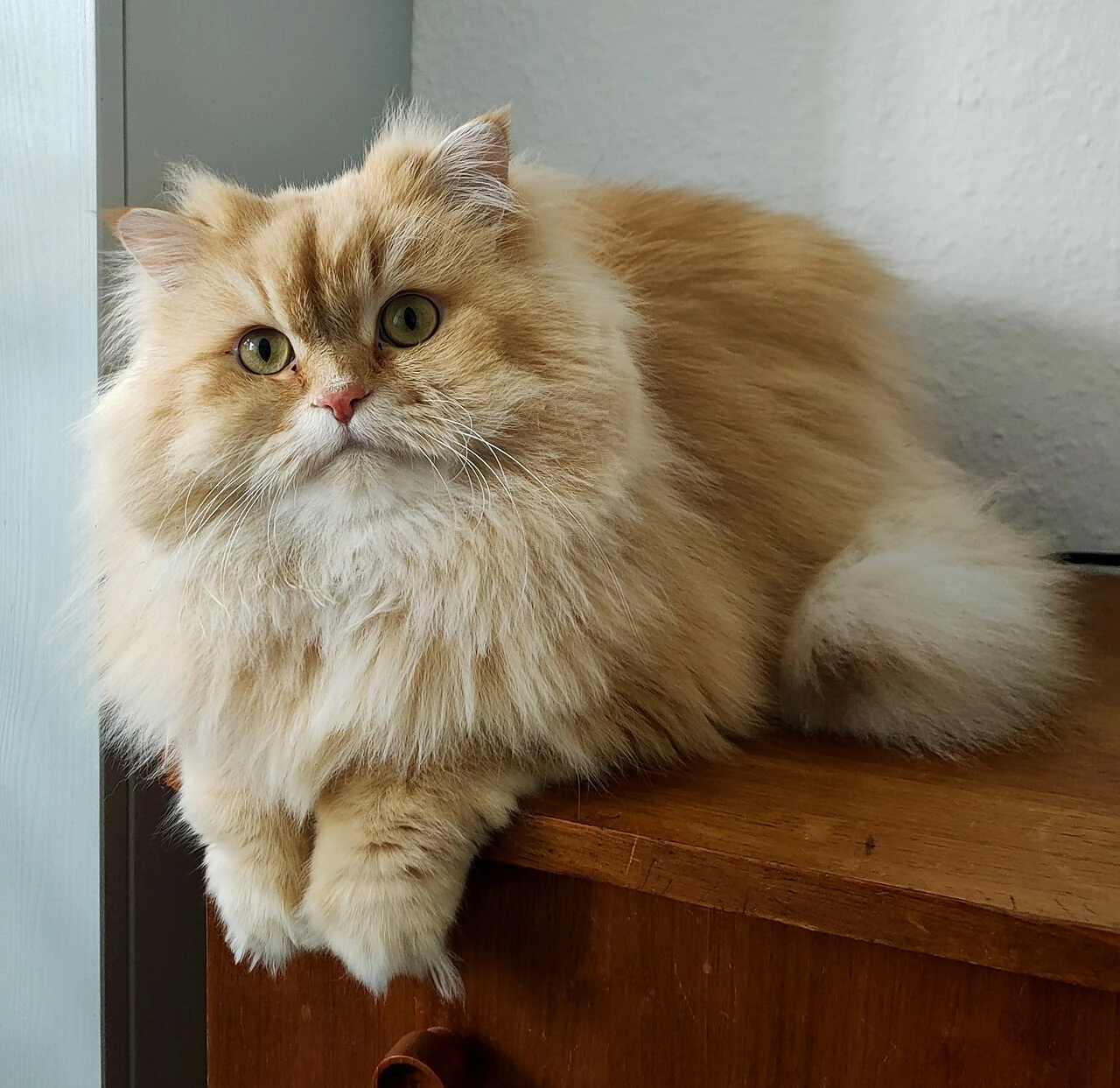
The British Longhair combines a sturdy build with a dense, longer coat. Many enjoy quiet company and like being close to their people. Daily grooming, engaging games and attention to body weight are part of caring for this breed.
At a glance
- Size
- Medium
- Weight
- 3.2 to 7.7 kg
- Activity
- Moderate
- Care needs
- High
- Enrichment
- Play at their own pace
- Owner experience
- First cat with preparation
Quiet companionship on the cat’s own terms
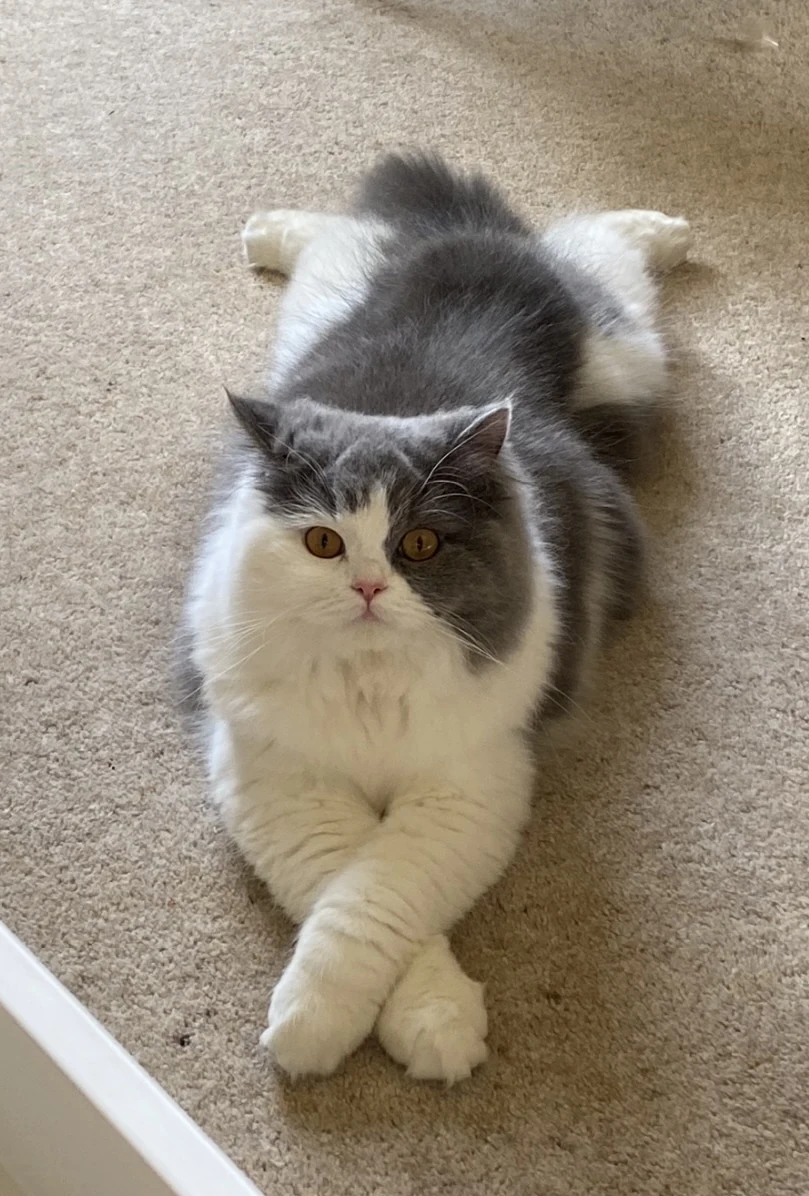
A British Longhair does not have to sit on your lap to feel connected to you. She may prefer to settle beside you or watch what is happening from a comfortable place. The British breeding organisation GCCF describes British cats as generally relaxed and not particularly keen on being carried around for long. People who appreciate this kind of companionship can enjoy sharing their home with one.
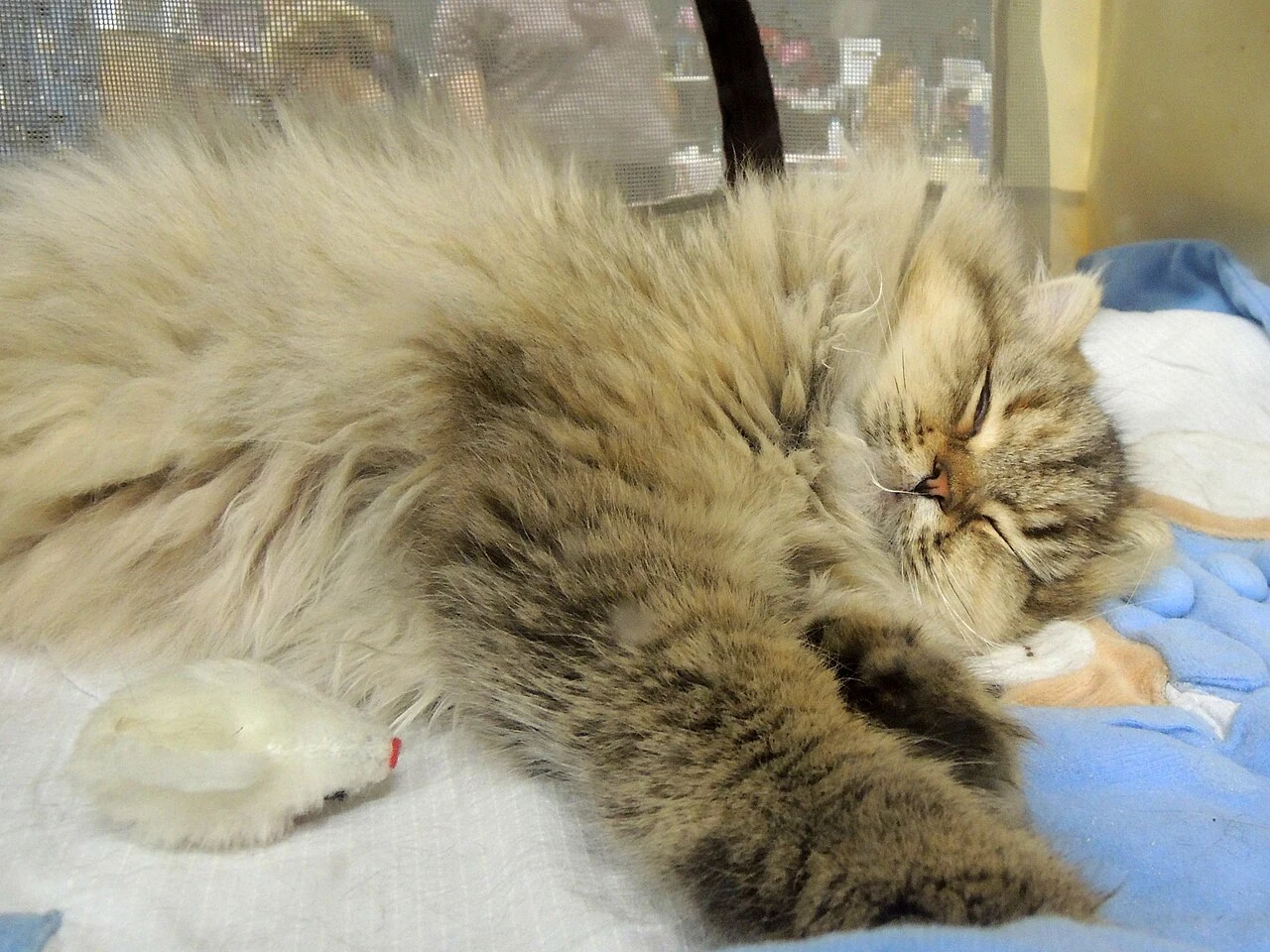
Being quiet does not mean having no interest in play. A new toy, a cardboard box or a slowly moving wand attachment can catch an adult cat's attention. You should allow time to watch and stalk it. When visitors arrive, and in a busy family home, it helps if the cat can approach people herself. Children should leave her in peace on her resting place and use a toy rather than their hands for games.
Variety matters for a quiet cat too
The breed's more leisurely habits make opportunities for exercise particularly useful. Several short invitations to play often fit the day better than one long session. A wand can imitate small prey, a ball can roll across the floor and an easy food puzzle can encourage searching. The first tasks should be simple enough for the cat to find or remove food readily.
A scratching tree should be sturdy enough for this substantial cat and stay steady when she jumps onto it. Broad resting platforms, accessible steps and a choice of sleeping places make the home more interesting. As a cat grows older or develops joint problems, routes to favourite spots should become easier. An extra low step can then be more helpful than an even taller climbing tree.
In a home with several cats, food, water, litter trays and resting places should be available in different areas. A quieter cat should not have to pass another animal to reach everything she needs. A second pet should be introduced gradually, starting with separate spaces. Alongside the breed's generally calm description, you should pay attention to how the two individual cats respond to each other.
For practical play, food searches and quiet retreats, read Indoor Cat Enrichment: Play, Food Puzzles and Safe Retreats ↗
Combing the undercoat and following weight changes
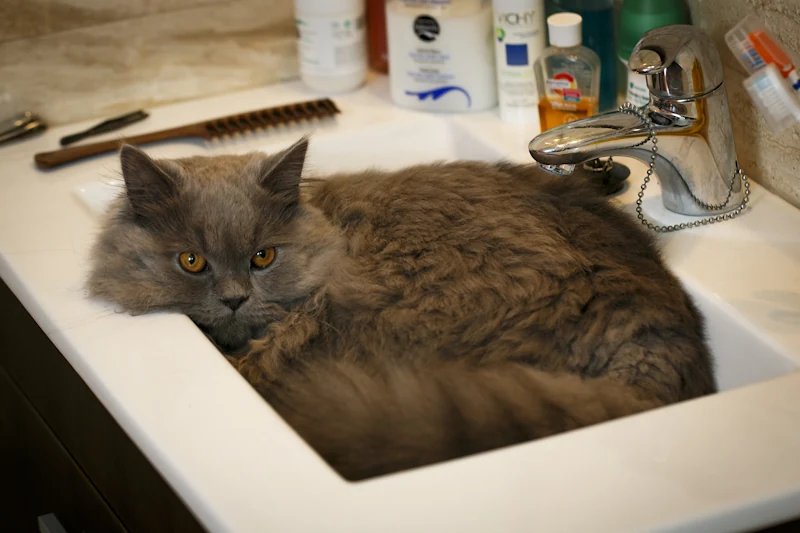
The coat has a dense undercoat, meaning the shorter hairs beneath the longer outer coat. These provide volume but can become tangled together with loose hair. A British Longhair should therefore be gently combed every day. Working through small sections reaches the deeper layers rather than merely brushing the surface.
Short, calm grooming sessions should become familiar from the start. Areas where the coat rubs together, such as behind the front legs, deserve particular attention. Pulling hard on a compact mat will not remove it comfortably. A mat close to the skin should be dealt with by the veterinary practice. Using scissors at home risks cutting the skin.
Weight gain can be difficult to see beneath the generous coat. Regular weighing and feeling the ribs are more useful than judging the outline alone. Your veterinary team can show you how to assess body condition. Food rewards should be included in the daily allowance.
How the longhaired variety developed
The British Longhair developed from British Shorthair breeding. Historical crosses with Persian cats introduced the gene for longer hair into these lines. For many years, longhaired kittens were placed in pet homes while breeding focused on the shorthaired form. The longhaired variety was later recognised as a breed in its own right. The international cat federation FIFe recognised it in 2017.
The standard describes a medium to large cat with strong muscles, a round head and a broad chest. The moderately long coat should be dense and stand away from the body. Many colours and patterns are recognised, so the breed is not limited to the familiar blue grey coat.
For British cats, the British GCCF gives adult weights of approximately 3.2 to 5.4 kilograms for females and 4.1 to 7.7 kilograms for males. These breed figures should not become feeding targets for an individual cat. A smaller cat needs a different assessment from a large male. What matters is how body frame, muscle and fat cover fit together. The substantial adult build can take several years to develop fully.
Understanding kidney and heart conditions
Before buying a kitten, you should ask which health examinations have been carried out in the breeding cats. In the British Longhair, inherited polycystic kidney disease, or PKD, is an important subject. It causes fluid filled spaces called cysts to form in the kidneys. These may grow over time and damage kidney tissue. A DNA test can identify the known inherited variant, while an ultrasound can show whether cysts are already visible.
Hypertrophic cardiomyopathy, abbreviated to HCM, should also be discussed. This heart disease causes parts of the heart muscle to thicken. Affected cats may initially appear completely well. A heart ultrasound can reveal changes. According to the GCCF, British cats do not have a DNA test that replaces heart examinations for HCM screening. When looking at records for the parents, the actual result, the identity of the cat and the date of the examination are useful details.
Increased drinking, weight loss or a reduced appetite should be checked by the veterinary practice. Difficulty breathing, breathing with an open mouth or sudden painful paralysis of the hind legs require immediate veterinary attention. For ongoing care, weight notes and examination reports can be stored together in Fellfolio. This makes changes easier to follow at the next appointment.
Would a British Longhair suit your home?
Could work well if …
- You enjoy a generally relaxed cat who can appreciate company without wanting to be carried all the time.
- You can make time for daily grooming and introduce it gently so your cat becomes comfortable with it.
- You provide sturdy climbing places and regular games, and pay attention to food portions and weight.
What to consider
- If daily combing does not fit your routine, the dense long coat will add a significant care commitment.
- Before taking a kitten home, you should discuss documented PKD results and heart examinations in the breeding cats.
- A sturdy build should not be confused with excess weight. The veterinary practice can assess body condition.
Meet other cat breeds.
Selected by size, activity, care and play needs.
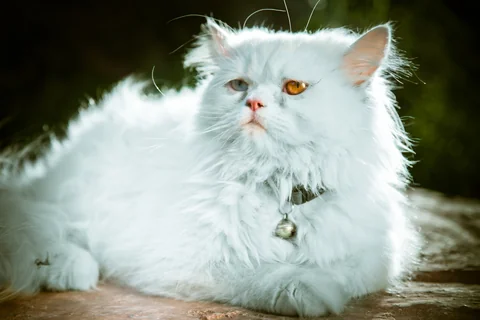
Longhair cat · Persian group
Persian
Persians tend to prefer a calm home. Their long coat needs daily combing. Cats with very short muzzles need particular attention to breathing, eyes and teeth.
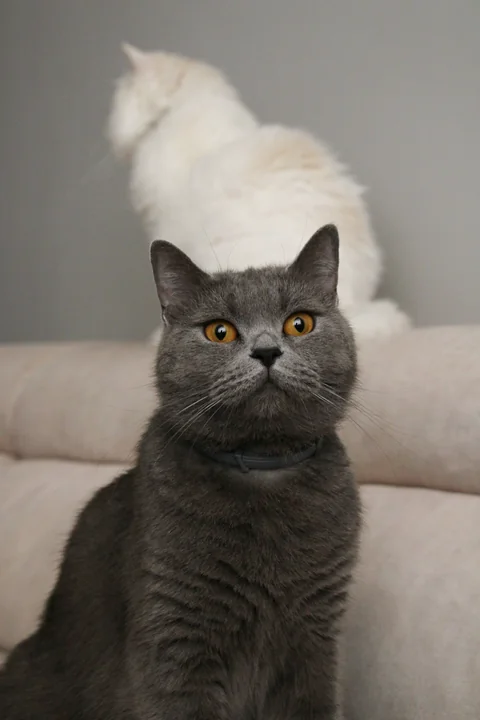
Shorthair cat · Great Britain
British Shorthair
A round face, a dense coat and a generally quiet temperament. British Shorthairs enjoy company but often prefer sitting beside their owners to curling up on a lap.
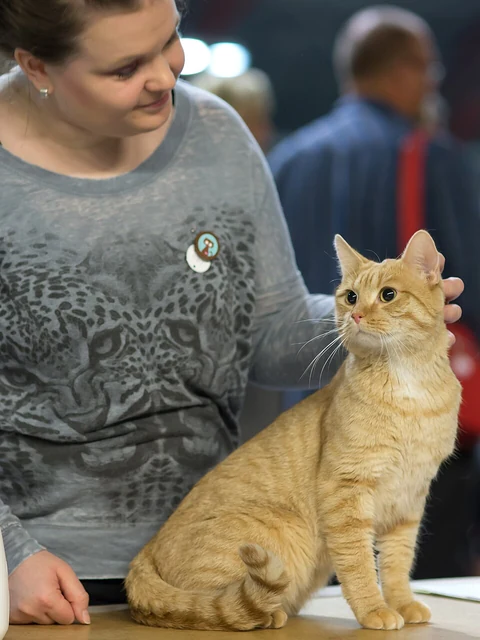
Shorthaired cat · Europe
European Shorthair
The European Shorthair is a recognised breed that preserves the natural type of European domestic cats. Its short coat and balanced build look familiar. A satisfying life includes engaging games, safe resting places and people who pay attention to the cat’s individual habits.
Sources and photograph credit
- British Longhair and British Shorthair breed standard
Used in this profile for: Day-to-day care, Size and build
- British Shorthair and British Longhair breed profile
Used in this profile for: Size / Weight, Temperament, Everyday life, Day-to-day care, Size and build, Health, Could this breed fit your life?
- British Longhair breed profile
Used in this profile for: Temperament, Everyday life, Size and build, Could this breed fit your life?
- Indoor cats
Used in this profile for: Everyday life, Could this breed fit your life?
- Tips for grooming longhaired cats
Used in this profile for: Day-to-day care
- Cats and play
Used in this profile for: Everyday life
- Hypertrophic Cardiomyopathy
Used in this profile for: Health
- Polycystic Kidney Disease
Used in this profile for: Health
- Introducing your new cat to other cats in your home
Used in this profile for: Everyday life, Could this breed fit your life?
- How to keep your cat healthy and happy
Used in this profile for: Health
Photo credits
Portrait · Fanta3 · CC BY-SA 4.0

Everyday life · Snowyjr · CC BY-SA 4.0

Everyday life · Albert Codina · CC BY 3.0

Everyday life · Abujoy · CC BY 4.0
