fellfolio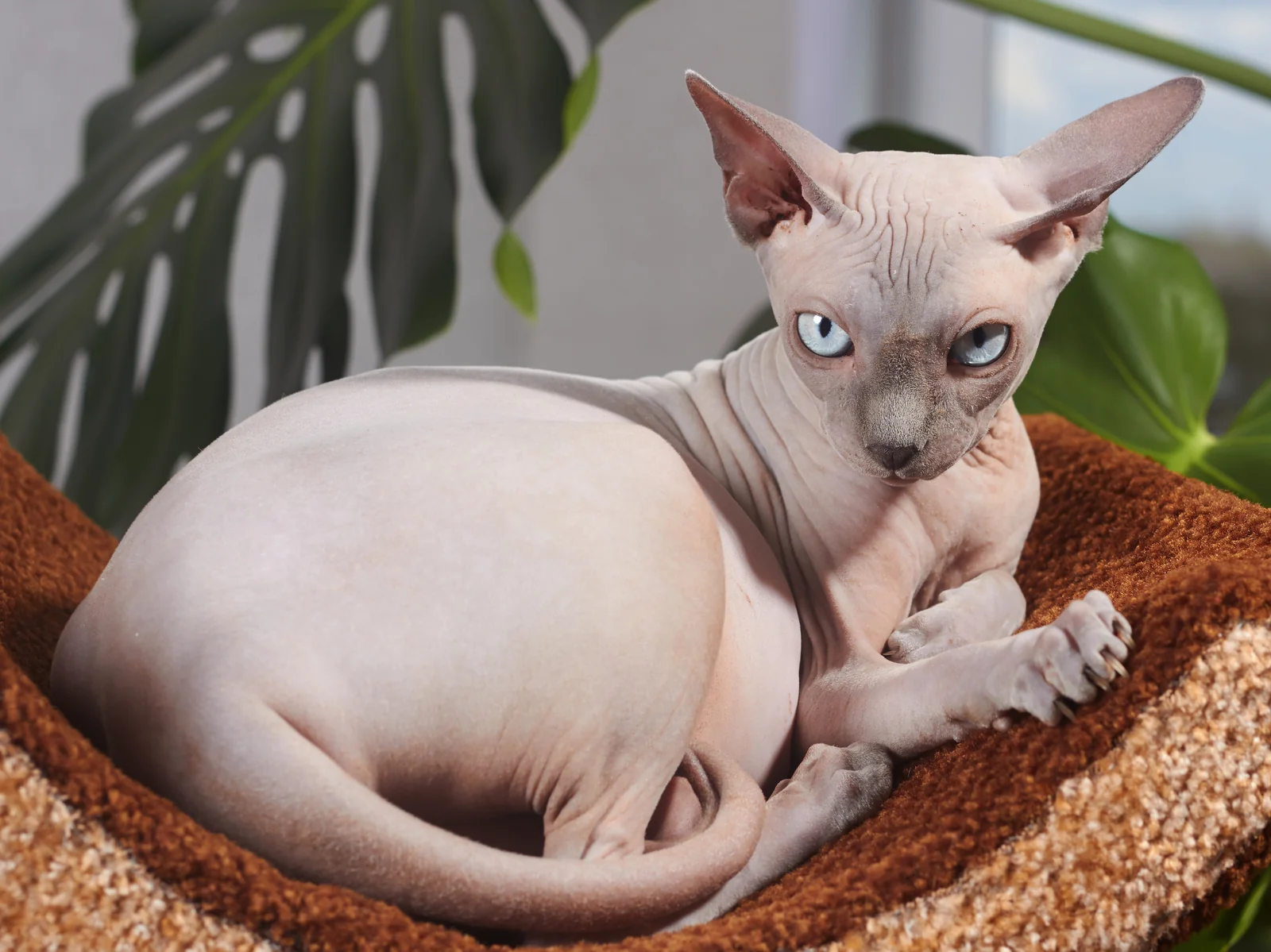
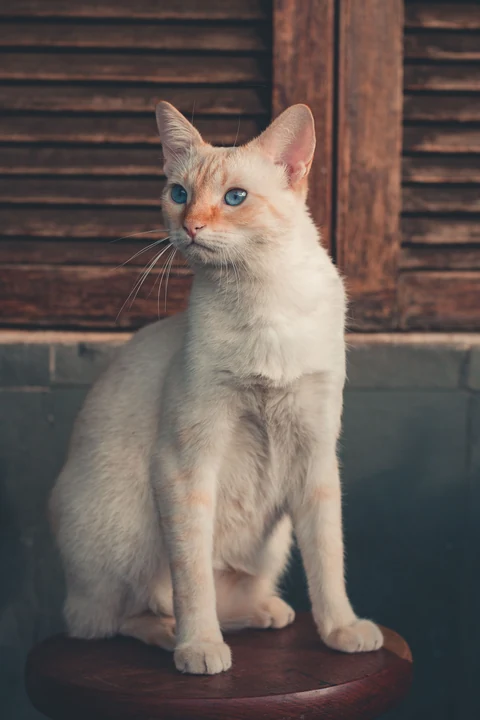
Short-haired cat · Thailand
Siamese
Slender, athletic and often very talkative, Siamese cats seek out their people and like to be part of family life.
Nearly hairless cat · Canada
Sphynx cats often seek out their people and love to be active. Their nearly bare skin needs protection from strong sun and cold, with gentle care when needed.
Many Sphynx cats come to the door when visitors arrive. They seek out their people, reach for toys with their long toes and like to follow whatever is happening at home. Some even open cupboard doors, so cleaning products and small objects need to be kept out of reach. If you enjoy shared games and a cat that often settles close beside you, you may love their company.
A sturdy cat tree and safe climbing spots give an active Sphynx room to move. Short games with a wand toy or a hidden toy to find offer variety. With so little coat to protect the skin, the cat needs a warm place away from draughts. A secure balcony should provide shade, and on cold days the cat must always be able to go back inside.
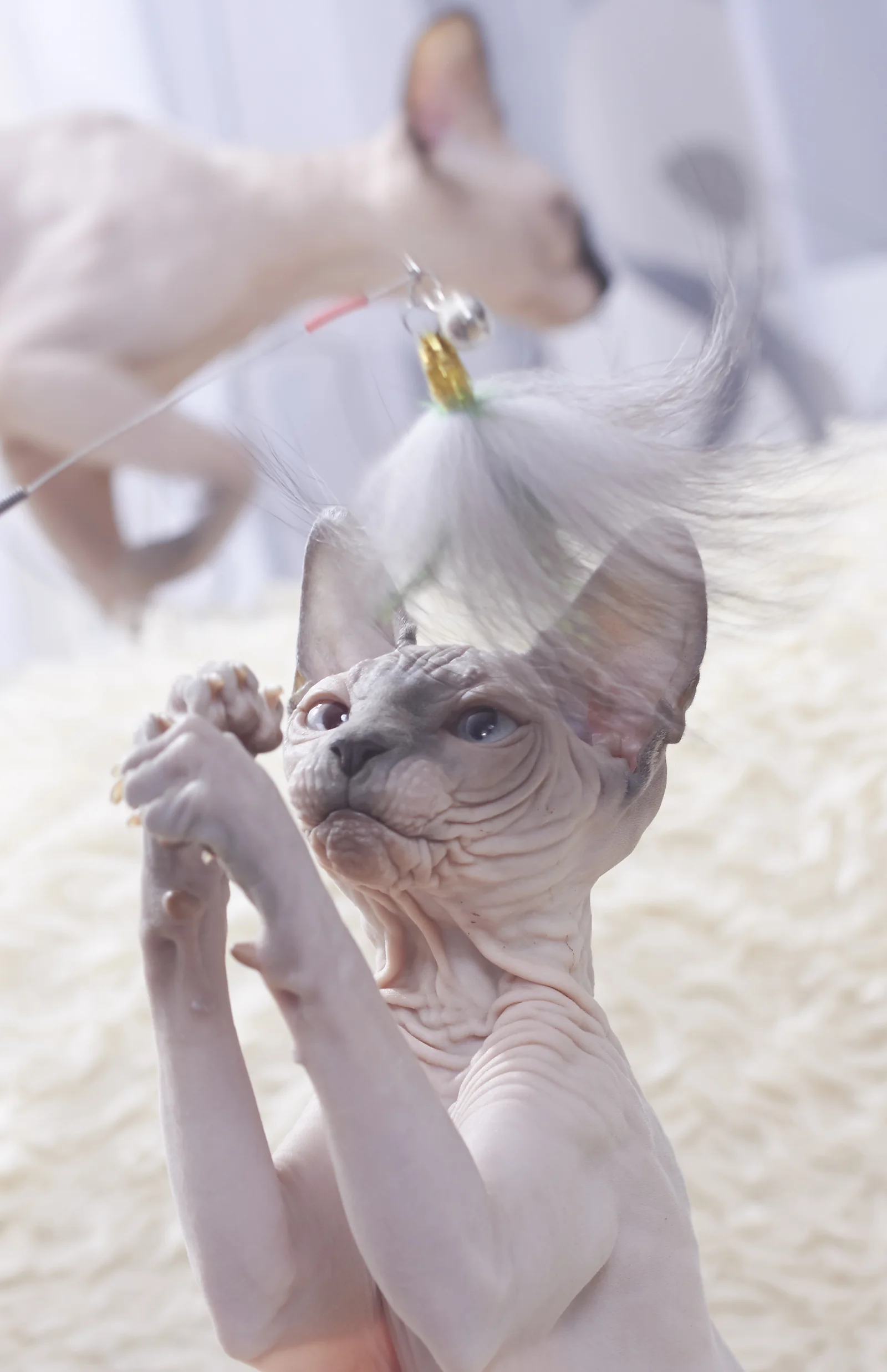
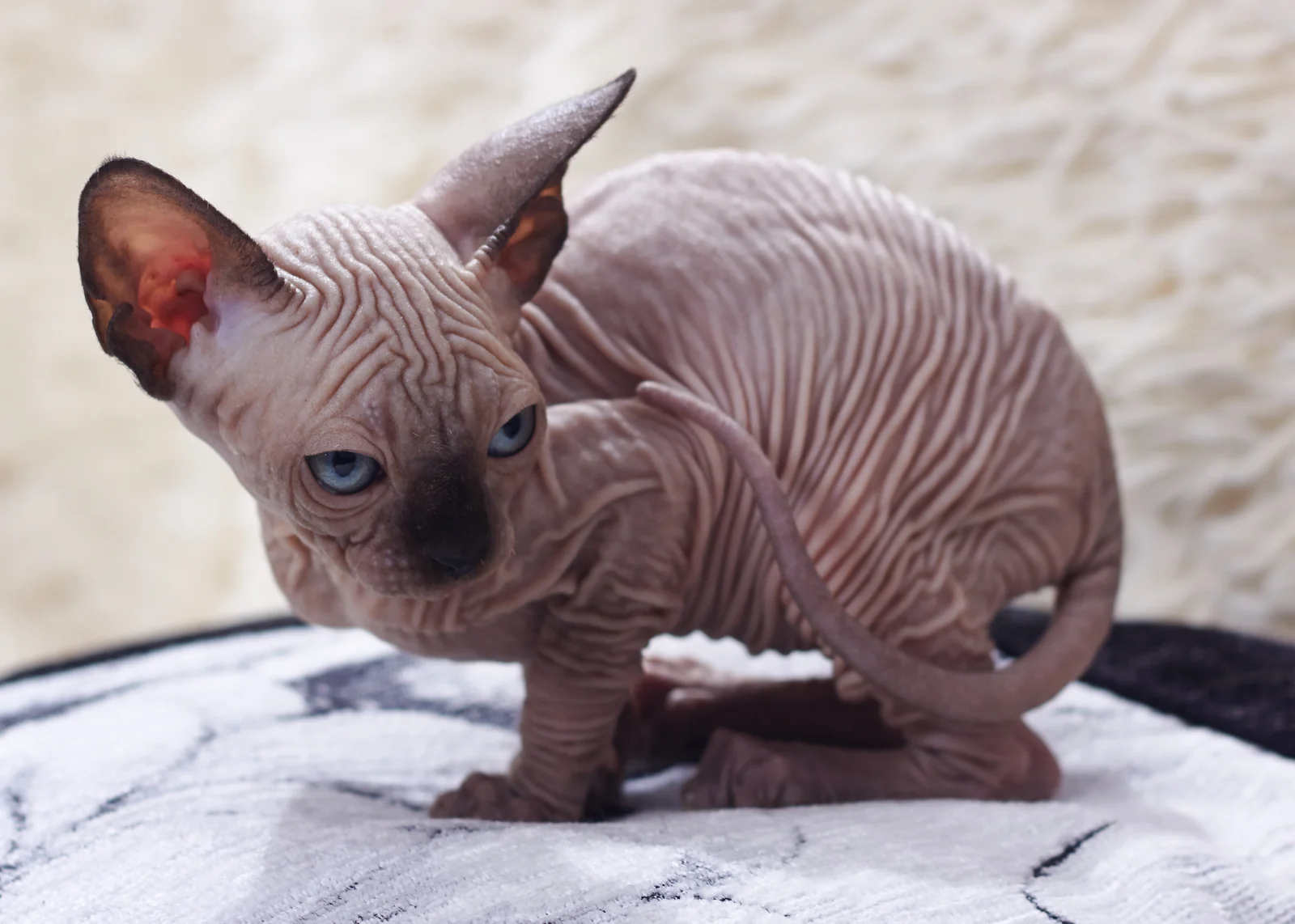
A Sphynx is not entirely bare: most have very fine down, with more hair sometimes visible on the nose, ears or paws. Skin oils can build up on the nearly bare body, while earwax can collect in the ears. Gently clean dirty skin and ears, and check the claws regularly. A weekly bath is no fixed rule; excessive washing can irritate the skin. How often a cat needs washing depends on its skin. Even without a dense coat, a Sphynx can still trigger symptoms in people with cat allergies.
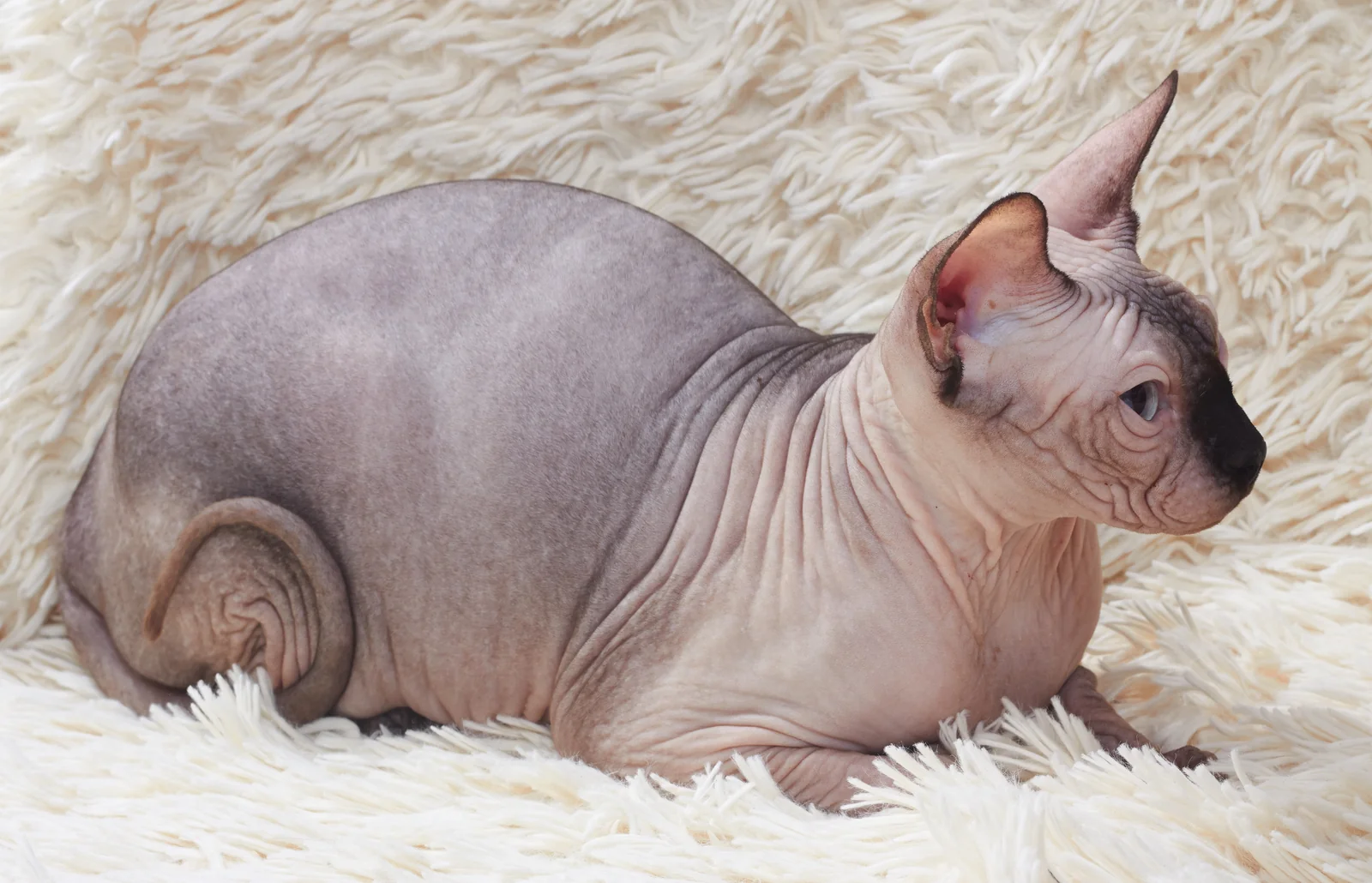
A Sphynx is medium-sized, muscular and far from fragile. Large ears, lemon-shaped eyes and a sturdy, rounded body are typical of the breed. Skin pigment may be solid or patterned. TICA lists adult females at about 3.2–4.5 kg and males at about 3.6–5.4 kg. A Sphynx feels especially warm to the touch because there is almost no coat between your hand and its skin.
Hypertrophic cardiomyopathy, HCM, is an important concern in Sphynx cats. The heart muscle thickens, and an ultrasound scan can detect this even when the cat still seems well. Ask for recent heart scan results for both breeding parents. Also ask your veterinarian when your own cat should be screened: HCM may only become detectable later. A DNA test can also check for a gene variant that may cause congenital myasthenic syndrome, CMS, an inherited muscle weakness in Sphynx and Devon Rex cats. This test does not replace a heart scan because it checks for a different condition. Have unusual weakness after exertion assessed by a veterinarian. Laboured or rapid breathing needs urgent veterinary care.
Selected by size, activity, grooming and play needs.
Short-haired cat · Thailand
Slender, athletic and often very talkative, Siamese cats seek out their people and like to be part of family life.
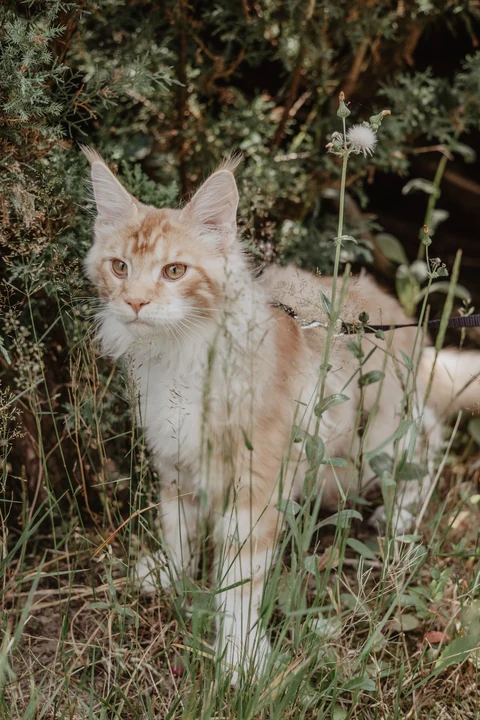
Semi-longhair cat · United States
The Maine Coon pairs a long, powerful frame with a full coat and bushy tail. Many stay playful and like to keep their people in sight around the home.
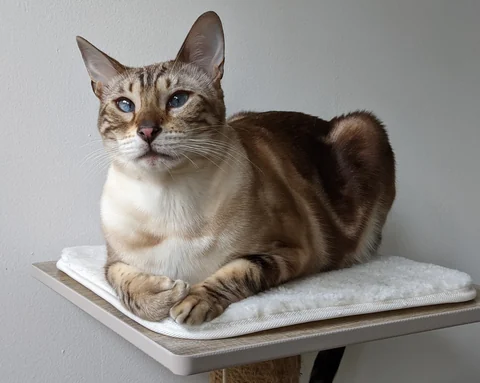
Spotted or marbled coat
Bengals are active, curious cats with a muscular build. Climbing opportunities and daily enrichment are part of life with the breed.
Portrait · Dmitry Makeev · CC BY-SA 4.0 · Edited
Side view · Dmitry Makeev · CC BY-SA 4.0 · Edited
In action · Dmitry Makeev · CC BY-SA 4.0 · Edited
Kitten · Dmitry Makeev · CC BY-SA 4.0 · Edited