 fellfolio
Semilonghaired cat · Oriental breed family
Oriental Longhair
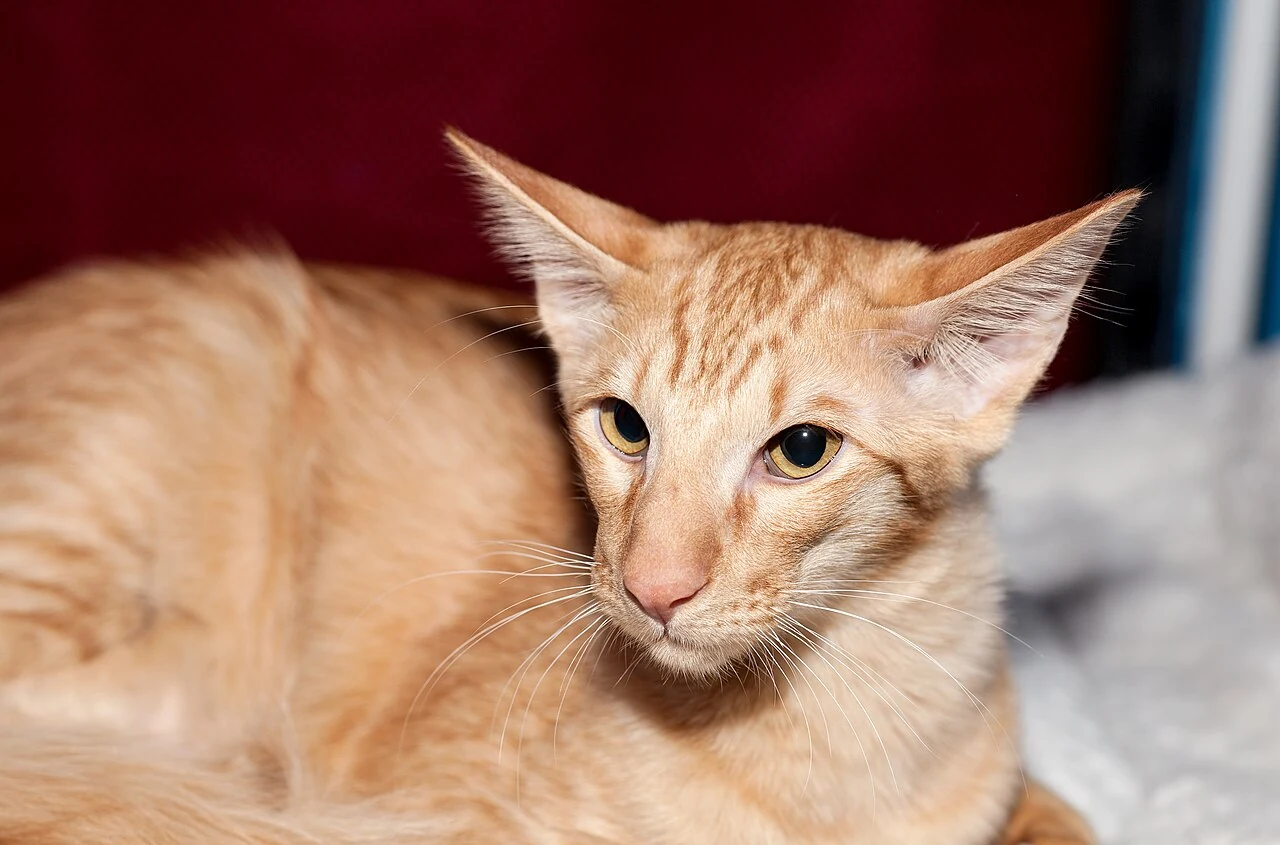
The Oriental Longhair is a slender, lively cat with large ears and a silky, plumed tail. She often seeks company and readily uses her voice to express what she wants. If you enjoy conversations, shared games and a curious companion at home, this is a breed worth getting to know.
At a glance
- Size
- Medium
- Activity
- High
- Care needs
- Moderate
- Enrichment
- Enjoys learning together
- Owner experience
- First cat with preparation
A lively companion with plenty to say
A rustling toy can quickly catch an Oriental Longhair's attention. She might follow it, settle beside someone and later use her voice to ask for attention again. FIFe, the international cat federation, describes an active, affectionate and sociable cat. For many people, her involvement in everyday life is a large part of the appeal.
Before she arrives, you should consider when you will have time for games and company each day. If everyone regularly spends long hours away, dependable arrangements for care and companionship are needed. A compatible second cat can help. You should ask about previous experiences and play preferences rather than simply choosing the same breed. A quiet older cat may want less energetic play than a young, highly active newcomer.
Children can enjoy games together when they watch how the cat responds. A wand toy or rolling ball keeps hands out of hunting games. If the cat moves away or retreats, you should leave her in peace. Even a sociable animal needs sleeping places where nobody picks her up for a hug.
Climbing routes and shared discoveries
A home for an Oriental Longhair should make use of height. Securely fixed shelves or a sturdy scratching tree provide places to climb and watch. Routes between them should be accessible, with surfaces large enough for comfortable resting. Fragile belongings should be kept where exploring paws will not easily knock them down.
Hunting games with short pauses suit shared activities. Toy prey can move along the floor, disappear behind a box and return after a short pause. She should be able to catch the attachment as well. Some cats bring back a small ball or enjoy learning a simple task. Coming to a particular place when they hear an agreed word is one example. You should pair the voluntary movement to that spot with a small reward and keep practice brief.
A simple food search adds another option. Food should initially be visible and easy to reach. The portion used in the game should come from the measured daily allowance. Especially in a busy household, regular opportunities for time together help without filling every quiet period with another task. In homes with several cats, feeding places, litter trays and retreats should be distributed so one cat does not constantly have to pass the other.
For practical play, food searches and quiet retreats, read Indoor Cat Enrichment: Play, Food Puzzles and Safe Retreats ↗
Silky fur without dense undercoat
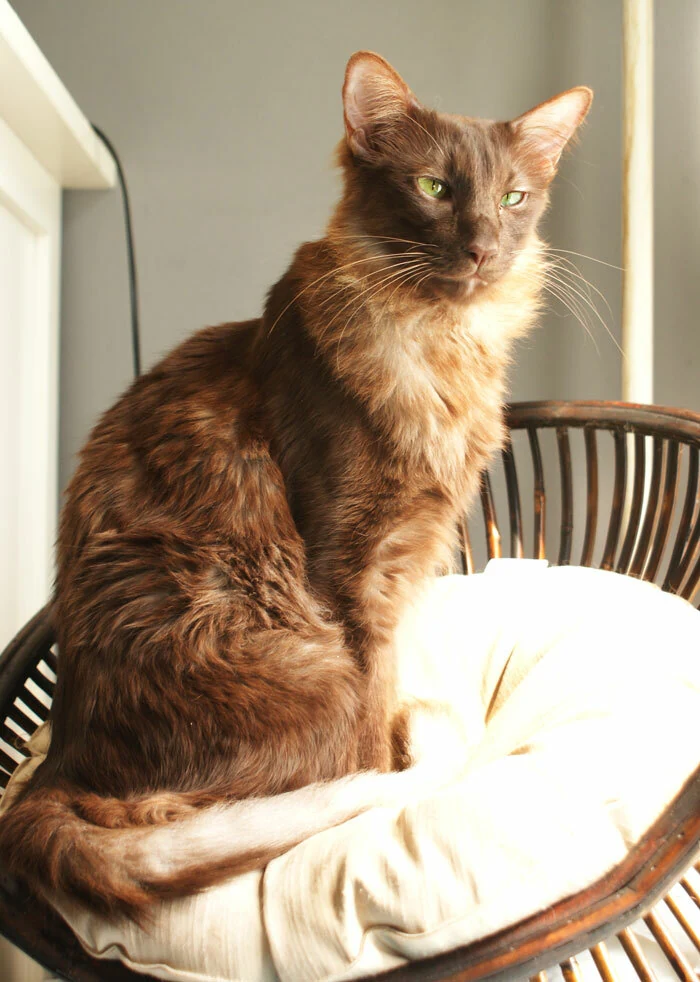
The coat is medium in length, fine and silky. It follows the slender body rather than surrounding it with dense undercoat. The long, plumed tail is particularly distinctive. The standard specifies no woolly undercoat. The full coat develops as the cat matures.
A soft brush or suitable comb a few times a week can remove loose hair and help you find small tangles early. Frequency should follow the needs of the actual coat. Areas behind the ears and beneath the front legs merit a check. If the cat dislikes being touched in one place, you should inspect it gently and have possible pain investigated. Firm mats should be removed by someone with suitable experience.
Teeth need attention too. You should introduce brief touches around the mouth gradually, followed by appropriate dental care. The veterinary team can demonstrate the technique. Human toothpaste is unsuitable. Bad breath, drooling or a change in chewing should be investigated even if the cat continues eating.
The longhaired form of the Oriental
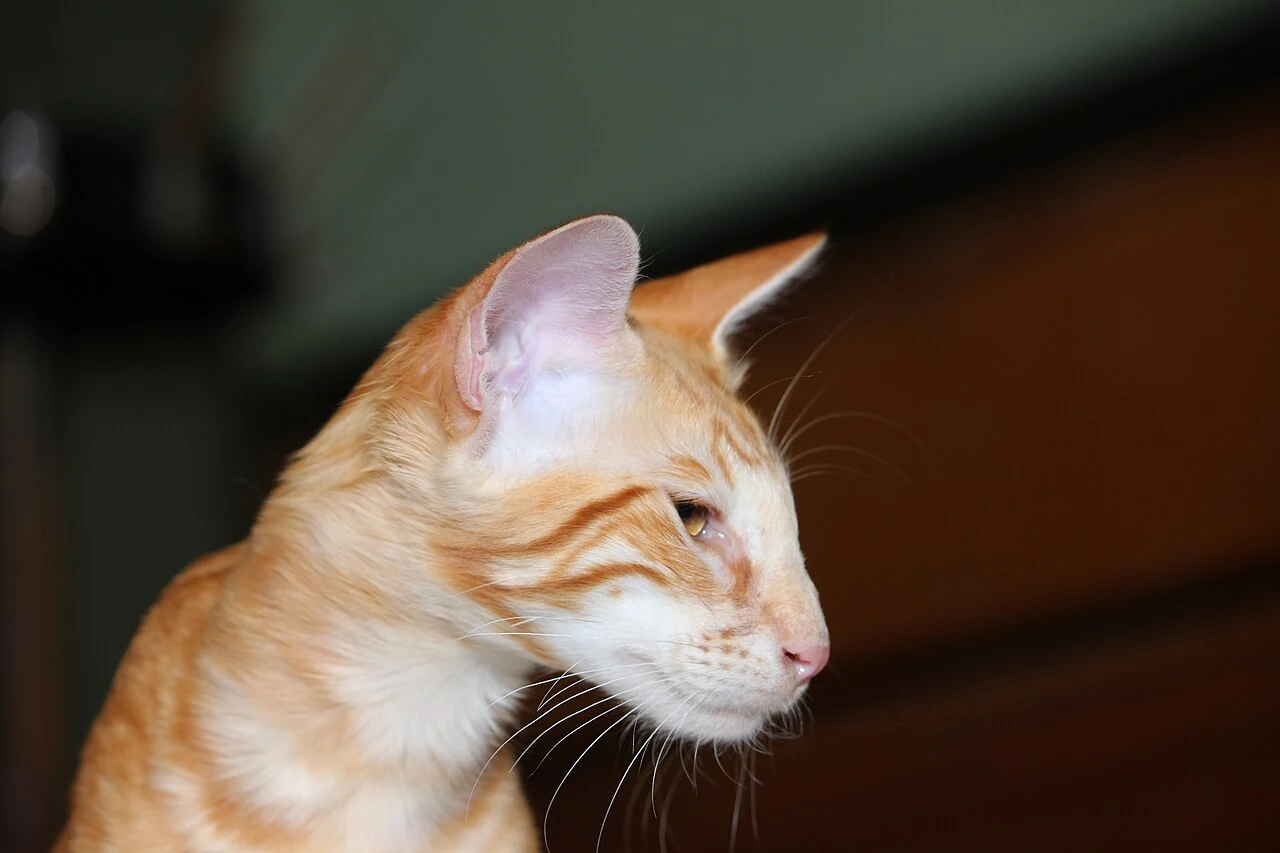
The Oriental Longhair is the longhaired form of the Oriental Shorthair. Both belong to the Siamese breed family, but their colours are not restricted to the typical pointed pattern with darker extremities. Oriental breeds were developed in many coat colours and patterns. Introducing longhaired cats also produced the silky coated longhaired form. FIFe recognised it in 1985.
The standard describes a medium sized cat with a long, slender body, good muscle and a long wedge shaped head. Large ears continue the lines of the head. Eyes are usually green. Under the FIFe standard, white cats may also have blue eyes or one blue and one green eye. The Balinese belongs to the same close family but has pointed colouring and blue eyes.
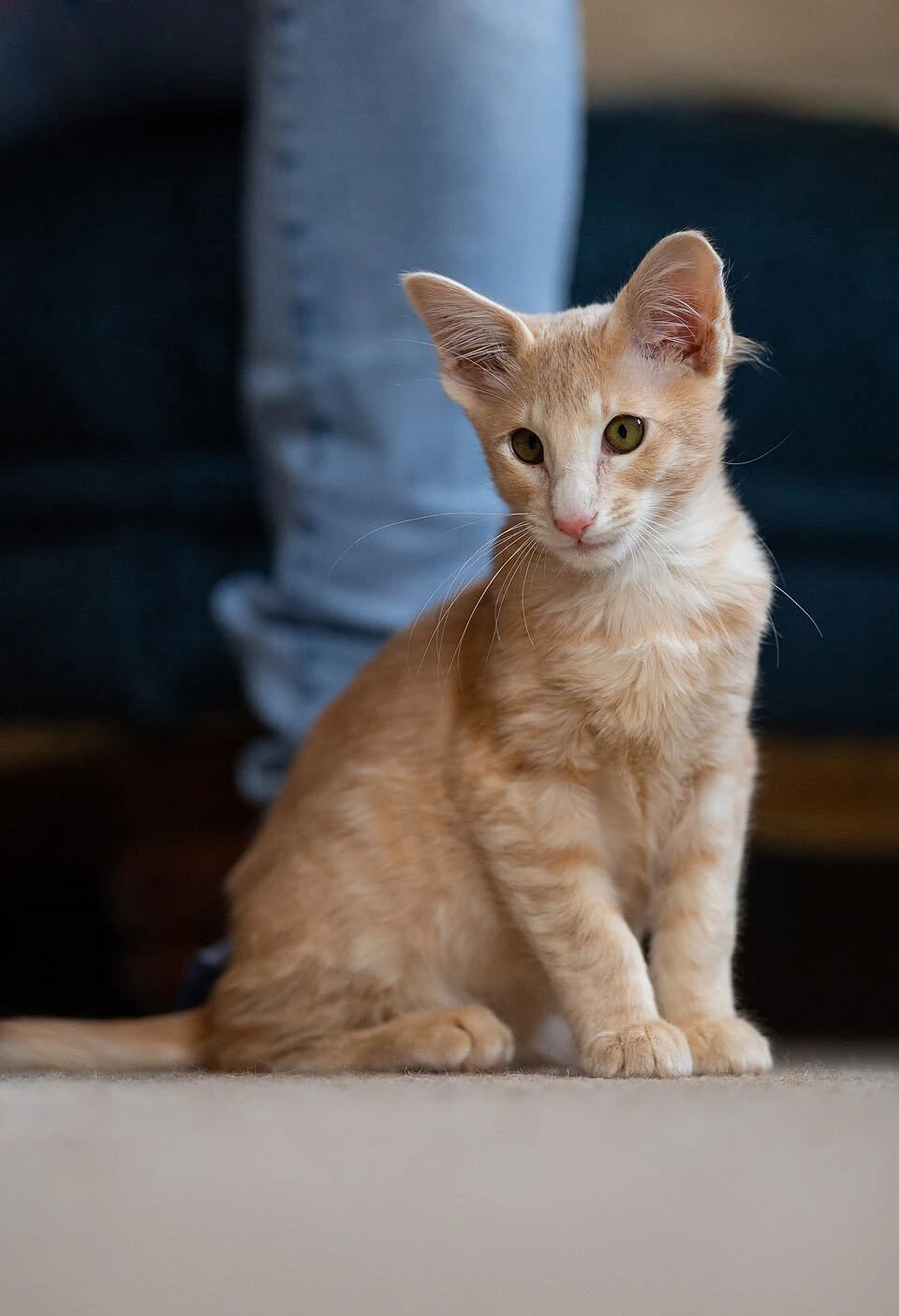
When meeting a kitten, you should ask about early grooming experiences and willing contact with people. An adult Oriental Longhair already has individual habits. How vocal is she, and what company is she used to? This information helps you prepare a suitable home. For an older cat, intermediate steps and lower favourite places should make movement easier. Sudden withdrawal or less jumping should prompt an examination for pain or illness.
Understanding inherited eye disease
An inherited eye condition found in the Oriental breed family is progressive retinal atrophy, usually shortened to PRA. The retina is the light sensitive layer of the eye. As its cells gradually deteriorate, the cat loses vision. The genetics laboratory at the University of California, Davis explicitly lists the Oriental Longhair among breeds suitable for the rdAc variant test.
For this form, the cat must inherit the relevant change from both parents to be affected. A cat with one copy can pass it on without losing vision from this form. Before buying a kitten, you should have the parents' results and their meaning explained. The test examines this particular inherited change. It does not assess other causes of eye disease.
Britain's cat registry GCCF also describes an inherited tendency towards amyloid deposits in the breed family, particularly in the liver. Deposits of certain proteins can damage organs. You should ask about known family illnesses and specific records. Reduced appetite, weight loss or unusual weakness should be assessed by a veterinarian. Fellfolio can keep genetic results and health history alongside observations and appointments.
Would an Oriental Longhair suit you?
Could work well if …
- You enjoy an active, often vocal cat who wants to join everyday life.
- You can provide company and shared games, with safe climbing routes around the home.
- You want to understand inherited screening results and introduce grooming through pleasant experiences.
May be less suitable if …
- Regular long absences should be planned before arrival, with dependable care and suitable company.
- For another cat, behaviour and previous experiences should be compatible. Introductions should be gradual, with separate essential places.
- A PRA test examines the relevant variant. Family history and veterinary examinations remain important for understanding the rest of the cat's health.
Meet other cat breeds.
Selected by size, activity, care and play needs.
Semilonghaired cat · USA
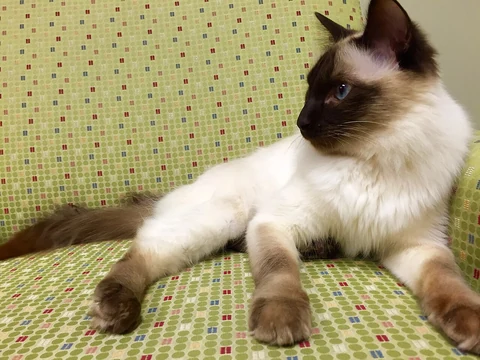
Balinese
A Balinese often joins the conversation, follows people around the home and is quick to take an interest in a game. Beneath the silky coat is an energetic cat who needs plenty of shared time and satisfying places to climb.
Short- and longhair · Japan
Japanese Bobtail
The Japanese Bobtail has a short tail with a shape all its own. It is agile, vocal and enjoys playing with its people.
Nearly hairless cat · Canada
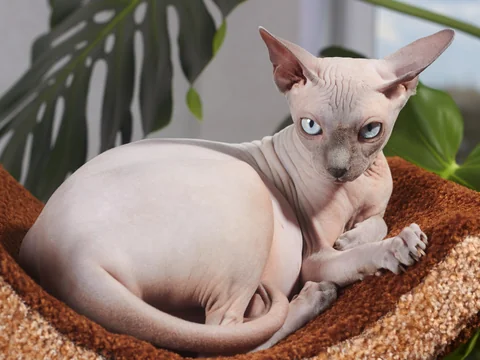
Sphynx
Sphynx cats often seek out their people and love to be active. Their nearly bare skin needs protection from strong sun and cold, with gentle care when needed.
Sources and photograph credit
- Indoor cats
Used in this profile for: Everyday life, Could this breed fit your life?
- Tips for grooming longhaired cats
Used in this profile for: Day-to-day care
- Cats and play
Used in this profile for: Everyday life
- Feline Dental Disease
Used in this profile for: Day-to-day care
- Loving Care for Older Cats
Used in this profile for: Size and build
- Oriental breed group profile
Used in this profile for: Temperament, Everyday life, Health
- Oriental Longhair breed profile
Used in this profile for: Temperament, Everyday life, Size and build, Could this breed fit your life?
- Balinese, Siamese, Oriental Longhair and Oriental Shorthair standard, 1 January 2026
Used in this profile for: Day-to-day care, Size and build
- Oriental Longhair standard, October 2024
Used in this profile for: Day-to-day care, Size and build
- Introducing your new cat to other cats in your home
Used in this profile for: Temperament, Everyday life, Could this breed fit your life?
- How to keep your cat healthy and happy
Used in this profile for: Owner experience
- Progressive Retinal Atrophy, PRA rdAc
Used in this profile for: Health
- Amyloidosis in Cats
Used in this profile for: Health
Photo credits
Portrait · Nickolas Titkov · CC BY-SA 2.0
.jpg)
Everyday life · Yusui.y · CC0

Coat and features · Kamée · CC BY 3.0
,_Red_Classic_Tabby.jpg)
Kitten · Gnew17 · CC BY-SA 4.0
