fellfolio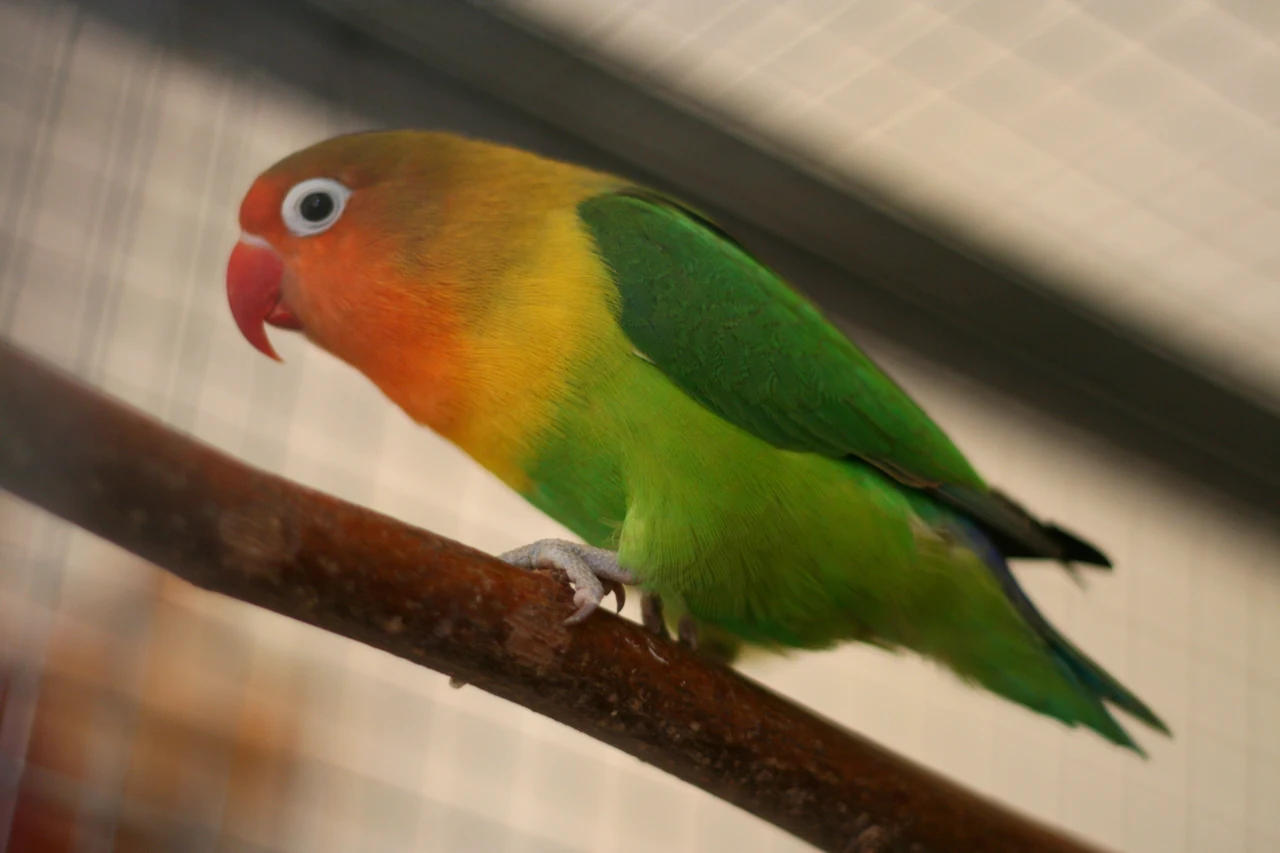
Which lovebird are you looking at?
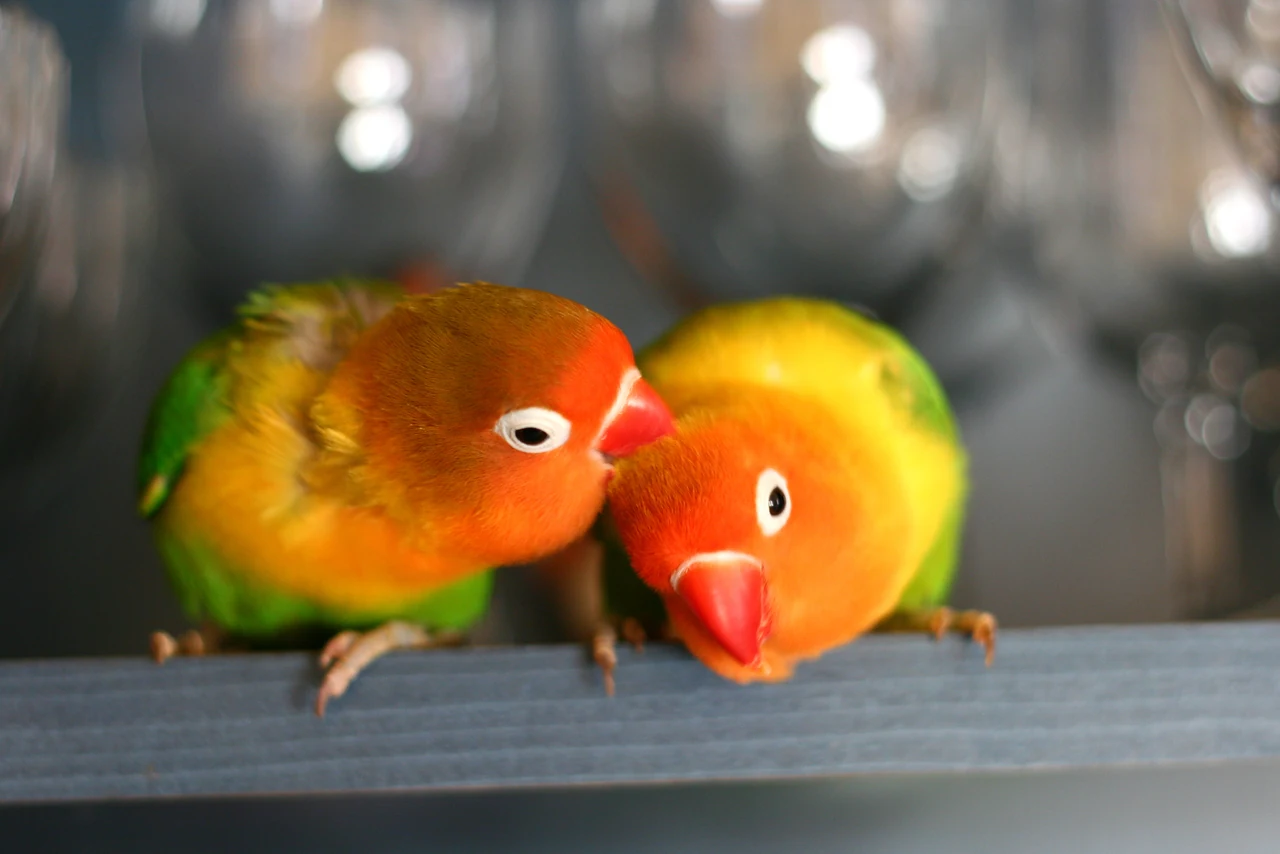
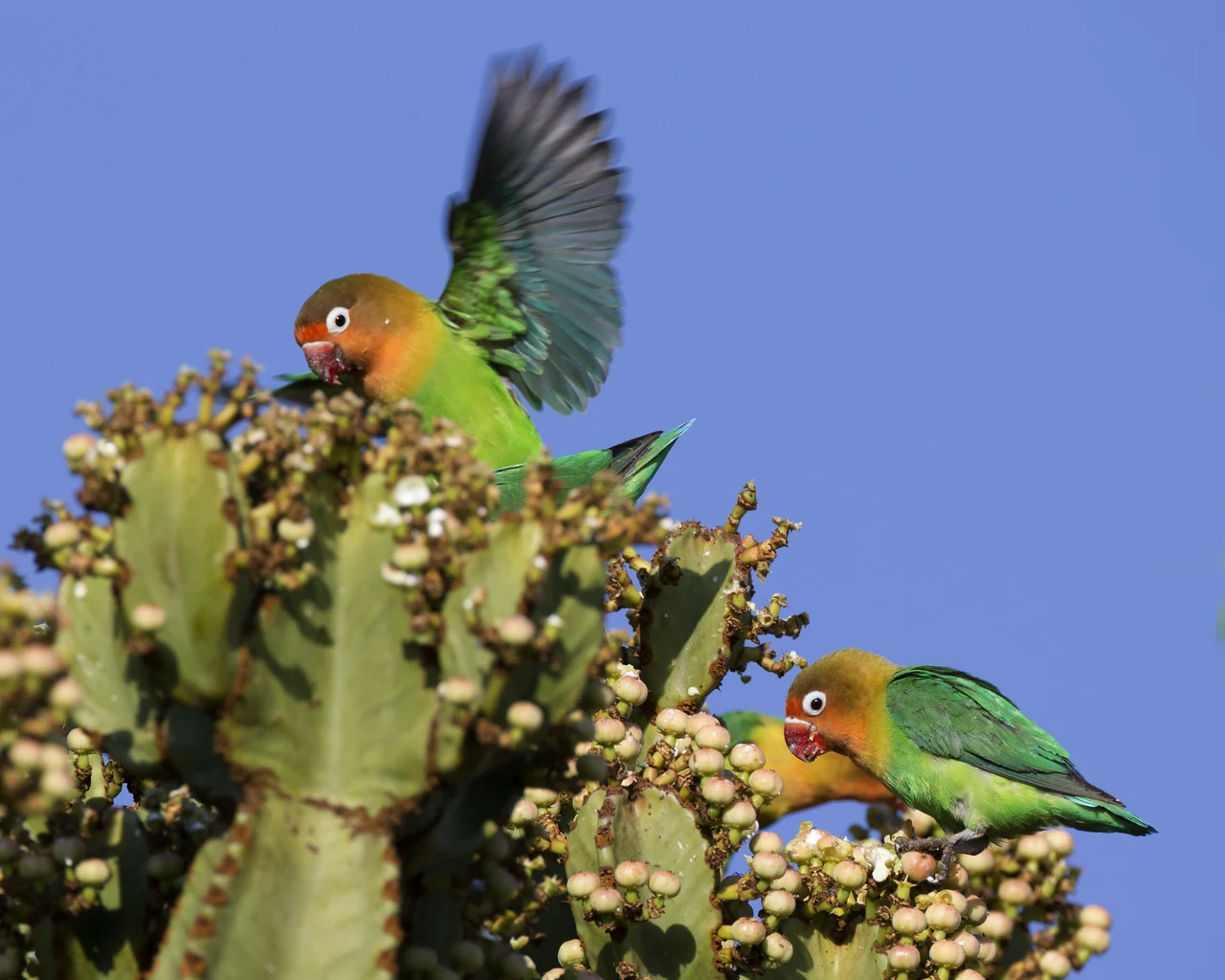
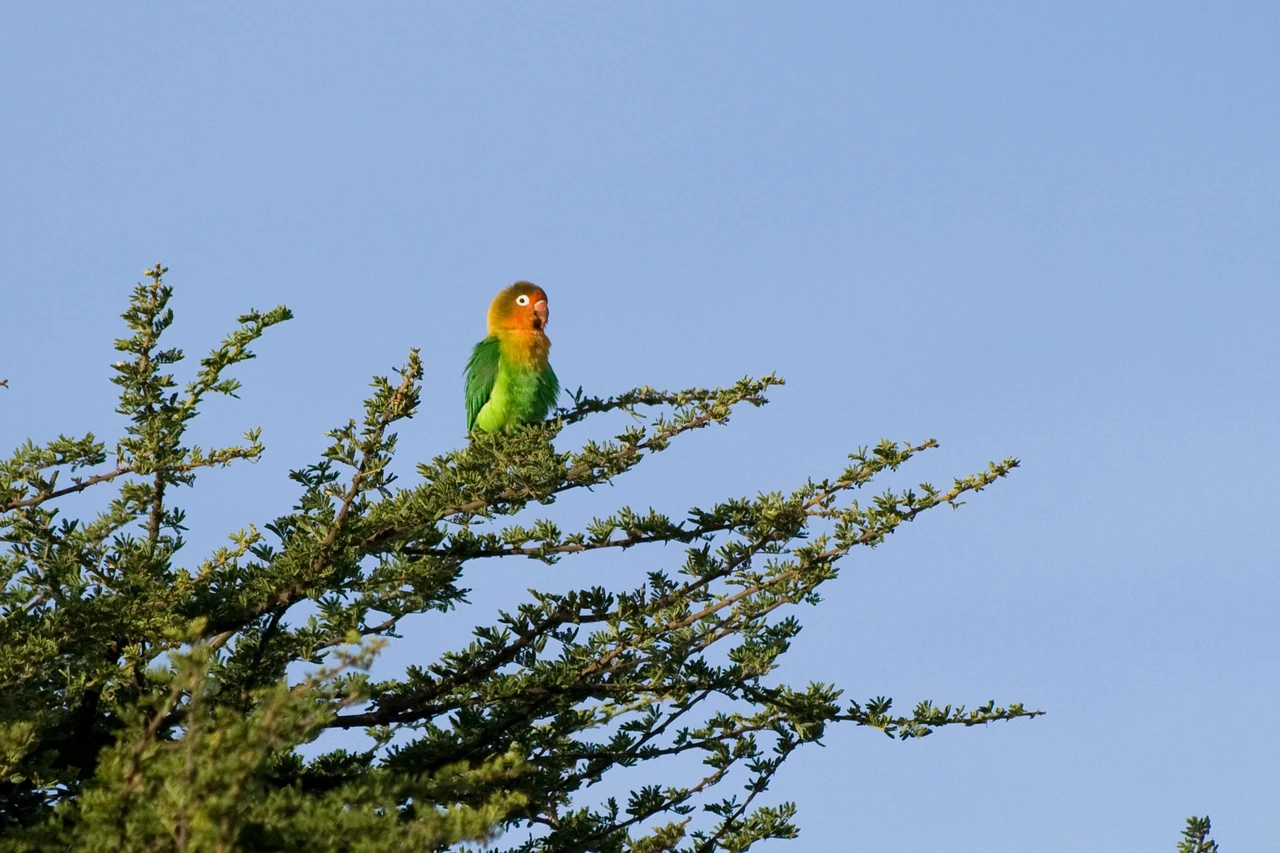
Fischer’s lovebird is Agapornis fischeri, a small parrot about 15 centimetres long. Its native range is in Tanzania, where it inhabits grassland with scattered trees and woodland. Naturally coloured birds have an orange face, red bill, white eye rings and a green body. The back of the head is olive-brown, with blue colouring above the tail.
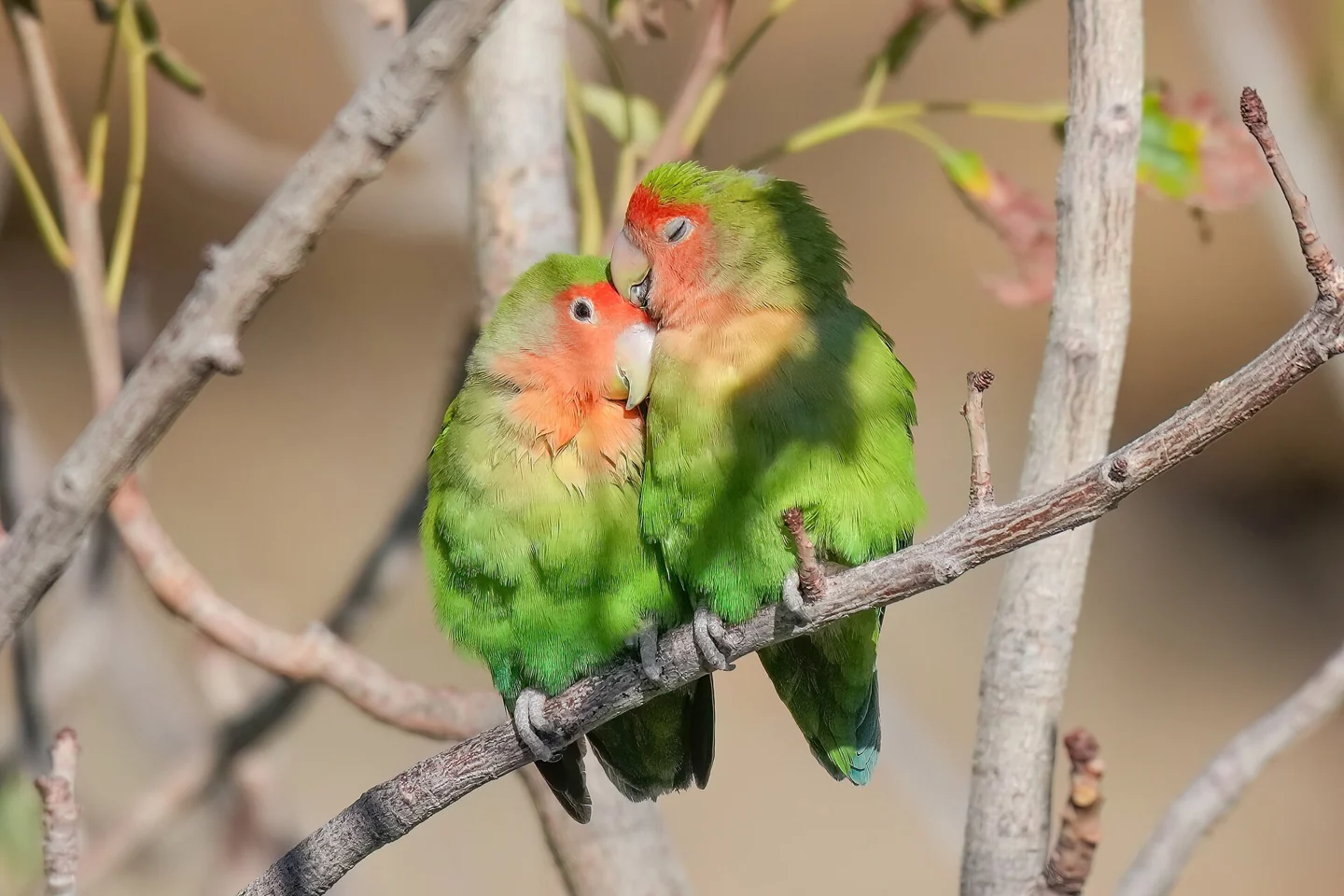
Peach-faced and rosy-faced lovebird are two common names for Agapornis roseicollis, a different species from Fischer’s lovebird. Naturally coloured rosy-faced lovebirds have a pink face and a pale bill. Masked lovebirds, Agapornis personatus, have a much darker head and yellow collar in their natural plumage.
Colour varieties bred in captivity can make these distinctions less obvious. When choosing a companion, the bird’s species should be established from its history and, where necessary, expert advice. Male and female Fischer’s lovebirds cannot be reliably distinguished by their feathers. An avian vet, meaning a vet experienced in bird medicine, can arrange laboratory sex identification when it is needed for care planning.
Read more: Rosy-faced lovebird care: pairs, flight and enrichment
A pair that gets along
Resting close together, preening each other’s heads and answering calls are all part of a lovebird relationship. People can offer company and build trust, but cannot take over these interactions between birds. Adopting an established compatible pair is often a simpler starting point than bringing together two birds that have never met.
If a new companion is needed, an experienced bird rescue or avian vet can help with selection and introductions. A newcomer should have a veterinary check and initially live separately from existing birds. This quarantine period reduces the chance of passing on an infection that has not yet become apparent. The vet should advise on its duration and the separation needed in your home.
Once that stage is complete, the birds can begin by seeing and hearing one another from separate enclosures. During later meetings, both need room to move away. Several food stations make it harder for one bird to control all the food. Persistent chasing, biting or keeping the other bird away from bowls calls for safe separation and help with the introduction. A second enclosure should be ready for that purpose. A bird of another species should not simply be added as a substitute partner.
Making room for a pair
An aviary is a large bird enclosure with room for short flights. Length matters: a tall, narrow cage may offer climbing space but little distance to fly. Swiss Animal Protection recommends at least two square metres of floor area, for example two metres by one metre, and a height of two metres for two to six lovebirds. This is a welfare recommendation to inform planning, rather than a legal requirement that applies everywhere.
More room is worthwhile for a pair wherever it can be provided. Perches at different sides encourage short flights, with a clear route between them instead of a tangle of ladders and toys. Safe daily flight outside the enclosure should also be part of the arrangement. A dedicated bird room is another option when its windows, doors and furnishings have been made safe.
Natural branches of different thicknesses let the feet grip in different ways. Food and water dishes should sit where droppings cannot fall into them from a perch. Mesh, coatings and fastenings need to be suitable for parrots that chew. The aviary should stand in a quiet, sheltered place where the birds can rest and sleep undisturbed at night. Indoor lighting also deserves specialist advice, as an ordinary room lamp does not fully meet birds’ particular lighting needs.
Read more: Setting up a bird room: safe flight and good landing places
A safer room for flight
Before the birds come out, exterior doors and windows should be closed, including tilt-opening windows. Suitable coverings help make large panes of glass and mirrors visible as obstacles. Fans must be off. Cables should be protected and open water containers covered, because a curious bird investigates with its beak and may land in unexpected places. Cats and dogs should stay in another room during flight time.
A kitchen is unsuitable as a bird room. Hot cooking surfaces and open pots create hazards, and airborne fumes are another concern. PTFE is a plastic used in some nonstick coatings. Coated cookware and appliances can release substances that are deadly to birds, especially when overheated. Smoke, fragrance sprays and cleaning fumes should not reach the birds either. Planning the room therefore includes considering where cooking air and other fumes travel.
Read more: Setting up a bird room: safe flight and good landing places
A varied diet, with attention to what each bird eats
Given a seed mix, lovebirds may pick out their favourites and leave the rest. A full bowl tells you little about the balance of their diet. A suitable complete food for small parrots can help provide consistent nutrition. Pellets are small pieces of food made from several ingredients combined, so birds cannot pick out just one ingredient. Washed vegetables, such as finely cut carrot or sweet pepper, add variety. Appropriate portions of seeds can also form part of the plan.
The balance depends in part on activity, body condition and what the birds currently eat. An avian vet can help put together a feeding plan. A bird accustomed to seeds needs a gradual transition. Simply removing familiar food can leave it eating too little. Watching each bird and weighing them regularly helps establish whether the new food is actually being eaten.
Clean drinking water should always be available and renewed daily, with bowls washed every day. Fresh leftovers should be removed after feeding, before they spoil. Insoluble grit is made of small stones that some birds swallow to help digest food. Lovebirds do not need it because they remove the hulls from seeds before eating. Any vitamin or mineral supplements should be chosen in relation to the food already provided, rather than adding several products without checking what they contain.
Things to dismantle and discover
Fresh, uncontaminated branches of correctly identified hazel or willow give the beak something to work on. Birds can investigate buds and strip bark. Simple bird-safe food toys offer another activity, with a reward that is easy to reach at first. As the birds learn, individual pieces of food can be tucked beneath loose scraps of paper. Those portions come from their usual daily food.
Introducing only a few new toys at a time makes it easier to see what interests the birds and what they still avoid. Their reactions can help you choose other activities they might enjoy. Damaged parts, loose threads and small pieces that come away should be removed regularly. A mirror does not replace another lovebird. Some birds become unsettled or aggressive towards their reflection.
Trust often grows during ordinary moments: a bird stays relaxed while you change a bowl, or investigates a perch you offer. A small reward immediately after a voluntary step helps it understand what earns the reward. These early steps can lead to learning to enter a carrier or stand on scales. If the bird moves away, it should be given more space. Repeatedly catching it would make these encounters harder.
Read more: Bird training: confidence, carriers and cooperative care
Why a sleeping box can encourage nesting
Wild Fischer’s lovebirds breed in cavities. A nest box or dark sleeping hut may therefore prompt a pair to establish and defend a nesting place. These objects should not be added casually as cosy accessories. Birds still need sheltered places to rest when breeding is not intended. Suitable perch positions and screening can provide those without an enclosed nest.
Females can lay eggs without a male present. Repeated laying places demands on the body, including the calcium needed for eggshells. If eggs appear, an avian vet should help plan what to do next. Simply taking eggs away can stimulate further laying. A female that is straining and weak needs immediate veterinary help. She may be egg bound, meaning unable to pass an egg, although other illnesses can cause similar signs.
Settling in and getting to know both birds
A rescue may be able to place an established pair and explain their habits. Wherever birds come from, their origin, current diet, known health problems and relationship with each other should be clear. Young birds should already eat independently. Finishing the hand-feeding of an unweaned youngster is not a suitable way for a new keeper to build a bond.
Their enclosure and feeding places should be ready before arrival. Familiar food makes the change easier. At first, quiet observation from a little distance is useful: can both birds find the bowls, where do they rest and how do they move around? Over time, their individual habits become clearer. One might investigate new branches first, while the other initially prefers to stay near its companion.
Knowing those habits also helps with health care. If a bird eats noticeably less, sleeps much more than usual or produces unusual droppings, an avian vet should be contacted promptly. Birds often show illness only after it has progressed. Clearly laboured breathing, or weakness that leaves a bird unable to perch, calls for immediate veterinary help. A familiar carrier and a saved emergency number make it easier to act.
Read more: Bird life stages: from youngster to older companion
Planning for the years ahead
The World Parrot Trust lists a lifespan of around 15 to 20 years for Fischer’s lovebirds. A pair may be with you through moves, changes at work and many holidays. A backup carer should become familiar with both birds, their feeding places and safe flight routines well before they are needed.
Ongoing expenses include food and replaceable supplies, veterinary checks and possible treatment. A suitable aviary and making the room safe can account for a substantial part of the initial cost. The cost planner can help you budget for those items separately. Spending a longer visit with lovebirds in a well-run home or rescue is useful too. Their bright calls and busy daily lives are much easier to judge in person than from a short video.
Read more: Living with parrots: choosing a species and shaping the day
Common questions
Can a pair of Fischer’s lovebirds become tame?
Yes, a pair can develop trust in people. One bird may choose to step onto a hand while another prefers more distance. Short, voluntary sessions and pleasant experiences help them get to know you. A bird should not be kept apart from its companion for this purpose.
Are Fischer’s lovebirds quiet enough for an apartment?
Their calls can be piercing. Whether that suits an apartment depends on sound insulation, neighbours and your own routine. A longer visit to a rescue or experienced keeper gives a more realistic impression of the noise.
Are Fischer’s lovebirds the same as peach-faced lovebirds?
No. Peach-faced and rosy-faced lovebird are two names for Agapornis roseicollis. Fischer’s lovebird is a different species, Agapornis fischeri.
Is a tall cage with plenty of toys enough?
Lovebirds need usable flight paths. A tall, narrow cage offers little horizontal distance, and too many toys can block the remaining space. A roomy aviary and safe daily flight outside it are best planned together.
A closer look
Sources and photo credit
- Fischer’s LovebirdWorld Parrot TrustWhich lovebird are you looking at? · Planning for the years ahead
- Fischer’s LovebirdSan Diego Zoo Wildlife AllianceWhich lovebird are you looking at? · A pair that gets along · Why a sleeping box can encourage nesting · Planning for the years ahead
- Rosy-faced LovebirdWorld Parrot TrustWhich lovebird are you looking at?
- Masked LovebirdWorld Parrot TrustWhich lovebird are you looking at?
- Agaporniden, Merkblatt 6/2018Schweizer Tierschutz STSWhich lovebird are you looking at? · A pair that gets along · Making room for a pair · Things to dismantle and discover
- Living with other birdsRSPCAA pair that gets along · Why a sleeping box can encourage nesting
- Housing and environments for pet birdsRSPCAMaking room for a pair · A safer room for flight · Things to dismantle and discover
- How should I house my bird?RSPCA AustraliaMaking room for a pair
- Where should I get my bird from?RSPCA AustraliaSettling in and getting to know both birds · Planning for the years ahead
- Introducing a New Pet BirdVCA Animal HospitalsA pair that gets along · Settling in and getting to know both birds
- Feeding Pet LovebirdsVCA Animal HospitalsA varied diet, with attention to what each bird eats
- Feeding a Pet BirdMSD Veterinary ManualA varied diet, with attention to what each bird eats
- Management of Pet BirdsMSD Veterinary ManualA varied diet, with attention to what each bird eats · Settling in and getting to know both birds
- Enrichment for pet birdsRSPCAThings to dismantle and discover
- The Power of Positive ReinforcementWorld Parrot TrustThings to dismantle and discover
- Household Hazards and Dangers to BirdsVCA Animal HospitalsA safer room for flight
- Chronic Egg Laying in BirdsVCA Animal HospitalsWhy a sleeping box can encourage nesting
- Egg Binding in BirdsVCA Animal HospitalsWhy a sleeping box can encourage nesting
- Recognizing the Signs of Illness in Pet BirdsVCA Animal HospitalsSettling in and getting to know both birds
Photo credits
Photo: IMG_2309 · Peter Békési · CC BY 2.0. Image format adapted.
Photo: IMG_0692 · Peter Békési · CC BY-SA 2.0. Image format adapted.
Photo: Fischer's Lovebird (Agapornis fischeri) · Lip Kee · CC BY-SA 2.0. Image format adapted.
Photo: Fischer's Lovebird · Stig Nygaard · CC BY 2.0. Image format adapted.