 fellfolio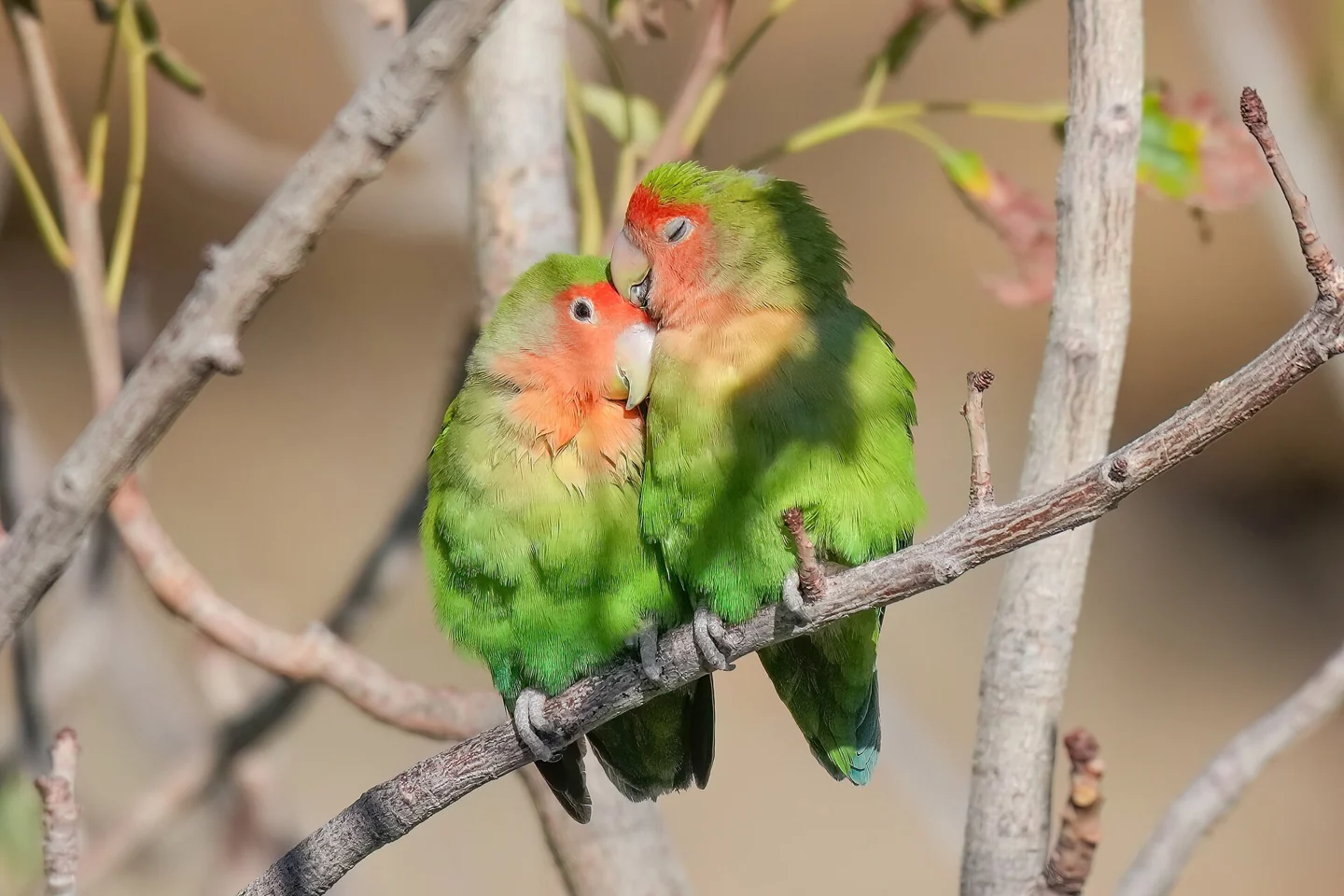
One particular lovebird species
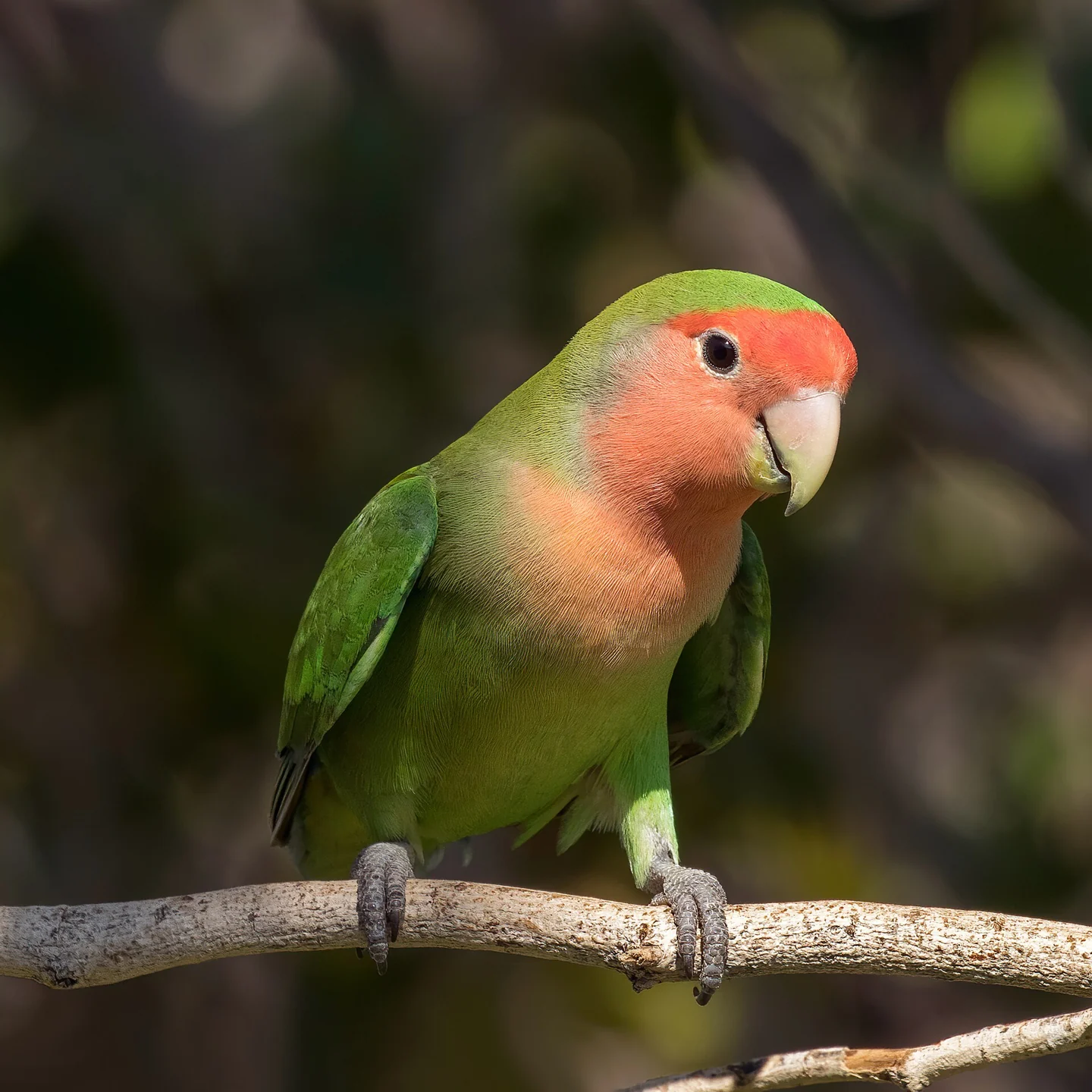
Agapornis roseicollis is one of several lovebird species. Fischer’s and yellow-collared lovebirds are different species, so the exact identification matters when choosing companions. The natural colour pattern includes a rosy face, pale bill and green body. Domestic colour mutations may look very different.
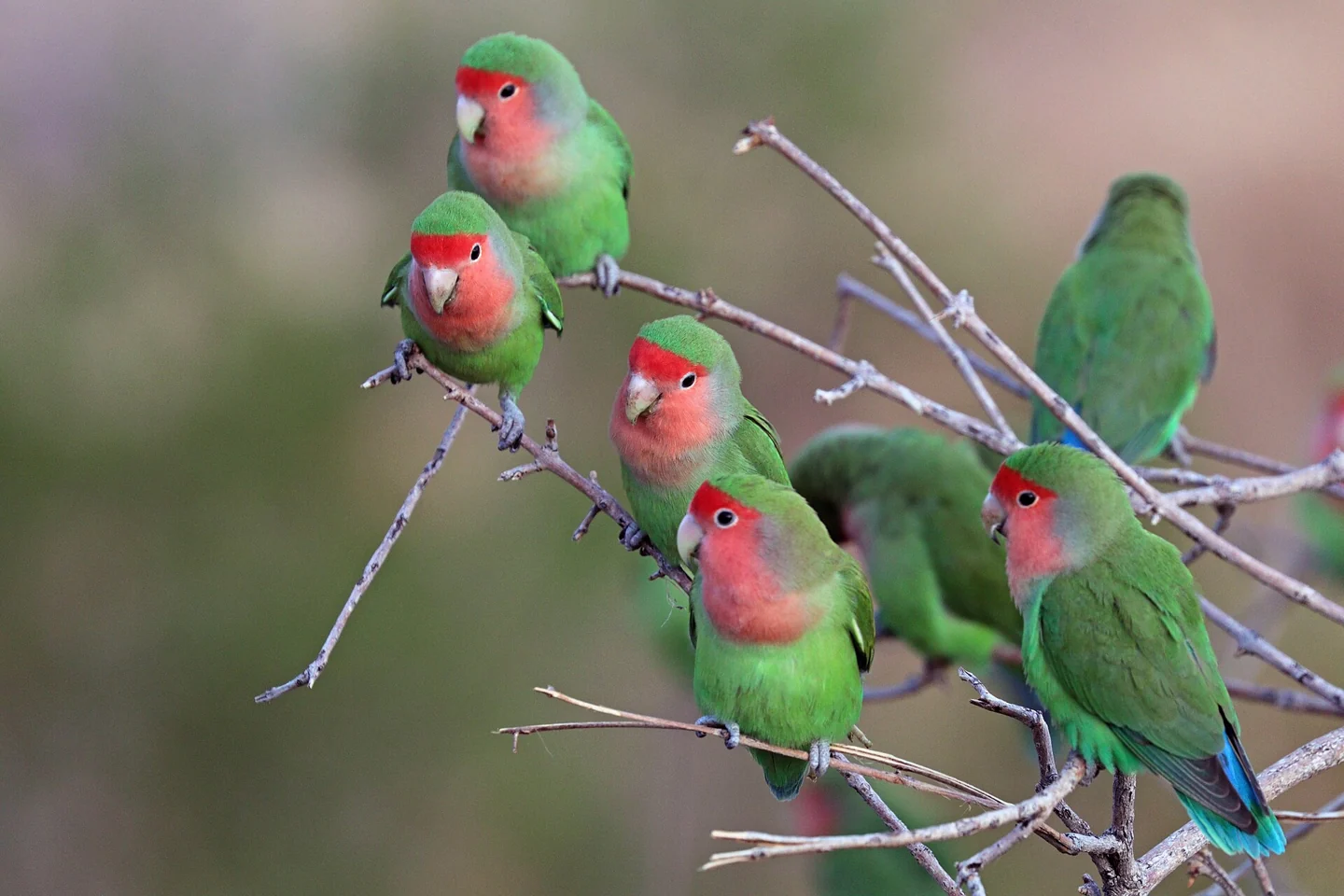
Rosy-faced lovebirds originate from south-western Africa and are adapted to life with other birds. Resting together, mutual feather care and calls maintain relationships. A pair represents a long-term commitment, with housing, holiday cover and access to an avian veterinary practice needed for both individuals. Small body size gives little indication of the space or attention involved. Swiss Animal Protection gives a lifespan of roughly twelve to sixteen years for these lovebirds, sometimes longer.
Watching an established pair before committing can reveal more than a brief encounter with a single tame bird. Movement, vocal activity and the amount of material they dismantle are all part of ordinary daily care.
Sources for this section
- AgapornidenSchweizer Tierschutz STS
Compatible partners and safe boundaries
An established compatible pair is a useful starting point. Matching a new companion depends on the birds themselves; two individuals placed side by side will not necessarily form a bond. Age, history and, where needed, reliable sex identification help with planning. An experienced rescue or avian veterinary practice can guide the process.
Health assessment and any initial separation should be arranged before introductions. Once together, birds need more than one feeding place and routes away from each other. Persistent pursuit or exclusion from important resources requires safe separation and informed advice.
Rosy-faced lovebirds should not be treated as easy additions to a budgie or small-finch aviary. Their strong bills and territorial behaviour can cause serious injury. Even among several pairs of the same species, a spacious enclosure does not guarantee lasting compatibility. Being able to change the arrangement is part of responsible group planning.
Sources for this section
- AgapornidenSchweizer Tierschutz STS
- Living with other birdsRSPCA
Fast flight and undisturbed rest
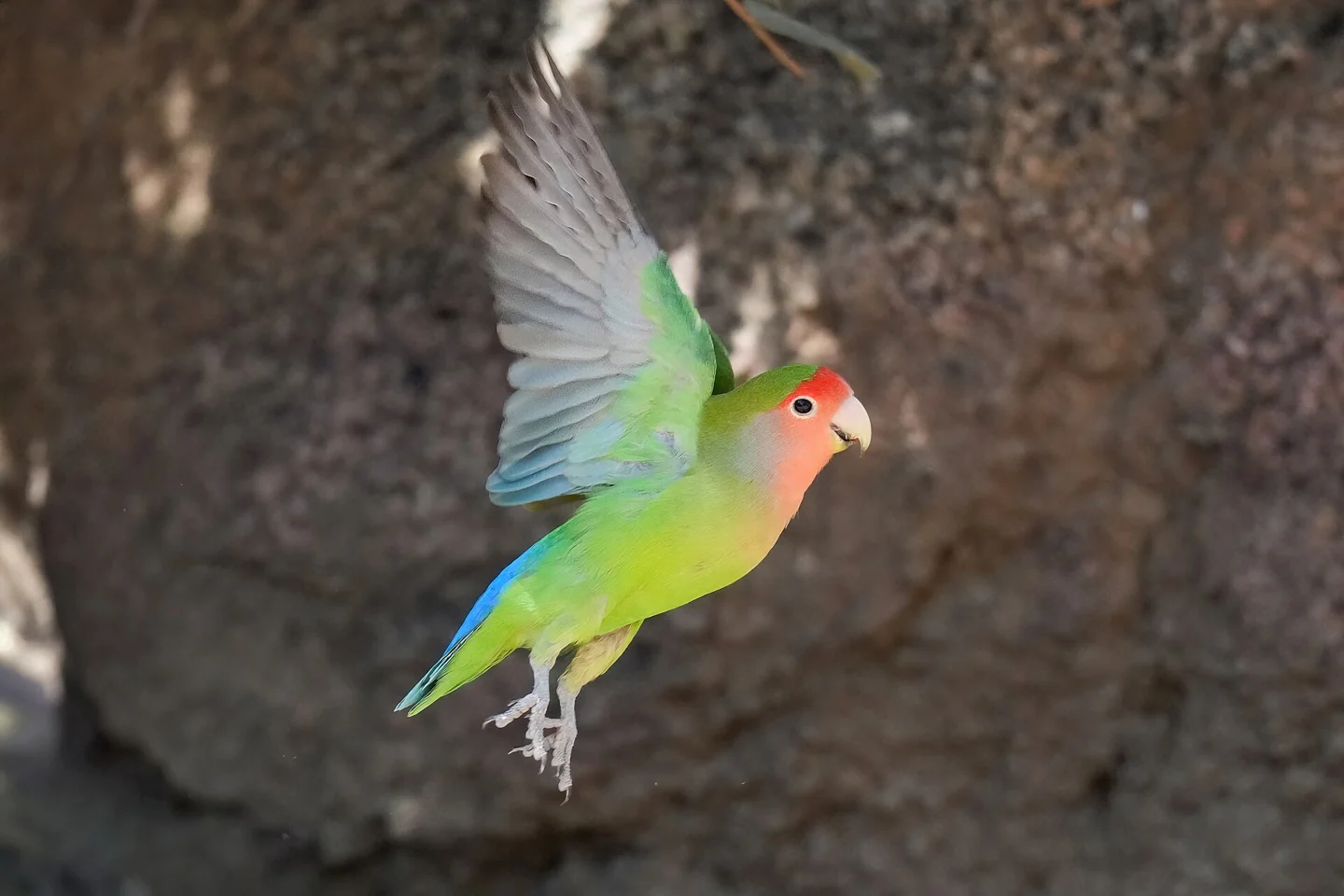
Swiss Animal Protection recommends an aviary with at least two square metres of floor space, approximately two metres by one metre, and two metres in height for two to six lovebirds. This offers a clear starting point when planning for a pair. Longer unobstructed flight paths and safe daily flight outside the aviary give further opportunities to exercise.
Their beaks make material choice and reliable catches especially important. Mesh, coatings and fittings should be suitable and nontoxic for parrots. Natural branches of different thicknesses offer grip and chewing opportunities. Central flight paths need to stay open, and no bird should be able to monopolise every sheltered resting place.
Open or tilted windows, running fans, hot surfaces and open water containers are avoidable hazards in a flight room. Smoke and cooking fumes should never reach the birds. Quiet, predictable night-time conditions are still needed when people stay awake later in the evening.
Read more: Setting up a bird room: safe flight and good landing places
Sources for this section
- AgapornidenSchweizer Tierschutz STS
- Housing and environments for pet birdsRSPCA
Matching food to daily activity
Seeds alone provide an unbalanced diet for lovebirds. A suitable complete parrot food, vegetables and controlled amounts of other appropriate foods can be combined into a plan with an avian vet. This means pellets formulated for the species: small pieces of compound food with the nutrients distributed throughout each piece. Tiny portions of favourite energy-rich foods, such as sunflower kernels, can be reserved as training rewards within the normal ration. Washed carrot and cucumber, cut into small pieces, are examples of suitable fresh vegetables.
New foods should be introduced gradually. Observation and regular weighing reveal actual intake more reliably than the appearance of a shared bowl. One partner may eat preferred items quickly, giving a misleading impression that both birds have fed well.
Fresh foods need clean containers and should be removed after feeding. Drinking water should be renewed daily and whenever it becomes dirty. Insoluble grit is unnecessary because lovebirds remove seed hulls. Supplements should be selected in relation to the food the birds really eat; adding several products without checking their contents can create an inappropriate balance.
Sources for this section
- Lovebirds: FeedingVCA Animal Hospitals
- AgapornidenSchweizer Tierschutz STS
Chewing, searching and voluntary learning
Untreated branches of correctly identified hazel or willow, small safe pieces of paper and easy food-searching tasks give the birds something to do with their bills and attention. The first task should let them find food readily. Once they understand it, the difficulty can increase in small steps. Loose long fibres, exposed glue and detachable swallowable parts make unsuitable materials.
A calm training invitation might begin with voluntarily approaching a perch. An immediate small reward helps identify the action worth repeating. Moving away or becoming visibly tense should be respected. Learning to enter a carrier and to stand on scales is particularly useful before veterinary care is needed.
Nest boxes and dark cavities can encourage reproductive behaviour. Their suitability and a plan to avoid unwanted chicks should be discussed before they are offered. Eggs or repeated laying call for an individual veterinary plan. Reduced eating or a sudden loss of activity needs prompt assessment at any age. Laboured breathing requires immediate contact with an avian vet or emergency veterinary service.
Read more: Bird training: confidence, carriers and cooperative care · Bird life stages: from youngster to older companion
Sources for this section
- AgapornidenSchweizer Tierschutz STS
- The power of positive reinforcementWorld Parrot Trust
Common questions
Does a tame lovebird need a companion?
Yes. A person cannot replace shared resting, mutual preening and communication with another lovebird. Compatible pairs can still enjoy voluntary contact with people.
Are rosy-faced lovebirds quiet apartment birds?
Their calls can be loud and penetrating. Spending time with them in a rescue or good existing home, including active periods of the day, helps set realistic expectations.
A closer look
Sources and photo credit
- AgapornidenSchweizer Tierschutz STS
- Lovebirds: FeedingVCA Animal Hospitals
- Housing and environments for pet birdsRSPCA
- Living with other birdsRSPCA
- The power of positive reinforcementWorld Parrot Trust
Photo: 087 Rosy-faced lovebird couple cuddling in Damaraland Photo by Giles Laurent.jpg · Giles Laurent · CC BY-SA 4.0. Resized proportionally and converted to WebP. The layout may crop the image.
Photo: Rosy-faced lovebird (Agapornis roseicollis roseicollis).jpg · Charles J. Sharp · CC BY-SA 4.0. Resized proportionally and converted to WebP. The layout may crop the image.
Photo: 162 Rosy-faced lovebird in flight in Damaraland Photo by Giles Laurent.jpg · Giles Laurent · CC BY-SA 4.0. Resized proportionally and converted to WebP. The layout may crop the image.
Photo: Rosy-faced lovebird (Agapornis roseicollis roseicollis) flock.jpg · Charles J. Sharp · CC BY-SA 4.0. Resized proportionally and converted to WebP. The layout may crop the image.

.jpg)

_flock.jpg)