fellfolio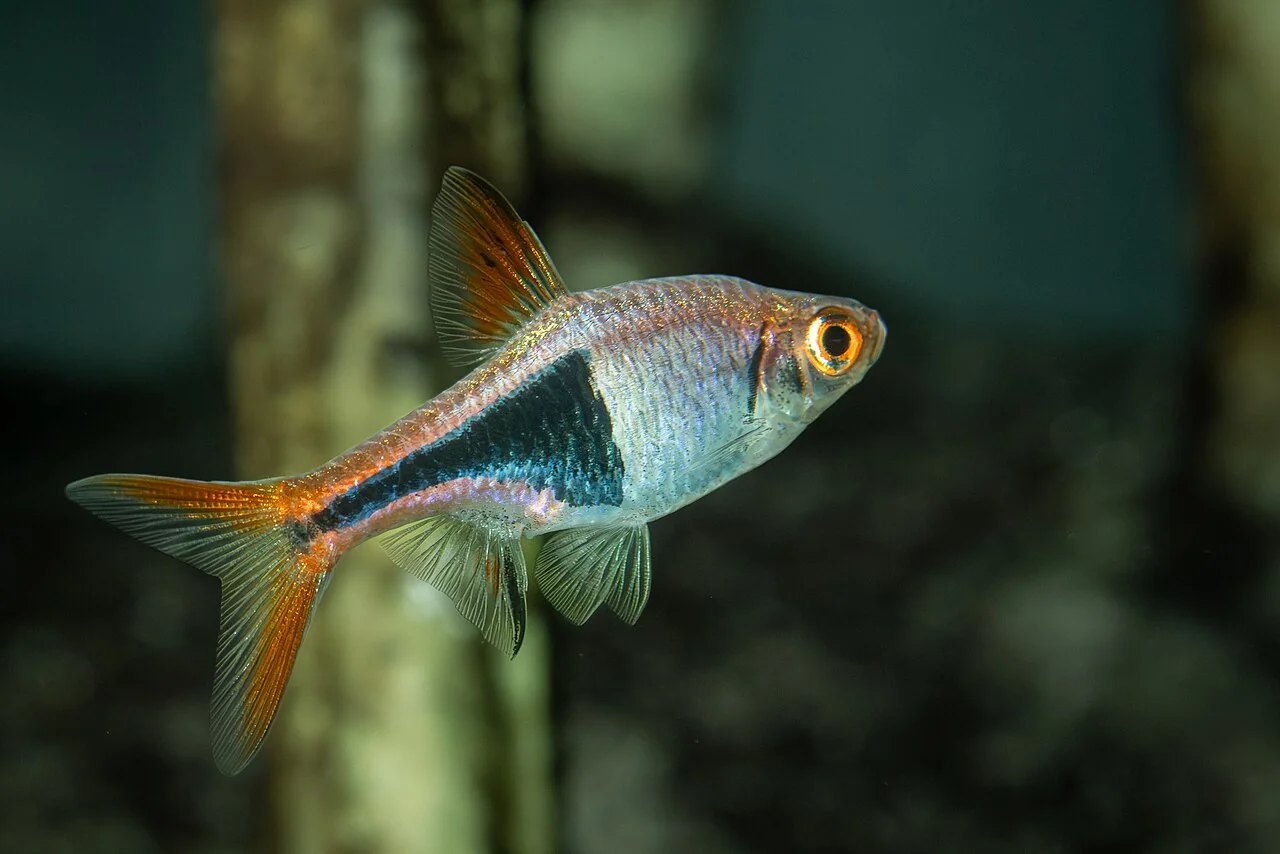
Similar markings can belong to different species
The harlequin's black wedge occupies much of the rear half of its body. Related species such as Trigonostigma espei and Trigonostigma hengeli also have dark markings but look more slender and have a narrower patch. Trigonostigma truncata is another close lookalike. That species was described scientifically in 2020.
You should ask for the scientific name and a traceable origin when identifying fish. Photographs from different angles may help a knowledgeable person compare them. Similar markings do not mean that every care sheet applies equally to all these species. This portrait concerns Trigonostigma heteromorpha.
Combine shelter with space to swim together
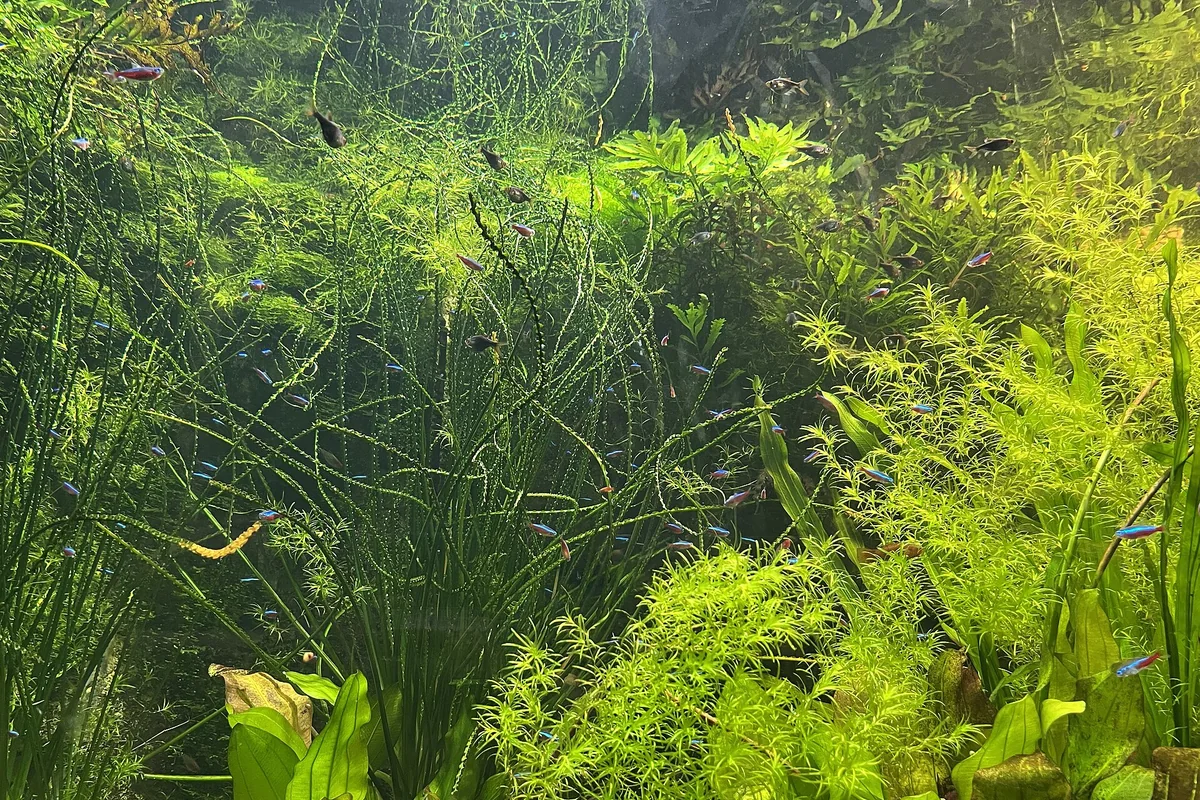
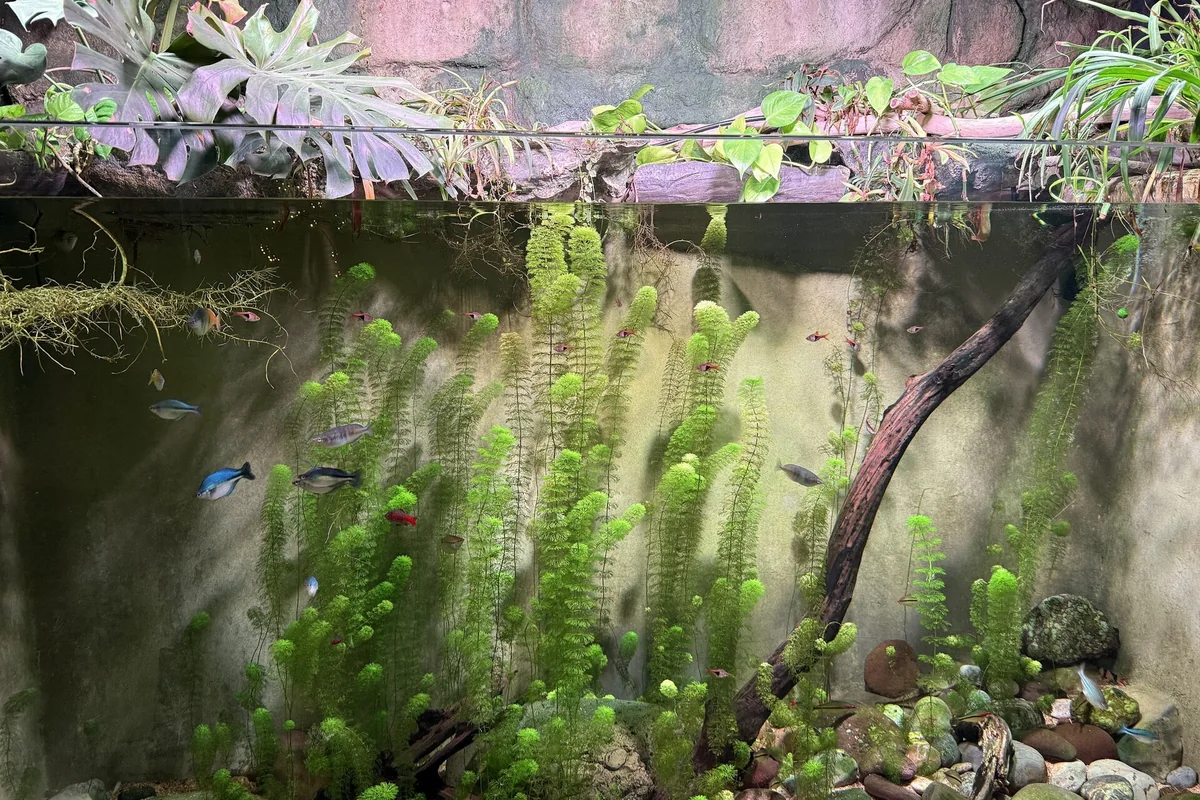
Planting should provide cover mainly along the sides and towards the back. The fish should have room among the leaves while an open area remains at the front or centre. Some floating plants can shade part of the surface. They should not turn the entire tank into a dense mass that is difficult to maintain.
When choosing an aquarium, you should consider its length and usable footprint for the planned group. A very narrow tank can be difficult to divide into shelter and swimming areas despite a reassuring volume figure. The filter outlet and layout should let fish reach quieter areas too. A heater and a separate thermometer help you check the actual temperature.
Read more: Setting up a freshwater aquarium: tank, filter and water
What soft, acidic water means
Natural habitats include forest waters that are soft and acidic. Soft water contains relatively little dissolved calcium and magnesium. Acidic water has a pH below seven. Hardness and pH are therefore different measurements. You should know both readings for your available water before choosing these fish.
The species care sheet from Aquarium Industries lists 23 to 26 °C and pH 6 to 7.5. General rasbora sheets cover other species too and may give different figures. You should ask about the previous conditions of the fish being offered and discuss a suitable range that you can maintain consistently. Products intended to lower pH should not be added speculatively simply to make the tank resemble a forest stream.
A group of harlequins and calm companions
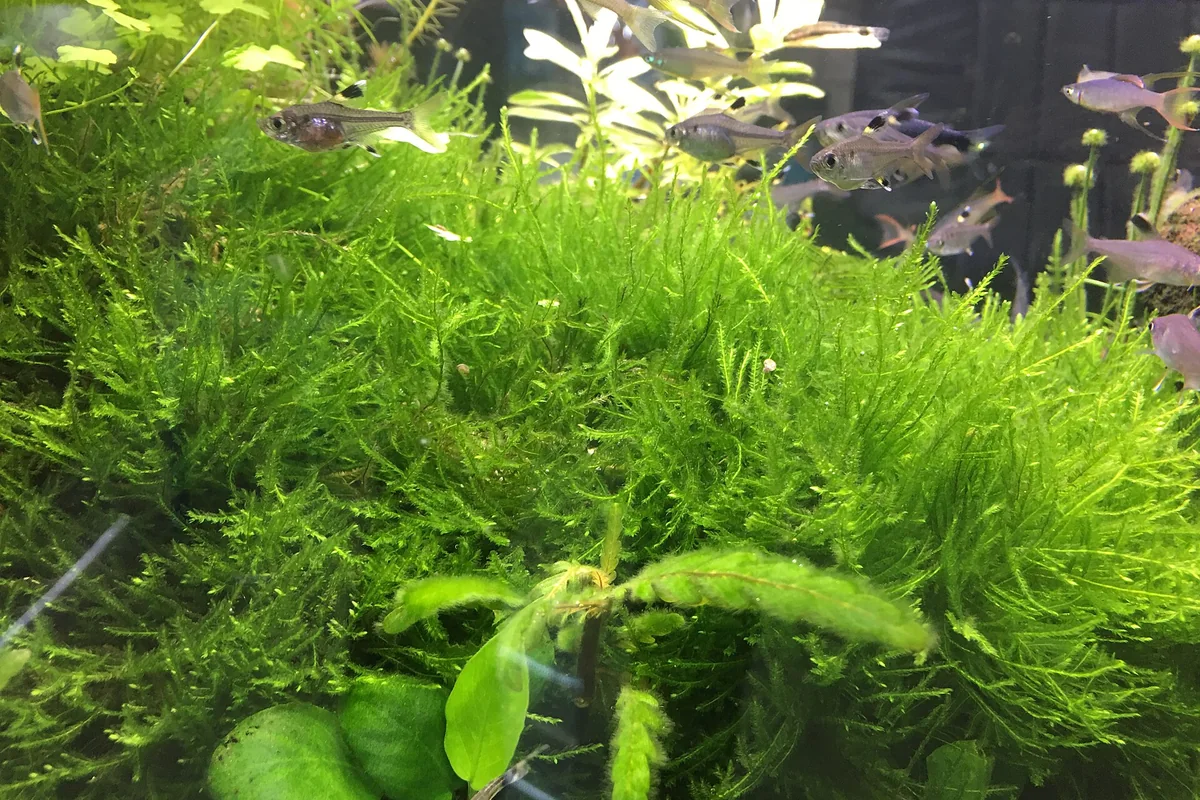
The RSPCA recommends keeping rasboras in groups of at least six. Their own kind can help fish feel less timid. Space for that whole group should therefore be planned first. A few individuals from several different social species do not replace the companions each species needs.
Additional inhabitants should be calm, appropriately sized and suited to similar water conditions. Very active or much larger fish may displace the rasboras or see them as prey. You should watch particularly at feeding time to see whether the small group can eat undisturbed. If the fish spend almost all their time hiding, their layout, companions and water readings should be reviewed.
Read more: Choosing aquarium fish that can live well together · Neon tetra care: plan a complete shoal
Small food that reaches the fish
Suitable complete food in small flakes or fine granules should supply their nutrients. Appropriate small frozen foods, such as water fleas, can supplement it. Large pieces are difficult for their small mouths to handle. You should watch whether the fish actually take the food offered.
If food quickly sinks to the bottom or is intercepted by other inhabitants, its form and distribution should be adjusted. Adding more may not solve the problem and increases waste. Prepared small portions make care easier for someone else. An automatic feeder should still be checked regularly to ensure it is working.
Eggs on the undersides of leaves
Harlequin rasboras reproduce differently from guppies and mollies. During spawning, the fish turn upside down beneath suitable plant leaves and attach eggs to their undersides. Larvae hatch from these eggs. Small fish among the plants are therefore not the result of live birth.
If you intend to raise young, suitable conditions for egg laying and development and very fine food should be prepared first. A planted community aquarium alone does not amount to a complete rearing plan. Any additional aquarium needs a working filter able to process the young fish's waste before they arrive. When starting out, it may be sensible to become familiar with the adult group and its care first.
Build a dependable care routine
The filter should be established without fish before the first inhabitants arrive. Bacteria grow and process harmful ammonia and nitrite produced from waste. This is called cycling. An ammonia product intended for cycling aquariums is used according to its instructions and the process is followed with tests. Repeated measurements after the further prescribed additions should show zero ammonia and nitrite before the first group moves in.
In everyday care, equipment should be checked and regular partial water changes and tests planned. Unusually rapid breathing, loss of appetite or new spots should be assessed by a vet who treats fish. Severe breathing difficulty or weakness needs immediate help. If a problem arises, readings and a brief note on recent maintenance help with assessment.
Read more: Caring for an aquarium: watch the water, filter and fish
Common questions
Can I keep just a pair?
Harlequin rasboras should live with a suitable group of their own species. The RSPCA recommends at least six rasboras. Other fish species do not replace their own kind.
Do they need dark water?
Their natural forest habitats explain the preference for soft, acidic water and shelter. Aquarium water colour tells you little about measured hardness, pH or harmful waste. Additives should only be used as part of a water plan agreed with knowledgeable advice.
Do they produce young as readily as mollies?
They lay eggs instead of giving birth to live fry. Eggs and larvae need suitable conditions and prepared rearing arrangements. Planting an aquarium alone does not organise that care.
A closer look
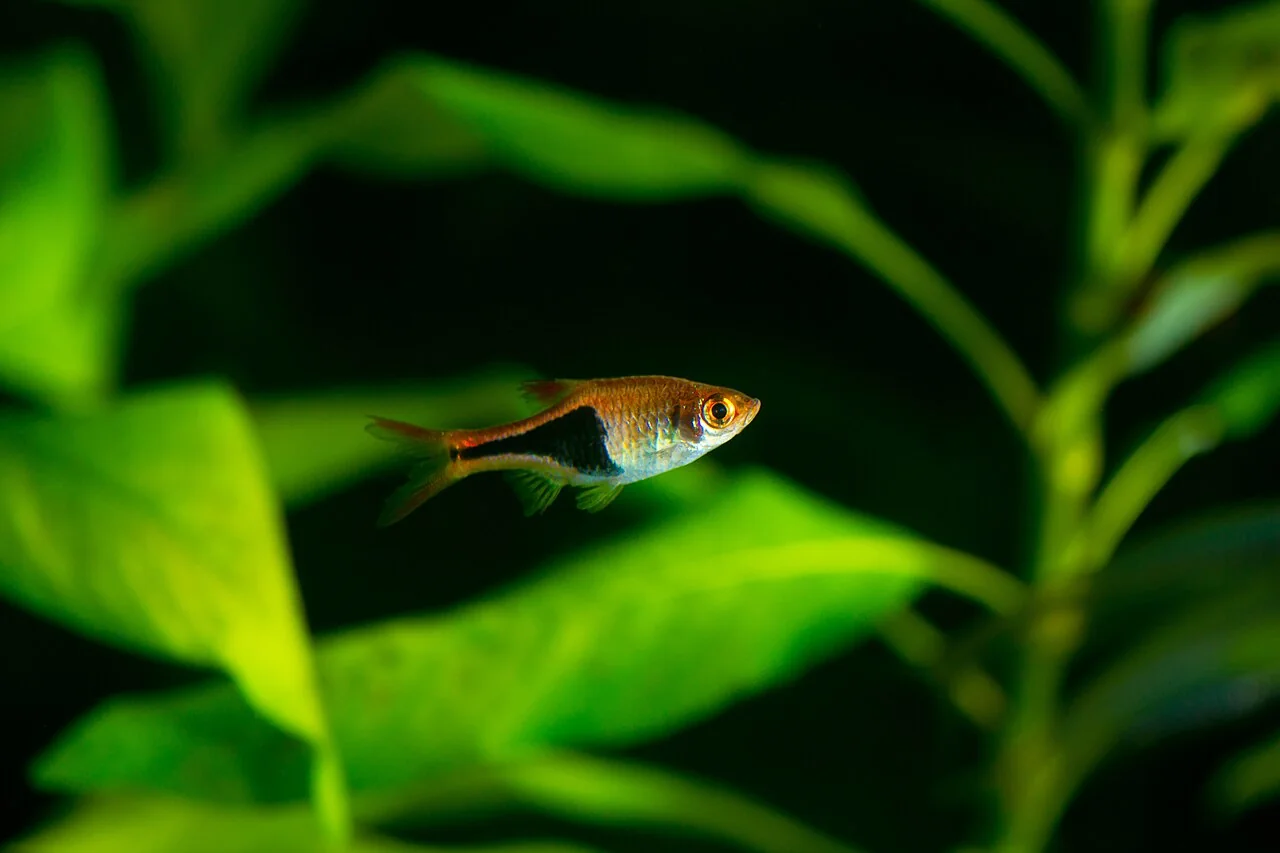
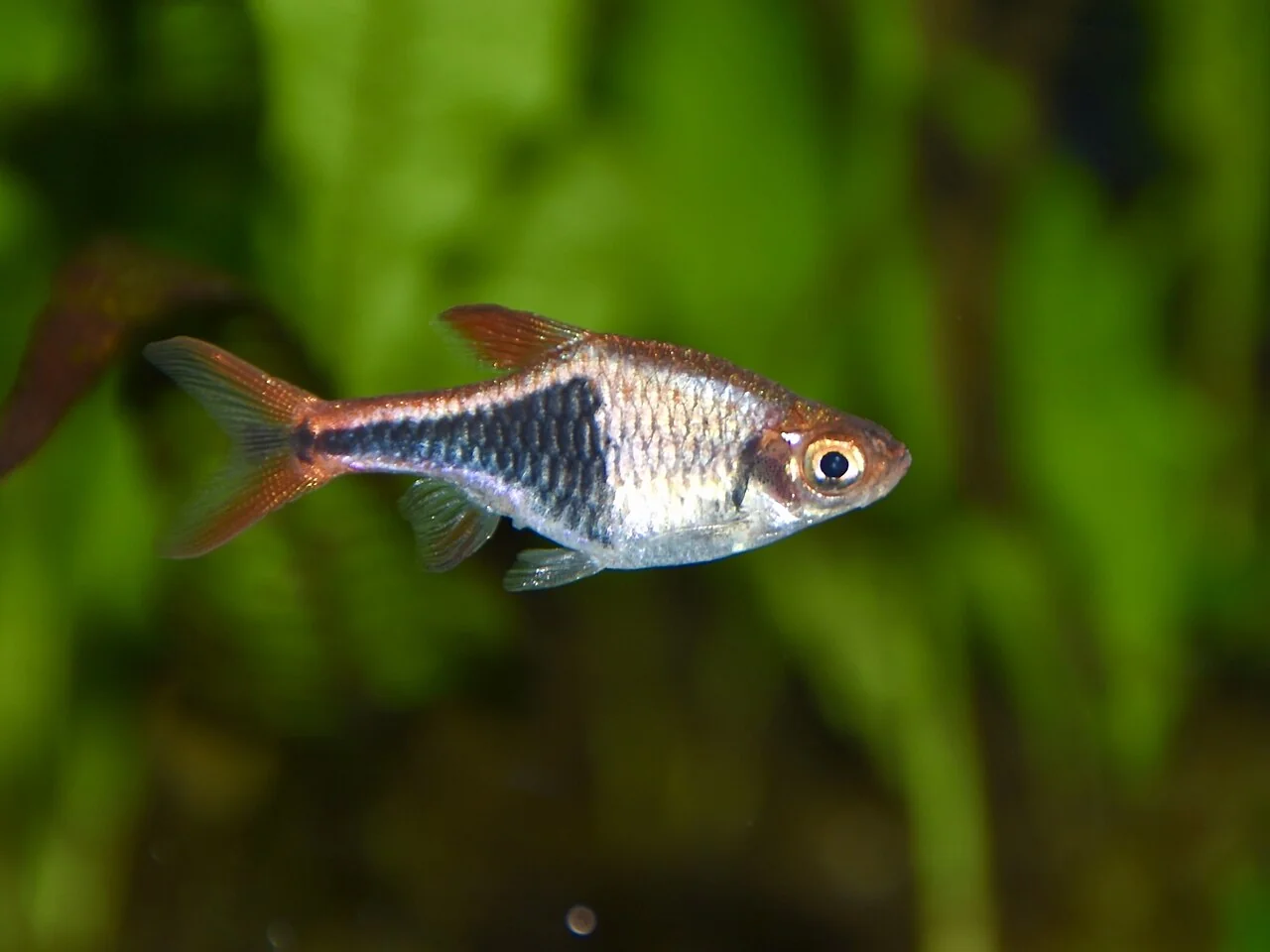
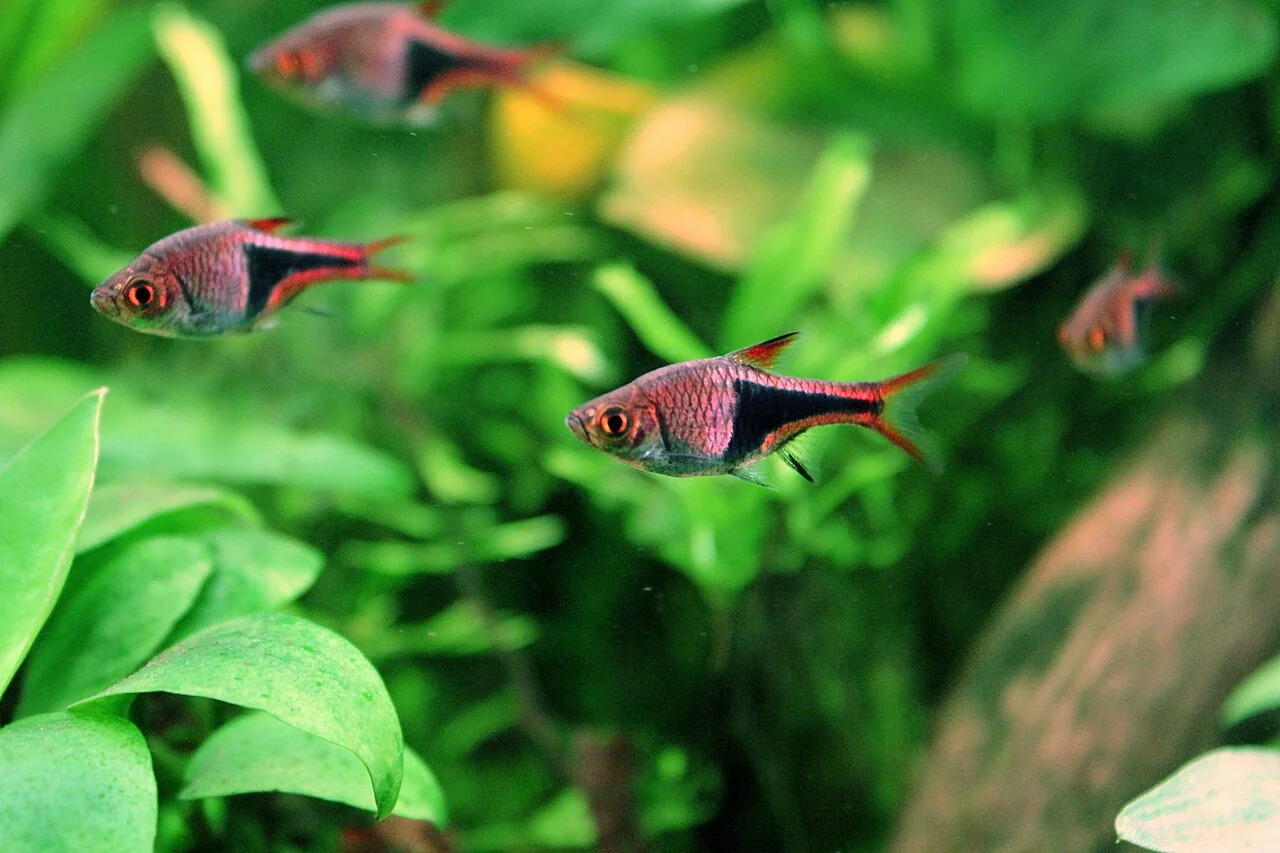
Sources and photo credit
- How to look after rasborasOrnamental Aquatic Trade AssociationCombine shelter with space to swim together · What soft, acidic water means · A group of harlequins and calm companions · Eggs on the undersides of leaves
- Trigonostigma heteromorpha species summaryFishBaseSimilar markings can belong to different species · What soft, acidic water means · Small food that reaches the fish · Eggs on the undersides of leaves
- Management of Aquarium FishMerck Veterinary ManualEggs on the undersides of leaves
- How to test water quality in your freshwater tank / aquariumOrnamental Aquatic Trade AssociationBuild a dependable care routine
- Routine Health Care of FishMerck Veterinary ManualBuild a dependable care routine
- Emergencies of FishMerck Veterinary ManualBuild a dependable care routine
- Keeping pet fish togetherRSPCAA group of harlequins and calm companions
- Choosing an aquariumRSPCACombine shelter with space to swim together
- What to feed your fishRSPCASmall food that reaches the fish
- A Summary of Water Quality Tests and Recommended UseMerck Veterinary ManualWhat soft, acidic water means
- Trigonostigma truncata, a new species of harlequin rasbora from Malay PeninsulaTan Heok Hui, Raffles Bulletin of Zoology, National University of SingaporeSimilar markings can belong to different species · Eggs on the undersides of leaves
- How to set up and look after a freshwater tank / aquariumOrnamental Aquatic Trade AssociationBuild a dependable care routine
- Harlequin Rasbora care sheetAquarium IndustriesCombine shelter with space to swim together · What soft, acidic water means · A group of harlequins and calm companions · Small food that reaches the fish
- Providing a Home for FishMerck Veterinary ManualCombine shelter with space to swim together
Photo credits
Photo: Trigonostigma heteromorpha Natural History Museum University of Pisa.jpg · Mattia Nocciola (photograph) / Museo di storia naturale dell’Università di Pisa / Marta Arosio (WMIT, crop) · CC BY-SA 4.0. Image format adapted.
Photo: Harlequin Rasbora.jpg · Mariusz Dabrowski (Wayrse) · CC BY-SA 3.0. Image format adapted.
Photo: Cyprinidae Trigonostigma heteromorpha 3.jpg · Nasser Halaweh (NasserHalaweh) · CC BY-SA 4.0. Image format adapted.
Photo: 01.Rasbora heteromorpha.jpg · Juan R. Lascorz / Togabi · CC BY-SA 3.0. Image format adapted.