 fellfolio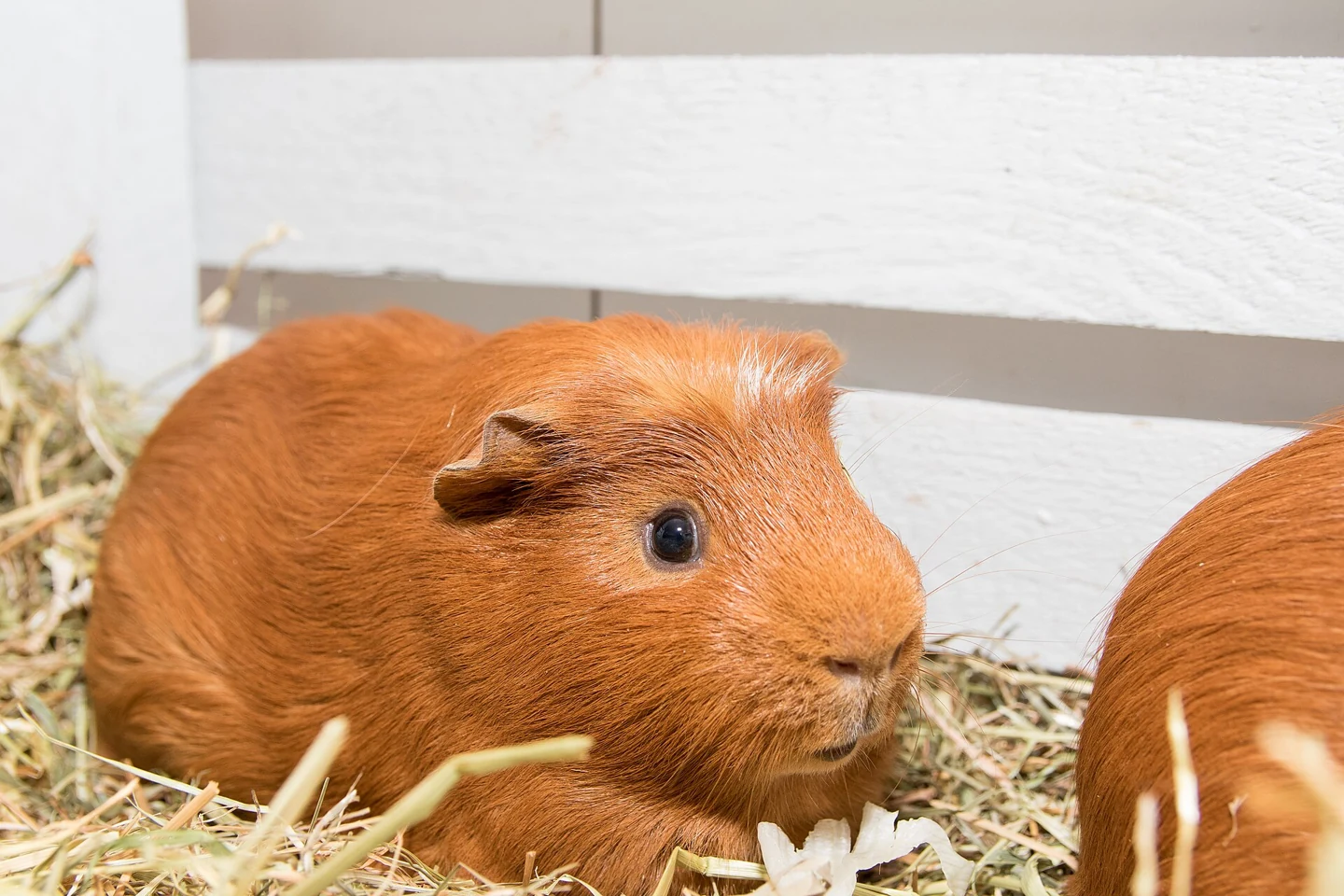
Start with a compatible group
Guinea pigs should live with suitable companions of their own species. The German Animal Welfare Federation recommends at least three. A neutered male living with females is one possible arrangement, but an established compatible group may have a different composition. Preventing unwanted breeding is part of the plan.
Adopting animals that already live together can be a useful starting point. A rescue or foster carer can explain their relationships, identify the quieter individual and describe any medical history. Those details are more useful than choosing by coat colour alone. If a new introduction is needed, an experienced rescue should help plan the matching and process before the animals meet.
Design routes through the enclosure
The German Animal Welfare Federation recommends at least two square metres of floor space for up to four guinea pigs. Treat that as a lower limit, with more continuous space where possible. A two-metre by one-metre footprint makes the scale clear. Extra levels should not be counted as a replacement for that main floor.
A simple floor plan should leave a clear running route and provide several places to eat and hide. Shelters with two exits allow animals to move away from each other. A house placed across the only passage creates a bottleneck; putting every resource in one corner makes that corner unnecessarily busy. Distributing the useful features helps animals use the whole enclosure.
Flooring should be dry, secure underfoot and easy to keep clean. Dogs and cats must not be able to enter an open indoor enclosure. Year-round outdoor accommodation needs separate planning for weather, heat and predators. A summer exercise pen on its own does not provide that protection.
Build meals around hay and suitable greens
Good-quality hay should always be available, alongside appropriate daily fresh greens and vegetables. Guinea pigs cannot make their own vitamin C, so their diet must provide it. Bell pepper can be a useful part of the fresh-food selection. New foods should be introduced gradually in small amounts.
When shopping, it helps to distinguish everyday supplies from occasional extras. Hay and fresh greens belong on the regular list. Sugary snack sticks, yoghurt products and large fruit portions do not replace them. Any supplementary food should be formulated specifically for guinea pigs.
Water needs a practical check, too. A bottle can look full while its spout is blocked. Testing the flow and checking how the animals drink is more informative than simply topping it up. Uneaten fresh food and damp patches can be removed during the same daily visit.
Let contact happen at ground level
A guinea pig sitting still on someone’s lap is not necessarily relaxed. Prey animals may freeze when frightened. Sitting quietly beside the enclosure and offering a familiar piece of greenery lets the animal decide whether to approach.
Children can enjoy discovering which guinea pig explores a tunnel first or finds a new feeding spot. There should still be an easy route back to shelter. Lifting an animal for a necessary health check has a different purpose from carrying it around for entertainment. An experienced handler can demonstrate how to support both the chest and hindquarters securely.
Notice what changes for each animal
At feeding time, check that each guinea pig approaches, chews and moves as usual. Reduced eating, noticeably fewer droppings or unusual quietness warrant prompt veterinary advice. A small animal may already be unwell before the change becomes dramatic.
A dated weight record adds useful context. The trend for that individual matters more than one isolated number. A note such as “takes pepper but leaves hay” tells a vet more than “eating oddly”. Photos and observations can help describe a problem, but they cannot establish a diagnosis or a treatment plan at home.
Include care cover and ongoing costs
Hay, fresh food, bedding or washable liners, cleaning supplies and veterinary care continue throughout the animals’ lives. A realistic budget uses local prices and the actual number of guinea pigs. The purchase or adoption fee says little about the cost of keeping them well.
Before a holiday, the person covering their care should join you for a normal feeding and cleaning session. A handover should identify each animal, list familiar food and explain anything unusual to watch for. The vet’s details, an emergency contact, the carrier and the location of medical records should all be easy to find.
Common questions
Can a rabbit keep a guinea pig company?
A rabbit cannot replace another guinea pig. Their communication and care needs differ. Both animals need suitable companions of their own species.
Is two square metres always enough?
The figure is a welfare recommendation for a lower limit, not an ideal target. More animals, conflict within the group or an awkward layout can mean more space is needed.
Sources and photo credit
- Haltung von MeerschweinchenDeutscher Tierschutzbund
- Your guinea pig’s dietPDSA
- Guinea pig behaviour and hiding placesRSPCA
- Guinea pig health and welfareRSPCA
Photo: Portrait of guinea pig. Close up photo. (50716110562).jpg · Jernej Furman from Slovenia · CC BY 2.0. Resized proportionally and converted to WebP. The layout may crop the image.
.jpg)