fellfolio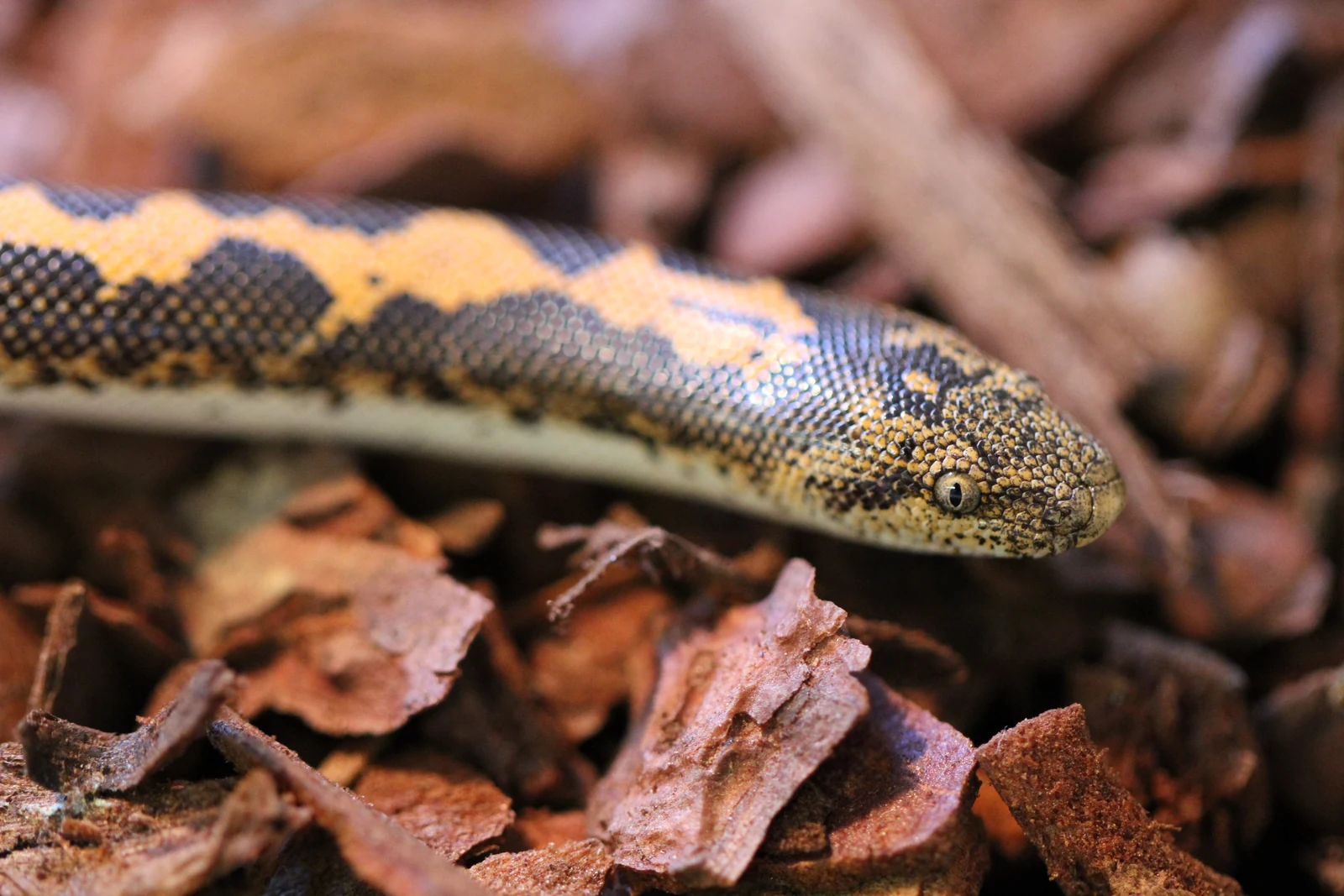
Which sand boa is this?
Older documents may call Eryx colubrinus Gongylophis colubrinus. Both names refer to the same species. Other sand boas have their own requirements. Eryx jaculus, the western sand boa, should not be confused with it when buying an animal or checking wildlife trade documents.
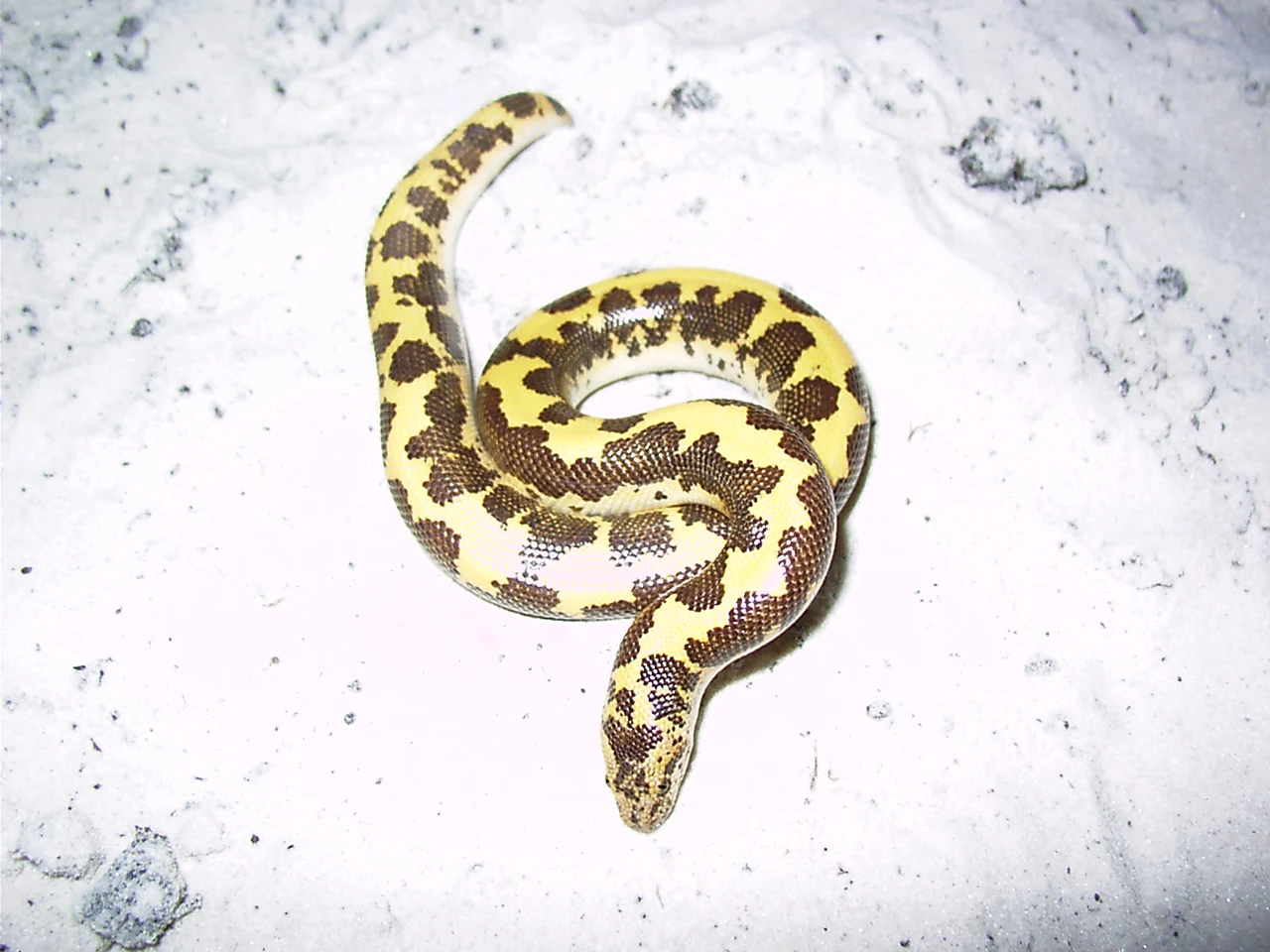
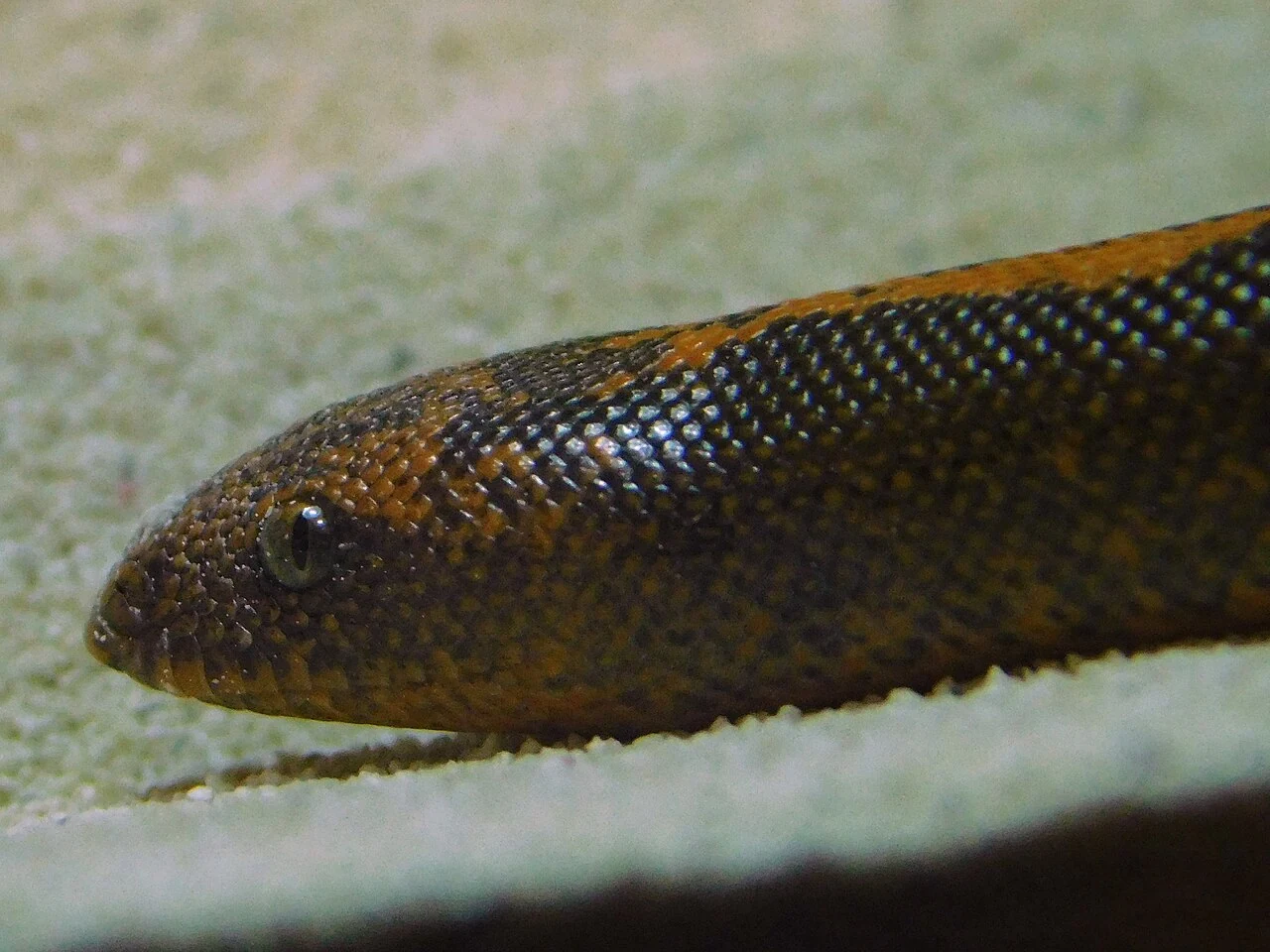
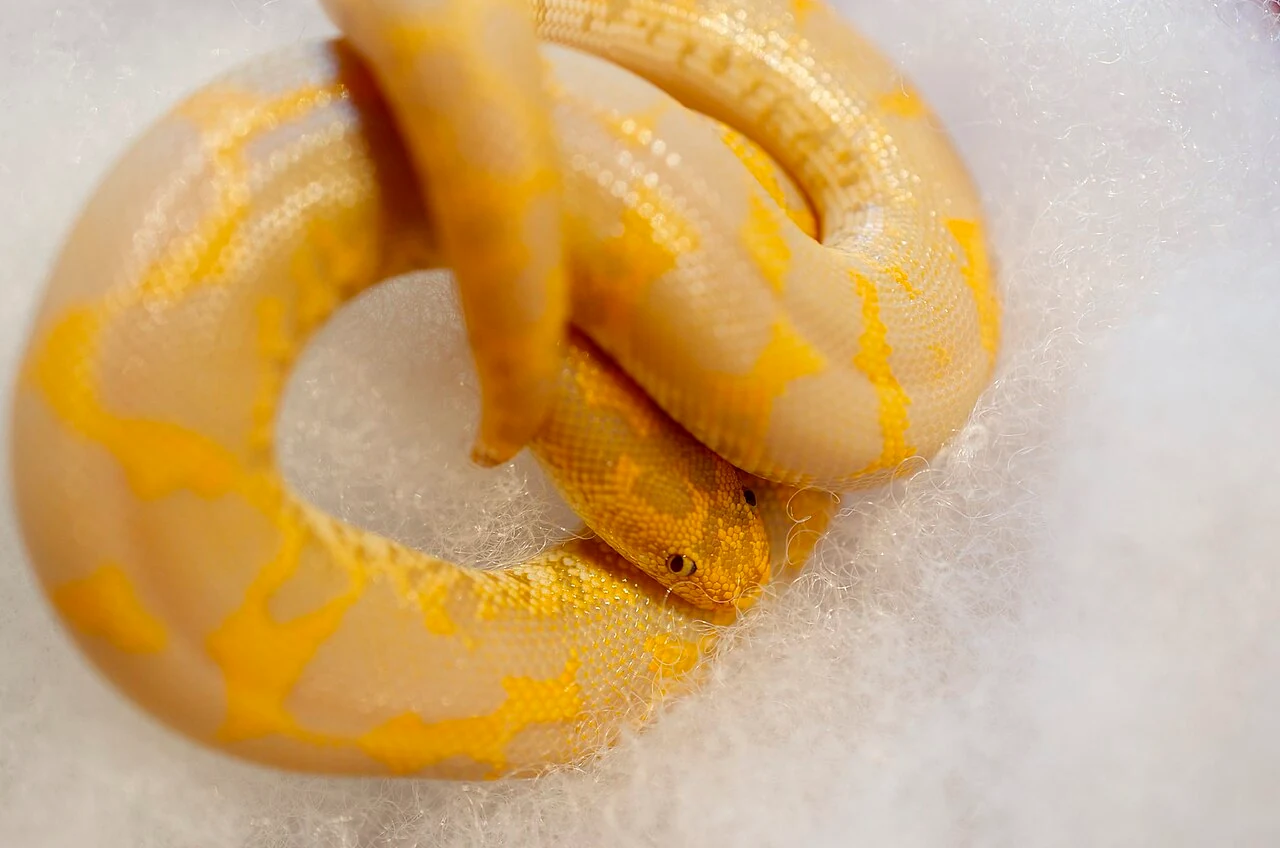
Females become substantially larger and heavier than males. The Exotic Pet Vets gives an adult total length of approximately 46 to 91 cm. The enclosure should be planned for the eventual adult, rather than just the animal’s present size. A striking colour pattern does not reliably establish its geographic origin or how an individual will respond to handling.
Room for burrowing
The Exotic Pet Vets recommends at least approximately 91 × 46 × 46 cm for a single adult. This is a veterinary care-sheet recommendation, rather than a legal minimum. A large female benefits from additional floor space. Between the furnishings, the substrate should be deep enough for the snake to bury itself fully.
The clinic suggests around 8 to 10 cm of burrowing material as a starting depth. Suitable substrate stays loose, produces little dust and contains no sharp pieces. The name sand boa does not mean that pure sand is the only option. Heavy rocks and bowls should rest securely on the enclosure floor before the substrate is added. A burrowing snake must not be able to undermine them. Doors, cable openings and ventilation panels all need to prevent escape.
Read more: Keeping reptiles: habitat and daily care before arrival
Warm places and cooler retreats
The species care sheet gives a warm basking area of around 35 °C and a cooler area of around 24 to 27 °C as a guide. One reading on the back wall cannot show all the temperatures available to the snake. Temperatures should be measured where the snake rests and at the substrate in both areas, after the lights have warmed up and at night.
A thermostat controls a heat source using a temperature reading. Its probe needs to stay securely in place. Covered retreats at both ends let the snake choose warmth or a cooler position. Hot rocks should not be used. UVB is short for ultraviolet B radiation. It supports the body’s production of vitamin D3, which helps it use calcium. Carefully arranged, low-intensity UVB lighting can be useful even for this snake, which is mainly active in the evening and at night. Fully shaded retreats remain necessary. The lamp, its distance and any mesh between it and the snake together determine exposure.
Read more: Getting heat and UVB right in a reptile enclosure
Whole prey and a clean feeding routine
Kenyan sand boas eat animal prey. In captivity, appropriately sized whole feeder animals, usually mice, are offered. Frozen prey should be thawed completely. Live rodents can seriously injure a snake with their teeth. Meal size and feeding intervals depend on age, body development and the animal’s feeding history. A date on the calendar is not enough to establish when another meal is appropriate.
A useful feeding note can be brief: prey type and size, accepted or refused, the date and the snake’s weight. Frozen feeders should be stored separately from human food and thawed away from the kitchen. Thawing containers should be stored separately from cooking utensils. A shallow bowl of fresh water should remain accessible. A burrowing snake from relatively dry habitats still needs drinking water.
Distinguish hiding from signs of trouble
Shedding renews the snake’s outer skin layer. Its colours can look duller and its eyes temporarily cloudy beforehand. A suitable humid retreat helps without making the entire enclosure wet. Moisture should be checked rather than spraying the substrate whenever the snake disappears.
Being buried is ordinary behaviour for this species. New breathing noises, mucus around the mouth, repeated regurgitation or substantial weight loss need prompt veterinary assessment. Stuck skin should not be pulled away. When the snake needs to be moved, its body should be supported from below. It should never be dragged out by the tail or repeatedly removed from a retreat simply to make it visible.
Read more: Humidity and shedding in reptiles
Check provenance and local requirements
In the EU, Eryx colubrinus falls under Annex B of the wildlife trade regulation. This is a protected category requiring lawful provenance, rather than a general ban on keeping the species. Written documents should identify the scientific name, origin and transfer. The words “captive bred” alone do not provide that record.
In Germany, keeping this protected species must be registered with the responsible nature conservation authority. Exemptions for certain other boas and the royal python do not automatically cover Kenyan sand boas. Transfers and changes to the registered collection also need to be reported. Elsewhere, or for a transfer across a border, the relevant authority’s requirements should be checked beforehand. App notes and photographs can help organise records, but cannot replace legally required documents.
Common questions
Is a Kenyan sand boa suitable for frequent handling?
Much of its life takes place underground. Brief necessary checks are different from daily handling. Watching its natural behaviour is more informative than repeatedly moving it.
Does it have to live on pure sand?
No. It needs suitable substrate deep enough to burrow into. The materials must work with the heating and moisture plan, without producing excessive dust or containing sharp pieces.
A closer look
Sources and photo credit
- Eryx colubrinusThe Reptile DatabaseWhich sand boa is this?
- Kenyan Sand BoaThe Exotic Pet VetsWhich sand boa is this? · Room for burrowing · Warm places and cooler retreats · Distinguish hiding from signs of trouble
- Sand Boa CareChicago Exotics Animal Hospital, Erica Mede CVTRoom for burrowing · Whole prey and a clean feeding routine
- Providing a Home for a ReptileMerck Veterinary Manual, Stephen J. DiversWarm places and cooler retreats
- Disorders and Diseases of ReptilesMerck Veterinary Manual, Stephen J. Divers, updated June 2026Distinguish hiding from signs of trouble
- UVB Lighting for ReptilesLafeberVet, Frances M. Baines, 2024Warm places and cooler retreats
- Reptiles and AmphibiansUS Centers for Disease Control and PreventionWhole prey and a clean feeding routine
- Council Regulation (EC) No 338/97, consolidated 29 June 2026European Union, EUR-LexCheck provenance and local requirements
- Genehmigungen und BescheinigungenBundesamt für NaturschutzCheck provenance and local requirements
- Bundesartenschutzverordnung, § 7 und Anlage 5Bundesministerium der Justiz, Gesetze im InternetCheck provenance and local requirements
Photo credits
Photo: Eryx colubrinus close up.jpg · The Reptilarium · CC BY-SA 2.0. Resized and converted to WebP.
Photo: Gongylophis colubrinus loveridgei.jpg · Viki at German Wikipedia · CC BY-SA 3.0. Resized and converted to WebP.
Photo: File:Eryx colubrinus stripe morph lateral view.jpg · NathanScientific · CC0. Resized and converted to WebP.
Photo: File:Eryx colubrinus albino morph.jpg · B a y L e e ' s 8 Legged Art · CC BY-SA 2.0. Resized and converted to WebP.