 fellfolio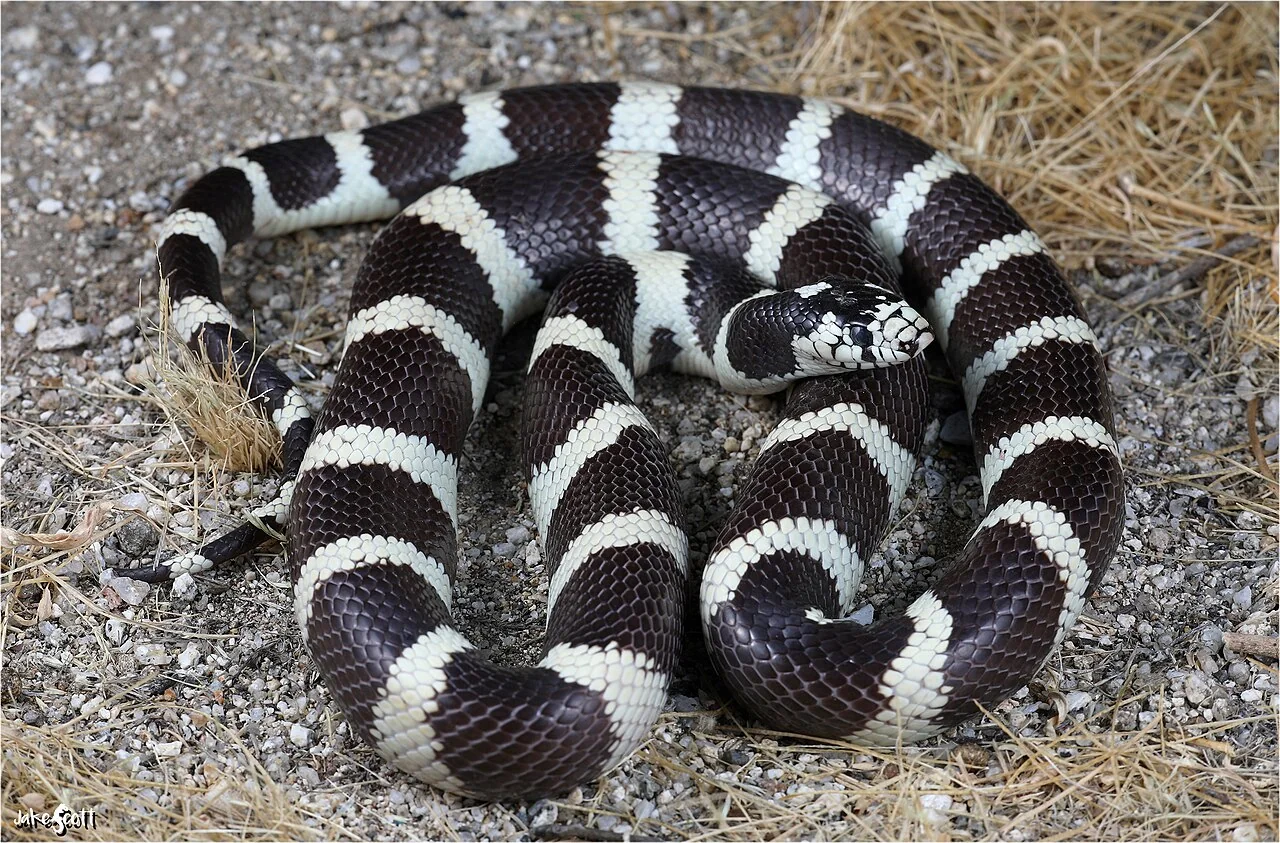
A ground-oriented snake with a seasonal rhythm
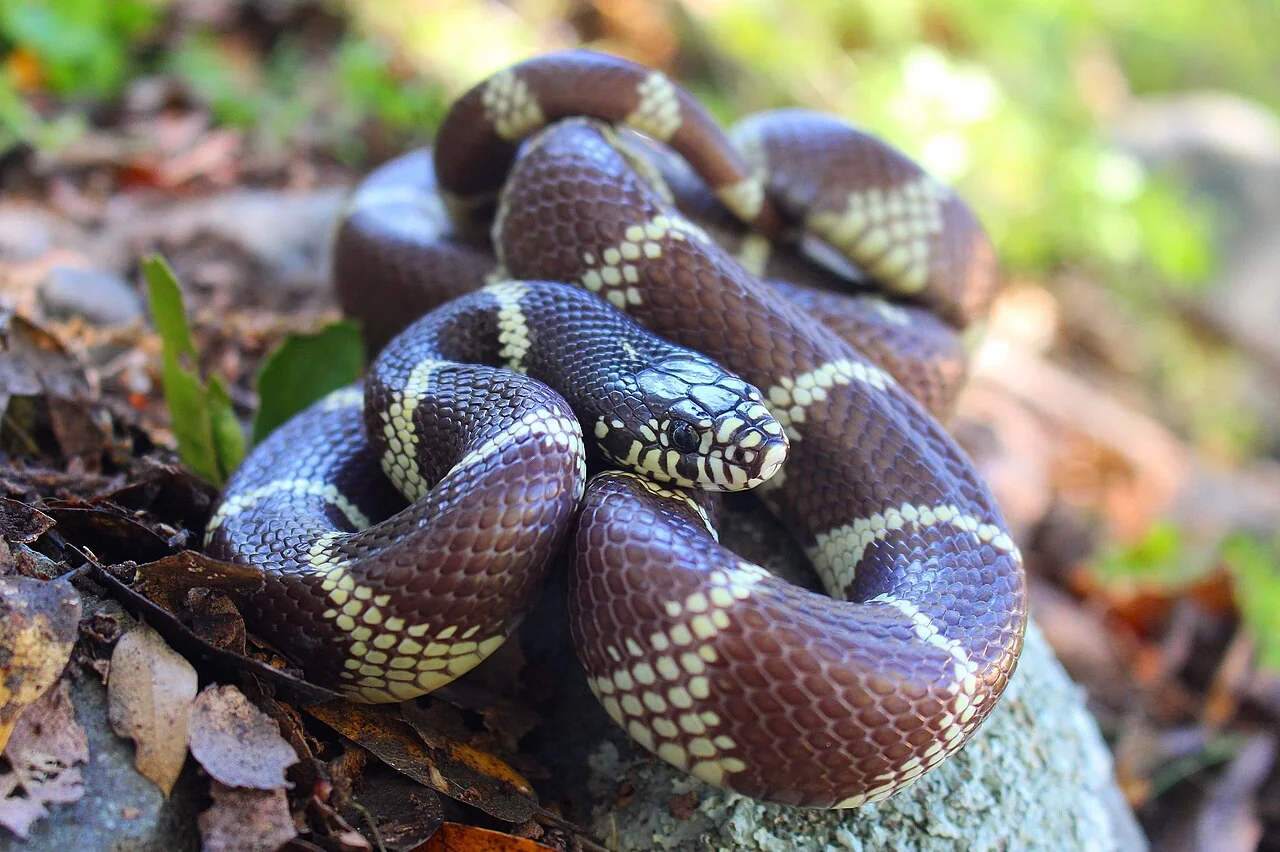
The name Lampropeltis californiae distinguishes this species from other kingsnakes; older sources may call it Lampropeltis getula californiae. California Department of Fish and Wildlife records it on and below the ground, in burrows and under logs. Those sheltered routes are useful models for enclosure design.
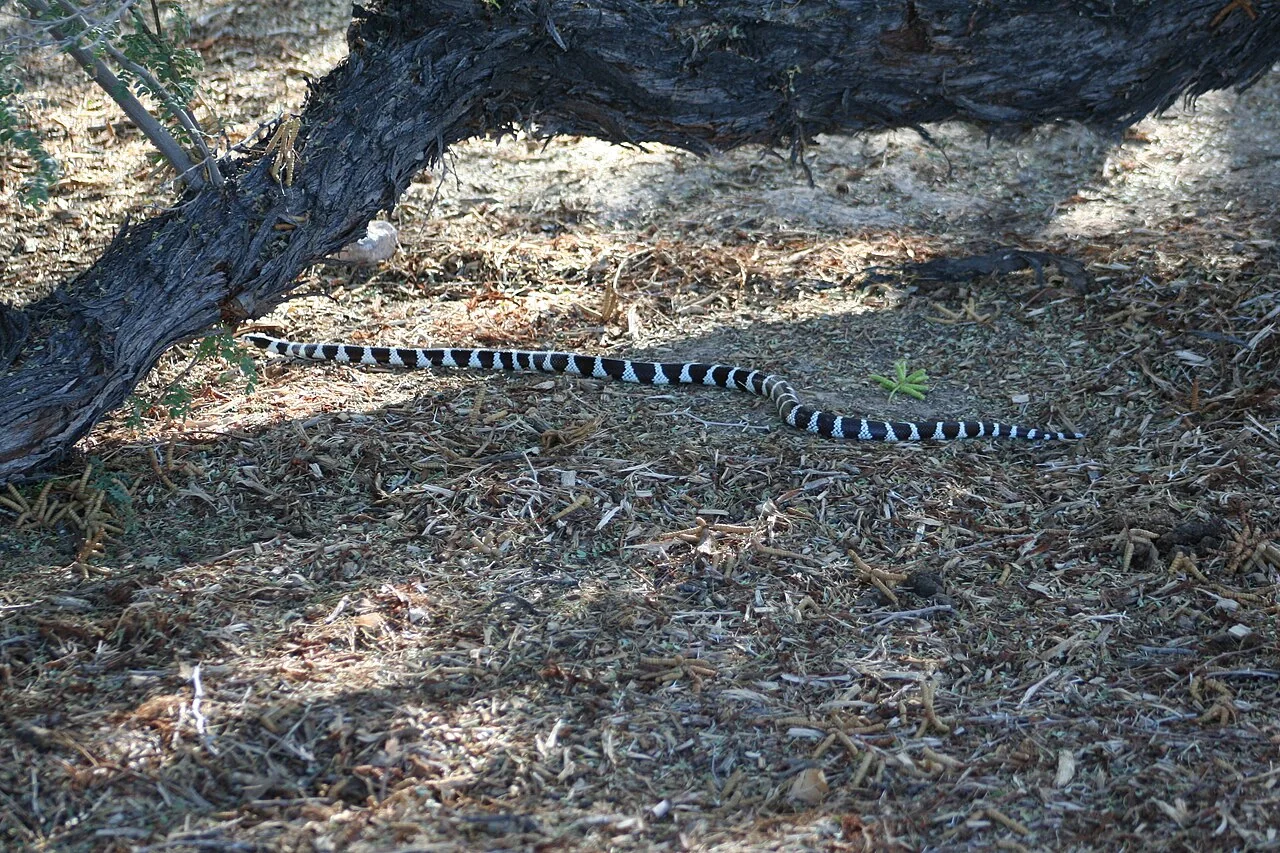
The same account describes activity around midday in cooler seasons and a shift toward early morning and evening in summer heat. Watching the snake at its naturally active times can reveal more than frequent handling. A quiet day alone may be unremarkable; a record of when it explores, hides and feeds makes a lasting change easier to recognize.
Sources for this section
- California kingsnake species accountCalifornia Department of Fish and Wildlife
Room to stretch and reliable shelter
The RSPCA recommends a kingsnake enclosure long enough for the animal to stretch out fully. Its group-level guide notes snakes around 180 cm and lifespans over 20 years in captivity. California kingsnakes vary in size, so the individual snake’s length should guide the usable enclosure length.
Secure closure and ventilation matter alongside space. Hides in both the warm and cool areas let the snake rest under cover while choosing a temperature. An area for burrowing and firmly secured low branches add more usable routes and resting places. Shelter should remain available without forcing the animal to stay against a heat source. This arrangement also makes exploration easier to watch from outside the enclosure.
Sources for this section
- How to take care of your kingsnakeRSPCA
- Providing a Home for a ReptileMerck Veterinary Manual
- California kingsnake species accountCalifornia Department of Fish and Wildlife
Make heat and light measurable
A thermal gradient lets the snake choose between warmer and cooler places. For kingsnakes, the RSPCA gives 26 to 30 °C at the basking area, 21 to 24 °C at the cool end and roughly 40 to 55 percent relative humidity. These are starting targets to check against readings in the furnished enclosure and the animal’s behaviour.
Measure conditions where the snake actually spends time, including its hides. Heat sources need guards to prevent contact and a thermostat to control them. The RSPCA’s general guidance also recommends UVB light with shaded retreat and darkness at night. Providing both lit and shaded places preserves choice, while checking the measured conditions helps confirm that the intended areas are working.
Sources for this section
- How to take care of your kingsnakeRSPCA
- Providing a Home for a ReptileMerck Veterinary Manual
One snake per enclosure
Wild California kingsnakes take prey that includes other reptiles, small mammals and birds. Kingsnakes can also eat other snakes, so sharing an enclosure creates a serious risk even when the occupants appear similar in size. Each snake needs its own secure enclosure, with its own water, shelter and access to appropriate temperature areas. Solitary housing follows directly from this feeding ecology.
For captive kingsnakes, the RSPCA recommends appropriately sized, dead rodents that have been fully thawed and offered with tongs. Live prey can injure a snake. Fresh water should be available in a bowl large enough for the animal to immerse itself, and fouled water needs replacing. Suitable prey size and feeding intervals depend on the individual snake’s condition and advice from a reptile specialist.
Sources for this section
- California kingsnake species accountCalifornia Department of Fish and Wildlife
- How to take care of your kingsnakeRSPCA
Let exploration happen on the snake’s terms
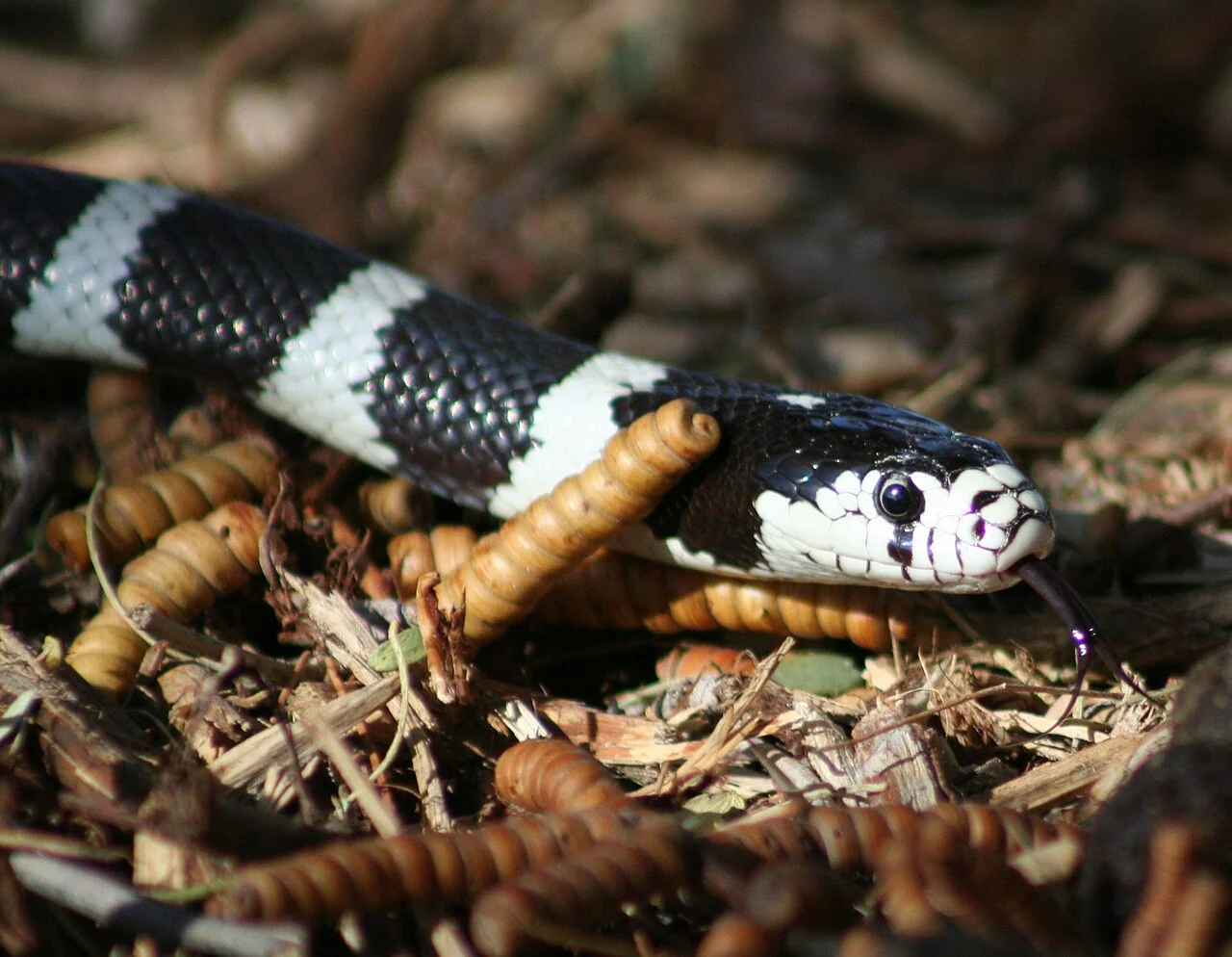
An exploring kingsnake can be engaging to watch inside its enclosure. It may move between cover and open space, use different hides and become active at different times as conditions change. Handling is seldom needed simply to see these behaviours. Recording activity times and locations gives a useful picture of the snake’s usual pattern and context for later questions about feeding or shedding.
Handling may still be useful for care or inspection. The RSPCA’s general kingsnake advice calls for waiting 48 hours after a meal before handling. When contact is needed, a calm, brief session with the body supported gives the animal secure contact. If it persistently tries to move away, observation can continue once it is back in its enclosure.
Sources for this section
- How to take care of your kingsnakeRSPCA
- California kingsnake species accountCalifornia Department of Fish and Wildlife
Use health changes to guide veterinary care
After a shed, the discarded skin and the snake can be checked for retained patches. Skin left over an eye needs assessment and removal by a reptile specialist veterinarian; pulling it off at home risks injury. Repeated incomplete sheds also warrant review, even if the snake remains active. Notes on sheds and enclosure conditions can give the veterinarian useful background.
Weight loss, skin blisters, abnormal breathing or a marked feeding change deserve reptile veterinary advice. A seasonal dip in feeding can occur, but weight and other signs matter when judging urgency. Wild winter inactivity is not a reason to lower captive conditions by guesswork; any planned seasonal rest needs species-specific professional guidance.
Sources for this section
- How to take care of your kingsnakeRSPCA
- California kingsnake species accountCalifornia Department of Fish and Wildlife
Common questions
Does a California kingsnake need a companion?
No. Other reptiles are natural prey, and kingsnakes can eat other snakes. A separate enclosure for each animal is the sound basis for housing.
What if skin remains over an eye?
A reptile specialist veterinarian should assess the eye and remove retained skin. Pulling at it at home can cause injury.
Is eating less always an emergency?
A temporary decrease can be seasonal. Weight trend, breathing, skin and other changes matter too; a reptile specialist veterinarian can assess concerning signs.
A closer look
Sources and photo credit
- How to take care of your kingsnakeRSPCA
- California kingsnake species accountCalifornia Department of Fish and Wildlife
- Providing a Home for a ReptileMerck Veterinary Manual
Photo: Lampropeltis californiae.jpg · Caudatejake · CC BY-SA 4.0. Resized and converted to WebP; scene unchanged.
Photo: California kingsnake close up (8122454724).jpg · Pacific Southwest Region USFWS from Sacramento, US · Public domain. Resized and converted to WebP; scene unchanged.
Photo: California kingsnake at Ash Meadows NWR (8122437361).jpg · Pacific Southwest Region USFWS from Sacramento, US · Public domain. Resized and converted to WebP; scene unchanged.
Photo: California Kingsnake (Lampropeltis getula californiae).JPG · Connor Long · CC BY-SA 4.0. Resized and converted to WebP; scene unchanged.

.jpg)
.jpg#Licensing)
.jpg)
.jpg#Licensing)
.JPG)