 fellfolio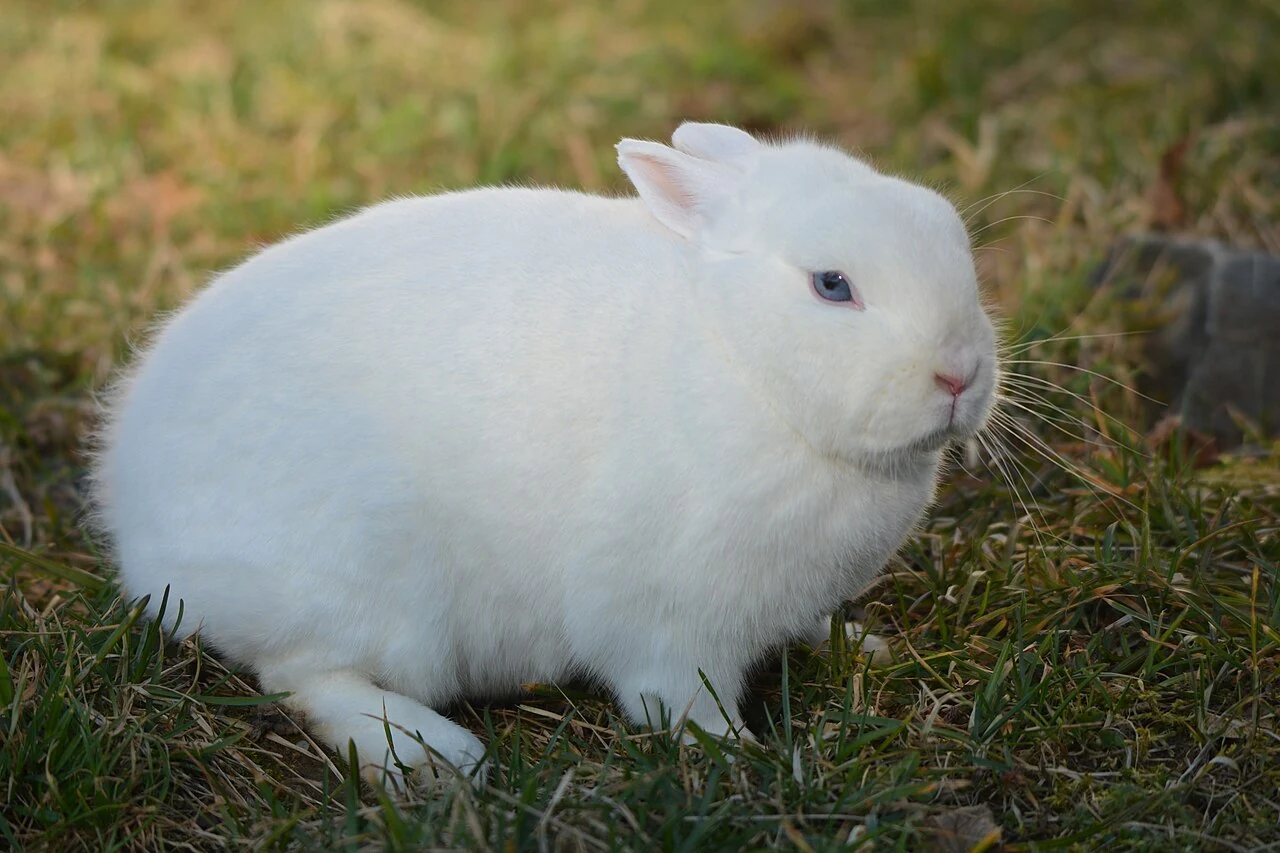
An old breed with names that vary by country
The Danish rabbit breeders’ association traces the breed’s background to white rabbits exhibited in Hull, England, in 1884. Further breeding on the European mainland developed the compact type. Modern names differ by country: Danish Hermelin includes coloured rabbits, whereas the German standard describes white Hermelin. The American Rabbit Breeders Association also lists today’s Polish as a separate breed. These labels should not simply be treated as interchangeable.
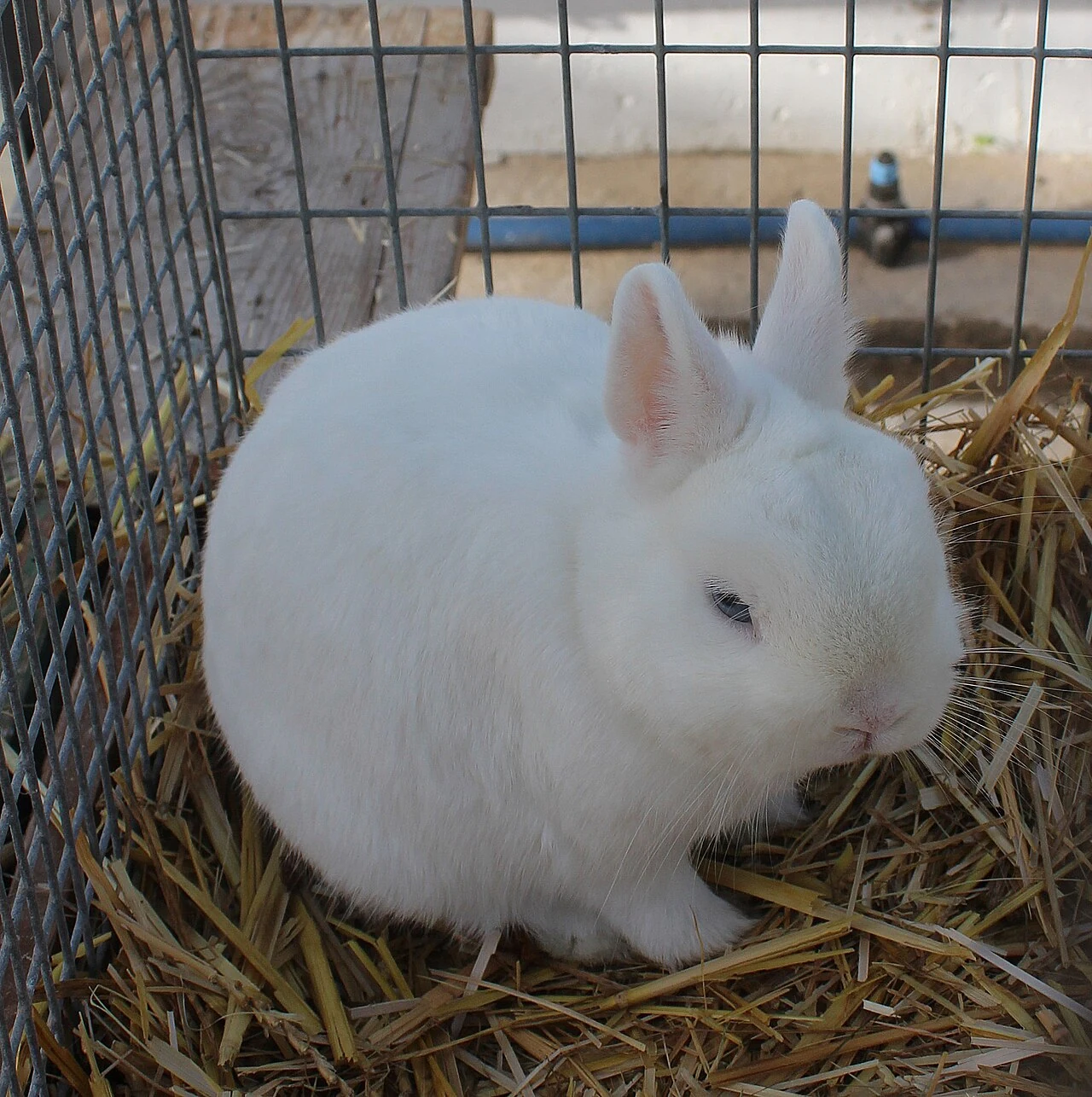
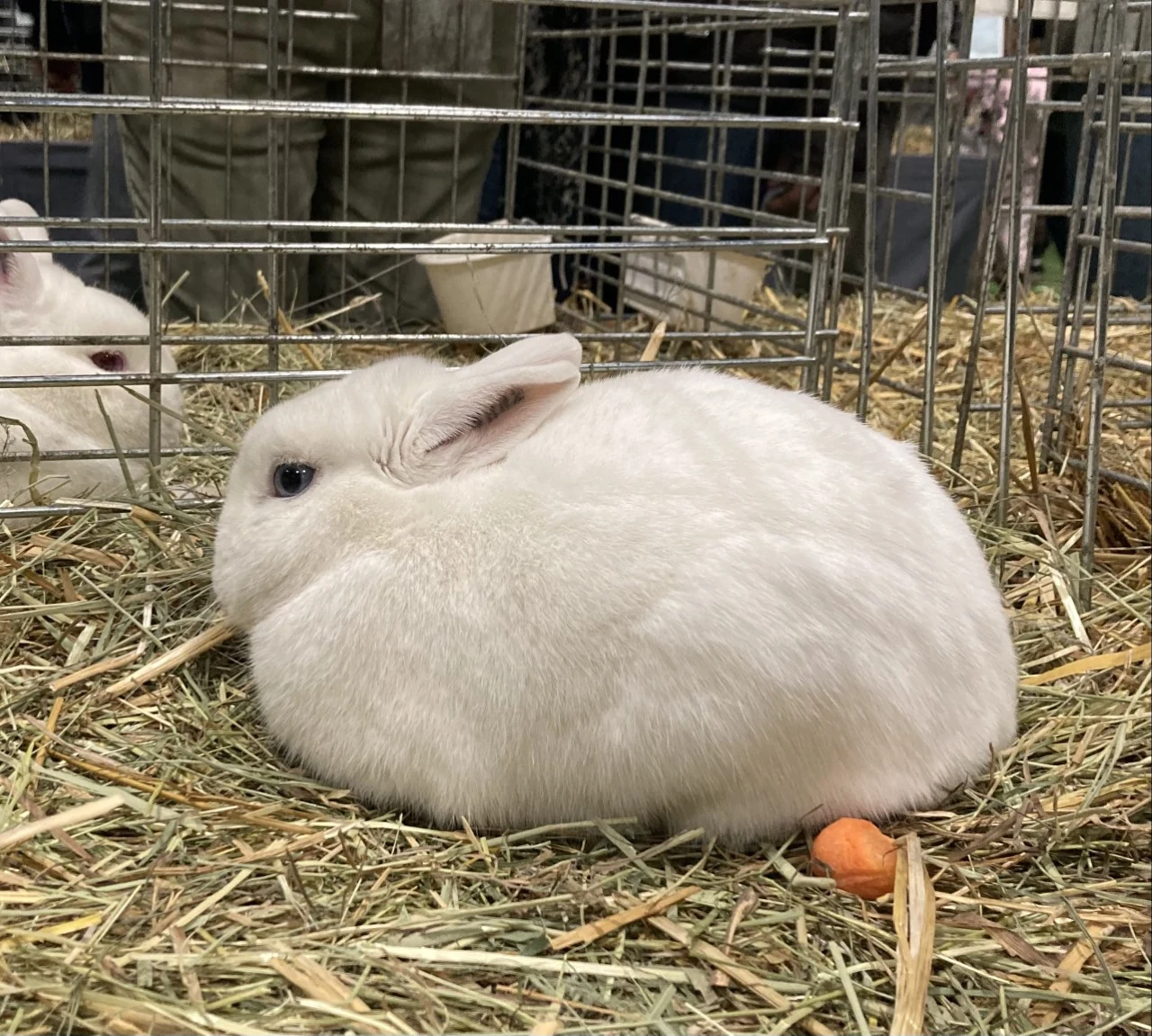
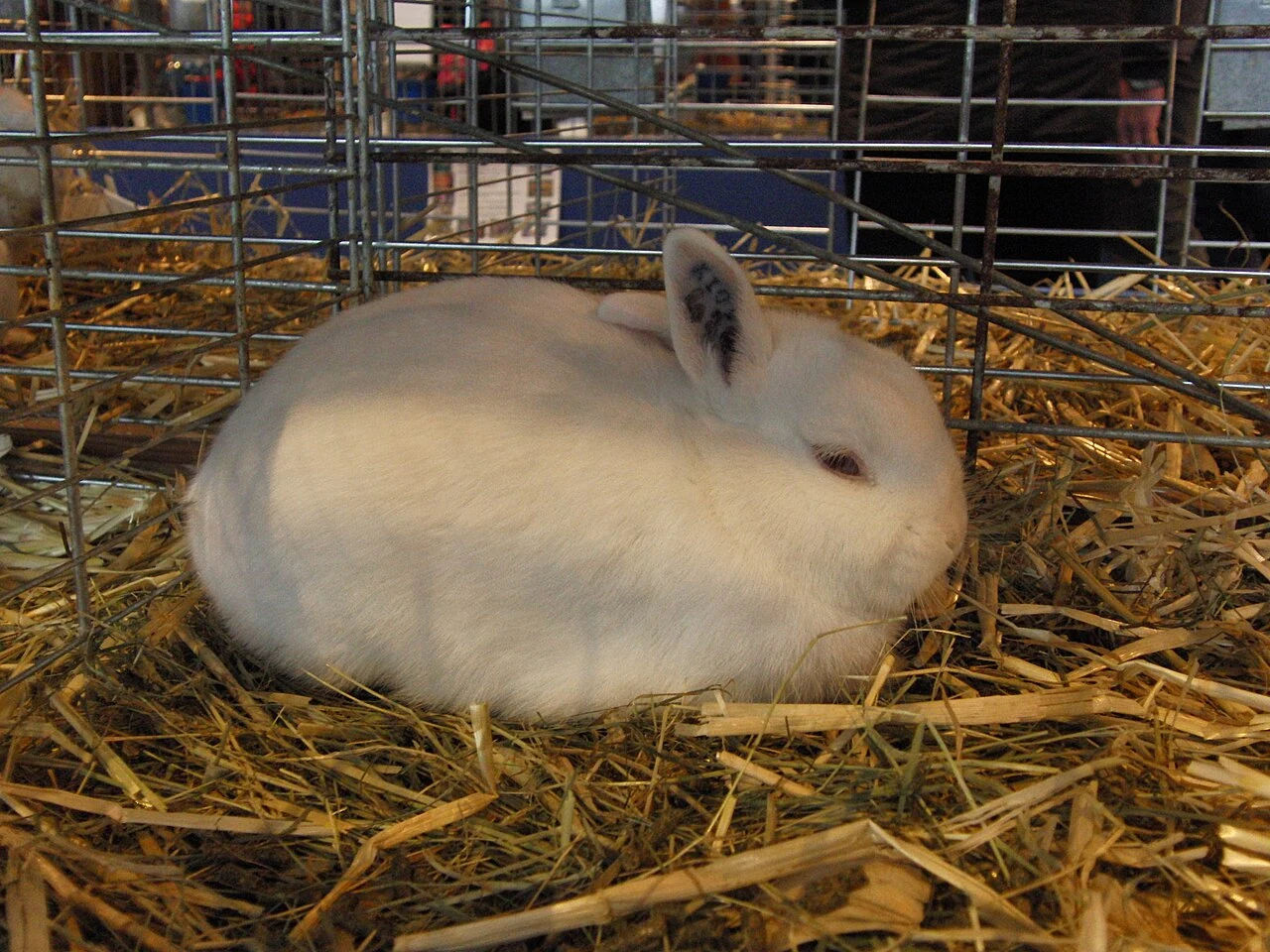
The German breed has red-eyed and blue-eyed varieties. Red-eyed Hermelin are albino, lacking the usual pigment, so the red appearance of their eyes is normal. Since 2026, the German association ZDRK has included both Type A and a larger Type B without the dwarf gene, the inherited variant that produces the particularly small build. Type B receives its highest weight score between 1.35 and 1.80 kg. An individual rabbit’s condition should be assessed against its own build rather than an ambition to keep it especially tiny.
Running routes and quiet corners
A Hermelin should be able to stretch out beside its partner and still have space to run across its enclosure. For two average-sized rabbits, the Rabbit Welfare Association & Fund, or RWAF, recommends a permanently accessible single floor area of at least 3 by 2 metres, with a height of 1 metre. A sleeping hutch alone does not provide that living space.
The indoor enclosure should be in a quiet part of the home, away from radiators and draughty windows. A choice of resting places and accessible hides lets the rabbits settle down or retreat when they want some peace. Non-slip surfaces help them move confidently. The setup should be easy to clean, with wet bedding removed promptly. Electrical cables and poisonous houseplants should stay out of reach.
Read more: Rabbit housing: space, exercise and companionship
A companion and a considered introduction
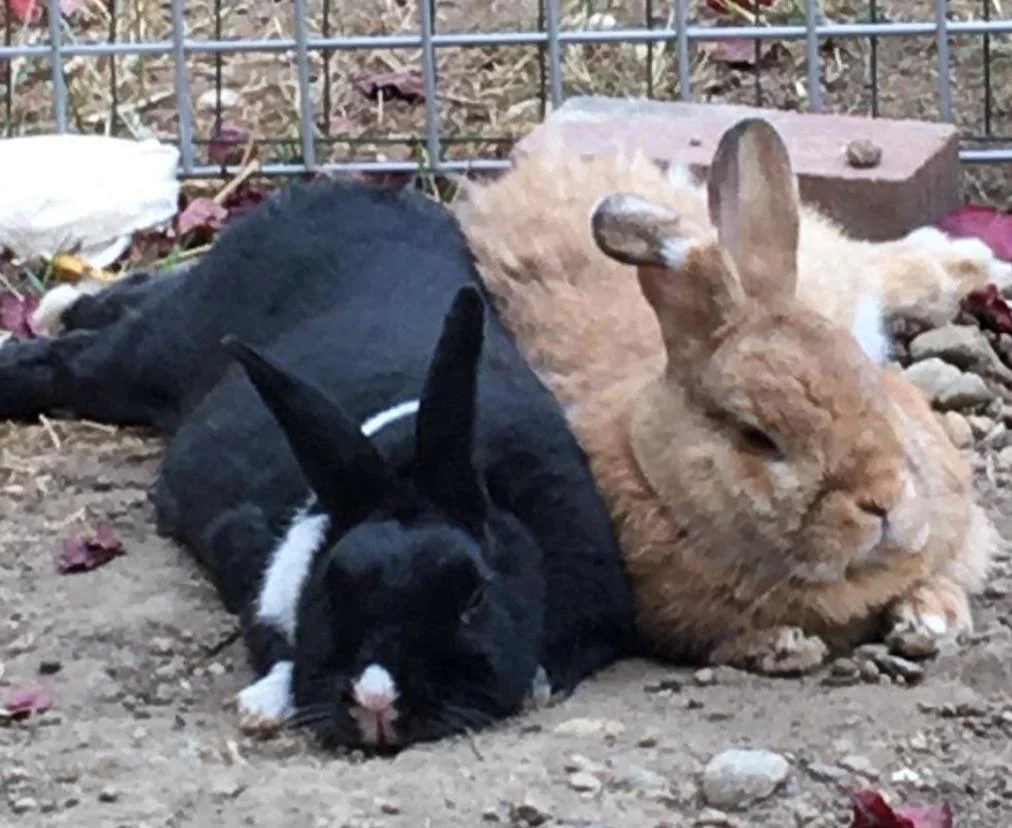
Another rabbit provides company when nobody is at home. The pair can rest, groom and feed together. People and guinea pigs cannot replace a rabbit companion. You should look for a partner with compatible behaviour and health, preferably without a very large difference in size. Matching coat colour has little to offer this decision.
Adopting an established pair avoids the need to introduce unfamiliar rabbits. If a new companion is joining an existing rabbit, health, neutering and a neutral meeting area should be arranged first. Both animals need room to move away, several feeding places and suitable retreats. Our bonding guide explains the preparation and the behaviours that suggest a relaxed meeting or a need for support.
Read more: Bonding rabbits: preparing for a shared home
Hay, fresh grass and suitable additions
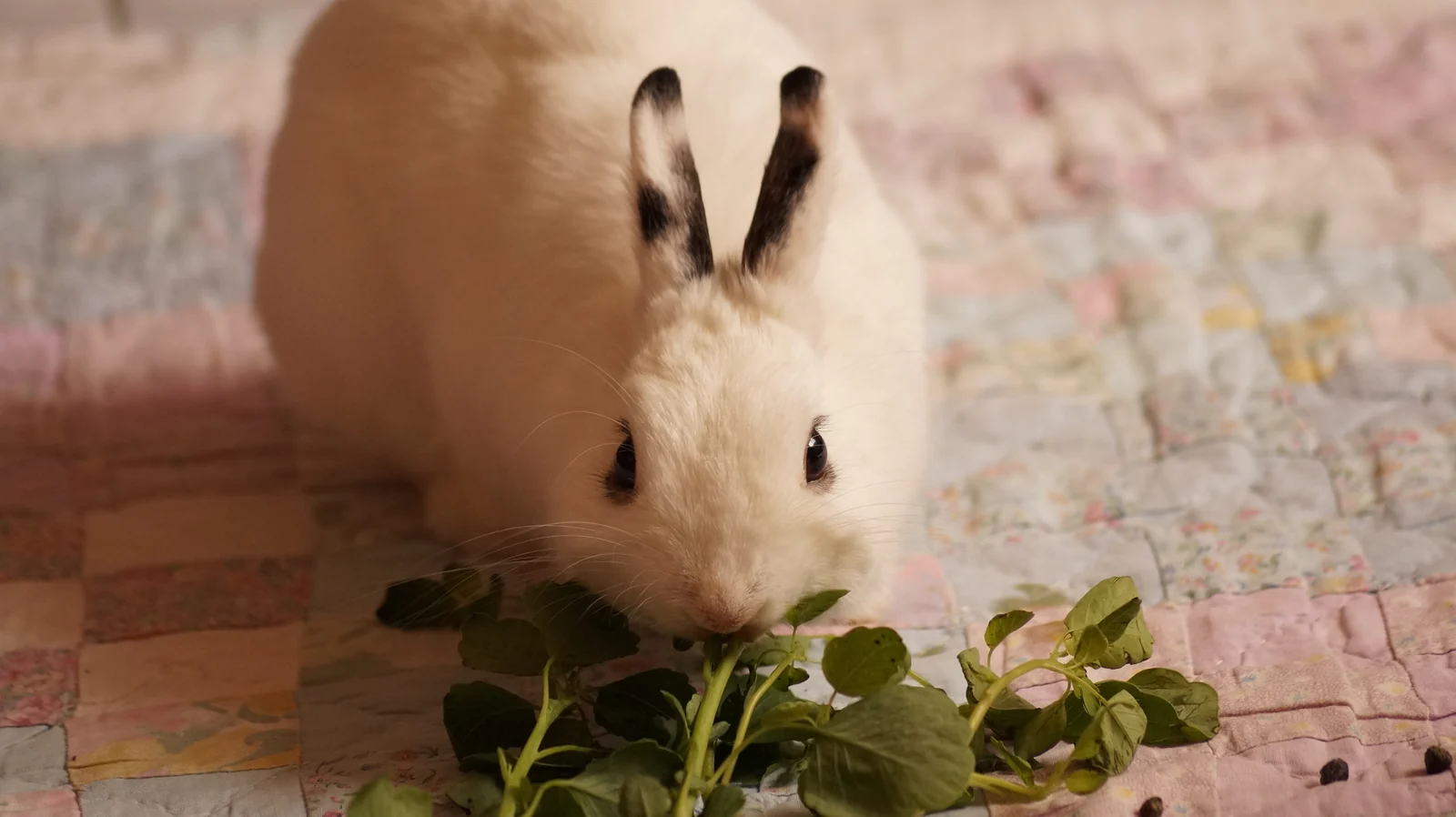
Hay and suitable fresh grass should make up most of the diet and be available throughout the day. Long periods of chewing help wear continuously growing teeth, while plant fibres support movement through the gut. Clean grass from a suitable untreated area can be offered fresh. New grasses, herbs and vegetables should be introduced gradually, allowing the digestive system to adjust.
Leafy greens and familiar herbs add variety. An appropriate small portion of rabbit pellets may complement them, adjusted for age and body condition. Pellets are compressed supplementary food rather than a replacement for unlimited hay. When rabbits move home, their familiar food should come with them initially. Fresh water should be easy to reach. Lawnmower clippings are unsuitable because they can ferment quickly.
Normal eye colour and signs of a problem
The red colour of an albino Hermelin’s eyes is different from an eye that has newly become red, watery or tightly closed. These changes should be examined by a vet. Moisture and staining around the eyes or chin should also draw your attention against a pale coat. A wet chin can, for example, be caused by drooling associated with dental pain. Examination is needed to establish the cause.
Daily care should include a look at the rear. Urine or droppings stuck in the coat can irritate the skin and attract flies. Fly larvae can cause severe tissue damage, a condition called flystrike that needs immediate veterinary help. Reduced eating or far fewer droppings also require prompt contact with a vet. Regular checks and an appropriate local vaccination plan for myxomatosis and rabbit haemorrhagic disease, or RHD, belong in preventive care. RHD is an infectious and often fatal viral disease.
Gentle grooming and small shared activities
The short coat should be checked regularly for loose hair, matting and skin changes. Grooming is best approached quietly on a secure surface. Dirt is easy to see against white fur, but bathing a rabbit to keep the coat immaculate is inappropriate. Recurrent soiling should lead to a discussion with the vet about housing and health.
For everyday interaction, you can sit on the floor and offer a familiar leaf nearby. A simple food search uses a few leaves placed in easy-to-reach spots, with room for both companions to take part. A rabbit that withdraws should be allowed some quiet. When lifting is necessary, the chest and hindquarters must be supported. Lying motionless after being placed on its back is a fear response in rabbits, not an indication of relaxation.
Choosing a Hermelin and organising its care
During a visit, you should ask about previous housing, familiar food, vaccinations and any dental history. Adult rabbits available for adoption can be easier to assess because their mature size and many of their habits are already apparent. A pale coat tells you little about how much an individual enjoys approaching people.
Both rabbits will need regular spending on food, bedding and preventive care, with funds for possible treatment. The cost calculator helps bring these items together. The small-pet finder can help you compare space, time and desired interaction if you are still considering different animals. A holiday carer should reliably check eating, droppings and behaviour. Our rabbit life-stage guide explains how needs change as animals grow older.
Read more: Rabbit life stages: from youngsters to older companions · Which small pet suits your home? Six rodents compared
Common questions
Are red eyes a health problem in a Hermelin?
Red eye colour is normal in a red-eyed albino Hermelin. New redness, discharge, swelling or tightly closed eyes are different and should be examined.
Can Hermelin rabbits have coloured coats?
German Hermelin are white under the German standard. In Denmark, the name also covers coloured varieties. The registry country matters when comparing descriptions.
Does white fur need cosmetic treatment?
No. Dry, clean bedding and regular checks matter more. Repeated matting or soiling should prompt attention to possible housing or health causes.
A closer look
Sources and photo credit
- Die Standard-Fachkommission im ZDRK gibt bekannt (01-2026)Zentralverband Deutscher Rasse-KaninchenzüchterAn old breed with names that vary by country
- Hermelin: Baggrund og kendetegnDanmarks KaninavlerforeningAn old breed with names that vary by country
- Recognized BreedsAmerican Rabbit Breeders AssociationAn old breed with names that vary by country
- Space RecommendationsRabbit Welfare Association & FundRunning routes and quiet corners
- Keeping rabbits in your homeRSPCARunning routes and quiet corners
- Company for pet rabbitsRSPCAA companion and a considered introduction
- What do rabbits eat?RSPCAHay, fresh grass and suitable additions
- Nutrition of RabbitsMerck Veterinary ManualHay, fresh grass and suitable additions
- How to keep your rabbit healthyRSPCANormal eye colour and signs of a problem · Gentle grooming and small shared activities · Choosing a Hermelin and organising its care
- Noninfectious Diseases of RabbitsMerck Veterinary ManualNormal eye colour and signs of a problem
- Pet rabbits: Handling rabbitsRSPCAGentle grooming and small shared activities
- Understanding rabbit behaviourRSPCAGentle grooming and small shared activities
- ForagingRabbit Welfare Association & FundGentle grooming and small shared activities
- New to RabbitsRabbit Welfare Association & FundHay, fresh grass and suitable additions · Choosing a Hermelin and organising its care
- Bathing RabbitsRabbit Welfare Association & FundGentle grooming and small shared activities
- Creating the right home for your rabbitRSPCARunning routes and quiet corners
Photo credits
Photo: Lapin nain polonais.jpg · Lilian Briot · CC BY-SA 4.0. Image format adapted.
Photo: Alsleben (Saale), Kaninchenausstellung 2023, Hermelin.jpg · Dguendel · CC BY 4.0. Image format adapted.
Photo: Lapin polonais ou hermine aux yeux bleus.jpg · Thomon · CC BY-SA 4.0. Image format adapted.
Photo: Polonais hermine yeux roses SDA2011.JPG · Eponimm · CC BY-SA 3.0. Image format adapted.

,_Kaninchenausstellung_2023,_Hermelin.jpg)

