 fellfolio
Watchdog and companion
Schipperke
The Schipperke is a small Belgian dog with a thick collar of fur around its neck. It takes a keen interest in its surroundings and enjoys joining its people on outings. Despite its handy size, it needs shared walks and patient training, including help with alert barking.
At a glance
- Size
- Small
- Weight
- 3 to 9 kg
- Lifespan
- over 12 years
- Activity
- High
- Grooming
- Several times weekly
- Training
- Patience & clear guidance
- Owner experience
- First dog with support
Curious, watchful and keen to join in
A noise at the door, movement in the garden, a shopping bag: many Schipperkes want to investigate whatever is happening. The breed was kept as a watchdog and rat catcher. That background helps explain why some quickly notice changes in their surroundings and announce them by barking.
Training should help the dog respond to sounds without prolonged barking. A resting place away from the front door and short exercises rewarding quiet behaviour can help. Shouting may add to the excitement. Visitors should give the dog time to approach in its own way.
Schipperkes are often closely attached to their people and enjoy joining their outings. When meeting a dog that will live with children, attention should be paid to how that individual reacts to their movements and noise. Its sleeping place should be somewhere it can rest undisturbed.
Everyday life
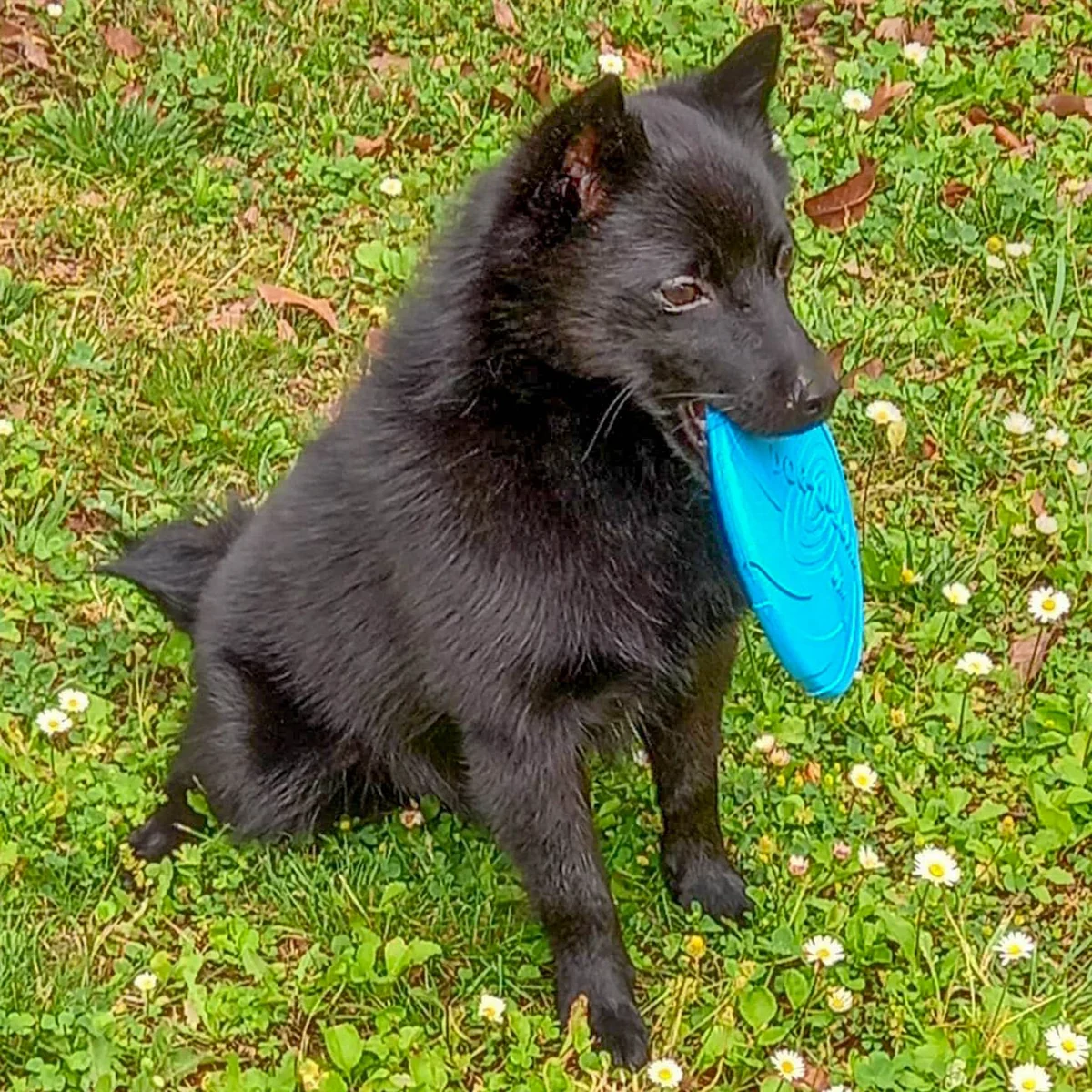
The Royal Kennel Club, a British kennel organisation, places the Schipperke in an exercise category of up to an hour a day. For many adults, several walks can be combined with play and short training sessions. Finding a hidden toy, coming when called or walking beside you on a loose lead can engage a small dog too.
A flat can work if daily outings and company are available. In a building where sound carries, it is also worth considering how often the dog reacts to noises. Floor space alone says little about whether the routine will work.
Its history as a rat catcher matters around small animals. Rabbits or rodents should not run loose with a Schipperke. Outdoors, a sudden movement can also trigger a chase. Until recall is reliable, a long line attached to a well-fitting harness allows more room to move while maintaining a safe distance from roads and wildlife.
Staying home alone
Dogs learn to stay home alone in small steps. The RSPCA advises no more than four hours at a time. Puppies and dogs that become unsettled when left alone need shorter absences and gradual practice. Arrange someone to care for your dog when you will be away longer.
Everyday dog training: recall, a loose lead and clear communication ↗
Day-to-day care
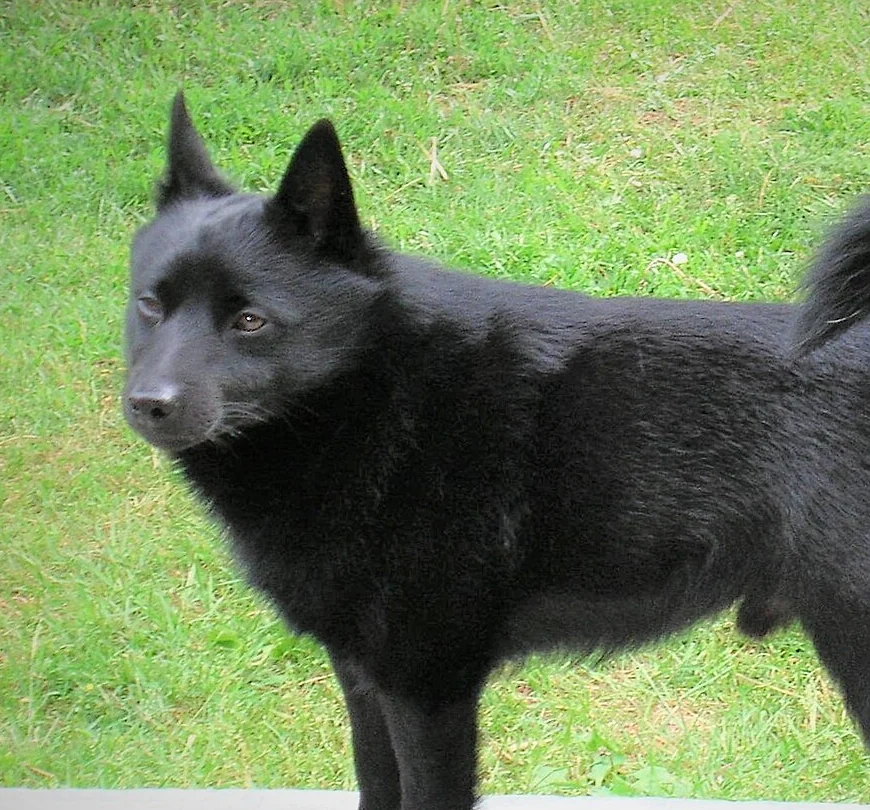
The neck ruff and longer hair on the backs of the thighs create the characteristic outline. Beneath the outer coat is a dense undercoat, a softer layer of hair. Regular brushing, such as short, thorough sessions several times a week, removes loose coat. During seasonal shedding, working down to the lower layer is especially useful. A relatively short coat does not mean little shedding.
Normal care also includes the teeth, ears and nails. Small steps and rewards help with learning to accept paw checks and tooth brushing. A Schipperke does not need elaborate styling for everyday coat care.
Size and build
The Schipperke comes from Belgium. It was already popular with craftspeople in Brussels in the 17th century, guarding homes and catching small rodents. An association with canal boats is also part of its recorded history. The first Belgian breed club was founded in 1888.
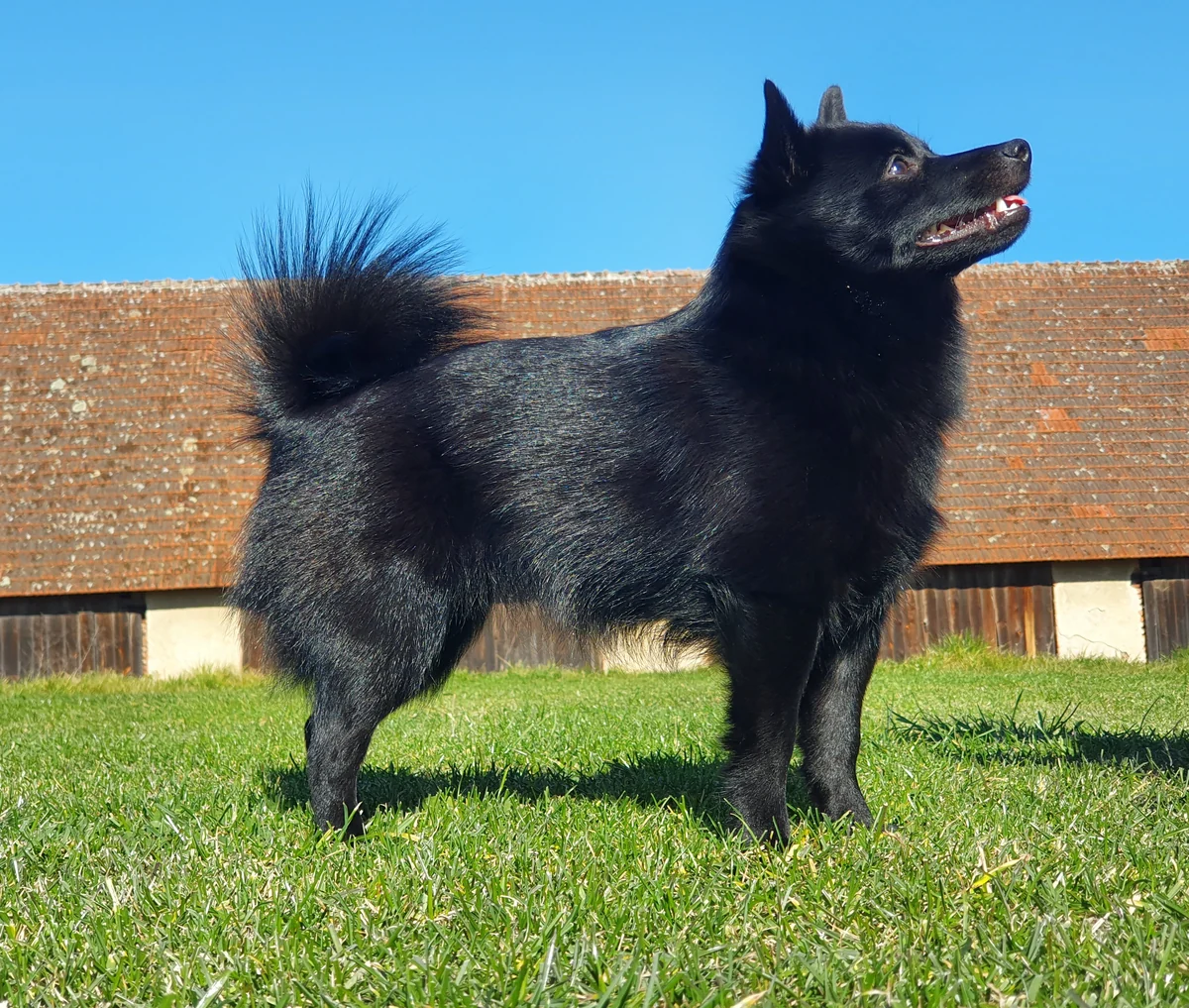
A compact, almost square body, wedge-shaped head and small upright ears are characteristic. The international standard gives a weight range of 3 to 9 kg, with an average of 4 to 7 kg preferred within that range. It does not specify a fixed shoulder height. Black is the coat colour in this standard, although some other registries accept additional colours.
Schipperkes today have natural tails of different lengths. Some are also born with a short tail. Older pictures also show dogs whose tails were docked, meaning surgically shortened. The breed’s natural appearance is therefore more varied than some historical photographs suggest.
From puppy to senior: caring for your dog through every life stage ↗
Health
An important DNA test for breeding dogs concerns mucopolysaccharidosis type IIIB, shortened to MPS IIIB. In this inherited metabolic condition, a particular enzyme does not work adequately. Enzymes are proteins the body uses for tasks such as breaking substances down. Here, substances remain inside cells and accumulate, potentially damaging the nervous system among other tissues. Signs may first appear in an adult dog, including unsteady movement, tremors or changes in behaviour.
The test distinguishes dogs without the tested variant, carriers with one copy and dogs with two copies. The disease develops in dogs with two copies of this variant. Carriers with one copy normally do not develop it themselves, but can pass on the variant. Both parents’ results and an explanation of the planned mating therefore matter when choosing a puppy.
The British breed club also reports recurrent seizures and the hip condition Legg-Calvé-Perthes. In the latter, the head of the thigh bone in a young dog receives an inadequate blood supply and bone tissue is damaged. Persistent limping should not be dismissed as a harmless phase of growth. These reports do not establish a reliable frequency for all Schipperkes. Asking about conditions in the family and previous examinations is more useful than a general claim that the breed is robust.
Could this breed fit your life?
Could work well if …
- You want a small dog that enjoys an active part in everyday life.
- You can patiently work on recall and watchdog behaviour.
- You have time for shared walks and caring for a dog that sheds.
What to consider
- You want a very quiet dog and would struggle with frequent alert barking.
- The dog would regularly run loose with rabbits or rodents.
- You expect a small dog to need little exercise or training.
Similar needs, different dogs.
Selected by shared size, activity, grooming and training characteristics.
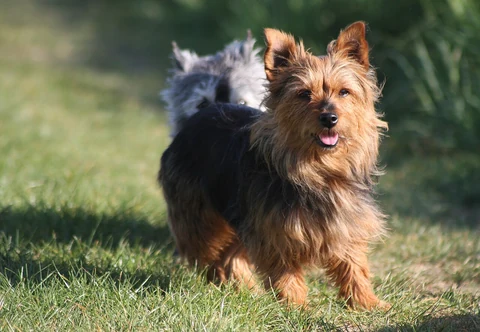
Small Australian wire coated terrier
Australian Terrier
The Australian Terrier is a small, alert dog that enjoys getting out and exploring. Its harsh coat and distinctive neck ruff reflect a working background. At home it often wants to be close to its people, while a scent or a small animal can capture its attention outdoors.
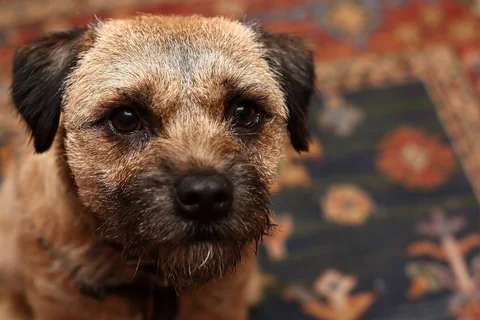
Terrier
Border Terrier
A small, hardy terrier with a strong appetite for activity. It loves sniffing, digging and games, but a whiff of wildlife can put recall to the test.
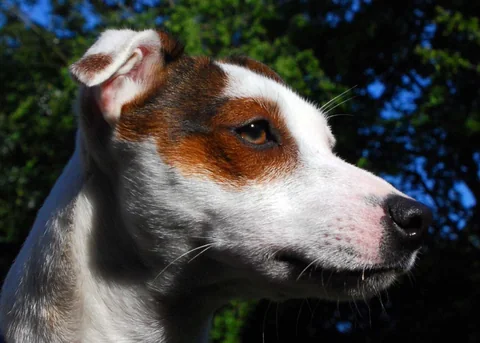
Terrier
Jack Russell Terrier
The Jack Russell Terrier is a small hunting dog with plenty of stamina. It likes to run and search, and needs daily exercise, scent games and recall training.
Sources and photograph credit
- Teaching your dog to be left alone
Used in this profile for: Staying home alone
- Avascular necrosis of the femoral head (Legg-Calvé-Perthes Disease) in dogs
Used in this profile for: Health
- Mucopolysaccharidosis Type IIIB (MPS IIIB)
Used in this profile for: Health
- General Health Information
Used in this profile for: Health
- History of the Schipperke
Used in this profile for: Size and build
- About the Schipperke
Used in this profile for: Temperament, Everyday life, Day-to-day care, Could this breed fit your life?
- Schipperke
Used in this profile for: Everyday life, Day-to-day care, Size and build, Lifespan, Could this breed fit your life?
- FCI Standard No. 83: Schipperke
Used in this profile for: Size / Weight, Temperament, Everyday life, Day-to-day care, Size and build, Could this breed fit your life?
Photo credits
Side view · File:Schipperkehpg002.jpg · JezevecStendencíLouhovatČaj · CC BY-SA 4.0 · Edited

Head and ruff · File:Shipp 23 QurreS06.jpg · Bingar1234 · CC BY-SA 4.0 · Edited

In action · File:Schipperke con freesbi.jpg · Cinvic · CC BY-SA 4.0 · Edited

Puppy · File:Schipperke Puppy Daisy 12-weeks 2015-07-27.jpg · Dalehawaii · CC BY-SA 4.0 · Edited
