 fellfolio
Retriever
Nova Scotia Duck Tolling Retriever
The Nova Scotia Duck Tolling Retriever, usually called the Toller, is an active Canadian gundog. It lured ducks closer by playing along the shore, then brought shot birds back from the water. As a companion, it needs daily walks, search games and time with its people.
At a glance
- Size
- Medium
- Height at shoulder
- 45 to 51 cm
- Weight
- 16 to 23 kg
- Lifespan
- 12 to 14 yearsAmerican Kennel Club breed profile
- Activity
- High
- Grooming
- Several times weekly
- Training
- Often cooperative
- Owner experience
- First dog with support
Playing at the water’s edge was part of the hunt
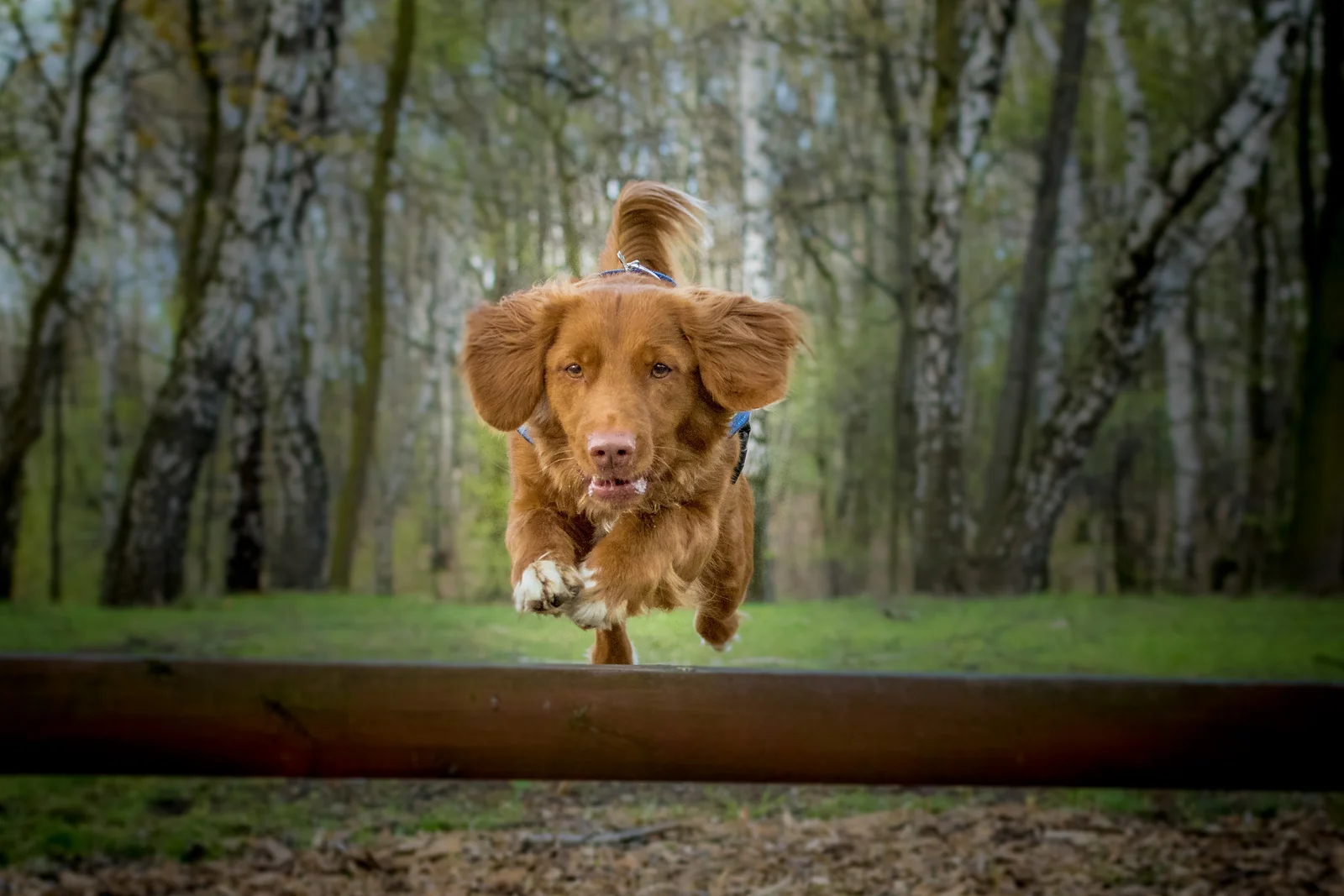
Beside Canadian waters, the Toller had an unusual job. It ran and played along the shore, drawing curious ducks closer. After the hunt it brought birds back from the water. Both animated play and retrieving belong to the breed's history. A family dog need not hunt, but can enjoy finding a toy, carrying it and bringing it back.
Tollers are often clever, lively and willing to work with people. Because games and movement excite them, simple rules help: throw or hide a toy, ask the dog to bring it back and let go, then pause or start another round. This also gives practice in waiting after excitement. An adult should guide play with children so enthusiasm does not turn into bumping or snatching.
Everyday life
A Toller needs daily movement and time doing things with its people. A substantial walk with sniffing, a short search and a calm retrieving game offer more variety than endless throws. If you visit water, check the bank, current and entry point. Swimming is not compulsory, even though many Tollers enjoy it. After a swim, the dog needs to dry off and rest somewhere warm.
Recall and letting go of an object are especially useful skills. Start at home with a toy your dog likes but does not get very excited about. Trade it for another toy or a reward rather than pulling it from the dog's mouth. Repeat later in the garden and outside. A smaller home can work when walks and shared activities are a dependable part of every day.
Staying home alone
Dogs learn to stay home alone in small steps. The RSPCA advises no more than four hours at a time. Puppies and dogs that become unsettled when left alone need shorter absences and gradual practice. Arrange someone to care for your dog when you will be away longer.
Day-to-day care
The water-resistant, medium-length coat has a soft, dense undercoat. Hair is longer on the chest, ears, legs and tail. Brush into these areas several times a week; twigs and burrs collect there, and small knots can tighten. More undercoat comes loose during moulting. Brush more often at those times instead of clipping the coat short.
After swimming, rinse away dirt with fresh water; after a sea swim, rinse away salt too. Gently dry the longer coat and the outer ear flaps. A smelly or red ear, or repeated head shaking, deserves a veterinary examination. Check the feet after trips to the shore for cuts, debris and sore spots. Check between the toes as well.
Size and build
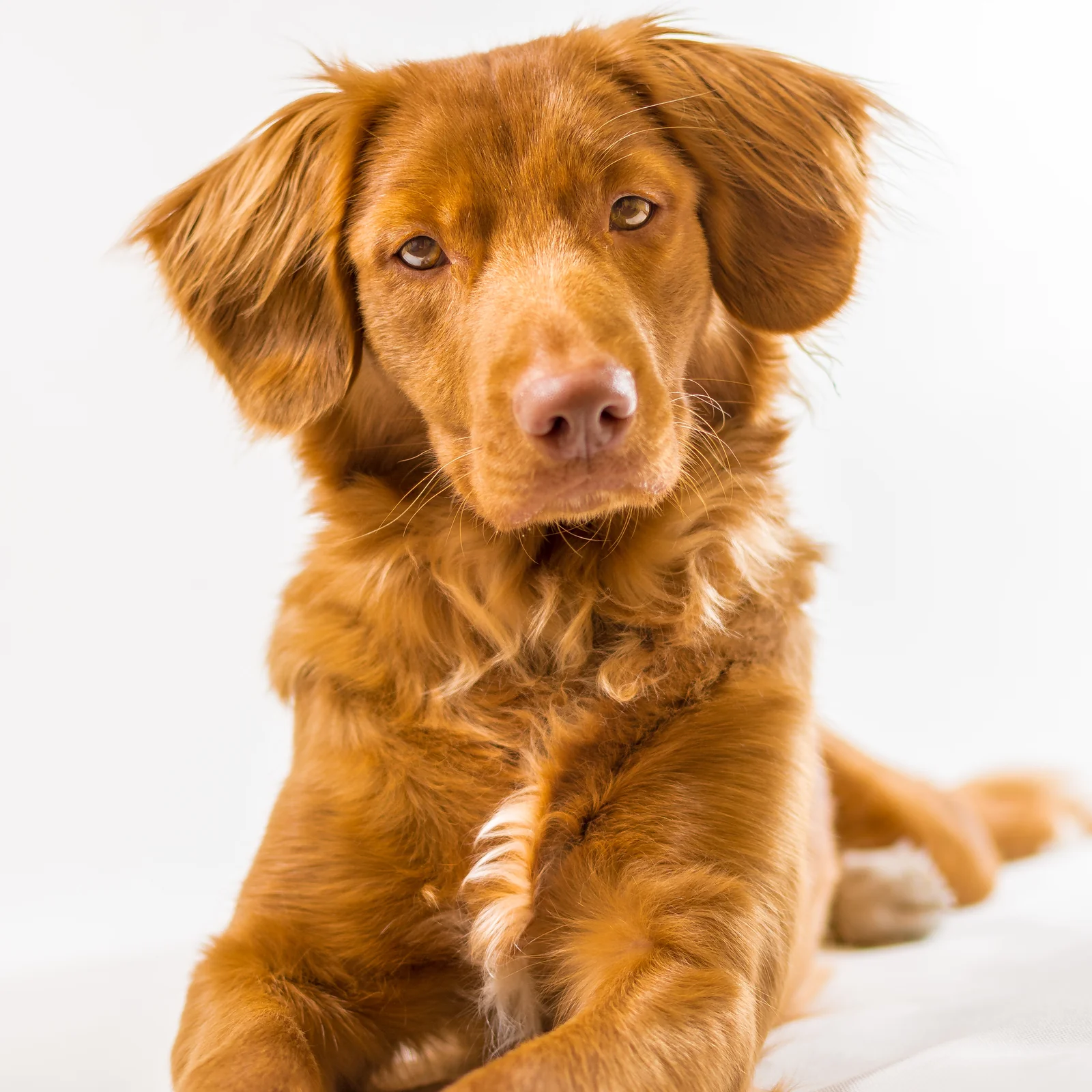
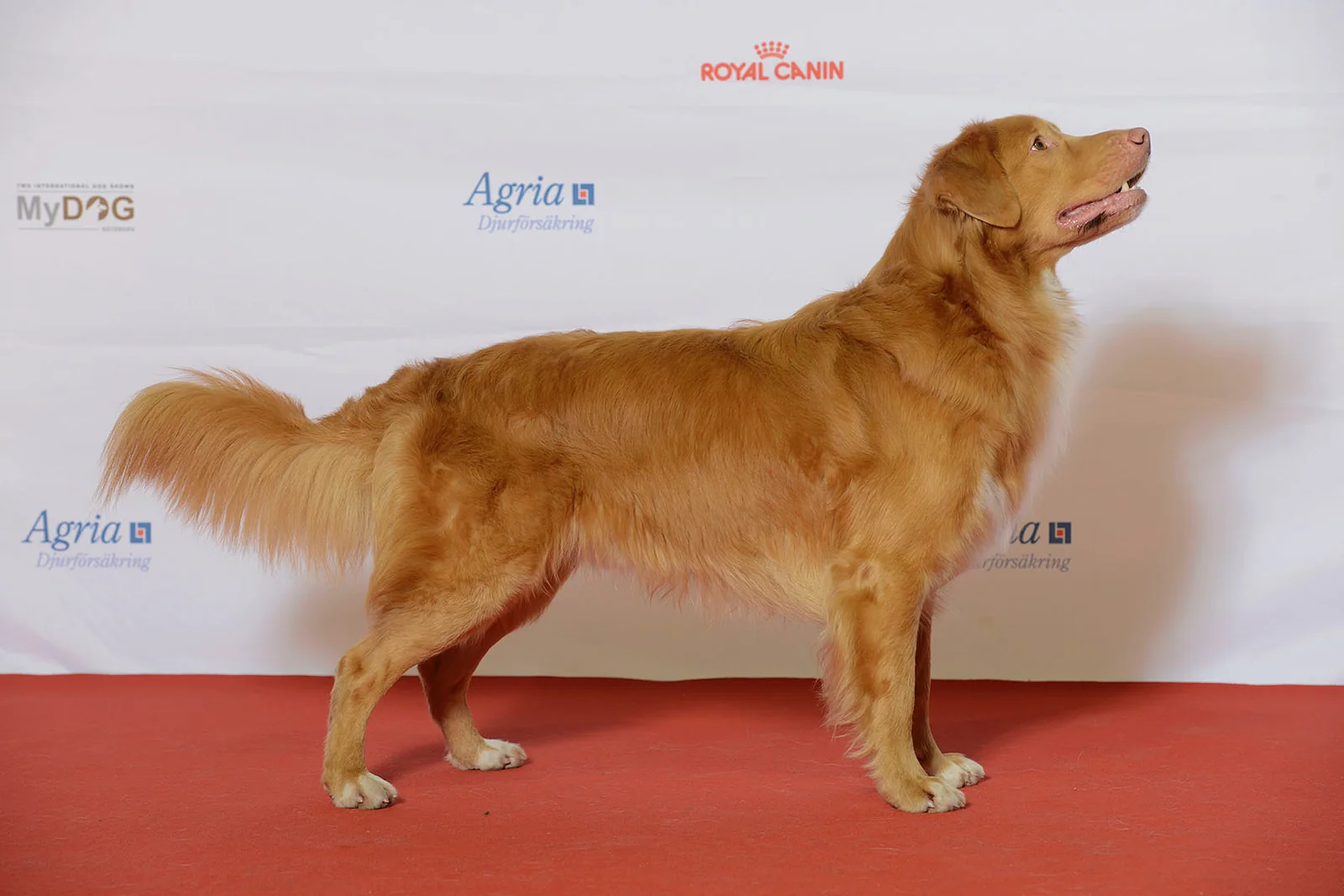
The Nova Scotia Duck Tolling Retriever is compact and muscular. It is smaller than a Golden or Labrador Retriever but does not look delicate. It has a deep chest, a short level back and sturdy legs. The head tapers slightly to the muzzle; medium-sized triangular ears hang at the sides. The bushy tail moves when the dog is alert. Round feet have well-developed webbing between the toes.
The British standard gives 48 to 51 cm at the shoulder for males and 45 to 48 cm for females. The American Kennel Club gives roughly 16 to 23 kg. Its double coat runs from red to orange, often with pale marks on the chest, feet or tail tip, although white markings are not required. A Toller should move freely with a springy stride. Look for easy movement, a waist visible from above and ribs that are easy to feel beneath the coat.
Health
For breeding dogs, the Royal Kennel Club recommends a DNA test for prcd-PRA, an inherited disease that damages the retina at the back of the eye, and a test for degenerative myelopathy, a disease of the spinal cord. Further recommendations include eye, hip and elbow examinations. When choosing a puppy, ask to see both parents' results and have each test explained. Hearing only that the dogs were 'genetically tested' does not tell you which conditions were covered.
An inherited form of Addison's disease, where the adrenal glands produce too little hormone, can also affect young Tollers; a DNA test is available. It indicates whether the risk is higher or lower, but cannot predict with certainty whether a dog will develop the disease. Repeated weakness, vomiting or loss of appetite deserves a veterinary check rather than being dismissed as a bad day. Eye trouble may show up as difficulty in dim light or repeated squinting. Have these changes checked by a vet.
Breed organisations give conflicting lifespan estimates: the American Kennel Club lists 12 to 14 years, while the Royal Kennel Club places the breed below ten years. A 2024 UK study estimated median survival at 13.2 years from 286 Tollers, including 47 deceased dogs. Median survival means that, in the model estimate, half the dogs survived to that age. It is a group estimate from UK data, not a prediction for your dog.
Could this breed fit your life?
Could work well if …
- You would enjoy walks, search games and teaching a dog to retrieve a toy.
- You can help an excitable dog practise calm pauses and brush its coat regularly.
May be more difficult if …
- You expect a medium-sized retriever to be content all day without shared activity.
- You want to choose on red coat colour alone, without asking about health results or meeting the dog's family.
Similar needs, different dogs.
Selected by shared size, activity, grooming and training characteristics.
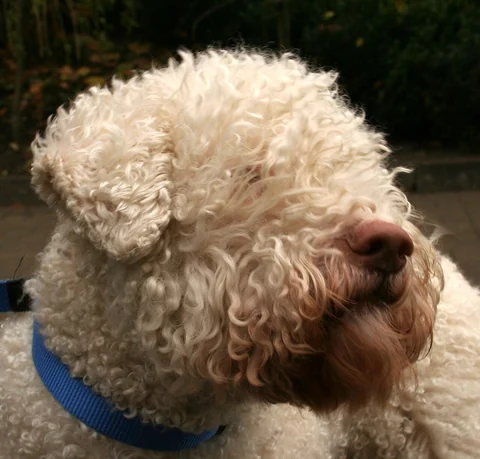
Water dog and truffle finder
Lagotto Romagnolo
This curly dog from Romagna once retrieved waterfowl and is now famous for finding truffles, edible fungi that grow underground. Long walks, scent games and careful coat maintenance make up its daily routine.
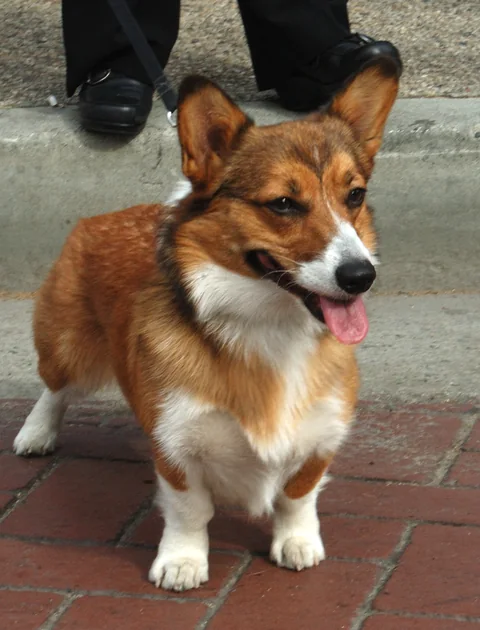
Cattle dog
Pembroke Welsh Corgi
The Pembroke Welsh Corgi brings a cattle dog's alertness into family life. It learns quickly, enjoys being on the move and leaves plenty of hair on the sofa.
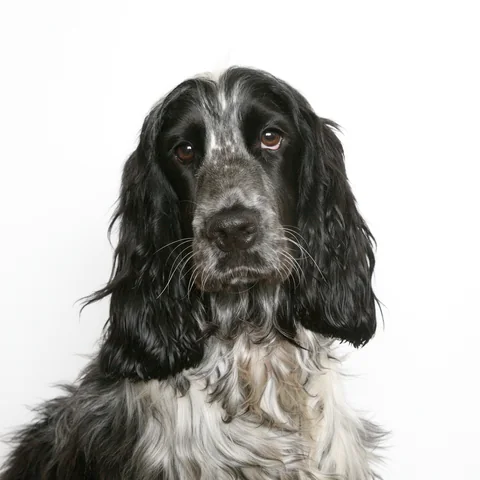
Gundog
English Cocker Spaniel
The English Cocker Spaniel is a lively gundog that loves getting out with its people. Its nose finds plenty to investigate outdoors, while its silky coat calls for daily care.
Sources and photograph credit
- Teaching your dog to be left alone
Used in this profile for: Staying home alone
- Nova Scotia Duck Tolling Retriever dog breed information
Used in this profile for: Size / Weight, Size and build, Health, Lifespan
- Life expectancy by breed: 2024 UK companion-dog cohort
Used in this profile for: Health, Lifespan
- Retriever (Nova Scotia Duck Tolling), Breeds A to Z
Used in this profile for: Temperament, Everyday life, Day-to-day care, Health, Lifespan, Could this breed fit your life?
- Retriever (Nova Scotia Duck Tolling) breed standard
Used in this profile for: Size / Weight, Temperament, Everyday life, Day-to-day care, Size and build, Could this breed fit your life?
- New DNA testing scheme for the Nova Scotia Duck Tolling Retriever
Used in this profile for: Health
- Juvenile Addison’s Disease (JADD) in Nova Scotia Duck Tolling Retrievers
Used in this profile for: Health
- Body Condition Score for Dogs
Used in this profile for: Size and build
Portrait · orange is a new... white · Tom Ek · CC BY-SA 2.0 · Edited
.jpg)
Side view · BIR Grupp 8: NOVA SCOTIA DUCK TOLLING RETRIEVER, Riverbreeze Dream Team Kiowa · Johan Frick-Meijer / Svenska Mässan · CC BY 2.0 · Edited
.jpg)
In action · Flying toller.. · Tom Ek · CC BY-SA 2.0 · Edited
.jpg)
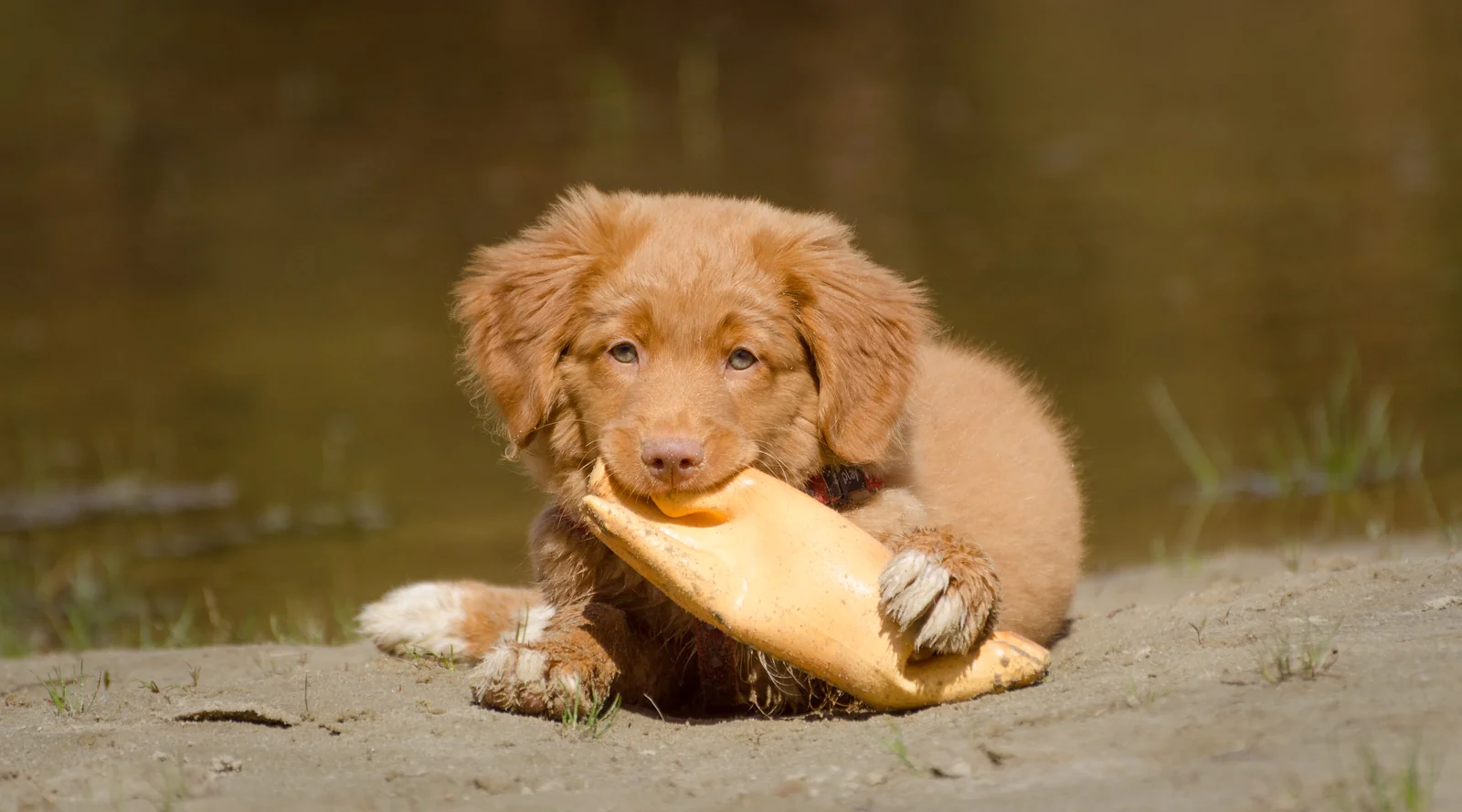
Puppy · DSC_3076-export · Tom Ek · CC BY 2.0 · Edited
.jpg)