 fellfolio
Water dog and truffle finder
Lagotto Romagnolo
This curly dog from Romagna once retrieved waterfowl and is now famous for finding truffles, edible fungi that grow underground. Long walks, scent games and careful coat maintenance make up its daily routine.
At a glance
- Size
- Medium
- Height at shoulder
- 41 to 48 cm
- Weight
- 11 to 16 kg
- Lifespan
- over 12 yearsUK Royal Kennel Club breed profile
- Activity
- High
- Grooming
- Several times weekly
- Training
- Often cooperative
- Owner experience
- First dog with support
From marshes to truffle hunts
In Italy's Romagna region, the Lagotto once retrieved waterfowl from marshes. As the wetlands were drained, another talent became more useful: its excellent nose. The breed now searches for truffles in its homeland. This history helps explain why a walk with time to sniff may mean more to a Lagotto than simply covering distance quickly.
Breed standards describe a lively, intelligent dog that is affectionate with its people. Many enjoy working alongside someone when the task is clear. Start with a toy the dog can find in the same room, then hide it behind a door or outside in grass. Let the dog search and reward it when it finds the toy. You have a shared activity without needing real truffles.
Everyday life
An adult Lagotto needs regular exercise and something interesting for its nose. Plan a substantial walk with time to explore. Hide a toy along the way or let the dog find a few pieces of food in grass. This gives its nose a job without making every outing a running session.
A small dog can be surprisingly determined once it starts digging for a scent. Decide where digging is allowed and teach a friendly stop cue before garden beds or park borders become a problem. On quieter days, hide part of a meal indoors or let the dog find a toy in several rooms. Children can help with these games when an adult guides them and the dog has room to step away.
Staying home alone
Dogs learn to stay home alone in small steps. The RSPCA advises no more than four hours at a time. Puppies and dogs that become unsettled when left alone need shorter absences and gradual practice. Arrange someone to care for your dog when you will be away longer.
Day-to-day care
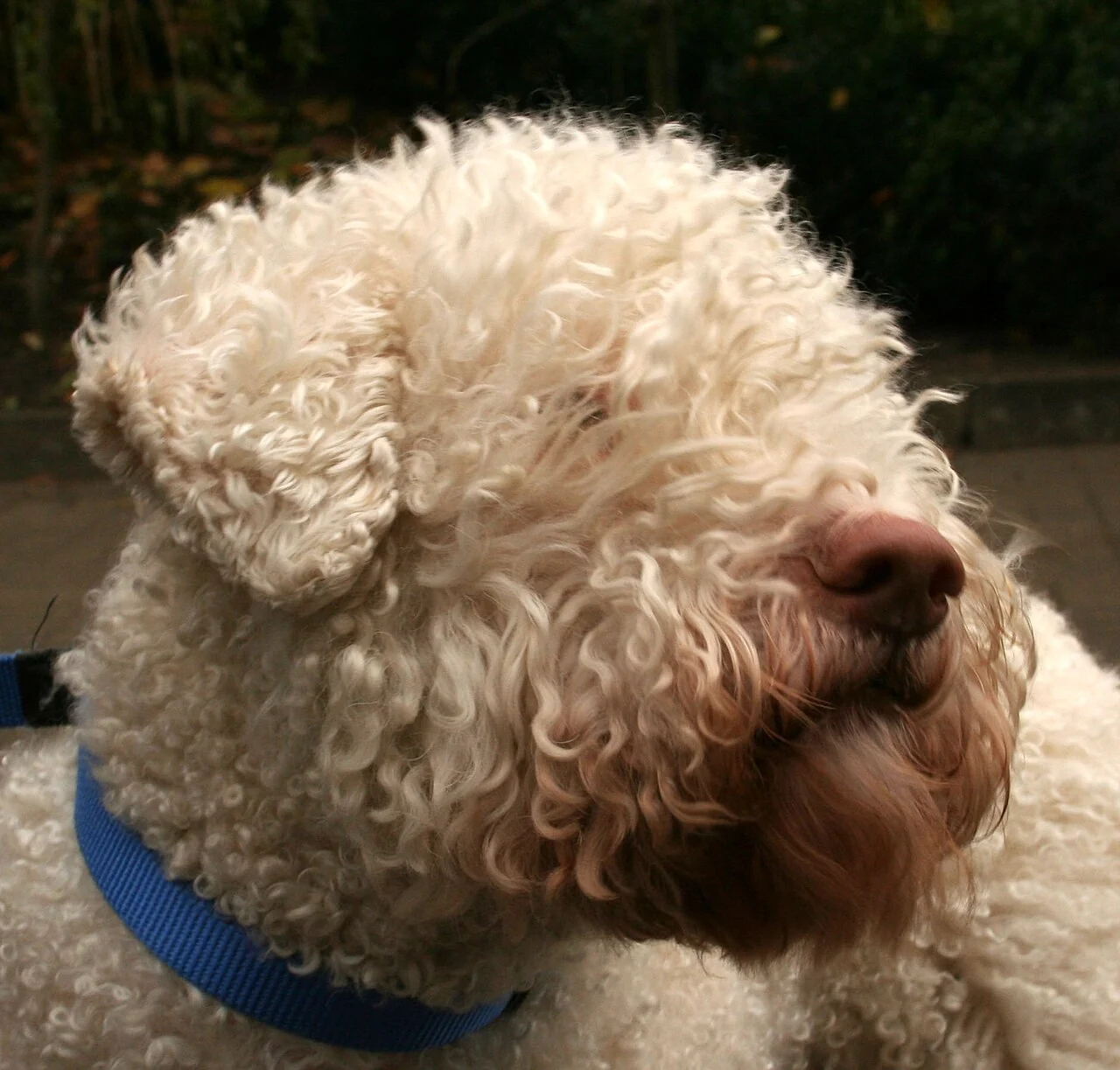
The dense curls keep growing and can mat even though the Lagotto leaves relatively little hair around the home. Moisture, soil and plant debris can lodge behind the ears, along the legs and in the beard. Run your fingers through these areas after a walk and loosen small tangles before they tighten against the skin. Regular trimming keeps the coat manageable; find a groomer familiar with the breed's natural curly texture.
The British standard describes a woolly, water-resistant coat with an undercoat. Hair on the head and brows may be longer but should not cover the eyes. Check the ears for redness, smell or repeated head shaking. Do not reach deep into the ear canal with cotton buds or pluck hair yourself to treat irritation; ask a vet to examine a sore ear.
Size and build
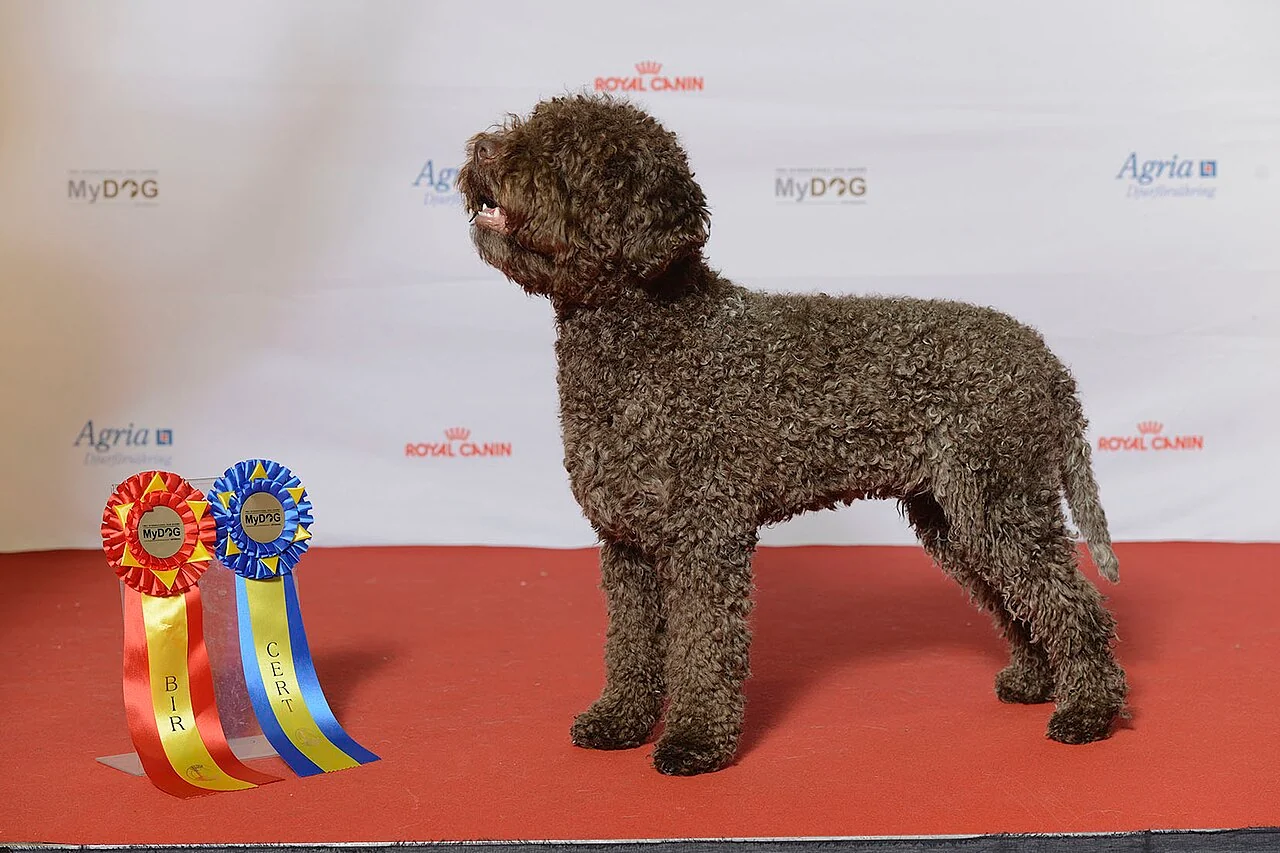
The Lagotto is nearly square, with a body roughly as long as it is tall. It is compact and sturdy, with a well-developed chest, a firm back and legs that stand straight. Rounded feet have hair between the toes. Thick curls cover the head too, forming brows and a beard that give the dog its slightly tousled expression. Colours include white, orange and several shades of brown and roan.
The British standard gives 43 to 48 cm at the shoulder and 13 to 16 kg for males, and 41 to 46 cm and 11 to 14 kg for females. An adult Lagotto should be able to move freely and smoothly. You should still be able to assess its body beneath the curls; a long, matted coat is not a mark of quality.
Health
Two distinct inherited neurological diseases are known in Lagottos. Familial juvenile epilepsy causes seizures in young puppies. In studied dogs, seizures often stopped by four months of age. Every seizure still needs veterinary assessment. Lagotto storage disease, by contrast, is progressive and can increasingly affect coordination.
DNA tests are available for both conditions. Ask to see both parents’ results and have their implications for the litter explained. The juvenile epilepsy test detects one specific genetic change, not every cause of seizures. Seizures have also been observed in a few dogs with just one copy of that change. A blanket promise that testing protects every puppy from all epilepsy would therefore be misleading.
The Royal Kennel Club also recommends hip and elbow X-rays and eye examinations for breeding dogs. Ask for the written reports. If your dog has seizures or an unsteady gait, take any genetic results to the veterinary appointment.
Could this breed fit your life?
Could work well if …
- You enjoy regular walks and would like to build scent games step by step with your dog.
- You can maintain a curly coat and budget for regular trims.
May be more difficult if …
- You assume a low-shedding dog needs little grooming or cannot trigger allergies.
- You want a dog content to spend most of its time alone without walks or activities.
Similar needs, different dogs.
Selected by shared size, activity, grooming and training characteristics.
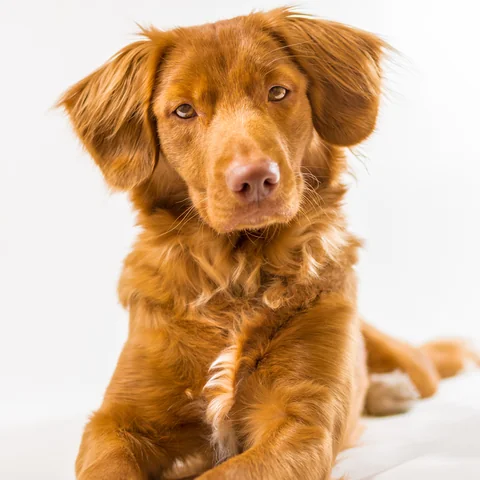
Retriever
Nova Scotia Duck Tolling Retriever
The Nova Scotia Duck Tolling Retriever, usually called the Toller, is an active Canadian gundog. It lured ducks closer by playing along the shore, then brought shot birds back from the water. As a companion, it needs daily walks, search games and time with its people.
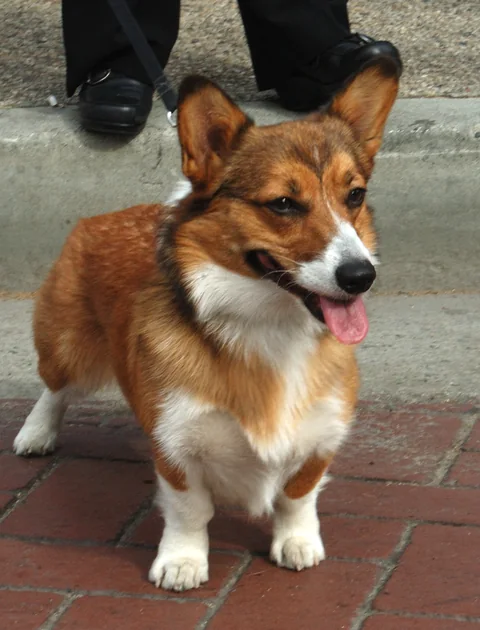
Cattle dog
Pembroke Welsh Corgi
The Pembroke Welsh Corgi brings a cattle dog's alertness into family life. It learns quickly, enjoys being on the move and leaves plenty of hair on the sofa.
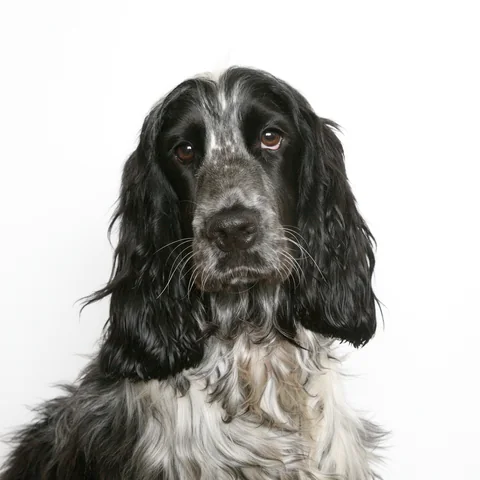
Gundog
English Cocker Spaniel
The English Cocker Spaniel is a lively gundog that loves getting out with its people. Its nose finds plenty to investigate outdoors, while its silky coat calls for daily care.
Sources and photograph credit
- Teaching your dog to be left alone
Used in this profile for: Staying home alone
- Lagotto Romagnolo dog breed information
Used in this profile for: Everyday life, Day-to-day care, Could this breed fit your life?
- A Missense Change in the ATG4D Gene Links Aberrant Autophagy to a Neurodegenerative Vacuolar Storage Disease
Used in this profile for: Health
- Behavioral Abnormalities in Lagotto Romagnolo Dogs with a History of Benign Familial Juvenile Epilepsy: A Long-Term Follow-Up Study
Used in this profile for: Health
- Lagotto Romagnolo · FCI standard no. 298
Used in this profile for: Temperament, Size and build
- Lagotto Romagnolo, Breeds A to Z
Used in this profile for: Temperament, Everyday life, Health, Lifespan, Could this breed fit your life?
- Lagotto Romagnolo breed standard
Used in this profile for: Size / Weight, Temperament, Day-to-day care, Size and build
- LGI2 Truncation Causes a Remitting Focal Epilepsy in Dogs
Used in this profile for: Health
- Lagotto Romagnolo Grooming
Used in this profile for: Day-to-day care
- Health Conditions in the Lagotto Romagnolo
Used in this profile for: Health
Portrait · Lagotto romagnolo 555 · Pleple2000 · CC BY-SA 3.0 · Edited

Side view · BIR Grupp 8: LAGOTTO ROMAGNOLO La Gottis Campione · Johan Frick-Meijer / Svenska Mässan · CC BY 2.0 · Edited

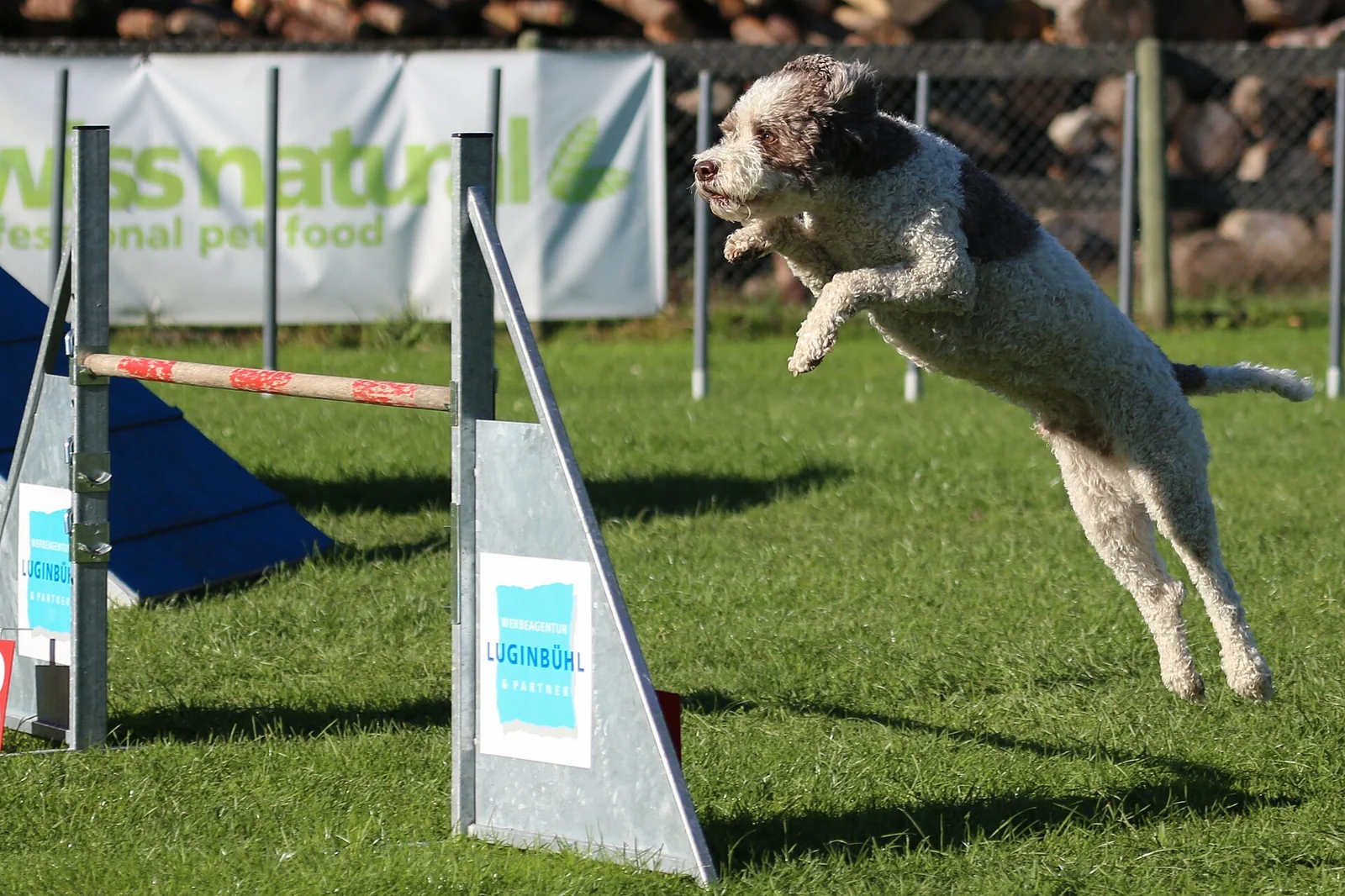
In action · Agility - Sprung Lagotto 1 · A. Buser · CC BY-SA 3.0 ch · Edited

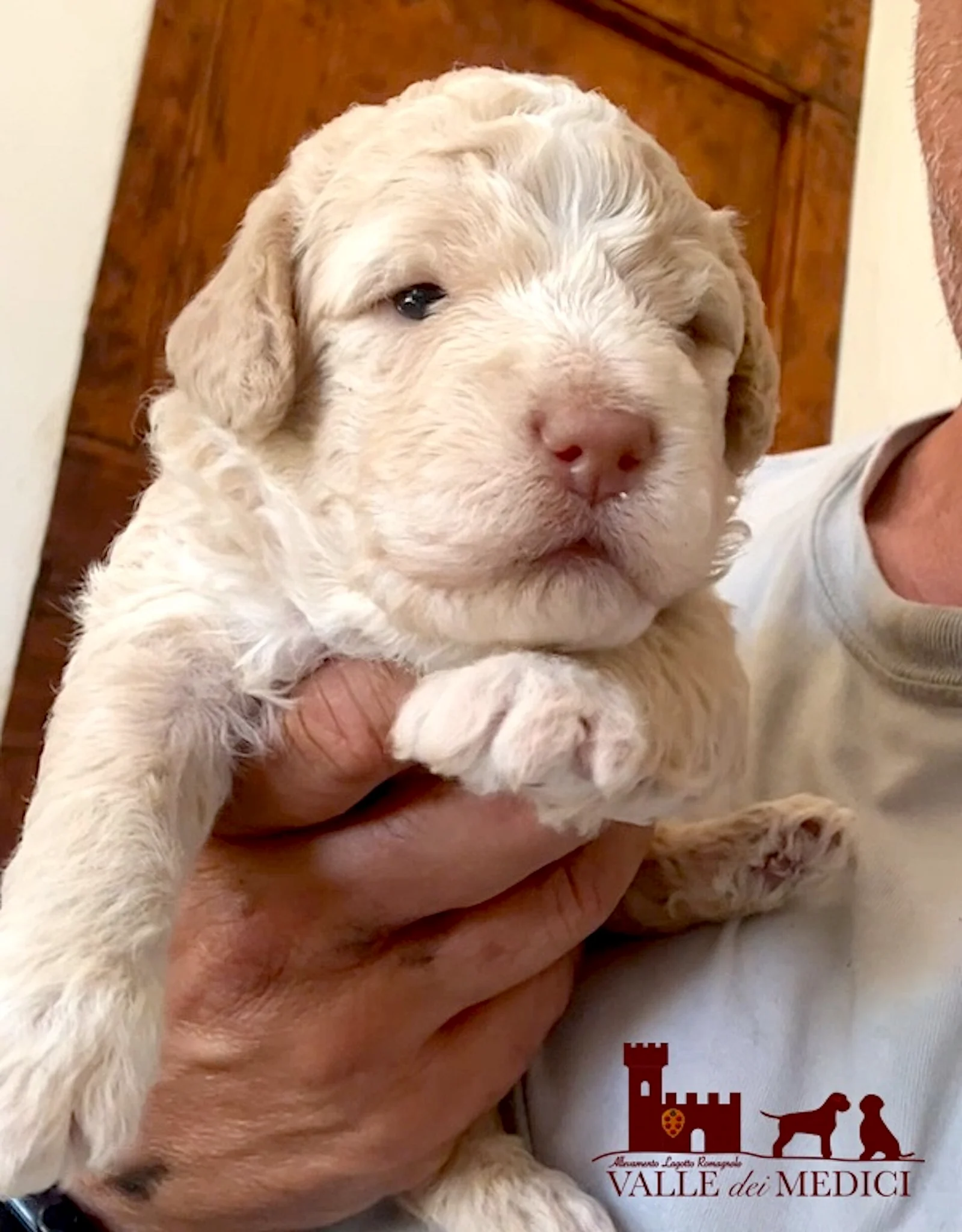
Puppy · Lagotto Romagnolo puppies - Allevamento Valle dei Medici · Martinacammelli · CC0
