 fellfolio
Herding dog
Australian Kelpie
The Australian Kelpie was bred to work sheep. Quick reactions and considerable stamina mean it may suit people who enjoy being outdoors every day and training alongside their dog.
At a glance
- Size
- Medium
- Height at shoulder
- 43 to 51 cm
- Lifespan
- 10 to 13 years
- Activity
- Very high
- Grooming
- Weekly
- Training
- Demanding activities
- Owner experience
- Experience recommended
A herding dog that likes to think
A Kelpie pays close attention to what is happening around it. Movement rarely goes unnoticed, and many are immediately ready to join in. That attention helped their ancestors move sheep across large areas. In family life, a dog may also follow running children or other animals and try to control their movement. Adults should supervise these situations and help the dog learn an alternative, such as coming to them or settling on its bed.
A Kelpie can learn quickly and also work out for itself what is worth doing. Short exercises with clear cues and a suitable reward are more useful than constantly increasing the demands. A dog that enjoys working also needs opportunities to switch off. Learning to lie quietly nearby should have a place alongside recall practice and exercise.
Everyday life
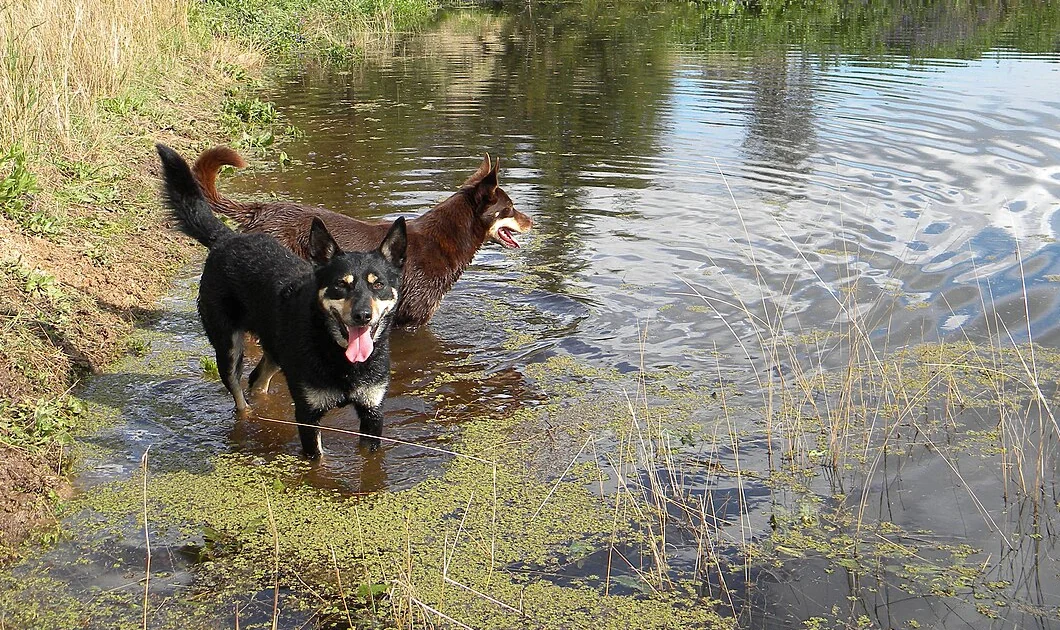
A Kelpie needs daily exercise and activities that involve working attentively with its person. Walks can be combined with scent searches, a training class or a dog sport you learn together. For a simple search, the dog might find a familiar toy you have placed in the grass. Changing the distance and hiding place adds difficulty without making every game a high-speed chase.
A garden can be convenient, but it does not replace shared activities. A Kelpie may suit someone who regularly enjoys longer outings and likes dog training. People looking mainly for short walks and an otherwise quiet companion should get to know other breeds. The length and intensity of outings must suit a puppy or young dog’s development. A Kelpie can overheat too. On warm days, active outings should be moved to cooler hours, with water and shade available.
Breeding background matters when choosing a dog. Working Kelpies are selected primarily for their actual livestock work. Australian Kelpies are also bred to a written breed standard describing features such as build and coat. These are different breeding populations. The name alone does not tell you how much activity an individual needs. The parents’ behaviour and the breeder’s or foster carer’s experience provide more useful information.
Staying home alone
Dogs learn to stay home alone in small steps. The RSPCA advises no more than four hours at a time. Puppies and dogs that become unsettled when left alone need shorter absences and gradual practice. Arrange someone to care for your dog when you will be away longer.
Everyday dog training: recall, a loose lead and clear communication ↗
Day-to-day care
The short coat has a firm outer layer over a dense undercoat, the softer hair beneath it. Weekly brushing is often sufficient between seasonal sheds. When the undercoat is coming out, loose hair needs removing more frequently. A Kelpie can shed noticeably despite having short hair. Baths are mainly needed when the dog is genuinely dirty.
After walks through long grass, the paws and coat should be checked for trapped plant material. Teeth, ears and nails also need regular care. Slowly introducing gentle handling of these areas from the outset makes later examinations easier.
Size and build
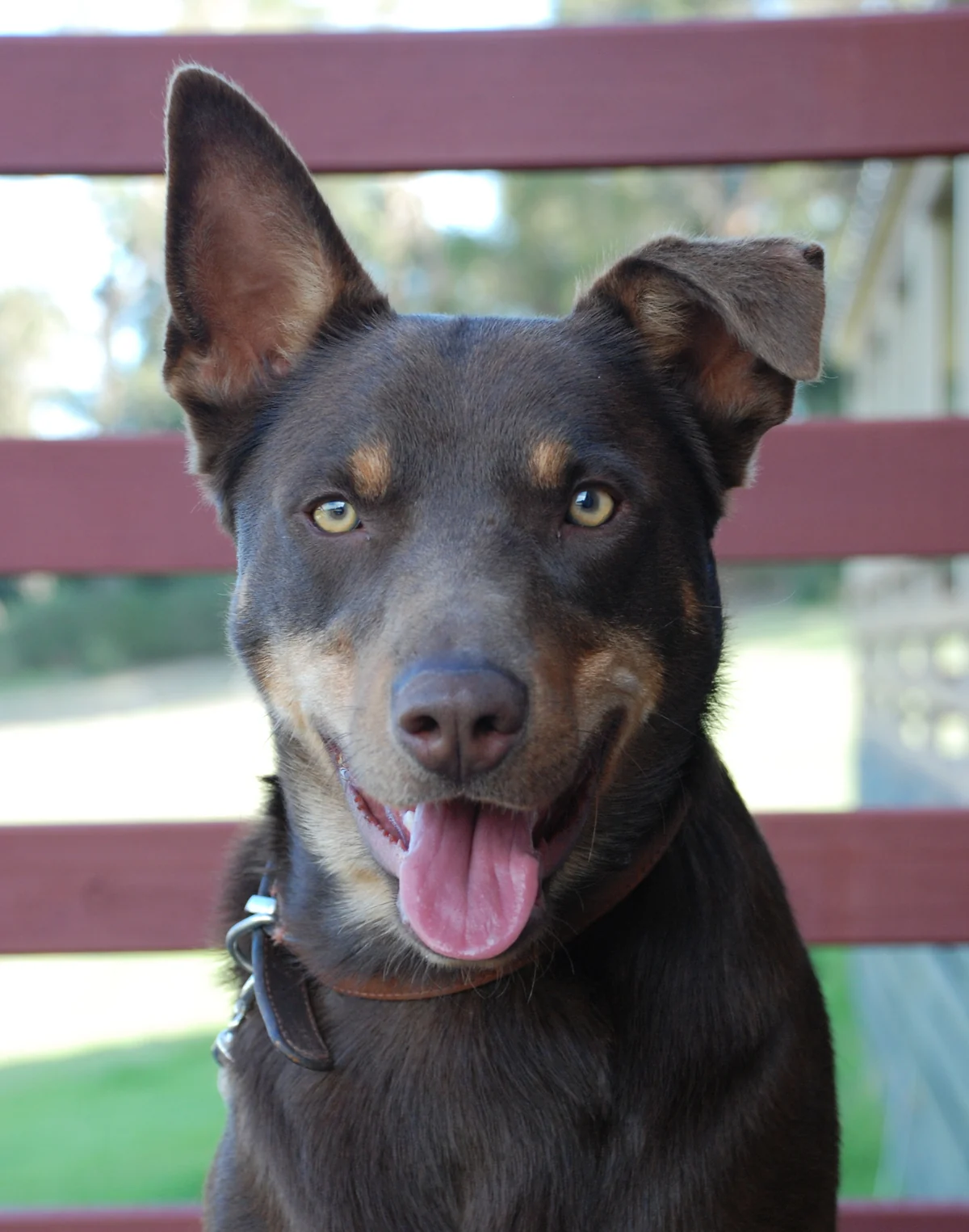
The breed developed in Australia from imported Scottish herding dogs. Expanding sheep flocks required dogs that could cover long distances and work over difficult ground. Today’s Kelpie is agile and muscular without looking heavy. Upright ears and an alert expression are characteristic.
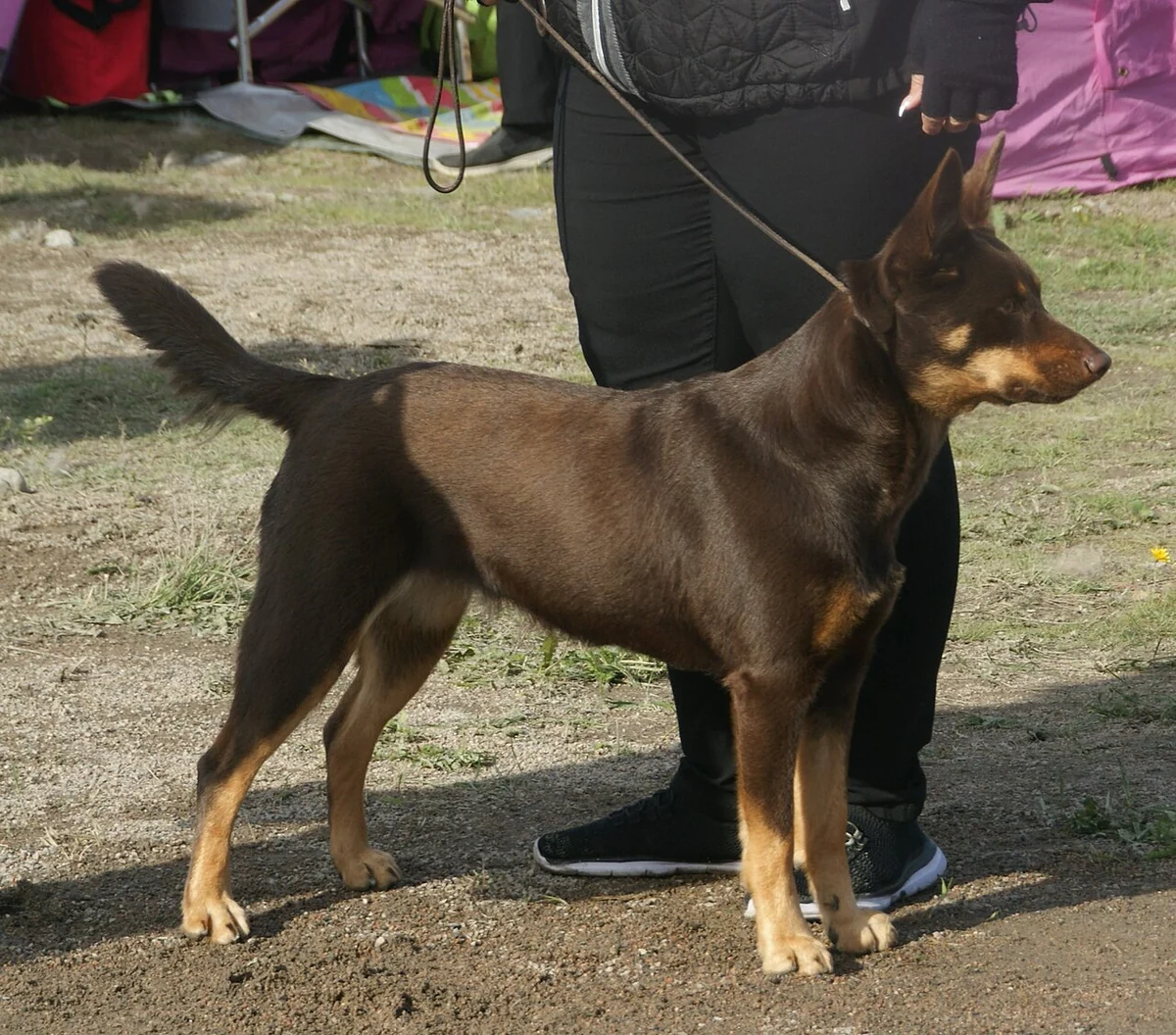
The international breed standard gives shoulder heights of 46 to 51 cm for males and 43 to 48 cm for females. Shoulder height is measured from the ground to the highest point above the shoulders. The standard does not set a body weight. Coat colours include black, red and chocolate, sometimes with lighter markings. Colour and breeding background alone tell you little about how well an individual will fit your life.
From puppy to senior: caring for your dog through every life stage ↗
Health
When choosing a Kelpie, the parents’ health reports and any known conditions among relatives should be discussed. Depending on the breeding programme, relevant checks include hip and eye examinations and appropriate DNA tests. Hip dysplasia is abnormal development of the hip joint and can cause pain and joint wear. X-rays help assess the parents, but cannot prevent every later joint problem in a puppy.
Inherited conditions have also been described in Kelpies. Cerebellar abiotrophy, or CA, damages cells in the cerebellum, a brain region involved in coordinating movement. Affected dogs may walk unsteadily, have involuntary head movements or lift their feet unusually high. Intestinal lipid malabsorption, or ILM, prevents the gut from absorbing dietary fats properly. Puppies may grow poorly and pass unusually greasy, soft stools. These changes need veterinary investigation.
CA tests do not all provide the same information. Some assess genetic features linked to a higher risk, although not every dog with that feature develops the disease. Others test for a particular disease-associated change in the DNA. Results need to be appropriate for the dog and its ancestry and can be discussed with the vet. A clear DNA result is not an overall certificate of health.
Could this breed fit your life?
Could work well if …
- You enjoy being active every day and want to combine exercise with training together.
- You can guide a quick-reacting herding dog with patience and help it settle.
- You are willing to investigate breeding background and meet the parents or the adult dog before deciding.
What to consider
- You mainly want company on short walks.
- The dog would often spend long periods without activity or company.
- You expect herding behaviour around children or other animals to disappear without practice.
Similar needs, different dogs.
Selected by shared size, activity, grooming and training characteristics.
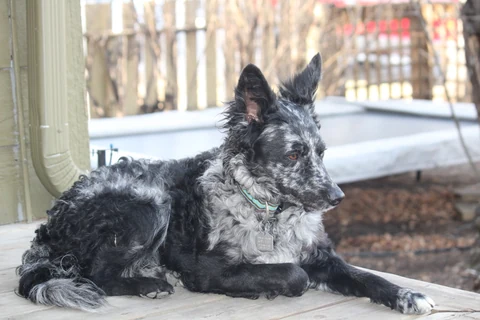
Hungarian herding dog
Mudi
The Mudi is an agile Hungarian herding dog with upright ears, a wavy coat and quick reactions. It watches closely, enjoys learning and wants plenty to do with its people. Its manageable size and relatively straightforward coat care can make daily routines easier. Exercise and training call for committed owners who can also help the dog relax around visitors and fast movement.
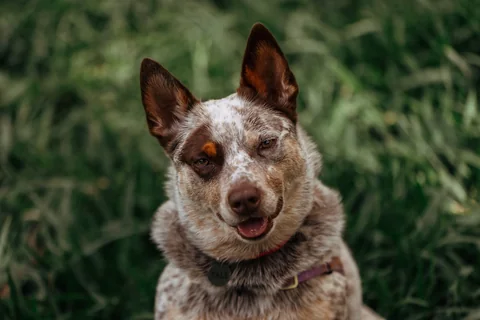
Herding dog
Australian Cattle Dog
Bred to drive cattle over long distances, the Australian Cattle Dog still notices movement quickly in family life. It needs plenty of exercise and people who will teach it to let running children and bicycles pass calmly.
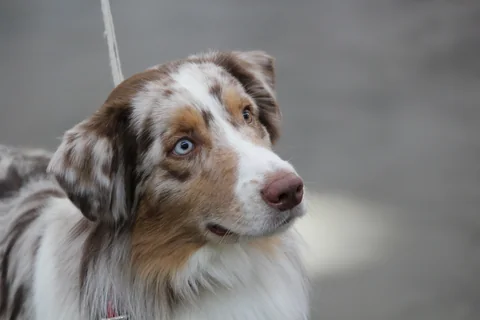
Herding dog
Australian Shepherd
Australian Shepherds were developed on western US ranches to herd livestock and work closely with people. In family life, they may watch bicycles or running children. Calm training at a distance helps them let movement pass.
Sources and photograph credit
- Teaching your dog to be left alone
Used in this profile for: Staying home alone
- Australian Kelpie
Used in this profile for: Lifespan
- Fun Facts About the Australian Kelpie
Used in this profile for: Temperament, Everyday life, Day-to-day care, Could this breed fit your life?
- Cerebellar Abiotrophy in Australian Working Kelpies Is Associated with Two Major Risk Loci
Used in this profile for: Health
- A large deletion on CFA28 omitting ACSL5 gene is associated with intestinal lipid malabsorption in the Australian Kelpie dog breed
Used in this profile for: Everyday life, Health
- FCI Standard No. 293: Australian Kelpie
Used in this profile for: Size / Weight, Temperament, Day-to-day care, Size and build, Could this breed fit your life?
- Australian Kelpie: Hälsa
Used in this profile for: Health
- Hip Dysplasia in Dogs
Used in this profile for: Health
- Heatstroke in dogs
Used in this profile for: Everyday life
- Characteristics and Conformation of the Kelpie
Used in this profile for: Everyday life, Could this breed fit your life?
Photo credits
Portrait · File:Australian Kelpie portrait.jpg · davepaku · CC BY-SA 2.0 · Edited

Side view · File:Australian Kelpie liver & tan 4.jpg · Canarian · CC BY-SA 4.0 · Edited

Everyday life · File:Kelpies Swimming.JPG · Barfguts · CC BY-SA 4.0 · Edited

Puppy · File:Puppy Eyes Kelpie.jpg · Stephanie Watson · CC BY-SA 2.0 · Edited
