 fellfolio
Hungarian herding dog
Mudi
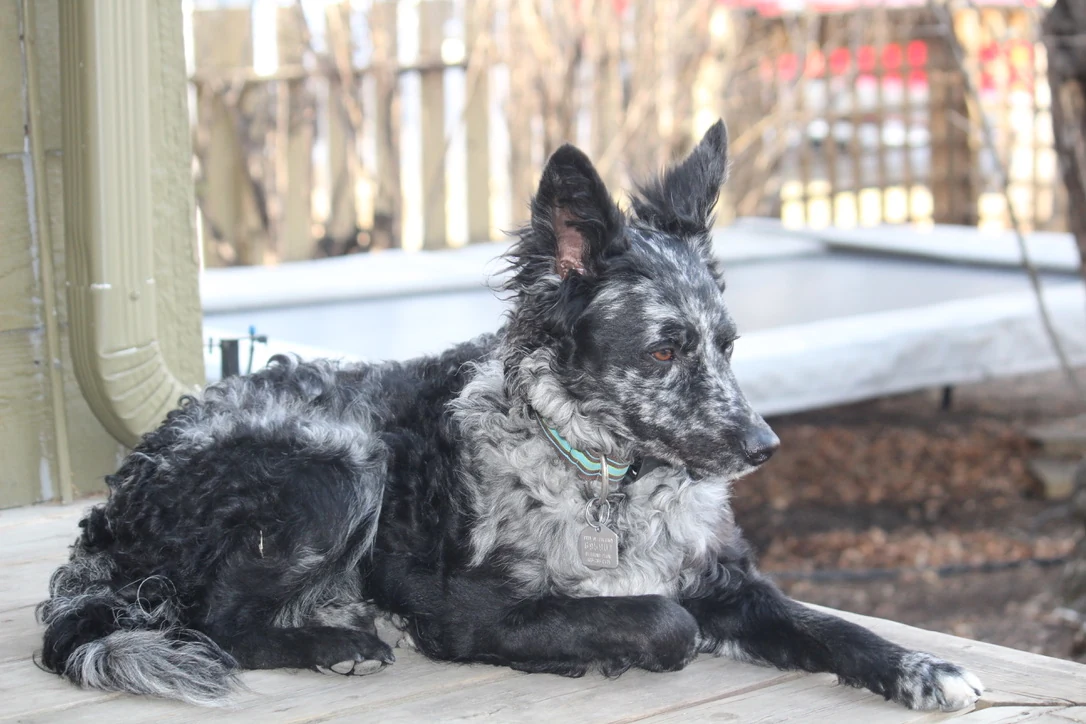
The Mudi is an agile Hungarian herding dog with upright ears, a wavy coat and quick reactions. It watches closely, enjoys learning and wants plenty to do with its people. Its manageable size and relatively straightforward coat care can make daily routines easier. Exercise and training call for committed owners who can also help the dog relax around visitors and fast movement.
At a glance
- Size
- Medium
- Height at shoulder
- 38 to 47 cm
- Lifespan
- 12 to 14 years
- Activity
- Very high
- Grooming
- Weekly
- Training
- Demanding activities
- Owner experience
- Experience recommended
An attentive working partner with a voice of its own
The Mudi worked at driving and herding sheep and cattle. It needed to notice movement, respond quickly and cooperate with a person. Many Mudis bring that watchfulness into the home. A passer-by at the window or a ringing doorbell may prompt barking. Calm observation and a familiar resting place away from the front door should therefore be taught early.
The American breed club describes a generally friendly, playful dog among familiar people. It may be reserved with strangers at first. Visitors should allow time rather than immediately reaching towards it. A well-managed introduction with plenty of space helps you assess its response. Puppies should meet different places, sounds and people in manageable, pleasant encounters.
Herding behaviour can appear in daily life as following or chasing fast movement. Running children, bicycles or a dog going past may attract interest. Adults should notice staring and preparations to chase early, then create distance and ask for a familiar task. Children’s interactions need supervision. With other pets too, the responses of the individual animals during introductions matter.
Everyday life
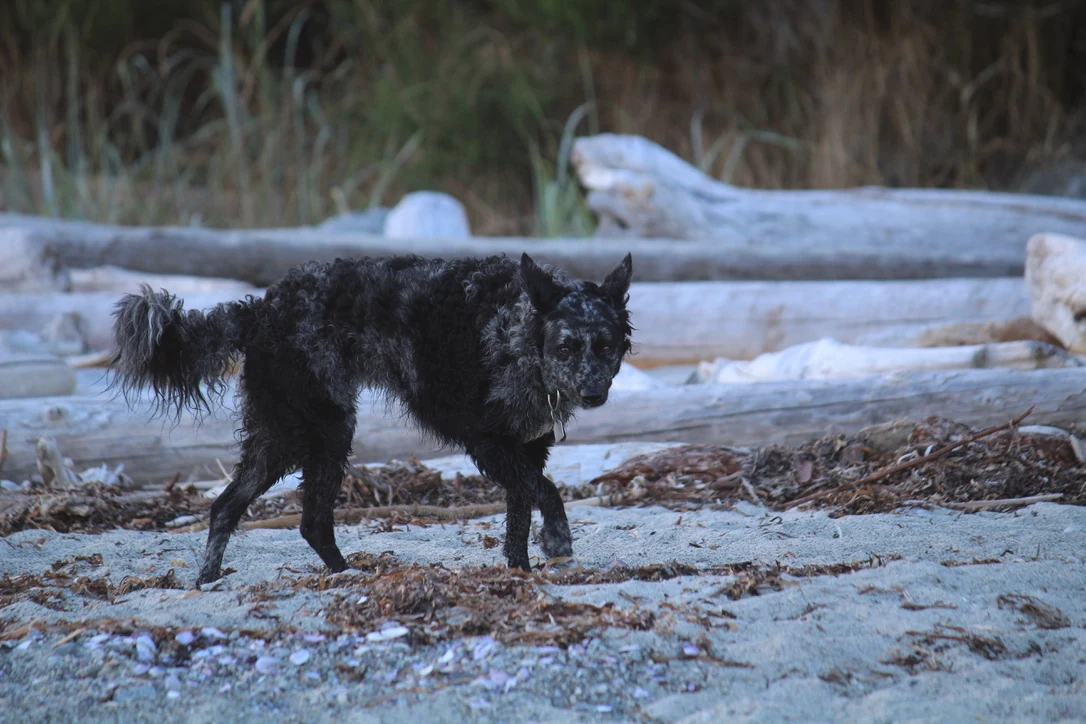
A Mudi needs daily movement and activities that use its mind. A walk can combine recall, brief waiting and searching together for a toy. Free running should take place in a safe area. First, you should check how far the dog moves away and whether it still returns reliably when called around wildlife or fast movement.
Dog sports offer plenty of possibilities for people who enjoy training. Agility is an obstacle course where a dog works with its handler through tunnels and over suitable obstacles. The Mudi Club of America names it as one option. Foundations such as waiting calmly to begin and following a hand movement can be taught without jumping. Physical demands should suit age and health and be introduced with skilled guidance.
An active day should also include rest. A dog expecting another task after every movement should have opportunities to learn to relax in a quiet place. A flat can suit the breed with well-organised exercise and training. Loud barking and constant distractions just outside the windows should be considered. Learning to be alone should progress in small steps. Longer absences require care arrangements while the dog is still learning to cope comfortably.
Staying home alone
Dogs learn to stay home alone in small steps. The RSPCA advises no more than four hours at a time. Puppies and dogs that become unsettled when left alone need shorter absences and gradual practice. Arrange someone to care for your dog when you will be away longer.
Everyday dog training: recall, a loose lead and clear communication ↗
Day-to-day care
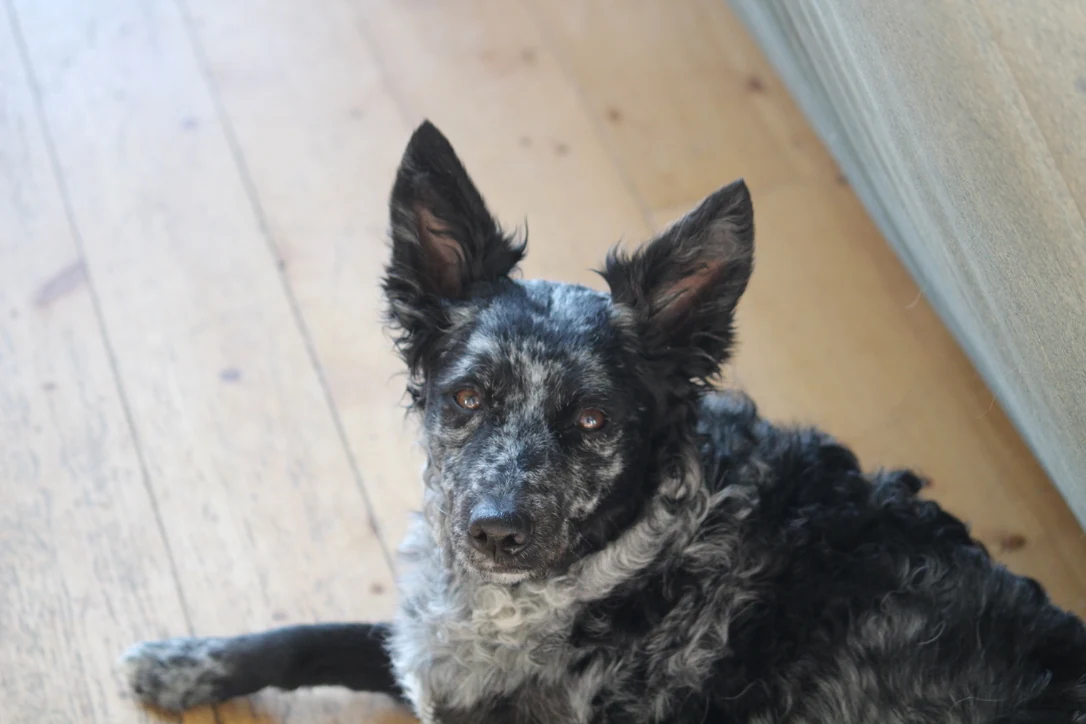
A Mudi has short, smooth hair on the head and fronts of the legs. Elsewhere, the coat is wavy or forms small curls. Regular brushing or combing removes loose hair. More frequent attention may be useful during moulting. Following outings, feet and the areas under a collar or harness should be checked for dirt, plant material and skin irritation.
Bathing is possible when needed, for instance after particularly dirty material gets into the coat. Suitable dog shampoo should be rinsed out thoroughly. Nails should be checked regularly and trimmed by someone competent when necessary. Daily toothbrushing can be introduced gradually using dog toothpaste and an appropriate brush.
Brief grooming exercises can reduce the need to restrain an energetic dog. A short touch to a foot can be rewarded first. Later, lifting the foot and looking at the pads can be added. Turning away or becoming restless suggests that the exercise should become easier or a break would help.
Size and build
The breed developed in Hungary during the 18th and 19th centuries. The standard of the international breed organisation FCI describes crosses among Hungarian herding dogs and suggests involvement from German herding dogs with upright ears. Details of that early ancestry remain uncertain. Today’s Mudi is a separate breed, distinguished from the Puli and Pumi by features including its upright ears and combination of smooth and wavy hair.
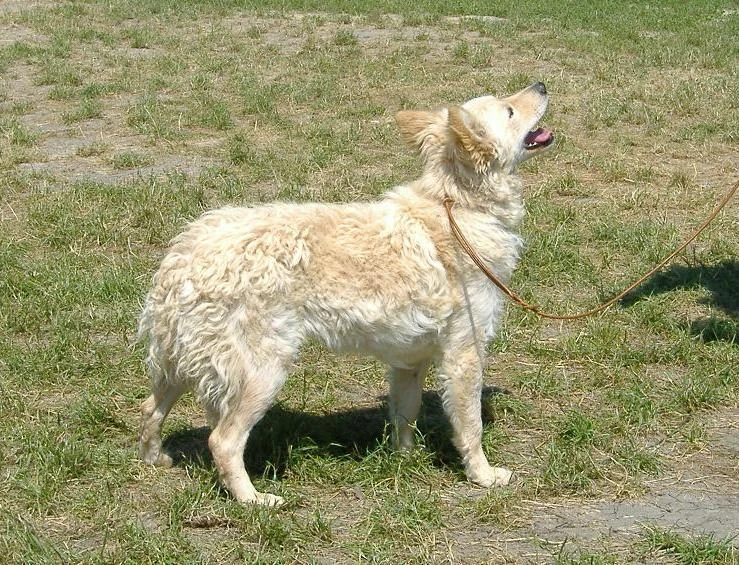
Its body is slightly longer than its height. The tail may be long, but naturally short tails also occur. Alongside black and white, the standard describes fawn, brown, ash-coloured and merle dogs, among others. Merle is an irregular marbling of lighter and darker areas of coat. Males stand 41 to 47 cm and females 38 to 44 cm. The current FCI standard, issued in 2023, does not specify a weight.
From puppy to senior: caring for your dog through every life stage ↗
Health
For breeding dogs, the Mudi Club of America recommends hip, elbow, kneecap and eye examinations. Since 2025, a basic cardiac examination has also formed part of its requirements. Complete results for both parents should be available when choosing a puppy. Joint assessments matter because abnormal development can cause pain and later arthritis.
In patellar luxation, the kneecap slips out of its normal groove. A dog may briefly lift a hind leg and then walk normally again. Even short episodes like this should be investigated by a vet. Eye examinations help detect inherited and other eye diseases. Redness, squinting or changes in vision call for prompt examination.
The club lists MDR1 DNA testing as an additional option. It checks a genetic variant that alters a transport mechanism for medicines. Certain drugs can then have stronger effects in the brain and cause adverse reactions. An existing result should be shared with the vet before medication is given. The test checks one particular variant and does not replace individual prescribing decisions. The American Kennel Club gives a lifespan of 12 to 14 years. Family health history and the individual dog’s condition are also useful for planning.
Could this breed fit your life?
Could work well if …
- You enjoy regular training and want to work with an energetic dog.
- You can patiently manage quick reactions, barking and introductions while allowing plenty of rest.
- You want a manageable-sized herding breed and choose by behaviour and documented health results.
What to consider
- A Mudi may watch movement closely and should receive early guidance around fast-moving distractions.
- Many Mudis bark to announce events. This matters when considering the home environment.
- Enough time should be planned every day for exercise, training and shared activities.
Similar needs, different dogs.
Selected by shared size, activity, grooming and training characteristics.
Herding dog
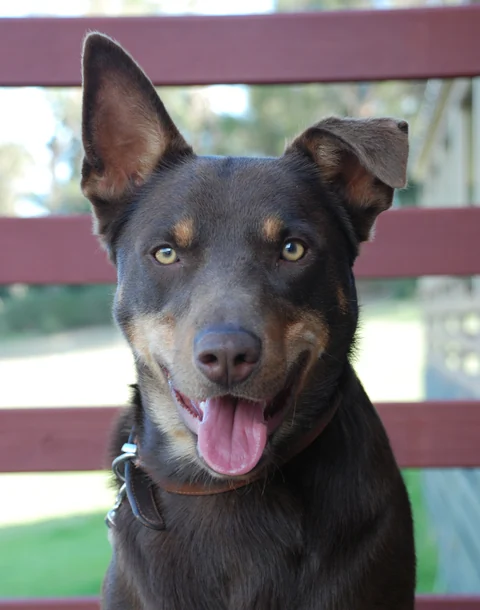
Australian Kelpie
The Australian Kelpie was bred to work sheep. Quick reactions and considerable stamina mean it may suit people who enjoy being outdoors every day and training alongside their dog.
Herding dog
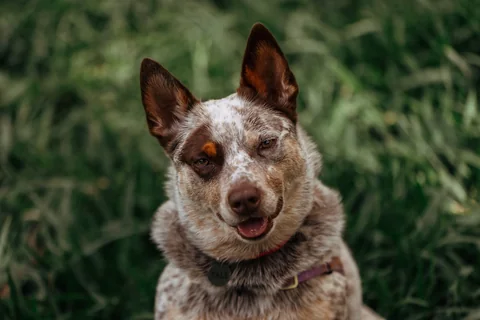
Australian Cattle Dog
Bred to drive cattle over long distances, the Australian Cattle Dog still notices movement quickly in family life. It needs plenty of exercise and people who will teach it to let running children and bicycles pass calmly.

Herding dog
Australian Shepherd
Australian Shepherds were developed on western US ranches to herd livestock and work closely with people. In family life, they may watch bicycles or running children. Calm training at a distance helps them let movement pass.
Sources and photograph credit
- Teaching your dog to be left alone
Used in this profile for: Staying home alone
- Canine hip dysplasia (CHD)
Used in this profile for: Health
- Patellar luxation
Used in this profile for: Health
- Mudi
Used in this profile for: Temperament, Everyday life, Day-to-day care, Lifespan, Could this breed fit your life?
- Mudi Club of America breed introduction
Used in this profile for: Temperament, Everyday life, Size and build, Could this breed fit your life?
- Mudi, FCI Standard No. 238
Used in this profile for: Size / Weight, Temperament, Day-to-day care, Size and build, Could this breed fit your life?
- Parent Club Health Statement 2025
Used in this profile for: Health
- Dental disease in dogs
Used in this profile for: Day-to-day care
- Eye problems in dogs
Used in this profile for: Health
- Grooming and bathing pets
Used in this profile for: Day-to-day care
- Teaching your dog to be left alone
Used in this profile for: Everyday life
- Separation-related behaviour
Used in this profile for: Everyday life
- Training your dog
Used in this profile for: Everyday life
- Multidrug Sensitivity (MDR1)
Used in this profile for: Health
Photo credits
Portrait · Stoic Mudi.jpg · Qwexcxewq · CC BY 4.0 · Edited

Coat and features · Gubby.jpg · Qwexcxewq · CC BY 4.0 · Edited

Everyday life · Wet Mudi.jpg · Qwexcxewq · CC BY 4.0 · Edited

Side view · Mudi fawn.JPG · Lily15 · CC BY-SA 3.0 · Edited
