 fellfolio
Herding dog
Australian Cattle Dog
Bred to drive cattle over long distances, the Australian Cattle Dog still notices movement quickly in family life. It needs plenty of exercise and people who will teach it to let running children and bicycles pass calmly.
At a glance
- Size
- Medium
- Height at shoulder
- 43 to 51 cm
- Weight
- 16 to 20 kg
- Lifespan
- over 10 years
- Activity
- Very high
- Grooming
- Low
- Training
- Demanding activities
- Owner experience
- Experience recommended
Why this breed is called a “Heeler”
In Australia, these dogs helped move cattle across large, sometimes rough stretches of land. To keep an animal moving, a dog could work close to its back legs and nip at its heels. That is where the name “Heeler” comes from.
Some Cattle Dogs turn that same urge towards running children, bicycles or fast games. When children play, begin far enough away that your dog can stay relaxed and check in with you. Reward that glance and move on before it starts pulling towards them. If it is already staring or begins to chase, calmly guide it away and practise later from farther back. With visitors, the dog can watch from a little distance first. It does not need to be touched by unfamiliar people straight away.
Everyday life
The UK veterinary charity PDSA recommends more than two hours of daily exercise for adult Australian Cattle Dogs. A long walk alone may not be enough. Scent games in a field, carefully built recall practice or a well-supervised agility class let the dog work with you. Keep it on a lead near cattle and other livestock unless it is trained for that work.
Rest has a place in the day as well. After an active outing, the dog should have a quiet place at home where it can sleep undisturbed. When children play, manage the situation actively: let the dog watch from a comfortable distance or occupy it separately before it begins to follow them.
Staying home alone
Dogs learn to stay home alone in small steps. The RSPCA advises no more than four hours at a time. Puppies and dogs that become unsettled when left alone need shorter absences and gradual practice. Arrange someone to care for your dog when you will be away longer.
Everyday dog training: recall, a loose lead and clear communication ↗
Day-to-day care
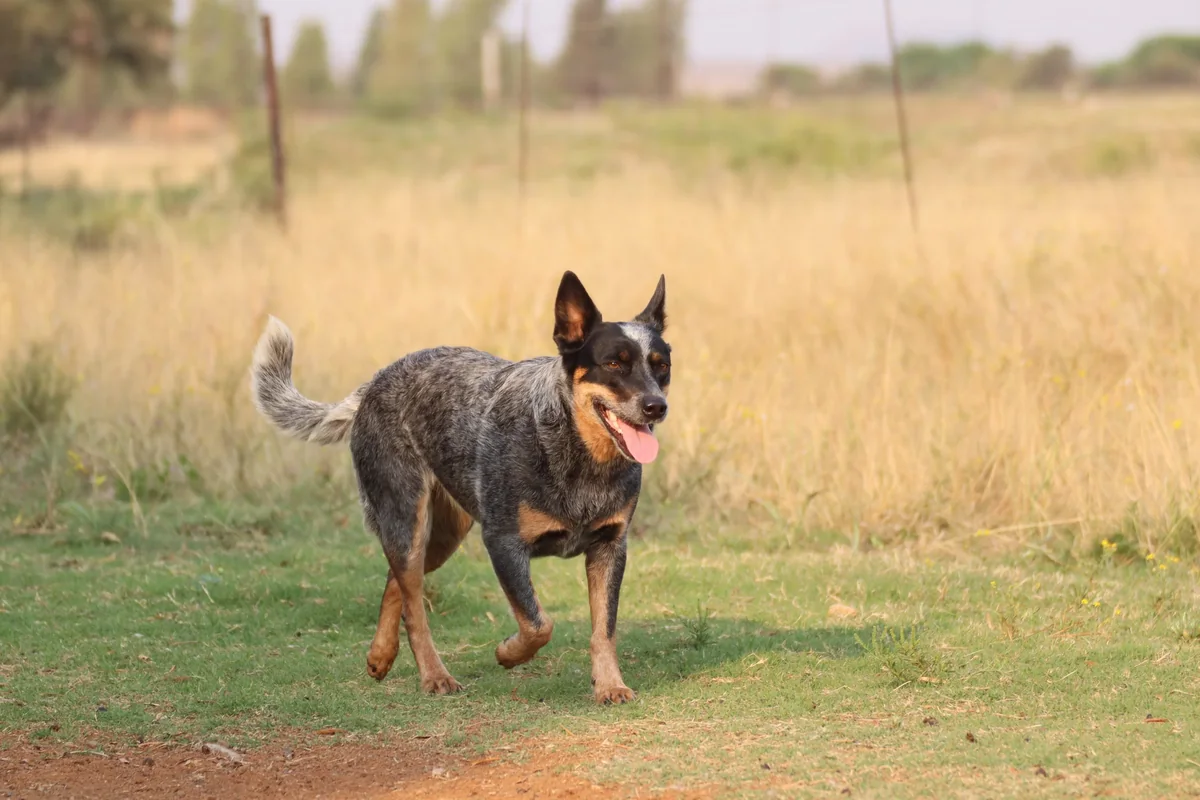
The short, weather-resistant double coat usually needs brushing once a week. More undercoat comes loose during seasonal shedding, when brushing more often helps. The coat should lie close to the body and needs no elaborate trim.
On warm days, check the ground with your hand before a walk. If the pavement is too hot, choose a cooler route or go out later. After stony or dry tracks, check the pads for cracks and sore spots. Notice itchy or red skin too; PDSA lists skin inflammation among the breed’s possible health problems.
Size and build
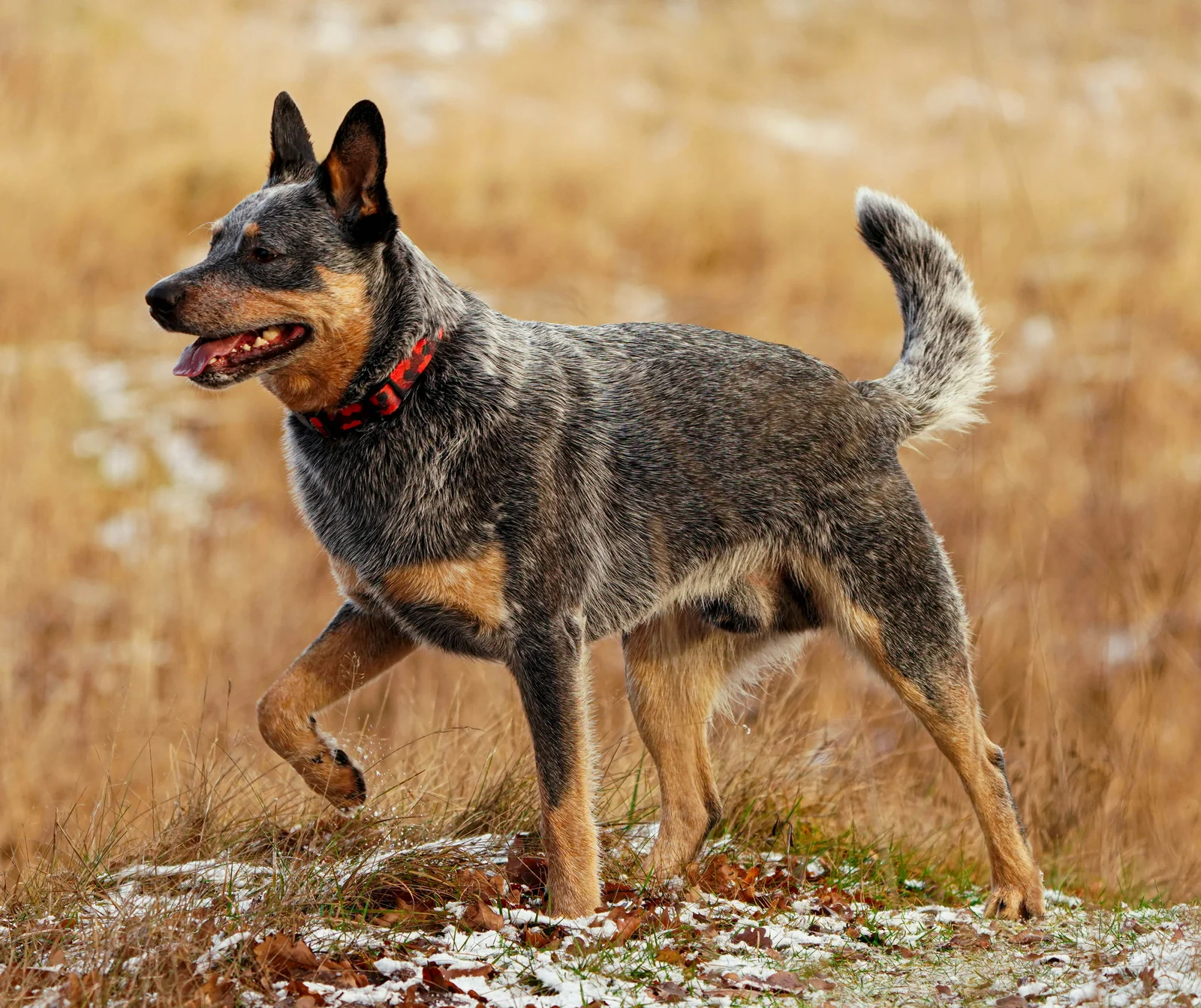
The Australian Cattle Dog is compact and strong, with a level back, deep chest and firm, round feet. Its body is a little longer than it is tall without looking heavy. The standard of the international kennel federation FCI gives 46 to 51 cm at the shoulder for males and 43 to 48 cm for females. PDSA lists a weight range of 16 to 20 kg.
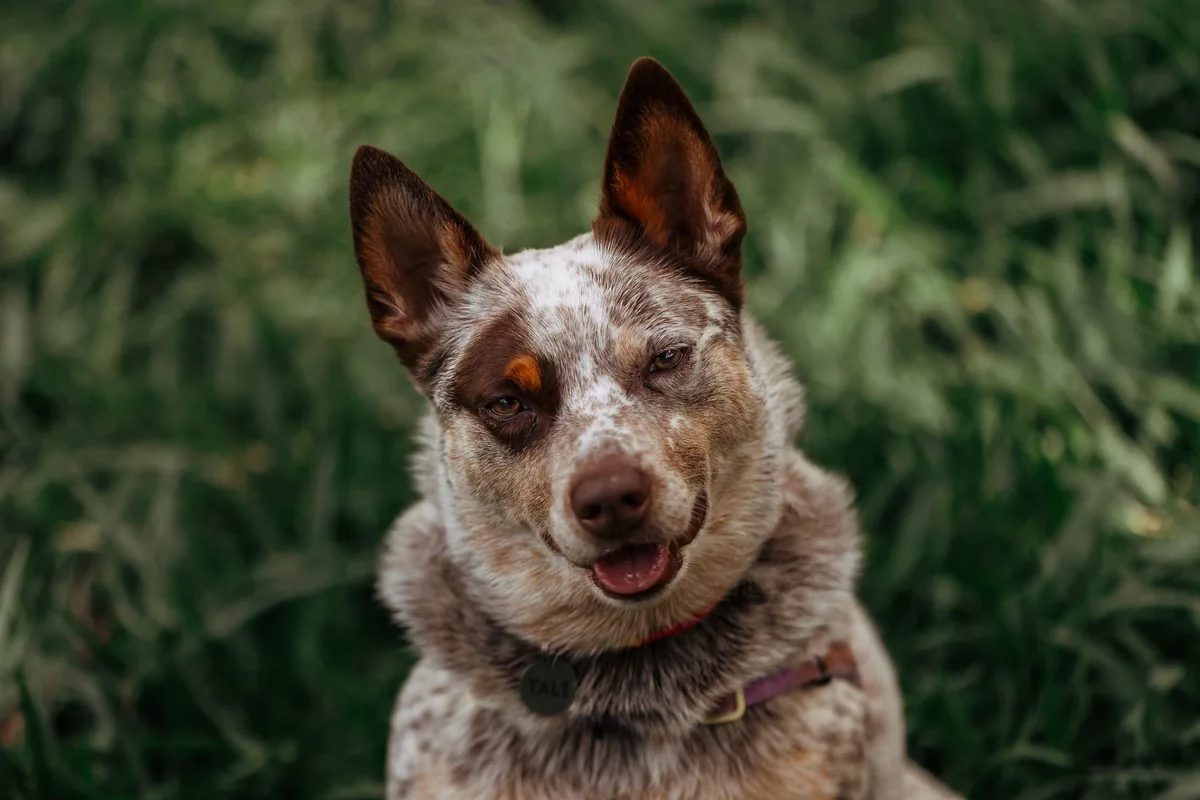
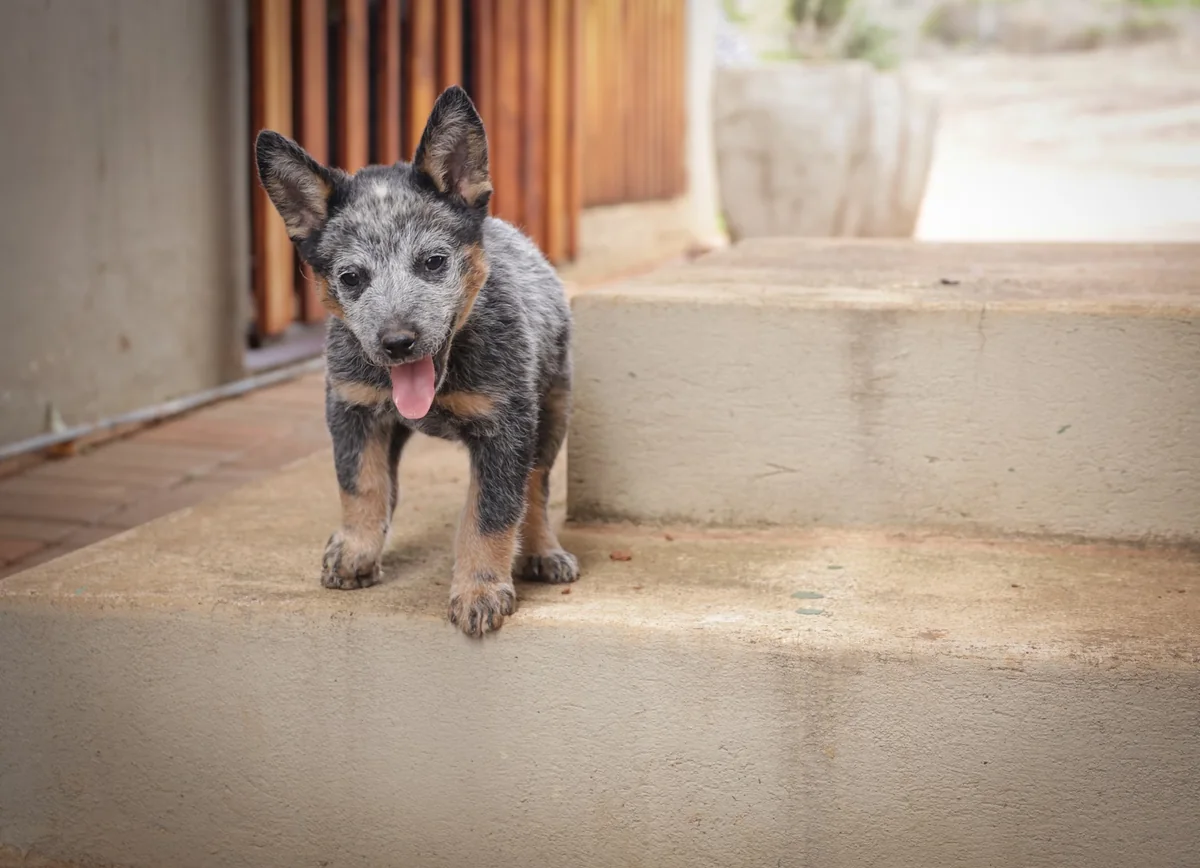
A dense undercoat lies beneath the short, hard outer coat. Blue or red colouring is made up of finely intermingled hairs, often giving a speckled appearance. Many puppies are born mostly white; the blue or red pattern becomes clearer over the following weeks.
From puppy to senior: caring for your dog through every life stage ↗
Health
Congenital hearing loss is an important issue in Australian Cattle Dogs. Watching whether a puppy reacts to sound is not enough: hearing in only one ear can be hard to notice at home. A BAER test checks each ear separately. Ask to see the puppy’s documented BAER result.
Hip and elbow dysplasia can lead to painful joint problems; the Kennel Club recommends screening the parents. Its health standard also lists eye examinations and a DNA test for one form of progressive retinal atrophy, in which damage to the retina gradually affects vision. Ask for the actual results rather than accepting “health tested” without details.
Could this breed fit your life?
Could work well if …
- You enjoy long daily outings and want to train with your dog.
- You can notice and gently redirect quick, strong cattle-driving behaviour early.
May be less suitable if …
- You can offer only short walks and little shared activity.
- You have small children who often play boisterously and cannot supervise their time with the dog.
Similar needs, different dogs.
Selected by shared size, activity, grooming and training characteristics.
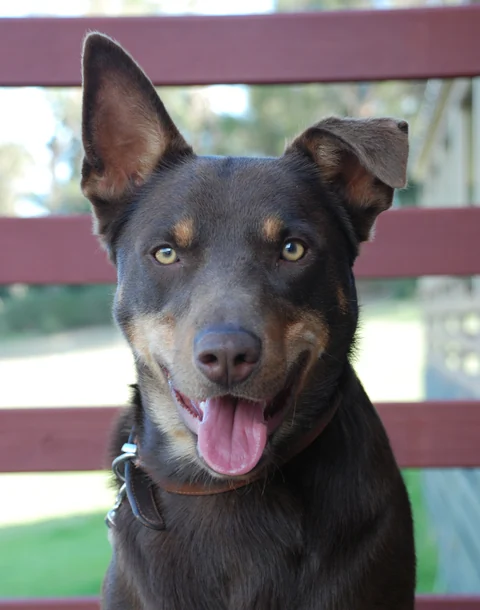
Herding dog
Australian Kelpie
The Australian Kelpie was bred to work sheep. Quick reactions and considerable stamina mean it may suit people who enjoy being outdoors every day and training alongside their dog.
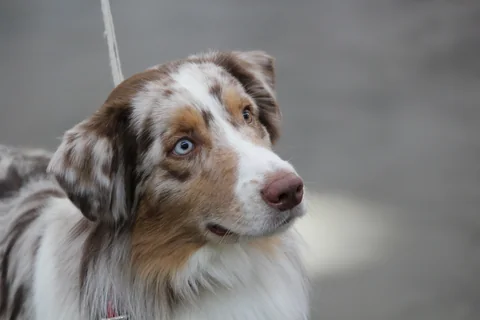
Herding dog
Australian Shepherd
Australian Shepherds were developed on western US ranches to herd livestock and work closely with people. In family life, they may watch bicycles or running children. Calm training at a distance helps them let movement pass.
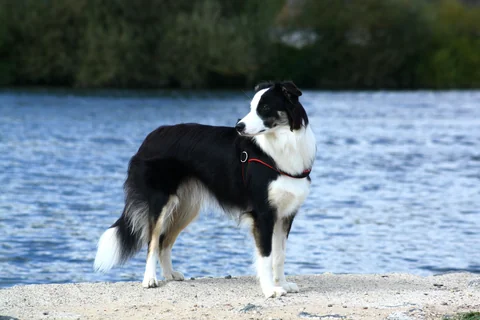
Herding dog
Border Collie
A Border Collie often notices even the smallest movement. This sheepdog from the border between England and Scotland learns quickly and enjoys working with people. Living with one means making time for long walks and shared activities, as well as giving the dog enough peace and quiet to rest at home.
Sources and photograph credit
- Is the Australian Cattle Dog right for your lifestyle?
Used in this profile for: Temperament, Size and build
- Teaching your dog to be left alone
Used in this profile for: Staying home alone
- FCI standard 287: Australian Cattle Dog
Used in this profile for: Size / Weight, Temperament, Everyday life, Size and build
- BAER programme: best practice testing protocol
Used in this profile for: Health
- Health Standard · Australian Cattle Dog
Used in this profile for: Health
- Australian Cattle Dog · breed guide
Used in this profile for: Size / Weight, Temperament, Everyday life, Day-to-day care, Size and build, Health, Lifespan, Could this breed fit your life?
Photo credits
Portrait · Helena Lopes · Pexels License
Side view · Marcin Wojna · Unsplash License
In action · Ryan Lansdown · Pexels License
Puppy · Magda Ehlers · Pexels License