 fellfolio
Shorthaired cat · Thailand
Thai
The Thai is a talkative, people oriented cat with blue eyes and darker markings on the face, ears, legs and tail. She likes to join family life and needs people who enjoy her appetite for company, play and shared activities.

At a glance
- Size
- Medium
- Activity
- High
- Care needs
- Moderate
- Enrichment
- Enjoys learning together
- Owner experience
- First cat with preparation
A conversational companion who likes to join in
A Thai rarely stays on the sidelines for long. She may greet someone coming home with her voice and quickly arrive to investigate a bag being unpacked. The international cat federation FIFe describes a sociable, sensitive cat who forms close bonds with people. If you enjoy that attention, she can be an engaging companion. Someone who mainly wants quiet and distance at home should consider this preference for interaction when choosing a breed.
Many Thais enjoy games with people and learning small tasks. You might roll a ball or teach the cat to come to a particular spot when she hears a word. The desired response should be paired with a small reward, and practice should stay brief. Enjoying an activity comes from pleasant experiences. Impatience or rough restraint can put a sensitive cat off joining in.
In a family home, the Thai should also have peace when she wants it. Children should learn to offer a toy and watch how the cat responds. If she walks away or hides, you should let her retreat. A sleeping place where nobody picks her up for a cuddle matters just as much as time for games.
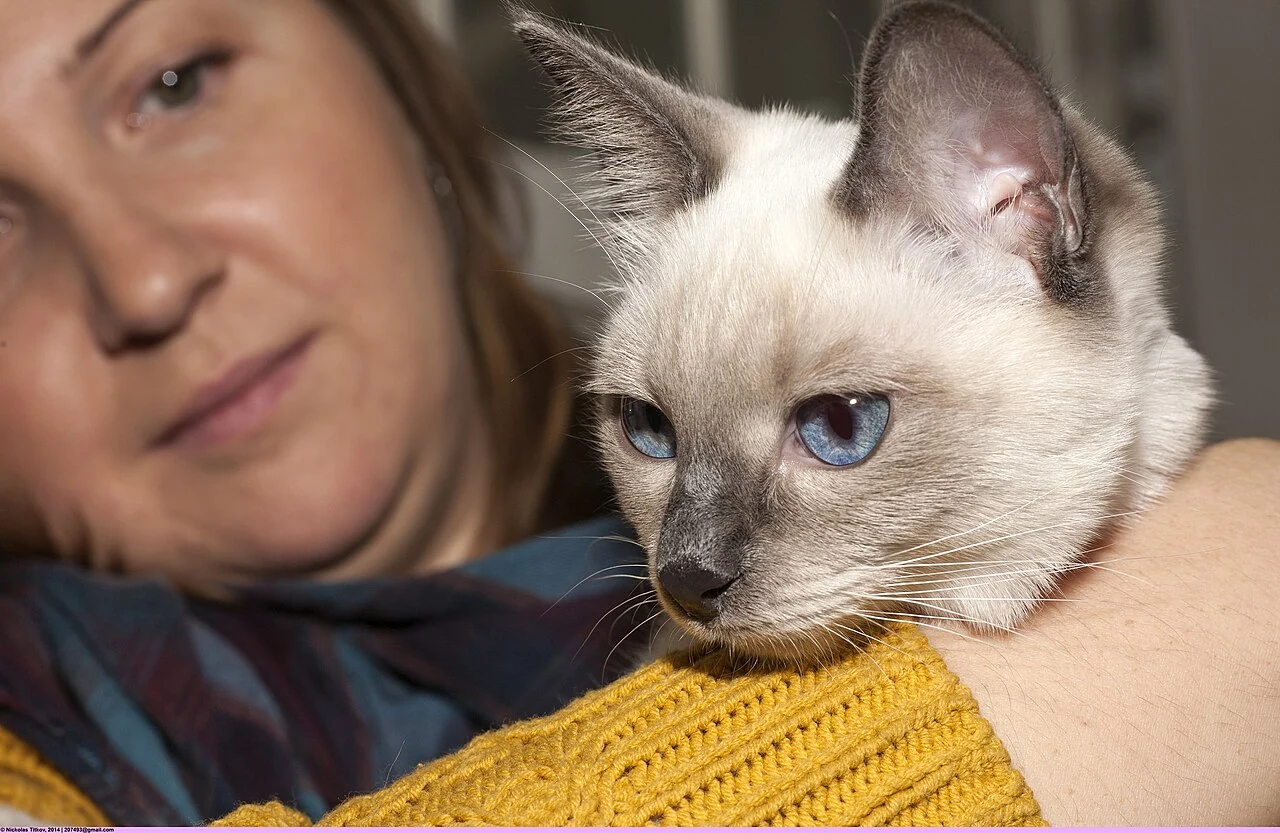
Sharing games and everyday life
Shared activities should have a regular place in a Thai's day. A short game after getting up and some time together in the evening can often fit around family routines. Between these occasions, she should be able to climb, scratch, watch from a sheltered place and rest undisturbed. A sturdy scratching tree and securely fixed resting shelves add routes to explore around the home.
When using a wand toy, its attachment should scurry across the floor, disappear behind an edge and come back into view. That gives the cat a chance to stalk it. She should occasionally catch and hold her toy prey. Searching for a few hidden pieces of food can also be interesting. They should be easy to find at first, perhaps beside a cardboard box rather than buried inside it. Food used in games should come from the measured daily allowance. Wand toys and loose strings should be put out of reach afterwards.
Long absences need an honest plan before the cat arrives. Who can provide care, and when will you have time together each day? Another cat can offer companionship if the two are compatible. A newcomer should initially have a separate room during introductions. Separate feeding places, litter trays and hiding places remain useful afterwards, so neither cat has to wait for the other or pass close by to reach something essential.
For practical play, food searches and quiet retreats, read Indoor Cat Enrichment: Play, Food Puzzles and Safe Retreats ↗
A short coat and healthy teeth
The short, fine coat lies smoothly against the body and has little undercoat. A soft brush or suitable grooming glove about once a week helps remove loose hair. During grooming, you should also look for bald patches, skin changes or unusually intense licking. Shedding seasons may bring more loose hair and a need for additional brief grooming sessions.
Dental care should also be part of the routine. Gradual familiarisation often helps a cat accept brief touches around the mouth and eventually a suitable cat toothbrush. Your veterinary team should demonstrate the technique and recommend appropriate products. Human toothpaste is unsuitable. If the gums are painful, the cause should be assessed before you attempt to brush the teeth.

Preserving the original Siamese type
The Thai descends from the original type of Siamese cat from Thailand. Cats of this type reached Europe in the late nineteenth century. Later, Siamese breeding developed a much slimmer body and a longer head, while other breeders preserved the earlier form. Today's Thai represents that more substantial but still agile type. FIFe recognised the Thai as a separate breed in 2017.
The darker markings are called points. The face, ears, legs and tail contrast with the lighter body. Blue, relatively oval eyes accompany a head that is longer than it is wide, without the very elongated outline of the modern Siamese. The standard describes a medium sized, well muscled cat. A Thai should look agile rather than ponderous.
When meeting a kitten, you should ask about everyday experiences so far. Has the kitten become familiar with household sounds, played willingly with people and had brief introductions to grooming? For an adult Thai, previous experience of time alone and other cats is useful information. In later life, smaller steps should help the cat reach favourite resting places. If jumping, eating or behaviour changes noticeably, an examination should check for pain or illness.
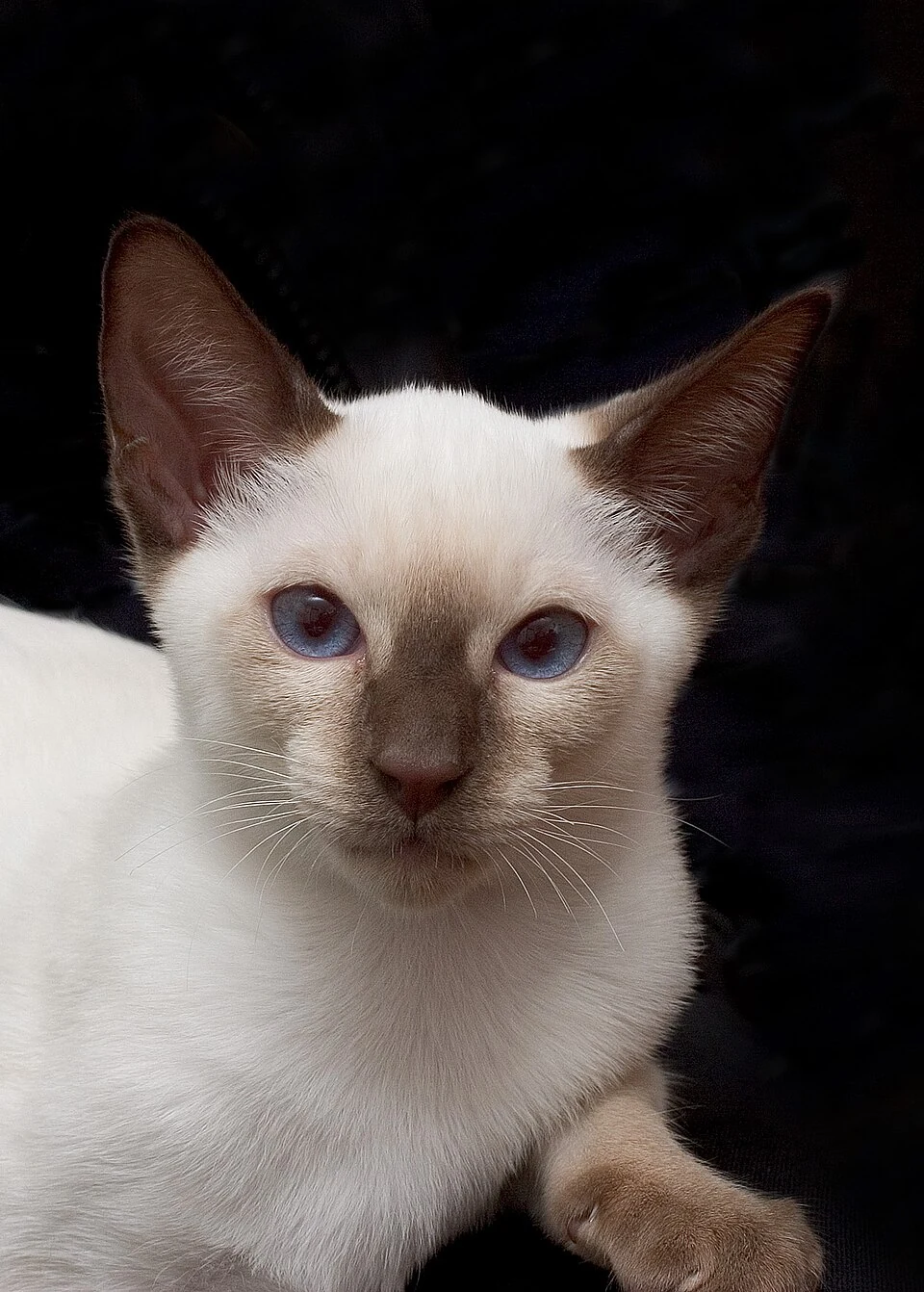
Health records and small changes
Before taking home a Thai, you should ask about the health history of the cat and her family. Which examinations have been carried out, what results are available, and have particular conditions repeatedly occurred in the line? Specific records are more helpful than a general statement that the cats are healthy. Your veterinary practice can advise which additional checks would be appropriate for your own cat.
Teeth and gums need regular attention. Bad breath, drooling or a change in chewing can indicate pain. Some cats continue eating despite dental disease, making a change easy to miss. These signs should be investigated even in a young, lively Thai.
Frequent trips to the litter tray, blood in the urine or painful urination should be assessed promptly. A cat who repeatedly tries to urinate but passes little or no urine needs immediate help. A blocked urethra can be life threatening. Fellfolio can keep examination results, routine appointments and observations together. A brief note about changes in eating or toilet habits may be useful when speaking with the veterinary team.
Would a Thai suit you?
Could work well if …
- You enjoy a cat who may be quite vocal and wants to take part in everyday family life.
- You can offer regular company and shared games, with care arranged for times when you are away.
- You want to teach small tasks kindly while also giving the cat quiet places to retreat.
May be less suitable if …
- If you want a particularly quiet, reserved cat, you should consider the Thai's usual sociability and voice.
- Another cat should be chosen with behaviour and past experiences in mind, then introduced gradually.
- Caring for a Thai also includes routine veterinary care and dental care. Changes in eating or urination should be investigated.
Meet other cat breeds.
Selected by size, activity, care and play needs.

Semilonghaired cat · USA
Balinese
A Balinese often joins the conversation, follows people around the home and is quick to take an interest in a game. Beneath the silky coat is an energetic cat who needs plenty of shared time and satisfying places to climb.
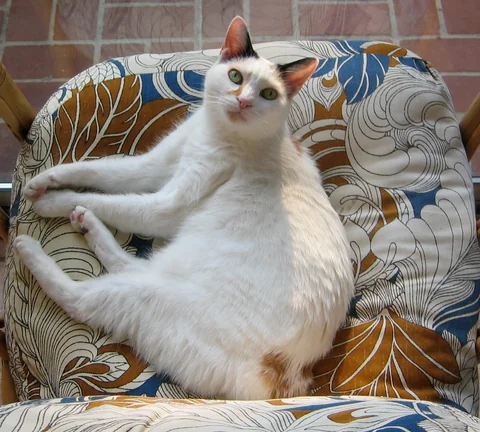
Short- and longhair · Japan
Japanese Bobtail
The Japanese Bobtail has a short tail with a shape all its own. It is agile, vocal and enjoys playing with its people.
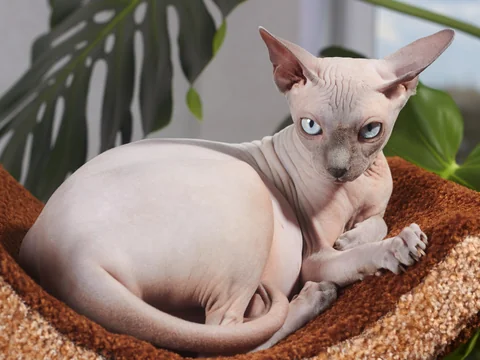
Nearly hairless cat · Canada
Sphynx
Sphynx cats often seek out their people and love to be active. Their nearly bare skin needs protection from strong sun and cold, with gentle care when needed.
Sources and photograph credit
- Indoor cats
Used in this profile for: Everyday life, Could this breed fit your life?
- Tips for grooming longhaired cats
Used in this profile for: Day-to-day care
- Cats and play
Used in this profile for: Everyday life
- Feline Dental Disease
Used in this profile for: Day-to-day care, Health
- Feline Lower Urinary Tract Disease
Used in this profile for: Health
- Loving Care for Older Cats
Used in this profile for: Size and build
- Introducing your new cat to other cats in your home
Used in this profile for: Temperament, Everyday life, Could this breed fit your life?
- How to keep your cat healthy and happy
Used in this profile for: Health
- Thai breed profile
Used in this profile for: Temperament, Everyday life, Size and build, Could this breed fit your life?
- Thai breed standard
Used in this profile for: Day-to-day care, Size and build
Photo credits
Portrait · Nickolas Titkov · CC BY-SA 2.0
.jpg)
Coat and features · Nickolas Titkov · CC BY-SA 2.0
.jpg)
Everyday life · Nickolas Titkov · CC BY-SA 2.0
.jpg)
Kitten · Kamée · CC BY-SA 3.0
