 fellfolio
Spotted shorthair · United States
Ocicat
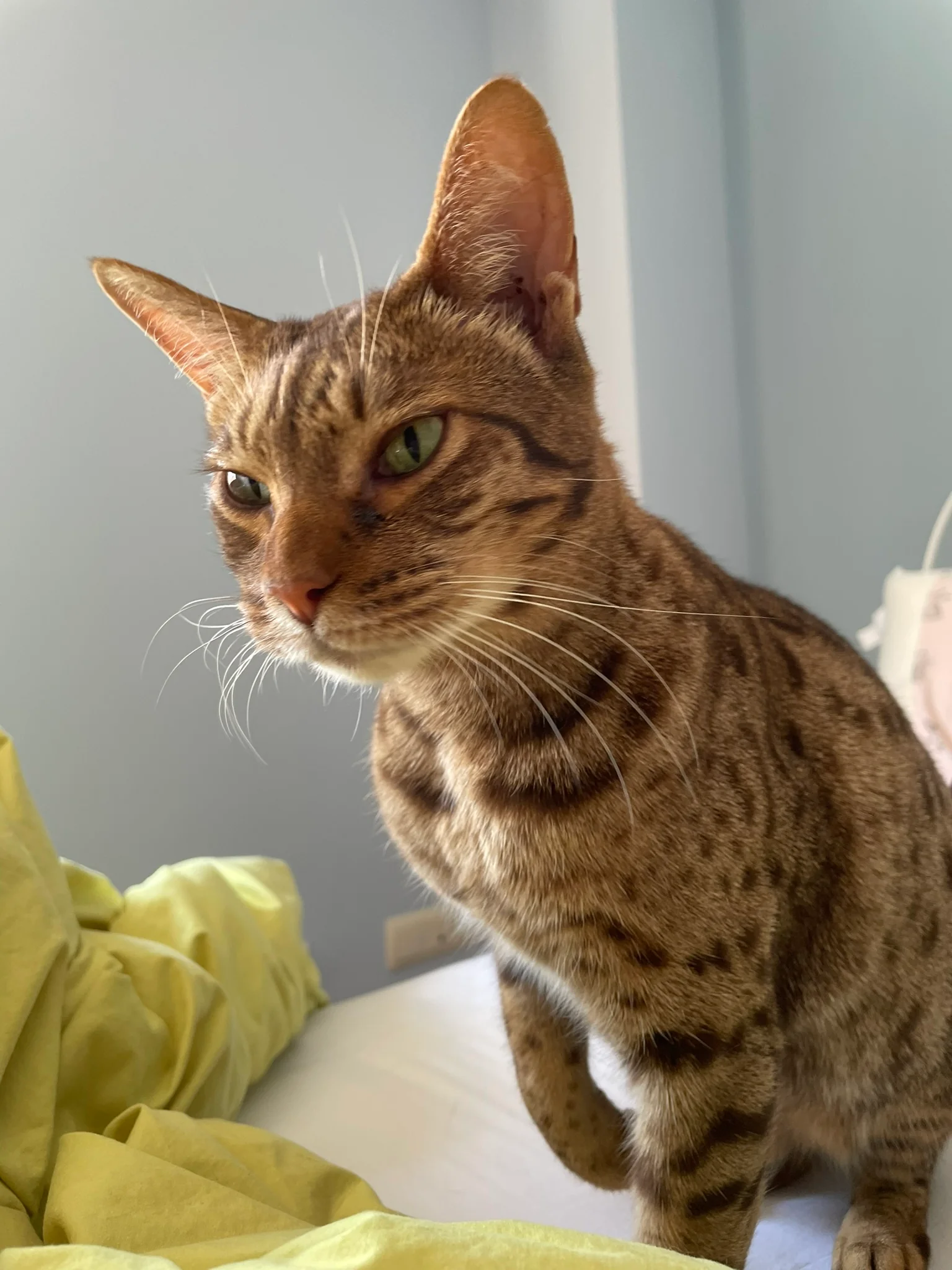
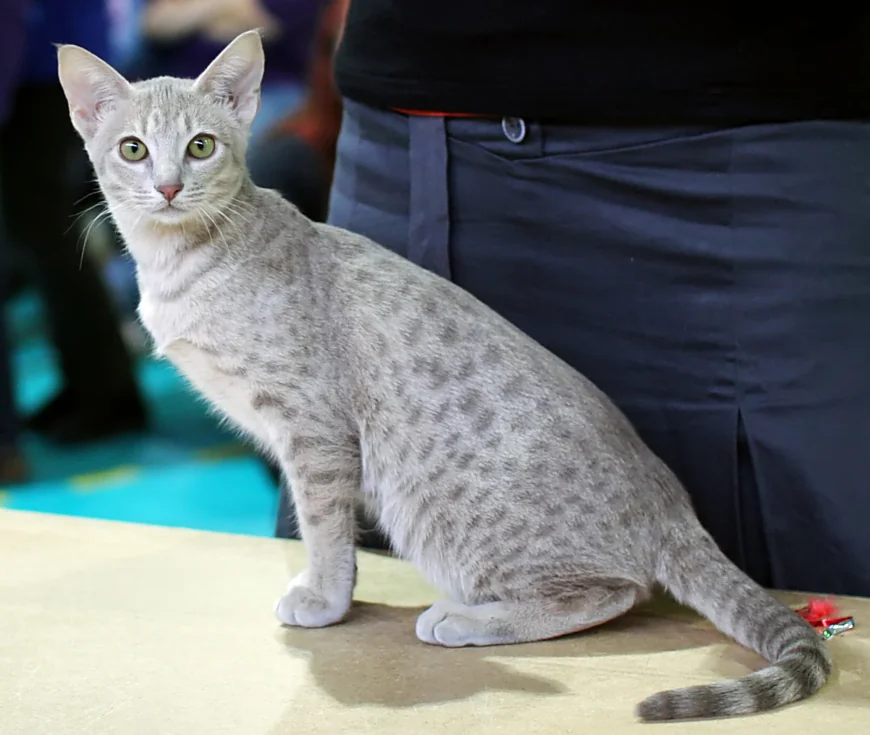
The Ocicat looks wild with its clear spots, but is a purpose-bred domestic cat. Strong and sociable, it is usually ready for a game.
At a glance
- Size
- Medium
- Lifespan
- 15 to 18 yearsUK GCCF cat breed profile
- Activity
- High
- Care needs
- Low
- Enrichment
- Enjoys learning together
- Owner experience
- First cat with preparation
Often curious about visitors
An Ocicat often investigates visitors instead of hiding straight away. It seeks family company and enjoys people who respond to its signals. Being outgoing does not mean limitless patience: it needs space when children get too rough. It can also live well with other pets when their energy levels suit one another and introductions are gradual.
Jumping and retrieving
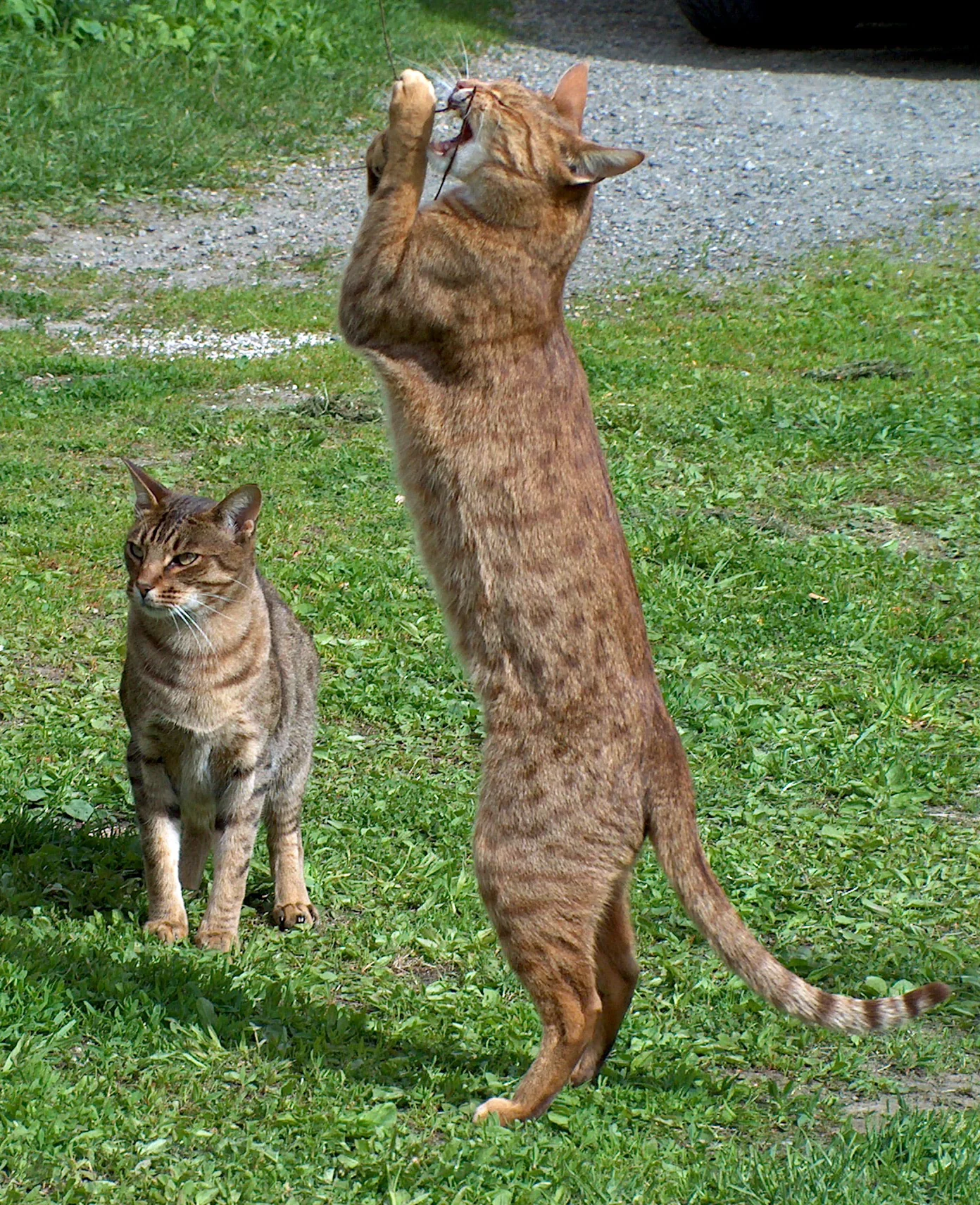
The strong, active Ocicat likes to jump. Give it a sturdy cat tree, clear routes through the home and varied hunting games. Move a toy over a low step or around a corner so the cat can climb, search and finally catch it. Some Ocicats also bring a light ball back. Because this is a sociable breed, long days without interaction can be difficult. Alongside lively play, give it a place to rest undisturbed.
For practical play, food searches and quiet retreats, read Indoor Cat Enrichment: Play, Food Puzzles and Safe Retreats ↗
Short coat, clear spots
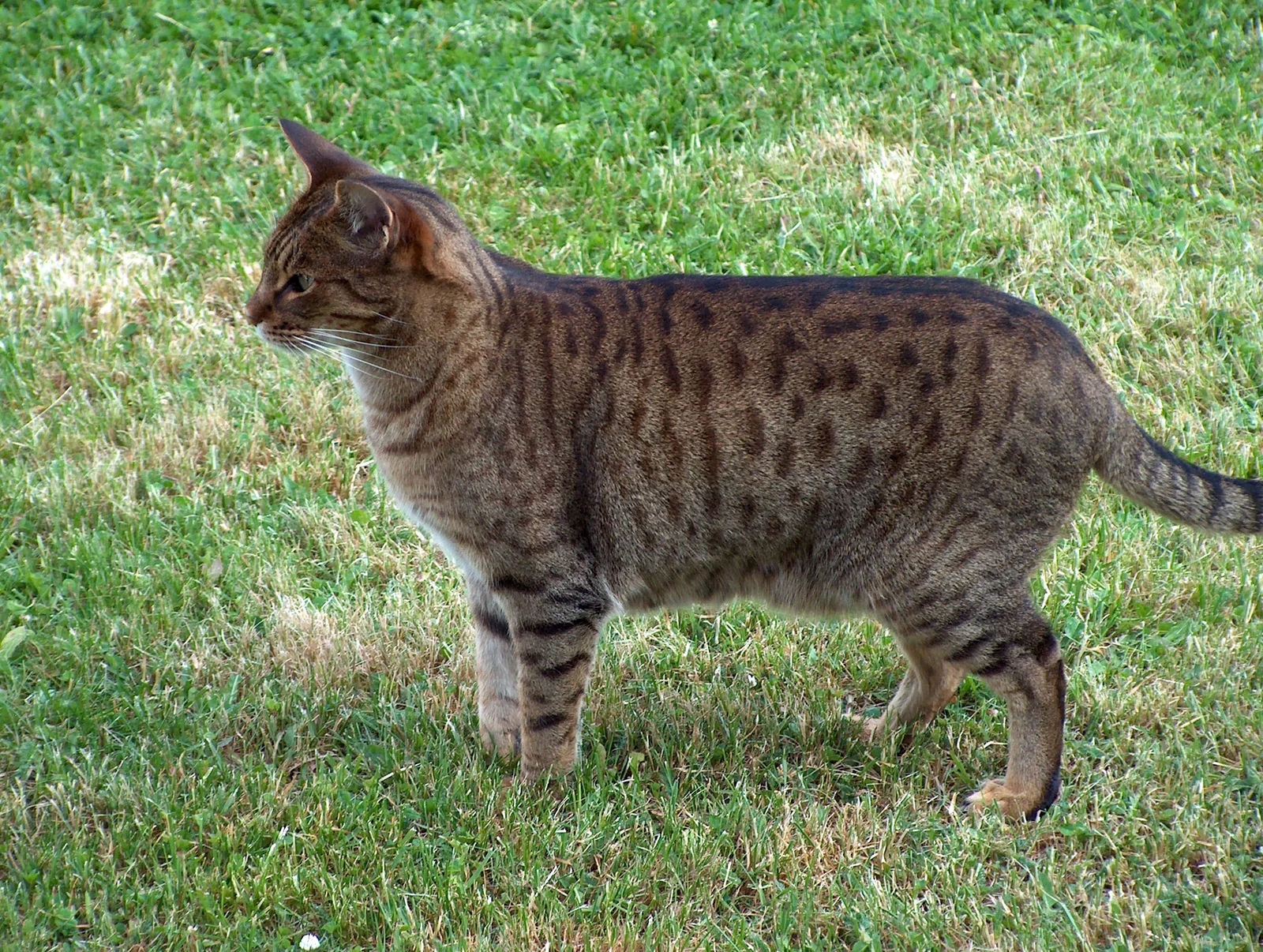
The close, short coat is straightforward to maintain. A weekly pass with a soft rubber brush removes loose hair. Use the time to check skin, claws and body shape. A healthy Ocicat does not need frequent baths. The ribs should remain easy to feel beneath a thin layer of fat. If the cat gains weight, ask your vet to review its food allowance and activity.
Wild pattern, domestic cat
The breed was developed in the United States from Siamese, Abyssinian and American Shorthair lines. Despite its ocelot-inspired name, there is no wild cat ancestry. The medium-to-large body is firmly muscled yet agile. Distinct darker spots sit on a lighter ground, with clear markings on legs and tail as well. Large almond-shaped eyes add to its alert expression.
Care for a strong body
The International Cat Association (TICA) describes Ocicats as generally healthy. UC Davis Veterinary Genetics Laboratory has nevertheless identified progressive retinal atrophy (PRA-rdAc), an inherited retinal disease, in Ocicats and offers a DNA test for it. The disease progressively damages the light-sensitive cells inside the eye and can lead to blindness. Ask to see both parents’ results when choosing a kitten; a negative result for this variant does not rule out other eye disease. Weight alone tells little about a muscular cat, so ask your vet to assess its body condition.
Could this breed fit your life?
Could work well if …
- You want an active, sociable cat and have time for shared games.
- You can provide safe climbing routes and teach children gentle handling.
May be more difficult if …
- The cat would regularly spend very long days without activity or company.
- You want an animal that prefers sitting quietly in one place all day.
Meet other cat breeds.
Selected by size, activity, care and play needs.
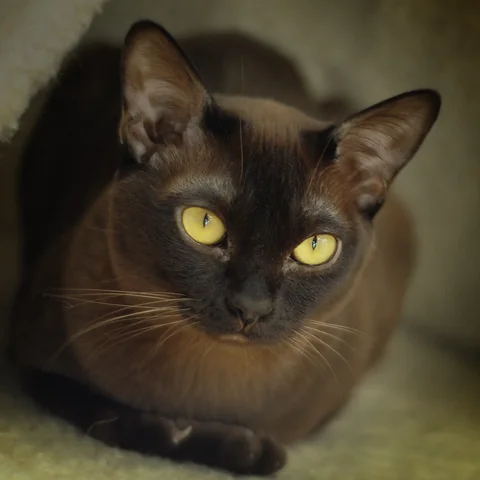
Shorthair cat · Southeast Asian roots
Burmese
Compact, silky-coated and strongly people-oriented, the Burmese often seeks close contact and joins in family life.
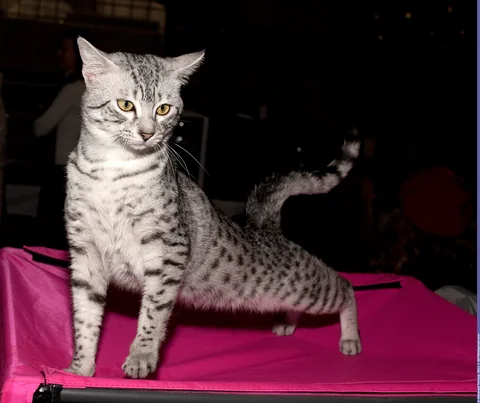
Spotted shorthair · Egypt
Egyptian Mau
The Egyptian Mau is a fast, spotted cat that enjoys playing with familiar people and often watches a new situation carefully before joining in.
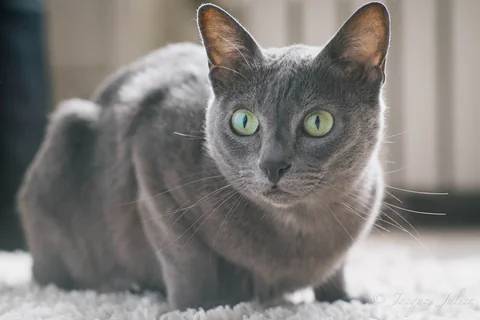
Shorthair · Thailand
Korat
The Korat, with its silver-sheened blue-grey coat, comes from Thailand. Compact and muscular, it seeks familiar company and often plays with impressive persistence.
Sources and photograph credit
- Cat obesity
Used in this profile for: Day-to-day care, Health
- Ocicat & Ocicat Classic
Used in this profile for: Lifespan
- Ocicat
Used in this profile for: Temperament, Everyday life, Day-to-day care, Size and build, Health, Could this breed fit your life?
- Progressive Retinal Atrophy (PRA rdAc) in Cats
Used in this profile for: Health
Portrait · Adult female ocicat sitting · Ljhlusko · CC0

In action · Ocicat-playing · Tom Bjornstad · Copyrighted free use

Side view · Ocicat 13.06.07 015 · T. Bjornstad · CC BY 2.5 · Edited

Kitten · Topspot La Colombina (Liina) OCI c 24 female kitten EX1 · Heikki Siltala / Catza.net · CC BY 3.0 · Edited
_OCI_c_24_female_kitten_EX1.JPG)