 fellfolio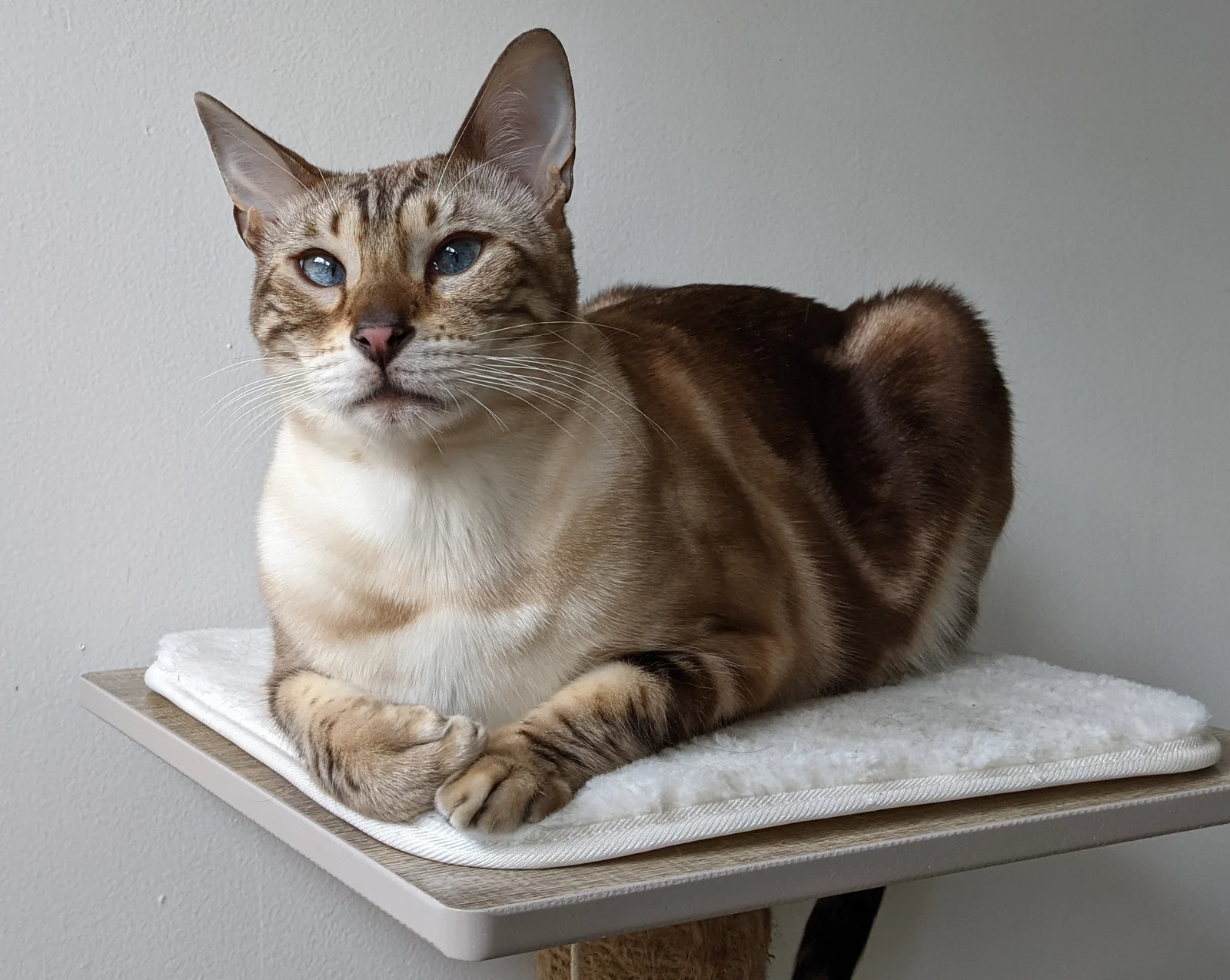
Short-haired cat · Thailand
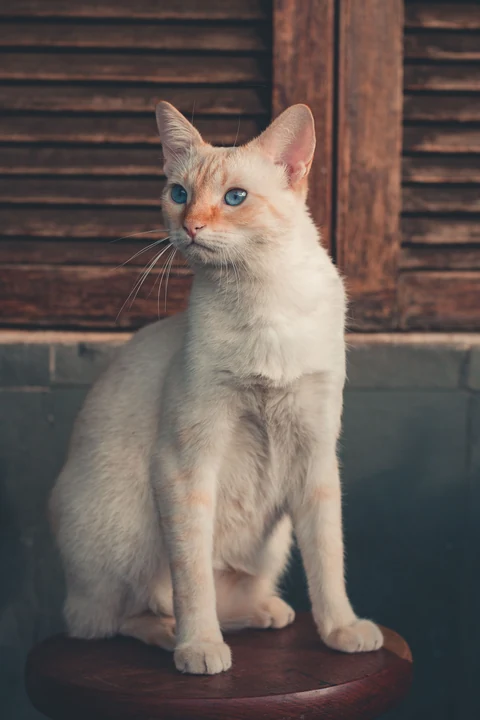
Siamese
Slender, agile and often remarkably talkative, Siamese cats like to stay close to family life. A food bowl and a sunny spot rarely hold their interest for long.
Spotted or marbled coat
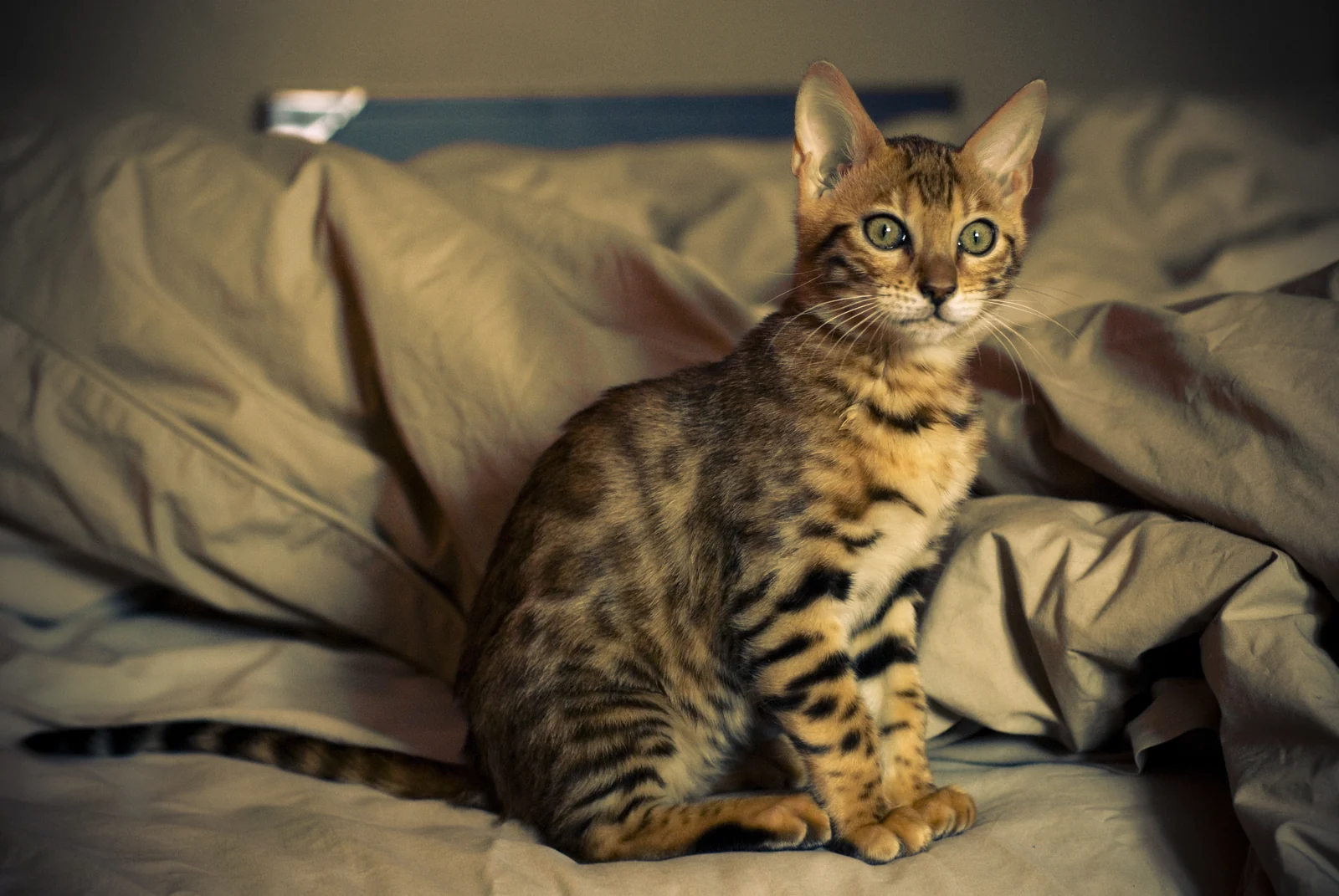
Muscular, quick and always investigating: a Bengal needs places to climb, games to solve and plenty to do with you.
A drawer opens or a toy rustles, and many Bengals are there to investigate. They follow familiar people through the house and quickly work out how to set a toy in motion. That curiosity makes them engaging company, but calls for time with you; a few balls left on the floor may not hold their attention for long. TICA describes Bengals as active, intelligent and people-oriented. Whether one cat seeks constant company or prefers to watch from a little distance still depends on temperament.
A Bengal needs room to climb. A sturdy cat tree, secure wall shelves and a window perch give this strong climber a route through the room. Make time for several short sessions each day: chase games with a wand toy, food hunts and puzzle feeders work both body and mind. Many Bengals also enjoy learning tricks or fetch; clicker training can be a good place to start.
The short, dense coat is soft and lies close to the body. A soft brush or grooming mitt once a week is usually enough to lift loose hair; expect a little more during seasonal shedding. Baths are rarely needed in everyday life. Dental and nail care are part of any cat’s routine.
Bengals are medium-to-large cats with a solid, visibly muscular body. TICA lists typical adult weights of about 2.7–5.4 kg (6–12 lb) for females and 4.1–6.8 kg (9–15 lb) for males; full size may take around two years. The body should look balanced, without exaggerated features. A relatively small head, broad nose and prominent whisker pads sit beneath large oval to almost round eyes. The ears are on the smaller side, broad at the base; the tail is medium in length, thick and low-set.
Three checks matter in Bengal breeding lines. TICA recommends screening breeding cats for hypertrophic cardiomyopathy (HCM); the CFA specifies an echocardiogram by a cardiology practice. The scan assesses the heart muscle—one genetic test cannot rule out every form of HCM. Ask to see recent findings for both parents and check when each cat was last screened.
Bengal-specific DNA tests are available for recessive retinal atrophy (PRA-b) and pyruvate kinase deficiency (PK deficiency). PRA-b can lead to progressive loss of sight; PK deficiency causes intermittent anaemia. Cats with one copy of either variant remain healthy but can pass it on. If both parents carry the same variant, one in four kittens is expected to be affected. Ask to see the written results for both parents for both tests.
A UK VetCompass life table based on veterinary records from 2019 estimated Bengal life expectancy from birth at 8.51 years (95% confidence interval 7.12–9.90; 73 recorded deaths).
This estimate describes the UK veterinary population at that time. TICA gives a general range of 12 to 20 years; the figures come from different kinds of evidence.
Selected by shared size, activity, grooming and training characteristics.
Short-haired cat · Thailand
Slender, agile and often remarkably talkative, Siamese cats like to stay close to family life. A food bowl and a sunny spot rarely hold their interest for long.
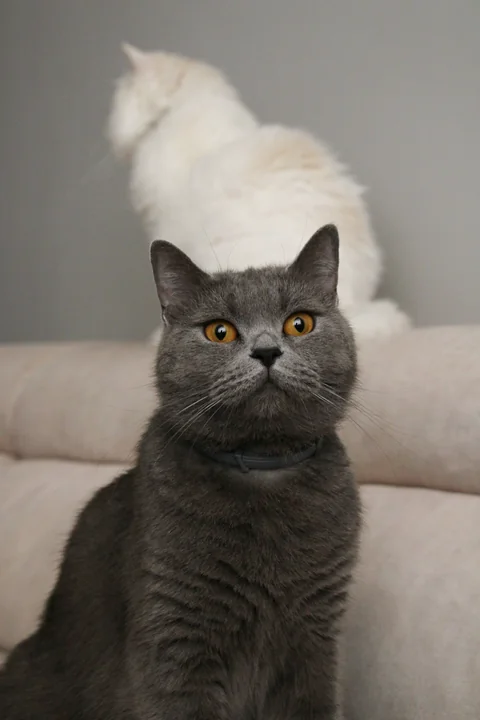
Shorthair cat · Great Britain
A round face, a dense coat and a generally quiet temperament. British Shorthairs enjoy company but often prefer sitting beside their owners to curling up on a lap.
Semi-longhair cat · United States
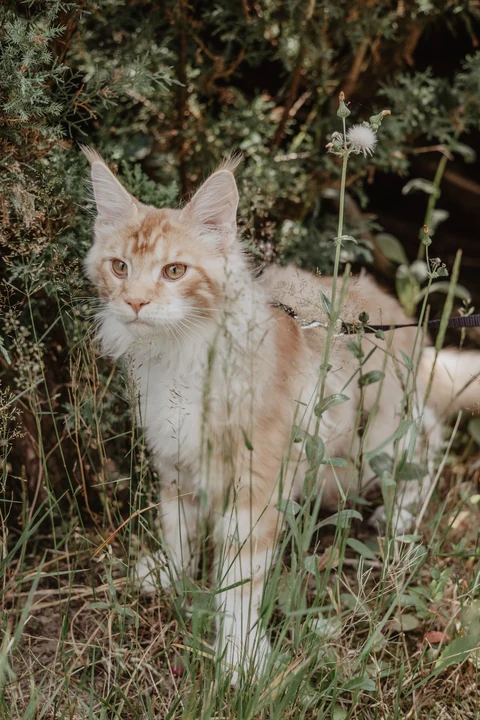
The Maine Coon pairs a long, powerful frame with a full coat and bushy tail. Many stay playful and like to keep their people in sight around the home.
Portrait · Hadal · CC BY-SA 4.0 · Edited
Kitten · Sean McGrath · CC BY 2.0 · Edited

.jpg)