 fellfolio
Companion dog
Yorkshire Terrier
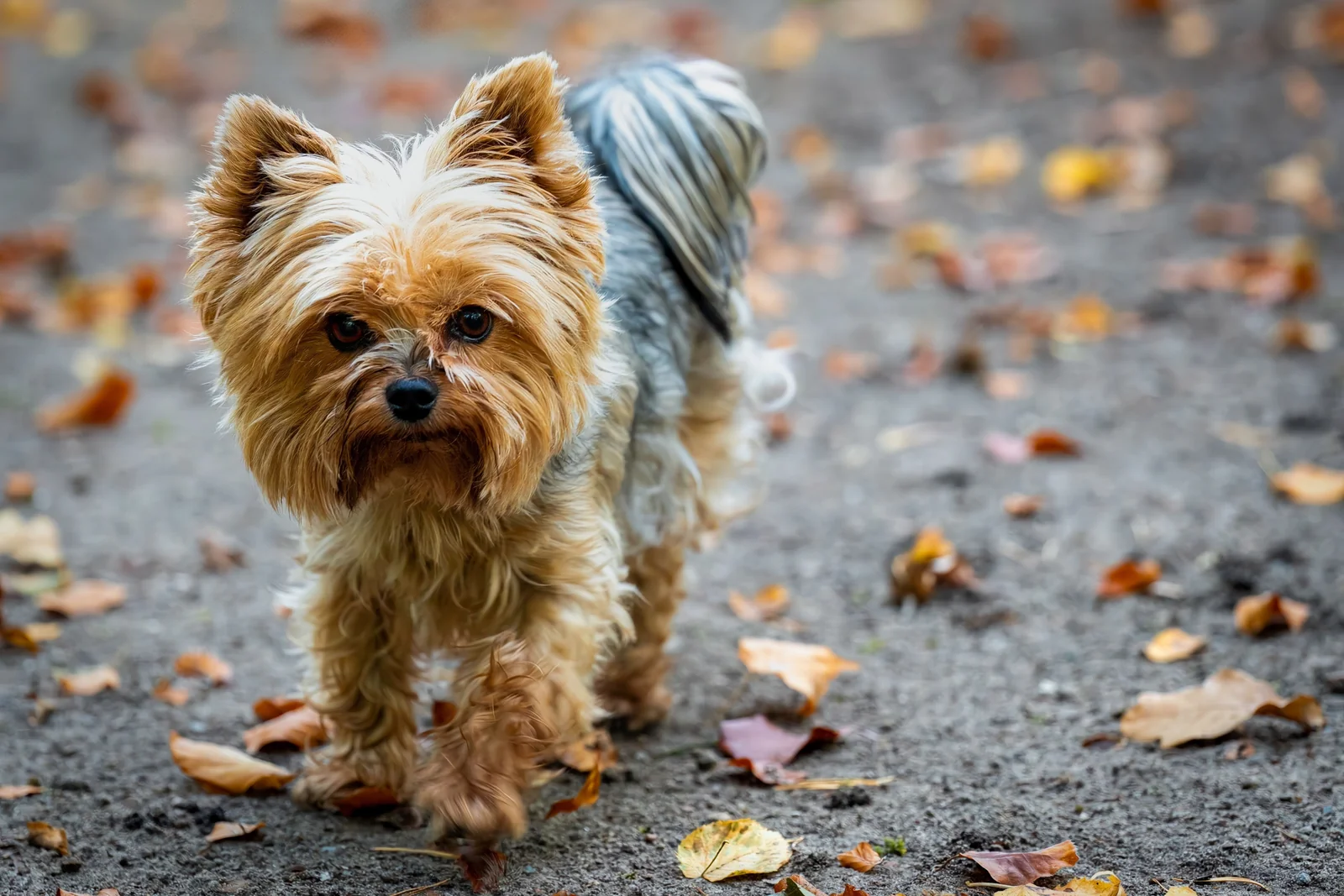
Small but often curious and active on walks, the Yorkshire Terrier needs daily coat care. Supervise it around young children and larger dogs to prevent accidental injury.
At a glance
- Size
- Small
- Height at shoulder
- 20 cm
- Weight
- 3.2 kg
- Lifespan
- over 12 years
- Activity
- Moderate
- Grooming
- Daily
- Training
- Patience & clear guidance
- Owner experience
- First dog with support
An active little terrier
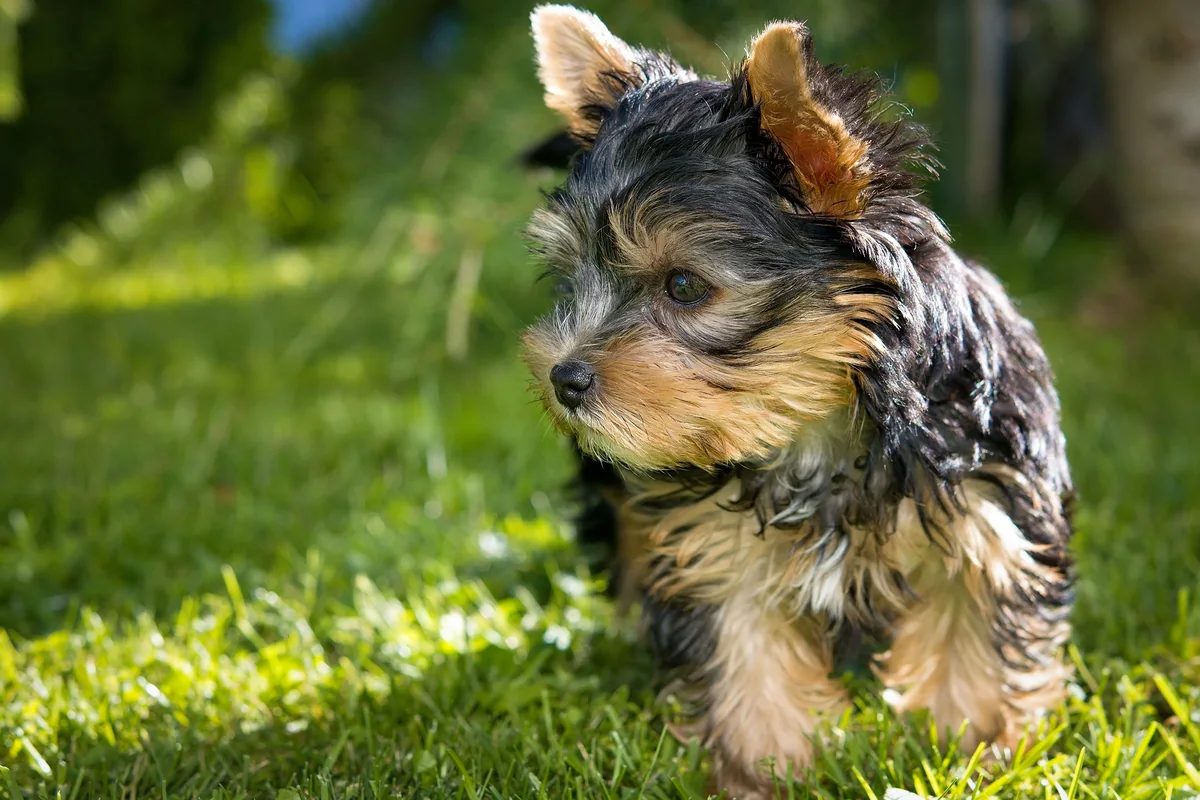
The Yorkshire Terrier developed from small terriers in England. Its interest in searching and play remains, even though it is now mainly a companion dog. Many Yorkies watch their surroundings closely and meet other dogs with more confidence than their size might suggest.
Let the dog walk during suitable encounters and give it time to watch other dogs from a comfortable distance. Reward it when it turns back to you. If it moves away, barks or looks tense, give it more space and walk on calmly. Pick it up briefly if an encounter becomes too close or unsafe; practise relaxed meetings on the ground at other times.
Everyday life
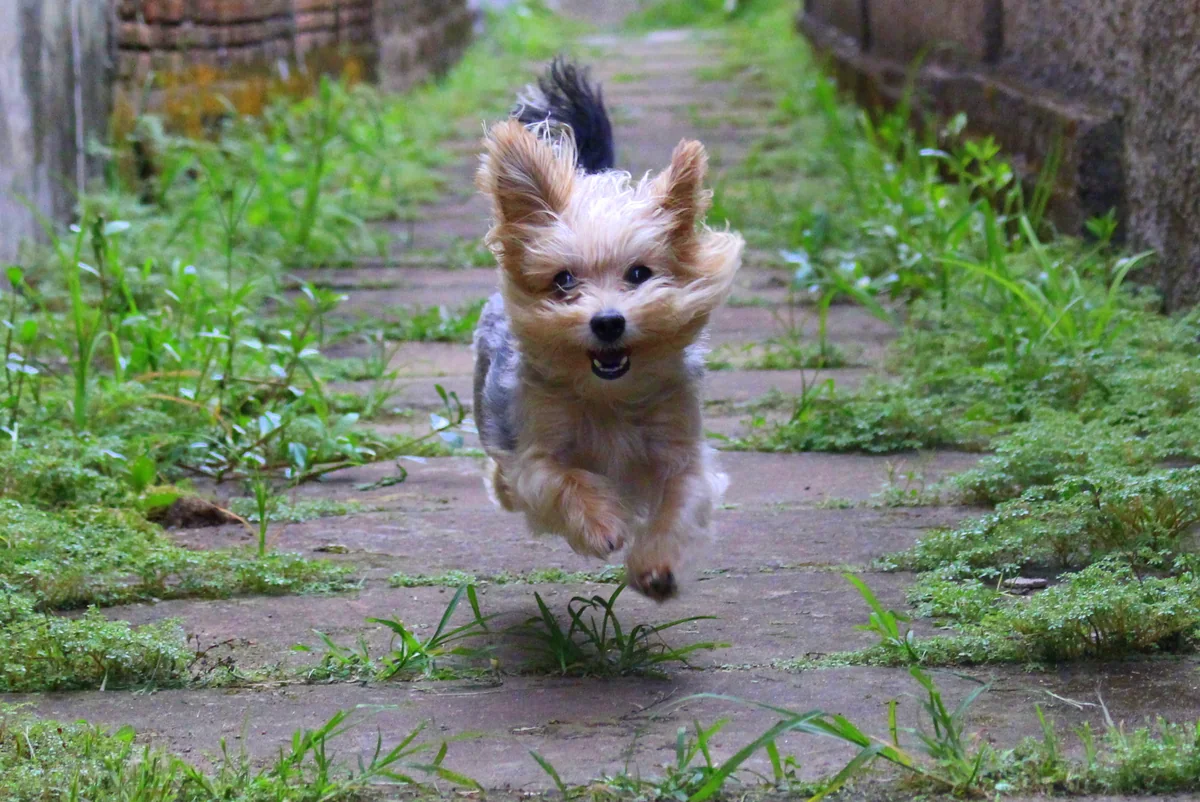
The UK veterinary charity PDSA suggests around 30 to 40 minutes of activity a day. This can be spread across walks with time to sniff, move and explore at the dog’s pace. Food searches and brief games add interest indoors.
Its low weight also makes it vulnerable when someone picks it up without warning or a child handles it clumsily. Show children how to approach and stroke the dog while it stays on the floor. Give it a quiet place to retreat to when play becomes too much.
Staying home alone
Dogs learn to stay home alone in small steps. The RSPCA advises no more than four hours at a time. Puppies and dogs that become unsettled when left alone need shorter absences and gradual practice. Arrange someone to care for your dog when you will be away longer.
Everyday dog training: recall, a loose lead and clear communication ↗
Day-to-day care
A long Yorkie coat tangles quickly, especially behind the ears, beneath a harness and under the front legs. Comb it through to the skin every day. A short trim saves time, but the coat still needs regular attention. Keep hair out of the eyes so it does not rub against them.
Teeth deserve as much attention as the coat. Introduce a dog toothbrush early and check regularly for buildup or sore gums. PDSA lists dental problems among the breed’s important health concerns.
Size and build
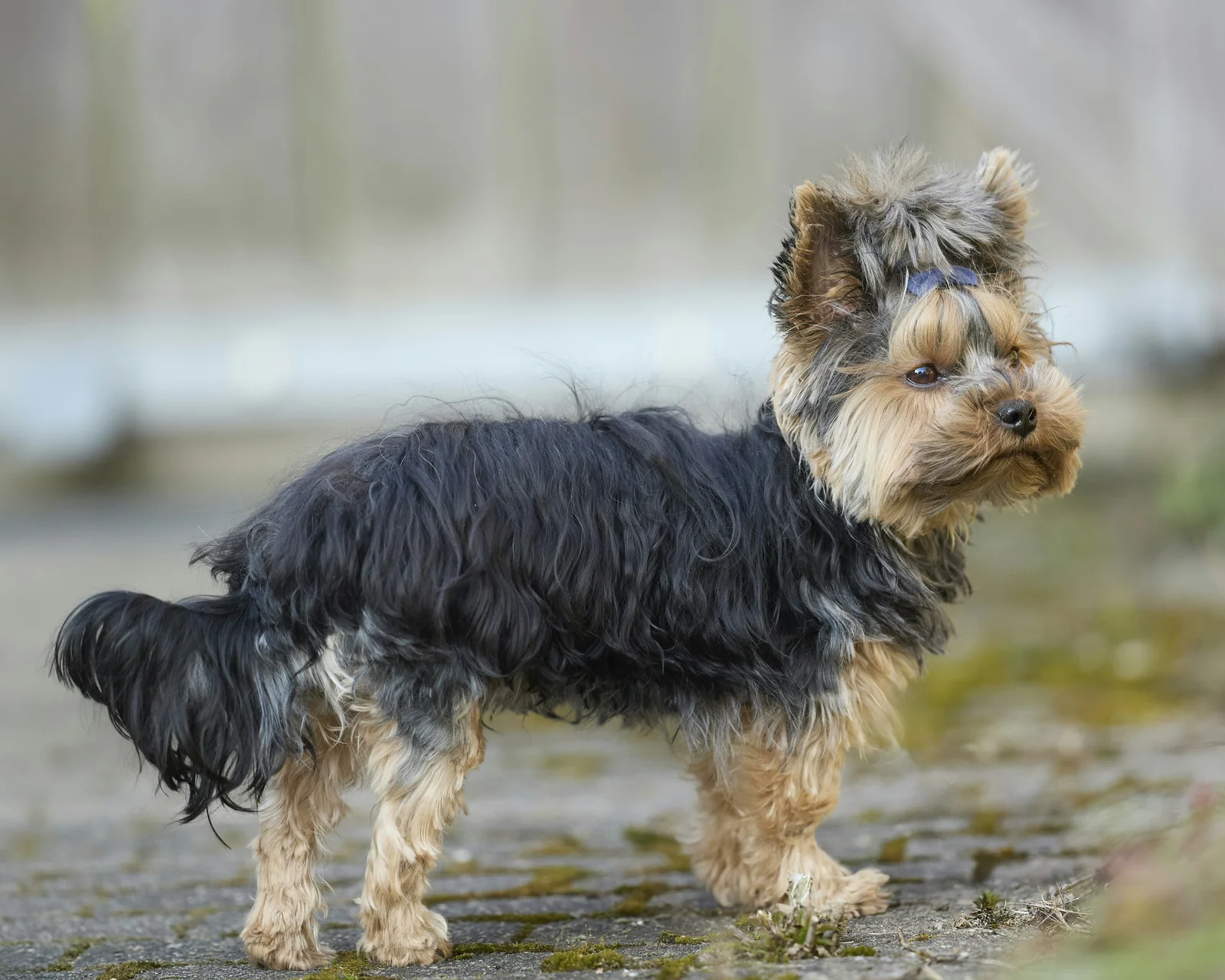
The Yorkshire Terrier has a compact body, level back, fine legs and small upright ears. PDSA gives an approximate height of 20 cm and weight of 3.2 kg. The standard of the international kennel federation FCI describes a straight, silky coat parted along the back and hanging down both sides. Dark steel blue on the body and rich tan on the head, chest and legs create the characteristic colouring.
The long hair should not get in the way of movement. When meeting a Yorkie, it is useful to watch whether it can move freely and whether its hair gets in the way.
From puppy to senior: caring for your dog through every life stage ↗
Health
A Yorkshire Terrier’s kneecap can temporarily slip out of place. Some dogs lift a hind leg for a few steps and then walk normally again. A persistent dry cough can point to trouble with the windpipe. Both deserve a veterinary check.
PDSA also lists bladder stones and eye and dental disease. If you are choosing a puppy, ask about the parents’ health and knee and eye examinations. If your Yorkie strains to urinate but passes no urine, call an emergency vet immediately. If it can still urinate but struggles, contact your vet promptly. A suddenly painful eye held shut needs an urgent veterinary examination. Persistent bad breath can point to painful dental disease and deserves a check too.
Could this breed fit your life?
Could work well if …
- You want a small, active dog and have time for walks and kind training.
- You can care for the coat and teeth regularly, even if you keep the coat trimmed short.
May be less suitable if …
- Very young children would often handle the dog clumsily, and you cannot supervise their time together.
- You expect a small dog to need little exercise, enrichment or grooming.
Similar needs, different dogs.
Selected by shared size, activity, grooming and training characteristics.
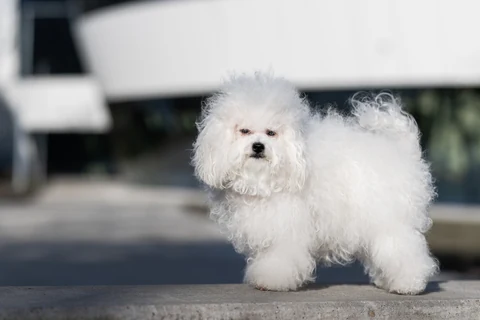
Companion dog
Bolognese
The Bolognese is a small white dog with a soft coat that falls in loose tufts. It comes from Italy and is closely associated with Bologna. Life with one involves company, walks with time to sniff and careful coat care. If you are looking for a fairly quiet small dog, that daily grooming should be part of your plans from the start.
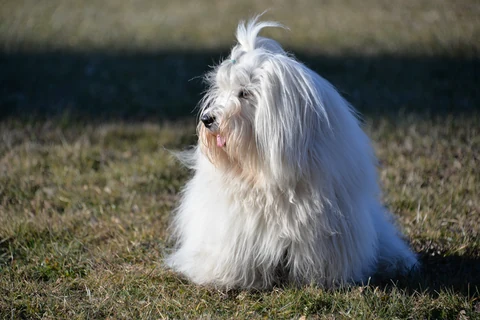
Companion dog
Coton de Tuléar
The Coton de Tuléar is a small companion dog from Madagascar. Its name refers to its soft, cotton-like coat and to the Malagasy city of Tuléar. It is known as a sociable, playful dog. That appealing appearance comes with a task that is easy to underestimate: the long coat needs thorough daily care.
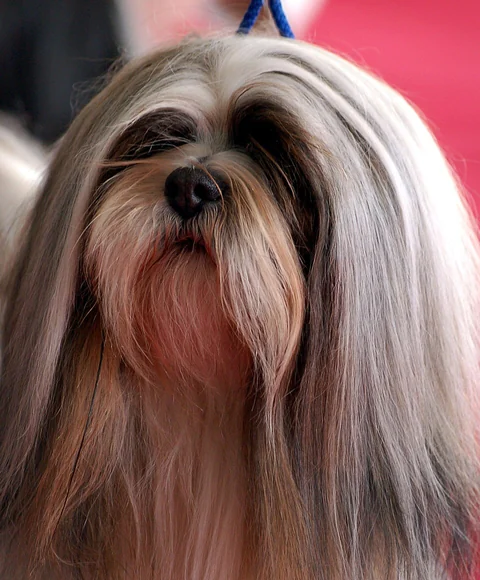
Tibetan companion and watch dog
Lhasa Apso
A small, sturdy Tibetan dog with long hair and an independent mind. Once an indoor sentinel, it notices noises and visitors. Its size is manageable, but maintaining the coat is a daily task.
Sources and photograph credit
- Teaching your dog to be left alone
Used in this profile for: Staying home alone
- FCI standard 86: Yorkshire Terrier
Used in this profile for: Temperament, Size and build
- Bladder stones in dogs
Used in this profile for: Health
- Painful eye or eye held closed in dogs
Used in this profile for: Health
- Yorkshire Terrier · breed guide
Used in this profile for: Size / Weight, Temperament, Everyday life, Day-to-day care, Size and build, Health, Lifespan, Could this breed fit your life?
Photo credits
Portrait · Gundula Vogel · Pexels License
Side view · Erwin Bosman · Unsplash License
In action · Dog running to see the owner · Gabyrlo · CC BY-SA 4.0 · Edited

Puppy · Pixabay (as credited on Pexels) · Pexels License