 fellfolio
Companion dog
Bolognese
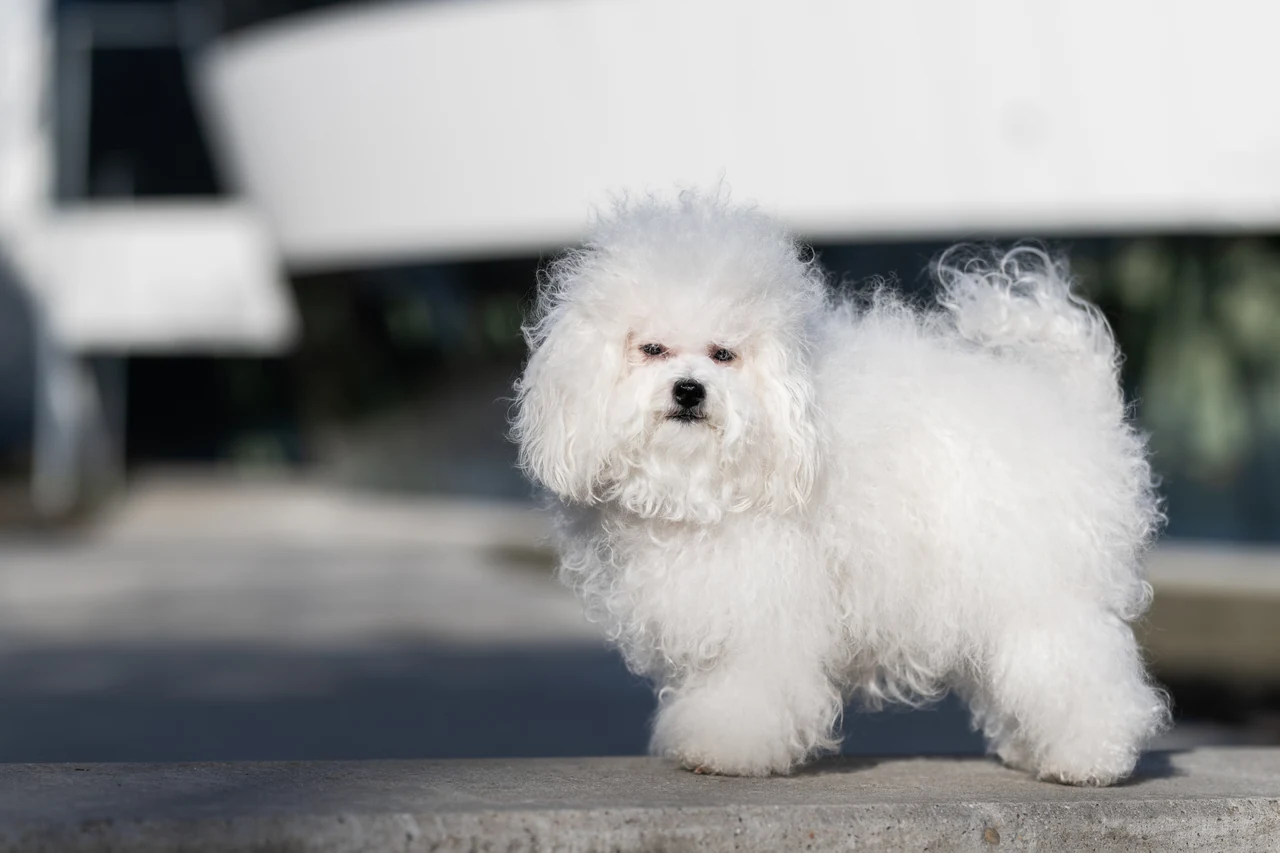
The Bolognese is a small white dog with a soft coat that falls in loose tufts. It comes from Italy and is closely associated with Bologna. Life with one involves company, walks with time to sniff and careful coat care. If you are looking for a fairly quiet small dog, that daily grooming should be part of your plans from the start.
At a glance
- Size
- Small
- Height at shoulder
- 25 to 30 cm
- Weight
- 2.5 to 4 kg
- Lifespan
- over 12 years
- Activity
- Moderate
- Grooming
- Daily
- Training
- Patience & clear guidance
- Owner experience
- First dog with support
A quiet companion with a mind of its own
The international breed standard describes the Bolognese as calm and very devoted to its family. The British breed club adds that some dogs are initially reserved with strangers and bark at unfamiliar sounds. A visitor may not receive an enthusiastic greeting straight away. Your dog should have time to watch and approach when ready.
Being small makes a Bolognese easy to carry, but it still needs opportunities to explore on its own paws. Children should learn to leave the dog undisturbed when sleeping or eating and to ask before picking it up. With other dogs or a resident cat, the individual animals’ experiences and behaviour matter. Calm first meetings tell you more than a promise that a breed gets along with everyone.
Everyday life
Britain’s Royal Kennel Club places the Bolognese in an exercise category of up to 30 minutes a day. This is a broad guide for adult dogs, rather than a limit on every walk. Age, fitness, weather and enjoyment of exercise should help you decide how long your outings are. A small dog still wants to sniff, explore new routes and go outside to toilet. A flat can suit a Bolognese when these outings are a reliable part of life.
At home, a hidden toy and short training sessions can add variety. You should reward the behaviour you want as it happens, such as responding to a name or settling on a bed. A quiet setting makes a new task easier to learn. Several short sessions usually fit into everyday life more comfortably than one long lesson.
That close attachment to people also matters when arranging care. Time alone should be introduced gradually, and regular longer absences need dependable care arrangements. Repeated panting, pacing or prolonged barking when you leave should prompt veterinary advice and, where needed, help from a qualified behaviour professional. Leaving an already distressed dog for longer in the hope it will get used to being alone is unlikely to help.
Staying home alone
Dogs learn to stay home alone in small steps. The RSPCA advises no more than four hours at a time. Puppies and dogs that become unsettled when left alone need shorter absences and gradual practice. Arrange someone to care for your dog when you will be away longer.
Everyday dog training: recall, a loose lead and clear communication ↗
Day-to-day care
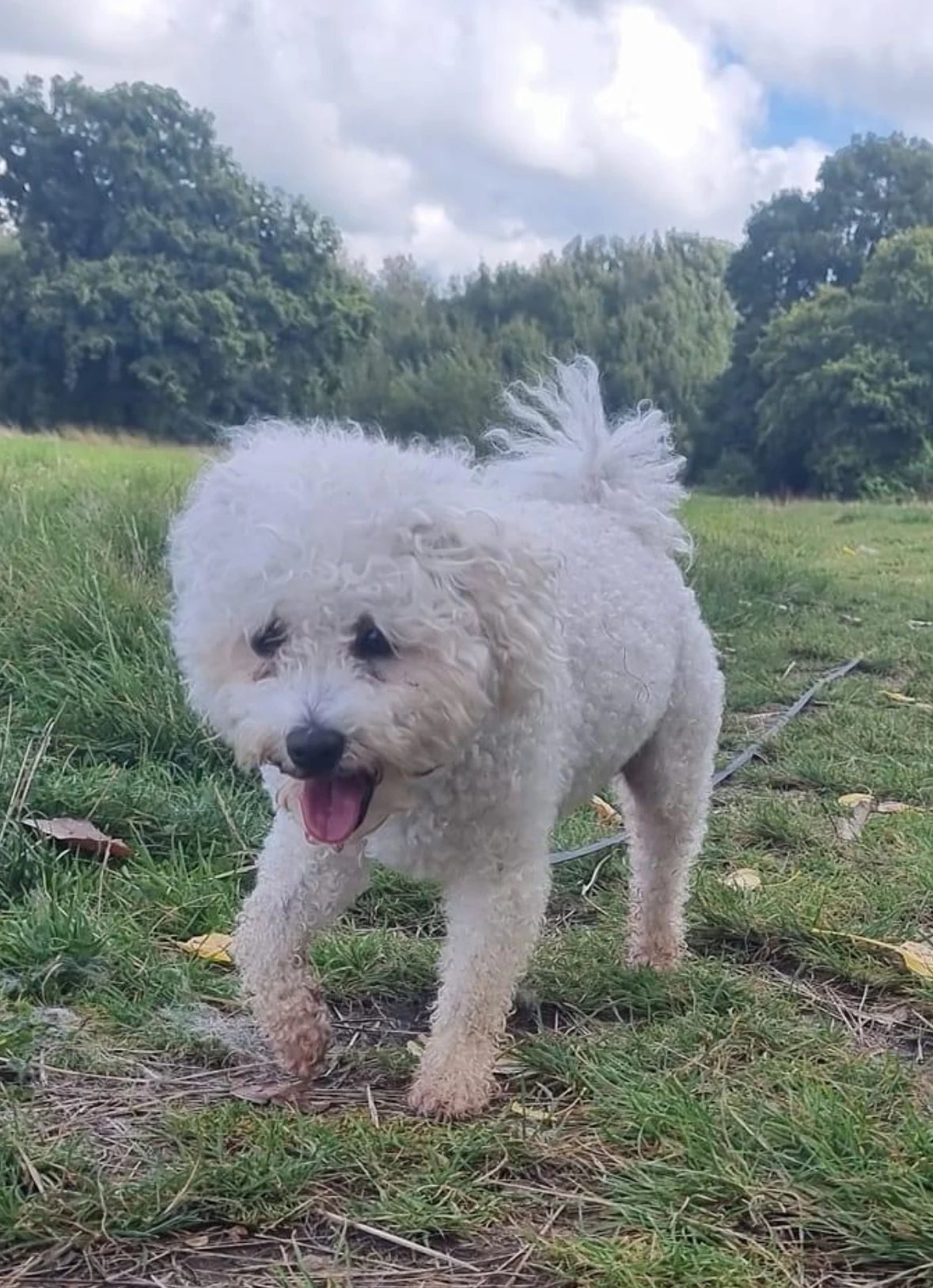
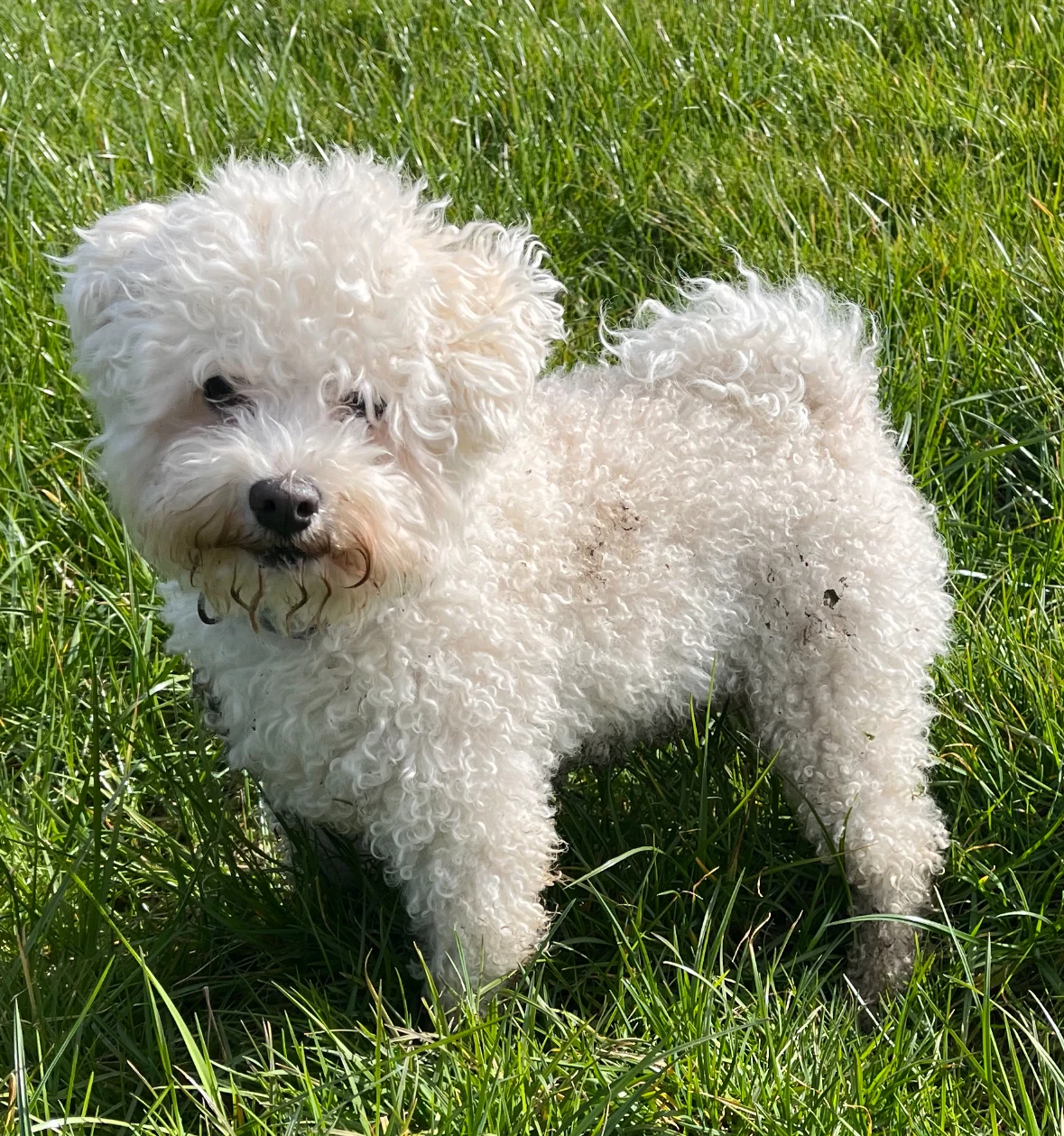
The white coat falls in loose, flocked strands. The Bolognese has no undercoat, the additional dense layer of hair beneath the longer coat. Even so, the hair can become tightly matted. Gentle daily brushing and combing help prevent small tangles turning into solid mats. The hair behind the ears, beneath a harness and between the legs needs attention too. Smoothing only the back will miss these areas.
A professional groomer can show you which brush and comb suit the coat and how to work through small sections down to the skin without pulling. Tight mats need professional attention. They can tug on the skin and cannot be brushed out painlessly by using more force. The coat should be free of tangles before a bath. Dog shampoo is suitable for bathing and should be rinsed out thoroughly.
Eyes, ears, nails and teeth also need regular attention. New eye redness, repeated head shaking or an unusual smell from an ear should be checked by a vet. A dog toothbrush and dog toothpaste are useful for dental care. Brushing should be introduced gradually and ideally done every day. Low shedding does not protect against dog allergies: allergens can be present in skin flakes and saliva, among other sources.
Size and build
The Bolognese belongs to the Bichon family, alongside breeds including the Maltese, Havanese and Bichon Frise. These related small companion dogs are distinct breeds. The international standard associates the Bolognese with Italy, particularly Bologna. Small white dogs of this type were kept in aristocratic households and exchanged as valuable gifts over centuries. Their role as close companions has a long history.
The Fédération Cynologique Internationale, or FCI, describes the Bolognese in Standard No. 196 as a compact dog with a body roughly as long as it is tall. Males should stand 27 to 30 cm at the shoulder and females 25 to 28 cm. The stated weight range is 2.5 to 4 kg. Drop ears, a tail curving over the back and a long white coat with shorter hair on the muzzle are part of its appearance. These figures describe the breeding ideal. They should not be used to force a healthy dog towards a particular weight without considering its body condition.
From puppy to senior: caring for your dog through every life stage ↗
Health
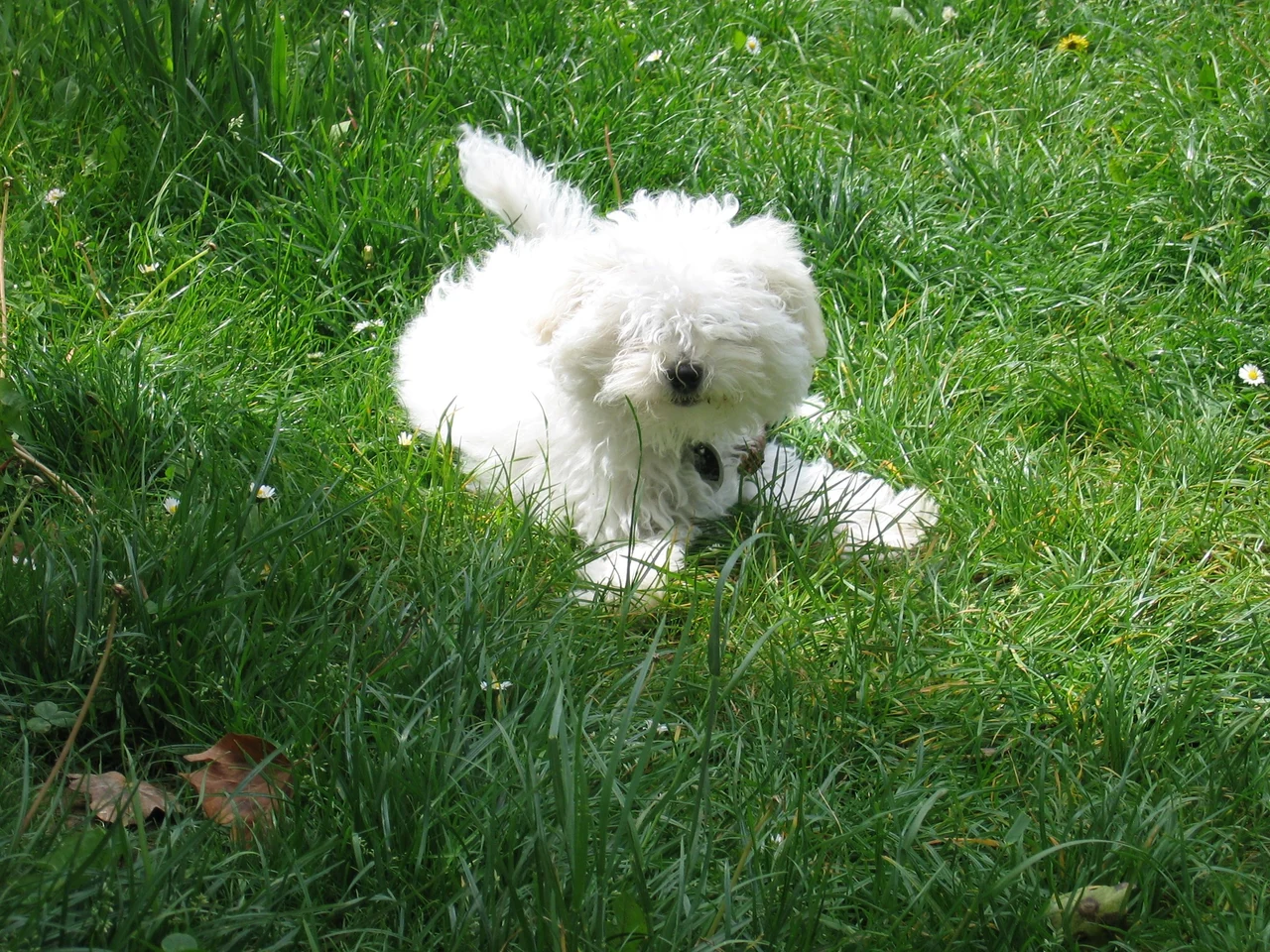
When choosing a puppy, it is worth looking closely at the health records for both parents. The Royal Kennel Club recommends eye examinations. The Bolognese Dog Club UK also lists kneecap checks and a DNA test for prcd-PRA. PRA stands for progressive retinal atrophy, a group of inherited conditions in which the retina at the back of the eye degenerates and vision deteriorates. prcd is one particular form. A clear DNA result for that form does not rule out other eye diseases.
Patellar luxation means the kneecap slips out of the groove where it should sit. A dog may briefly lift a hind leg, skip for a few steps and then walk normally again. Even if the change passes quickly, you should have it checked by a vet. Treatment depends on the findings and the dog’s symptoms. Cornell University describes it as a condition seen more often in small dogs, rather than an inevitable consequence of this breed.
Bad breath, red gums or difficulty chewing also warrant a check. Dogs can continue eating despite dental pain. Regular checks of the mouth at home therefore matter alongside veterinary examination of the teeth and gums. When choosing a breeder, clear records are more useful than a blanket claim that the breed has no health problems.
Could this breed fit your life?
Could work well if …
- You want a small companion and can provide regular walks and shared activities.
- You have time for daily coat care and are willing to learn the right grooming technique.
- You can introduce time alone gradually and arrange care during longer absences.
What to consider
- The flocked coat can mat without thorough care, even when little hair ends up on the sofa.
- Reserve with strangers and barking at sounds may be part of everyday life.
- The parents’ eye and kneecap examination records should be available to check.
Similar needs, different dogs.
Selected by shared size, activity, grooming and training characteristics.
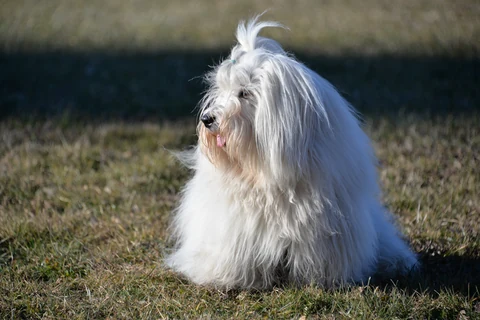
Companion dog
Coton de Tuléar
The Coton de Tuléar is a small companion dog from Madagascar. Its name refers to its soft, cotton-like coat and to the Malagasy city of Tuléar. It is known as a sociable, playful dog. That appealing appearance comes with a task that is easy to underestimate: the long coat needs thorough daily care.
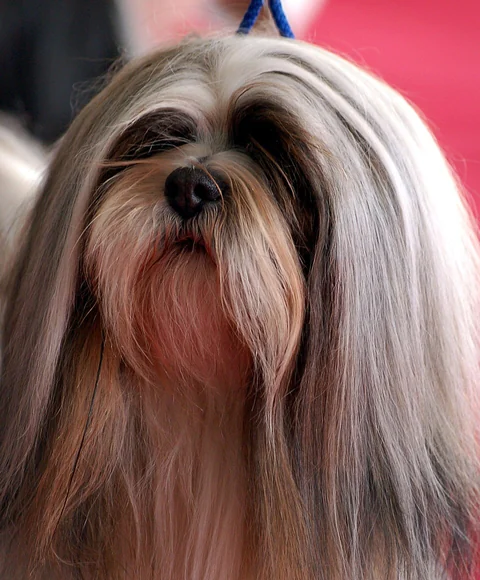
Tibetan companion and watch dog
Lhasa Apso
A small, sturdy Tibetan dog with long hair and an independent mind. Once an indoor sentinel, it notices noises and visitors. Its size is manageable, but maintaining the coat is a daily task.
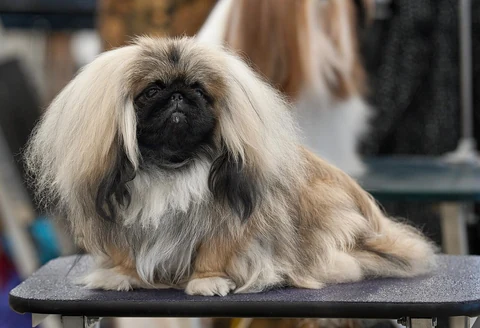
Small Chinese companion with a dense mane
Pekingese
The Pekingese is a small, sturdy companion with a dense mane and a long history in China’s imperial palaces. It can be devoted to familiar people while retaining strong opinions of its own. Its short face and demanding coat care deserve close attention, even when its exercise needs seem modest.
Sources and photograph credit
- Teaching your dog to be left alone
Used in this profile for: Staying home alone
- Bolognese · History, character and coat care
Used in this profile for: Temperament, Day-to-day care, Could this breed fit your life?
- What health checks are required for Bolognese?
Used in this profile for: Health
- Bolognese · FCI Standard No. 196
Used in this profile for: Size / Weight, Temperament, Day-to-day care, Size and build, Could this breed fit your life?
- Bolognese · Breed information and health
Used in this profile for: Everyday life, Day-to-day care, Health, Lifespan, Could this breed fit your life?
- Patellar luxation
Used in this profile for: Health
- Pet allergy · Symptoms and causes
Used in this profile for: Day-to-day care
- Dental disease in dogs
Used in this profile for: Day-to-day care, Health
- How often should you groom your pet?
Used in this profile for: Day-to-day care
- Separation anxiety in dogs
Used in this profile for: Everyday life, Could this breed fit your life?
- How to train your dog
Used in this profile for: Everyday life, Could this breed fit your life?
- Progressive rod-cone degeneration (PRA-prcd)
Used in this profile for: Health
Photo credits
Portrait · File:Bolognese felnőtt szuka.jpg · Bolognese94 · CC BY-SA 4.0 · Edited

Puppy · File:Bologneser.jpg · Ronald Berndt (RBerndt) · CC BY-SA 3.0 · Edited

In action · File:Male Bolognese Dog Walking.jpg · Mrtibbs1999 · CC BY-SA 4.0 · Edited

Everyday life · File:Male adult bolognese dog.jpg · Mrtibbs1999 · CC BY-SA 4.0 · Edited
