 fellfolio
Companion dog
Coton de Tuléar
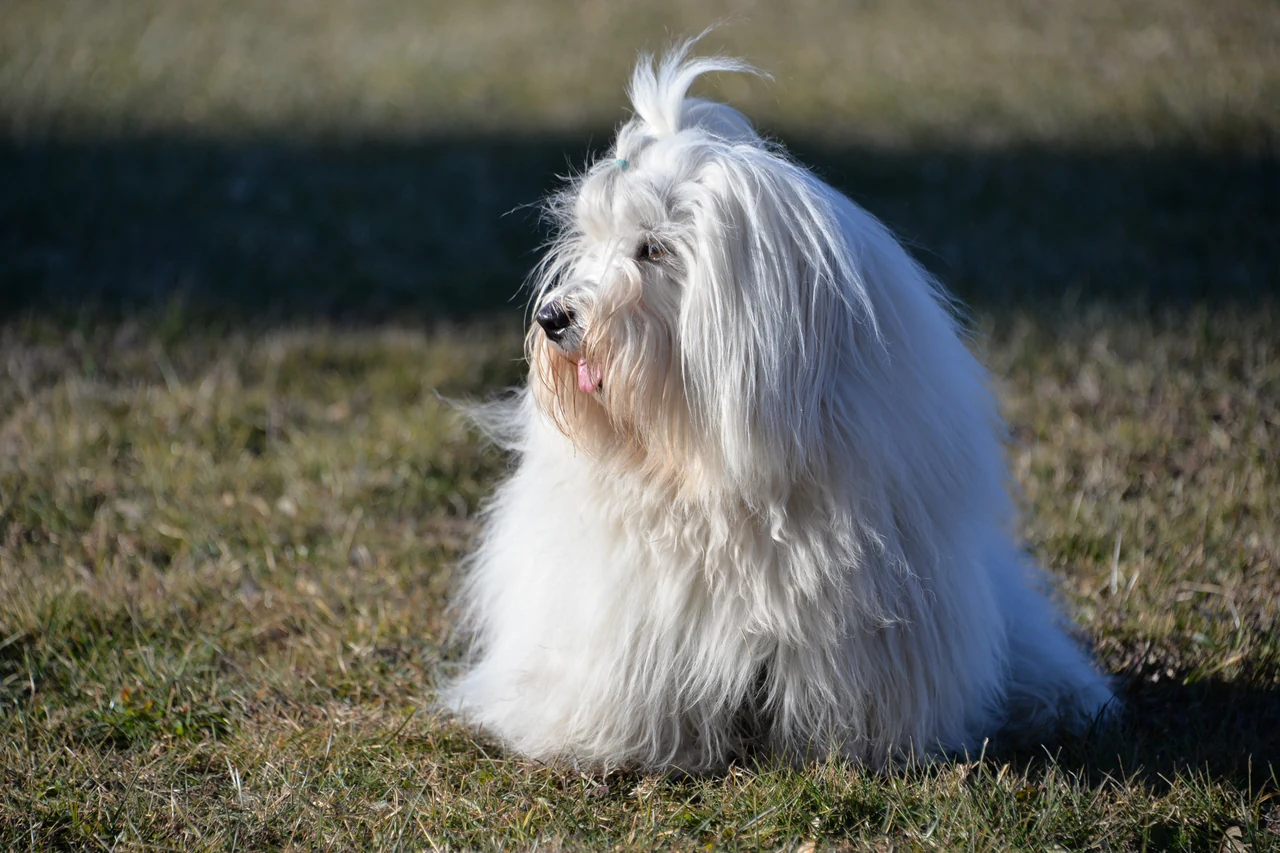
The Coton de Tuléar is a small companion dog from Madagascar. Its name refers to its soft, cotton-like coat and to the Malagasy city of Tuléar. It is known as a sociable, playful dog. That appealing appearance comes with a task that is easy to underestimate: the long coat needs thorough daily care.
At a glance
- Size
- Small
- Height at shoulder
- 23 to 28 cm
- Weight
- 3.5 to 6 kg
- Lifespan
- over 12 years
- Activity
- Moderate
- Grooming
- Daily
- Training
- Patience & clear guidance
- Owner experience
- First dog with support
A playful companion that likes to be included
The international standard describes the Coton as happy and sociable. That fits its history as a companion dog, but does not mean every individual will immediately approach unfamiliar people or dogs. A Coton may enthusiastically invite you to play and later settle happily near its people. How easily it fits into your life also depends on the experiences it has had.
A small dog can be a lovely companion for children when adults oversee their time together and encourage gentle handling. Picking the dog up, holding it still and constantly following it should not be part of play. A bed of its own gives a Coton somewhere to retreat. If another animal already lives in the home, first meetings should be calmly prepared. Even with a breed described as sociable, the individual animals’ reactions matter.

Everyday life
Britain’s Royal Kennel Club lists the Coton in its exercise category of up to 30 minutes a day. This broad category is not a fixed timetable and cannot replace looking at your own dog. A fit adult Coton may enjoy longer outings. Puppies, older dogs and dogs with health limitations need different levels of activity. Walks should include time to sniff and suit the weather and the dog’s fitness.
A Coton can live comfortably in a flat when walks, activities and time with people are reliable parts of life. Simple searches, bringing back a toy or learning a new cue can add variety. A quiet place to sleep matters as much as shared play. A resting dog should not repeatedly be prompted to take part in another activity.
Time alone should be introduced in small steps. The dog needs brief absences it can manage before being asked to cope with longer periods. Regular longer absences need care arrangements. Prolonged barking, panting or restless pacing may suggest it is struggling. Veterinary advice and, where needed, a qualified behaviour professional can help.
Staying home alone
Dogs learn to stay home alone in small steps. The RSPCA advises no more than four hours at a time. Puppies and dogs that become unsettled when left alone need shorter absences and gradual practice. Arrange someone to care for your dog when you will be away longer.
Everyday dog training: recall, a loose lead and clear communication ↗
Day-to-day care
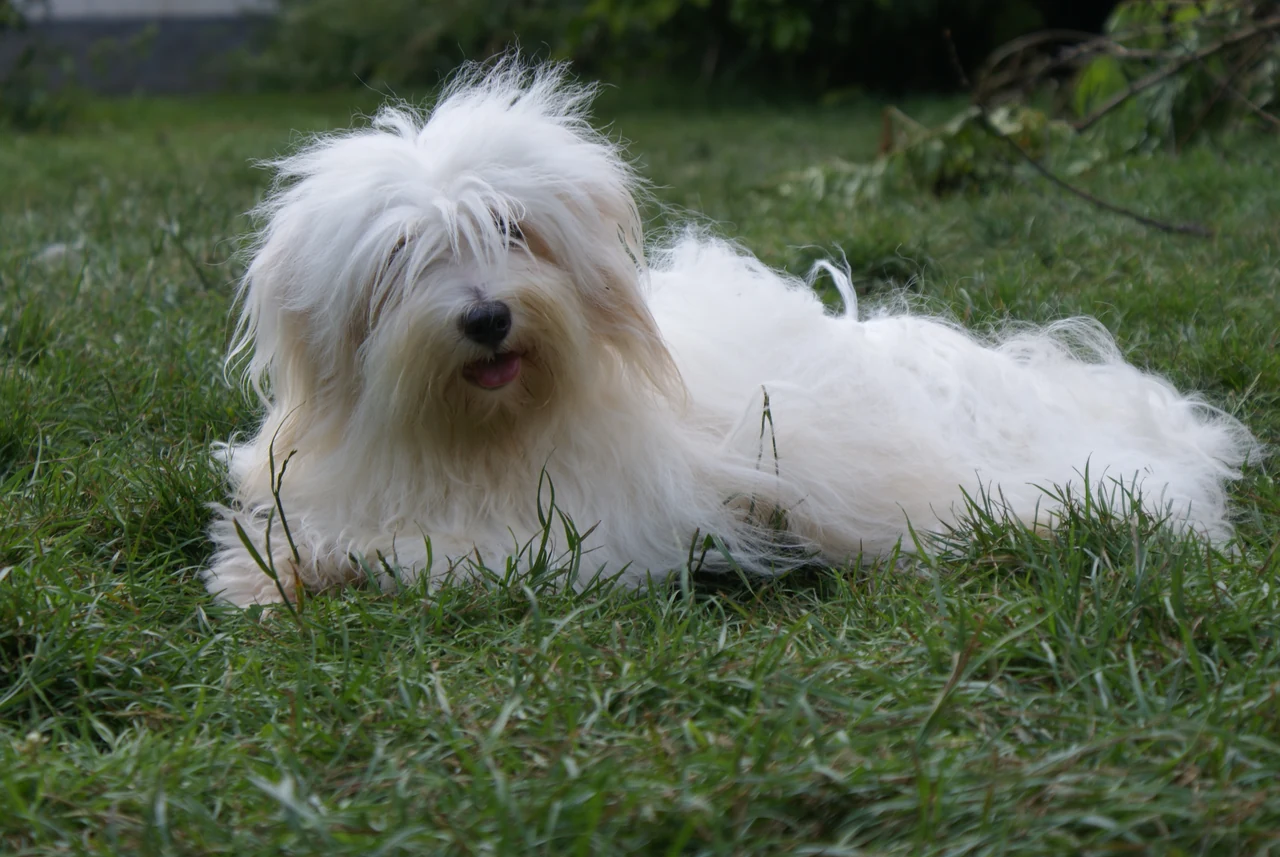
A Coton’s coat feels soft and supple, rather like cotton fibre. It is dense and may be slightly wavy. That long, soft hair tangles readily if only the visible surface is brushed. Daily grooming should involve parting the coat into small sections and gently combing through them. Tangles often form behind the ears, under the front legs and where a harness or collar rubs.
The transition from puppy coat to adult coat can make grooming more demanding. A professional groomer can show you how to use a brush and comb down to the skin without pulling. A shorter pet trim may make life easier, but regular combing is still necessary. Tight mats should be professionally removed. The coat needs to be free of knots before bathing, as washing can make matted areas tighten further.
Dog shampoo is suitable for bathing and should be rinsed out completely. When drying the coat, the flow of air should be kept away from the eyes. The air must not be hot enough to irritate the skin. Grooming products should not get into the eyes. Squinting, redness or unusual watering should prompt a veterinary check of the cause. Ears and nails also need regular checks. Brushing with dog toothpaste helps remove plaque before it becomes hard tartar. Tooth brushing should be introduced gradually and ideally done every day.
Cotons shed comparatively little. That does not automatically make them suitable for people with dog allergies. Allergens occur in skin flakes and saliva, among other sources. The term “hypoallergenic” offers a level of certainty that no dog breed can reliably provide.
Size and build
The Coton de Tuléar comes from Madagascar. The international standard names France as the country responsible for overseeing the standard. It describes the breed’s introduction to France before official recognition in 1970.
The Fédération Cynologique Internationale, or FCI, lists the breed in Standard No. 283 as a small companion dog with a body longer than it is tall. The stated shoulder height is 26 to 28 cm for males and 23 to 25 cm for females. The standard allows 2 cm above or 1 cm below these ranges for each sex. Males weigh 4 to 6 kg and females 3.5 to 5 kg.
Dark round eyes, triangular drop ears and a predominantly white coat are characteristic. Faint grey or reddish shading may appear on the ears. These markings do not make the dog a different breed. For a family dog, body condition should matter more than reaching a particular number in the standard.
From puppy to senior: caring for your dog through every life stage ↗
Health
Before buying a puppy, you should ask for clear health records for both parents. The Royal Kennel Club recommends eye examinations. In its 2021 health statement, the US breed club lists eye, kneecap and heart examinations as core breeding checks. Any additional tests suited to the family line and breeding programme should be discussed with the relevant breed club and a vet. A long list of available DNA tests does not mean that every condition on it is common in this breed.
Patellar luxation means the kneecap slips out of its groove. Some dogs briefly lift a hind leg or skip for a few steps before walking normally again. If it happens repeatedly, you should have it checked by a vet. Severity and symptoms determine whether treatment is needed and which approach is appropriate. Examining the parents helps with breeding decisions, but does not guarantee that a puppy will have healthy joints throughout life.
In everyday life, it is worth noticing changes in movement, the eyes and the mouth early. Bad breath, red gums or pain when chewing should be examined. Regular dental checks remain useful even when your dog eats normally. For a Coton, preventive healthcare should be as familiar a routine as grooming.
Could this breed fit your life?
Could work well if …
- You want a small companion dog and would like to include it regularly in your everyday life.
- You can care for the coat thoroughly every day and arrange professional help when needed.
- You can provide walks and play alongside enough undisturbed rest.
What to consider
- The cotton-like coat can mat down to the skin if only the surface is brushed.
- Being sociable does not guarantee easy time alone or immediate compatibility with other animals.
- Eye, kneecap and any other appropriate health checks should be discussed before buying a puppy.
Similar needs, different dogs.
Selected by shared size, activity, grooming and training characteristics.
Companion dog
Bolognese
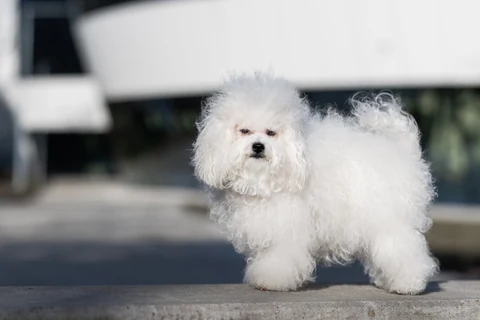
The Bolognese is a small white dog with a soft coat that falls in loose tufts. It comes from Italy and is closely associated with Bologna. Life with one involves company, walks with time to sniff and careful coat care. If you are looking for a fairly quiet small dog, that daily grooming should be part of your plans from the start.
Tibetan companion and watch dog
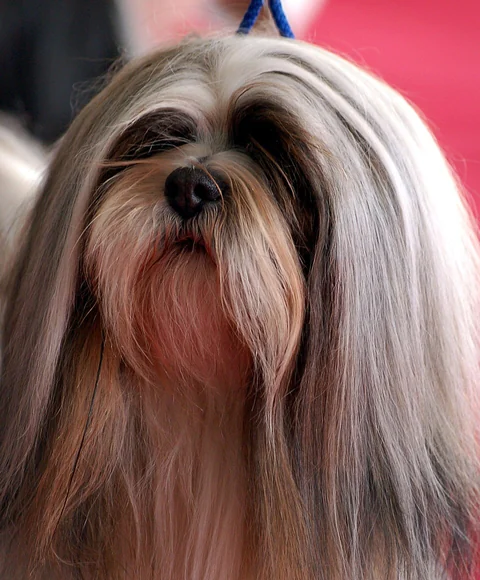
Lhasa Apso
A small, sturdy Tibetan dog with long hair and an independent mind. Once an indoor sentinel, it notices noises and visitors. Its size is manageable, but maintaining the coat is a daily task.
Small Chinese companion with a dense mane
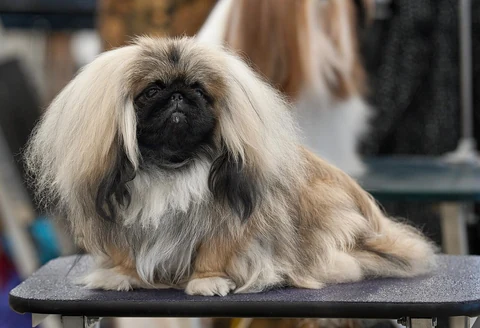
Pekingese
The Pekingese is a small, sturdy companion with a dense mane and a long history in China’s imperial palaces. It can be devoted to familiar people while retaining strong opinions of its own. Its short face and demanding coat care deserve close attention, even when its exercise needs seem modest.
Sources and photograph credit
- Teaching your dog to be left alone
Used in this profile for: Staying home alone
- Patellar luxation
Used in this profile for: Health
- Grooming your Coton
Used in this profile for: Temperament, Day-to-day care, Could this breed fit your life?
- Coton de Tulear · Health statement
Used in this profile for: Health
- History of the Coton de Tulear
Used in this profile for: Size and build
- Coton de Tuléar · FCI Standard No. 283
Used in this profile for: Size / Weight, Temperament, Day-to-day care, Size and build, Could this breed fit your life?
- Coton de Tulear · Breed information and health
Used in this profile for: Everyday life, Day-to-day care, Health, Lifespan, Could this breed fit your life?
- Pet allergy · Symptoms and causes
Used in this profile for: Day-to-day care
- Dental disease in dogs
Used in this profile for: Day-to-day care, Health
- How often should you groom your pet?
Used in this profile for: Day-to-day care
- Separation anxiety in dogs
Used in this profile for: Everyday life, Could this breed fit your life?
- How to train your dog
Used in this profile for: Everyday life, Could this breed fit your life?
Photo credits
Portrait · File:CotonDeTulearFullCoat.jpg · Sbrandner · CC BY-SA 4.0 · Edited

Puppy · File:Coton de Tulear Puppy-5899.jpg · Slaunger · CC BY-SA 4.0 · Edited

Coat and features · File:Emilio Coton de Tulear.JPG · Cvf-ps · CC BY-SA 3.0 · Edited

In action · File:Coton de Tulear 188.jpg · CamilleVila · CC BY-SA 3.0 · Edited
