 fellfolio
Versatile pointing dog with a harsh coat and enthusiasm for shared work
Wirehaired Pointing Griffon
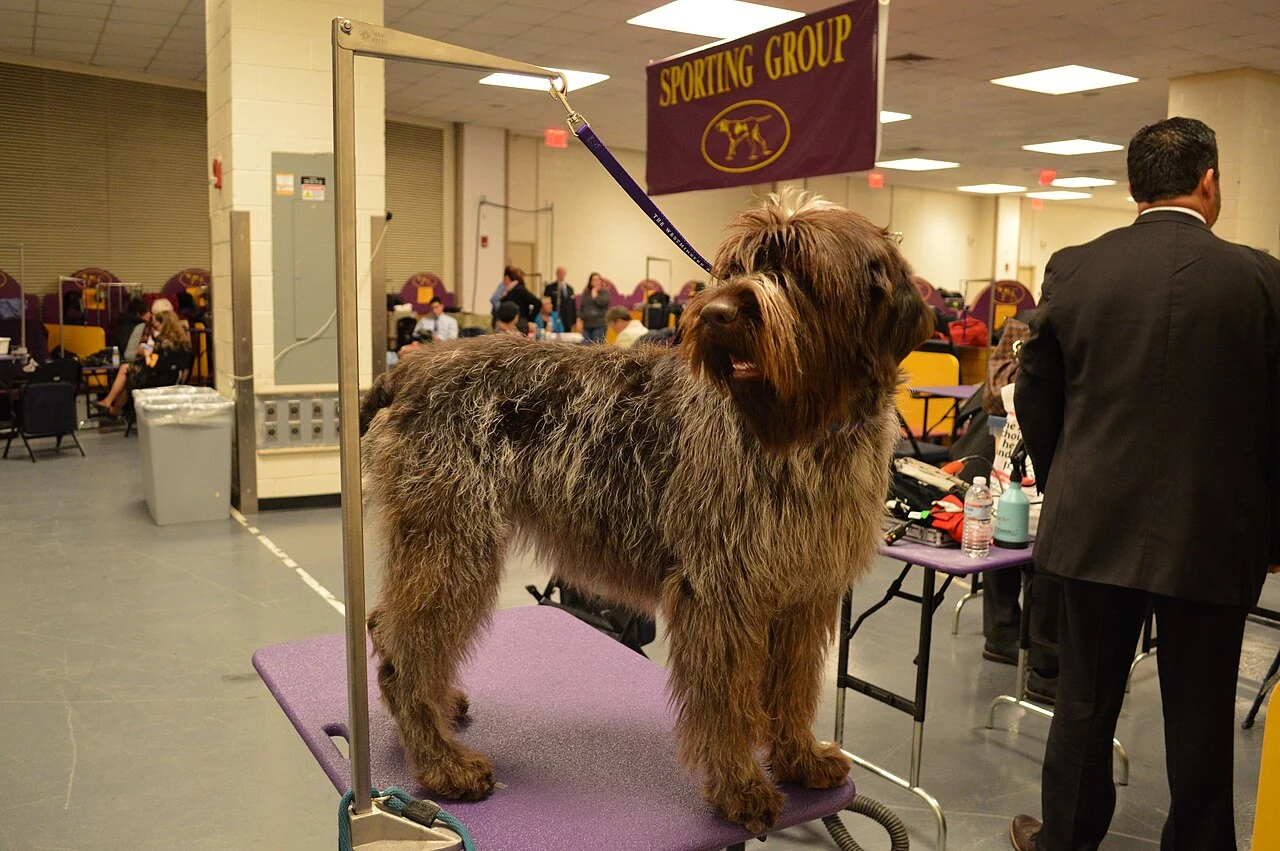
With a tousled beard and bushy eyebrows, the Wirehaired Pointing Griffon looks ready to emerge from the undergrowth. It was developed for versatile hunting work and enjoys both exercise and cooperation with its people. In family life, a brief walk around the block will leave much of that enthusiasm unused.
At a glance
- Size
- Medium
- Height at shoulder
- 50 to 60 cm
- Lifespan
- 12 to 15 years
- Activity
- High
- Grooming
- Several times weekly
- Training
- Patience & clear guidance
- Owner experience
- Experience recommended
A working partner across fields, woodland and water
Dutch breeder Eduard Korthals developed the breed during the second half of the nineteenth century, aiming for a dog able to perform several hunting tasks. Its history connects the Netherlands, Germany and France. The international canine organisation FCI lists France as its country of origin. Korthals Griffon is another name for the breed.
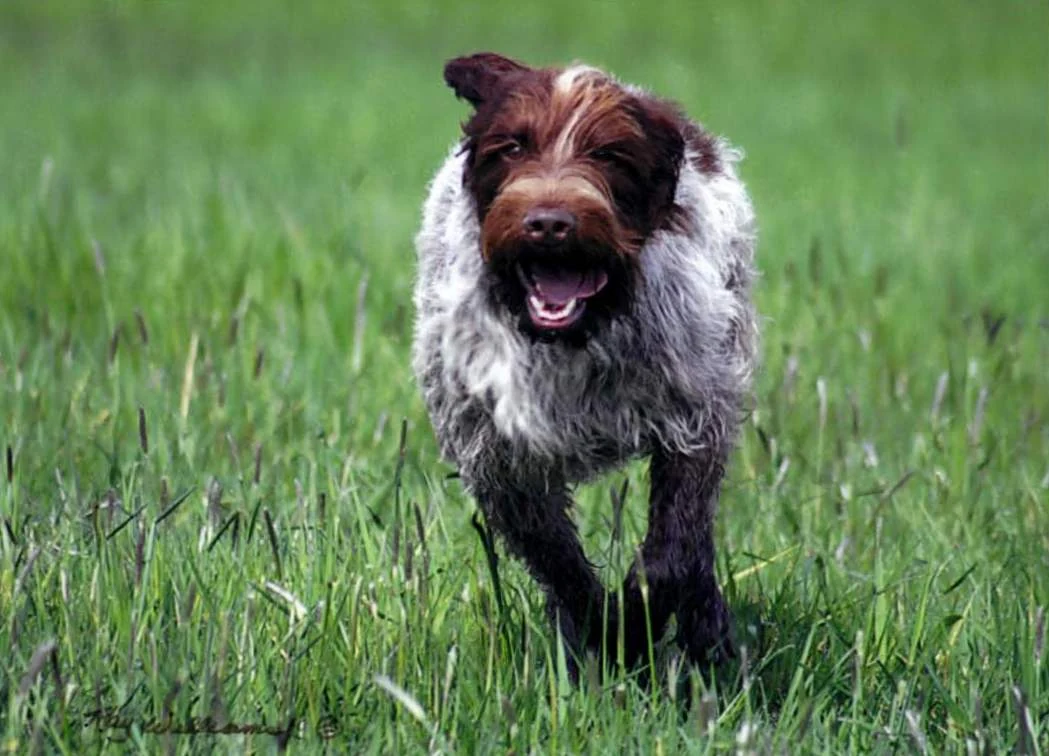
A pointing dog searches for the scent of game, then pauses and uses its body position to indicate where the animal is hidden. The Griffon also retrieves game and tracks injured animals. This stamina and interest in scent help explain why a walk can become an opportunity to investigate the ground around it.
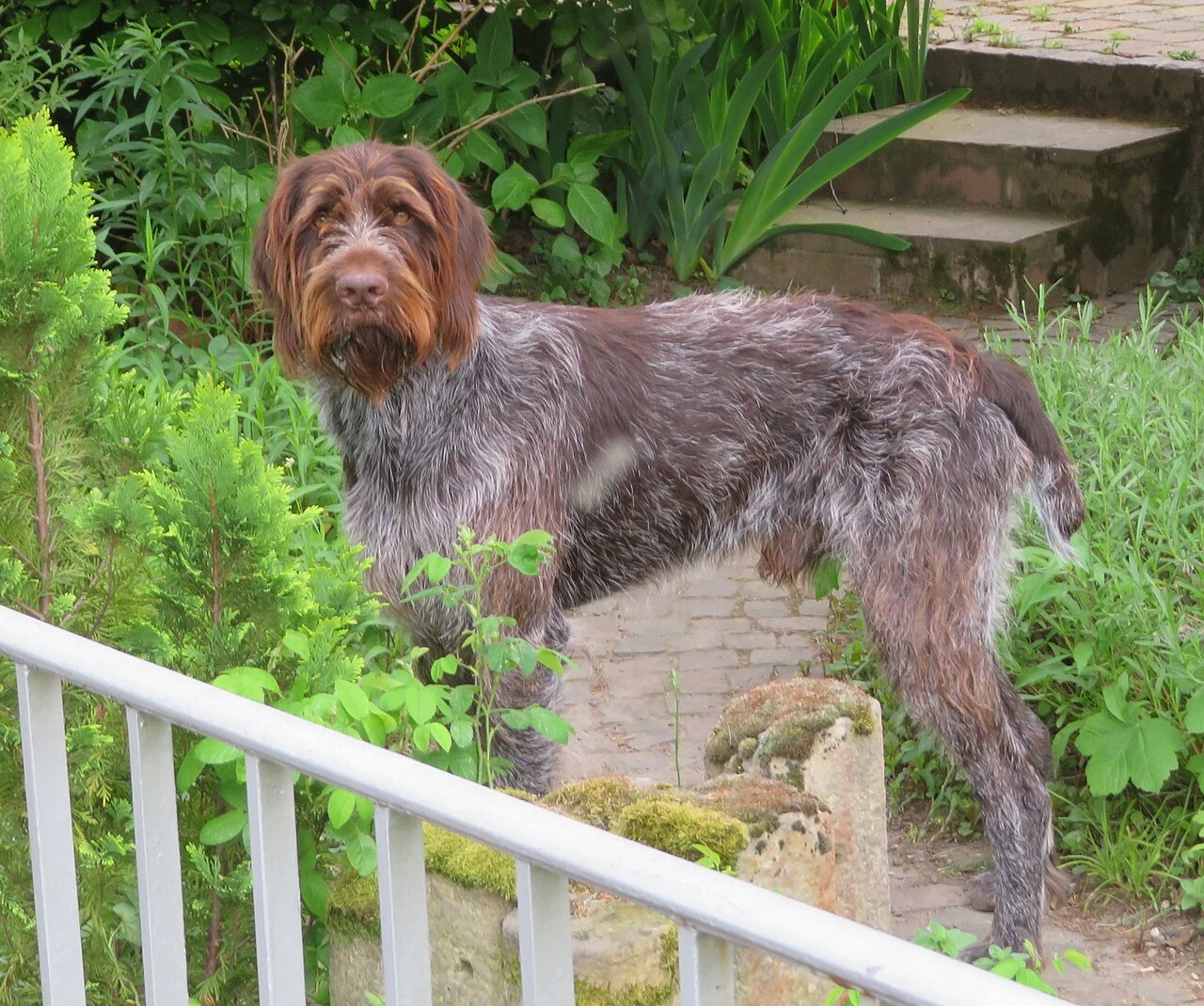
The coarse outer coat covers a dense, finer undercoat. Steel grey with brown patches is a common colour, with solid brown and other combinations also described in the standard. The beard and eyebrows are characteristic features. The FCI standard gives shoulder heights of approximately 55 to 60 centimetres for males and 50 to 55 centimetres for females.
The Griffon usually wants to be closely involved with its family. It can alert people to changes around the home and enjoys learning with a familiar handler. An adult should guide interactions with children and make sure the dog can rest undisturbed. Birds and other wildlife may trigger its hunting instincts outdoors, which should influence plans for walks and free running.
Everyday life
A healthy adult Griffon needs substantial daily exercise and activities that engage its mind. Varied country walks, guided scent work and finding and retrieving a training object can suit it well. A familiar training object could first be placed where it is easy to see, with simple hiding places making the search more interesting later. A suitable training club can help you build these skills together.
Even a large garden does not replace shared outings. The Griffon was selected to work with people and should be able to participate in family life. Convenient access to countryside routes and a securely fenced space make it easier to provide both varied exercise and free running.
Coming back when called should first be practised and rewarded in quiet surroundings. In areas with wildlife, a long lead attached to a suitable harness can help prevent a chase. Learning to be left alone also takes gradual practice. For longer absences, arranging care is more useful than trying to exhaust the dog with ever more exercise beforehand.
Staying home alone
Dogs learn to stay home alone in small steps. The RSPCA advises no more than four hours at a time. Puppies and dogs that become unsettled when left alone need shorter absences and gradual practice. Arrange someone to care for your dog when you will be away longer.
Everyday dog training: recall, a loose lead and clear communication ↗
Day-to-day care
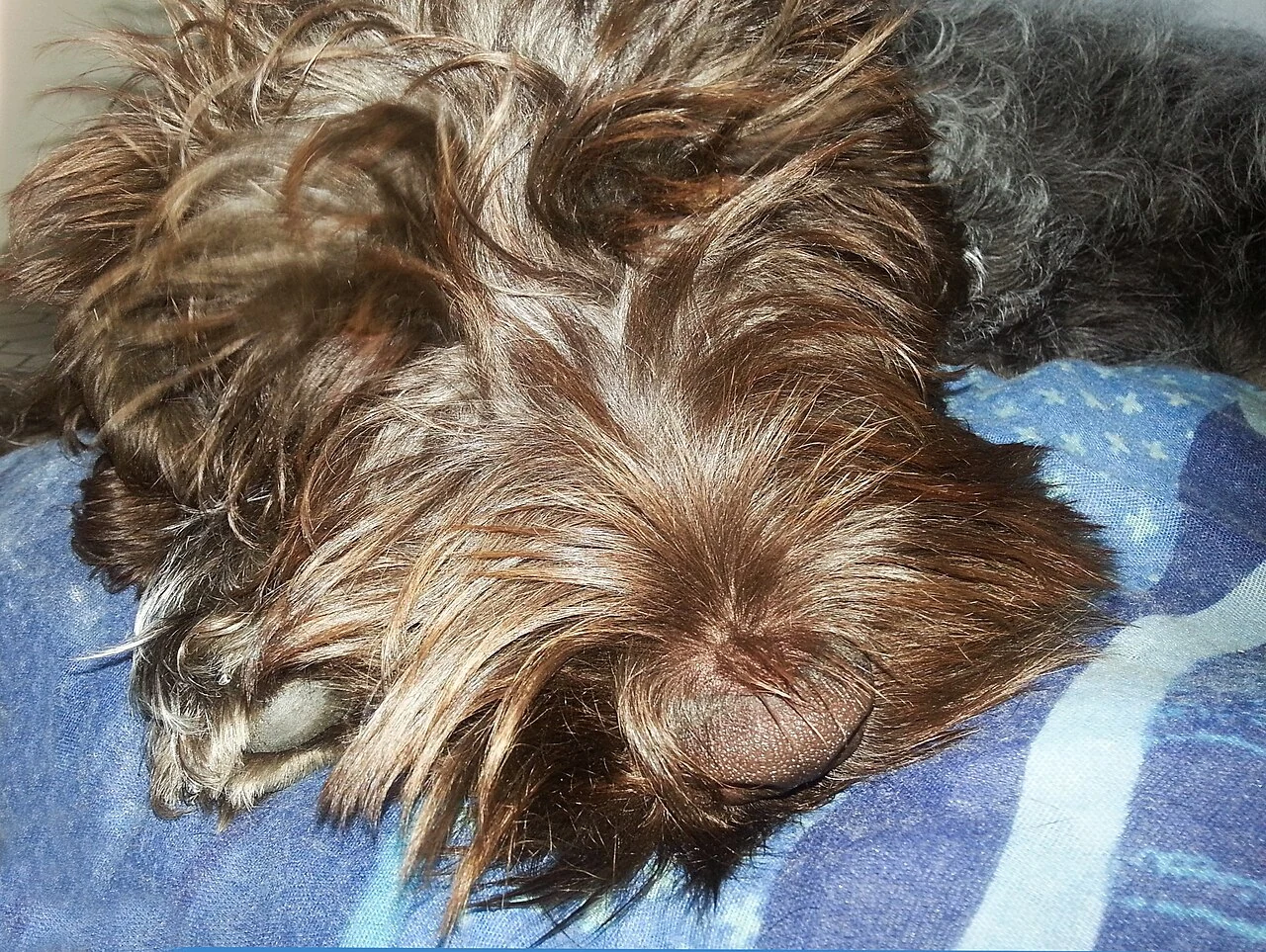
The harsh coat should be brushed or combed several times a week. Small twigs, dirt and plant material can collect in the beard and leg hair after outings. A damp cloth can remove food and dirt from the beard, which should then have a chance to dry.
Some coats also benefit from hand stripping. This removes old hairs that are ready to come out, helping maintain the harsh texture. An experienced groomer can show you which approach suits your dog’s coat and when it needs attention.
The hanging ears should be checked regularly for redness, unusual smell or discharge. Repeated head shaking or scratching should be assessed by a vet. Cleaning products and techniques should be agreed with the practice. Toothbrushing with dog toothpaste and checking the nails are also part of routine care.
Size and build
A young Griffon is often curious and energetic. Brief search games and calm introductions to different people and dogs help it learn about its surroundings. Gentle paw handling or combing a small patch of coat can introduce grooming gradually. A puppy should have plenty of breaks. Long runs beside a bicycle and repeated high jumps should wait until its body has matured.
An adult’s activities can become longer and more challenging as fitness develops. For an older dog, shorter walks and searches without long runs can keep familiar activities enjoyable. A dog that suddenly slows down or becomes reluctant to get up should be checked for pain. The American Kennel Club lists a life expectancy of twelve to fifteen years.
From puppy to senior: caring for your dog through every life stage ↗
Health
Britain’s Royal Kennel Club recommends hip and elbow screening for breeding dogs. The American breed club also specifies a specialist eye examination. Before choosing a puppy, you should ask to see both parents’ results and have the breeder explain how they informed the pairing.
Hip dysplasia means the joint does not fit together with sufficient stability. Pain and joint deterioration can follow, and radiographs help assess these changes. Developmental abnormalities can also affect the elbows and movement. Repeated lameness, difficulty rising or less enthusiasm for exercise should therefore be investigated.
Paws, skin and ears deserve a check after outings. If your dog repeatedly licks one area or shakes its head, recording when it started and whether it followed swimming or a walk through long grass can help at the appointment. Fellfolio can keep these observations alongside weight records and examination reports for your next visit.
Could this breed fit your life?
Could work well if …
- You enjoy daily outdoor activity and want to develop shared searching or retrieving tasks.
- You have time for a dog that wants close involvement in family life.
- You can plan for hunting behaviour, regular grooming and preventive health care.
What to consider
- Birds and wildlife scents can capture its attention. Free running should take place in a suitable safe setting.
- The tousled coat needs regular attention, particularly around the beard and legs.
- When choosing a puppy, you should ask about the parents’ hip, elbow and eye results.
Similar needs, different dogs.
Selected by shared size, activity, grooming and training characteristics.
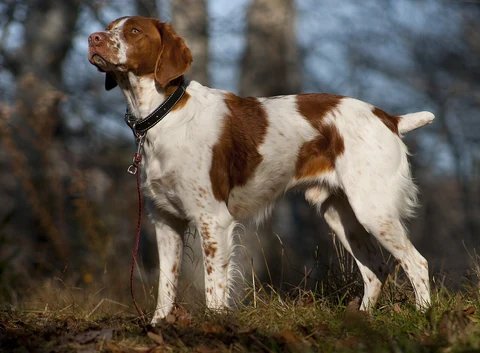
French pointing dog
Brittany
The Brittany is a compact French gundog with plenty of energy and a keen nose. It searches for game, points and retrieves. Pointing means pausing near game it has located to show the handler where it is. Anyone considering a Brittany as a companion should take its hunting instincts as seriously as its often friendly, people-oriented nature.
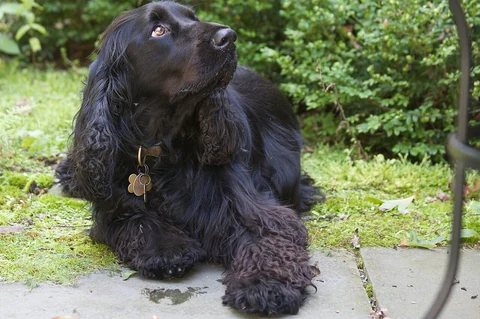
Sensitive hunting companion with a long silky coat
Field Spaniel
The Field Spaniel is an active, sensitive dog that enjoys following scents outdoors and being close to its people at home. Beneath the long silky coat is an enduring hunting companion. Varied exercise, shared activities and kind training give this attentive dog plenty to enjoy with its family.
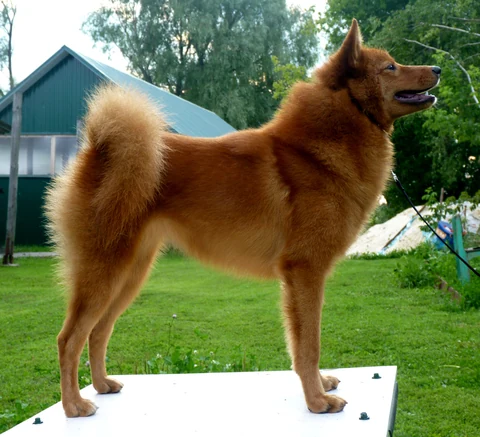
Vocal hunting dog from Finland
Finnish Spitz
A reddish gold coat, pointed ears and a tail curled over the back make the Finnish Spitz easy to recognise. Its voice is as much a part of its history as its appearance. When hunting, it barks to indicate a bird’s position in a tree. Life with this breed calls for plans that take exercise, hunting interest and noise into account together.
Sources and photograph credit
- Teaching your dog to be left alone
Used in this profile for: Staying home alone
- Canine Hip Dysplasia
Used in this profile for: Health
- Position Statements and Humane Dog Training
Used in this profile for: Everyday life
- Wirehaired Pointing Griffon
Used in this profile for: Temperament, Everyday life, Day-to-day care, Size and build, Lifespan, Could this breed fit your life?
- griffon parent club health statement
Used in this profile for: Health
- Wirehaired Pointing Griffon Korthals FCI107
Used in this profile for: Size / Weight, Temperament, Day-to-day care
- Korthals Griffon
Used in this profile for: Everyday life, Day-to-day care, Health, Could this breed fit your life?
- Ear problems in pets
Used in this profile for: Day-to-day care, Health
- Exercising Your Puppy
Used in this profile for: Size and build
- Training Your Dog to Be Left Alone
Used in this profile for: Everyday life, Size and build
- Children and Dogs
Used in this profile for: Temperament
- Caring for Your Dog’s Teeth
Used in this profile for: Day-to-day care
- Train Your Dog to Come When Called
Used in this profile for: Everyday life
Photo credits
Side view · Wirehaired Pointing Griffon - GCH Glacier's Gertie Queen Of Spades (16418078089).jpg · Pets Adviser from Brooklyn, USA · CC BY 2.0 · Edited
.jpg)
In action · GCH Int Ch UCH Zerubbabel von Herrenhausen CGC MHA run.jpg · CarolPtak · CC BY-SA 4.0 · Edited

Everyday life · Griffon - Vorstehhund im Garten.jpg · Sciencia58 · CC BY-SA 4.0 · Edited

Coat and features · Maia Griffon korthal.jpg · Pierre André Leclercq · CC BY-SA 4.0 · Edited
