 fellfolio
Vocal hunting dog from Finland
Finnish Spitz
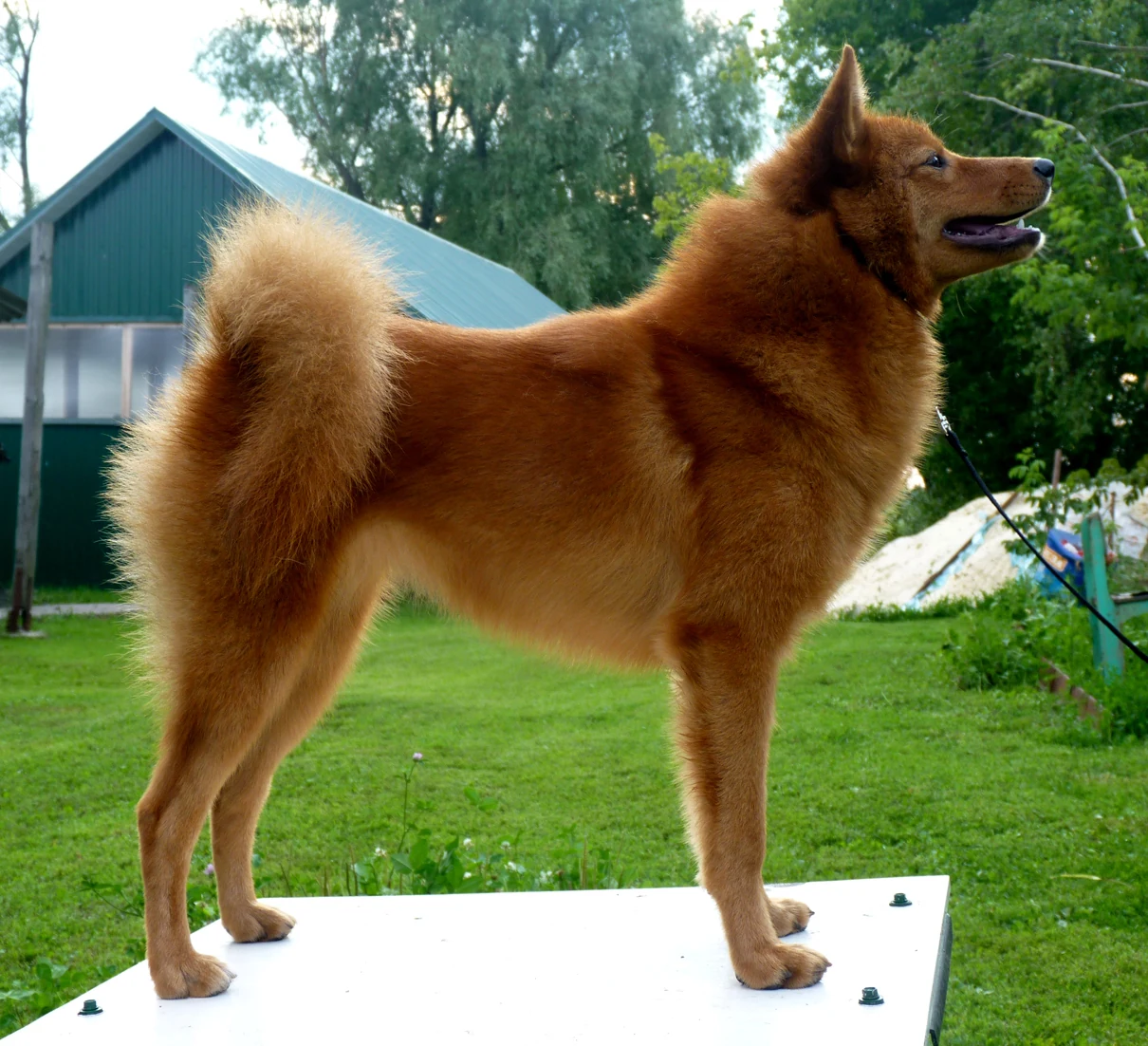
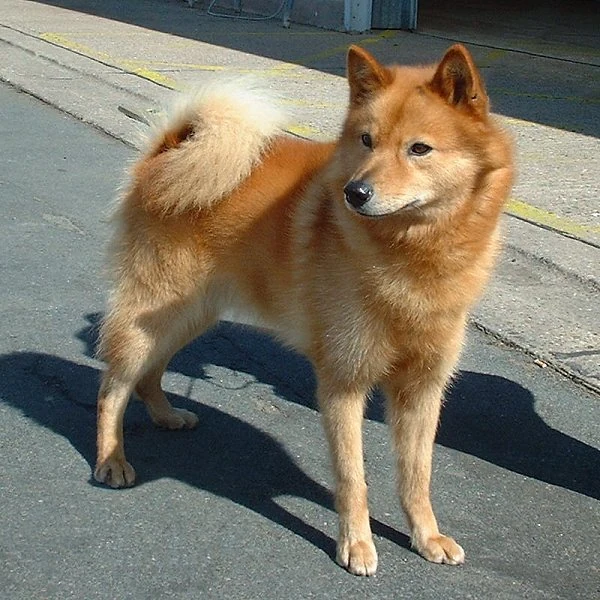
A reddish gold coat, pointed ears and a tail curled over the back make the Finnish Spitz easy to recognise. Its voice is as much a part of its history as its appearance. When hunting, it barks to indicate a bird’s position in a tree. Life with this breed calls for plans that take exercise, hunting interest and noise into account together.
At a glance
- Size
- Medium
- Height at shoulder
- 39 to 50 cm
- Lifespan
- over 10 years
- Activity
- High
- Grooming
- Several times weekly
- Training
- Patience & clear guidance
- Owner experience
- Experience recommended
Observant, independent and clearly heard
The Finnish Spitz was bred to find forest birds and show its handler where they were. It works independently while remaining connected to the hunter. That combination of initiative and cooperation also shapes life as a companion. Interesting scents or a bird in a hedge can quickly draw its attention away from its person.
Barking serves a purpose in its original work: the dog shows where the bird is and tries to keep it in the tree by barking while the hunter approaches. A prospective owner should therefore expect a vocal dog. Living in a building where sound travels easily can be more demanding. Quiet places to rest and rewards for looking back at you or settling after a noise are useful. Shouting can add to the excitement.
It may initially be reserved with unfamiliar people. Meetings should begin with enough distance for the dog to observe and approach at its own pace. Adults should supervise contact with children and protect its resting place. Small pets need accommodation the dog cannot enter. With cats, the individual dog’s response matters, especially whether it can remain calm or tries to chase.
Everyday life
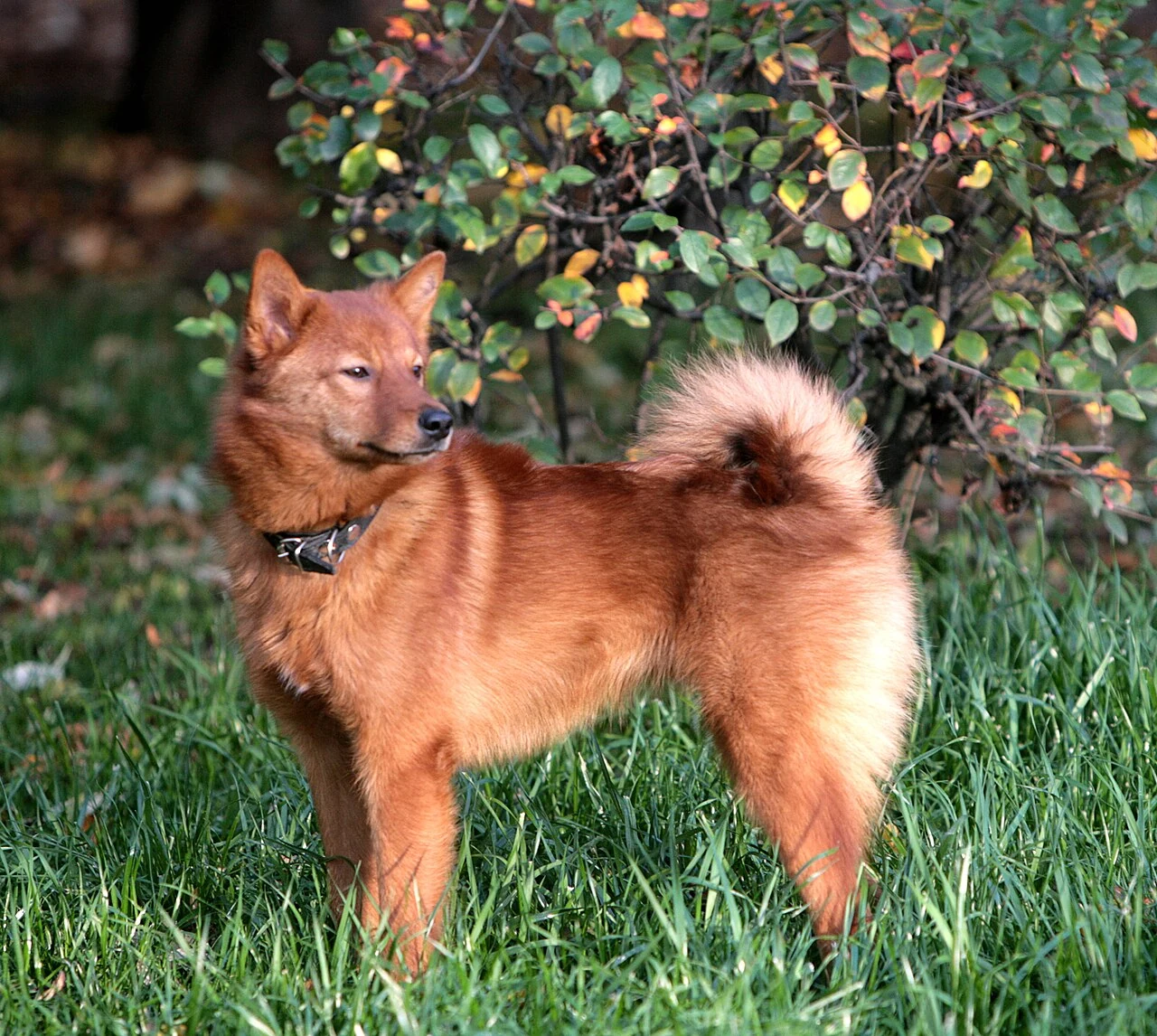
Regular walks should provide opportunities to explore. A lead is sensible where wildlife or roaming cats may appear. In suitable surroundings, a longer lead can offer more room to move while keeping the dog secure. Off lead running is best provided in a securely fenced area.
Returning when called can first be practised without strong distractions. When the dog is only a few steps away, you can call it cheerfully and reward it for coming. It can then go back to sniffing. This helps prevent every return from signalling the end of an interesting walk. Greater distance and new distractions should follow once the dog reliably returns in quiet surroundings.
Alongside exercise, brief search games and learning activities can add variety. Repeating the same exercise for a long time may be less engaging than small tasks with an achievable reward. Time to settle belongs in the daily routine too. Before bringing home a puppy, it is useful to plan care during absences and consider noises around the home.
Staying home alone
Dogs learn to stay home alone in small steps. The RSPCA advises no more than four hours at a time. Puppies and dogs that become unsettled when left alone need shorter absences and gradual practice. Arrange someone to care for your dog when you will be away longer.
Everyday dog training: recall, a loose lead and clear communication ↗
Day-to-day care
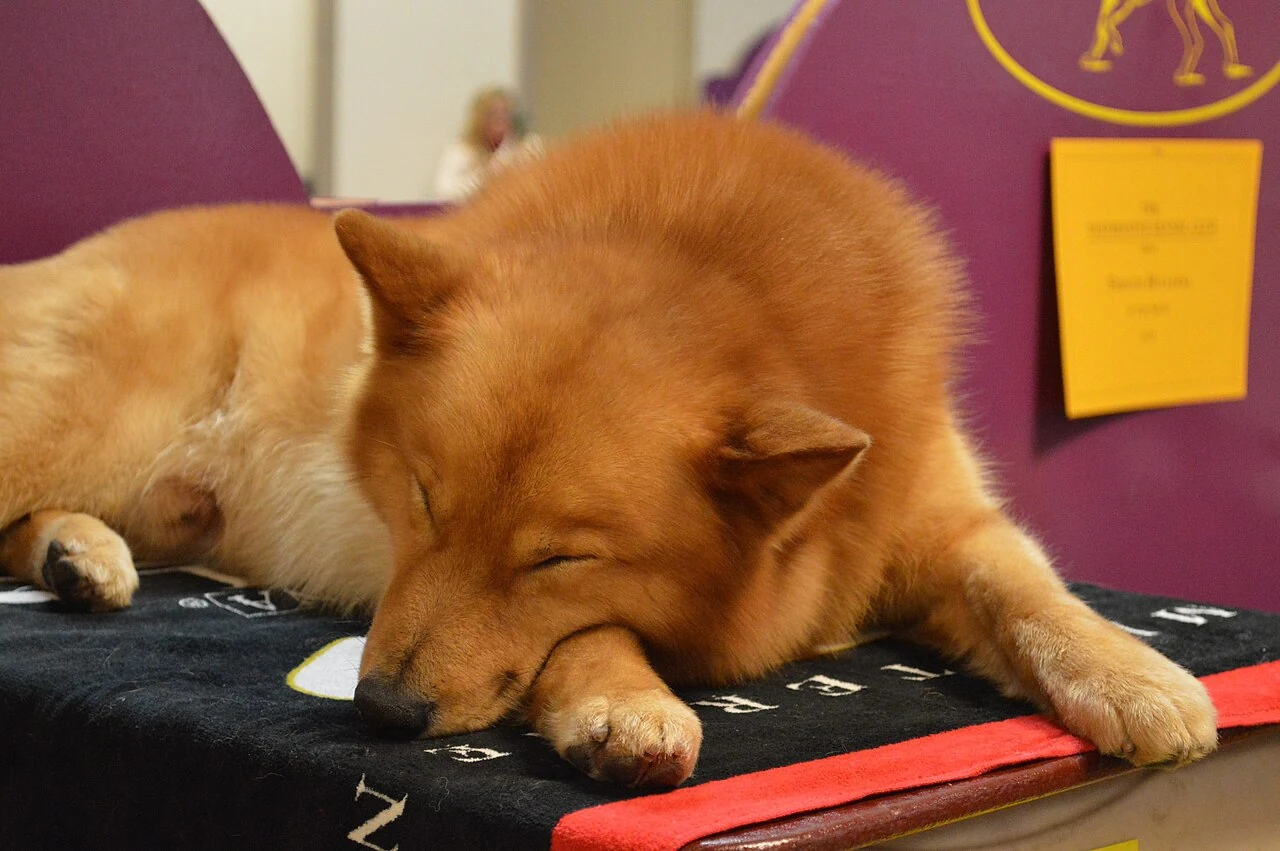
The coat combines a firmer outer layer with dense, soft undercoat. Regular brushing removes loose hairs, particularly during a moult. Hair is stronger around the neck and back, and males often have a more pronounced neck ruff. Brushing should be gentle. Tight tangles or painful skin need knowledgeable help.
After outings, feet, nails and skin can be checked while the dog is being dried. The upright ears should not have an unusual smell. Frequent head shaking, scratching or redness should be assessed by a vet. Regular brushing with dog toothpaste can be introduced early in small steps.
Food portions should suit the dog’s activity and body condition. Even an active dog can receive too much energy if numerous treats are added to its meals. Rewards should therefore count towards the daily food allowance. Notes on weight changes and other observations help the vet assess developments over time.
Size and build
The Finnish Spitz comes from Finland, where it was used mainly to hunt forest birds. Work to record and establish the breed began in the late nineteenth century, and its first standard was written in 1892. It has been Finland’s national dog since 1979. Dogs previously known as the Karelian Finnish Laika were combined with the Finnish Spitz as one breed in 2006.
Its outline is almost square, with upright ears and a curled tail. The coat is reddish to golden brown, with paler areas on various parts of the body. In its 2026 standard, the international canine organisation FCI specifies shoulder heights of 44 to 50 cm for males and 39 to 45 cm for females. The preferred heights are 47 and 42 cm respectively.
From puppy to senior: caring for your dog through every life stage ↗
Health
Before choosing a puppy, ask about illness in its family and the available health records. Epilepsy has been specifically studied in the Finnish Spitz. This condition involves repeated seizures caused by abnormal electrical activity in the brain. With idiopathic epilepsy, no other underlying disease is identified. A Finnish study published in 2013 describes an inherited contribution in the breed.
A seizure does not always affect the whole body. Unusual repeated movements in particular parts of the body can also occur. A vet should determine whether an episode is a seizure and investigate its cause. A first suspicious episode should be discussed even if the dog seems normal afterwards. A seizure lasting longer than two minutes needs immediate veterinary help.
The Royal Kennel Club, the British canine organisation, gives a lifespan of more than ten years. A dog with epilepsy needs an individual treatment plan and ongoing monitoring. A brief account of the episode, its duration and recovery afterwards can help at an appointment. Medication should only be given or changed according to the vet’s plan.
Could this breed fit your life?
Could work well if …
- You enjoy being outdoors and want to understand the needs of a hunting dog.
- You can accommodate a vocal dog where you live and patiently encourage calm behaviour.
- You enjoy varied training and appreciate a dog that can think independently.
What to consider
- Its barking can cause difficulties in a building where sound travels easily and should be considered before it arrives.
- Birds and other small animals can trigger hunting interest. Off lead exercise needs secure surroundings.
- Epilepsy in the family and unusual episodes should be discussed openly with the breeder and vet.
Similar needs, different dogs.
Selected by shared size, activity, grooming and training characteristics.
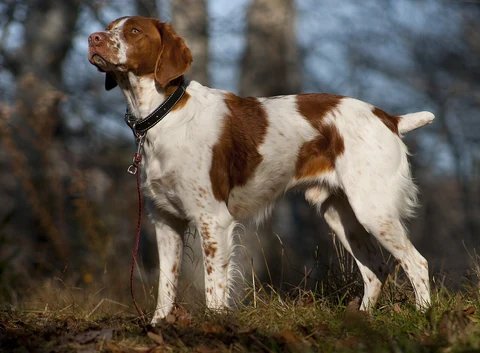
French pointing dog
Brittany
The Brittany is a compact French gundog with plenty of energy and a keen nose. It searches for game, points and retrieves. Pointing means pausing near game it has located to show the handler where it is. Anyone considering a Brittany as a companion should take its hunting instincts as seriously as its often friendly, people-oriented nature.
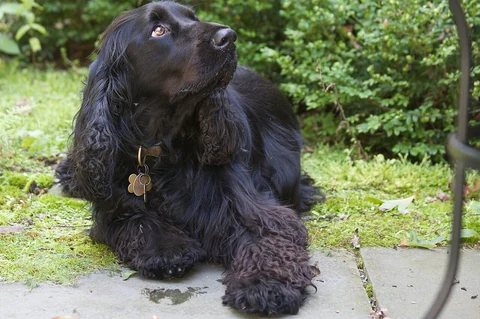
Sensitive hunting companion with a long silky coat
Field Spaniel
The Field Spaniel is an active, sensitive dog that enjoys following scents outdoors and being close to its people at home. Beneath the long silky coat is an enduring hunting companion. Varied exercise, shared activities and kind training give this attentive dog plenty to enjoy with its family.
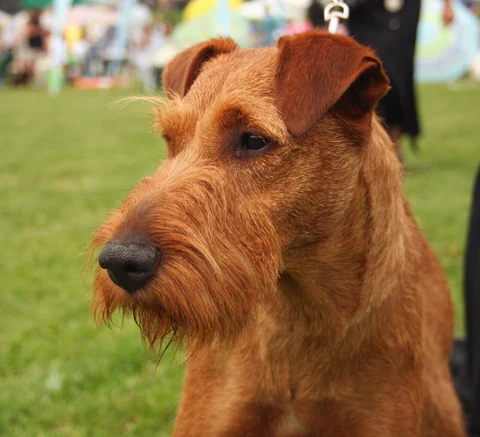
Red Irish wire-coated terrier
Irish Terrier
The Irish Terrier combines a red, wiry coat with long legs and a lean, strong body. Its ancestors guarded farms and worked at different hunting tasks. Today, it can suit people who enjoy activity and are happy to guide an independent dog through rewards. Grooming, managing an interest in chasing and calm encounters with other dogs deserve preparation.
Sources and photograph credit
- Teaching your dog to be left alone
Used in this profile for: Staying home alone
- Phenotype, inheritance characteristics, and risk factors for idiopathic epilepsy in Finnish Spitz dogs
Used in this profile for: Health
- Finnish Spitz, FCI Standard No.49
Used in this profile for: Size / Weight, Temperament, Everyday life, Day-to-day care, Size and build, Could this breed fit your life?
- Finnish Spitz
Used in this profile for: Temperament, Everyday life, Could this breed fit your life?
- Finnish Spitz
Used in this profile for: Temperament, Everyday life, Day-to-day care, Health, Lifespan, Could this breed fit your life?
- Dental disease in dogs
Used in this profile for: Day-to-day care
- Ear problems in pets
Used in this profile for: Day-to-day care
- Grooming and bathing pets
Used in this profile for: Day-to-day care
- Seizures and Epilepsy in Dogs
Used in this profile for: Health
- Training your dog
Used in this profile for: Everyday life, Could this breed fit your life?
Photo credits
Side view · FSpitz dogshow.jpg · Karelka-layka · CC BY-SA 3.0 · Edited

Everyday life · FINNISH SPITZ.jpg · Karelgerda · CC BY-SA 3.0 · Edited

Portrait · Finnish Spitz 600.jpg · sannse · CC BY-SA 3.0 · Edited

Coat and features · Finnish Spitz - GCH Dv9k9's Red Hot Star aka Rocket 2 (16576435166).jpg · Pets Adviser · CC BY 2.0 · Edited
.jpg)