 fellfolio
Companion dog
Tibetan Spaniel
The Tibetan Spaniel is a small companion dog with a silky coat and a long association with monasteries. Often called a Tibbie, it can explore its surroundings on walks and needs a quiet resting place and dependable company at home. Before choosing a puppy, take a close look at the parents’ eye examinations and health records.
At a glance
- Size
- Small
- Weight
- 4.1 to 6.8 kg
- Lifespan
- over 12 years
- Activity
- Moderate
- Grooming
- Several times weekly
- Training
- Patience & clear guidance
- Owner experience
- First dog with support
Alert and independent-minded
Despite its name, the Tibetan Spaniel does not belong to the working spaniel breeds. It is classified as a companion dog. The Fédération Cynologique Internationale, or FCI, the international federation of kennel clubs, describes alertness, independence and attachment to familiar people in its standard, with some reserve towards strangers. An individual may respond differently to visitors depending on its experiences and learning.
A good first meeting allows the dog to approach voluntarily. Picking it up immediately tells you little about how comfortable it feels with someone new. When visiting a breeder or foster home, it helps to watch the dog moving around and resting as well as greeting people.
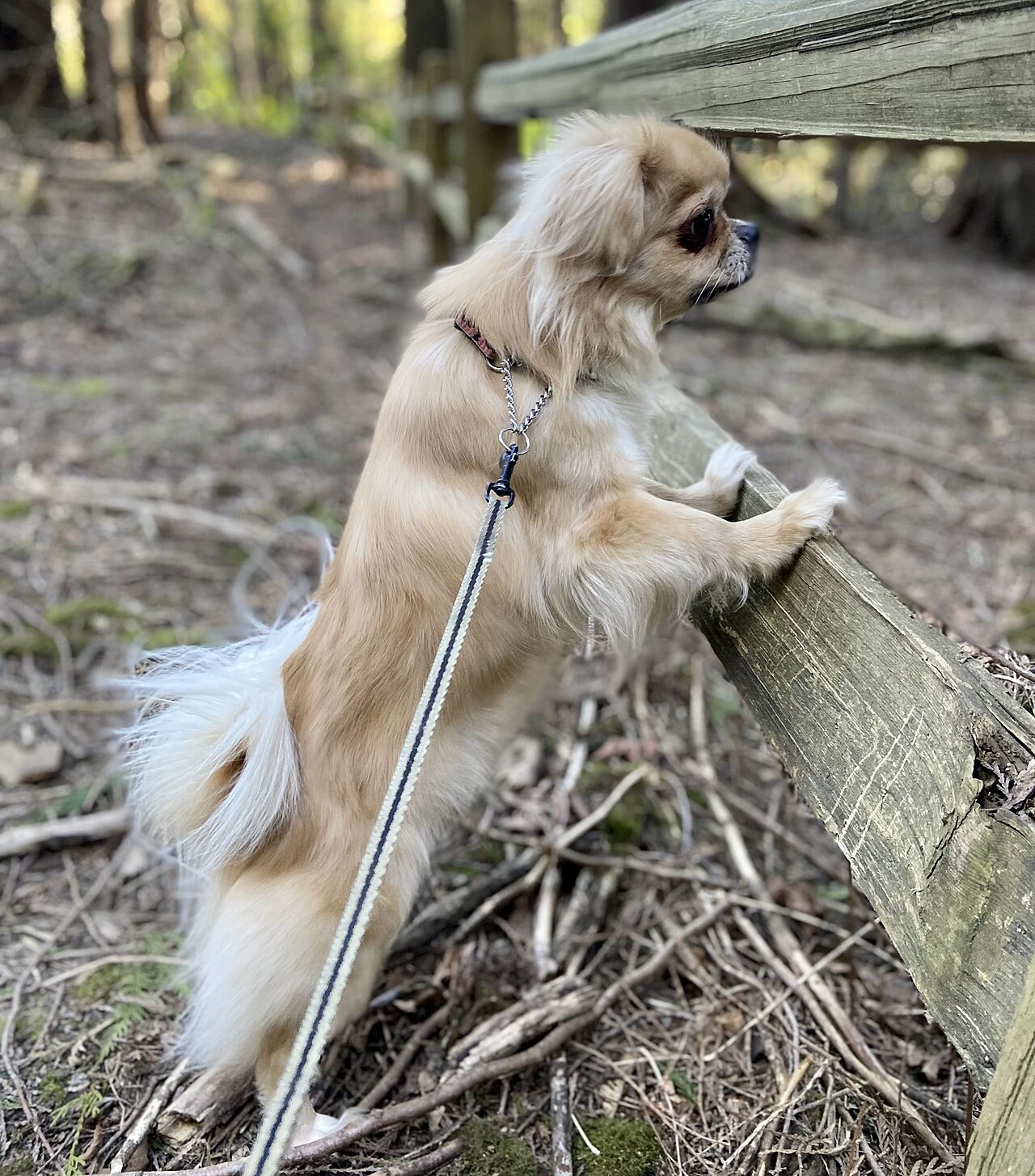
Tibetan Spaniels have been described as attentive companions and watchdogs. In a modern home, that attention may focus on hallway noises or people beyond a window. If a dog often barks there, a quieter resting place and rewards for relaxed behaviour can help. A lookout spot needs protection against falls. A small dog should not sit on an unsecured windowsill.
Everyday life
Walks give a Tibetan Spaniel opportunities to sniff, discover its surroundings and spend time with familiar people. The Royal Kennel Club, the British kennel club, gives up to an hour of daily exercise as broad guidance. The length and intensity of an outing should reflect the dog’s age, health and fitness.
For training, find a reward your Tibbie values. This might be food, a toy or a shared game. A new cue can first be learned quietly at home, then practised in other places before stronger distractions are added. Clear tasks and worthwhile rewards help the dog enjoy taking part.
Recall should be developed reliably. A long training lead allows more exploration on walks without leaving the dog unsecured. Children should not disturb it when eating or sleeping, or pick it up against its wishes. Adults should supervise their encounters. Time alone also needs gradual practice rather than assumptions based on the breed description.
Staying home alone
Dogs learn to stay home alone in small steps. The RSPCA advises no more than four hours at a time. Puppies and dogs that become unsettled when left alone need shorter absences and gradual practice. Arrange someone to care for your dog when you will be away longer.
Everyday dog training: recall, a loose lead and clear communication ↗
Day-to-day care
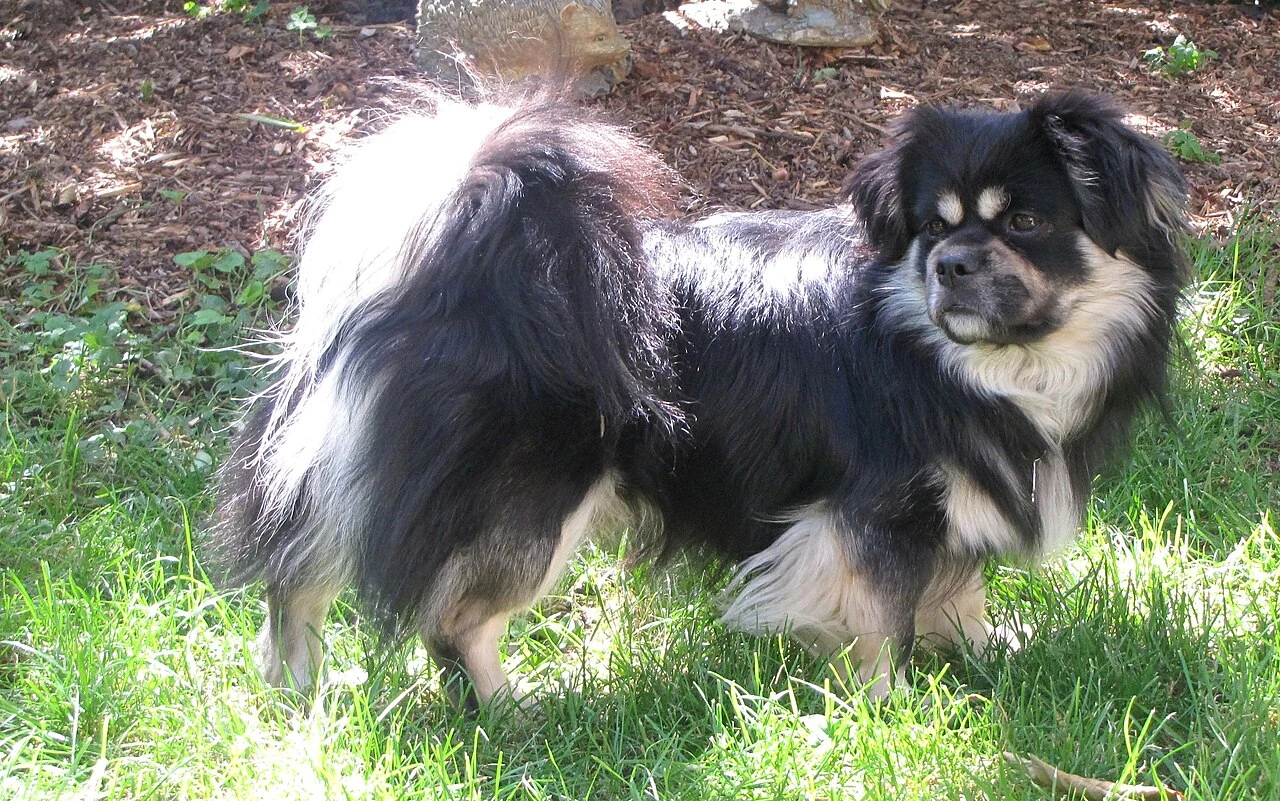
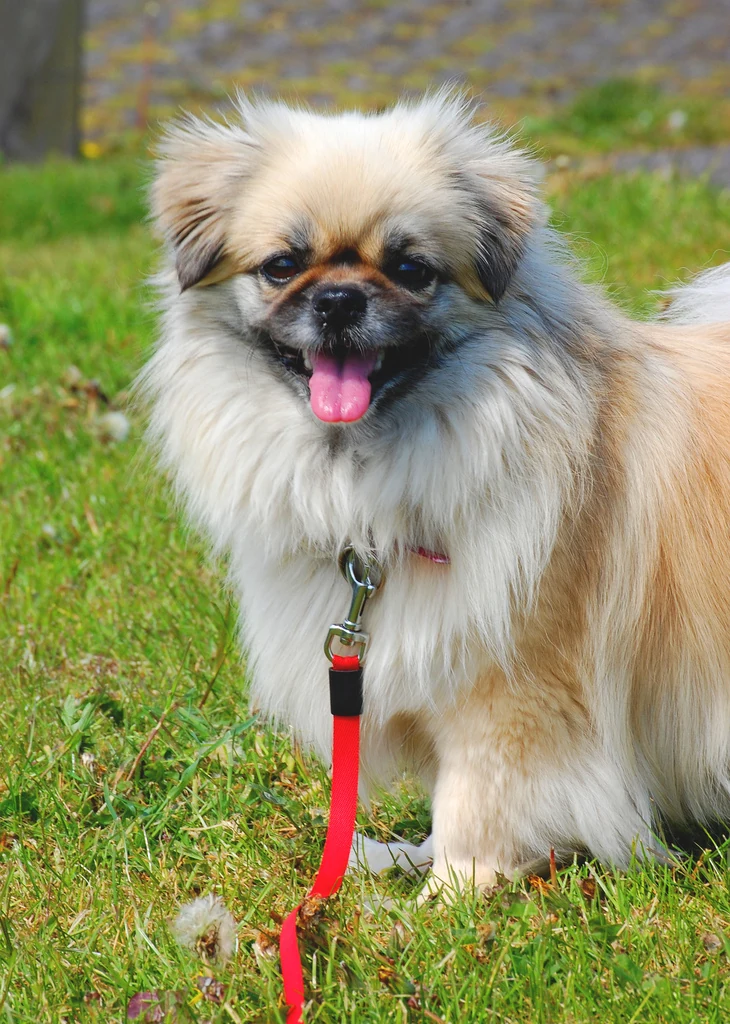
The silky outer coat lies over a fine, dense undercoat, the shorter layer beneath the visible outer hair. The longer hair around the ears, legs and tail is called feathering. This simply means fringes of hair rather than a separate type of coat.
When brushing, pay particular attention to small knots behind the ears and in the longer hair. During shedding periods, more frequent brushing helps remove loose undercoat. The Royal Kennel Club lists grooming at more than once a week. A tightly matted patch should be removed by someone experienced. Cutting with scissors close to the skin risks injury because skin can be drawn up into the mat.
Grooming is also an opportunity to check nails, ears and teeth. A toothbrush and dog toothpaste can be introduced gradually. Pain when chewing or a red patch of skin needs an examination even if the dog stands quietly during grooming.
Size and build
The breed’s history is linked with Tibet and its monasteries, where the dogs lived as companions and drew attention to visitors. Europeans used the name spaniel because the dogs reminded them of small European spaniels. That resemblance does not make them working spaniels. A British breed association was established in 1957.
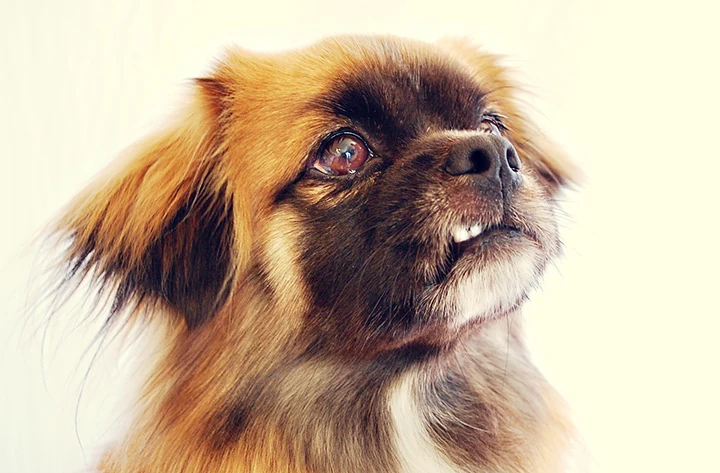
The FCI lists the Tibetan Spaniel under standard number 231. Its standard gives an approximate shoulder height of 25.4 cm and an ideal weight of 4.1 to 6.8 kg. All colours are permitted. The muzzle should be of medium length and free of wrinkles, so an especially flat face should not be treated as a sign of quality when choosing a dog.
From puppy to senior: caring for your dog through every life stage ↗
Health
It helps to distinguish two kinds of eye screening. The Royal Kennel Club recommends a veterinary eye examination to check for disease and a DNA test, which examines genetic material, for PRA3. PRA means progressive retinal atrophy, a gradual deterioration of the retina that impairs vision and can lead to blindness. The retina is the light-sensitive layer at the back of the eye. PRA3 is one particular inherited form.
The DNA test looks for a known change in the FAM161A gene. To be affected by this form, a dog must inherit the altered variant from both parents. A carrier with one altered copy is not affected by PRA3 as a result of that copy, although the result still matters when planning breeding. A clear PRA3 test does not rule out other eye diseases or further forms of PRA, so clinical examinations remain important.
The American parent club’s 2016 health statement also recommends an examination for patellar luxation, checking whether the kneecap slips out of its normal track. Before buying a puppy, the results, dates and identity of the parents examined should be clear. Vision problems or repeated limping in your own dog should be assessed by a vet. The Royal Kennel Club lists a lifespan of over 12 years as broad guidance.
Could this breed fit your life?
Could work well if …
- You want a small companion dog and are comfortable allowing for independence in training.
- You can provide regular walks, coat care and dependable company.
- You are willing to review the parents’ eye examination and genetic test results, and discuss any questions with the breeder and your vet.
What to consider
- The spaniel name does not make this a working spaniel breed.
- A small body does not promise quiet behaviour or easy time alone.
- A clear PRA3 result does not replace a clinical eye examination.
Similar needs, different dogs.
Selected by shared size, activity, grooming and training characteristics.
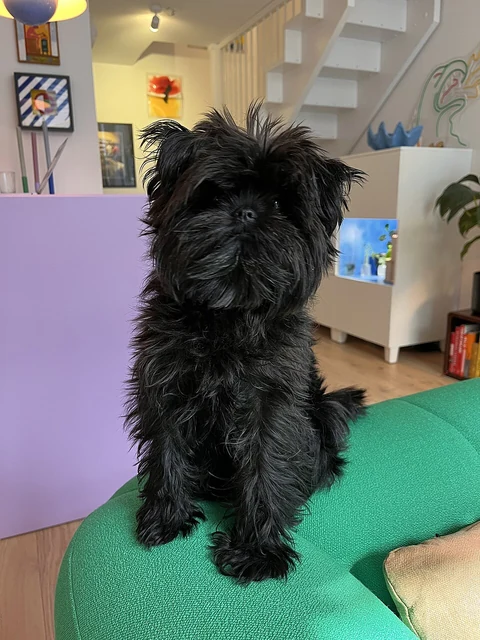
Rough-coated German companion dog
Affenpinscher
The Affenpinscher’s shaggy face, beard and bushy eyebrows are immediately recognisable. Behind them is a small, lively dog that enjoys outings with its people and can have ideas of its own. Flat living can suit it when walks, play and company are provided. Its rough coat needs regular attention, and its small body should be considered around children and larger dogs.
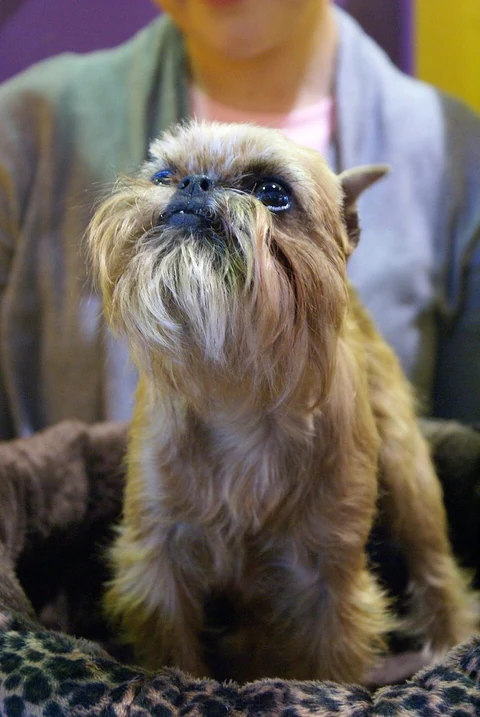
Small Belgian companion with a red rough coat and close family attachment
Brussels Griffon
The Brussels Griffon is small, alert and happiest close to family life. A red rough coat and distinctive beard give this Belgian companion its characteristic appearance. It needs companionship, kind training and regular grooming. Breathing deserves particular attention because its short muzzle can cause health problems.
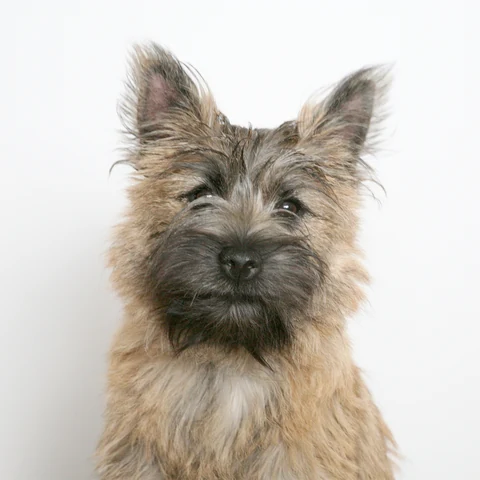
Terrier
Cairn Terrier
The Cairn Terrier once searched Scottish stone piles for small animals. Today it brings the same energy to sniffing, digging and exploring. A practised recall and secure places to run help manage its interest in chasing.
Sources and photograph credit
- Teaching your dog to be left alone
Used in this profile for: Staying home alone
- Patellar Luxations
Used in this profile for: Health
- Position Statements and Humane Dog Training
Used in this profile for: Temperament, Everyday life
- Progressive Retinal Atrophy (PRA3)
Used in this profile for: Health
- Training Your Dog to Be Left Alone
Used in this profile for: Temperament, Everyday life, Could this breed fit your life?
- Understanding Your Dog’s Behaviour
Used in this profile for: Temperament, Everyday life, Day-to-day care
- Children and Dogs
Used in this profile for: Temperament, Could this breed fit your life?
- Caring for Your Dog’s Teeth
Used in this profile for: Day-to-day care
- Train Your Dog to Come When Called
Used in this profile for: Everyday life
- 2026 Health Seminar: Genetic Testing with Kari Ekenstedt
Used in this profile for: Health
- Grooming Your Tibbie
Used in this profile for: Day-to-day care
- Tibetan Spaniel
Used in this profile for: Temperament, Everyday life, Day-to-day care, Size and build, Health, Lifespan, Could this breed fit your life?
- FCI Standard No. 231: Tibetan Spaniel
Used in this profile for: Size / Weight, Temperament, Day-to-day care, Size and build, Could this breed fit your life?
- Tibetan Spaniel Club of America Health Statement
Used in this profile for: Health
Photo credits
Portrait · Tibbie(Doukki).JPG · Daedra · CC BY-SA 3.0 · Edited
.JPG)
Side view · Curious Tibetan Spaniel.jpg · DillyFan503 · CC BY-SA 4.0 · Edited

Coat and features · Holly - Tibetan Spaniel.jpg · Daimen.Richards · CC BY 2.0 · Edited

Coat and features · Tibetan Spaniel.jpg · Angelica · CC BY 2.0 · Edited
