 fellfolio
Terrier
Cairn Terrier
The Cairn Terrier once searched Scottish stone piles for small animals. Today it brings the same energy to sniffing, digging and exploring. A practised recall and secure places to run help manage its interest in chasing.
At a glance
- Size
- Small
- Height at shoulder
- 28 to 31 cm
- Weight
- 6 to 7.5 kg
- Lifespan
- over 10 years
- Activity
- Moderate
- Grooming
- Several times weekly
- Training
- Patience & clear guidance
- Owner experience
- First dog with support
A terrier that likes to investigate
In the Scottish Highlands, Cairn Terriers searched among piles of stones and rocks for small quarry. That background helps explain why a rustle in the undergrowth can be more compelling than the straight path home. The Cairn is alert, bold and independent, though the breed standard does not call for aggression. Its small stature says little about how determined it can be once it follows a scent.
Friendly, regular training gives that curiosity somewhere useful to go. Reward a glance back to you on walks and begin recall practice where wildlife and roaming cats will not overwhelm the lesson. If it likes to dig, a designated digging area can give that behaviour an appropriate place. Rabbits, guinea pigs and other small pets need housing the terrier cannot access. Even a friendly dog may suddenly chase; introductions do not make direct contact reliably safe.
Everyday life
The Royal Kennel Club places the Cairn in its up-to-one-hour-a-day exercise category. The amount your dog can comfortably manage also depends on age, health and fitness. An adult dog enjoys walks with time to sniff, explore different ground and tackle short searches. Start by hiding a familiar toy somewhere easy to see in the garden, let the dog search and reward it for finding the toy. Gradually make the hiding place harder.
A Cairn can live well in a flat if outings are interesting and the dog learns to settle indoors. Arrange meetings with other dogs so it can step away; a confident small dog may not always be read kindly by larger ones. A securely fenced garden is useful, but it does not replace walks or recall training.
Staying home alone
Dogs learn to stay home alone in small steps. The RSPCA advises no more than four hours at a time. Puppies and dogs that become unsettled when left alone need shorter absences and gradual practice. Arrange someone to care for your dog when you will be away longer.
Everyday dog training: recall, a loose lead and clear communication ↗
Day-to-day care
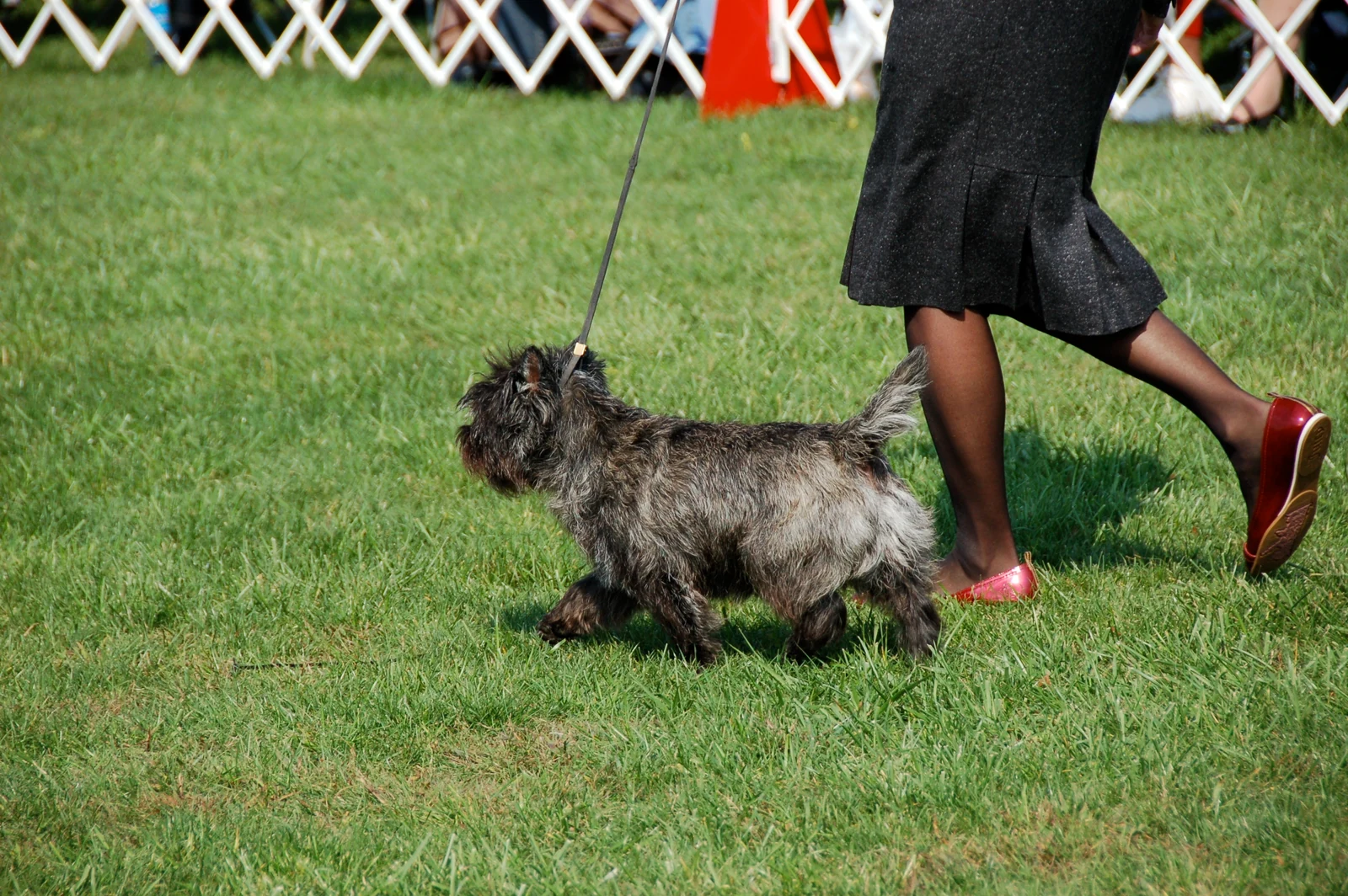
A harsh outer coat covers a short, soft undercoat. Together they help protect the dog from wind and rain. Brush and comb several times a week to remove loose hair and bits of vegetation. Skilled hand stripping removes dead outer hair and keeps the characteristic firm texture; clipping short is not the same process. Accustom a puppy to a comb, foot handling and standing calmly for grooming.
After walks through dense scrub, check between the toes and under the belly for thorns or grass seeds. Keep the nails short enough for the feet to plant cleanly on firm ground. Dental care also deserves a regular place in a small dog’s routine.
Size and build
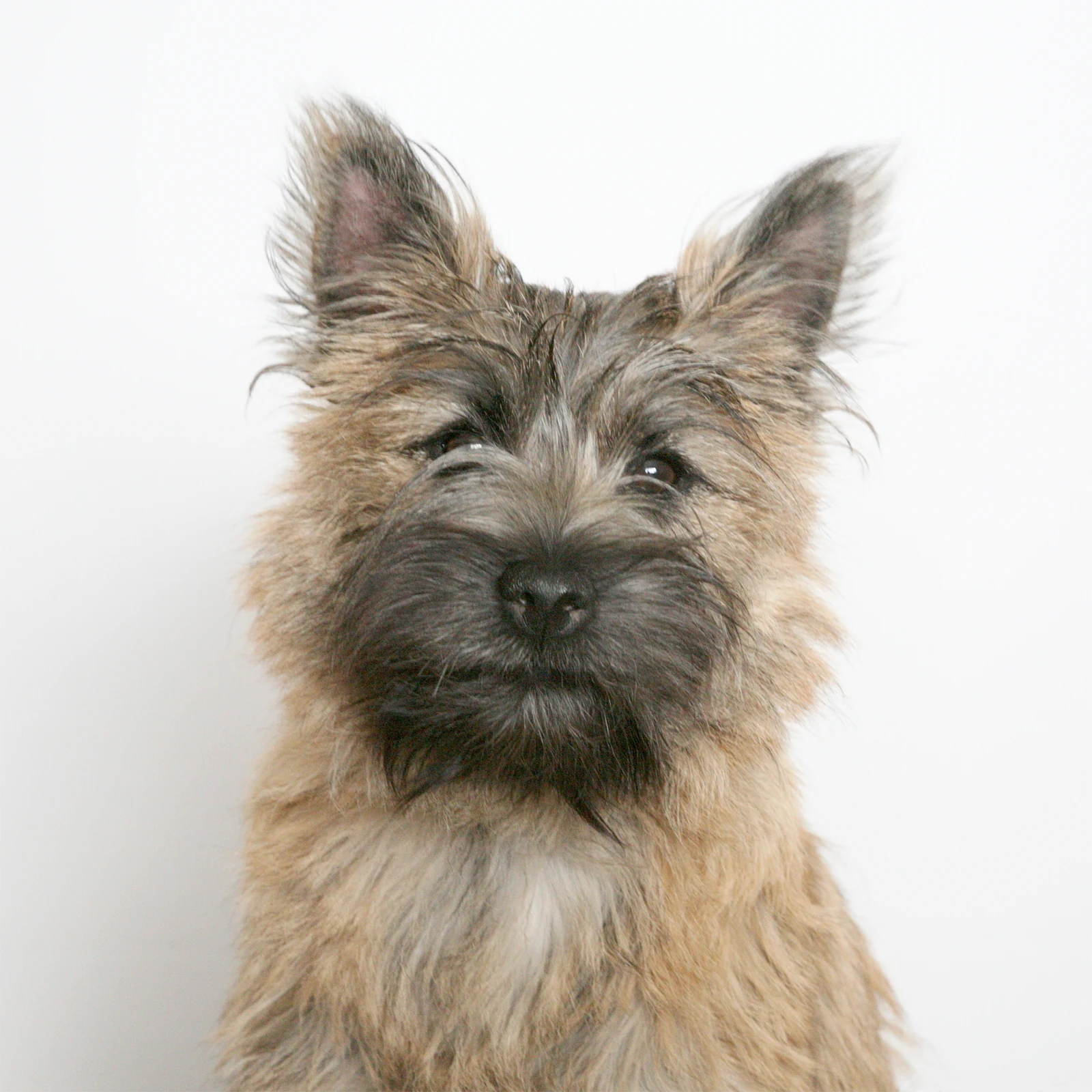
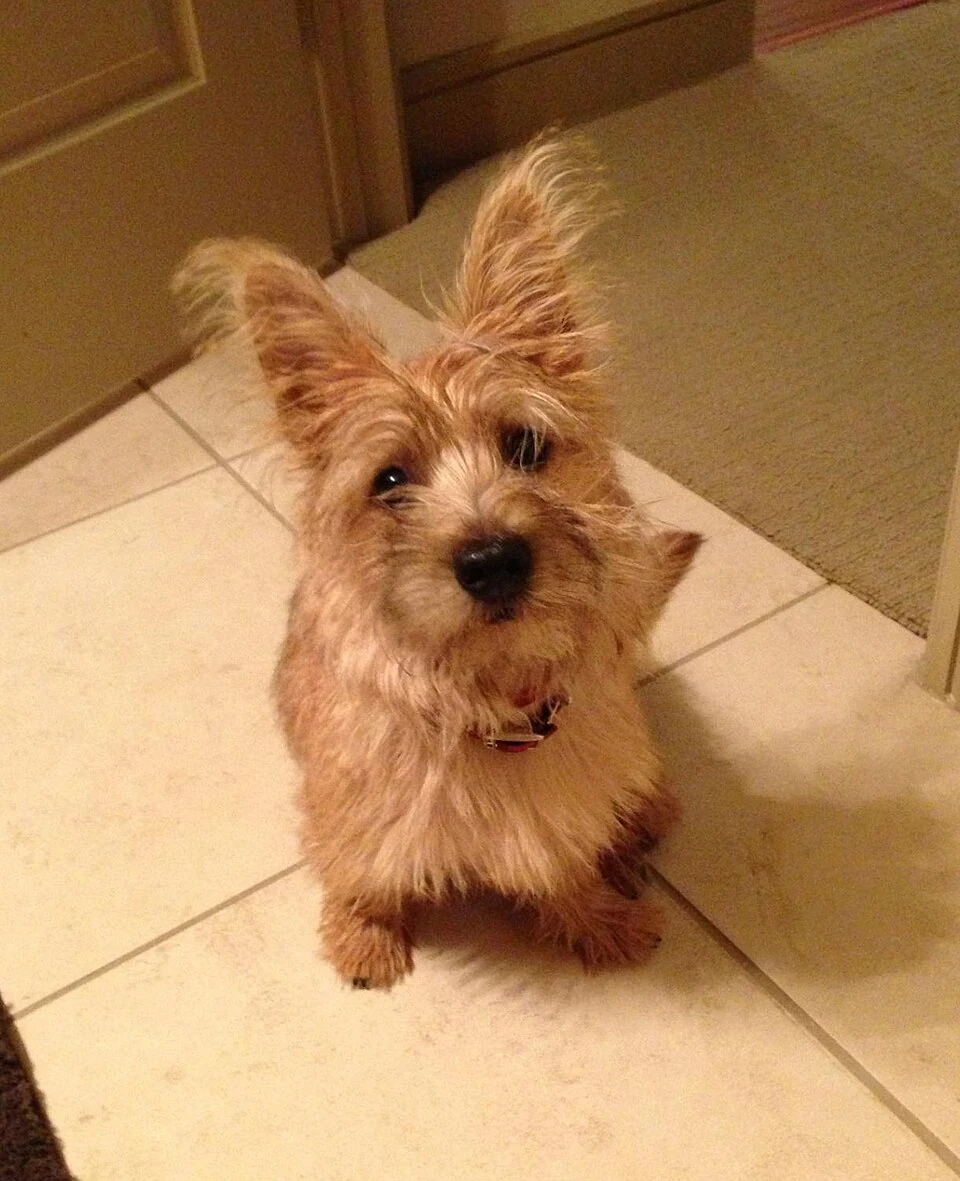
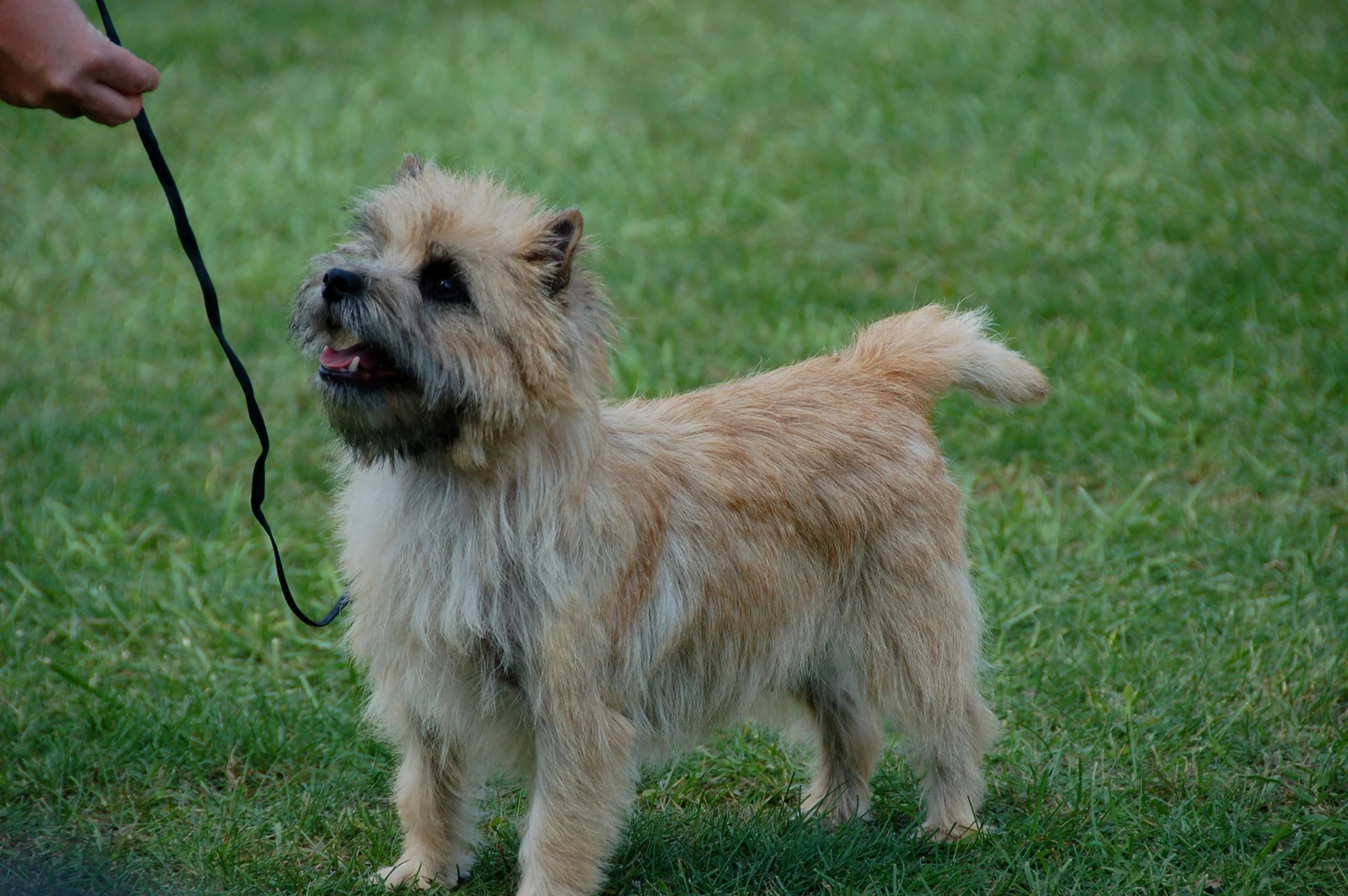
The British standard describes a Cairn of about 28 to 31 cm at the shoulder and an ideal weight of 6 to 7.5 kg. Its back is level, the ribs deep, and the legs should move freely rather than stiffly. The result is compact but not cumbersome. Small upright ears and shaggy hair around the head give it a keen expression.
The coat may be cream, wheaten, red, grey or nearly black, and brindled patterns are also accepted. Dark ears and muzzle are typical. A puppy’s coat colour may still change. When visiting, watch how the puppy moves and responds to people, and ask for the parents’ health reports.
From puppy to senior: caring for your dog through every life stage ↗
Health
The Royal Kennel Club recommends eye screening for breeding dogs. Ocular melanosis is one condition recorded in Cairns. Pigment cells accumulate in the eye and can obstruct fluid drainage. The resulting rise in pressure can cause severe pain and damage sight.
The American national breed club also lists kneecap and heart checks, as well as kidney, liver and DNA tests. Ask to see both parents’ individual reports and ask about conditions in their family.
If your dog holds an eye closed or an eye suddenly becomes red or cloudy, seek veterinary attention immediately. Repeated skipping on three legs or an unusual cough also needs examination.
Could this breed fit your life?
Could work well if …
- You enjoy a small dog that likes searching, digging and exploring outside.
- You can make time for recall practice, coat care and varied activities.
May be less suitable if …
- You expect reliable off-lead walks around wildlife without training.
- Small pets at home cannot be housed safely apart from the terrier.
Similar needs, different dogs.
Selected by shared size, activity, grooming and training characteristics.
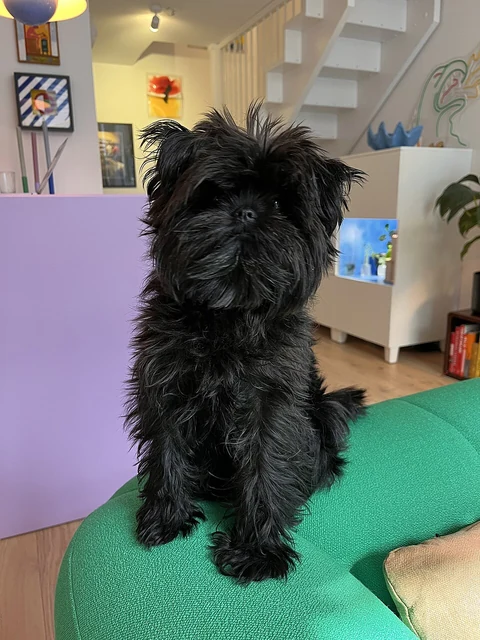
Rough-coated German companion dog
Affenpinscher
The Affenpinscher’s shaggy face, beard and bushy eyebrows are immediately recognisable. Behind them is a small, lively dog that enjoys outings with its people and can have ideas of its own. Flat living can suit it when walks, play and company are provided. Its rough coat needs regular attention, and its small body should be considered around children and larger dogs.
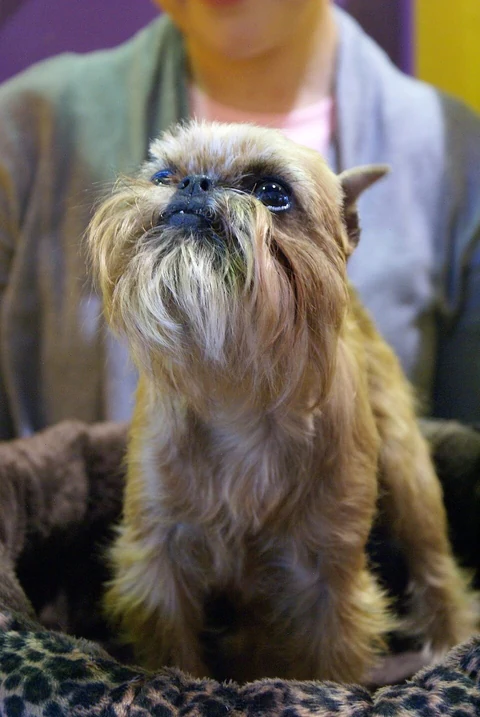
Small Belgian companion with a red rough coat and close family attachment
Brussels Griffon
The Brussels Griffon is small, alert and happiest close to family life. A red rough coat and distinctive beard give this Belgian companion its characteristic appearance. It needs companionship, kind training and regular grooming. Breathing deserves particular attention because its short muzzle can cause health problems.
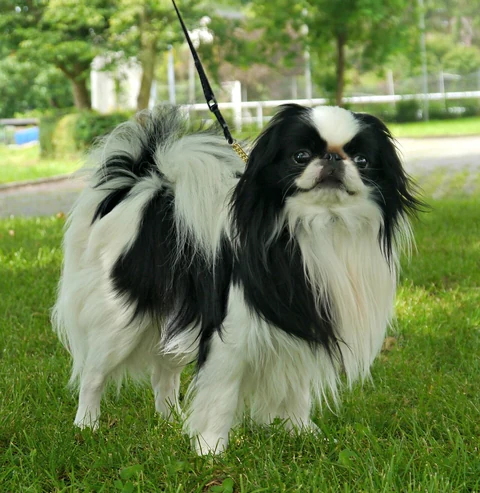
Small Japanese companion with a silky coat
Japanese Chin
The Japanese Chin is a small companion with a silky coat, a broad face and a feathered tail carried over its back. It combines lively games with a close attachment to its people. A suitable home offers gentle handling, regular grooming and careful attention to the health implications of its short nose.
Sources and photograph credit
- Teaching your dog to be left alone
Used in this profile for: Staying home alone
- Cairn Terrier dog breed information
Used in this profile for: Temperament, Everyday life, Day-to-day care, Health, Could this breed fit your life?
- Care & Health
Used in this profile for: Day-to-day care, Health
- Cairn Characteristics
Used in this profile for: Size and build
- Inherited eye disease list: Cairn Terrier ocular melanosis
Used in this profile for: Health
- Ocular Melanosis in Dogs
Used in this profile for: Health
- Cairn Terrier, Breeds A to Z
Used in this profile for: Temperament, Everyday life, Health, Lifespan, Could this breed fit your life?
- Cairn Terrier breed standard
Used in this profile for: Size / Weight, Temperament, Day-to-day care, Size and build
Photo credits
Portrait · Trixie · John · CC BY 2.0 · Edited

Side view · DSC_3853 · Brad L. · CC BY-SA 2.0 · Edited
In action · DSC_3729 · Brad L. · CC BY-SA 2.0 · Edited
Puppy · Cairn Terrier Puppy · TXDC · CC BY-SA 3.0 · Edited
