 fellfolio
Herding and water dog
Spanish Water Dog
A versatile Spanish working dog with a woolly, curly coat. It helped herd livestock and retrieve from water. Today it needs people who will train, explore and learn how to care for its unusual coat.
At a glance
- Size
- Medium
- Height at shoulder
- 40 to 50 cm
- Weight
- 14 to 22 kg
- Lifespan
- over 10 yearsUK Royal Kennel Club breed profile
- Activity
- High
- Grooming
- Specialist coat care
- Training
- Often cooperative
- Owner experience
- First dog with support
More than a dog for the lake
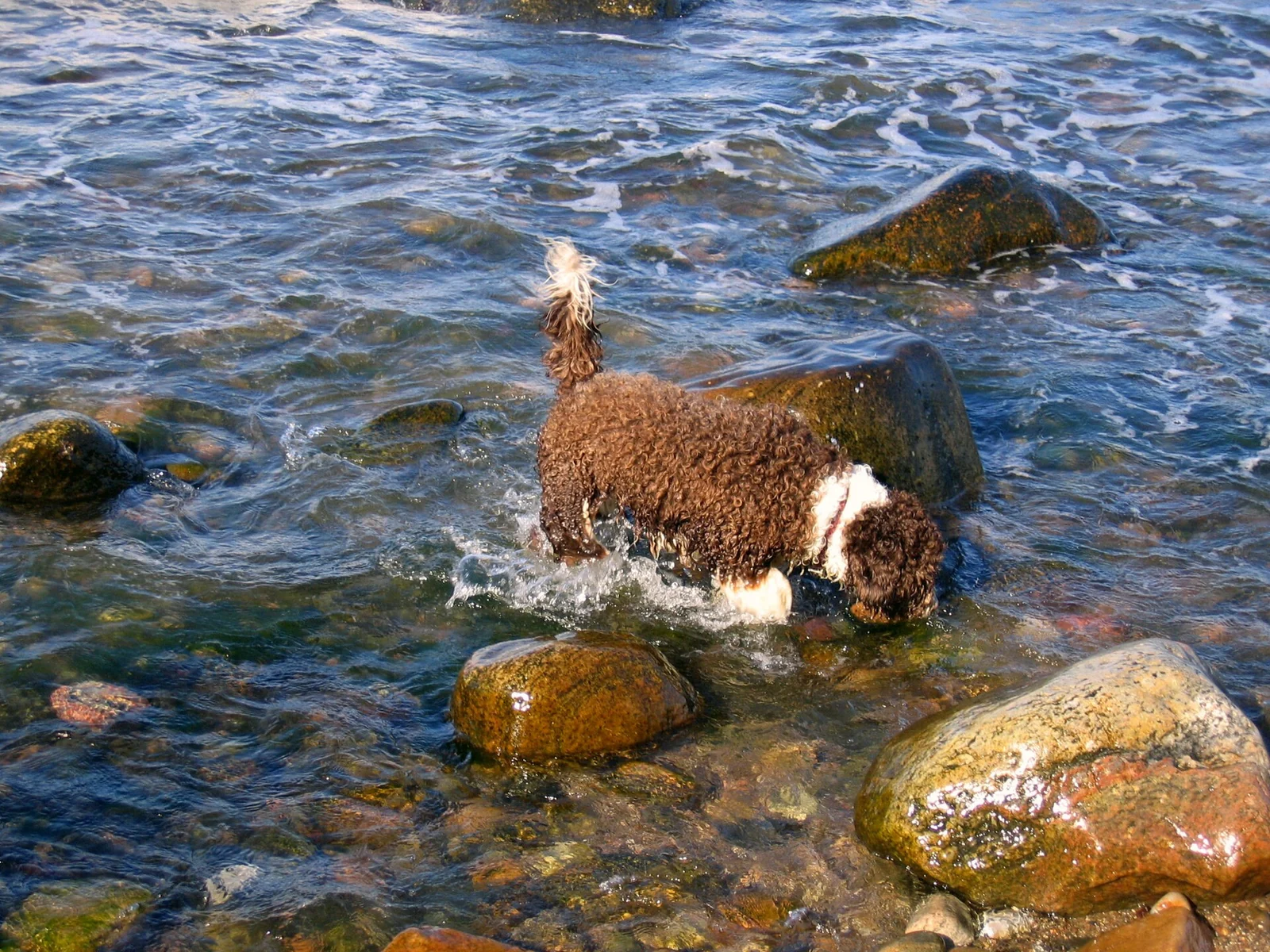
In its homeland, the Spanish Water Dog worked alongside herders, hunters and fishermen. It had to follow cues, cover uneven ground and bring objects out of water. That mix helps explain its interest in learning and its attention to movement. The American Kennel Club describes loyalty to family but sometimes caution with strangers. Good experiences with different people and places matter more than hoping it will relax everywhere on its own.
Practise brief, friendly encounters. Let the dog look from a distance at first and reward it for checking back with you. Around running children or dogs, watch whether it follows or tries to turn them. That can reflect its herding background, but in family life the behaviour needs a calm interruption and a different task.
Everyday life
The UK veterinary charity PDSA and the Royal Kennel Club give about an hour of activity a day as a guide for adults. An active individual may enjoy longer outings. Combine walks with small searches, recall practice and occasional swimming in safe water. AKC notes that many in the breed swim well. Check water temperature and banks before letting the dog in regardless.
An apartment can work if walks and shared activity are a regular part of the day. After exciting games, practise settling on a mat rather than always offering more stimulation. A puppy does not need long running routes or repeated jumps; short explorations and everyday learning are enough at first.
Staying home alone
Dogs learn to stay home alone in small steps. The RSPCA advises no more than four hours at a time. Puppies and dogs that become unsettled when left alone need shorter absences and gradual practice. Arrange someone to care for your dog when you will be away longer.
Day-to-day care
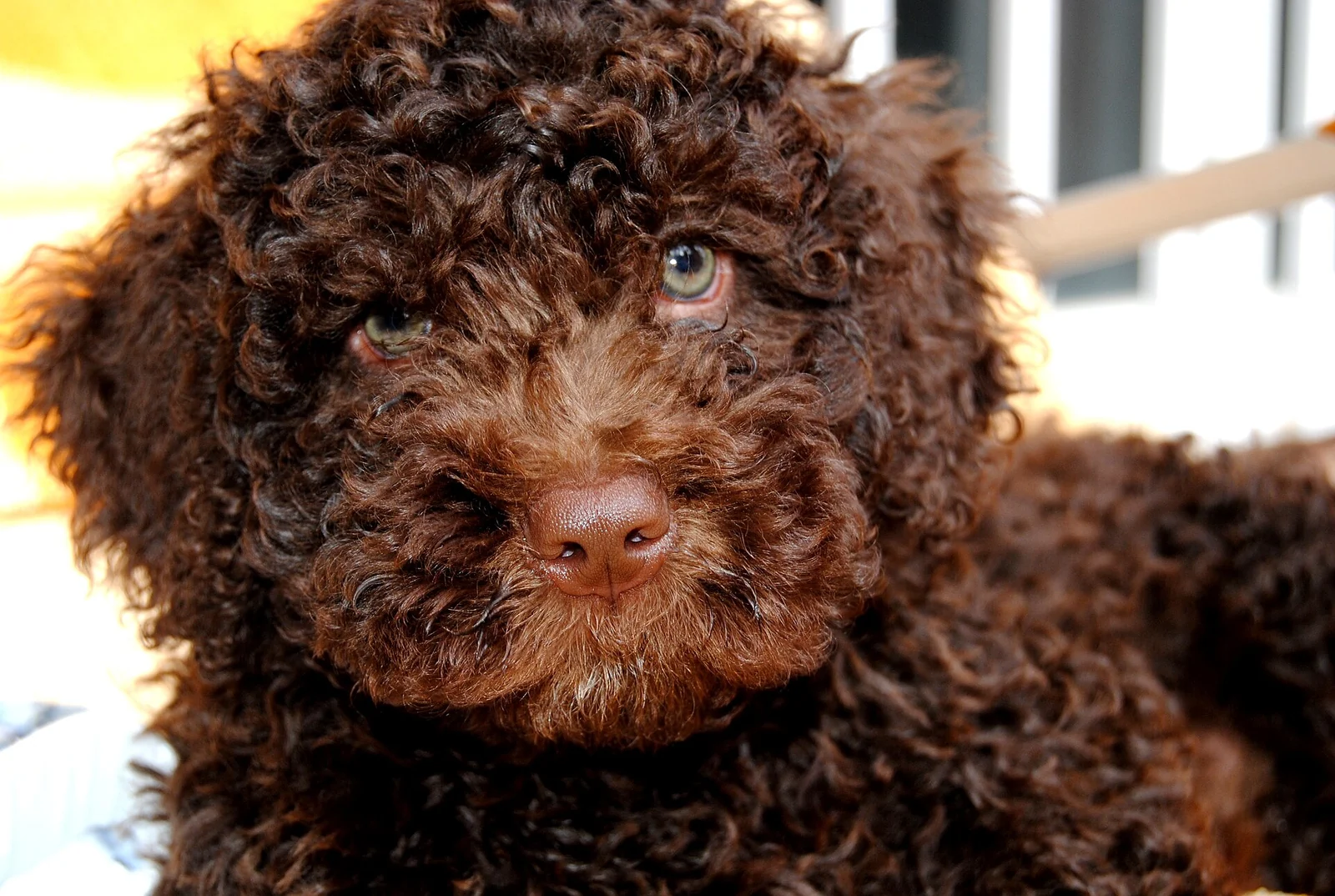
Its woolly hair forms tight curls and may develop cords as it grows. Unlike many long-coated breeds, it should not be brushed out, according to the American Kennel Club. Regular care means examining curls and skin, removing debris, gently separating developing cords with the fingers and having the coat clipped to an even length. The British standard does not call for decorative shaping with sections of different lengths. Ask someone experienced with this particular coat to demonstrate the work.
After swimming or rain, the dense coat needs to dry well, or dampness may linger near the skin. Check ears and feet for trapped seeds and small twigs. The breed sheds little, but that does not make its coat effortless or guaranteed to suit people with allergies.
Size and build
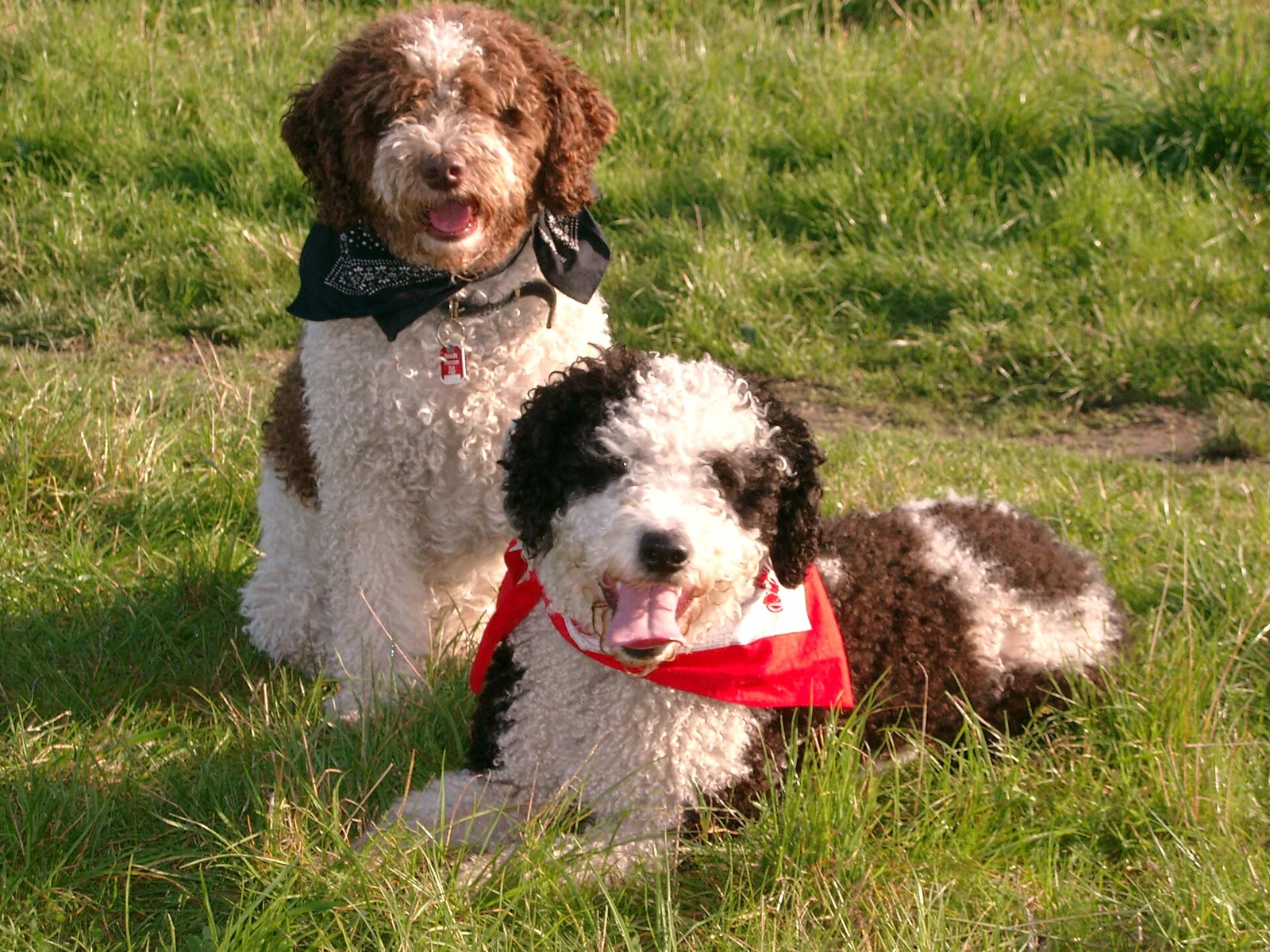
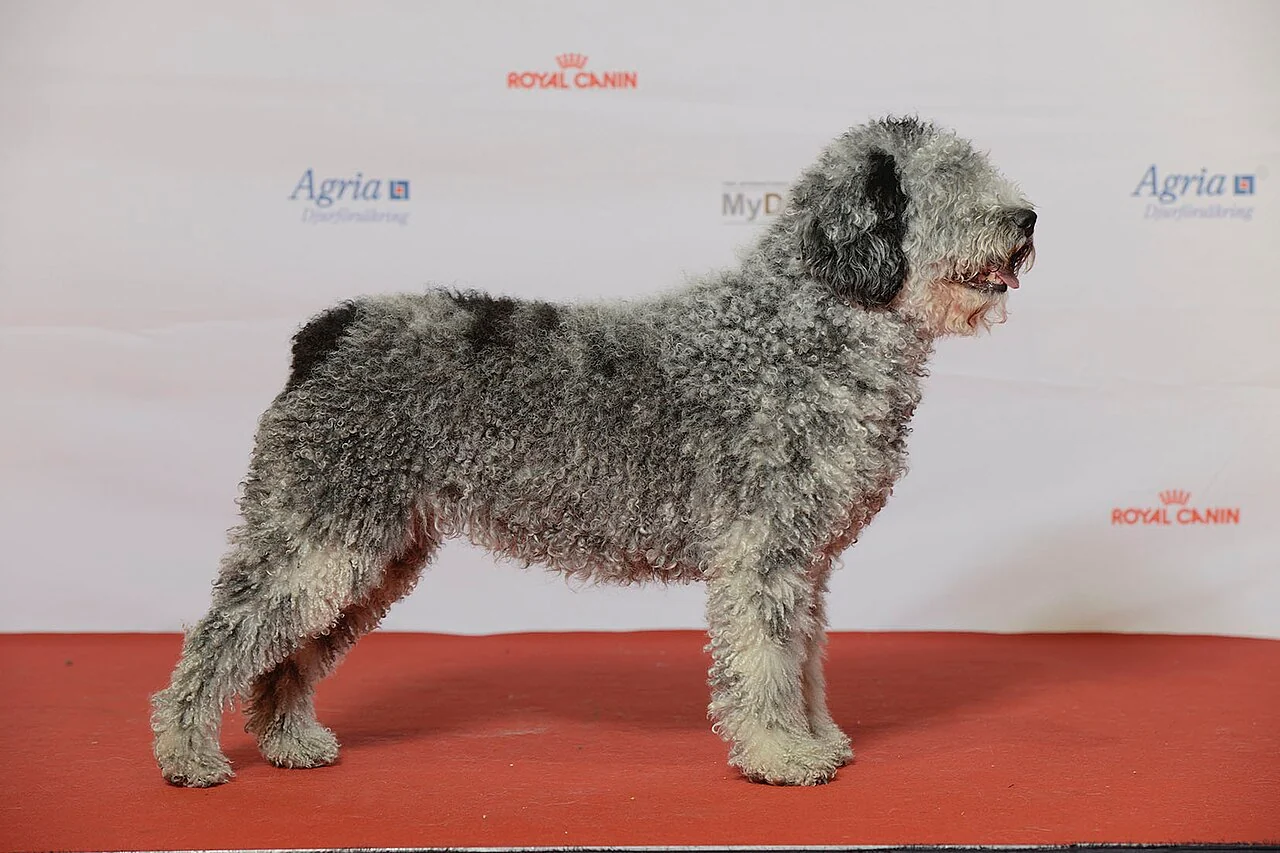
The Spanish Water Dog is sturdy and medium-sized. The body is a little longer than it is tall, the chest reaches roughly to the elbows and the legs are well muscled. Eyes range from hazel to dark brown, and the V-shaped ears hang down. Curly hair covers the dog from head to foot in black, brown, white or parti-colour. Longer hair can form cords, yet the dog’s shape should remain apparent beneath them.
The British standard gives 44 to 50 cm and 18 to 22 kg for males, and 40 to 46 cm and 14 to 18 kg for females. In motion, the dog should look brisk and even. When meeting an adult, check that it can see freely and move comfortably despite the dense coat.
Health
The Royal Kennel Club recommends a DNA test for prcd-PRA, an inherited breakdown of the retina that can progressively destroy sight. Eye examinations should also include the drainage angle, where fluid leaves the eye. Restricted drainage can raise pressure inside the eye and damage vision. Hip scores and further DNA tests for rarer inherited conditions are among its additional recommendations. Ask for both parents’ results and an explanation of which findings matter for that pairing. PDSA lists hip dysplasia and progressive retinal problems as important risks.
If a dog becomes uncertain in dim light or bumps into objects, have its eyes checked. Repeated limping or difficulty getting up also needs veterinary assessment. A painful patch can hide beneath this coat, so regularly looking through to the skin serves health as well as grooming.
Could this breed fit your life?
Could work well if …
- You want to walk, search and perhaps swim with a dog that likes learning.
- You are willing to learn the unusual coat care and check skin and ears regularly.
May be more difficult if …
- You expect to brush a curly coat vigorously like ordinary long hair.
- You have little time for activity, training and unhurried introductions to new people.
Similar needs, different dogs.
Selected by shared size, activity, grooming and training characteristics.
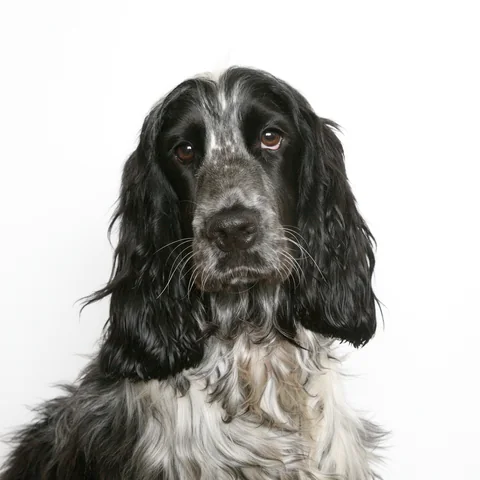
Gundog
English Cocker Spaniel
The English Cocker Spaniel is a lively gundog that loves getting out with its people. Its nose finds plenty to investigate outdoors, while its silky coat calls for daily care.
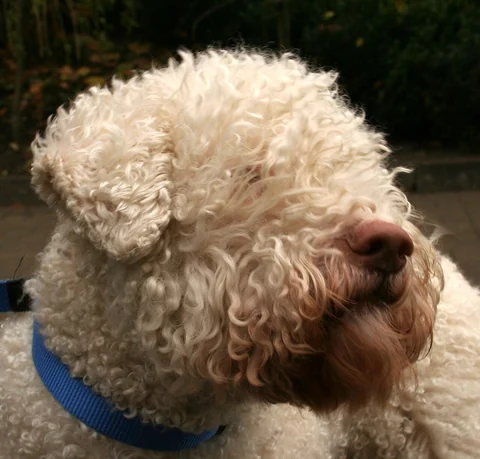
Water dog and truffle finder
Lagotto Romagnolo
This curly dog from Romagna once retrieved waterfowl and is now famous for finding truffles, edible fungi that grow underground. Long walks, scent games and careful coat maintenance make up its daily routine.
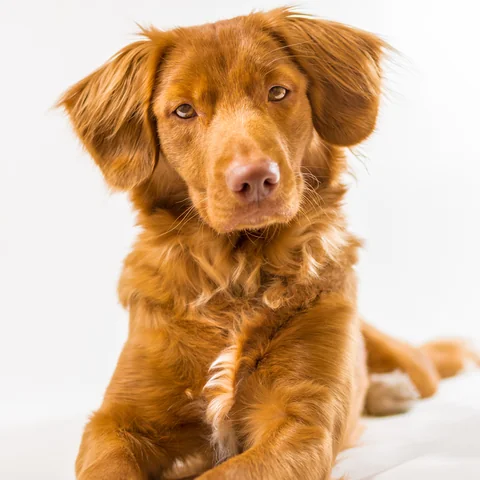
Retriever
Nova Scotia Duck Tolling Retriever
The Nova Scotia Duck Tolling Retriever, usually called the Toller, is an active Canadian gundog. It lured ducks closer by playing along the shore, then brought shot birds back from the water. As a companion, it needs daily walks, search games and time with its people.
Sources and photograph credit
- Teaching your dog to be left alone
Used in this profile for: Staying home alone
- Glaucoma in Dogs
Used in this profile for: Health
- Spanish Water Dog breed information
Used in this profile for: Temperament, Everyday life, Day-to-day care, Could this breed fit your life?
- Spanish Water Dog breed information
Used in this profile for: Size / Weight, Everyday life, Day-to-day care, Health, Lifespan
- Spanish Water Dog, Breeds A to Z
Used in this profile for: Temperament, Everyday life, Health, Lifespan, Could this breed fit your life?
- Spanish Water Dog breed standard
Used in this profile for: Size / Weight, Temperament, Day-to-day care, Size and build
Portrait · Gino Rasta Spanish Waterdog · Susanne Lorenz · CC BY-SA 2.5 · Edited

Side view · BIR Grupp 8: PERRO DE AGUA ESPANOL, Tussbergets Zuccé · Johan Frick-Meijer / Svenska Mässan · CC BY 2.0 · Edited

In action · Emma spanish waterdog 3 · Moritz Zimmermann · CC BY-SA 2.5 · Edited

Puppy · Pdaemarronjovencachorro · Saraqwerty · CC BY-SA 3.0 · Edited
