 fellfolio
Swiss cattle and watchdog
Entlebucher Mountain Dog
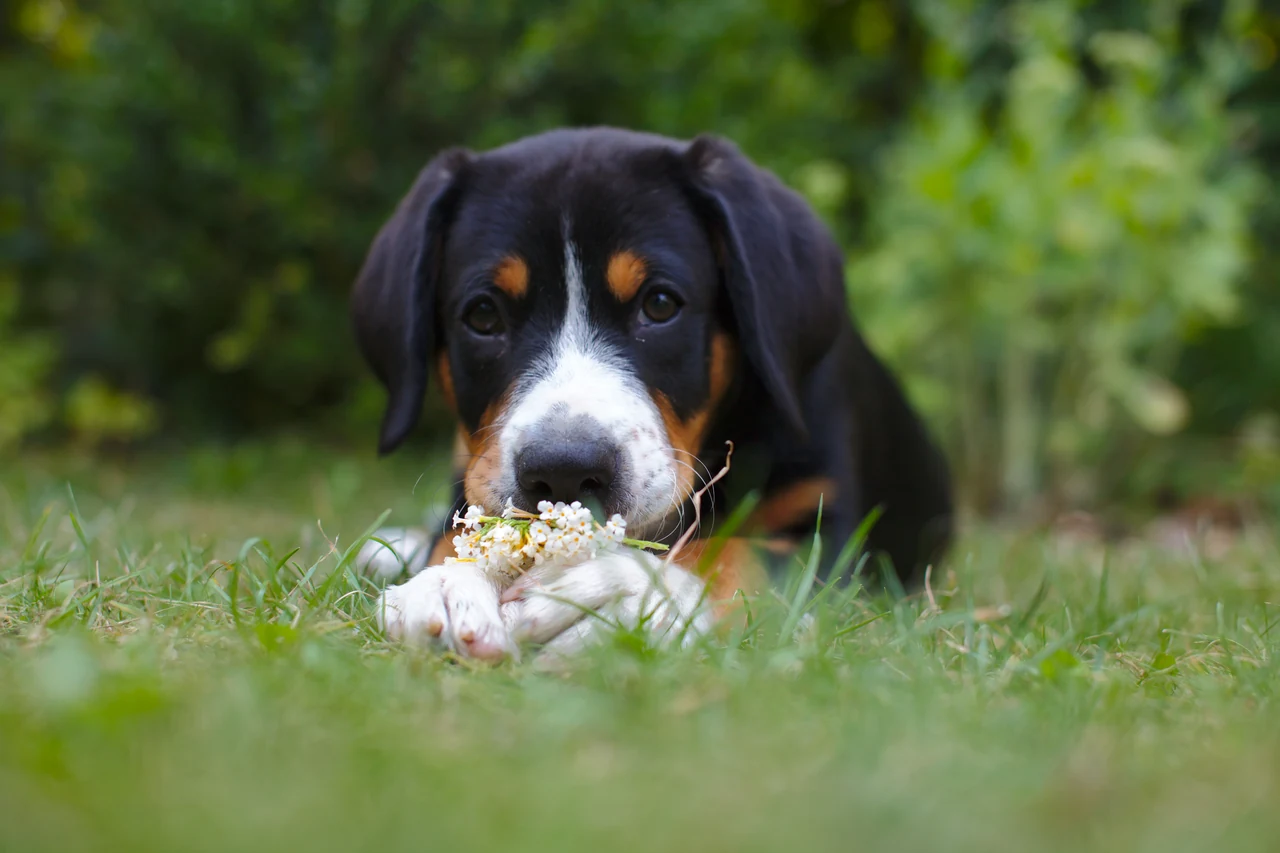
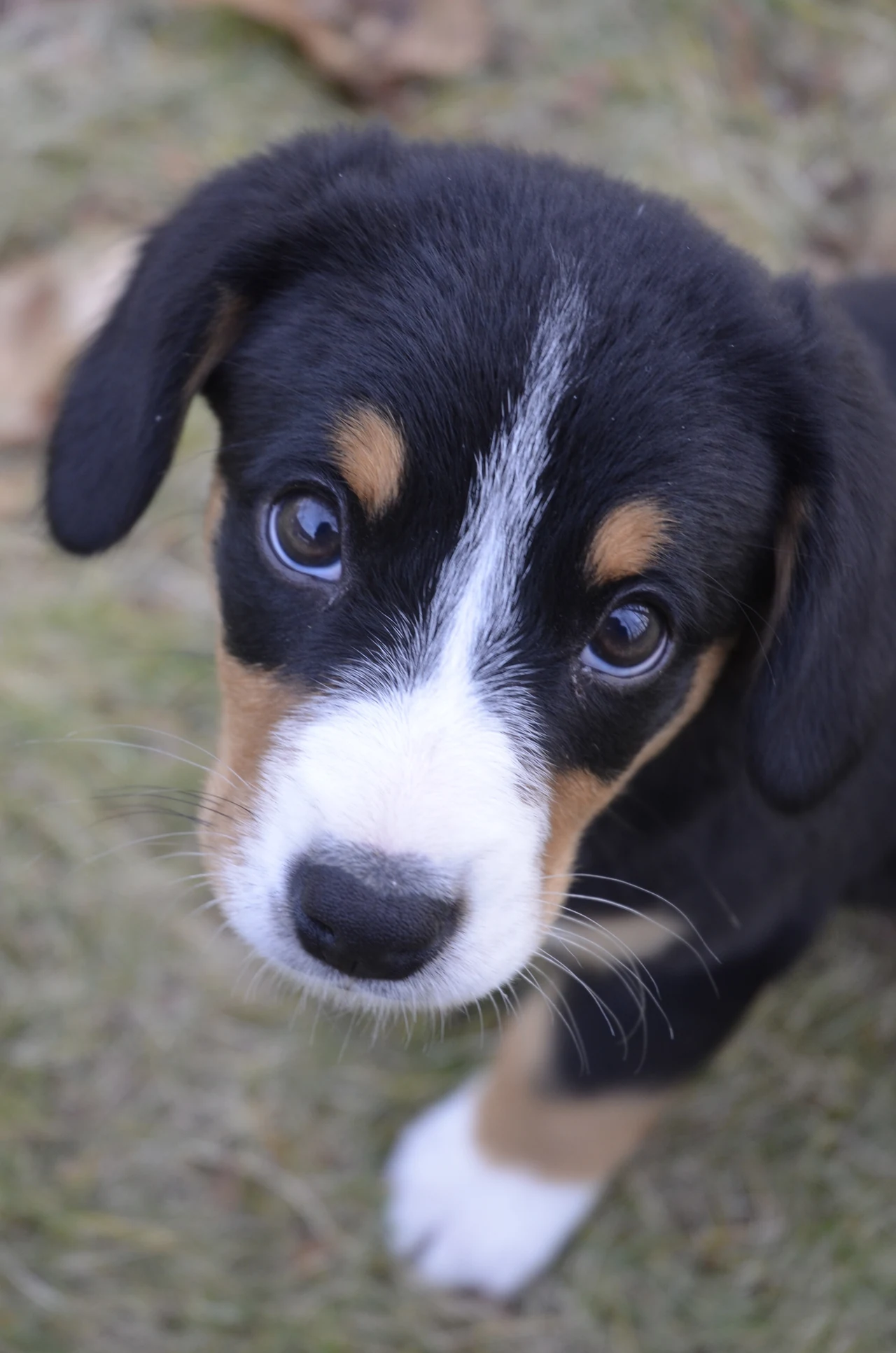
The Entlebucher is the smallest of the four Swiss mountain dog breeds, with plenty of energy for walks and activities together. Its compact body, short tricolour coat and attentive expression reflect a background in driving cattle. It likes to stay close to its people and join in their activities. Choosing one means making regular time for exercise, training and health care.
At a glance
- Size
- Medium
- Height at shoulder
- 42 to 50 cm
- Lifespan
- over 12 years
- Activity
- High
- Grooming
- Weekly
- Training
- Often cooperative
- Owner experience
- Experience recommended
The smallest Swiss mountain dog, with plenty of energy
The international standard describes the Entlebucher as lively, enduring and very devoted to its family. It can initially be suspicious of unfamiliar people. Visitors should avoid touching or crowding it straight away. A spot a little farther away lets your dog watch what is happening. Calm behaviour or a relaxed approach made in its own time can be rewarded.
As a former cattle-driving dog, an Entlebucher often pays close attention to movement. In family life, you should watch for attempts to stop children or other animals running. Children need guidance around the dog and an adult who watches both sides during play. A resting place should remain undisturbed even when your dog otherwise likes to be involved in everything.
Before bringing a dog home, it is worth asking about its previous experiences with other animals. Calm, carefully arranged meetings help you assess whether it might suit a resident cat or another dog. What matters is how the individual animals respond to one another.
Everyday life
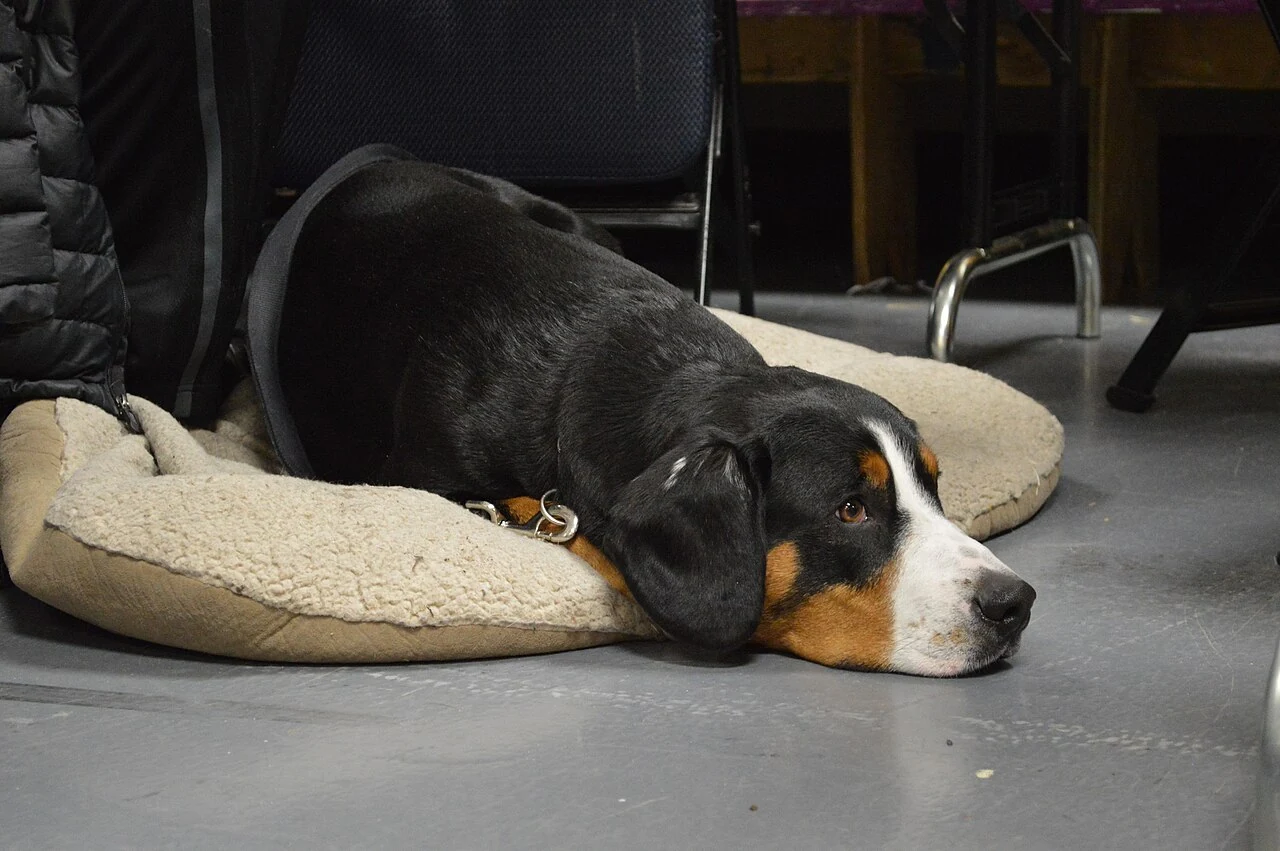
An Entlebucher wants regular time outdoors and activities with its people. Walks with time to sniff, search games and short training sessions offer more variety than following the same route every day. Outings together should remain part of life even with a large garden. NEMDA, the North American breed association, emphasises daily exercise and advises against frisbee games involving repeated jumps.
Searching for a familiar toy is one activity to try together. It should be easy to find at first. Short training exercises can also fit into a walk, such as waiting calmly before you cross a path. Exercise and training should suit your dog’s age, fitness and joint health.
Entlebuchers enjoy learning, but new tasks should be easy to understand. Recall, walking on a loose lead and settling on a bed are useful foundations. The RSPCA, a British animal welfare charity, recommends short, regular sessions and rewards for the behaviour you want. Between activities, your dog needs enough opportunities to sleep and relax.
Care arrangements need planning too. Time alone should be introduced gradually. Regular longer absences need dependable care. If your dog repeatedly pants, paces or barks for long periods when you leave, you should seek veterinary advice and, where appropriate, help from a qualified behaviour professional.
Staying home alone
Dogs learn to stay home alone in small steps. The RSPCA advises no more than four hours at a time. Puppies and dogs that become unsettled when left alone need shorter absences and gradual practice. Arrange someone to care for your dog when you will be away longer.
Everyday dog training: recall, a loose lead and clear communication ↗
Day-to-day care
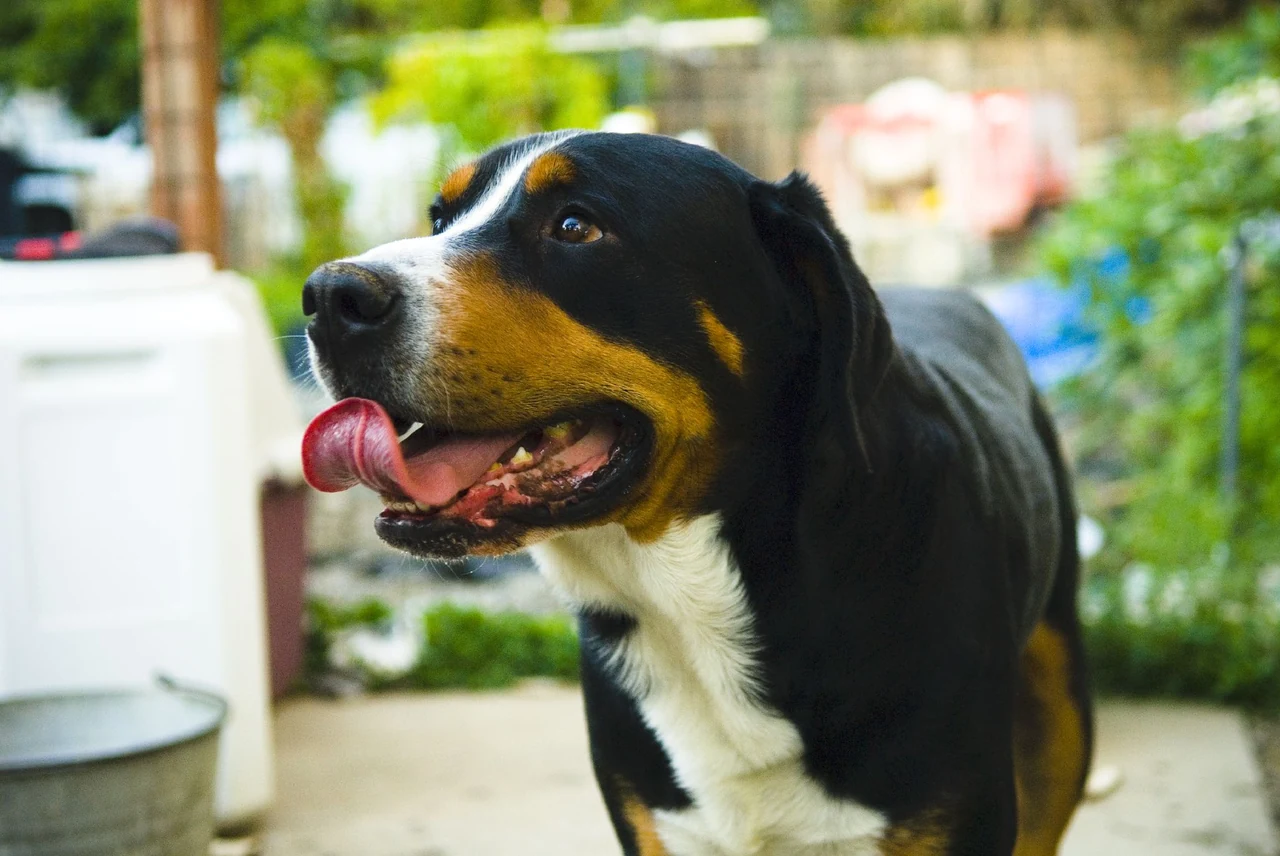
The short, firm outer coat lies close to the body. Beneath it is a dense undercoat, an additional layer of hair. Britain’s Royal Kennel Club suggests weekly brushing as a guide. During moulting, more frequent sessions may be needed to remove loose hair. Grooming after walks also gives you a chance to check the paws and skin.
Eyes, ears, nails and teeth should be checked regularly. Repeated head shaking, an unusual ear smell or red skin warrant veterinary attention. Toothbrushing with dog toothpaste should be introduced gradually and ideally become a daily habit.
Food portions should suit your dog’s activity and body condition. Remember to include training rewards when working out the daily food allowance. Your vet can advise on suitable food and portions for a growing dog.
Size and build
The Entlebucher takes its name from a valley in the Swiss cantons of Lucerne and Bern. Farmers used these dogs to drive cattle and guard the farm. The name Entlibucherhund was documented in 1889. Appenzellers and Entlebuchers were not clearly distinguished for some time. After four dogs were presented at a show in Langenthal in 1913, the Entlebucher was entered in the Swiss studbook as a separate mountain dog breed. The breed club was established in 1926 and the first standard followed in 1927.
The Fédération Cynologique Internationale, or FCI, describes it in Standard No. 47 as a compact dog with a slightly elongated body. Males should stand 44 to 50 cm at the shoulder and females 42 to 48 cm. The standard allows upper tolerances of 52 cm for males and 50 cm for females. The black coat has tan and white markings. The tail can be long or naturally short from birth.
The Appenzeller, Bernese and Greater Swiss Mountain Dog are the other three Swiss mountain dog breeds. They share a working background but differ markedly in size and build. The Entlebucher is a distinct breed, rather than a small version of the Bernese.
From puppy to senior: caring for your dog through every life stage ↗
Health
Before choosing a puppy, you should ask to see health records for both parents. The Royal Kennel Club lists hip assessments and a DNA test, which examines genetic material, for prcd-PRA. Hip dysplasia is a developmental abnormality in which the hip joint is too loose. It can cause pain and arthritis. Repeated limping or difficulty rising should be checked by a vet.
PRA stands for progressive retinal atrophy, a group of inherited diseases in which the retina at the back of the eye degenerates and vision deteriorates. prcd is one specific form in which the light-sensitive cells of the retina gradually die. A clear DNA result for that form does not rule out other eye conditions. The North American breed association therefore also recommends regular eye examinations. It identifies cataracts, clouding of the lens, and glaucoma, raised pressure inside the eye, as further concerns. An eye that suddenly becomes red or painful, or new difficulty seeing, needs urgent veterinary assessment.
Entlebuchers can also have congenital abnormalities of the ureters. These tubes carry urine from the kidneys to the bladder. If they open in the wrong place, urine may leak, including while the dog is lying down or asleep. Such changes should be investigated. They do not show that the dog has failed to understand housetraining.
The Royal Kennel Club gives the breed’s lifespan as over 12 years. That cannot tell you how long an individual dog will live. Alongside breeding health records, preventive care includes suitable feeding and watching for changes in movement, eyes or urination.
Could this breed fit your life?
Could work well if …
- You want an active dog and have time every day for walks and activities together.
- You can train patiently and supervise visits and play with children thoughtfully.
- You are willing to check health records and take changes in eyes, movement or urination seriously.
What to consider
- Being the smallest Swiss mountain dog does not mean needing little activity.
- Watchfulness and reserve with unfamiliar people deserve consideration when planning everyday life.
- Hip results, prcd-PRA status and eye examinations are important topics when choosing a breeder.
Similar needs, different dogs.
Selected by shared size, activity, grooming and training characteristics.
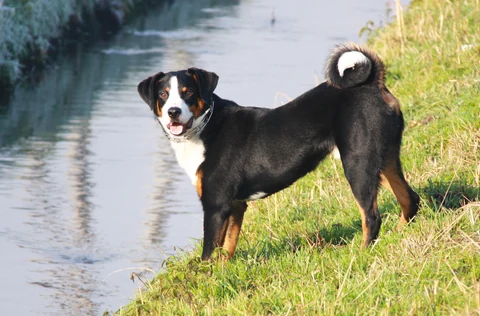
Swiss cattle and watchdog
Appenzeller Mountain Dog
The Appenzeller Mountain Dog is easy to recognise by its tricolour coat and tightly curled tail. Behind that cheerful appearance is an attentive Swiss working dog. It enjoys activity, learns quickly and notices changes around it. This breed suits people who want to spend time outdoors with their dog every day and can help it cope calmly with visitors and events at home.
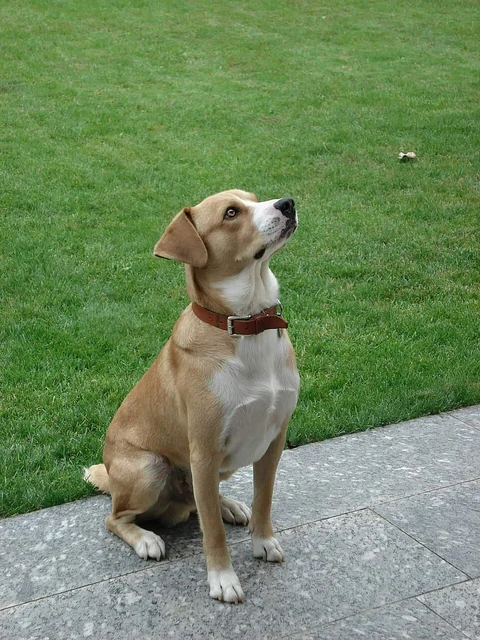
Austrian farm and companion dog
Austrian Pinscher
The Austrian Pinscher is a lively farm dog that enjoys accompanying familiar people and notices visitors attentively. Its short to medium-length coat is relatively straightforward to maintain. Exercise, shared activities and calm guidance of its guarding behaviour require more time. Meeting adult dogs helps show whether its watchfulness and temperament could suit your daily life.
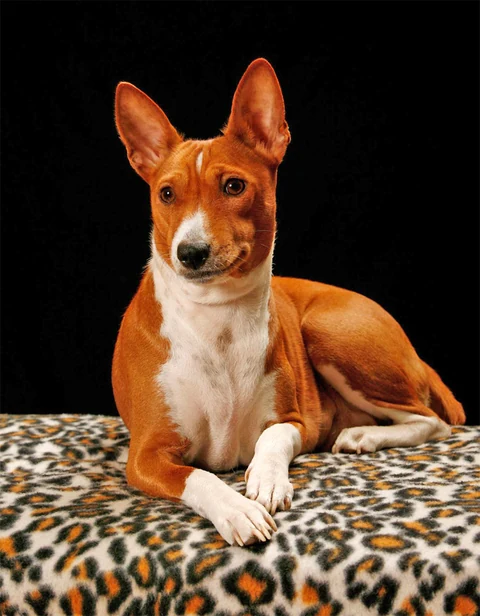
Hound
Basenji
The Basenji rarely barks but can make yodelling sounds. Outside, it may follow a scent or moving animal at speed, so off-lead running calls for secure fencing.
Sources and photograph credit
- Teaching your dog to be left alone
Used in this profile for: Staying home alone
- Ectopic Ureter
Used in this profile for: Health
- Canine hip dysplasia (CHD)
Used in this profile for: Health
- Entlebuch Cattle Dog, FCI Standard No. 47
Used in this profile for: Size / Weight, Temperament, Day-to-day care, Size and build, Could this breed fit your life?
- Eye Health
Used in this profile for: Health
- Health and Genetics
Used in this profile for: Everyday life, Health, Could this breed fit your life?
- Entlebucher Mountain Dog (Imp)
Used in this profile for: Day-to-day care, Health, Lifespan
- Entlebucher Sennenhund
Used in this profile for: Temperament, Everyday life, Size and build, Could this breed fit your life?
- Dental disease in dogs
Used in this profile for: Day-to-day care
- Glaucoma in dogs
Used in this profile for: Health
- Grooming and bathing pets
Used in this profile for: Day-to-day care
- Separation-related behaviour
Used in this profile for: Everyday life
- Training your dog
Used in this profile for: Everyday life
- Progressive Retinal Atrophy, Progressive Rod-Cone Degeneration (PRA-prcd)
Used in this profile for: Health
Photo credits
Portrait · File:Kira von S Entlebucher Sennenhund.jpg · DarmstadtKoeln · CC BY-SA 2.0 · Edited

Puppy · File:Entlebucher Puppy on lawn.jpg · Ziegelhausen · CC BY-SA 3.0 · Edited

Coat and features · File:Entlebucher Sennenhund portrait.jpg · John · CC BY-SA 2.0 · Edited

Everyday life · File:Entlebucher Mountain Dog - GCH Larry Of Brunswick aka Larry 1 (16602413595).jpg · Pets Adviser · CC BY 2.0 · Edited
.jpg)