 fellfolio
Gundog
English Cocker Spaniel
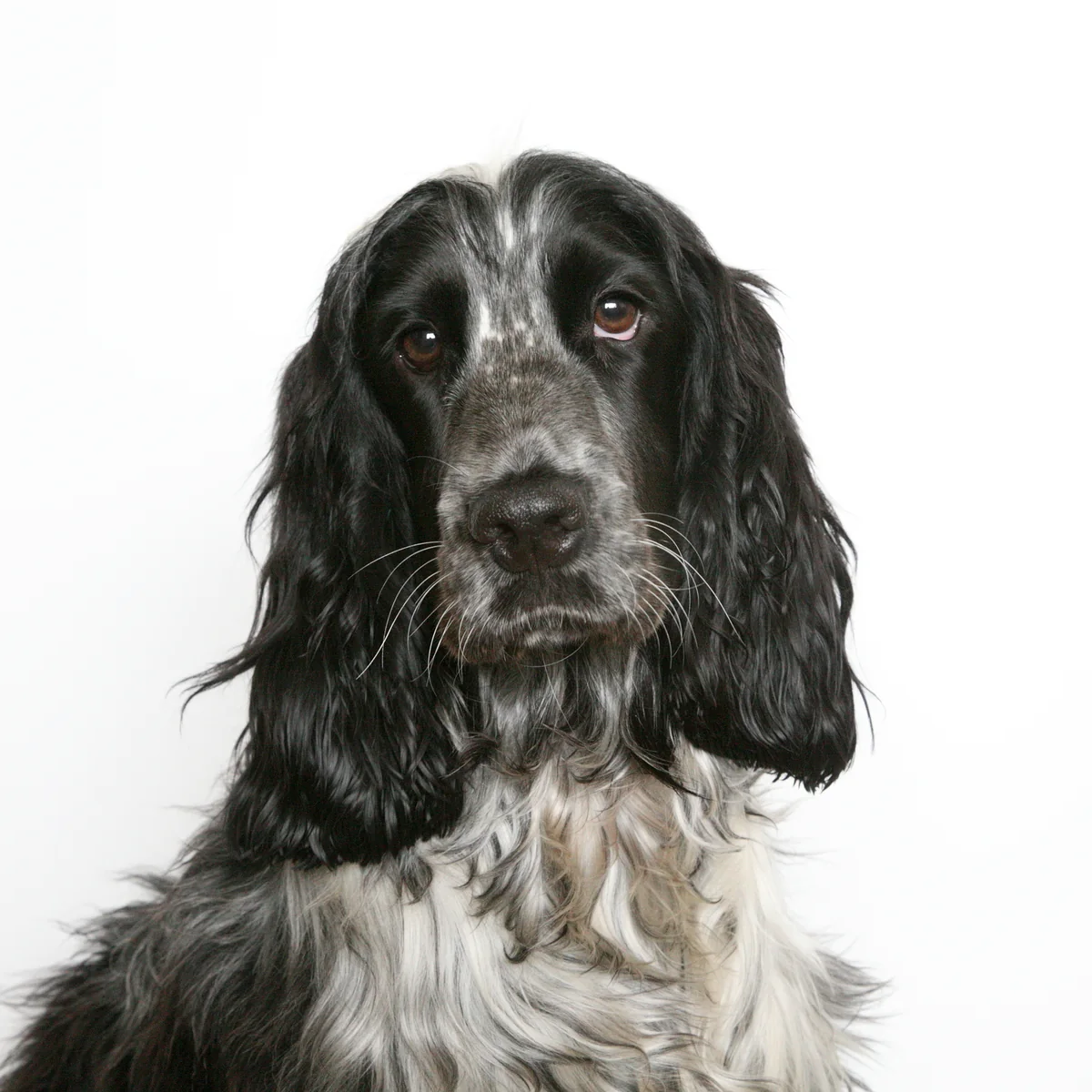
The English Cocker Spaniel is a lively gundog that loves getting out with its people. Its nose finds plenty to investigate outdoors, while its silky coat calls for daily care.
At a glance
- Size
- Medium
- Height at shoulder
- 38 to 41 cm
- Weight
- 13 to 14.5 kg
- Lifespan
- over 10 years
- Activity
- High
- Grooming
- Daily
- Training
- Often cooperative
- Owner experience
- First dog with support
A cheerful gundog with a busy nose
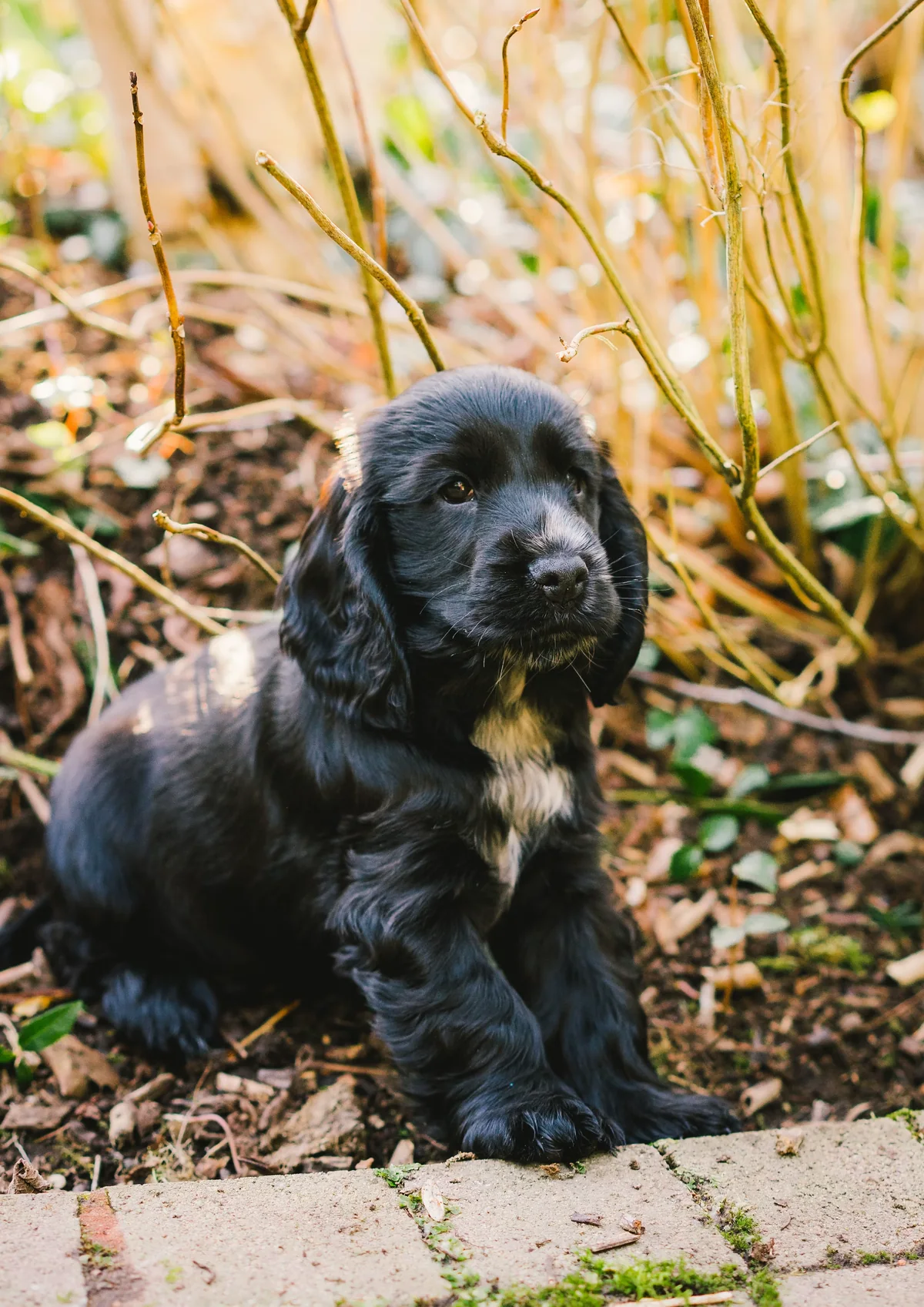
The English Cocker Spaniel was bred in Britain to hunt woodcock. It searched dense cover and flushed birds into the open. You can still see that heritage on a walk: a promising scent in the bushes may draw the dog straight in. A recall taught early and rewarded well is more useful than calling repeatedly once its nose has taken over.
Many Cockers stay close to their people and enjoy search or retrieve games. If you are looking for a puppy, ask what its parents do each day. Field-bred Cockers are often more enduring and need more work for their noses and minds. Show lines frequently have a fuller coat and therefore need more grooming.
Everyday life
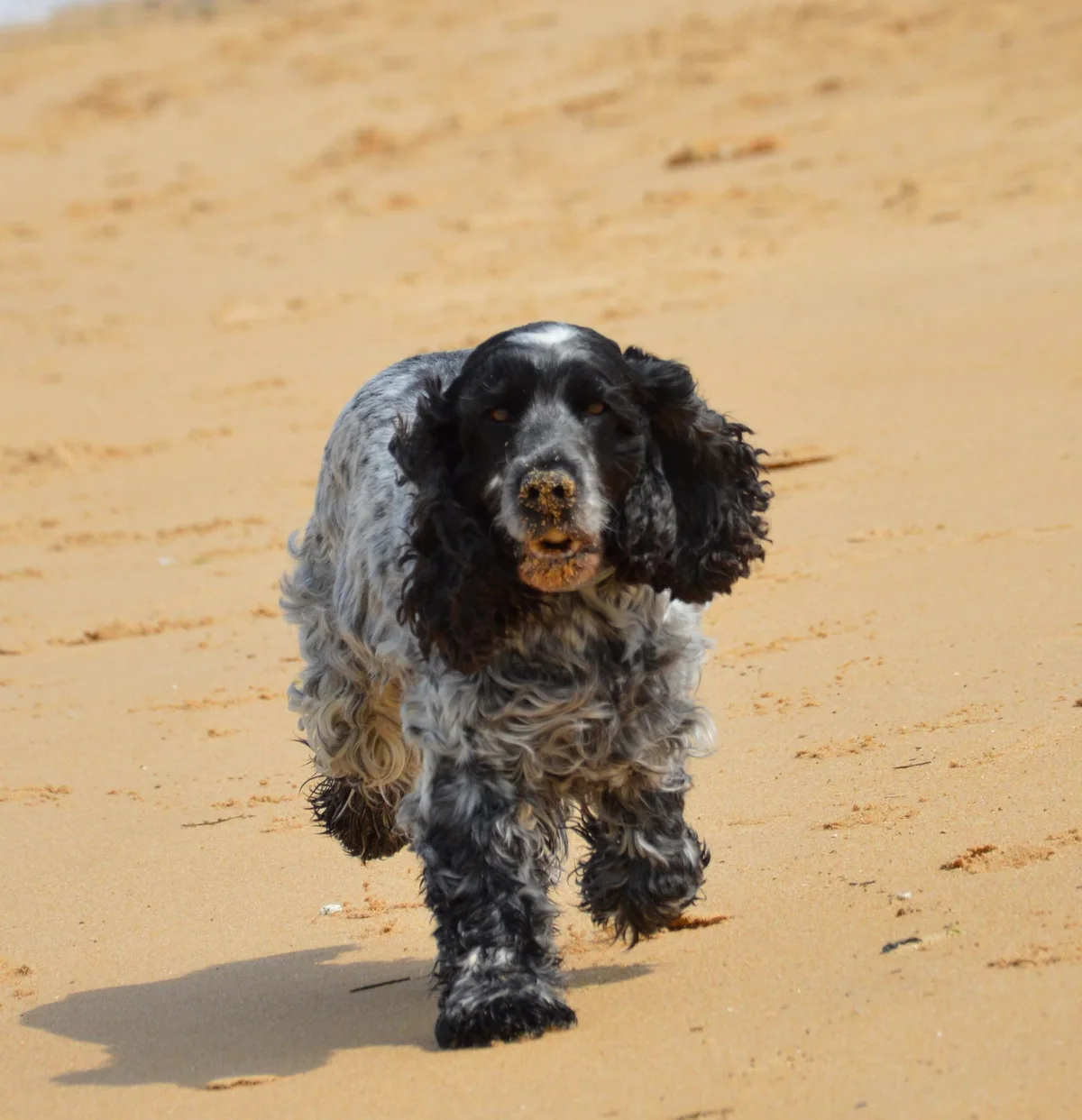
The UK veterinary charity PDSA recommends at least an hour of exercise a day for an adult Cocker, spread across several outings. A good walk gives the dog time to sniff, explore and solve small problems. Hide a toy beside the path and let it search for it. Choose a secure area for off-lead running until recall is reliable around birds and other wildlife.
A Cocker can live well in a town if it gets proper walks each day, rather than only short toilet trips. At home, it enjoys company but also needs a quiet place to sleep. Build time alone gradually; many Cockers struggle with long stretches by themselves. With a field-bred Cocker, make scent games and training a regular part of the week rather than simply lengthening every walk.
Staying home alone
Dogs learn to stay home alone in small steps. The RSPCA advises no more than four hours at a time. Puppies and dogs that become unsettled when left alone need shorter absences and gradual practice. Arrange someone to care for your dog when you will be away longer.
Everyday dog training: recall, a loose lead and clear communication ↗
Day-to-day care
The soft, feathered coat needs a few minutes with a brush and comb every day. Tangles often start behind the ears, under the front legs and in the longer hair on the legs. Burrs and twigs can lodge there after a walk through long grass too. Ease them out before they turn into mats. Show lines often have more coat and may benefit from professional trimming about every three months; working lines generally need fewer salon visits.
Check the ears while you groom. An unpleasant smell, redness or frequent head shaking calls for a vet visit. Repeated ear trouble can also be linked to a skin allergy. Some dogs develop infections after swimming, so ask your vet whether your Cocker needs its ears dried or cleaned afterwards and how to do that safely. Pushing cotton buds into the ear canal is no substitute for proper advice.
Size and build
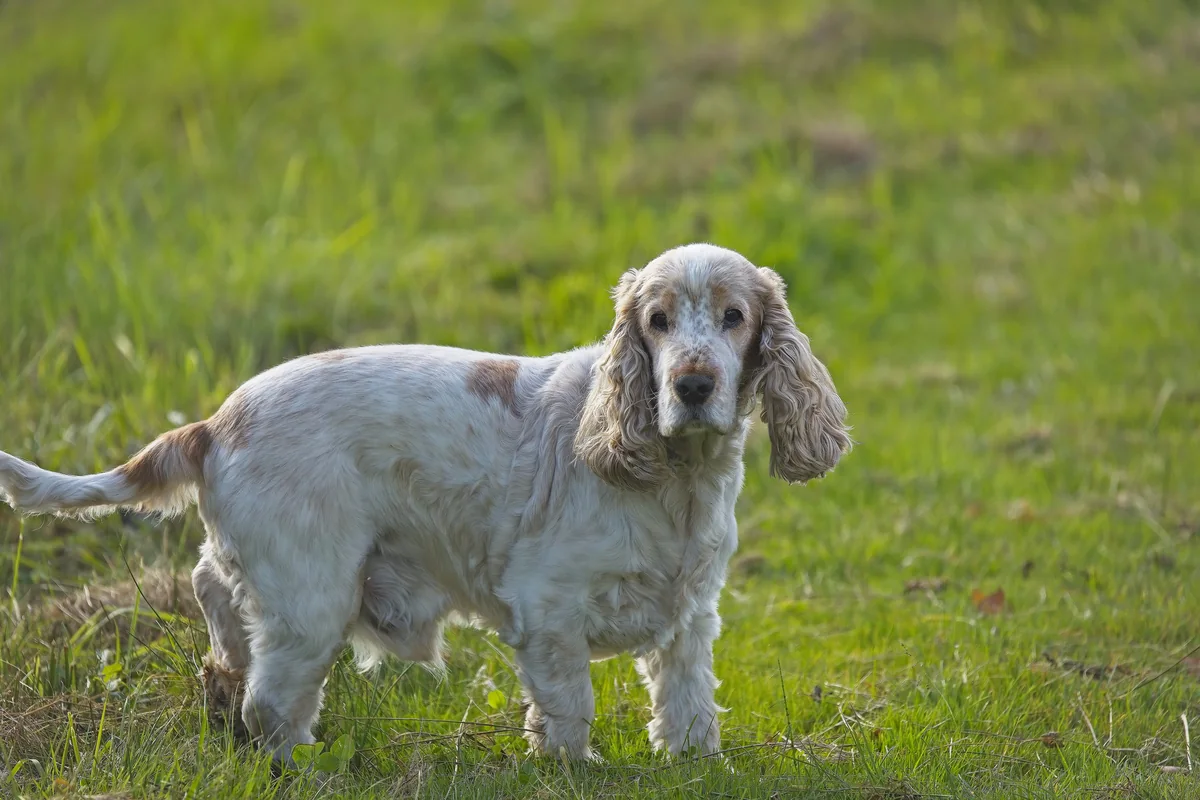
At around 38 to 41 cm at the shoulder and 13 to 14.5 kg, the English Cocker is manageable in size yet strongly built. Its height and body length are roughly equal: a compact back, developed chest and muscular hind legs give it the strength to work through cover. The long ears are set low and lie close to the head. Its lively tail is part of the familiar picture when the dog catches a scent.
The coat lies flat and feels silky, rather than wiry or curly. Hair grows longer on the chest, belly, legs and ears, forming the feathering. Cockers may be solid black, red or golden, or come in two and three colour patterns, including roan. The amount of grooming depends more on the individual coat and family line than on a particular colour.
From puppy to senior: caring for your dog through every life stage ↗
Health
Ears and skin deserve close attention in Cockers. Some develop atopy, an allergic tendency that can cause itching and repeated ear infections. If your dog scratches often, licks its paws or shakes its head, ask a vet to find the cause. Hip dysplasia is another concern: the ball and socket do not fit together properly, which can lead to pain and arthritis.
The Royal Kennel Club gives particular priority to DNA tests for acral mutilation syndrome, which can impair pain sensation in the paws, and prcd-PRA, an inherited retinal disease. Hip and eye screening plus tests for familial nephropathy, a kidney disease, and adult-onset neuropathy, which affects the nerves later in life, are also part of breeding care. If you are choosing a puppy, ask to see both parents’ written results and which tests have been done in this family line. Repeated ear or skin problems among close relatives are worth discussing as well.
Could this breed fit your life?
Could work well if …
- You want an active dog who can be part of family life.
- You can provide daily brushing and shared activity.
May be less suitable if …
- The dog would regularly be alone for many hours.
- You want to avoid the care needs of a longer coat.
More breeds to compare
Explore their build, activity and care needs in these profiles.
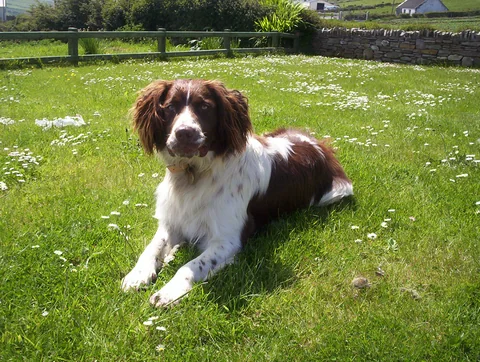
Flushing and retrieving dog
English Springer Spaniel
A friendly, energetic gundog that loves using its nose and needs plenty of time outdoors with its people.
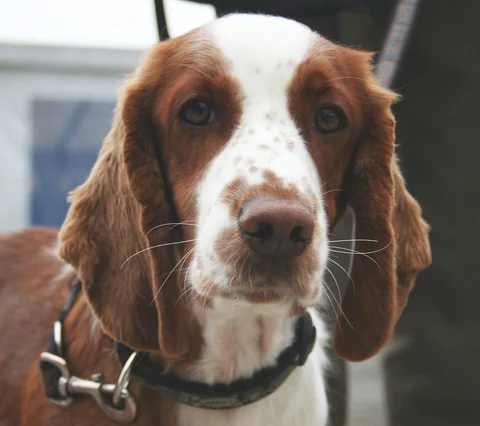
Flushing spaniel
Welsh Springer Spaniel
The Welsh Springer Spaniel searched for birds while working close to people. Today it needs long walks with time to sniff and a recall practised around the distraction of birds.

American flushing spaniel
American Cocker Spaniel
The American Cocker Spaniel combines a gentle expression and long, silky hair with a sporting dog’s curiosity. Many enjoy close company, unhurried sniffing and games with their people. Its manageable size suits a range of homes. Plenty of time should still be allowed for coat care, ears and an interesting daily routine.
Sources and photograph credit
- Teaching your dog to be left alone
Used in this profile for: Staying home alone
- Spaniel (Cocker) · Breeds A to Z
Used in this profile for: Temperament, Health
- Spaniel (Cocker) · Breed Standard
Used in this profile for: Size and build
- Ear infections in dogs
Used in this profile for: Day-to-day care, Health
- English Cocker Spaniel · breed guide
Used in this profile for: Size / Weight, Temperament, Everyday life, Day-to-day care, Size and build, Health, Lifespan, Could this breed fit your life?
Photo credits
Portrait · Tilly · John · CC BY 2.0 · Edited

Side view · Olavi Anttila · Pexels License
In action · SlimMars 13 · Pexels License
Puppy · Melissa Keizer · Unsplash License