 fellfolio
Herding dog
Smooth Collie
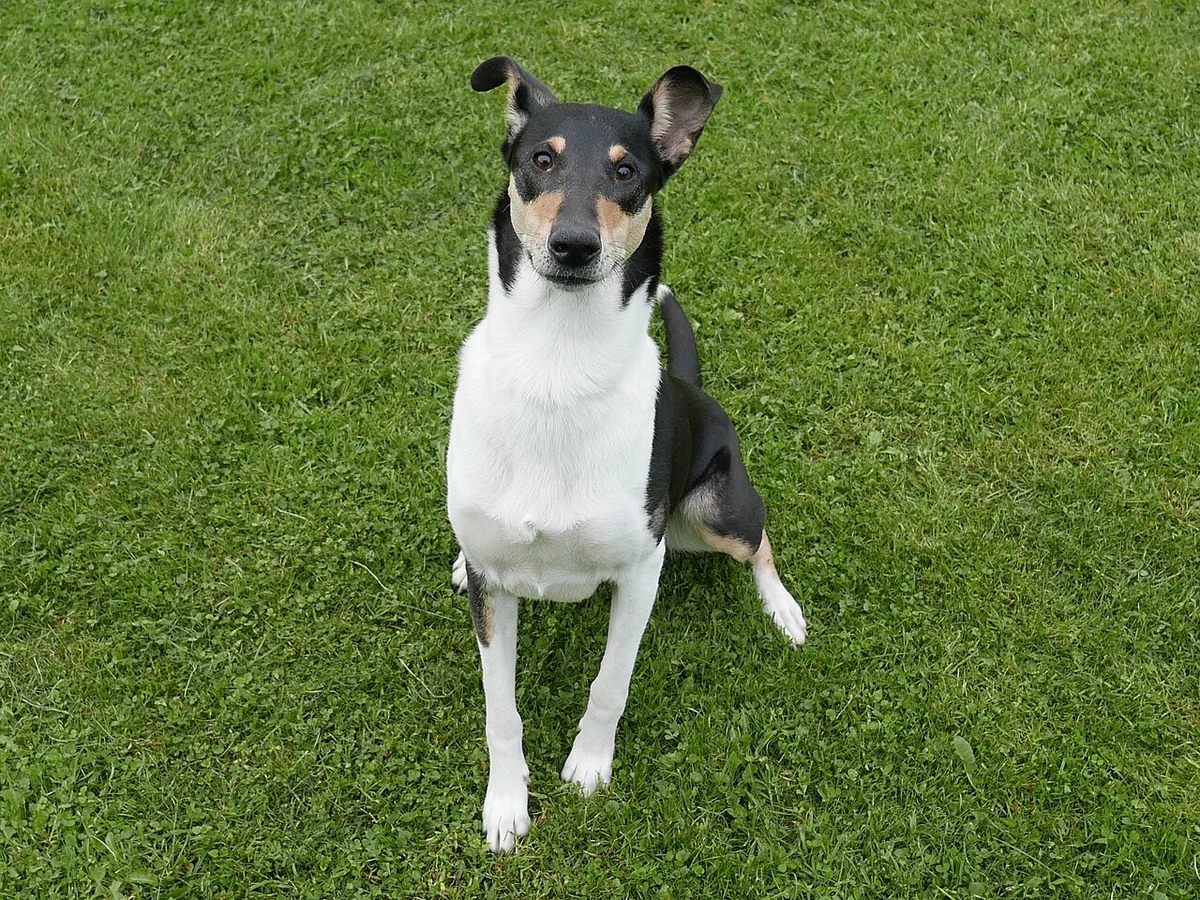
The Smooth Collie combines the slender build and characteristic head of a Collie with a short coat. This British herding dog needs shared walks, kind training and close contact with its people.
At a glance
- Size
- Large
- Height at shoulder
- 51 to 61 cm
- Weight
- 18 to 29.5 kg
- Lifespan
- 12 to 14 years
- Activity
- Moderate
- Grooming
- Weekly
- Training
- Often cooperative
- Owner experience
- First dog with support
Sensitive and keen to share family life
For many people, the Smooth Collie’s attentiveness and close attachment to its family are central to its appeal. It notices changes at home, and many dogs enjoy joining shared activities. A friendly approach and understandable exercises make learning easier. Harsh corrections can unsettle a sensitive dog.
Some Collies are vocal about visitors or noises. Early practice should help the dog learn to settle again after a cue. A bed away from a constant view of the entrance can be useful. If the dog seeks some distance when visitors arrive, that choice should be respected.
A Smooth Collie may suit a family where children learn how to behave around dogs and adults supervise their time together. Even a friendly dog needs sleep and a place to retreat. Cats and other dogs need gradual introductions. Although Smooth Collies are often described as sociable, living together depends on how the individual animals respond to each other.
Everyday life
The Smooth Collie Club of Great Britain suggests about an hour of exercise daily for adult Smooth Collies. Some dogs also enjoy much longer outings. Walks can include small scent games or training, such as practising recall on a quiet path. A Collie does not have to herd sheep to enjoy learning with its person.
Dog sports can also suit the breed. In rally obedience, for example, the handler and dog follow a course where signs set out different exercises. Working together is the focus. Short, simple tasks are a better starting point than introducing many new demands at once.
A flat or house may be suitable when shared time, exercise and a quiet sleeping place are available. A large garden does not take over those responsibilities. Time alone needs to be introduced gradually. Someone who is regularly away for long periods needs reliable care arrangements and should find out how that particular dog copes.
Staying home alone
Dogs learn to stay home alone in small steps. The RSPCA advises no more than four hours at a time. Puppies and dogs that become unsettled when left alone need shorter absences and gradual practice. Arrange someone to care for your dog when you will be away longer.
Everyday dog training: recall, a loose lead and clear communication ↗
Day-to-day care
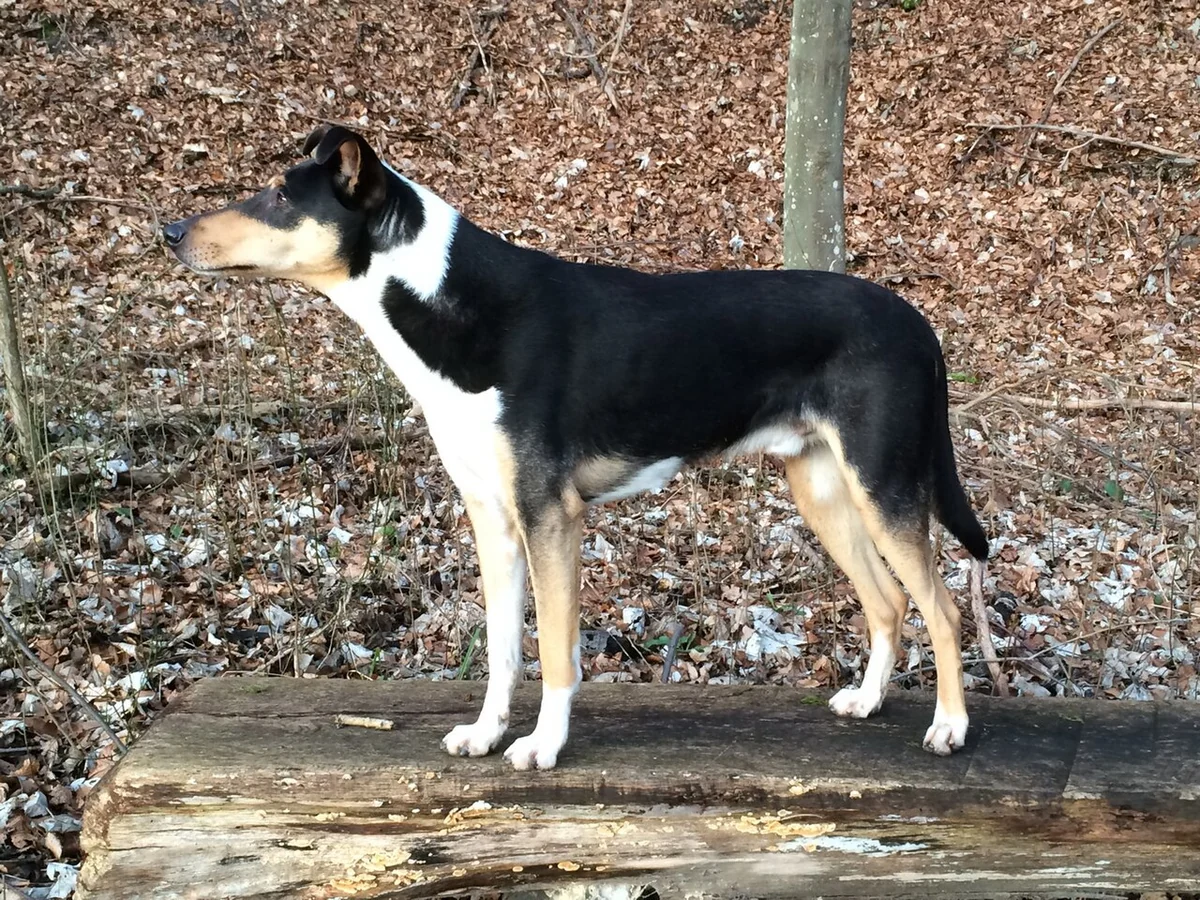
The short coat has a very dense undercoat, the softer layer of hair beneath the outer coat. Weekly brushing removes loose hair. More frequent care is usually needed during seasonal shedding. A Smooth Collie is therefore not a low-shedding alternative to a Rough Collie. Its coat is normally neither clipped nor trimmed into shape.
Ears, paws and nails need regular checks, and tooth care also belongs in the routine. These tasks are often easier for a dog that has been gently introduced to handling and rewarded along the way. After muddy outings, cleaning the affected areas may be enough rather than bathing the entire dog every time.
Size and build
Collies developed from British sheep-working dogs. A Smooth Collie is neither a clipped Rough Collie nor a Border Collie. The FCI, an international federation of national kennel organisations, lists it under its own breed standard describing the characteristic build and appearance.
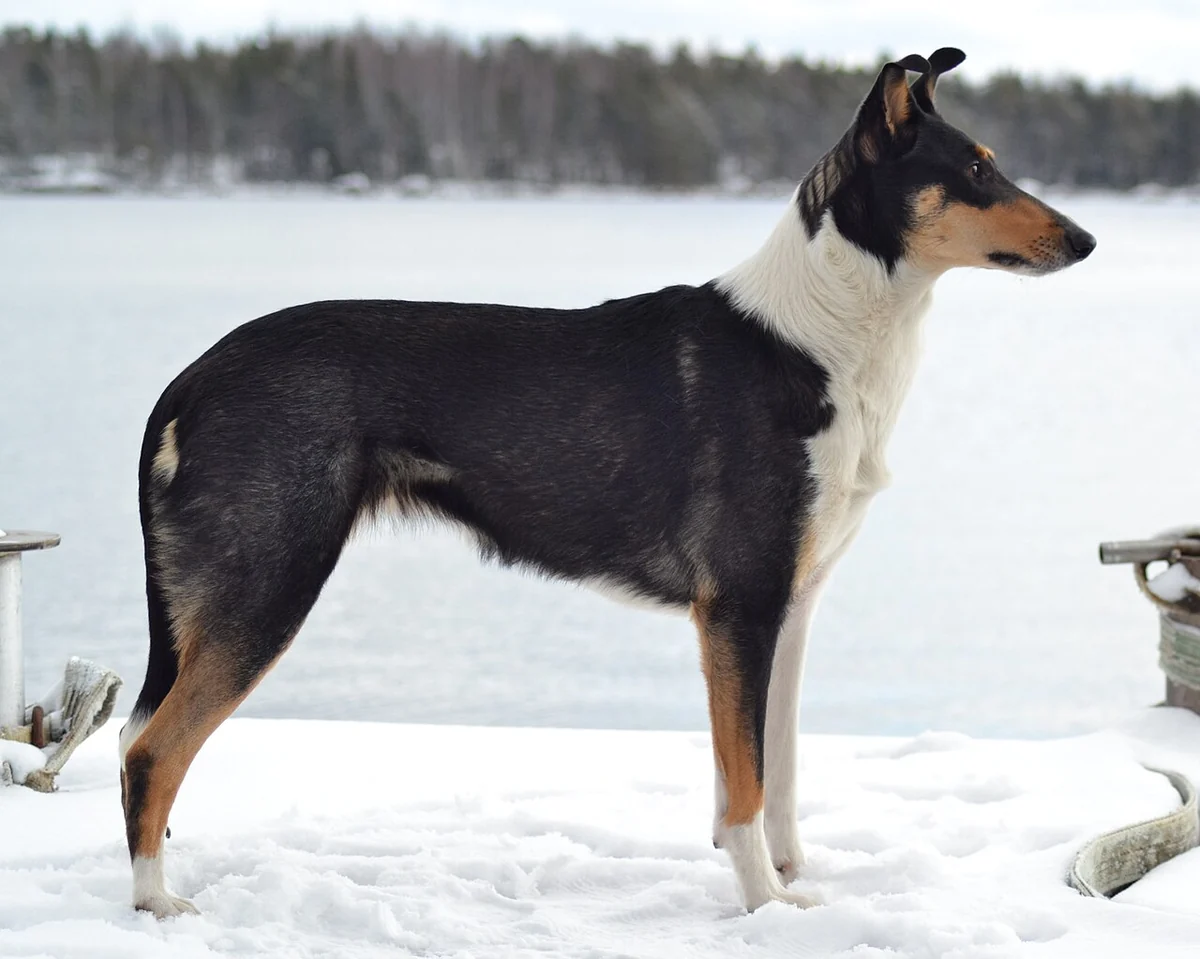
The body is slightly longer than it is tall, with a long, wedge-shaped head. When alert, the ears are held partly upright, with the tips folding forwards. The standard gives males a shoulder height of 56 to 61 cm and a weight of 20.5 to 29.5 kg. Females stand 51 to 56 cm and weigh 18 to 25 kg. Shoulder height is measured from the ground to the highest point above the shoulders.
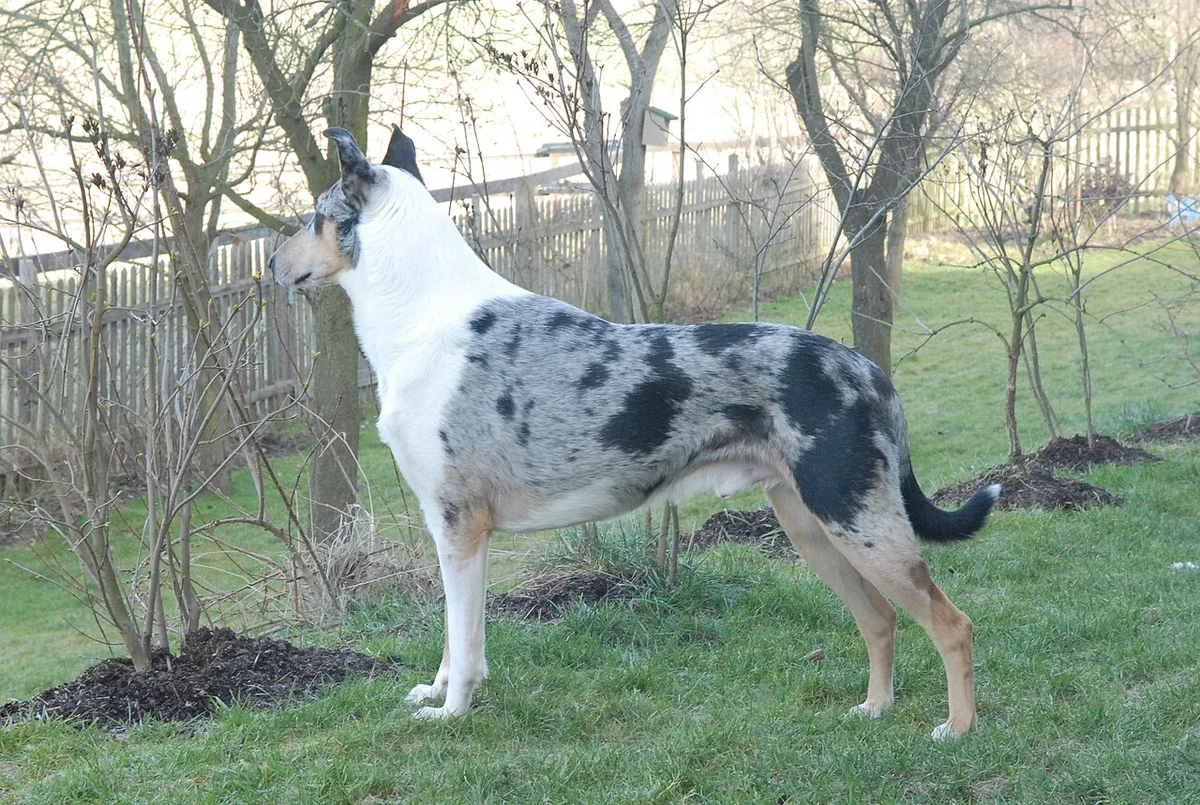
Three colour patterns are described. Sable and white combines golden to dark brown hair with white markings. Tricolour combines black, white and tan. Blue merle has a silvery grey background with black patches and marbling. Mating two merle dogs increases the risk of vision and hearing problems. An eye-catching colour pattern should therefore be considered alongside health and information about both parents.
From puppy to senior: caring for your dog through every life stage ↗
Health
Eye examinations, hip examinations and appropriate DNA tests matter when choosing breeding dogs. Collie Eye Anomaly, or CEA, is an inherited disorder of eye development. Progressive retinal atrophy, or PRA, damages the retina, the light-sensitive layer at the back of the eye, and can gradually reduce vision. The Royal Kennel Club, a British kennel organisation, recommends tests including CEA and the PRA-rcd2 form, alongside eye examinations by appropriately qualified vets.
The MDR1 result is particularly useful in everyday veterinary care. This genetic variant impairs the removal of certain medicines from the brain and can lead to serious adverse effects. Dogs with just one copy of the variant can also be sensitive. The result should be available to the vet before treatment so that a suitable medicine and dose can be chosen.
Assessing a puppy includes seeing both parents’ individual results, rather than simply hearing that they were tested. A clear result for one tested variant does not cover every possible condition. Repeated lameness, painful eyes or declining vision still need investigation in a dog with good breeding reports.
Could this breed fit your life?
Could work well if …
- You want an attentive companion for walks and kind training.
- You can provide daily company and enough time to rest.
- You prefer a short coat but still expect regular care and shedding.
What to consider
- The dog would often be left alone for long periods.
- You want a dog that rarely announces noises or visitors.
- You expect short hair to need no care and hardly shed.
Similar needs, different dogs.
Selected by shared size, activity, grooming and training characteristics.
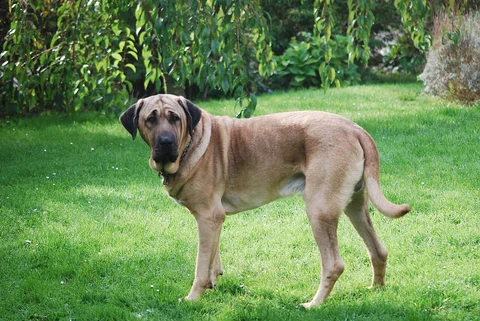
Companion and watchdog
Broholmer
A Broholmer makes an impression through sheer size. This Danish companion and watchdog often enjoys being involved in family life and needs people who can handle its strength safely. Shared walks, calm introductions to visitors and an easily accessible resting place help shape everyday life with this large dog.
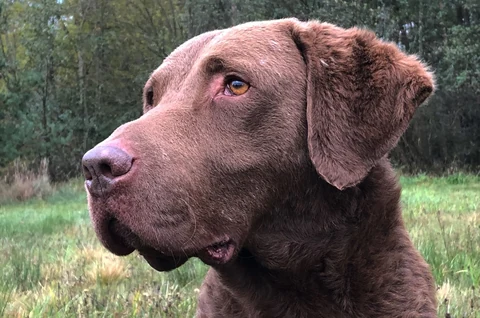
Water retriever
Chesapeake Bay Retriever
A strong, water-loving retriever with an oily, weather-resistant coat. The Chesapeake enjoys searching and bringing objects back from water, and bonds closely with its people. It may be more reserved with strangers than other retrievers.
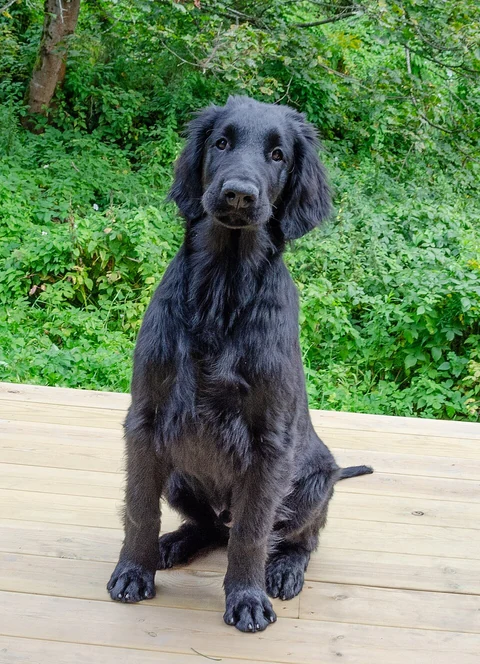
Retriever
Flat-Coated Retriever
The Flat-Coated Retriever enjoys searching and retrieving. Young dogs often greet people exuberantly, so daily walks and scent games go together with practising calmer arrivals.
Sources and photograph credit
- Teaching your dog to be left alone
Used in this profile for: Staying home alone
- AKC Rally
Used in this profile for: Everyday life
- Disorders of the Retina, Choroid, and Optic Disk (Ocular Fundus) in Dogs
Used in this profile for: Health
- All About the Smooth Collie
Used in this profile for: Temperament, Everyday life, Day-to-day care, Lifespan, Could this breed fit your life?
- Collie (Smooth)
Used in this profile for: Everyday life, Size and build, Health, Could this breed fit your life?
- FCI Standard No. 296: Collie (Smooth)
Used in this profile for: Size / Weight, Temperament, Day-to-day care, Size and build, Could this breed fit your life?
- Multidrug Sensitivity (MDR1)
Used in this profile for: Health
Photo credits
Portrait · File:Owczarek szkocki krótkowłosy 01.jpg · Jacek Proszyk · CC BY-SA 4.0 · Edited

Side view · File:Sileäkarvainen collie 1.jpg · IA · CC0

Coat pattern · File:20080200-Hundchen 089.jpg · HoWa · CC BY-SA 2.0 de · Edited

Everyday life · File:Kurzhaarcollie Ab-angelo-comitante-arak.JPG · Costa Ulma · CC BY-SA 4.0 · Edited
