 fellfolio
Companion and watchdog
Broholmer
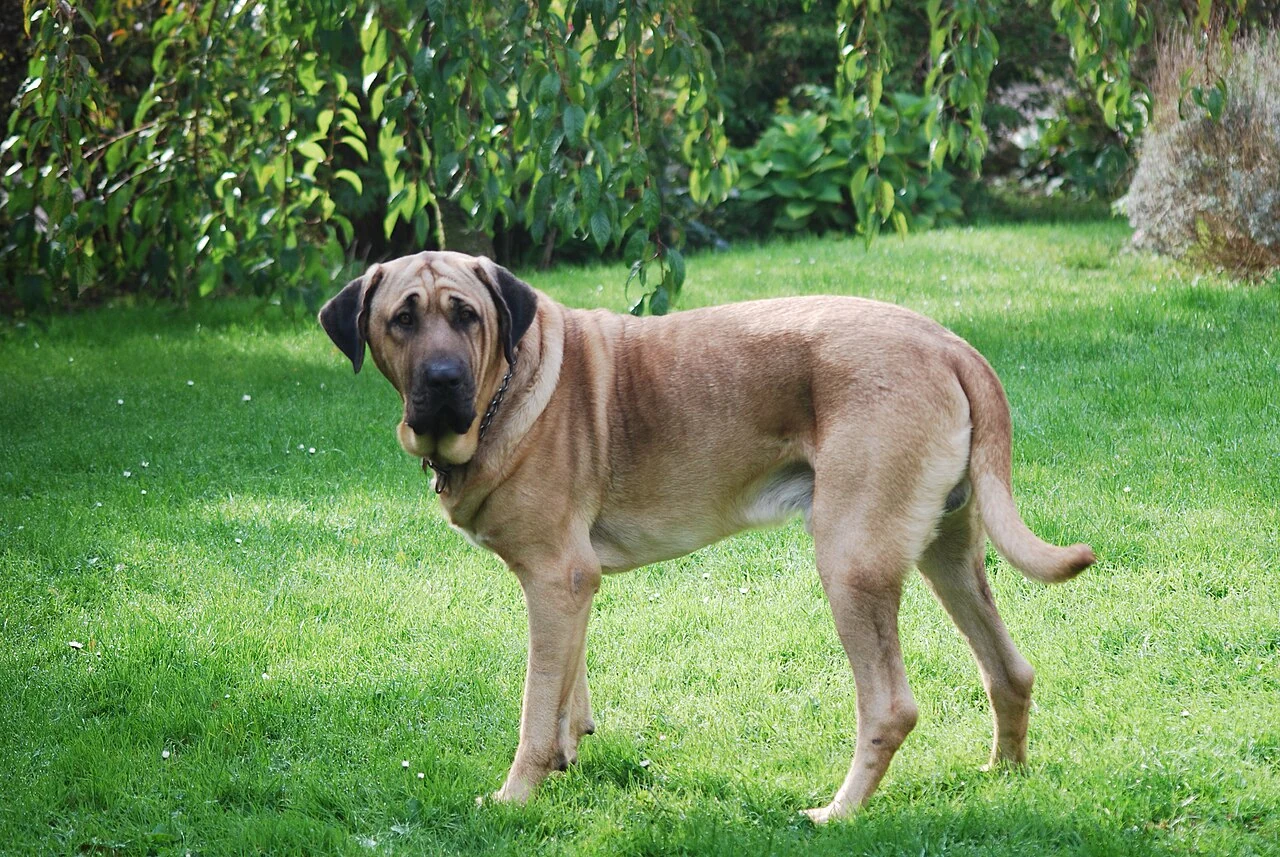
A Broholmer makes an impression through sheer size. This Danish companion and watchdog often enjoys being involved in family life and needs people who can handle its strength safely. Shared walks, calm introductions to visitors and an easily accessible resting place help shape everyday life with this large dog.
At a glance
- Size
- Large
- Weight
- 40 to 70 kg
- Activity
- Moderate
- Grooming
- Weekly
- Training
- Patience & clear guidance
- Owner experience
- Experience recommended
A large dog at home with the family
The Broholmer is a Danish breed with a long history as a farm and watchdog. Its name comes from the Broholm estate, where breeding was encouraged in the 18th century. After the Second World War, the breed almost disappeared. A rebuilding programme began in the 1970s with support from Denmark’s kennel organisation, the Dansk Kennel Klub.
The current standard published by the FCI, the international organisation that sets breed standards, describes a calm, friendly and watchful dog. An individual Broholmer’s response to strangers also depends on upbringing and experience. Early practice should teach it that visitors can enter while you handle the greeting. A bed away from the entrance can help a dog that otherwise stands right beside the door.
Even a relaxed large dog may knock a child over during play. An adult should supervise their time together and make sure the dog can eat and sleep undisturbed. Introductions to cats and other dogs should take place in a calm, prepared setting. Its size makes it especially important to watch every animal’s response and provide space to move away.
Everyday life
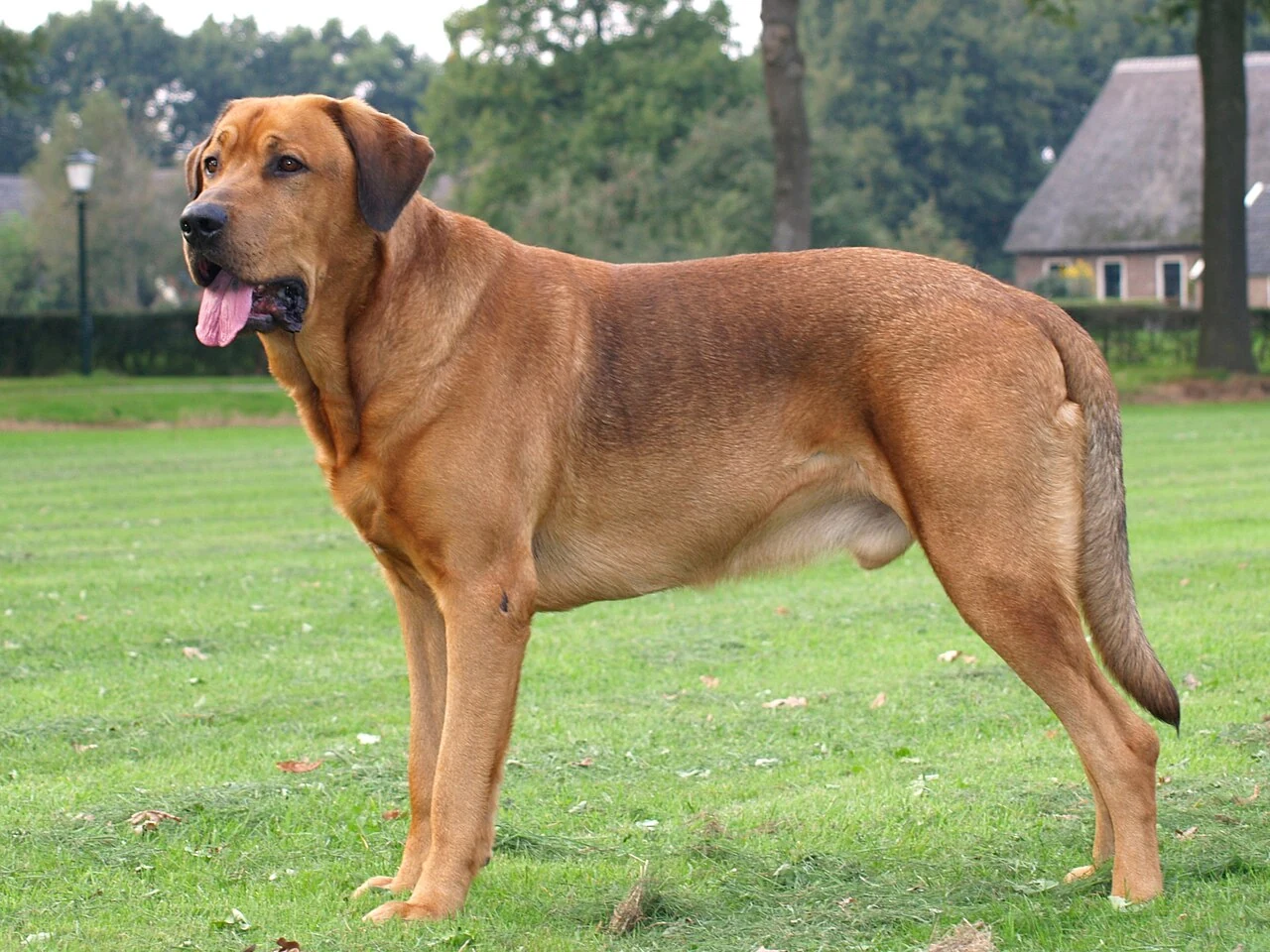
A shared walk can give a Broholmer time to sniff, explore and work out small tasks at a comfortable pace. You could ask it to find a familiar toy or practise walking on a loose lead along a quiet path. Regular outings still matter when your dog is content to settle on its bed at home.
Equipment should fit properly, and whoever is looking after the dog should be able to use it safely. Getting into the car and waiting at doorways are useful skills to practise while your puppy is still small. A sturdy ramp with a non-slip surface may later make car access easier. It should be suitable for the dog’s size and weight and introduced in a straightforward setting first.
A garden provides space, but shared activities and companionship remain part of the day. If your dog barks at passers-by through the fence, those encounters should not become its main outdoor activity. A quieter area and rewards for returning to you can make training easier. Time alone should be introduced gradually. On hot days, cooler walking times, shade and fresh water help you adapt the routine.
Staying home alone
Dogs learn to stay home alone in small steps. The RSPCA advises no more than four hours at a time. Puppies and dogs that become unsettled when left alone need shorter absences and gradual practice. Arrange someone to care for your dog when you will be away longer.
Everyday dog training: recall, a loose lead and clear communication ↗
Day-to-day care
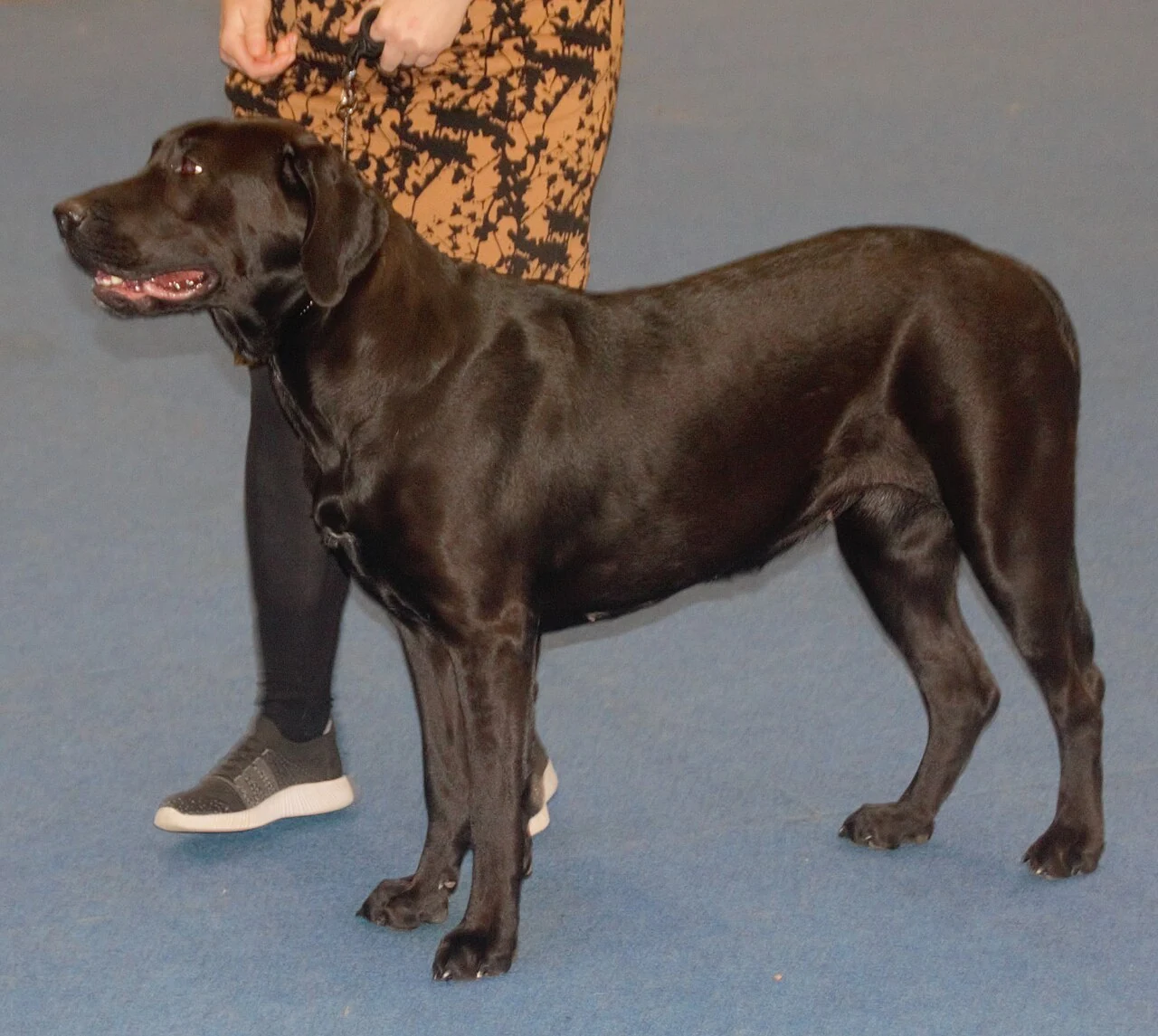
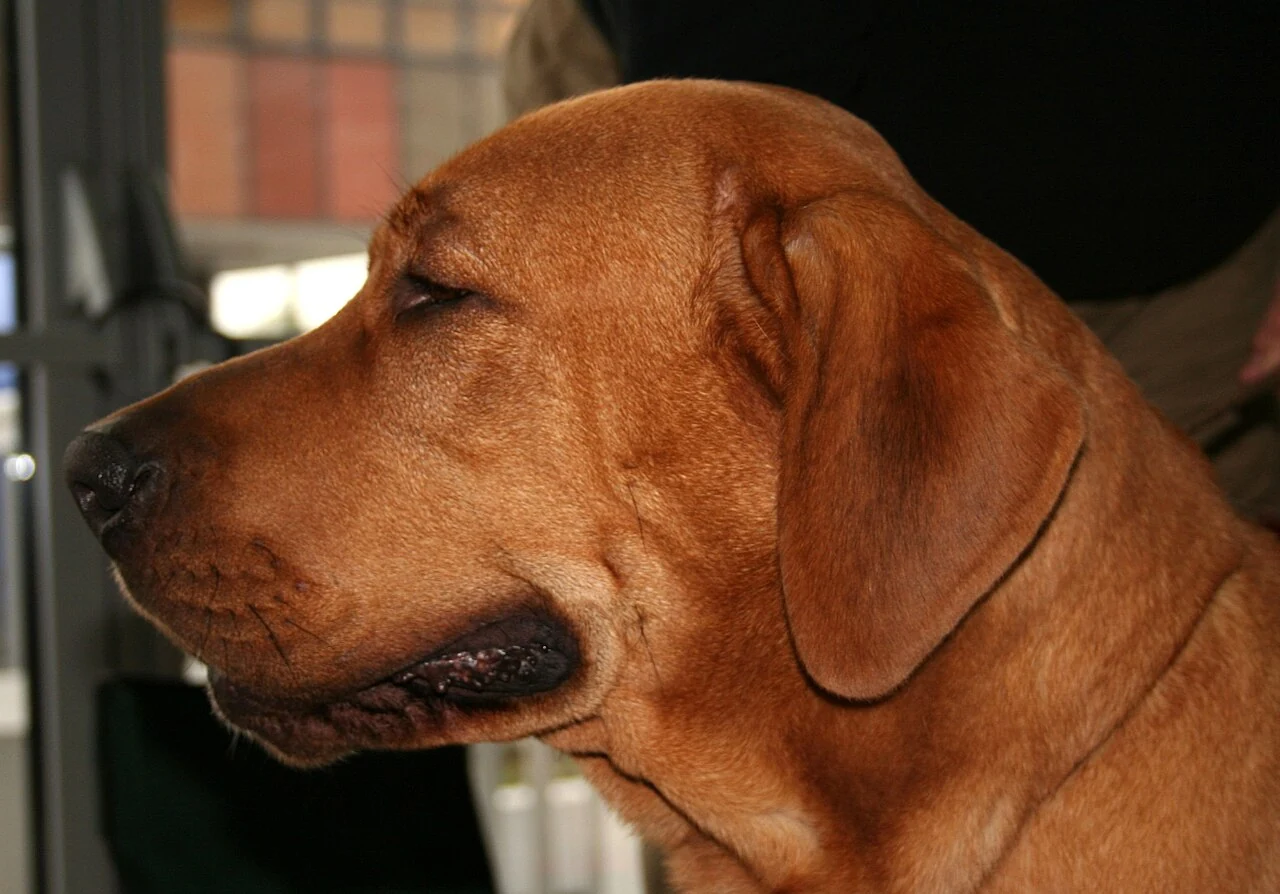
The short, close-fitting coat has a dense undercoat, the softer layer beneath the outer hairs. An appropriate brush can help you work through it. More loose hair may appear during spring and autumn shedding. Brushing more often then helps remove it and gives you a good opportunity to check the skin.
Your dog also needs a comfortable, secure position for grooming. On a non-slip surface, you could start by briefly examining one paw, reward the dog and gradually extend the task. Paws, nails and ears should be checked regularly. Frequent head shaking, an unusual ear smell or painful skin should prompt a veterinary appointment.
Toothbrushing with dog toothpaste can be taught in short stages too. It is sensible to plan the costs of this very large dog before bringing one home. Food, transport, care arrangements and veterinary bills should all be considered. Fellfolio’s cost planner can help you put these expenses together.
Size and build
The FCI standard gives adult males an approximate shoulder height of 75 cm and a weight of 50 to 70 kg. Females stand approximately 70 cm and weigh 40 to 60 kg. Height is measured at the withers, the highest point of the back just behind the neck. Extra weight does not mean better development. A young Broholmer needs feeding that supports steady growth.
The Dansk Kennel Klub advises moderate exercise for young Broholmers and avoiding frequent stair use while they are growing. Long running distances or repeated jumps should not be expected simply because the puppy already looks large. Your vet can help you match food and activity to its stage of development.
Kind training with clear, familiar routines is useful. You can reward your dog for turning towards you at a doorway or remaining relaxed while its lead is attached. In later life, shorter routes, secure footing on slippery floors and an accessible bed can make everyday activities easier. New stiffness or a marked change in willingness to move should be checked by a vet.
From puppy to senior: caring for your dog through every life stage ↗
Health
Before bringing a puppy home, you should look at its parents’ actual screening results. Official assessments of the hips and elbows are important in Danish breeding. Hip dysplasia, often shortened to HD, is abnormal development of the hip joint. Elbow dysplasia, or ED, covers several developmental problems that can cause pain and joint damage. Danish records also use AD for elbow dysplasia. Reports should identify the dogs that were examined.
For its additional Basis+ registration programme, the Dansk Kennel Klub also recommends a recorded heart assessment for SAS. This means subaortic stenosis, a narrowing below the valve through which blood leaves the heart for the main artery. A specialist heart examination can assess whether this defect is present. This recommendation belongs to the Danish programme and is not a universal breeding rule.
With a large, deep-chested dog, it is also useful to recognise possible gastric dilatation-volvulus, commonly called bloat. The stomach swells and can twist, making this a life-threatening emergency. Unproductive retching, severe restlessness and a suddenly swollen abdomen need immediate emergency veterinary attention. Fellfolio lets you keep weight records, veterinary findings and everyday observations together, so you can explain when changes in rising or stamina began.
Could this breed fit your life?
Could work well if …
- You can safely handle a very large dog and arrange suitable care during holidays or illness.
- You want your dog involved in family life and have room for an accessible place to rest.
- You can provide early everyday training and budget for the expenses of a large dog.
What to consider
- An adult Broholmer’s strength makes good lead handling and suitable transport especially important.
- A watchful dog should not spend its outdoor time reacting to visitors and passers-by alone at the fence.
- A large youngster needs appropriate exercise and food even when it already looks nearly grown.
Similar needs, different dogs.
Selected by shared size, activity, grooming and training characteristics.
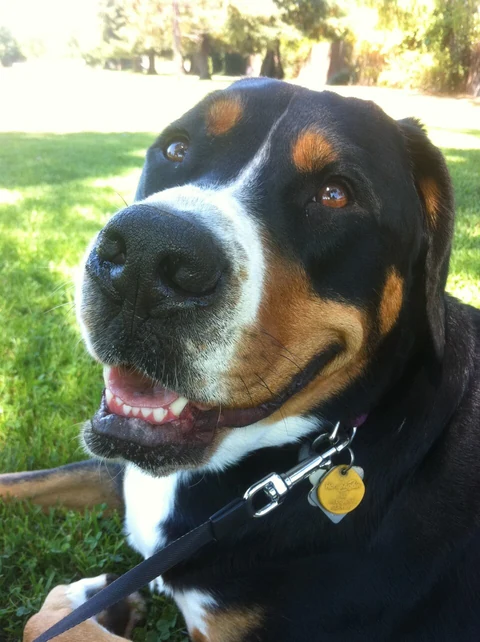
Mountain dog
Greater Swiss Mountain Dog
The Greater Swiss Mountain Dog is a powerful farm dog with a short, dense coat. It needs space, family contact and handling suited to its considerable strength.
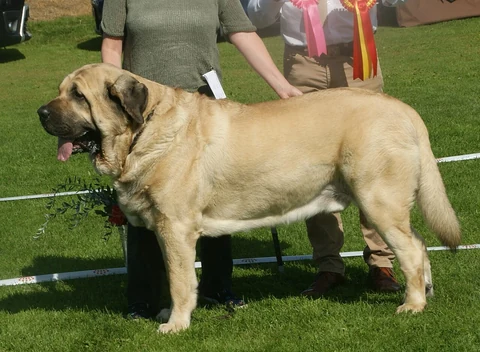
Spanish flock guardian with a deep voice
Spanish Mastiff
The Spanish Mastiff is a very large livestock guardian with a substantial head and a deep voice. It once travelled with migrating sheep flocks across Spain. Today it needs people who understand both its often calm manner and its readiness to guard the home.
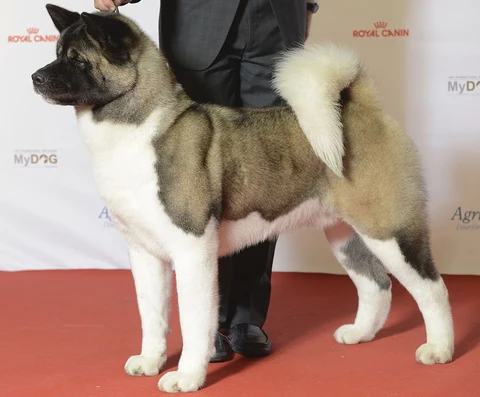
Large companion with Japanese roots
American Akita
The American Akita is a large, powerful dog with a broad head, upright ears and a dense coat. It can be deeply attached to its family while being less comfortable around unfamiliar dogs. Experienced handling and thoughtful arrangements for walks, visitors and temporary care are important.
Sources and photograph credit
- Teaching your dog to be left alone
Used in this profile for: Staying home alone
- Gastric Dilatation-Volvulus
Used in this profile for: Health
- Canine Hip Dysplasia
Used in this profile for: Health
- Position Statements and Humane Dog Training
Used in this profile for: Size and build
- Broholmer: Care and Breeding Requirements
Used in this profile for: Temperament, Everyday life, Day-to-day care, Size and build, Health, Could this breed fit your life?
- FCI Standard: Broholmer
Used in this profile for: Size / Weight, Temperament, Day-to-day care, Size and build
- Congenital and Inherited Cardiovascular Disorders in Dogs
Used in this profile for: Health
- Heatstroke in Dogs
Used in this profile for: Everyday life
- Exercising Your Puppy
Used in this profile for: Size and build
- Training Your Dog to Be Left Alone
Used in this profile for: Everyday life, Could this breed fit your life?
- Understanding Your Dog’s Behaviour
Used in this profile for: Temperament, Everyday life
- Children and Dogs
Used in this profile for: Temperament, Could this breed fit your life?
- Caring for Your Dog’s Teeth
Used in this profile for: Day-to-day care
Photo credits
Portrait · Bjorn 2011.jpg · WLVB · CC BY-SA 4.0 · Edited

Side view · Ivarr03.JPG · Thrudgelmir · Public domain

At a dog show · Broholmer-black1.jpg · Canarian · CC BY-SA 4.0 · Edited

Coat and features · Broholmer głowa profil 630.jpg · Pleple2000 · CC BY-SA 3.0 · Edited
