 fellfolio
Water retriever
Chesapeake Bay Retriever
A strong, water-loving retriever with an oily, weather-resistant coat. The Chesapeake enjoys searching and bringing objects back from water, and bonds closely with its people. It may be more reserved with strangers than other retrievers.
At a glance
- Size
- Large
- Height at shoulder
- 53 to 66 cm
- Lifespan
- over 10 yearsUK Royal Kennel Club breed profile
- Activity
- Very high
- Grooming
- Weekly
- Training
- Often cooperative
- Owner experience
- Experience recommended
Built for cold water
The breed was developed around the American Chesapeake Bay to retrieve waterfowl in cold, rough weather. Its dense double coat provides protection from water, while its strength helps it swim. The British standard describes an intelligent worker, affectionate with family but not necessarily exuberant with strangers.
Let it notice new people at its own pace and reward it for checking back with you rather than rushing at every visitor. Teach it to give up toys kindly and early. A dog that likes carrying things needs relaxed, clear rules for trading and releasing them. These small rehearsals make later water games and encounters easier.
Everyday life
The Royal Kennel Club gives more than two hours of daily activity as a guide for adults. A long walk through varied places, controlled retrieving and swimming in safe water can work well together. Hide a toy in tall grass or ask the dog to bring it from shallow water. Check currents, banks and water temperature first; enthusiasm for water is no protection from hazards.
Recall and loose-lead walking must still work when ducks or other animals appear. Begin in open, simple places and raise the challenge gradually. A garden is useful but cannot replace shared activity. For puppies, short playful sessions are enough. Long swims or running programmes belong to a physically mature dog.
Staying home alone
Dogs learn to stay home alone in small steps. The RSPCA advises no more than four hours at a time. Puppies and dogs that become unsettled when left alone need shorter absences and gradual practice. Arrange someone to care for your dog when you will be away longer.
Day-to-day care
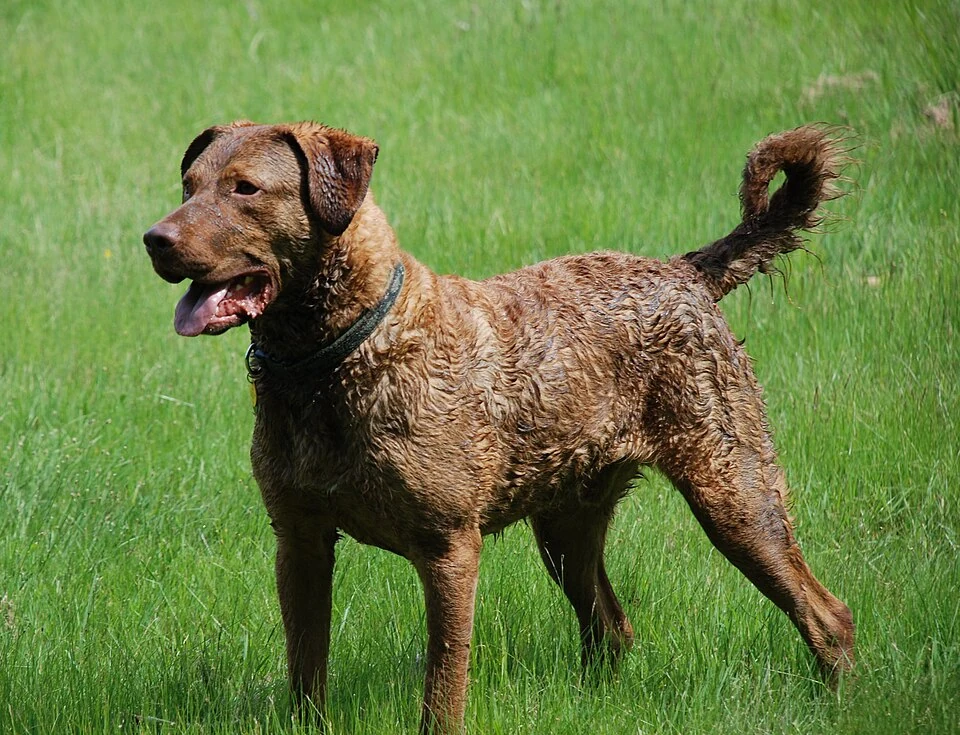
The coat is unusual: a short, harsh, slightly oily outer layer over dense, fine underfur. It may wave a little on the neck, back and shoulders. This structure helps repel water. Brush out loose hair about once a week and more thoroughly during a moult. Constant washing with a strong degreasing shampoo strips away the coat’s natural protection; bathe only when it is genuinely needed.
After swimming, rinse off dirt or salt water, dry the ears and check feet and skin. A dog that repeatedly shakes its head or has smelly ears needs an examination. The short coat still sheds, so regular brushing belongs in its care routine.
Size and build
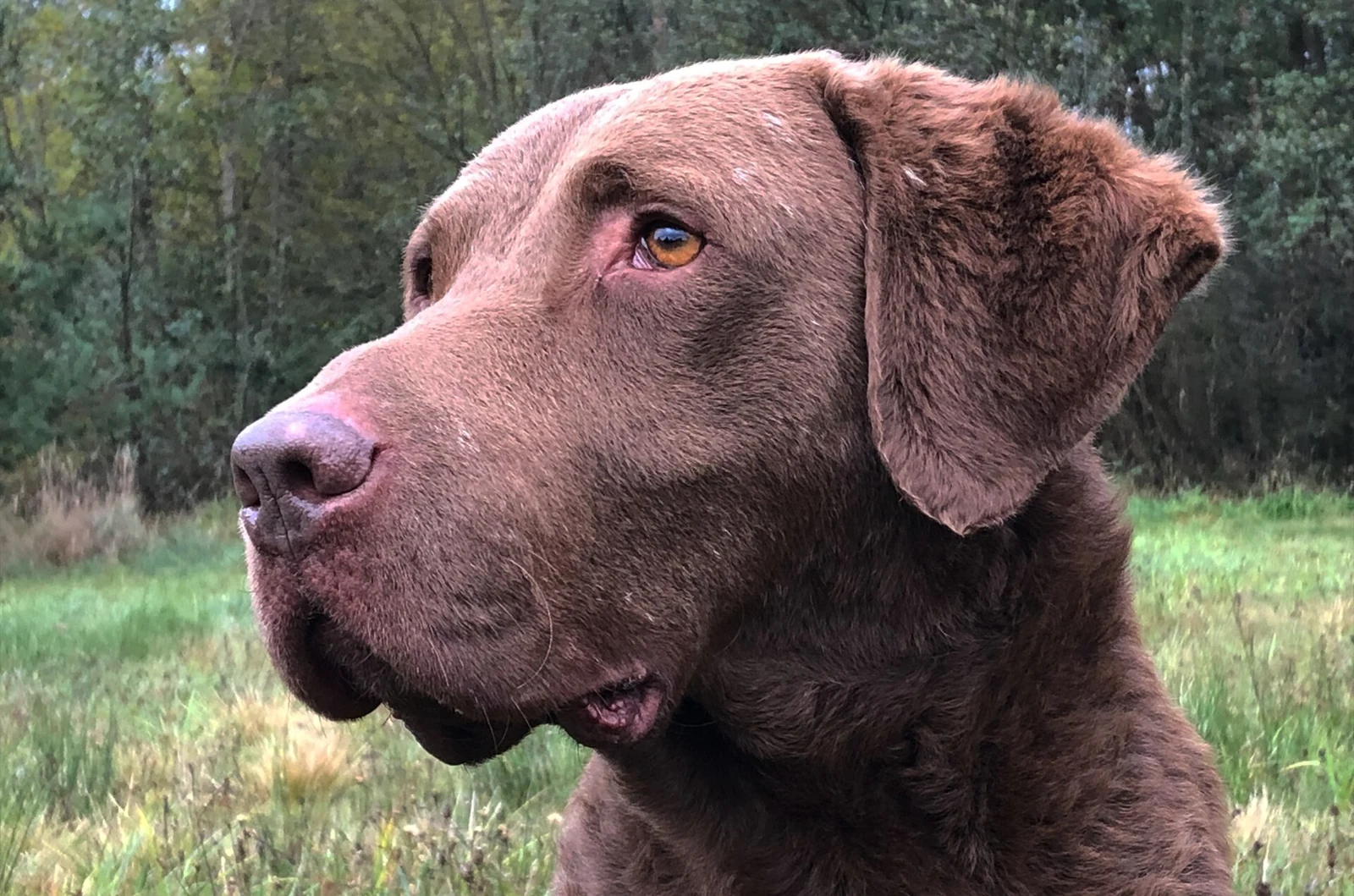
A Chesapeake is medium-large to large, strongly muscled and mobile. The chest is deep and broad, the back firm and the legs straight. Yellow to amber eyes and a broad head stand out. Well-developed webbing between the toes helps with swimming. The tail is straight or gently curved, not curled over the back. The coat comes in shades of brown, straw and sedge.
The British standard gives 58 to 66 cm at the shoulder for males and 53 to 61 cm for females. This source does not give a general weight range. Ask your vet to assess whether the dog has suitable muscle and a healthy weight for its size.
Health
The Royal Kennel Club recommends hip and elbow scores for breeding dogs. A DNA test exists for degenerative myelopathy, a progressive spinal cord disease. It identifies a genetic risk factor. Even two copies of the variant do not predict with certainty that a dog will develop the disease. Ask for both parents’ findings and the planned pairing. With careful breeding plans, a dog carrying one copy of the tested variant can be paired with a dog carrying none. Their puppies will not inherit two copies of this risk variant. DNA screening and eye examinations are also recommended for prcd-PRA, an inherited retinal disease in which the light-sensitive cells of the eye progressively deteriorate and vision declines.
Watch for changes in walking, rising and vision. Repeated stumbling, weakness or uncertainty in dim light deserves veterinary attention.
Could this breed fit your life?
Could work well if …
- You spend plenty of time outdoors and want to retrieve safely and swim where possible.
- You can patiently practise recall, giving up objects and calm greetings.
May be more difficult if …
- You want a retriever that greets every stranger eagerly and needs little activity.
- You have neither safe outings nor daily training time for a strong water dog.
Similar needs, different dogs.
Selected by shared size, activity, grooming and training characteristics.
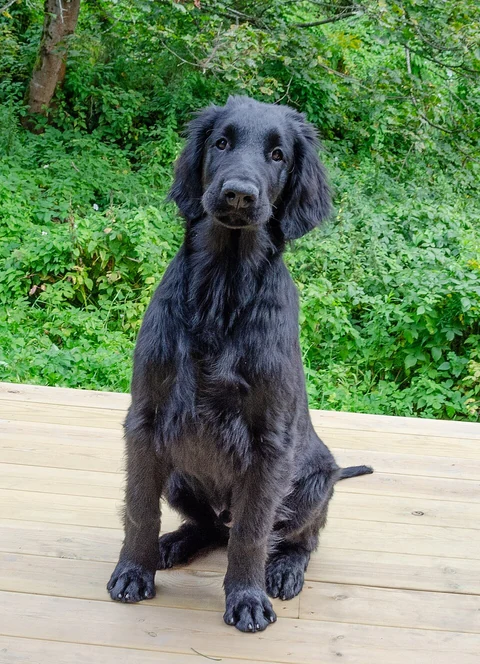
Retriever
Flat-Coated Retriever
The Flat-Coated Retriever enjoys searching and retrieving. Young dogs often greet people exuberantly, so daily walks and scent games go together with practising calmer arrivals.
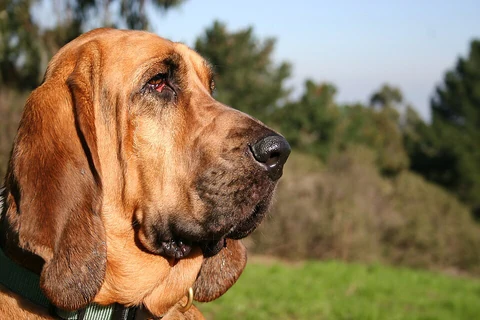
Scent hound
Bloodhound
The Bloodhound follows scent with remarkable persistence. Often friendly and calm at home, it needs time to sniff and safe handling outdoors.
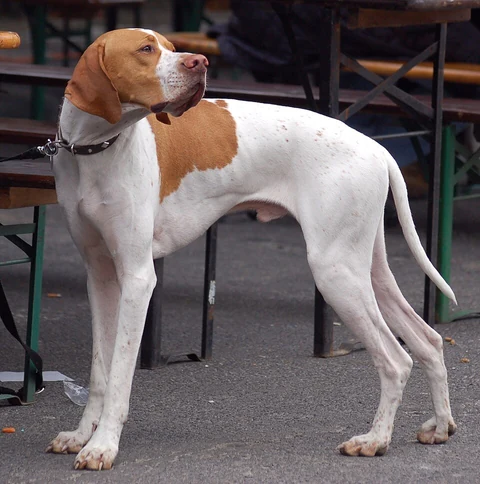
Pointer
Pointer
The Pointer ranges widely to find gamebirds, then stands still to show where they are. Its short coat is easy to care for, but it needs plenty of daily exercise.
Sources and photograph credit
- Teaching your dog to be left alone
Used in this profile for: Staying home alone
- Chesapeake Bay Retriever, Breeds A to Z
Used in this profile for: Temperament, Everyday life, Day-to-day care, Health, Lifespan, Could this breed fit your life?
- Chesapeake Bay Retriever breed standard
Used in this profile for: Size / Weight, Temperament, Everyday life, Day-to-day care, Size and build, Could this breed fit your life?
- Degenerative Myelopathy (DM)
Used in this profile for: Health
Portrait · CBR - head · Strojmir · CC BY-SA 4.0 · Edited

Side view · Chesapeake Bay Retriever1 · Original uploader was Keith Rousseau at en.wikipedia · CC BY-SA 3.0 · Edited

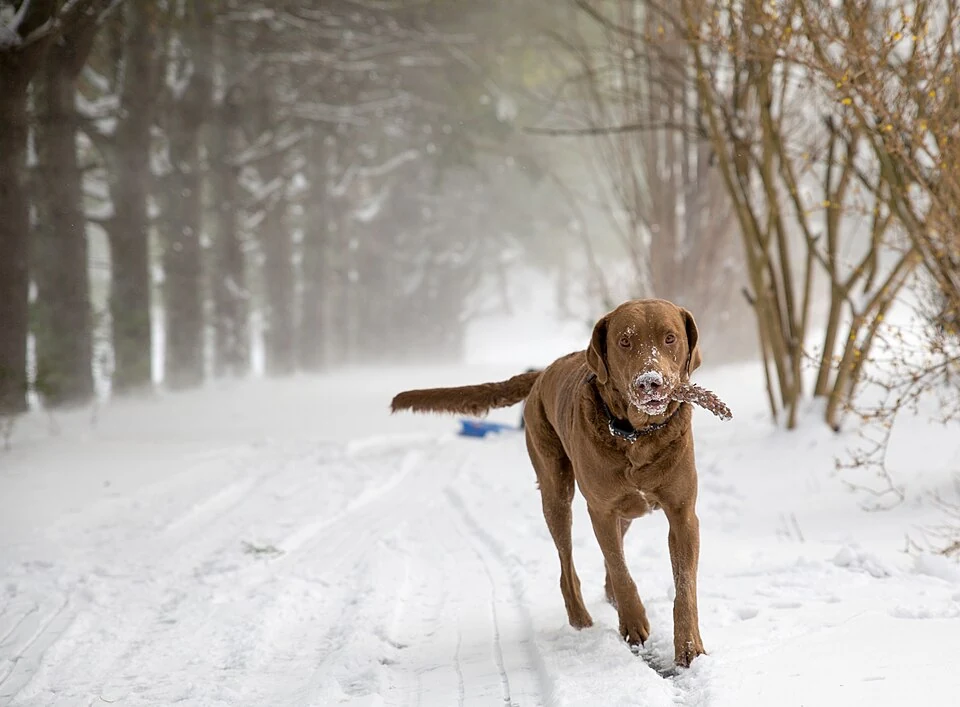
In action · Chesapeake Bay Retriever in the snow · Will Thomas · CC BY 2.0 · Edited

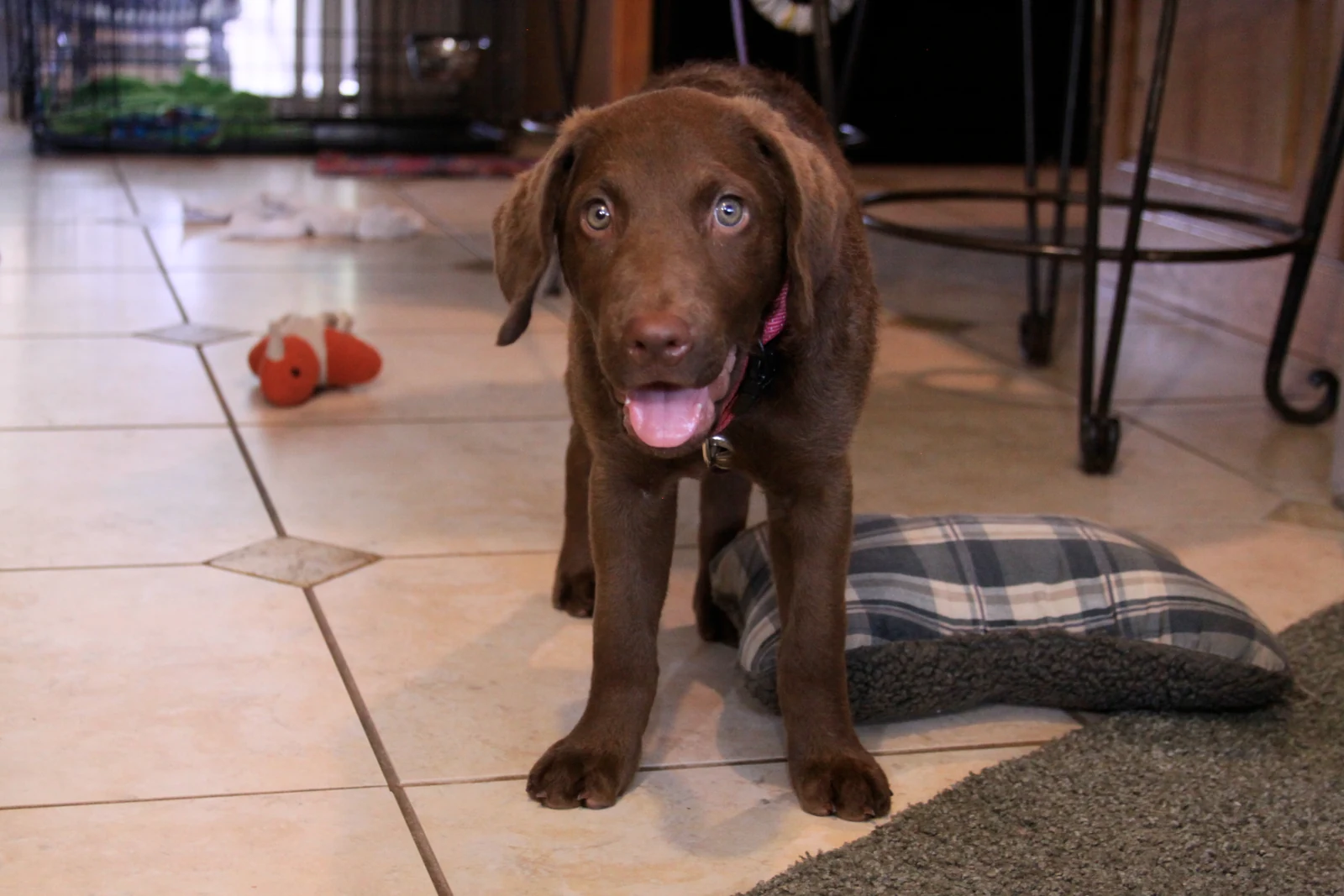
Puppy · Little Baby Luna · a.fave · CC BY 2.0 · Edited