 fellfolio
Long-legged hunting terrier from Britain
Parson Russell Terrier
The Parson Russell Terrier is small, long-legged and built for an active life. Its ancestors accompanied fox hunts and worked underground too. The curiosity, stamina and hunting interest of these terriers matter more when choosing the breed than its convenient size. It suits people who enjoy outings with their dog and want to build recall, safe exercise arrangements and the ability to relax at home carefully.
At a glance
- Size
- Small
- Height at shoulder
- 33 to 36 cm
- Lifespan
- over 12 years
- Activity
- High
- Grooming
- Weekly
- Training
- Patience & clear guidance
- Owner experience
- Experience recommended
Plenty of enthusiasm on long legs
The international breed standard describes the Parson Russell as bold, friendly, lively and enduring. Many take a keen interest in anything that moves or smells promising. An intriguing scent beside the path can quickly become the main attraction. Choosing this breed means enjoying that curiosity and being able to guide it safely in everyday life.
Its original work as a hunting terrier can show in chasing, digging and exploring confined spaces. The British breed club therefore highlights the need for a secure garden. Gaps beneath fencing and places a dog could climb or jump over deserve attention too. A small dog needs boundaries as dependable as those for a large one.
Some Parsons live comfortably with cats, while others show strong hunting interest in them. Before bringing one home, you should ask about the dog’s experience with cats and other animals. Small pets such as rabbits or guinea pigs should be protected from direct contact. Around children, an adult needs to supervise play and make sure the dog also has breaks and a quiet place to retreat.
Everyday life
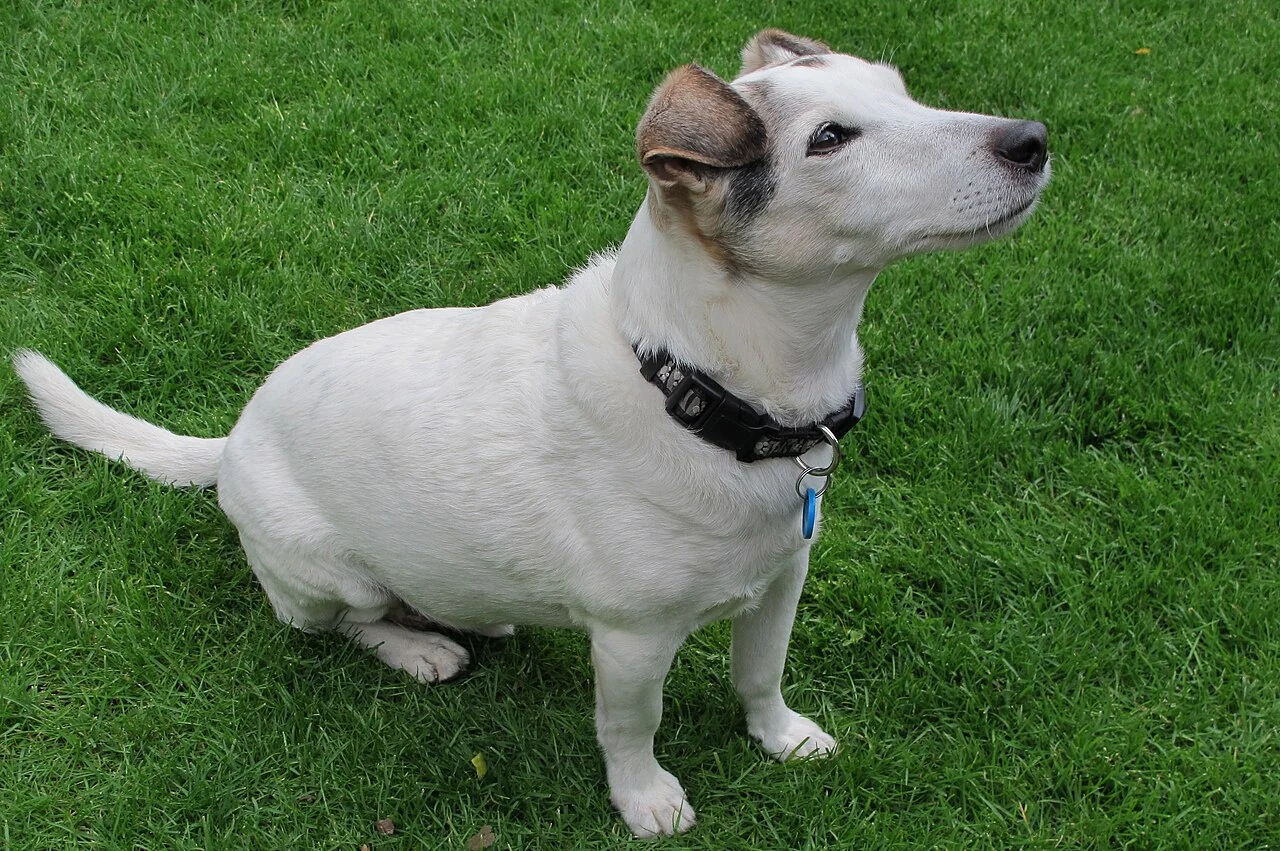
Walking, sniffing and exploring together belong in a suitable daily routine. Small size does not mean little need for activity. A garden can be useful, but does not replace walks or time with the dog’s people.
Recall training should begin in a quiet place with few distractions. Once your dog reliably comes to you in easy situations, the difficulty can increase gradually. A lead is useful where wildlife is present or recall is not yet reliable. A long line is a longer lead that gives your dog more room during practice. It should be handled so you can keep the dog safely under control. Search games offer a chance to use the nose. A familiar toy can first be left in plain sight, then hidden in easy places.
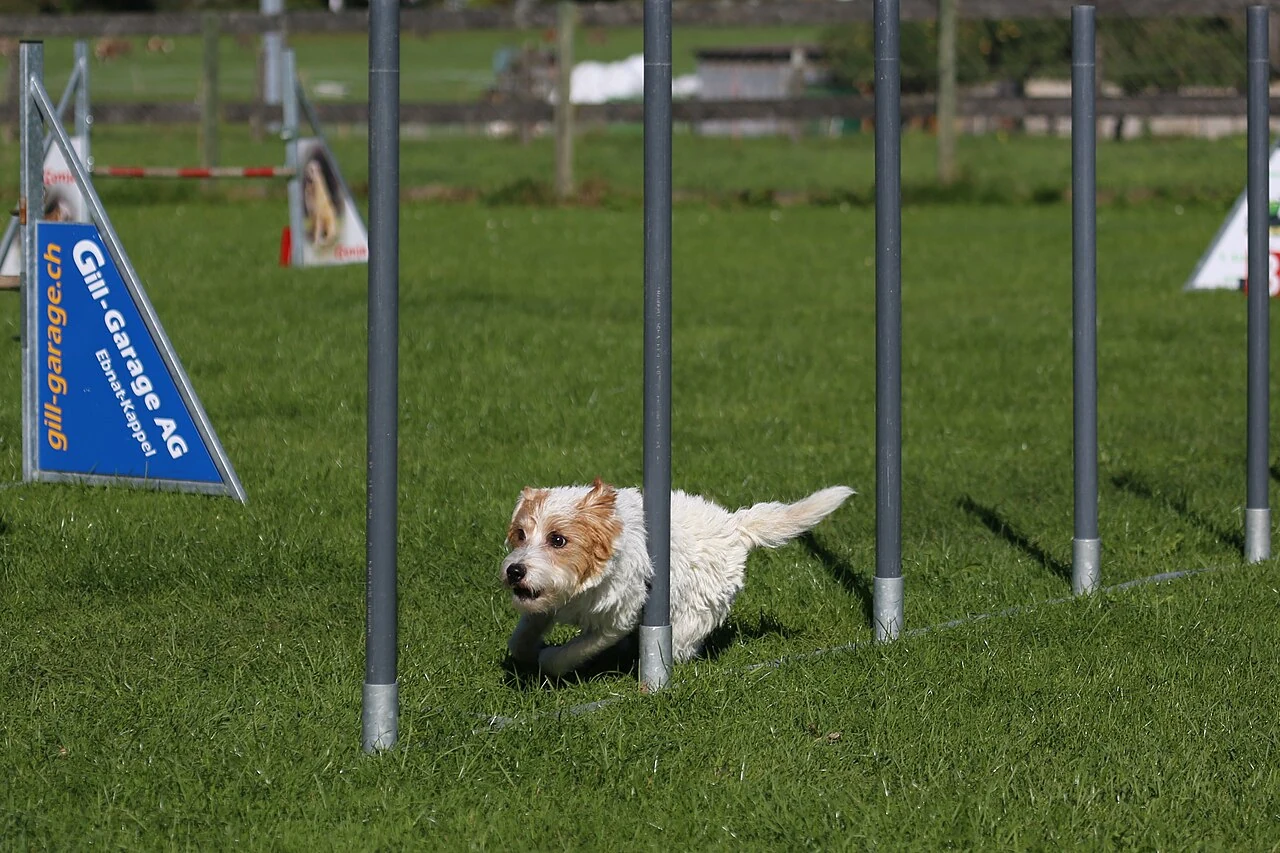
Dog sports can also offer activities for a healthy, fit Parson. Rally obedience is one example, a course with stations for exercises such as sitting, turning and waiting. Activity should suit age, health and training experience. These exercises offer movement while helping your dog learn to work attentively with you.
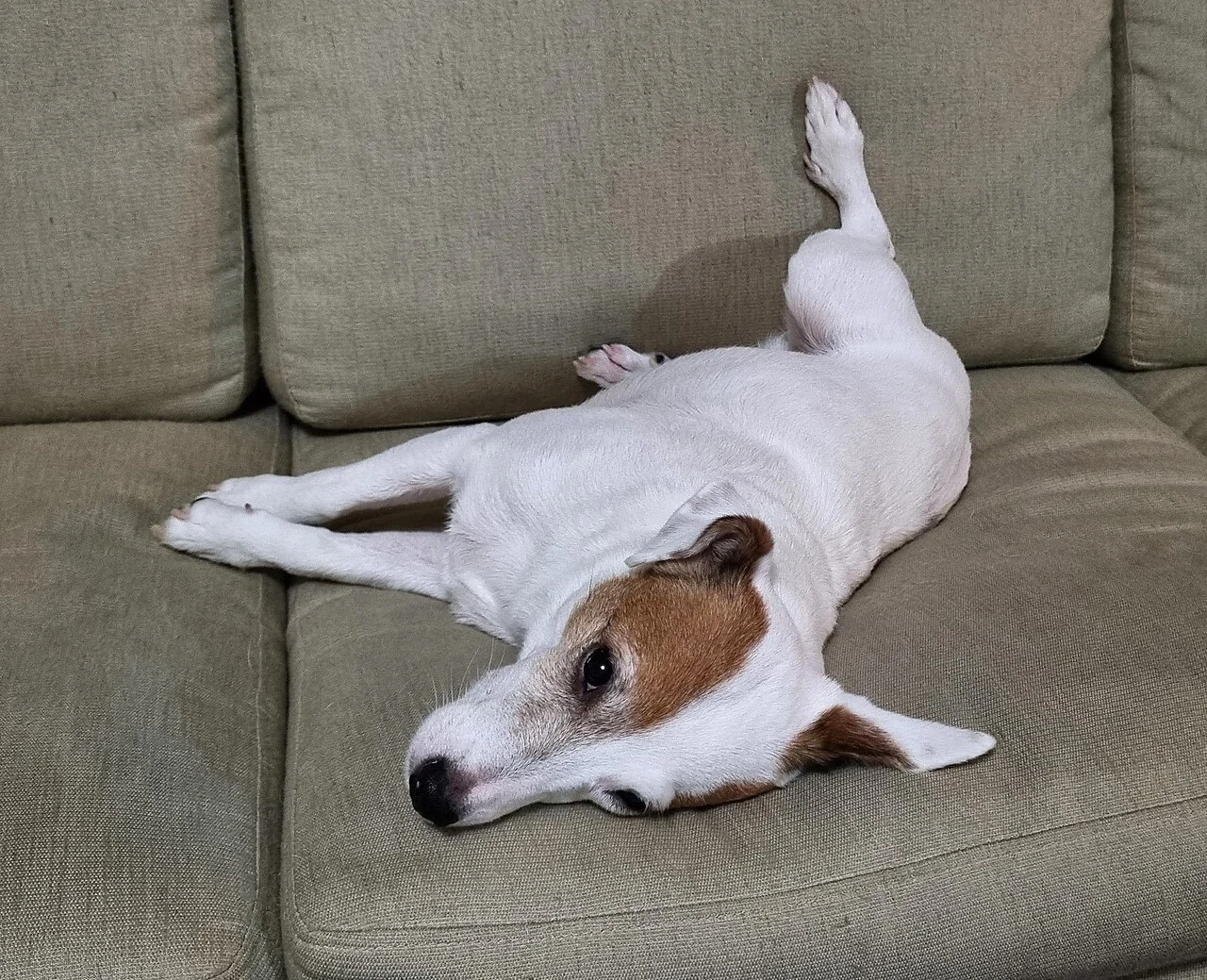
The RSPCA, a British animal welfare charity, recommends reward-based training in short, regular sessions. Alongside active tasks, settling quietly on a bed should be practised too. Time alone needs a gradual introduction, with dependable care arrangements for regular longer absences. Prolonged barking, panting or pacing when you leave can indicate distress. You should then seek veterinary advice and, where needed, support from a qualified behaviour professional.
Staying home alone
Dogs learn to stay home alone in small steps. The RSPCA advises no more than four hours at a time. Puppies and dogs that become unsettled when left alone need shorter absences and gradual practice. Arrange someone to care for your dog when you will be away longer.
Everyday dog training: recall, a loose lead and clear communication ↗
Day-to-day care
Parson Russell Terriers can have smooth coats, rough coats or a mixture of shorter and wirier hair known as a broken coat. All types can shed. Britain’s Royal Kennel Club suggests weekly brushing as a guide. Suitable brushes and any further care depend on the individual dog’s coat.
Hand stripping may be useful for wire-coated dogs. This removes dead, loose hairs by hand or with appropriate tools. A groomer experienced in wiry coats should explain whether and how it suits your dog. Even with a short haircut, the skin should be checked and loose hair removed regularly.
After walks, paws and coat should be checked for dirt or foreign material. Ears, nails and teeth need regular attention too. Toothbrushing with dog toothpaste should be introduced in small steps and ideally become a daily habit. Food portions should suit activity and body condition. With a small dog, numerous training treats can make up a noticeable share of the daily allowance.
Size and build
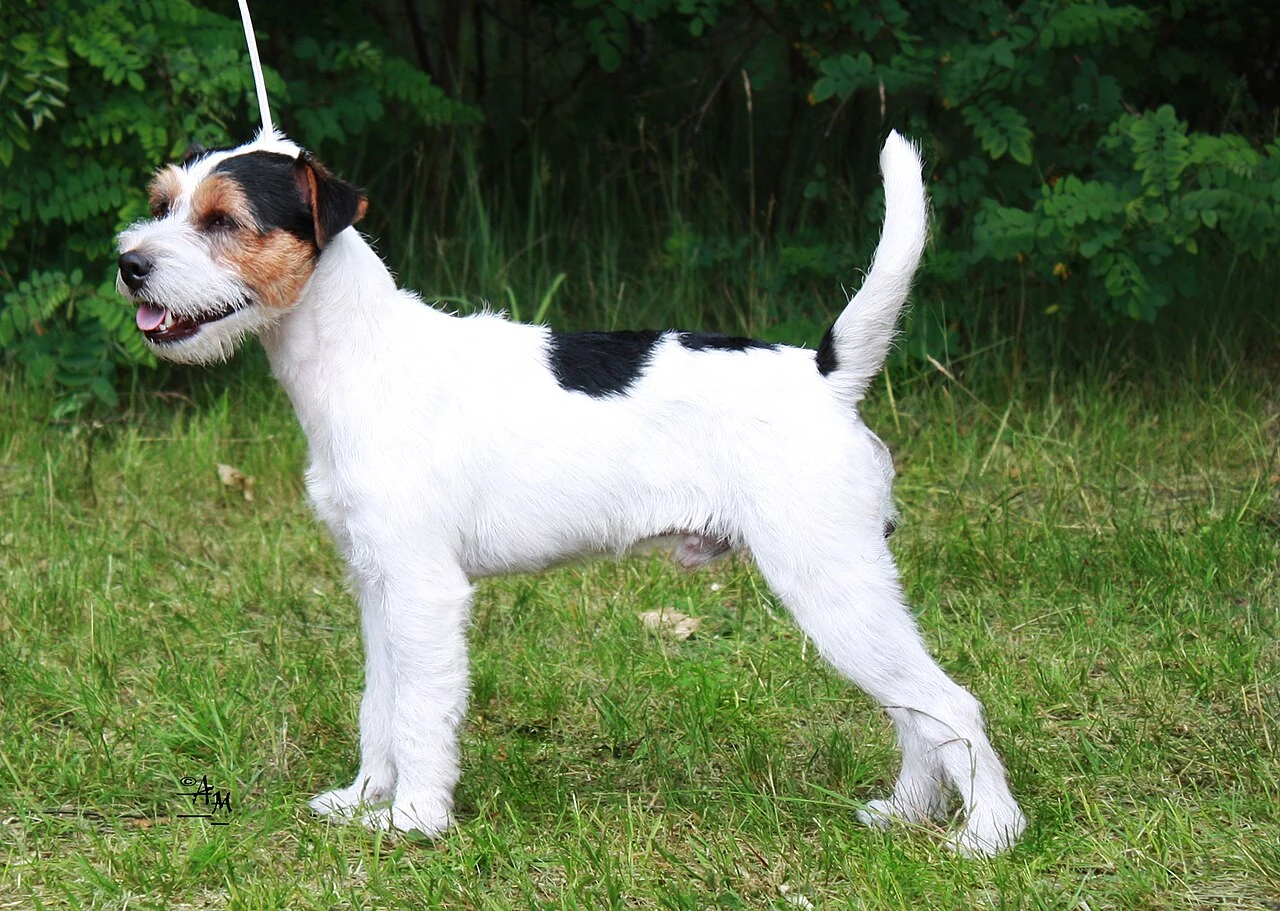
The breed traces back to the English Reverend John Russell and his work with hunting terriers. These dogs needed to accompany the hunt and follow foxes into their underground dens. That required stamina, agility and a muscular body that was not too broad. Parson is a word for a member of the clergy.
The British Kennel Club recognised the breed in 1990, initially as the Parson Jack Russell Terrier. The name changed to Parson Russell Terrier in 1999. The Parson Russell and Jack Russell are now distinct breeds. The Parson has longer legs. A predominantly white terrier therefore cannot be identified confidently as either breed by colour alone.
The Fédération Cynologique Internationale, or FCI, lists the Parson in Standard No. 339. It gives ideal heights at the shoulder of 36 cm for males and 33 cm for females. These are ideal measurements, rather than a complete height range for every dog. The body is slightly longer than it is tall and the V-shaped ears fold forwards. The coat is white or predominantly white with tan, lemon or black markings, which can also occur in combination.
From puppy to senior: caring for your dog through every life stage ↗
Health
Before choosing a puppy, you should ask to see the parents’ health records. The Royal Kennel Club recommends DNA tests, which examine genetic material, for primary lens luxation, late onset ataxia and spinocerebellar ataxia. It also lists eye examinations. Results should be clearly linked to the individual parent dogs.
Primary lens luxation, or PLL, means the eye’s lens moves out of its normal position. This can happen when the fibres that normally hold it in place break down. A displaced lens can cause pain and raised pressure inside the eye, putting vision at risk quickly. An eye that suddenly becomes painful or red, increased tearing or new difficulty seeing needs urgent veterinary assessment. The DNA test detects one known inherited cause. A clear result does not rule out other causes of lens problems.
Ataxia means impaired coordination of movement. In the inherited conditions LOA, late onset ataxia, and SCA, spinocerebellar ataxia, dogs may walk unsteadily and lose their balance. DNA tests are available for these forms. They do not cover every disease that can cause an uncoordinated gait. New staggering, tremors or stumbling should therefore be investigated by a vet regardless of the test results.
The Royal Kennel Club gives the breed’s lifespan as over 12 years. That is a guide, rather than a promise for an individual dog. Regular preventive care and watching for changes in eyes, movement or behaviour remain important even with good breeding health records.
Could this breed fit your life?
Could work well if …
- You want a small, active dog and enjoy going out together every day.
- You want to build recall and everyday training patiently and arrange safe places to exercise.
- You take hunting interest seriously and can plan necessary separation and calm meetings around other pets.
What to consider
- Small size does not mean little stamina or little need for activity in this terrier.
- Digging and hunting interest call for a secure garden and dependable restraint outdoors.
- DNA results for PLL, LOA and SCA, along with eye examinations, should be discussed when choosing a breeder.
Similar needs, different dogs.
Selected by shared size, activity, grooming and training characteristics.
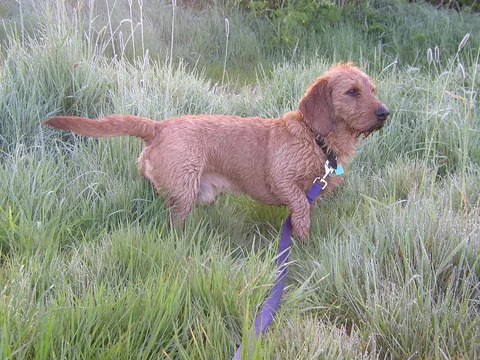
Small scent hound from Brittany
Basset Fauve de Bretagne
The Basset Fauve de Bretagne is a small French scent hound with a rough coat in wheaten to reddish shades. Its short legs can disguise considerable stamina. An outgoing nature, strong hunting interest and a love of exploring make daily outdoor time and patient training essential parts of its care.
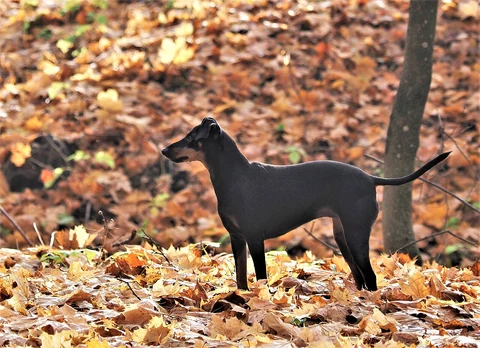
Smooth-coated English terrier
Manchester Terrier
A glossy black coat, rich tan markings and a slim outline make the Manchester Terrier distinctive. This observant, active companion has a history as a rat hunter. Its short coat is relatively straightforward to maintain. Recall, encounters with small animals and time to settle after exciting outings need more attention in daily life.
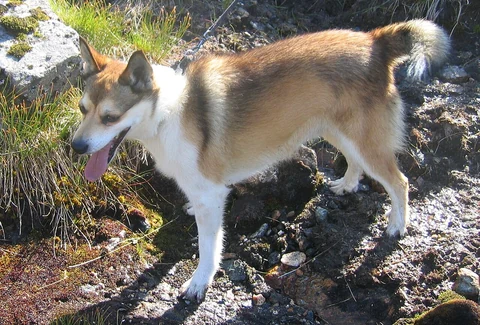
Norwegian cliff hunting specialist
Norwegian Lundehund
The Norwegian Lundehund has at least six toes on each foot. Its unusually flexible body once helped it reach puffins along steep coasts. Today it is a lively small companion whose particular health needs deserve careful attention. Anyone considering the breed should get to know it and learn about its inherited intestinal problems.
Sources and photograph credit
- Teaching your dog to be left alone
Used in this profile for: Staying home alone
- Everything You Need to Know About Hand Stripping Dog Coats
Used in this profile for: Day-to-day care
- Canine Genetics Laboratory, Russell Terrier group
Used in this profile for: Health
- Spinocerebellar Ataxia
Used in this profile for: Health
- At Home
Used in this profile for: Temperament, Everyday life, Day-to-day care, Could this breed fit your life?
- Health of the Breed
Used in this profile for: Health
- Parson Russell Terrier, FCI Standard No. 339
Used in this profile for: Size / Weight, Temperament, Everyday life, Day-to-day care, Size and build, Could this breed fit your life?
- Parson Russell Terrier
Used in this profile for: Day-to-day care, Size and build, Health, Lifespan
- Dental disease in dogs
Used in this profile for: Day-to-day care
- Grooming and bathing pets
Used in this profile for: Day-to-day care
- Glossary of canine terms
Used in this profile for: Day-to-day care
- Separation-related behaviour
Used in this profile for: Everyday life
- Training your dog
Used in this profile for: Everyday life, Could this breed fit your life?
- Primary Lens Luxation (PLL)
Used in this profile for: Health
Photo credits
Side view · File:Parson Russell Terier.jpg · Sadnes · CC BY-SA 3.0 · Edited

Portrait · File:Parson Russell Terriër.jpg · Timo Clemens · CC BY-SA 3.0 · Edited

In action · File:Agility - Slalom 4.jpg · A. Buser · CC BY-SA 3.0 CH · Edited

Everyday life · File:Bolt dreaming.jpg · Mauro Cateb · CC BY-SA 4.0 · Edited
