 fellfolio
Smooth-coated English terrier
Manchester Terrier
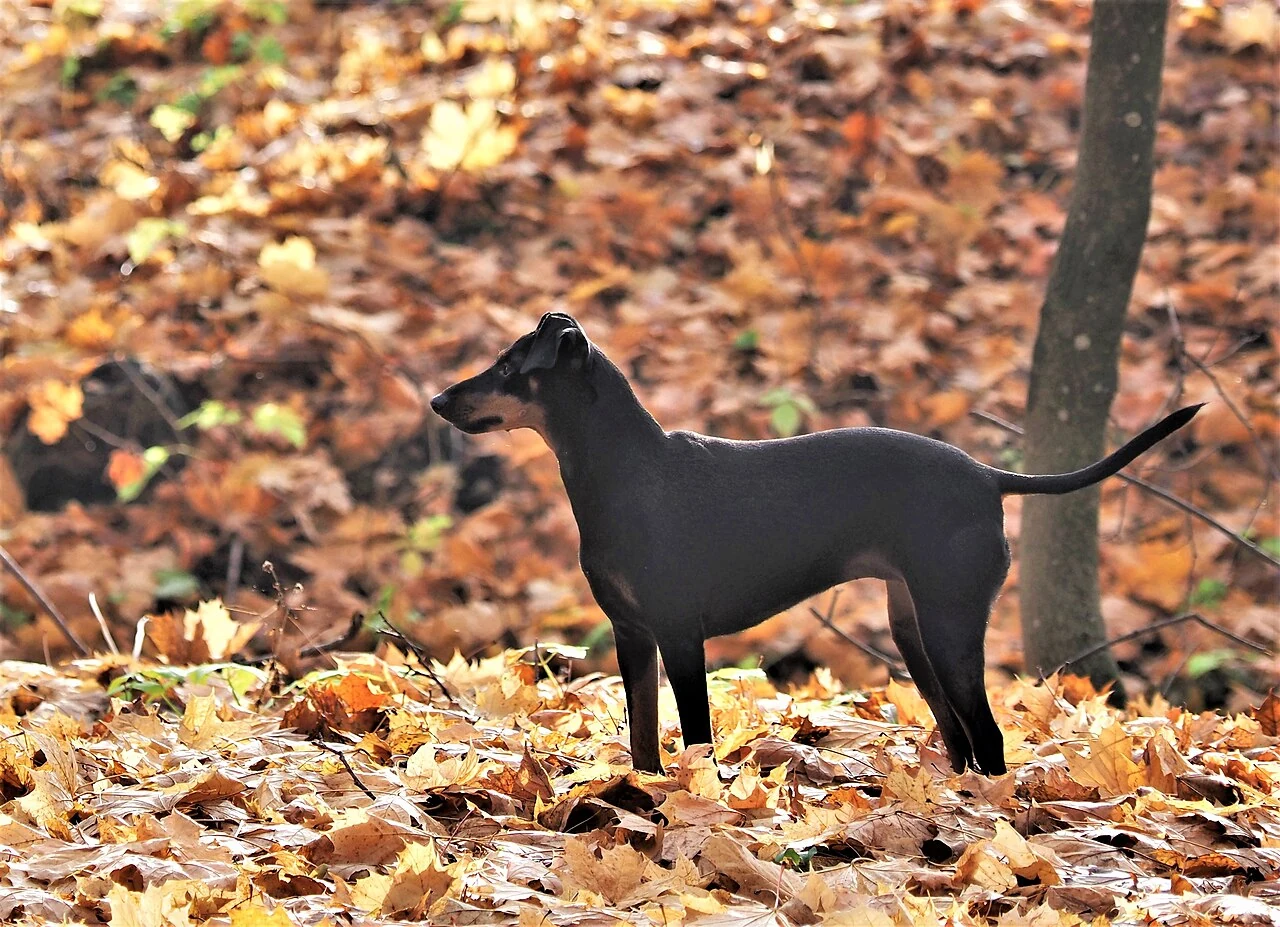
A glossy black coat, rich tan markings and a slim outline make the Manchester Terrier distinctive. This observant, active companion has a history as a rat hunter. Its short coat is relatively straightforward to maintain. Recall, encounters with small animals and time to settle after exciting outings need more attention in daily life.
At a glance
- Size
- Small
- Lifespan
- over 12 years
- Activity
- High
- Grooming
- Weekly
- Training
- Patience & clear guidance
- Owner experience
- Experience recommended
Alert, quick and closely connected to its people
The international breed standard describes the Manchester Terrier as watchful, lively and devoted to its people. Sounds and movement can quickly catch its interest. Someone who enjoys outings and can guide that attention through rewards has plenty of opportunities for activities together.
Its rat-hunting background can show in a desire to chase small animals that run away. Reliable recall should first be practised without those distractions. A lead is sensible where wildlife or cats may appear. Small pets should have accommodation the dog cannot access. Living with a cat depends on the experience and responses of both animals.
At home, the dog should have a bed where it can rest undisturbed. Children can join in training or search games when adults supervise and watch its body language. A dog that withdraws should be given space to rest. Calm encounters with other dogs and enough distance often work better than immediately joining a lively group.
Everyday life
A walk can offer a Manchester Terrier more than distance: interesting smells, a brief recall exercise and new routes explored together. A securely fenced area provides space to run off lead. Even a small dog can disappear quickly through an open garden gate, so gates and fencing should be checked regularly.
A simple search game can begin with a familiar toy. At first, it lies in sight at the edge of a room while the dog waits briefly beside you. A word such as “Search” can act as the signal to begin. After hearing it, the dog can go and find the toy. Later, part of the toy can be hidden behind furniture. The task should begin easily enough for the dog to understand and enjoy it.
After activity, it needs a dry bed away from draughts. Learning to stay alone should progress in small steps. Care arrangements should cover longer absences while it cannot yet settle comfortably on its own. A flat can be a suitable home when outings, activities and company are part of everyday life.
Staying home alone
Dogs learn to stay home alone in small steps. The RSPCA advises no more than four hours at a time. Puppies and dogs that become unsettled when left alone need shorter absences and gradual practice. Arrange someone to care for your dog when you will be away longer.
Everyday dog training: recall, a loose lead and clear communication ↗

Day-to-day care
A soft brush or grooming mitt can remove loose hairs from the short, close coat. The Royal Kennel Club, the British canine organisation, gives weekly grooming as a guide. This is also a chance to check the skin, feet and nails. After a wet walk, the dog should be dried and have somewhere dry to rest.
Ears should be clean and free from an unusual smell. Repeated head shaking, redness or pain should be checked by a vet. Cotton buds should not be put into the ear canal. Regular tooth brushing, ideally daily with dog toothpaste, is useful. It can be introduced gradually by rewarding brief touches around the mouth.
Meals should suit the dog’s age, activity and body condition. The vet can help assess an appropriate weight. Training rewards count towards its daily food allowance. Regular weighing helps you notice changes and discuss them with the vet.

Size and build
The breed comes from Great Britain and is named after the industrial city of Manchester. Its ancestors were black-and-tan terriers used to hunt rats. The international canine organisation FCI describes a probable contribution from the Whippet, a sighthound breed. This helps explain its elegant appearance, although the Manchester remains a terrier.
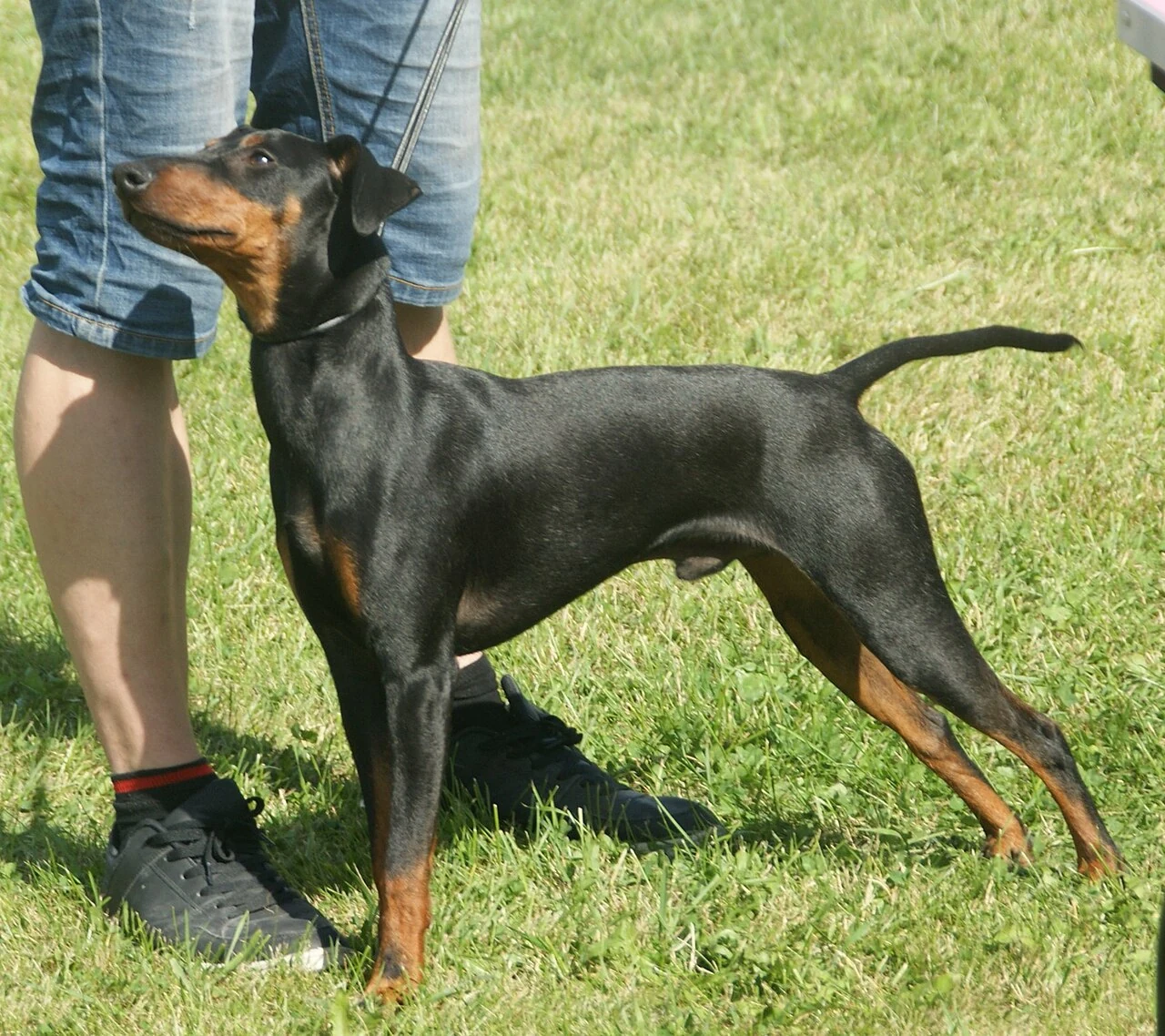
The body is compact and the coat short, smooth and glossy. Black with clearly defined rich mahogany-tan markings forms part of the breed’s appearance. The FCI standard gives an ideal shoulder height of 41 cm for males and 38 cm for females. An appropriate weight should be assessed from the individual dog’s body condition.
From puppy to senior: caring for your dog through every life stage ↗
Health
The parents’ actual health records should be checked before choosing a puppy. The Royal Kennel Club recommends genetic tests for certain blood-clotting, heart and metabolic conditions, alongside eye examinations. Which tests have been performed and what their results mean should be explained clearly.
Von Willebrand disease, for which a type 1 test is recommended in the Manchester, involves a missing or insufficient blood-clotting protein. Bleeding can therefore last longer than it should. Some dogs first show signs after an injury or during surgery. Known test results should be discussed with the vet before an operation. Unusual or persistent bleeding needs veterinary help.
Juvenile dilated cardiomyopathy affects the heart muscle of young dogs and can be severe. Xanthinuria type II is an inherited metabolic disorder that can cause crystals in the urinary tract and damage the kidneys. Each test examines a particular known genetic variant. Its result needs to be interpreted for that condition and the dog’s family history. It does not replace an examination when the dog has symptoms.
The Royal Kennel Club gives a lifespan of more than 12 years. Preventive care, suitable activity and a healthy weight therefore belong in long-term planning too. Collapse or difficulty passing urine needs immediate veterinary help. A marked reduction in stamina should also be investigated.
Could this breed fit your life?
Could work well if …
- You enjoy a slim, observant dog and want to spend plenty of time out together.
- You can patiently teach recall, lead skills and comfortable time alone.
- You prefer a short coat with straightforward grooming and take preventive health care seriously.
What to consider
- Small animals running away may trigger chasing. Leads, fences and protected small-pet areas need to account for this.
- Flat living needs reliable plans for exercise, activities and company.
- The recommended genetic tests and eye reports should be checked individually.
Similar needs, different dogs.
Selected by shared size, activity, grooming and training characteristics.
Small scent hound from Brittany
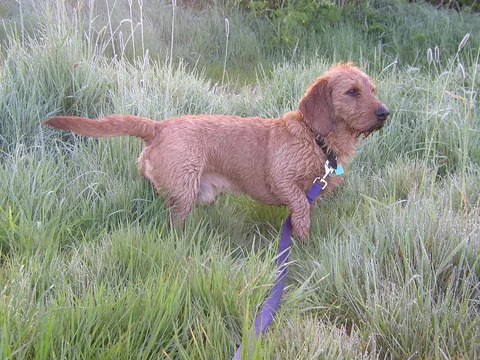
Basset Fauve de Bretagne
The Basset Fauve de Bretagne is a small French scent hound with a rough coat in wheaten to reddish shades. Its short legs can disguise considerable stamina. An outgoing nature, strong hunting interest and a love of exploring make daily outdoor time and patient training essential parts of its care.
Norwegian cliff hunting specialist
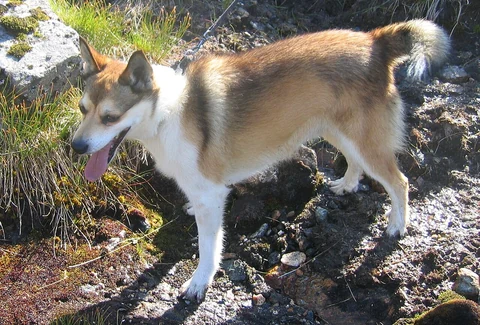
Norwegian Lundehund
The Norwegian Lundehund has at least six toes on each foot. Its unusually flexible body once helped it reach puffins along steep coasts. Today it is a lively small companion whose particular health needs deserve careful attention. Anyone considering the breed should get to know it and learn about its inherited intestinal problems.
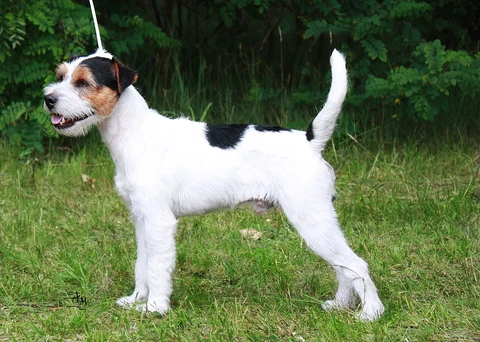
Long-legged hunting terrier from Britain
Parson Russell Terrier
The Parson Russell Terrier is small, long-legged and built for an active life. Its ancestors accompanied fox hunts and worked underground too. The curiosity, stamina and hunting interest of these terriers matter more when choosing the breed than its convenient size. It suits people who enjoy outings with their dog and want to build recall, safe exercise arrangements and the ability to relax at home carefully.
Sources and photograph credit
- Teaching your dog to be left alone
Used in this profile for: Staying home alone
- Canine von Willebrand Disease
Used in this profile for: Health
- Health Information
Used in this profile for: Everyday life, Day-to-day care, Health
- Manchester Terrier, FCI Standard No.71
Used in this profile for: Size / Weight, Temperament, Day-to-day care, Size and build, Could this breed fit your life?
- New DNA testing schemes for Manchester Terrier and English Toy Terrier
Used in this profile for: Health
- Manchester Terrier
Used in this profile for: Temperament, Day-to-day care, Size and build, Health, Lifespan, Could this breed fit your life?
- Dental disease in dogs
Used in this profile for: Day-to-day care
- Ear problems in pets
Used in this profile for: Day-to-day care
- Grooming and bathing pets
Used in this profile for: Day-to-day care
- What to do if your cat/dog cannot pee
Used in this profile for: Health
- Training your dog
Used in this profile for: Everyday life, Could this breed fit your life?
Photo credits
Portrait · Manchester Terrier, suczka 4 lata (na 2023 rok).jpg · Juhrek · CC BY-SA 4.0 · Edited
.jpg)
Coat and features · Anchor, the Manchester Terrier0.jpg · Roger Ahlbrand · CC BY 2.0 · Edited

Everyday life · Manchester Terrier 1.jpg · Canarian · CC BY-SA 4.0 · Edited

Portrait · Manchester terrier Koira 2013.JPG · Томасина · CC BY-SA 3.0 · Edited
