 fellfolio
Toy companion dog
Papillon
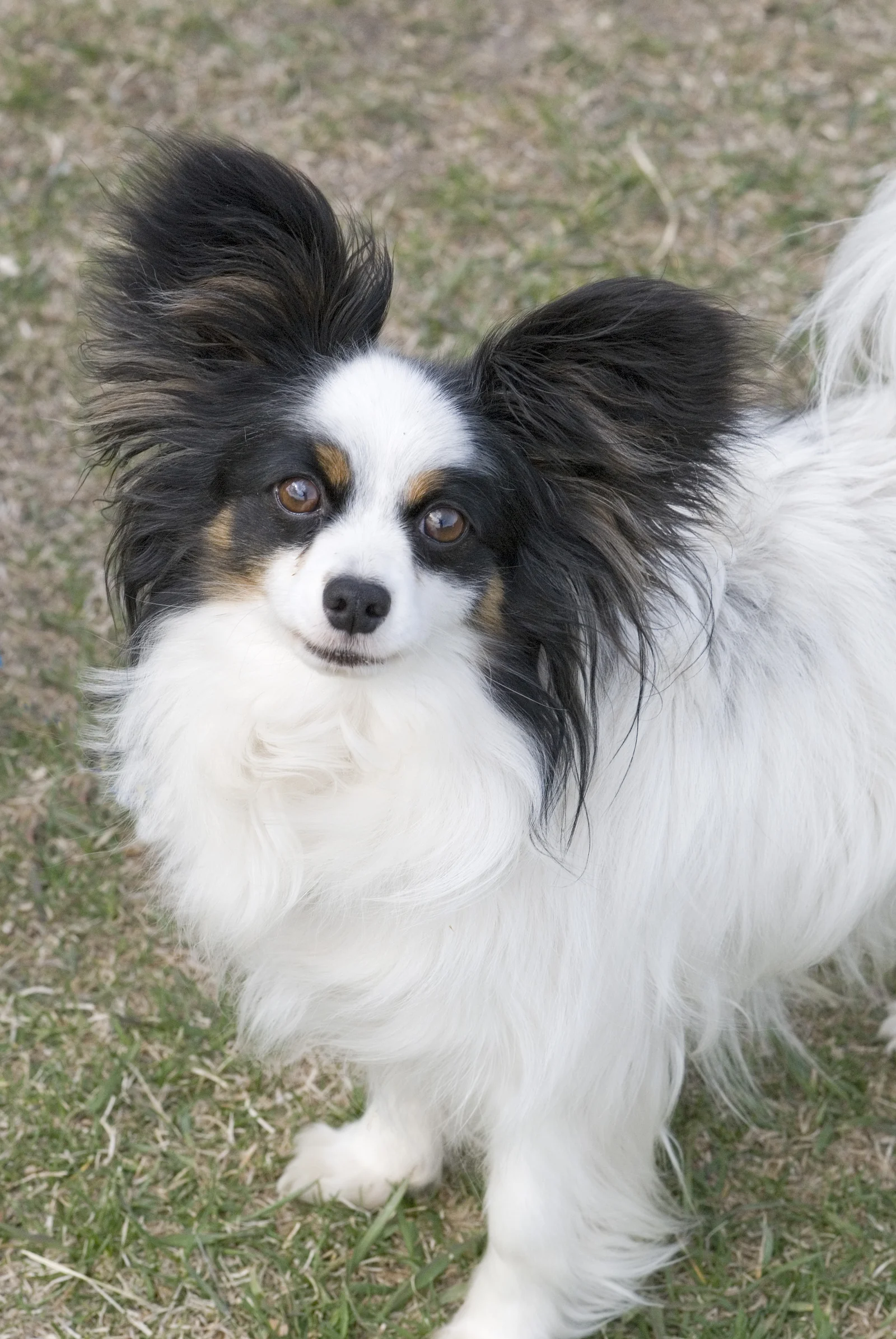
A tiny, alert companion with striking butterfly ears. It can live well in a small home but still wants to walk, play and use its brain.
At a glance
- Size
- Small
- Height at shoulder
- 20 to 28 cm
- Weight
- 2.3 to 4.5 kg
- Lifespan
- over 12 yearsUK Royal Kennel Club breed profile
- Activity
- Moderate
- Grooming
- Several times weekly
- Training
- Often cooperative
- Owner experience
- First dog with support
Small and surprisingly agile
The Papillon is a small Continental Toy Spaniel once popular as a companion in European courts. Its name means butterfly, referring to the large upright ears. The drop-eared form is called Phalène. Do not mistake the delicate build for a lack of interest in activity: Papillons are often observant, playful and remarkably quick on their feet.
Many enjoy short training games. Start with two cups and a small treat: show the dog where you hide it, move the cups and let it search. Reward success before making the game harder. During play with children, the dog's tiny size needs attention. An adult should make sure no one grabs it roughly or misses it during an energetic game.
Everyday life
The UK veterinary charity PDSA suggests about 30 minutes of exercise a day as a guide for an adult Papillon. A walk can offer more than distance: new smells, a few minutes of training and a game together. Some Papillons enjoy small obstacles or simple tricks. Match jumps and pace to the dog's age and fitness rather than carrying it everywhere or asking it to keep up with much larger dogs.
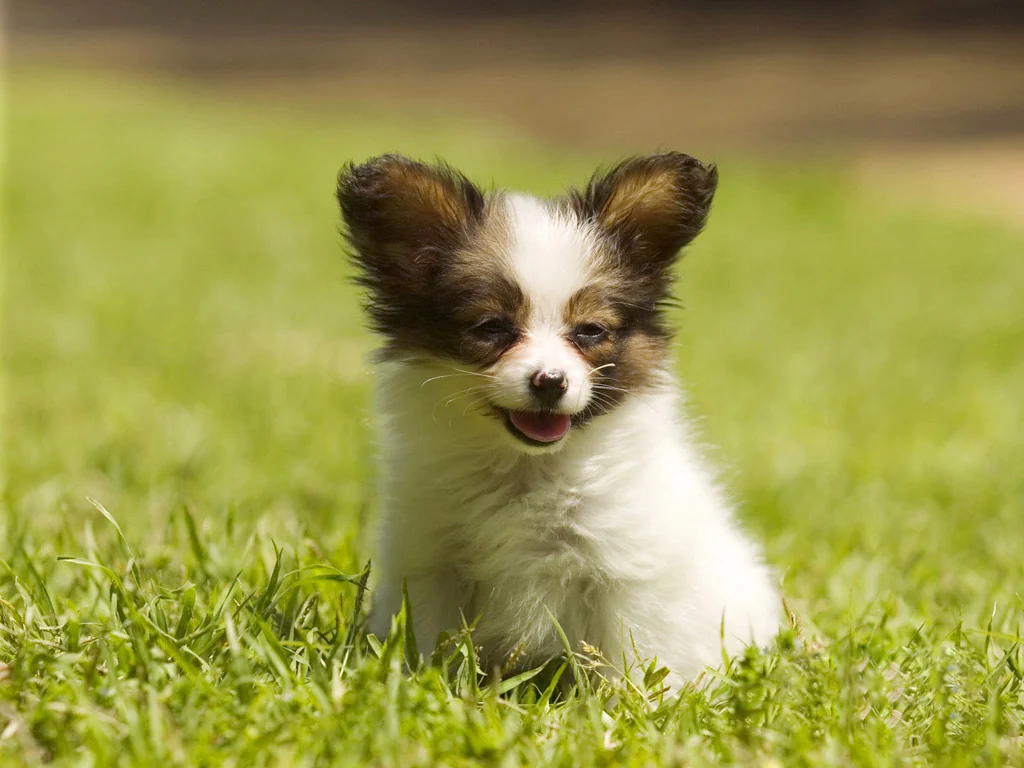
A large garden is unnecessary; a Papillon can do well in a flat with regular outings and things to do. When another dog approaches, keep some distance at first. You can then see whether both are relaxed before they greet. A much larger dog should not crowd the Papillon. A puppy can learn about new people, sounds and places through brief, pleasant experiences.
Staying home alone
Dogs learn to stay home alone in small steps. The RSPCA advises no more than four hours at a time. Puppies and dogs that become unsettled when left alone need shorter absences and gradual practice. Arrange someone to care for your dog when you will be away longer.
Day-to-day care
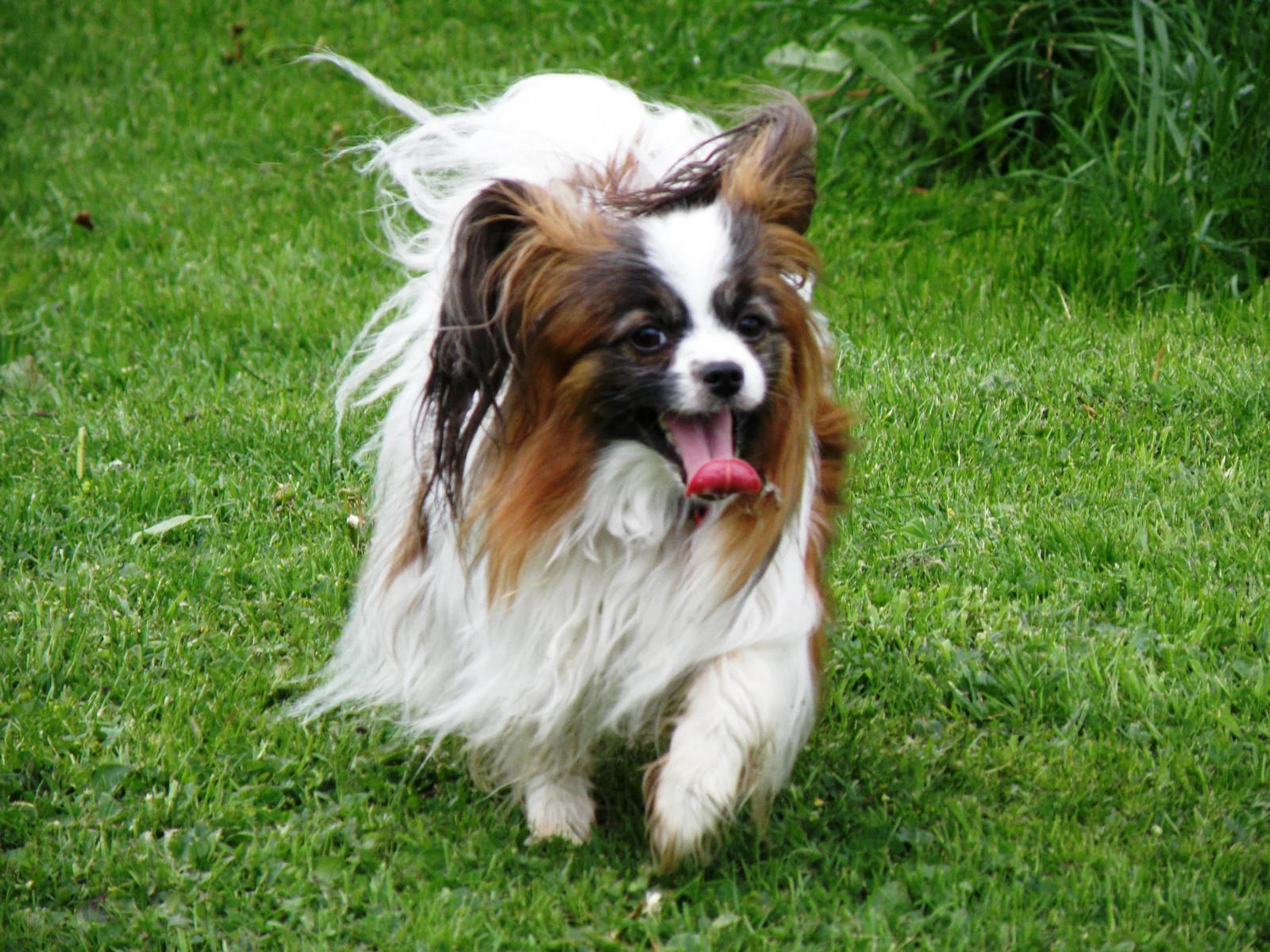
The silky coat has no dense undercoat. It grows longest around the ears, chest, tail and backs of the legs. Brush and comb two or three times a week, as PDSA advises. Hold the long ear fringes gently while combing so you do not pull the sensitive skin beneath. Small knots often form behind the ears first.
After a walk through wet grass, dirt and burrs can catch in those fringes. Work them free with your fingers and a comb before they tighten. If the dog scratches its ears often, shakes its head or squints one eye, ask a vet to examine it rather than trying to clean inside the ear or around the eye yourself.
Size and build
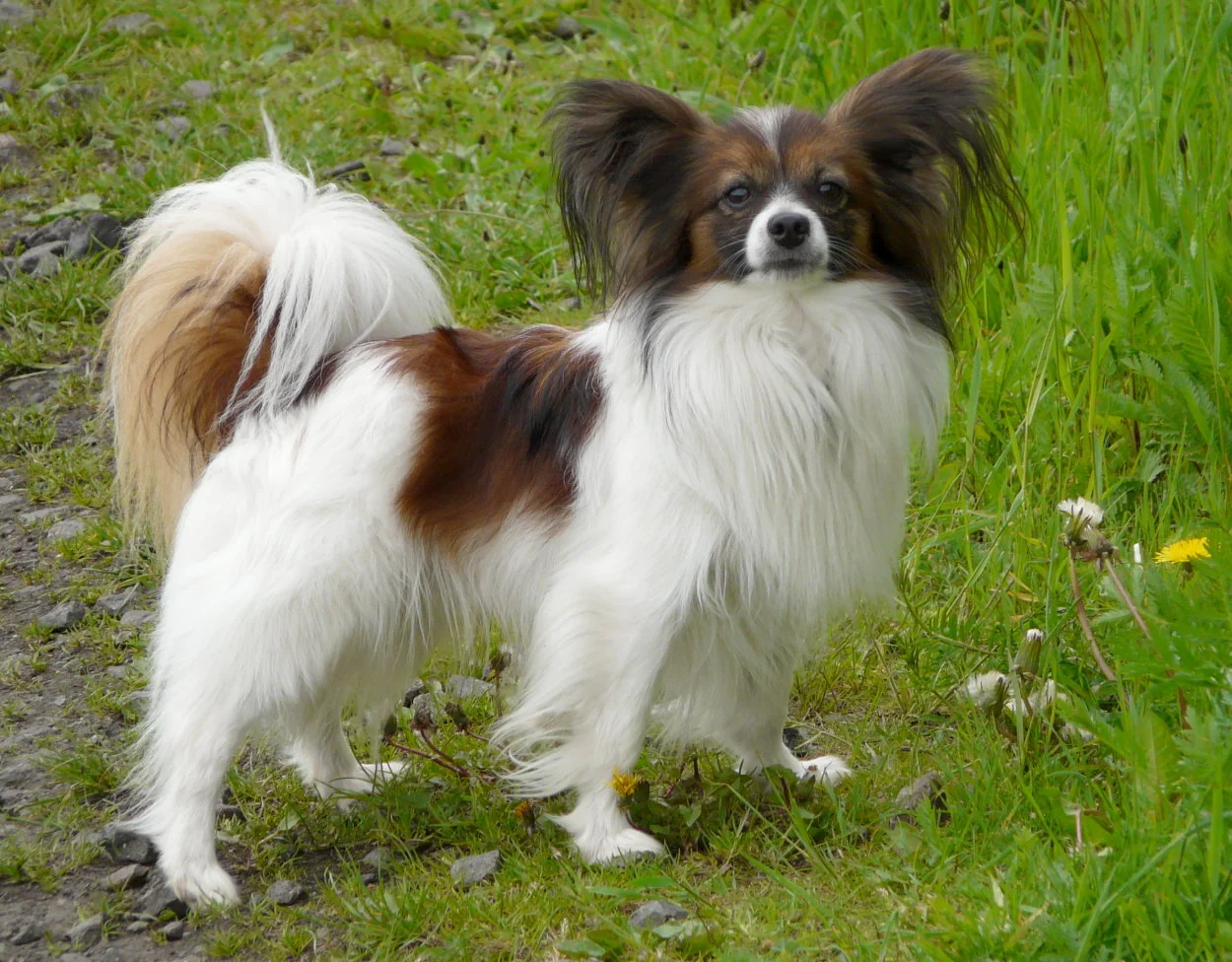
The Papillon is finely built and balanced, standing 20 to 28 cm at the shoulder under the British standard. The American Kennel Club gives a weight guide of 5 to 10 pounds, equivalent to roughly 2.3 to 4.5 kg. Long hair on the chest and legs makes the body look fuller than it is. A soft plume of hair rises over the back from the tail. A clear break between skull and muzzle, dark eyes and large mobile ears give the dog its alert expression.
The Papillon's ears stand out to the sides, their long fringes resembling butterfly wings. In the Phalène form the ears drop. Fine hair lies long and flat over the body but stays short on the face and fronts of the legs. The breed is predominantly white with coloured patches. In an individual dog, free movement and a comfortable, untangled coat matter more than unusually dramatic ear fringes.
Health
A Papillon's kneecap can slip out of its normal groove. The dog may briefly lift a hind leg while walking, then use it again a few steps later. If this keeps happening or the dog is lame, ask a vet to examine the knee. PDSA also lists progressive retinal atrophy, or PRA, in which the light-sensitive tissue at the back of the eye gradually deteriorates. Cataracts, which make the eye's lens cloudy, can also occur. Difficulty in dim light, bumping into objects or a cloudy lens should be checked.
Von Willebrand disease affects blood clotting. Unusually prolonged bleeding after a small injury or a procedure calls for veterinary care. When choosing a puppy, ask to see the parents' knee and eye examination reports. Also ask whether bleeding disorders have occurred in close relatives.
The Royal Kennel Club recommends DNA tests for pap-PRA, von Willebrand disease type 1 and NAD before breeding, alongside an eye examination. NAD is a progressive inherited disorder of the nervous system. These tests look for particular known genetic variants. A clear result therefore does not rule out all eye, neurological or clotting disorders. Ask the breeder to explain the original reports and check which parent each result belongs to.
Could this breed fit your life?
Could work well if …
- You want a small dog to walk every day and enjoy short games or training together.
- You can comb its fine coat regularly and supervise time with children or much larger dogs.
May be more difficult if …
- You want a dog that is carried nearly everywhere and rarely walks outside.
- Your home has rough, unsupervised play that could easily injure a very small dog.
Similar needs, different dogs.
Selected by shared size, activity, grooming and training characteristics.
Companion dog
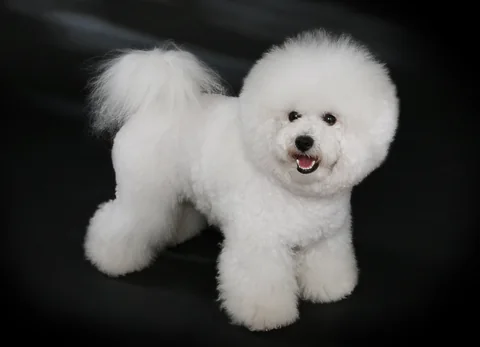
Bichon Frise
The Bichon Frise is a small, playful companion that likes to be near its people. Its white curly coat sheds little, but mats without daily care.
Companion dog
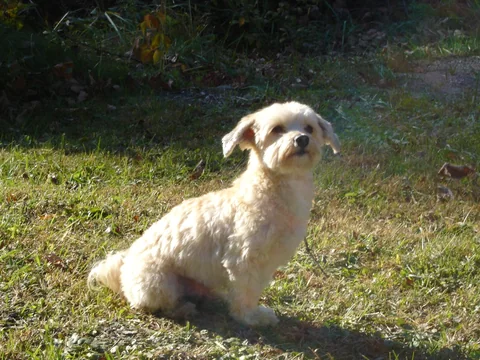
Havanese
Small, agile and happiest when included, the Havanese brings plenty of play into family life. Its long coat is lovely, but it needs attention every day.

Companion dog
Maltese
The Maltese is a tiny companion with plenty of curiosity. It wants to stay close to its people, explore on its own feet and have its long white coat brushed and combed every day.
Sources and photograph credit
- Teaching your dog to be left alone
Used in this profile for: Staying home alone
- Papillon Dog Breed Information
Used in this profile for: Size / Weight, Size and build
- Papillon, Breeds A to Z
Used in this profile for: Temperament, Everyday life, Health, Lifespan, Could this breed fit your life?
- Papillon breed standard
Used in this profile for: Size / Weight, Day-to-day care, Size and build
- Neuroaxonal disease (NAD): DNA testing
Used in this profile for: Health
- Papillon breed information
Used in this profile for: Temperament, Everyday life, Day-to-day care, Health, Could this breed fit your life?
- Luxating patella in dogs
Used in this profile for: Health


.jpg)