 fellfolio
Small companion dog
Chinese Crested
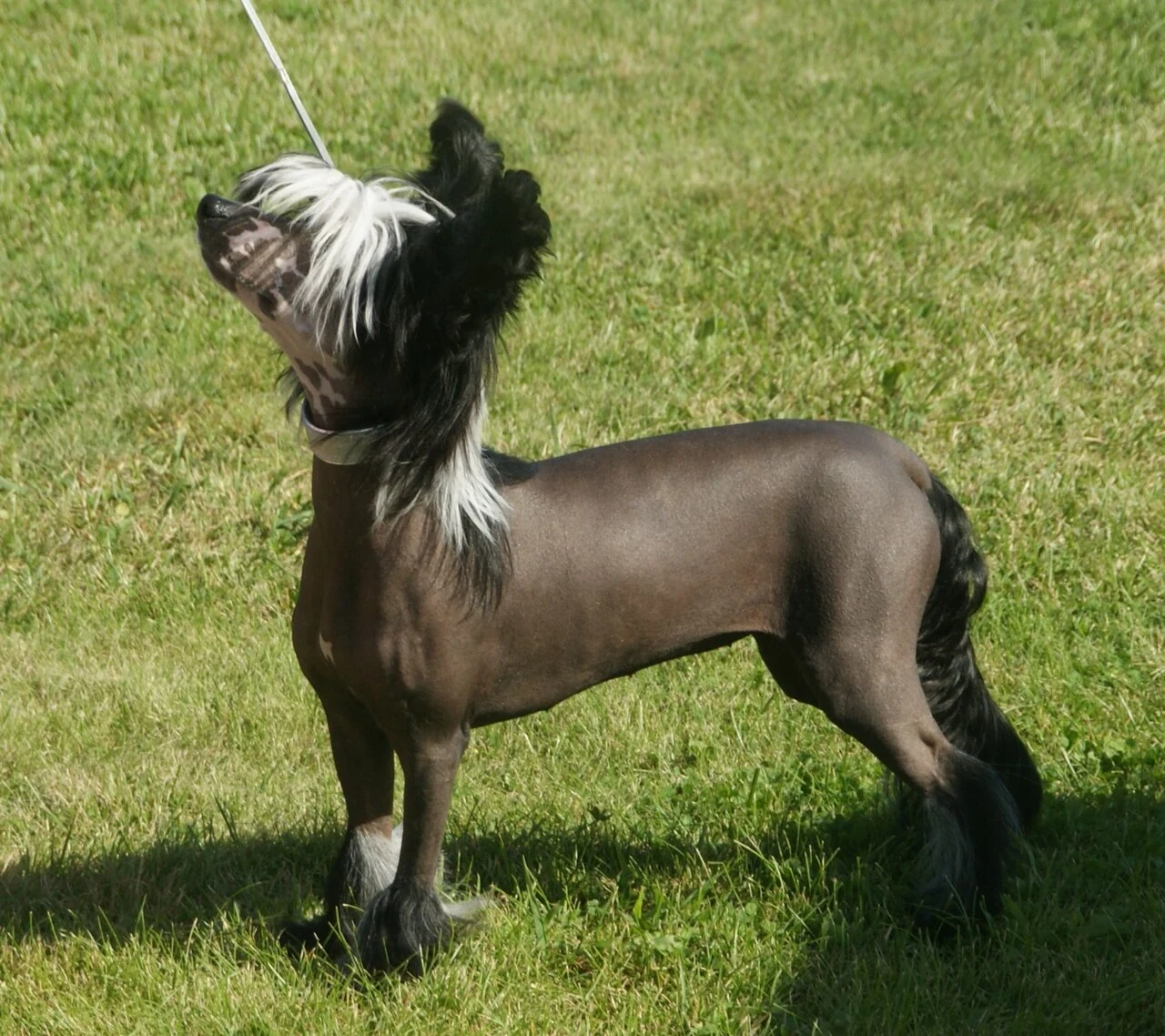
The Chinese Crested comes with a largely hairless body or as a fully coated Powderpuff. Both varieties belong to the same small companion breed. Their care differs considerably: the Powderpuff needs attention to its long coat, while the hairless variety particularly needs skin care and thoughtful protection from sun and cold.
At a glance
- Size
- Small
- Lifespan
- over 12 years
- Activity
- Moderate
- Grooming
- Several times weekly
- Training
- Often cooperative
- Owner experience
- First dog with support
Two coat varieties in one small companion breed
The breed’s name refers to the crest of hair on the head of the hairless variety. Longer hair also covers its feet and forms a plume on the tail. Powderpuff is the name for the fully coated variety with soft, long hair. Both varieties are companions, but their care needs differ. Before deciding, consider which routine you can provide consistently and how an individual fits your everyday life.
The American Chinese Crested Club describes a companion capable of joining in a range of activities. Short shared exercises can also be enjoyable for this small dog. Following a hand or stepping willingly onto a grooming mat are useful examples. A clear task and an appealing reward make cooperation easier.
With visitors, the dog should have the opportunity to approach voluntarily. An unusual appearance can prompt people to touch its skin or crest immediately. This should not happen without regard for the dog’s comfort. Children should also learn to leave it undisturbed while sleeping and avoid continually picking it up.
Everyday life
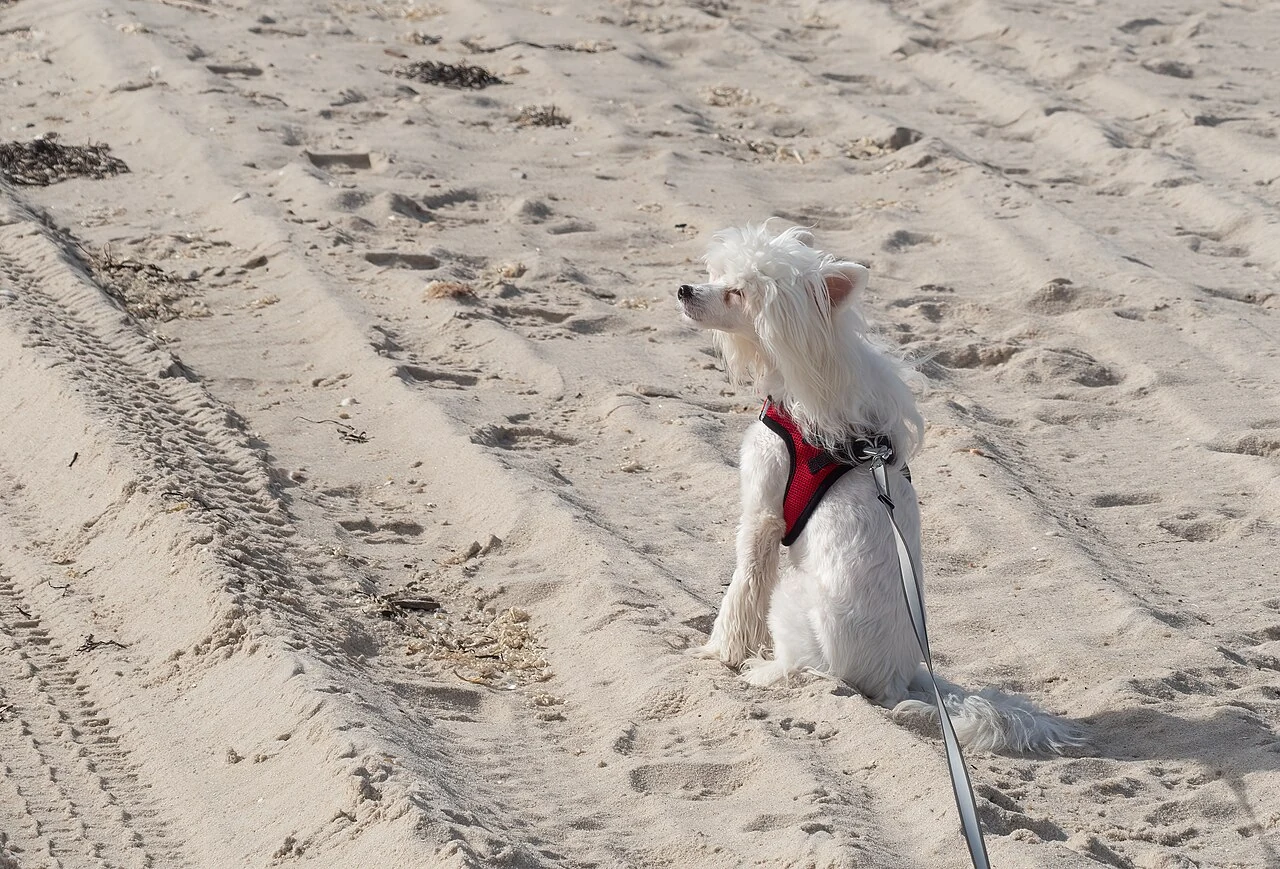
Walks with opportunities to sniff and short shared games belong in a Chinese Crested’s routine. For the hairless variety, plans should suit the weather. Shaded routes and cooler times of day help in sunshine. Prolonged sunbathing should be avoided because sparsely coated skin can burn.
A well-fitting dog coat can provide warmth in cold weather. It should neither rub nor restrict movement. A dog that shivers or noticeably slows down should be taken back into the warmth. After a walk in the rain, check whether the coat has become damp or is rubbing against the skin. A coat is usually unnecessary in a warm home.
A simple indoor search can provide a shared activity. An appropriate toy can first be placed in plain sight, with a reward for finding it. Later, part of it can be hidden behind a cushion. New tasks should remain easy to understand as they develop. Regular absences also need a care plan and gradual introduction to time alone.
Staying home alone
Dogs learn to stay home alone in small steps. The RSPCA advises no more than four hours at a time. Puppies and dogs that become unsettled when left alone need shorter absences and gradual practice. Arrange someone to care for your dog when you will be away longer.
Everyday dog training: recall, a loose lead and clear communication ↗
Day-to-day care
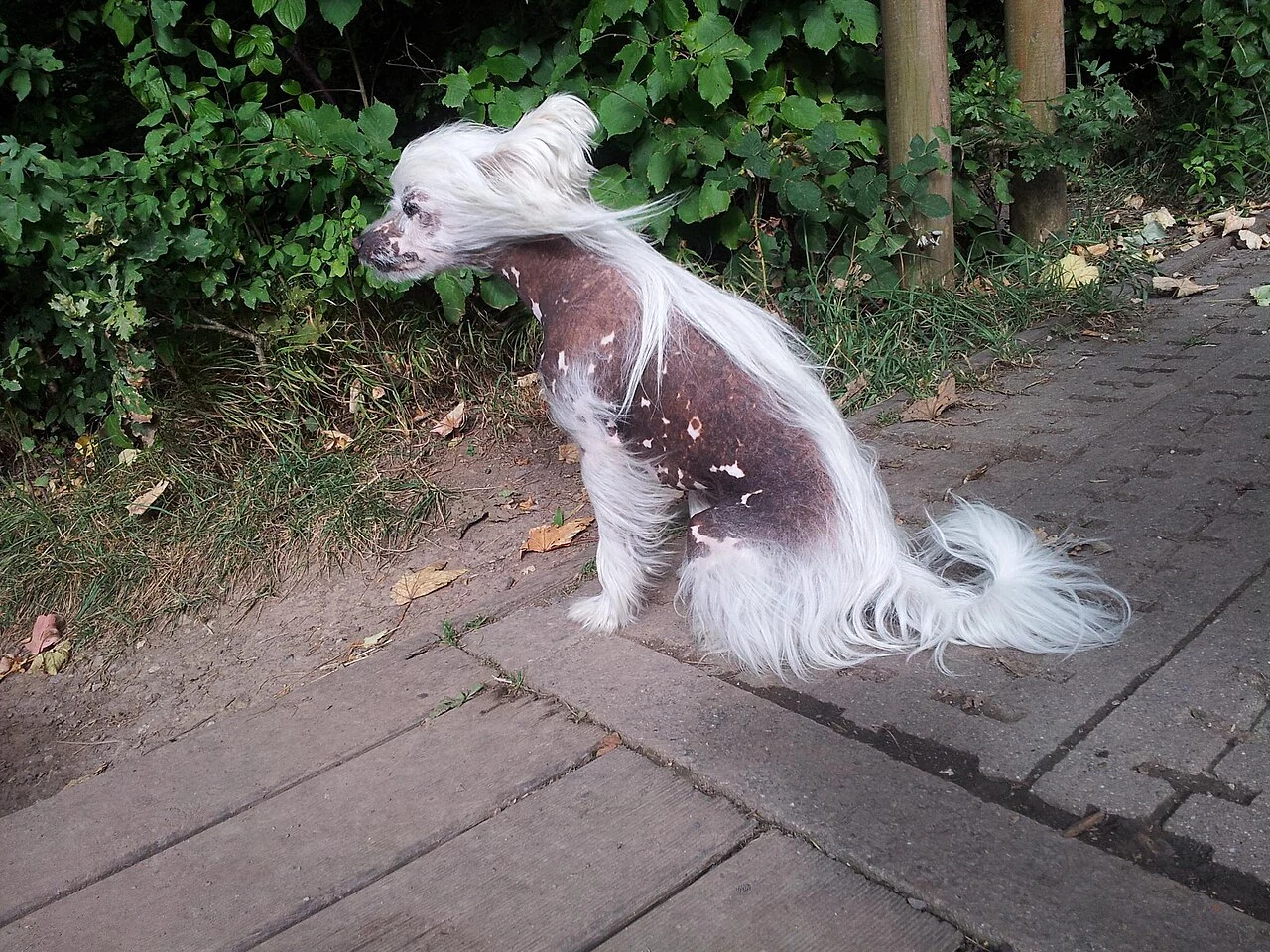
The Powderpuff has longer, soft hair over an undercoat, the shorter layer beneath the visible outer hair. Gentle brushing and combing should reach the roots so that tangles underneath are noticed. Behind the ears and where a harness rubs deserve particular attention. A suitable grooming cut can be discussed with a skilled groomer.
The hairless variety’s skin should be checked regularly for redness, rubbing and other changes. Shade and sensible walk timing are the first parts of sun protection. A vet can recommend a dog-appropriate sunscreen for exposed areas. Human skin products or acne treatments should not simply be used on the dog. Skin problems need an appropriate diagnosis rather than repeated experiments with new products.
Missing teeth can occur in the hairless variety. The Fédération Cynologique Internationale, or FCI, the international federation of kennel clubs, allows for this in its standard. Dental health remains important. Existing teeth need care and regular examination. Pain when eating, strong bad breath or changes in the gums should be discussed with the practice. For both varieties, grooming and examination should be introduced calmly and gradually.

Size and build
The FCI lists China as the country of origin and Great Britain as the country of patronage. Its standard also notes that the exact origin is difficult to establish. Stories about ancient ancestors should therefore not be presented as a proven, unbroken breed history. Today’s companion breed and its two coat varieties are clearly defined.
The FCI standard gives ideal shoulder height as 28 to 33 cm for males and 23 to 30 cm for females. It specifies no weight. Little hair does not mean allergen-free either. Allergens are substances that can trigger an allergic reaction. In dogs, they come from sources including saliva and flakes of skin. A Chinese Crested without a dense body coat can therefore still trigger symptoms in someone with a dog allergy.
From puppy to senior: caring for your dog through every life stage ↗
Health
Before buying a puppy, discuss the parents’ health records in understandable terms. The Royal Kennel Club, the British kennel club, lists DNA testing for primary lens luxation, abbreviated PLL, and prcd-PRA. With PLL, the lens loses its normal support inside the eye and can move out of position. This can cause painful rises in pressure within the eye. prcd-PRA is an inherited form of progressive degeneration of light-sensitive cells in the retina, the inner eye layer that receives light. It can lead to blindness.
A DNA test checks the known genetic change covered by that particular test. It cannot rule out every cause of eye disease. Veterinary eye examinations therefore remain important. A painful, tightly closed or suddenly changed eye needs urgent assessment.
In its 2018 statement, the American Chinese Crested Club also recommends eye, heart and kneecap examinations. In patellar luxation, the kneecap can slip out of its normal track. Repeated limping or briefly holding up a hind leg should be investigated. The Royal Kennel Club’s lifespan of over 12 years is general guidance. Skin care, teeth and preventive veterinary care need planning throughout the dog’s life.
Could this breed fit your life?
Could work well if …
- You want a small companion and can provide coat or skin care appropriate to its variety.
- You can adapt walks and protection from sun, rain and cold to the individual dog.
- You enjoy shared practice and can arrange calm, dependable care.
What to consider
- Little hair means neither little care nor reliable suitability for someone with a dog allergy.
- The hairless variety needs thoughtful protection from sun and cold. Clothing should fit comfortably and not be worn unnecessarily in warm conditions.
- Available DNA tests complement eye examinations. They cannot replace an overall health assessment.
Similar needs, different dogs.
Selected by shared size, activity, grooming and training characteristics.
Herding dog
Cardigan Welsh Corgi
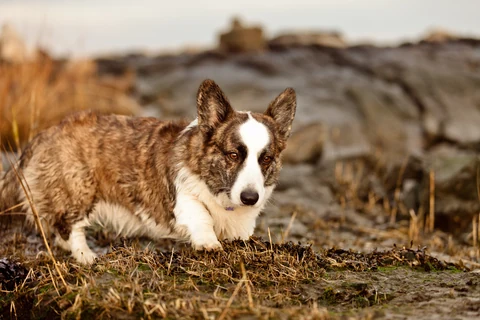
The Cardigan Welsh Corgi is a short-legged herding dog with a long body, large ears and a naturally long tail. Its compact size can obscure a history of working with livestock. Shared walks and small training tasks belong in everyday life alongside a comfortable place to rest.
Spitz and companion dog
Japanese Spitz
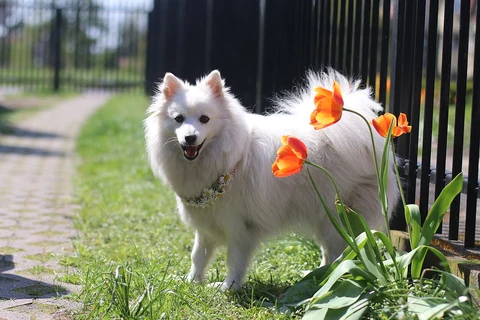
A white stand-off coat, upright ears and a tail carried over the back give the Japanese Spitz its distinctive outline. This small companion dog needs regular walks, shared activities and coat care. Before choosing one, it is worth discussing barking, time alone and the dog’s previous experiences as well as admiring its appearance.

Small companion dog
Löwchen
A Löwchen can look quite different with a long coat or its distinctive lion clip. Both appearances belong to the same small companion breed. Alongside its cheerful looks, prospective owners should plan for regular coat care, shared activities and dependable company.
Sources and photograph credit
- Teaching your dog to be left alone
Used in this profile for: Staying home alone
- Patellar Luxations
Used in this profile for: Health
- Position Statements and Humane Dog Training
Used in this profile for: Temperament, Everyday life
- Chinese Crested Breed Flier
Used in this profile for: Temperament, Everyday life, Day-to-day care, Could this breed fit your life?
- American Chinese Crested Club Health Statement
Used in this profile for: Health
- Chinese Crested
Used in this profile for: Size and build, Health, Lifespan
- FCI Standard No. 288: Chinese Crested Dog
Used in this profile for: Size / Weight, Day-to-day care, Size and build
- Progressive Retinal Atrophy (prcd-PRA)
Used in this profile for: Health
- Hypoallergenic Pets: Myths and Facts
Used in this profile for: Size and build, Could this breed fit your life?
- Eye Problems in Dogs: An Overview
Used in this profile for: Health
- Sunburn in Pets
Used in this profile for: Everyday life, Day-to-day care, Could this breed fit your life?
- Does My Dog Need a Coat on Winter Walks?
Used in this profile for: Everyday life, Day-to-day care, Could this breed fit your life?
- Training Your Dog to Be Left Alone
Used in this profile for: Temperament, Everyday life
- Children and Dogs
Used in this profile for: Temperament, Could this breed fit your life?
- Caring for Your Dog’s Teeth
Used in this profile for: Day-to-day care
- Primary Lens Luxation (PLL)
Used in this profile for: Health
Photo credits
Portrait · Chinese Crested naked 1.jpg · Canarian · CC BY-SA 4.0 · Edited

Everyday life · Chinese crested dog on the beach (13200).jpg · Rhododendrites · CC BY-SA 4.0 · Edited
.jpg)
Side view · Chinese Crested Dog - hairy hairless Seitenansicht.jpg · Frank Röhm (Franc) · Public domain (PD-user-de)

In action · Chinese Crested hairless agility.jpg · Ron Armstrong · CC BY 2.0 · Edited
