 fellfolio
Spitz and companion dog
Japanese Spitz
A white stand-off coat, upright ears and a tail carried over the back give the Japanese Spitz its distinctive outline. This small companion dog needs regular walks, shared activities and coat care. Before choosing one, it is worth discussing barking, time alone and the dog’s previous experiences as well as admiring its appearance.
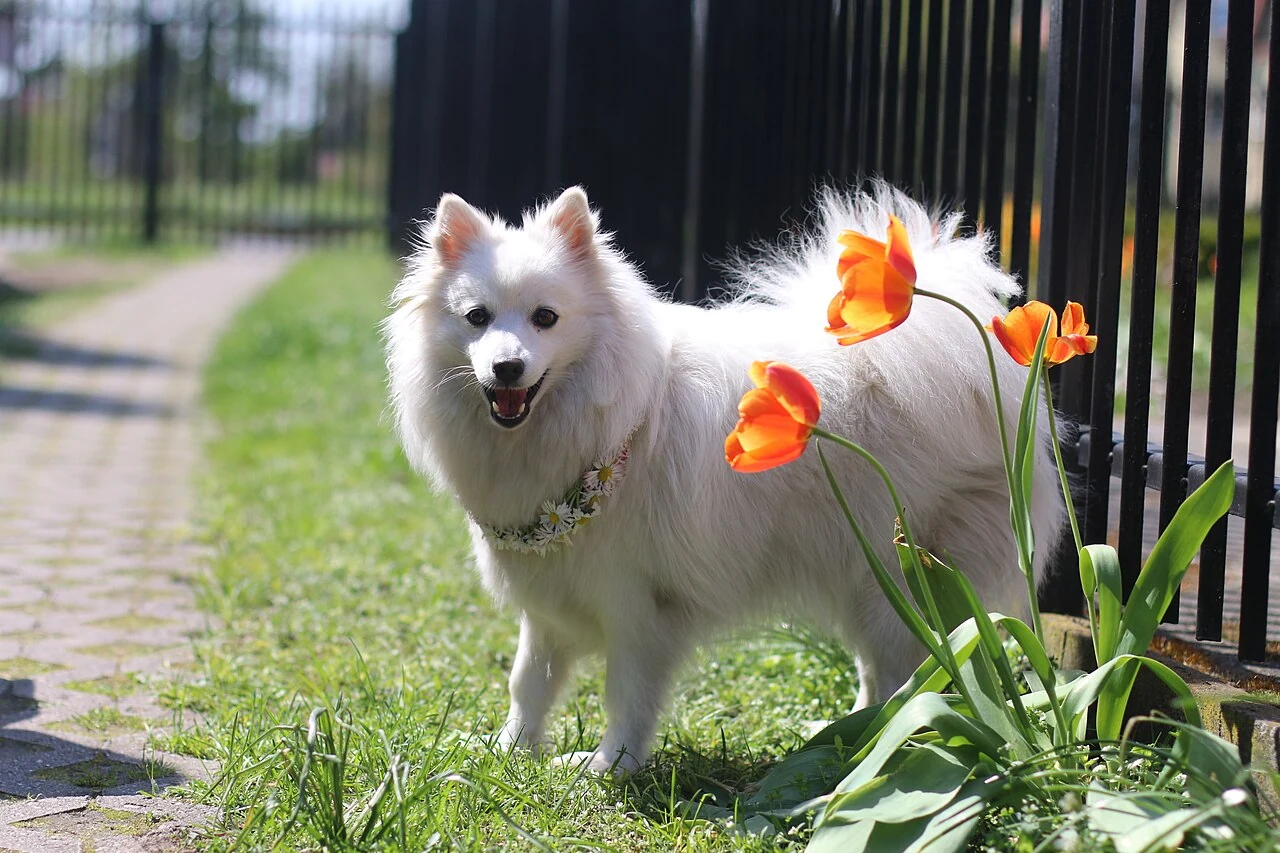
At a glance
- Size
- Small
- Lifespan
- over 12 years
- Activity
- Moderate
- Grooming
- Several times weekly
- Training
- Often cooperative
- Owner experience
- First dog with support
An attentive companion beneath a dense coat
The Japanese Spitz belongs to the spitz group. Spitz dogs typically have upright ears, dense coats and often a curled tail. The Fédération Cynologique Internationale, or FCI, the international federation of kennel clubs, describes the Japanese Spitz as cheerful, intelligent and alert in its standard. How comfortably an individual handles new people or a busy routine also depends on its experiences.
Barking is worth discussing and observing when you meet a Japanese Spitz. Hallway noises or people passing outside may attract its attention. If a dog often barks at the window, a less stimulating resting place may help. Quiet observation can be rewarded before barking escalates. Persistent barking should prompt a closer look at what the dog is responding to and what support it needs.
Visitors should not continually pass the dog around or touch it. A greeting with room to move away makes it easier for the dog to approach voluntarily. Children should learn when it wants space, and adults should supervise their encounters.
Everyday life
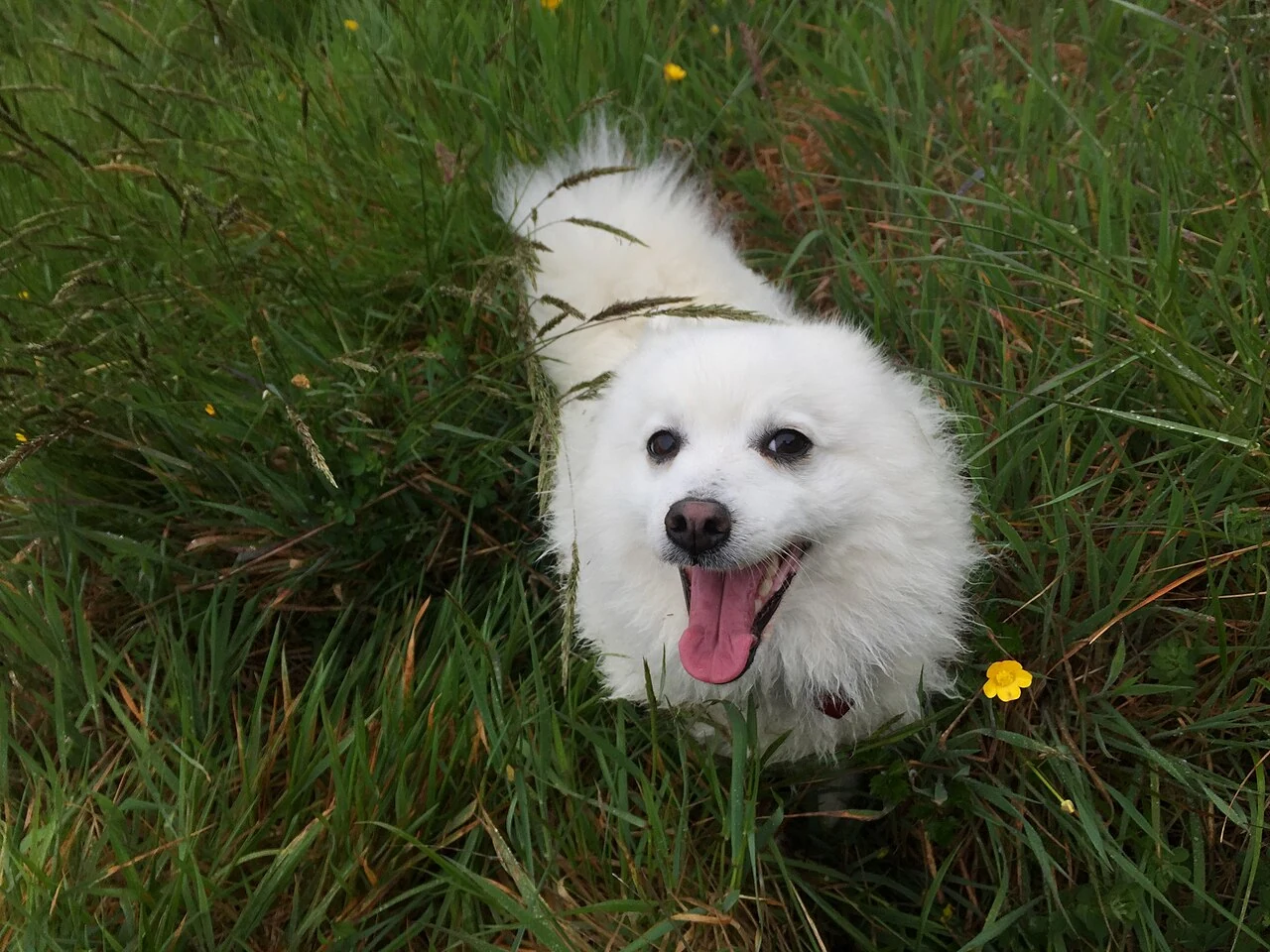
Walks with time to sniff, simple searches and manageable training tasks can fit together well. The Royal Kennel Club, the British kennel club, gives up to an hour of daily exercise as broad guidance. A healthy adult may enjoy different outings from a puppy or an older dog. The time should therefore not become a rigid daily target.
One useful outdoor skill is waiting calmly while you open a door or attach the lead to the harness. Start with a few quiet moments in familiar surroundings. An appropriate reward tells the dog which behaviour is worthwhile. Later, the same task can be practised in a slightly busier place. With a new cue, a short, understandable attempt is more useful than repeated requests when the dog is already distracted.
A Japanese Spitz can live in a flat when outings, rest and available care meet its needs. Time alone is one skill that should be built gradually. If the dog barks for long periods or paces during an absence, first assess whether it is coping with the separation.
Staying home alone
Dogs learn to stay home alone in small steps. The RSPCA advises no more than four hours at a time. Puppies and dogs that become unsettled when left alone need shorter absences and gradual practice. Arrange someone to care for your dog when you will be away longer.
Everyday dog training: recall, a loose lead and clear communication ↗
Day-to-day care
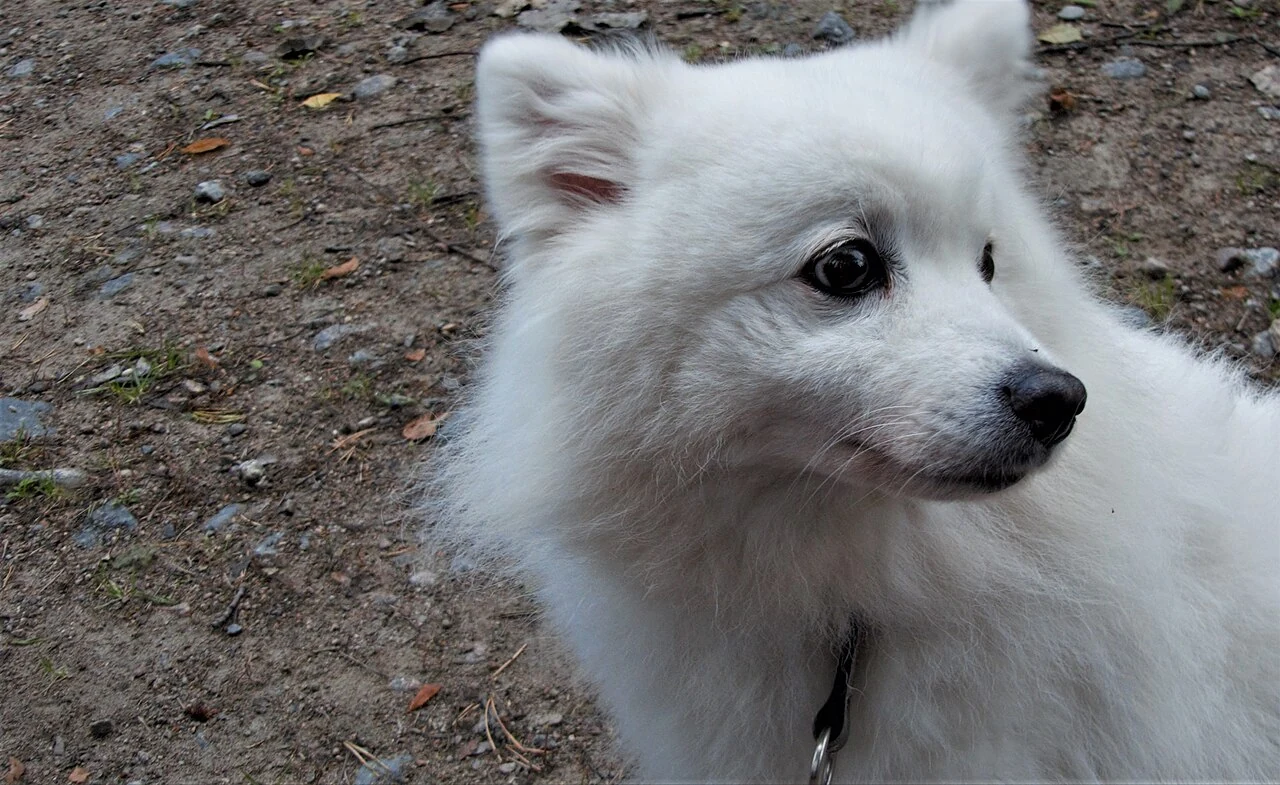
The white coat has longer outer hair over a soft, dense undercoat. The undercoat is the shorter layer beneath the visible outer hair. Brushing should therefore do more than smooth the surface. Gently combing through to the undercoat helps you find loose hair and small knots without pulling at the skin.
The Royal Kennel Club lists daily grooming. Shedding periods bring more loose hair, which can be removed by brushing and combing. Pay attention to the soft undercoat too, so that loose hair does not become tangled and compacted. The British Japanese Spitz Club notes that dried dirt can often be brushed out easily. After a walk, the coat can therefore often be cleaned without bathing the dog.
A skilled groomer should deal with tight mats. Brush handling, nail checks and dental care can be introduced in brief, comfortable stages. Dog toothpaste is appropriate for the teeth. Redness or repeated itching warrants an examination rather than being attributed only to moulting.
Size and build
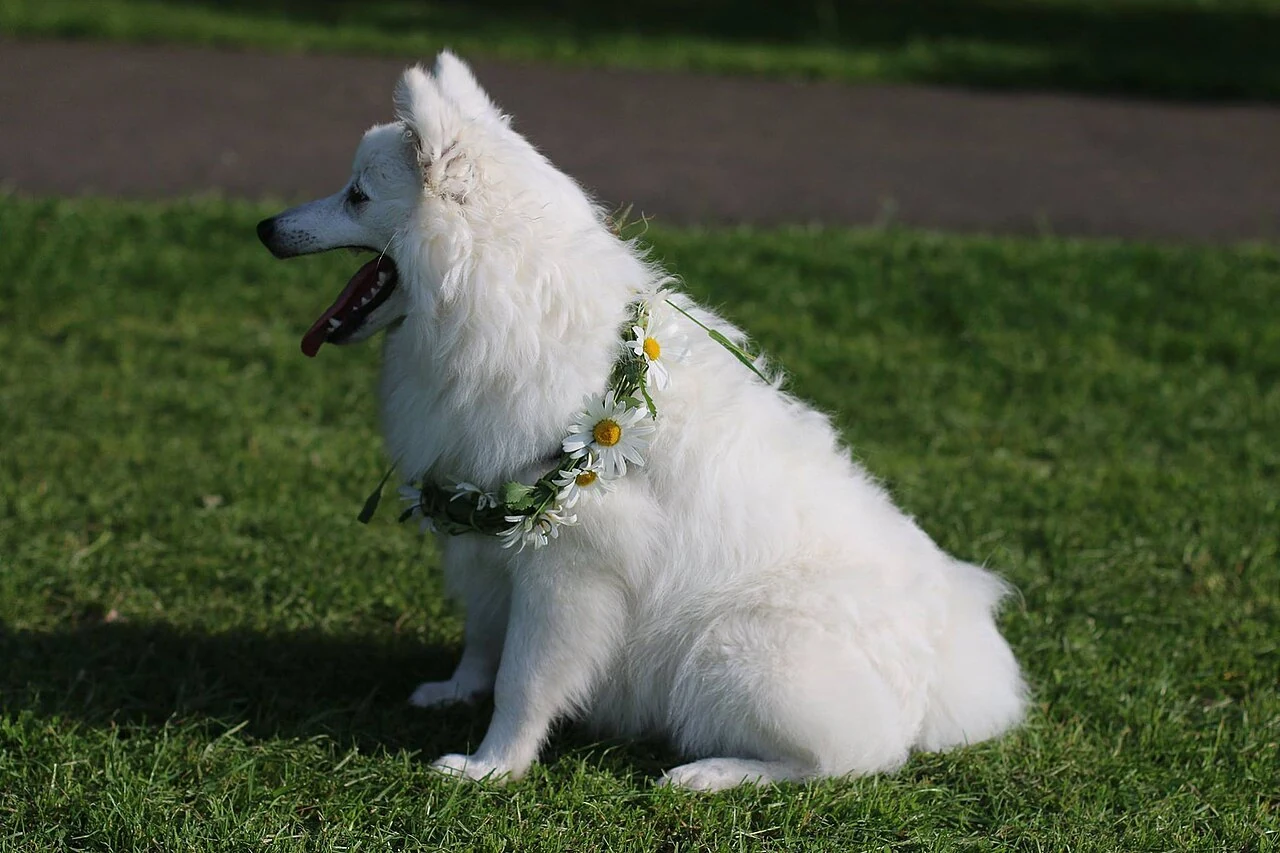
The Japanese Spitz developed through planned breeding in Japan. The FCI standard describes large white German Spitz dogs imported around 1920 as important founding dogs. Further white spitz dogs arrived in the following years. The Japan Kennel Club established a unified standard in 1948, and British Kennel Club recognition followed in 1977.
The FCI recognises the Japanese Spitz as a distinct breed under standard number 262. Its standard gives male shoulder height as 30 to 38 cm, with females slightly smaller. It specifies no weight. Whether a dog is too heavy or too light should therefore be assessed from its body condition, with help from a vet when needed.
From puppy to senior: caring for your dog through every life stage ↗
Health
The Royal Kennel Club currently offers no breed-specific DNA testing package for the Japanese Spitz. These tests look for known changes in genetic material. The absence of such a package does not mean every dog is free of inherited or other disease. Before a purchase, a breeder should explain the parents’ health and any known problems in their relatives openly.
The British Japanese Spitz Club provides a form for veterinary kneecap testing. This checks for patellar luxation, a condition in which the kneecap slips out of its normal track in the knee. Repeated limping or briefly holding up a hind leg should be investigated even if the dog then walks normally again. You can ask a breeder for the parents’ examination results.
The Royal Kennel Club lists a lifespan of over 12 years as general guidance. Long-term care includes weight checks, dental care, preventive veterinary visits and money set aside for treatment.
Could this breed fit your life?
Could work well if …
- You want a small companion dog and have time for walks and shared practice.
- You can make room for regular brushing and extra care during shedding periods.
- You can provide a quiet sleeping place and dependable care, including in a flat.
What to consider
- The white coat needs appropriate care to prevent knots and compacted undercoat.
- A breed description cannot promise a dog that never barks or copes easily with time alone.
- The absence of a DNA testing package says little about an individual dog’s health. Records and preventive veterinary care still matter.
Similar needs, different dogs.
Selected by shared size, activity, grooming and training characteristics.
Herding dog
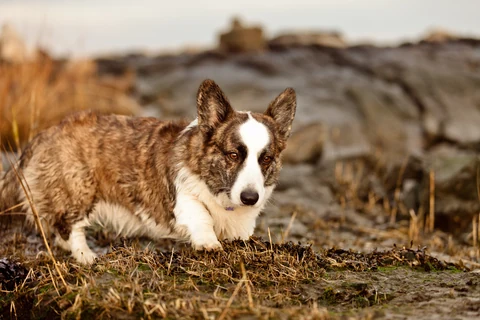
Cardigan Welsh Corgi
The Cardigan Welsh Corgi is a short-legged herding dog with a long body, large ears and a naturally long tail. Its compact size can obscure a history of working with livestock. Shared walks and small training tasks belong in everyday life alongside a comfortable place to rest.
Small companion dog
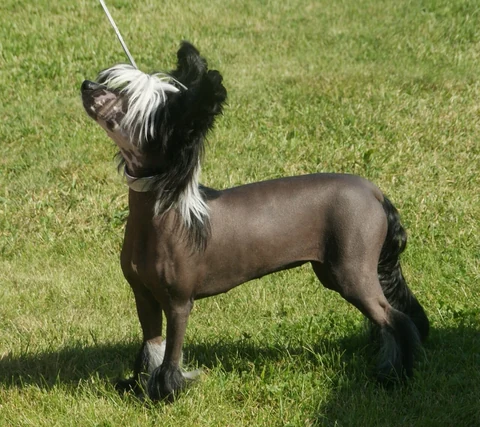
Chinese Crested
The Chinese Crested comes with a largely hairless body or as a fully coated Powderpuff. Both varieties belong to the same small companion breed. Their care differs considerably: the Powderpuff needs attention to its long coat, while the hairless variety particularly needs skin care and thoughtful protection from sun and cold.

Small companion dog
Löwchen
A Löwchen can look quite different with a long coat or its distinctive lion clip. Both appearances belong to the same small companion breed. Alongside its cheerful looks, prospective owners should plan for regular coat care, shared activities and dependable company.
Sources and photograph credit
- Teaching your dog to be left alone
Used in this profile for: Staying home alone
- Patellar Luxations
Used in this profile for: Health
- Position Statements and Humane Dog Training
Used in this profile for: Temperament, Everyday life
- Japanese Spitz
Used in this profile for: Grooming
- Grooming
Used in this profile for: Day-to-day care
- Patella Luxation: veterinary examination form
Used in this profile for: Health
- Japanese Spitz
Used in this profile for: Temperament, Everyday life, Day-to-day care, Size and build, Health, Lifespan, Could this breed fit your life?
- FCI Standard No. 262: Japanese Spitz
Used in this profile for: Size / Weight, Temperament, Day-to-day care, Size and build, Could this breed fit your life?
- Training Your Dog to Be Left Alone
Used in this profile for: Temperament, Everyday life, Could this breed fit your life?
- Understanding Your Dog’s Behaviour
Used in this profile for: Temperament, Everyday life, Day-to-day care
- Children and Dogs
Used in this profile for: Temperament, Could this breed fit your life?
- Caring for Your Dog’s Teeth
Used in this profile for: Day-to-day care
- Train Your Dog to Come When Called
Used in this profile for: Everyday life
Photo credits
Portrait · 1 year old Japanese Spitz.jpg · Yukisnowflakeprincess · CC BY-SA 4.0 · Edited

Coat and features · Japaninpystykorva 1.jpg · jekm · CC BY-SA 4.0 · Edited

Everyday life · Spock11.jpg · Ataraxic98 · CC BY-SA 4.0 · Edited

Side view · Yuki Snowflake Princess.jpg · Yukisnowflakeprincess · CC BY-SA 4.0 · Edited
