 fellfolio
Grey Nordic hunting spitz
Norwegian Elkhound
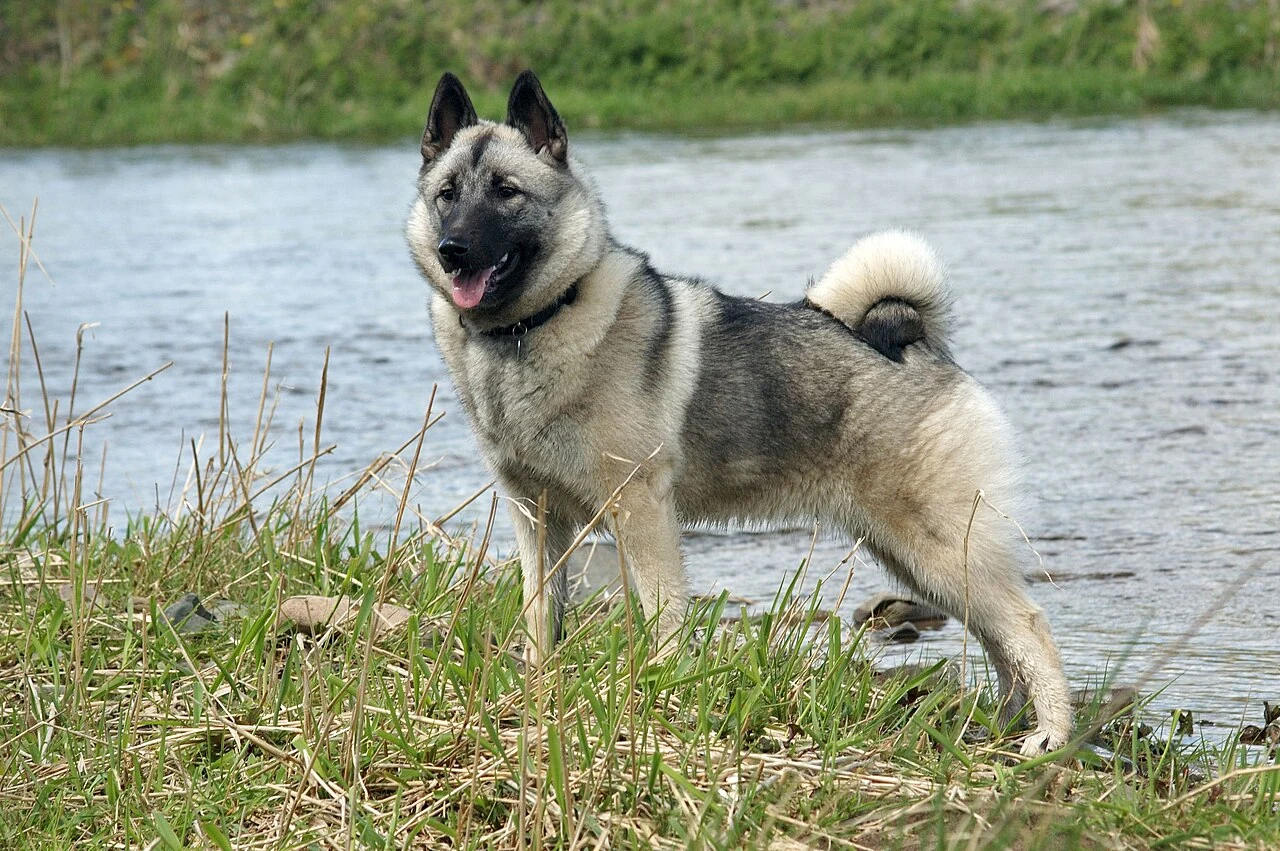
The Norwegian Elkhound is a hardy hunting dog with a thick coat, upright ears and a curled tail. It was bred to find game independently and announce its location by barking. Life with this dog should account for its love of activity, its voice and its interest in wildlife.
At a glance
- Size
- Medium
- Lifespan
- over 10 years
- Activity
- High
- Grooming
- Several times weekly
- Training
- Patience & clear guidance
- Owner experience
- Experience recommended
A hunting dog whose voice was part of the job
In Norway, the Elkhound searched for moose and used its bark to guide the hunter. It needed to work independently, stay agile and respond carefully to a large animal. The modern breed’s history includes a Norwegian dog show in 1877.
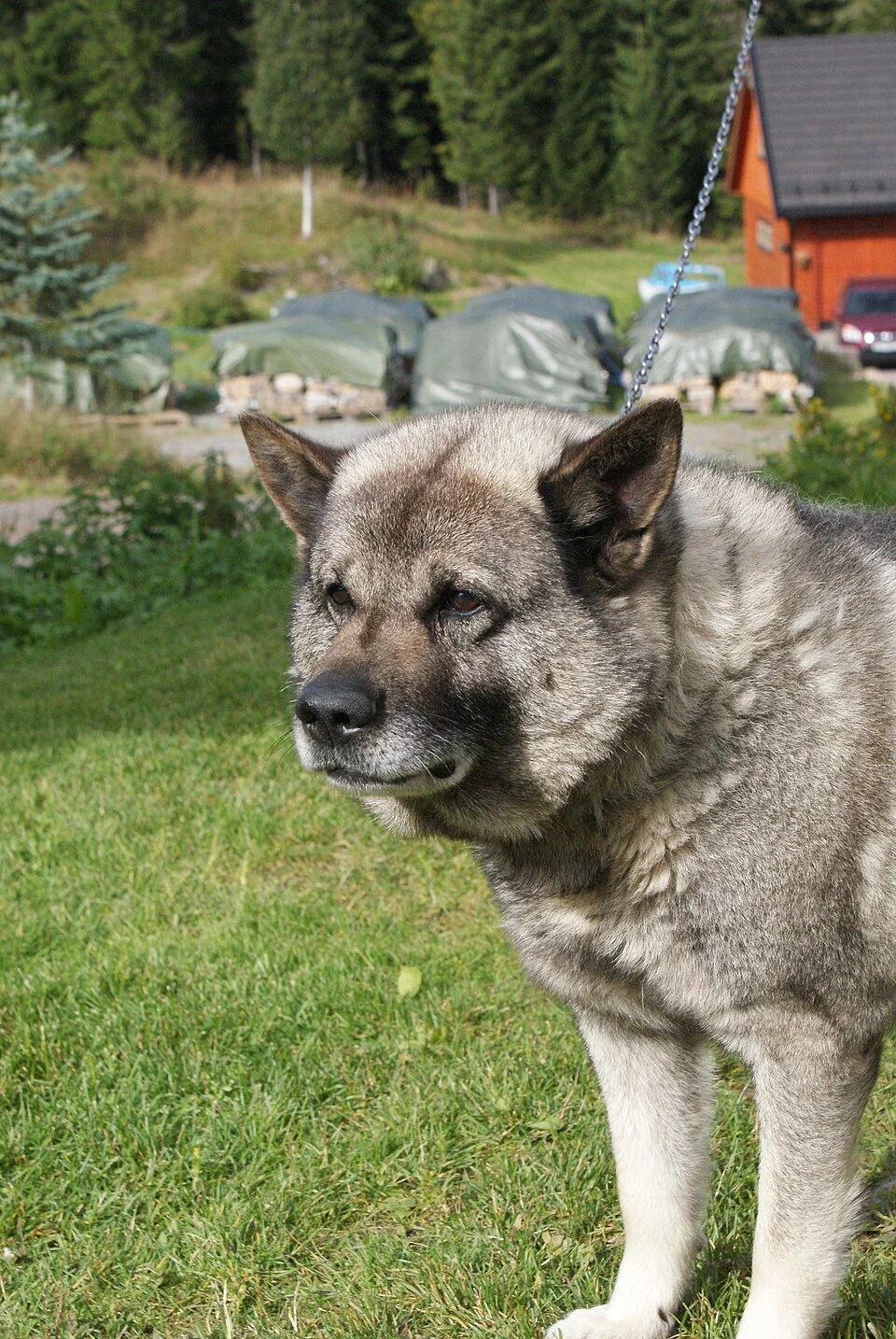
This profile covers the grey Norwegian Elkhound. The Black Norwegian Elkhound is a separate breed. Darker hair tips, a black mask and softer grey undercoat create the grey dog’s familiar appearance. Its body is compact and almost square. In its breed standard, the international canine organisation FCI gives ideal shoulder heights of 52 centimetres for males and 49 centimetres for females.
Its background helps explain why a wildlife scent may become more compelling than its person’s wishes. It also explains the importance of barking. An Elkhound can be closely attached to its family at home while making independent choices outdoors. Visitors and lively games with children should allow room for calm introductions and retreat. Living with a cat depends strongly on previous experience and both animals’ behaviour. Small prey animals should be kept physically separate.
Everyday life
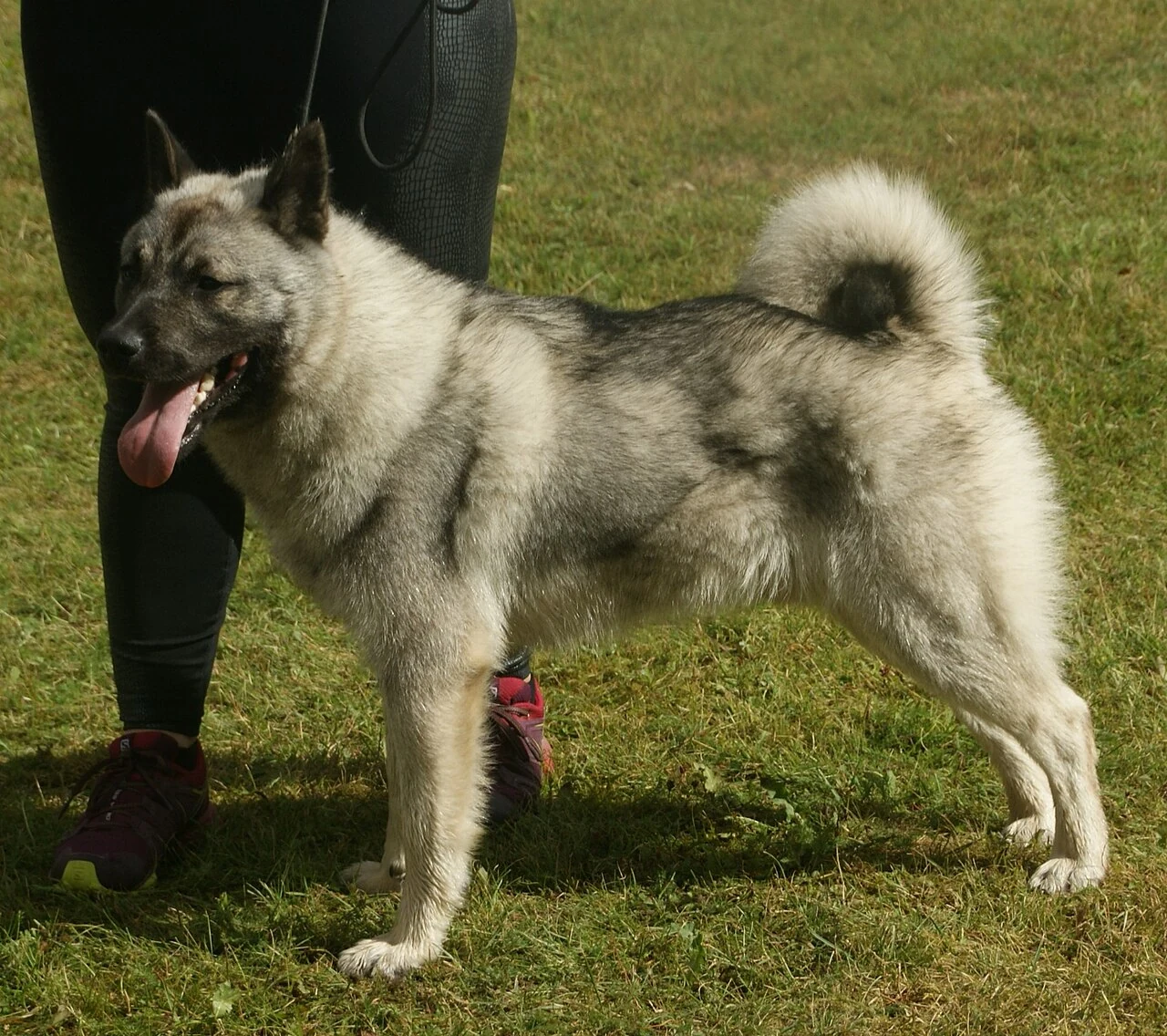
This dog suits people who enjoy being outside. Longer walks, varied routes and opportunities to investigate engage its body and nose. Each outing’s length should suit its fitness, the weather and its health. A healthy adult may enjoy hiking together when stamina has been developed gradually. A garden adds to these outings but does not replace them.
Returning when called should be taught early in easy settings. In woodland, a long lead attached to a suitable harness is often the more practical choice, as wildlife scents can strongly attract even a well trained dog. Searches for food or familiar objects draw on its interest in exploring. An object could initially be placed in plain sight. Later, you could move it farther away and begin the task with a familiar search cue.
Its voice also needs consideration. Frequent alert barking can quickly cause problems in a flat with poor sound insulation. You should notice whether your dog responds to people outside a window, sounds in the hallway or excitement before a walk. Reducing direct triggers and rewarding quiet moments can make practice easier. Shouting or punishment does not teach the dog a useful alternative.
Staying home alone
Dogs learn to stay home alone in small steps. The RSPCA advises no more than four hours at a time. Puppies and dogs that become unsettled when left alone need shorter absences and gradual practice. Arrange someone to care for your dog when you will be away longer.
Everyday dog training: recall, a loose lead and clear communication ↗
Day-to-day care
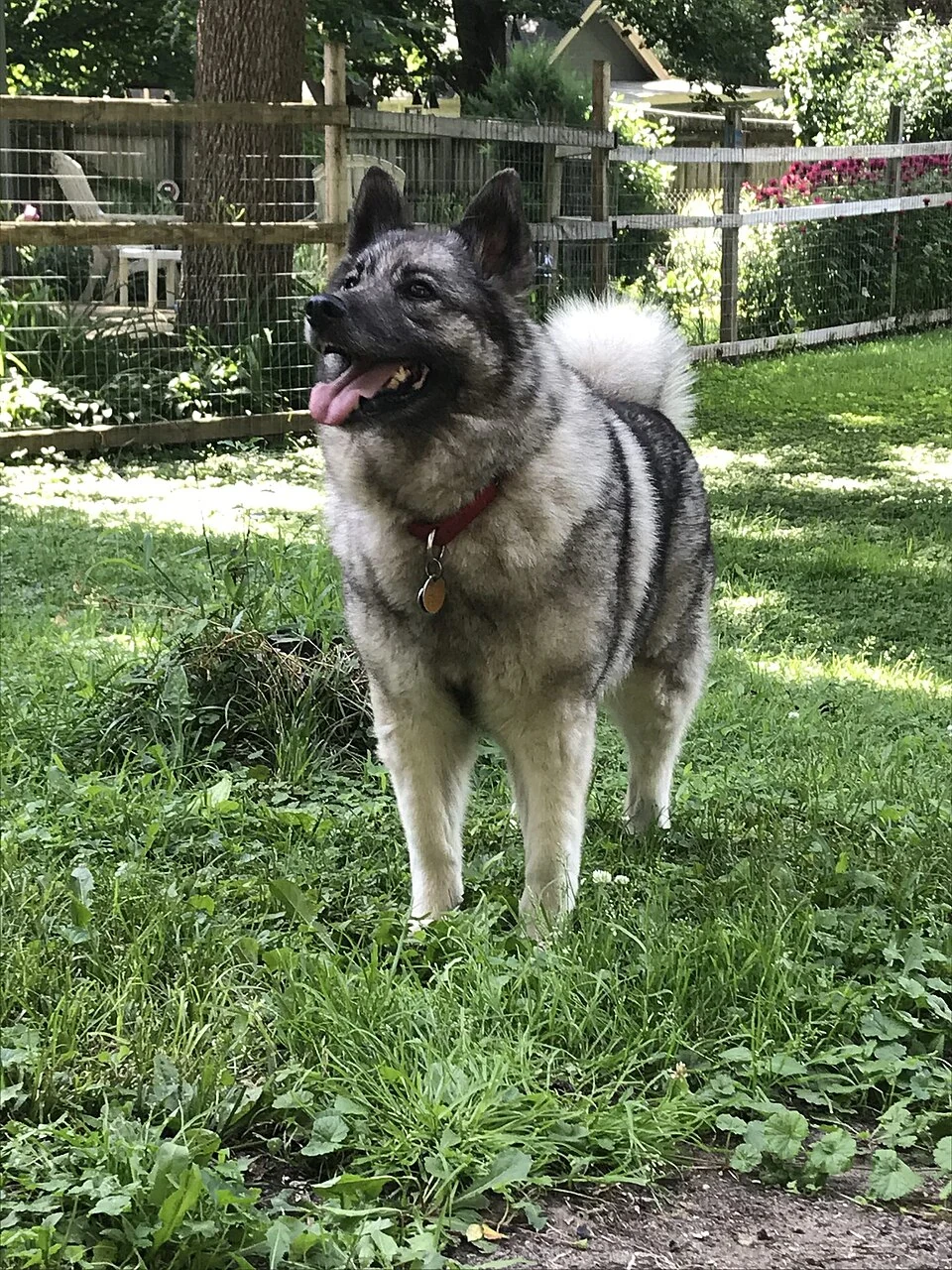
The weather resistant coat consists of a firmer outer layer and dense, soft undercoat. It should be brushed thoroughly several times a week. Much more frequent grooming may be needed during moulting, when large amounts of loose hair appear. A suitable comb helps check that you have reached the deeper layer. Mats close to the skin should be dealt with professionally so that brushing does not become painful.
On warm days, walks should move to cooler hours, with water and shade available. A dense coat does not reliably protect against overheating. Paws and skin are worth checking after outings, particularly when the dog has walked through dense vegetation. Nails and teeth need regular care as well. Toothbrushing should be introduced gently using dog toothpaste.
Size and build
An Elkhound puppy should have time to learn that people, vehicles and other dogs belong in its surroundings. Brief positive introductions are more useful than many new experiences at once. Walking comfortably on a lead and returning when called can begin with simple exercises. Long hikes and repeated jumps should wait while bones and joints are still developing.
An adult’s stamina can be built gradually. A routine that allows undisturbed sleep after outings matters too. Time alone needs separate practice, because plenty of exercise does not by itself resolve distress during separation. An older Elkhound may still enjoy sniffing and searching when steep paths and long distances have become too much. Shorter walks and easier search tasks preserve those shared activities. The Royal Kennel Club lists the breed’s life expectancy as over ten years.
From puppy to senior: caring for your dog through every life stage ↗
Health
When choosing a puppy, you should ask about hip results, specialist eye examinations and the genetic tests recommended for breeding. Hip dysplasia involves an unstable fit in the joint that can lead to painful changes. Difficulty getting up or repeated limping should be investigated. Both the American breed association and the Royal Kennel Club include hip examinations in their health recommendations.
Genetic tests are also available for particular inherited eye diseases and a disorder of cartilage development. One of the eye conditions tested is a form of glaucoma, in which pressure within the eye can rise and damage vision. The cartilage disorder, called chondrodysplasia, can cause unusually shortened limbs. The Royal Kennel Club’s current guidance distinguishes between basic and additional health examinations. A breeder should explain which results are available for both parents and how they were considered when choosing the pairing.
An eye examination can reveal changes that are already visible in the eye. A DNA test instead checks for the particular inherited variant it was designed to detect. A painful, red or visibly changed eye should be examined promptly by a vet. Fellfolio can keep weight records, hip findings, eye reports and changes in movement together, making the information easy to find at an appointment.
Could this breed fit your life?
Could work well if …
- You enjoy spending plenty of time outside and building suitable walks, hikes and scent tasks together.
- You can manage interest in wildlife through a secure lead and appropriate garden boundaries.
- You can provide a quiet retreat and live with substantial moulting and a distinctive voice.
What to consider
- Barking is part of the hunting background and may be difficult in a setting where noise travels easily.
- Wildlife scents need careful consideration on walks and before any exercise off lead.
- The grey and Black Norwegian Elkhounds are separate breeds. Their profiles should not be treated as interchangeable.
Similar needs, different dogs.
Selected by shared size, activity, grooming and training characteristics.
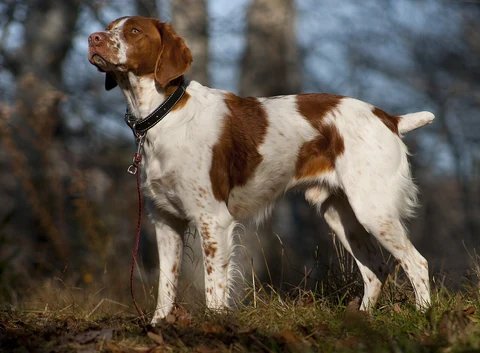
French pointing dog
Brittany
The Brittany is a compact French gundog with plenty of energy and a keen nose. It searches for game, points and retrieves. Pointing means pausing near game it has located to show the handler where it is. Anyone considering a Brittany as a companion should take its hunting instincts as seriously as its often friendly, people-oriented nature.
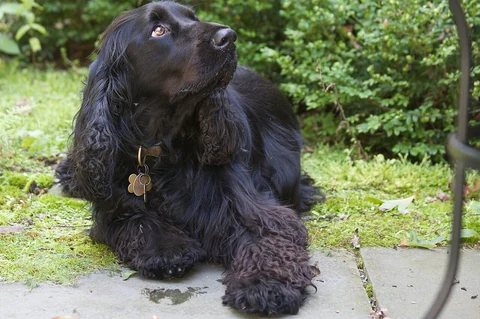
Sensitive hunting companion with a long silky coat
Field Spaniel
The Field Spaniel is an active, sensitive dog that enjoys following scents outdoors and being close to its people at home. Beneath the long silky coat is an enduring hunting companion. Varied exercise, shared activities and kind training give this attentive dog plenty to enjoy with its family.
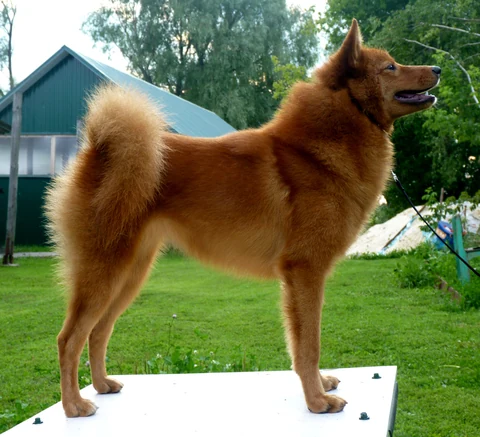
Vocal hunting dog from Finland
Finnish Spitz
A reddish gold coat, pointed ears and a tail curled over the back make the Finnish Spitz easy to recognise. Its voice is as much a part of its history as its appearance. When hunting, it barks to indicate a bird’s position in a tree. Life with this breed calls for plans that take exercise, hunting interest and noise into account together.
Sources and photograph credit
- Teaching your dog to be left alone
Used in this profile for: Staying home alone
- Canine Hip Dysplasia
Used in this profile for: Health
- Position Statements and Humane Dog Training
Used in this profile for: Everyday life
- Two new DNA schemes to combat inherited disease in the Norwegian Elkhound
Used in this profile for: Health
- Norwegian Elkhound Grey, FCI Standard No.242
Used in this profile for: Size / Weight, Temperament, Day-to-day care, Could this breed fit your life?
- Canine Health and Research
Used in this profile for: Health
- Illustrated Guide
Used in this profile for: Temperament, Everyday life, Could this breed fit your life?
- Norwegian Elkhound
Used in this profile for: Temperament, Everyday life, Day-to-day care, Size and build, Health, Lifespan, Could this breed fit your life?
- Heatstroke in Dogs
Used in this profile for: Day-to-day care
- Exercising Your Puppy
Used in this profile for: Size and build
- Training Your Dog to Be Left Alone
Used in this profile for: Size and build
- Children and Dogs
Used in this profile for: Temperament, Could this breed fit your life?
- Caring for Your Dog’s Teeth
Used in this profile for: Day-to-day care
- Train Your Dog to Come When Called
Used in this profile for: Everyday life
Photo credits
Side view · Norwegian Elkhound 1.jpg · Dmitry Guskov · Public domain

Everyday life · NorwegianElkGrey1.jpg · Canarian · CC BY-SA 4.0 · Edited

Portrait · Elkhound2020.jpg · HawkNightingale175 · CC BY-SA 4.0 · Edited

Coat and features · Norwegian Elkhound2.jpg · Jon-Eric Melsæter · CC BY 2.0 · Edited
