 fellfolio
Versatile pointing gundog
Large Munsterlander
The Large Munsterlander is a large black-and-white gundog bred for work in fields, woodland and water. Its jobs include finding game, indicating it by standing still and retrieving shot game. Life with this breed suits someone who enjoys careful training and regular practical work with their dog.
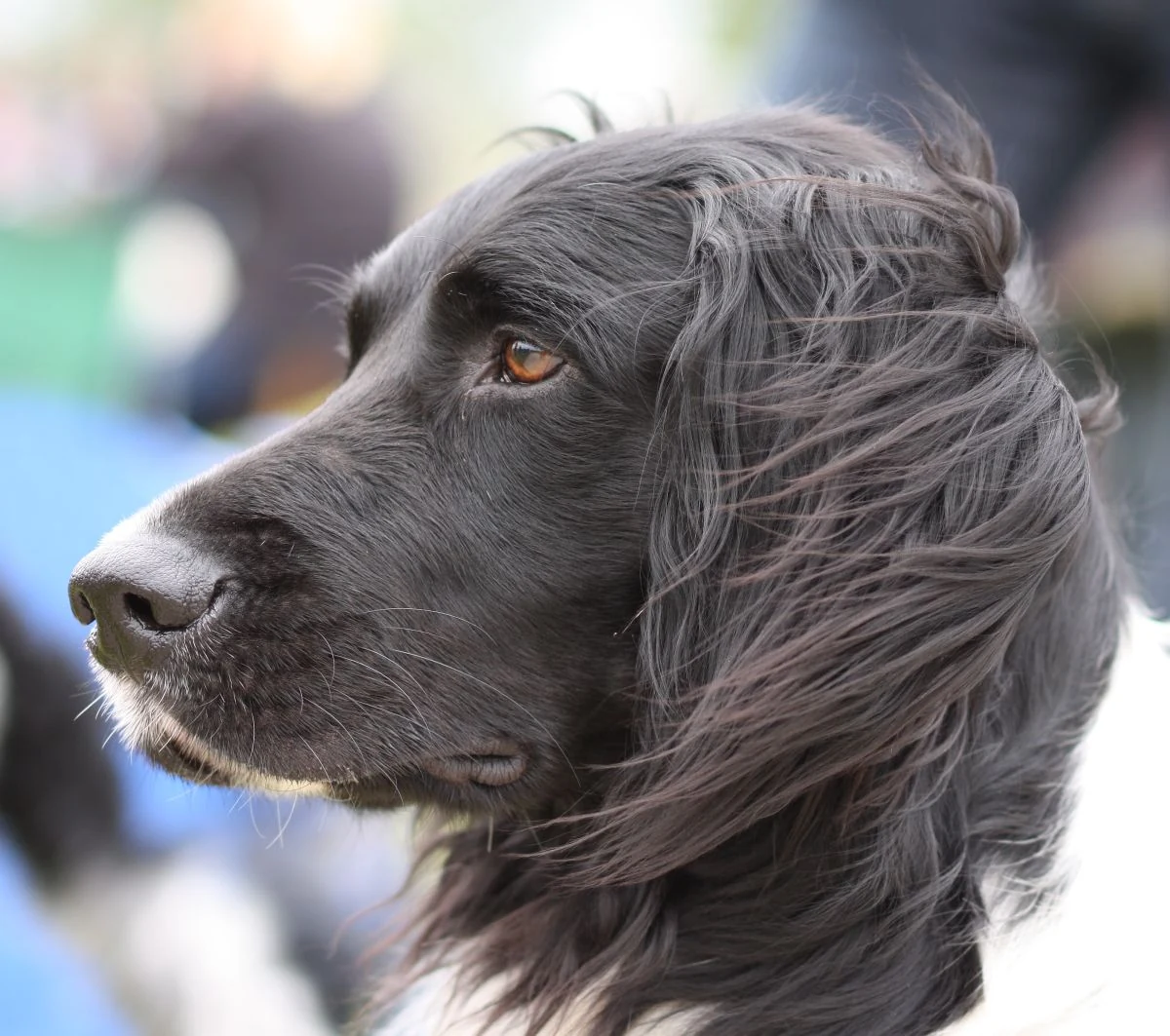
At a glance
- Size
- Large
- Lifespan
- over 10 years
- Activity
- High
- Grooming
- Several times weekly
- Training
- Demanding activities
- Owner experience
- Experience recommended
A search shared with your dog
A field full of scents gives a Large Munsterlander plenty to investigate. It is a pointing dog, bred to find game and then hold a still position while the handler approaches. Retrieving means picking something up and bringing it back. These are parts of its working role, and both need thoughtful training.
The breed standard describes a lively dog that is easy to guide and train. With good support, those qualities can make an attentive working companion. Training should give the dog clear information: reward the behaviour you want, make a new task easy and increase the difficulty after successful attempts. With a dog interested in wildlife, small moments of cooperation are worth noticing. A glance back at you on a walk can earn a reward just as a successful retrieve can.
At home, your dog should have somewhere to sleep undisturbed after time outdoors. Children should leave it alone there and while it eats, and adults should supervise their time together. Even a friendly dog needs to feel comfortable and have room to move away.
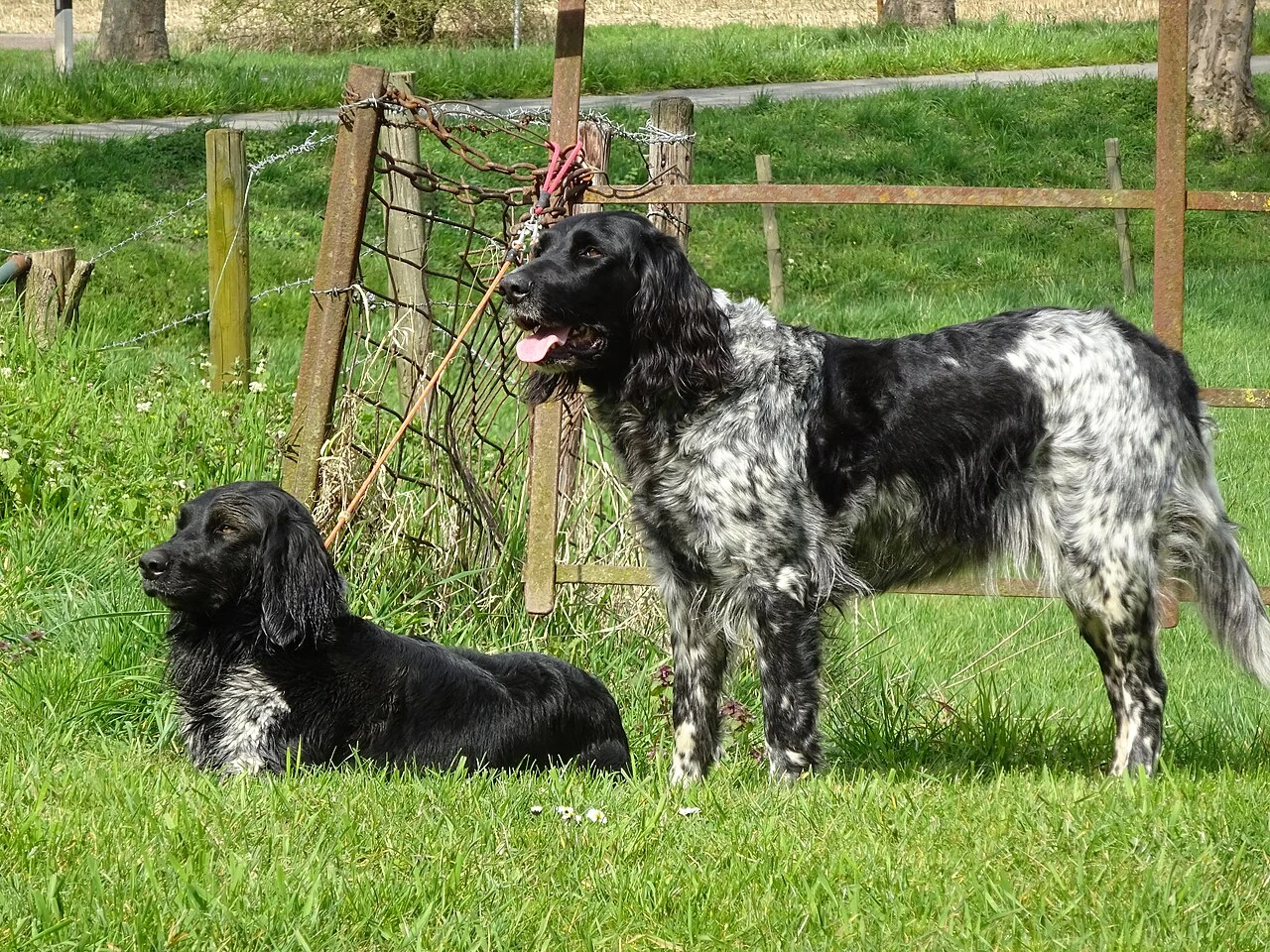
Everyday life
The breed is developed for versatile hunting work. This includes searching before a shot and work afterwards, such as locating and retrieving shot game. Before choosing a dog, you should establish what knowledgeable training and regular working opportunities you can provide. Discussing the particular line with the breed club and breeder helps match the dog to the home you are planning.
Everyday life should combine exercise, scent work and rest. A search for a dummy, a soft object used for retrieving practice, can involve remembering where it was placed, finding it and bringing it back. Start with the object clearly visible and easy to reach. Once your dog understands, you can add a small search in straightforward terrain. Your dog practises searching attentively and bringing its find back to you.
On paths with wildlife scents, your dog should remain secured until its recall is dependable there. A long training line attached to a well-fitting harness can allow exploration while you retain control. Practise recall in quiet surroundings first and reward coming back generously. Where it is appropriate, let your dog return to sniffing afterwards. Your call then need not announce the end of every walk.
Care arrangements should cover working days and the months outside the hunting season. Introduce time alone through brief, calm absences. If your dog paces restlessly or barks persistently, make the exercise easier and seek qualified help.
Staying home alone
Dogs learn to stay home alone in small steps. The RSPCA advises no more than four hours at a time. Puppies and dogs that become unsettled when left alone need shorter absences and gradual practice. Arrange someone to care for your dog when you will be away longer.
Everyday dog training: recall, a loose lead and clear communication ↗
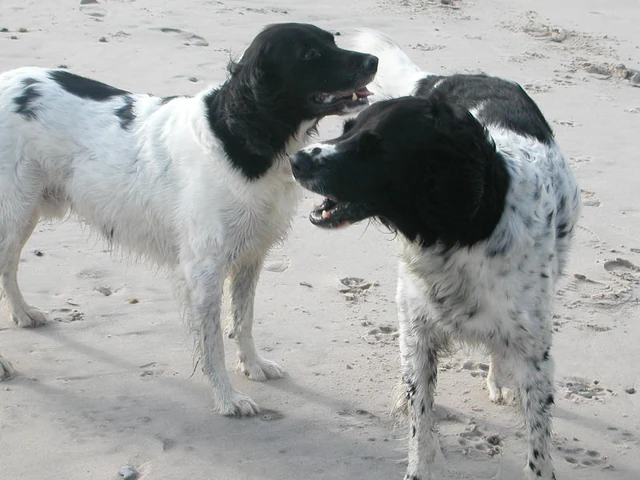
Day-to-day care
The Large Munsterlander has longer hair on its ears, legs and tail. Burrs, small twigs and grass awns can collect there during an outing. Grass awns are pointed plant parts that can lodge in the coat or skin. After walking through long grass, you should check the ears, paws and spaces between the toes in particular. Head shaking, a painful eye or persistent paw licking should be assessed by a vet.
Check and untangle the coat several times a week. When easing apart a small knot, hold the hair close to the skin to avoid pulling. After swimming, a towel and a dry resting place are useful. A short grooming session also gives you a chance to check the skin and paws. Introduce tooth brushing gradually, using toothpaste made for dogs.
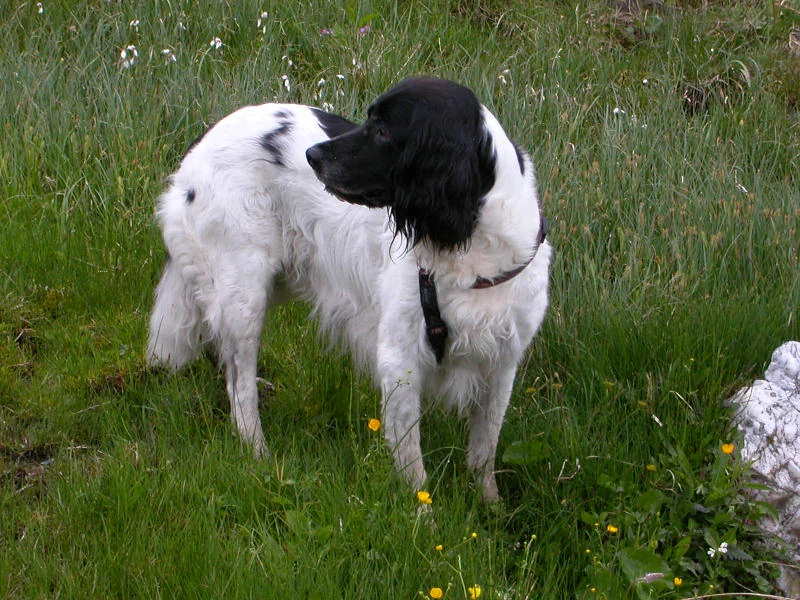
Size and build
The Large Munsterlander and German Longhaired Pointer share a breeding history. In 1909, the German Longhaired Pointer club excluded the black-and-white colour from its breeding programme. Those dogs were later developed as a separate breed, with the Large Munsterlander club founded in 1919. Both breeds therefore trace back to the long-haired gundog breeding of that period.
The international breed standard issued by the Fédération Cynologique Internationale (FCI) gives shoulder heights of 60 to 65 cm for males and 58 to 63 cm for females, allowing up to 2 cm above those ranges. Weight is described as approximately 30 kg. These measurements refer to adults. A puppy should grow with suitable portions and age-appropriate exploration. Calm car journeys, gentle paw examinations and positive introductions are as useful at this stage as the first steps towards future working tasks.
From puppy to senior: caring for your dog through every life stage ↗
Health
When choosing a puppy, you should ask to see the parents' health records. The German club's breeding rules effective from March 2026 consider hip and elbow health alongside a DNA test for an inherited disorder affecting uric acid. Hip dysplasia is a developmental problem in which the hip joint fits loosely. Elbow dysplasia covers several developmental problems within the elbow. Both can lead to painful joint changes.
HUU means hyperuricosuria, an increased amount of uric acid passing into the urine. It can lead to urinary stones. The DNA test identifies a particular inherited variant. A dog with one copy can pass it on without being ill because of that variant. Results should therefore be considered alongside the other parent's result and the current breeding rules. The club permits certain matings with a documented clear partner. A carrier result is not the same as a sick dog.
Repeated limping or difficulty getting up should be investigated. Blood in the urine and difficulty urinating also need veterinary attention. If your dog repeatedly tries but cannot pass urine, seek veterinary help immediately. Fellfolio can keep reports, treatments and your own observations together, making the course of a problem easier to explain at the next appointment.
Could this breed fit your life?
Could work well if …
- You want a large working gundog and can provide knowledgeable training and suitable work over the long term.
- You enjoy developing scent work and retrieving together, with dependable management around wildlife.
- You have time for grooming checks after outings and reliable care on working days.
What to consider
- Discuss the breed’s hunting focus with the club and breeder before choosing a dog.
- Small pets need separate, secure areas. Friendliness towards people tells you little about a dog’s response to a fleeing animal.
- HUU results should identify the actual parents of the litter and be considered alongside their joint reports.
Similar needs, different dogs.
Selected by shared size, activity, grooming and training characteristics.
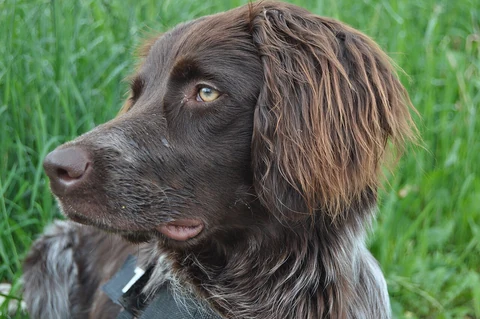
Versatile pointing gundog
German Longhaired Pointer
The German Longhaired Pointer is a large, long-coated pointing dog. Breeding is focused on its ability to do practical hunting work, combining field searches with tasks in woodland and water. A prospective owner should be able to provide suitable training and hunting opportunities.
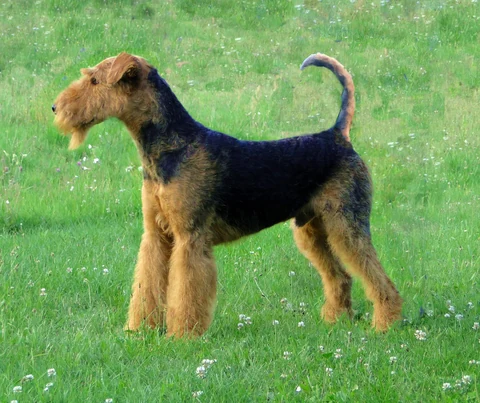
Large terrier from Yorkshire
Airedale Terrier
With its wiry coat, long head and distinctive beard, the Airedale is hard to miss. It is the largest terrier and shares much of the curiosity and independence of its smaller relatives. The breed originated along Yorkshire’s rivers, where dogs were needed for hunting on the banks. Today it suits people who enjoy being out with their dog, train patiently and make time for regular coat care.
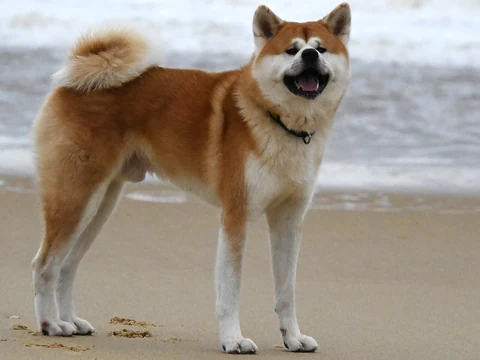
Japanese spitz with a dense undercoat
Akita
The Japanese Akita is a large dog with a dense undercoat, upright ears and a curled tail. It can form close bonds with familiar people while remaining more reserved with strangers. Its independence and hunting instincts suit people willing to guide encounters calmly and work with it regularly.
Sources and photograph credit
- Teaching your dog to be left alone
Used in this profile for: Staying home alone
- Canine Elbow Dysplasia
Used in this profile for: Health
- Canine Hip Dysplasia
Used in this profile for: Health
- Position Statements and Humane Dog Training
Used in this profile for: Temperament
- Zuchtordnung, gültig ab 01.03.2026
Used in this profile for: Everyday life, Health, Could this breed fit your life?
- Large Munsterlander
Used in this profile for: Day-to-day care, Lifespan
- FCI Standard No. 118: Large Munsterlander
Used in this profile for: Size / Weight, Temperament, Day-to-day care, Size and build
- Jagdliche Eignung
Used in this profile for: Temperament, Everyday life, Could this breed fit your life?
- Grass Seeds in Dogs
Used in this profile for: Day-to-day care
- Exercising Your Puppy
Used in this profile for: Size and build
- Training Your Dog to Be Left Alone
Used in this profile for: Everyday life
- Understanding Your Dog’s Behaviour
Used in this profile for: Everyday life
- Children and Dogs
Used in this profile for: Temperament, Could this breed fit your life?
- Caring for Your Dog’s Teeth
Used in this profile for: Day-to-day care
- Train Your Dog to Come When Called
Used in this profile for: Everyday life, Could this breed fit your life?
- Hyperuricosuria
Used in this profile for: Health
Photo credits
Portrait · Grote Münsterländer - world dog show 2010 2.jpg · mjk23 · CC BY 2.0 · Edited

Side view · GrosserMuensterlaender04.jpg · Mr.BBL · CC BY-SA 3.0 · Edited

Coat and features · Großer Münsterländer PM16 1.jpg · Pieter Delicaat · CC BY-SA 4.0 · Edited

Everyday life · GrosseMuensterlaender02.jpg · Mr.BBL · CC BY-SA 3.0 · Edited
