 fellfolio
Japanese spitz with a dense undercoat
Akita
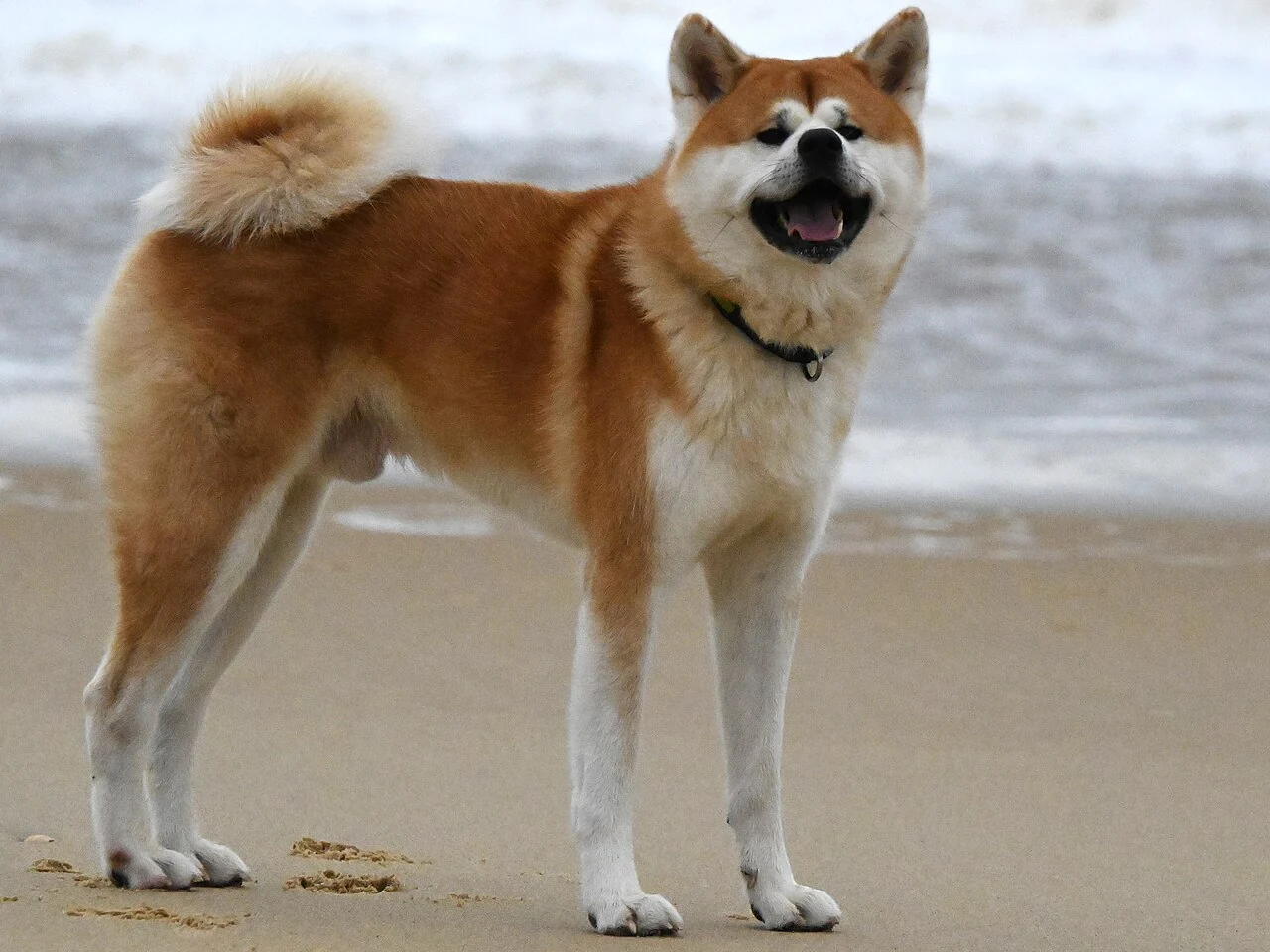
The Japanese Akita is a large dog with a dense undercoat, upright ears and a curled tail. It can form close bonds with familiar people while remaining more reserved with strangers. Its independence and hunting instincts suit people willing to guide encounters calmly and work with it regularly.
At a glance
- Size
- Large
- Height at shoulder
- 58 to 70 cm
- Lifespan
- 10 to 12 years
- Activity
- High
- Grooming
- Several times weekly
- Training
- Patience & clear guidance
- Owner experience
- Experience recommended
An independent companion with Japanese hunting roots
An Akita may have little interest in greeting every visitor or playing with every dog. Its reserve should be taken into account at home. It can be affectionate with familiar people while also making decisions of its own. A household that manages visitors and dog encounters thoughtfully suits it better than constantly changing, unpredictable activity.
Its ancestors were the dogs of the Matagi, traditional hunters in northern Japan, helping them pursue large wild animals. Later, dogs from the region were also bred for guarding and fighting and crossed with other breeds. Japanese preservation societies worked during the twentieth century to restore the local type. Breeding was rebuilt after severe losses during the Second World War. Different developments led to today’s Japanese Akita and American Akita. The international canine federation FCI recognises them as two breeds.
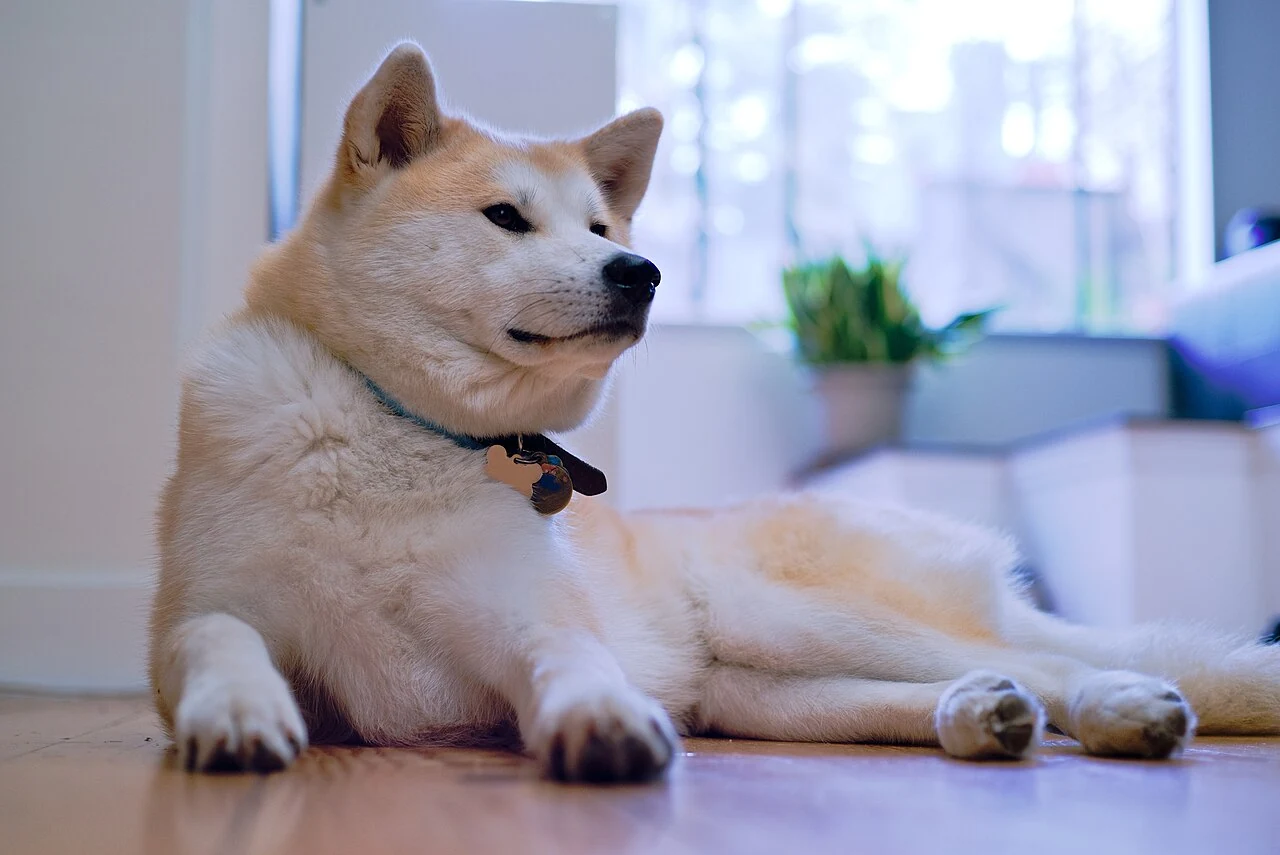
The FCI standard for the Japanese Akita gives males a shoulder height of 64 to 70 centimetres and females 58 to 64 centimetres. The coat has firm outer hair and a soft, dense undercoat. Colours include red, brindle and white. Lighter areas on the cheeks, chest and underside are characteristic in coloured dogs. Its large body needs a spacious bed and adequate room in the car.
Everyday life
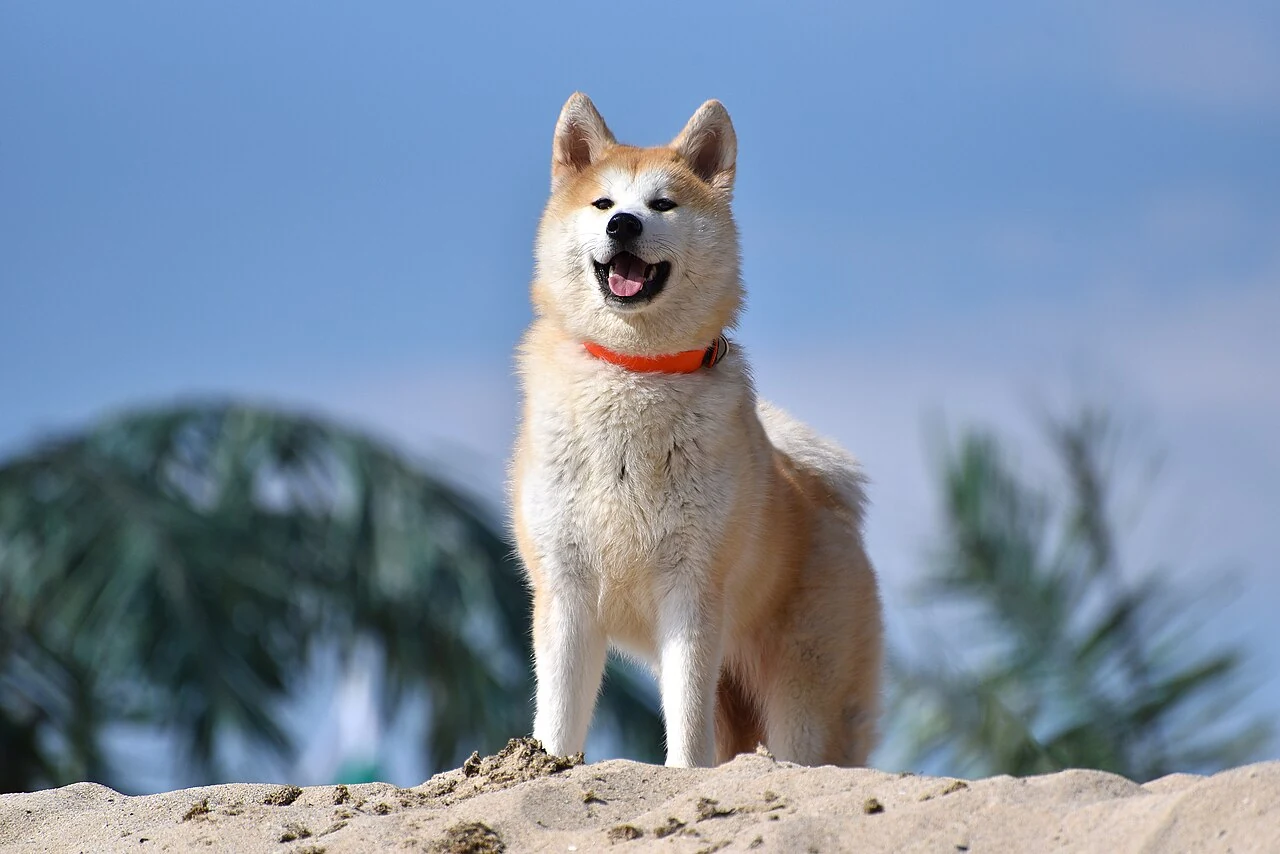
Walks, time to explore and shared tasks belong in a suitable Akita routine. A large garden should complement this time together. Many Akitas participate more readily when an exercise is short and its purpose is understandable. Walking on a loose lead, coming back when called and waiting calmly are especially useful everyday skills.
Coming back should first be practised in a quiet setting and rewarded with something the dog enjoys. Outdoors, a long training line attached to a harness can allow more freedom while the skill develops. With its hunting background, an Akita may want to chase smaller animals. Rabbits and other small pets should have physically separate accommodation.
Other dogs can also be challenging, particularly dogs of the same sex. Meetings should start in a controlled way, with distance and an opportunity to move away again. Living with a second dog requires compatible individuals and secure separation arrangements. Pleasant early experiences help the dog learn how to cope. If it later strongly dislikes certain encounters, its handling should adapt accordingly.
Time alone needs gradual practice. Longer absences are best covered by a carer who already knows the dog. A Fellfolio handover can explain visitor arrangements, suitable walking routes and what to consider during feeding or dog encounters.
Staying home alone
Dogs learn to stay home alone in small steps. The RSPCA advises no more than four hours at a time. Puppies and dogs that become unsettled when left alone need shorter absences and gradual practice. Arrange someone to care for your dog when you will be away longer.
Everyday dog training: recall, a loose lead and clear communication ↗
Day-to-day care
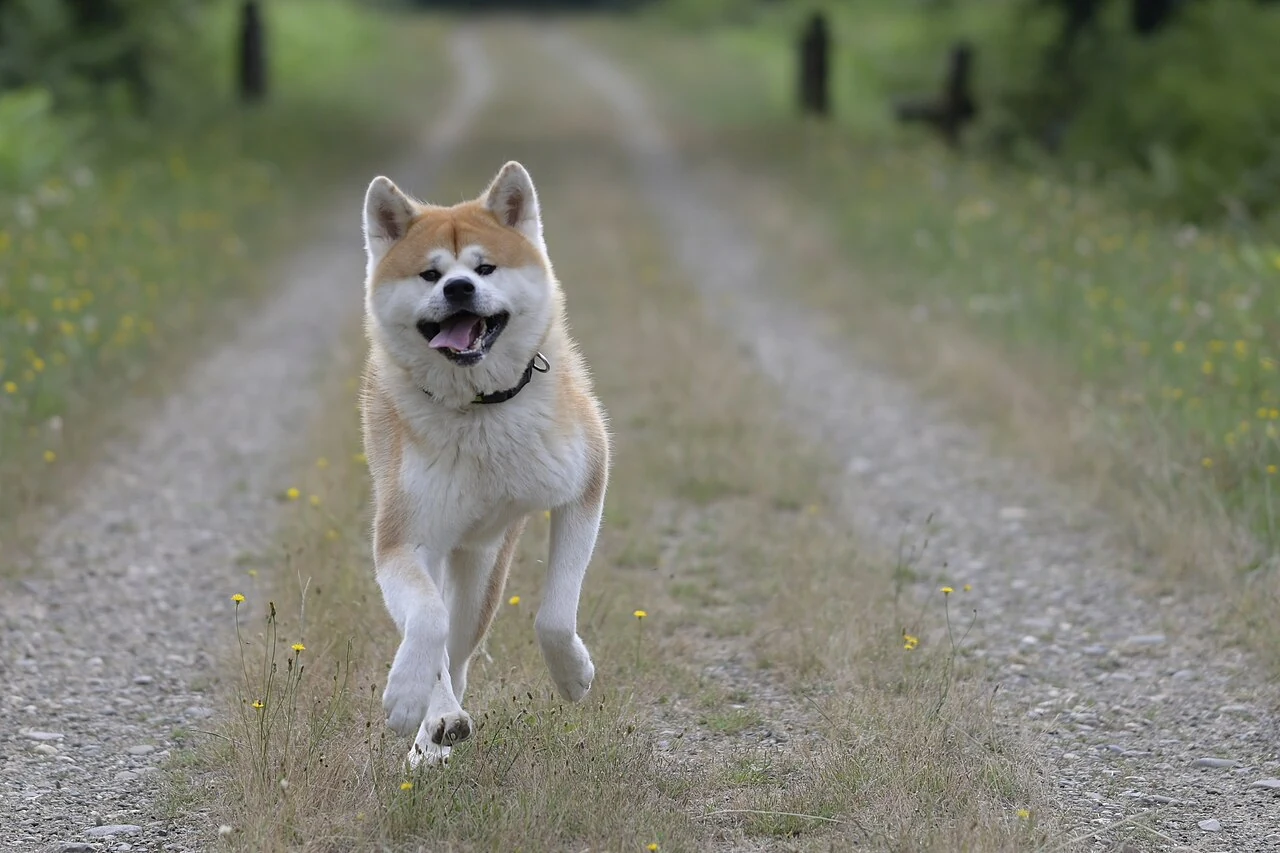
The dense coat should be brushed thoroughly and regularly. Large amounts of undercoat are shed during coat changes, so extra grooming may be needed. A comb helps reach into the undercoat and find small knots. Brushing should be introduced through pleasant, rewarded practice.
Skin checks are useful at the same time. Heavy scaling, bald areas or a sudden change in the coat should be investigated by a vet. Paws and nails also need regular attention. Toothbrushing with dog toothpaste complements coat care. Calm practice examining the ears, mouth and paws can start early and make later veterinary visits easier.
Size and build
An Akita puppy should have supported, pleasant experiences with different people, suitable dogs and new surroundings. Socialisation means helping those experiences go well. It need not involve constant handling by strangers. Quiet observation from a comfortable distance can be a useful first step. An adult should also supervise interactions between the dog and young children in its household.
During growth, short explorations and free play with breaks are more suitable than extended runs or repeated jumping. Exercise should increase gradually. Learning to wear a muzzle comfortably can start with short sessions and rewards, before one is needed for an examination. Later in life, routes, bedding and access to the car should suit the dog’s mobility. New stiffness or lameness needs assessment. Fellfolio can keep weight records and observations about movement together.
From puppy to senior: caring for your dog through every life stage ↗
Health
The Japanese Akitainu Club of America recommends eye, hip, elbow, thyroid and kneecap examinations for breeding dogs, among other screening. Before choosing a puppy, you should discuss the results and known illness in the family. Hip dysplasia involves abnormal development or instability of the joint and can cause pain and later joint damage.
A DNA test is available for the recognised ACP4 variant associated with an inherited problem in tooth enamel formation. The disease is called amelogenesis imperfecta. The protective enamel does not develop properly. Unusual teeth, difficulty chewing or pain should be investigated by a vet. The DNA test checks that particular inherited change, while examination of the mouth shows the actual condition of the teeth.
Certain diseases in which the immune system attacks the dog’s own tissues are also recognised in Akitas. Sebaceous adenitis damages oil-producing glands in the skin. These glands help keep the skin and coat supple. Affected dogs may develop scaling, changes in coat texture and hair loss. Another disease, uveodermatological syndrome, can affect the eyes and skin. The club’s 2025 health information states that genetic tests are not yet available for these two conditions.
Fellfolio can keep examination findings, medicines and photographs of skin changes together, making the progression easier to discuss with a vet. An emergency card adds reachable contacts and important medical details to these records.
Could this breed fit your life?
Could work well if …
- You enjoy independent dogs and can train calmly, patiently and regularly.
- You have time for substantial walks and thorough coat care.
- Visitors, care arrangements and dog encounters can be managed thoughtfully.
What to consider
- Hunting instincts and possible difficulties with other dogs need attention.
- Seasonal shedding can mean considerable extra grooming.
- Eye, skin, joint and dental screening should take known family conditions into account.
Similar needs, different dogs.
Selected by shared size, activity, grooming and training characteristics.
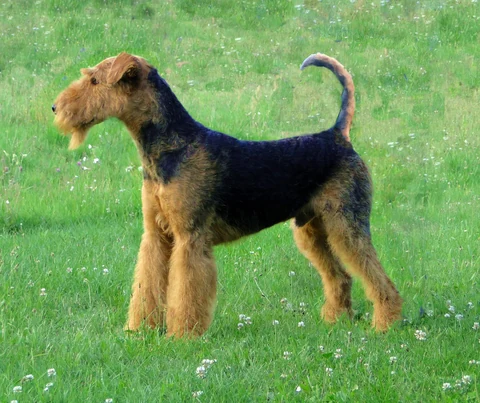
Large terrier from Yorkshire
Airedale Terrier
With its wiry coat, long head and distinctive beard, the Airedale is hard to miss. It is the largest terrier and shares much of the curiosity and independence of its smaller relatives. The breed originated along Yorkshire’s rivers, where dogs were needed for hunting on the banks. Today it suits people who enjoy being out with their dog, train patiently and make time for regular coat care.
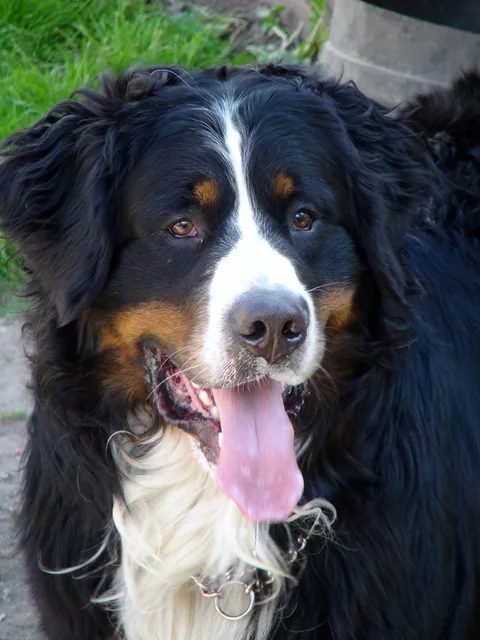
Swiss mountain dog
Bernese Mountain Dog
This large Swiss farm dog likes being close to its people. Start lead training early, groom its thick coat regularly and plan summer walks for the cooler parts of the day.
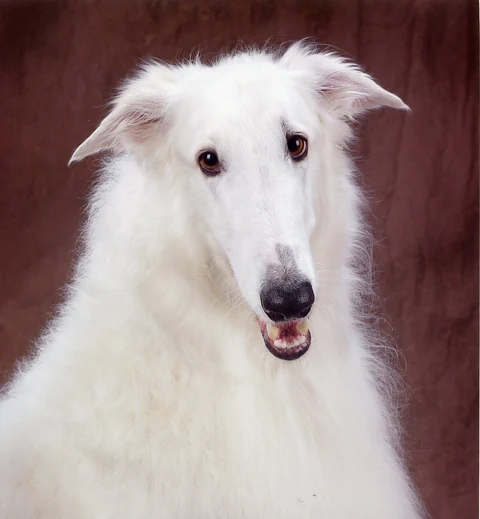
Sighthound
Borzoi
A very tall, lightly built sighthound with a long, easy stride. The Borzoi needs secure places to run and people who enjoy its independent nature.
Sources and photograph credit
- Teaching your dog to be left alone
Used in this profile for: Staying home alone
- Breed History
Used in this profile for: Temperament
- JACA Health Statement for AKC 2025
Used in this profile for: Health, Lifespan
- Training Your JA Puppy
Used in this profile for: Temperament, Everyday life, Day-to-day care, Size and build, Could this breed fit your life?
- Akita, FCI Standard No.255
Used in this profile for: Size / Weight, Temperament, Everyday life, Day-to-day care, Size and build, Could this breed fit your life?
- Japanese Akita Inu
Used in this profile for: Temperament, Everyday life, Day-to-day care, Size and build, Could this breed fit your life?
- Canine hip dysplasia
Used in this profile for: Health
- Exercising your puppy
Used in this profile for: Size and build
- Training Your Dog to Be Left Alone
Used in this profile for: Everyday life
- Children and Dogs
Used in this profile for: Temperament, Size and build
- Dog dental care
Used in this profile for: Day-to-day care
- Train Your Dog to Come When Called
Used in this profile for: Everyday life
- Training your dog
Used in this profile for: Everyday life
- Sebaceous Adenitis in Dogs
Used in this profile for: Health
Photo credits
Side view · Akita Inu (male).jpg · Azurfrog · CC BY 4.0 · Edited
.jpg)
In action · Akita Rappel.jpg · Azurfrog · CC BY 4.0 · Edited

Coat and features · An Akita Inu resting.jpg · Dllu · CC BY-SA 4.0 · Edited

Everyday life · Akita Inu dog.jpg · Biser Yanev · CC BY-SA 4.0 · Edited
