 fellfolio
Versatile pointing gundog
German Longhaired Pointer
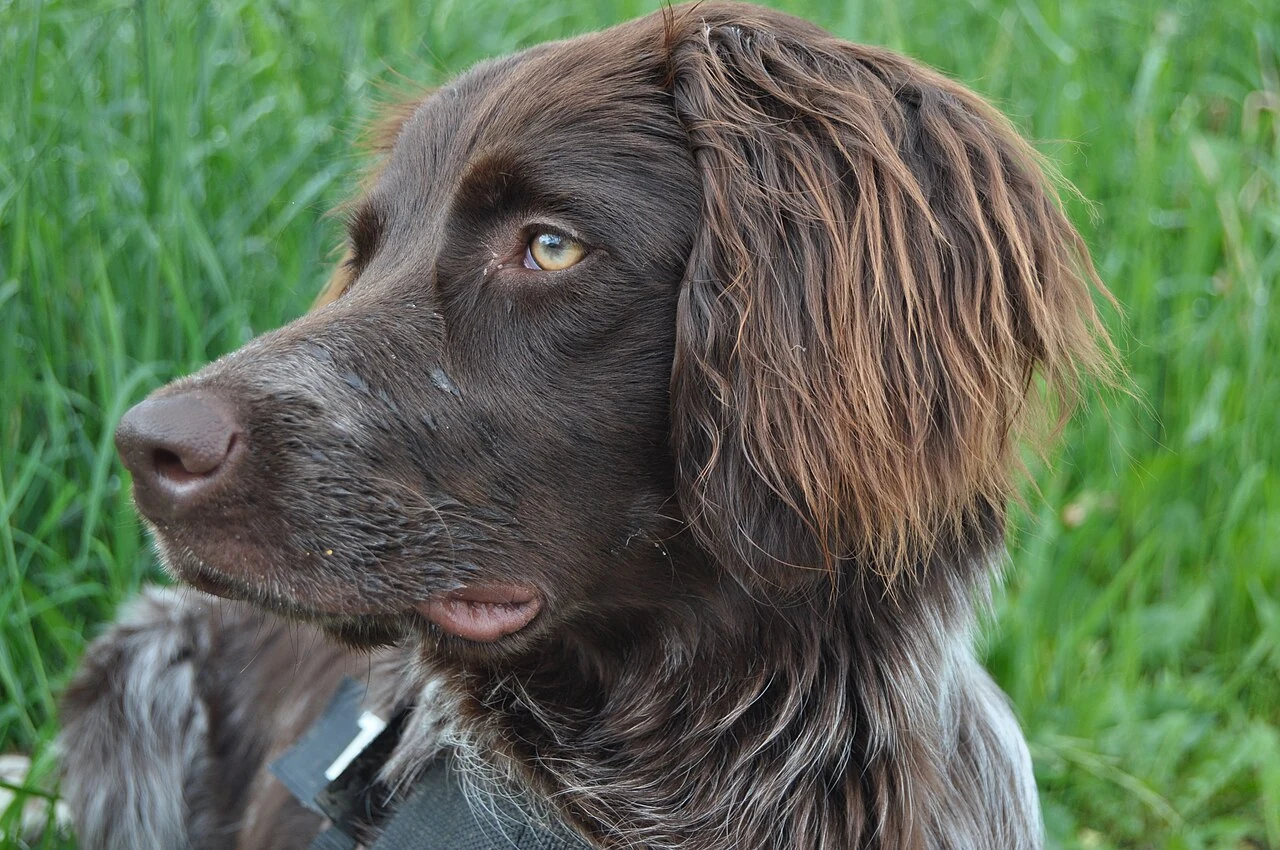
The German Longhaired Pointer is a large, long-coated pointing dog. Breeding is focused on its ability to do practical hunting work, combining field searches with tasks in woodland and water. A prospective owner should be able to provide suitable training and hunting opportunities.
At a glance
- Size
- Large
- Lifespan
- over 10 years
- Activity
- High
- Grooming
- Several times weekly
- Training
- Demanding activities
- Owner experience
- Experience recommended
A companion for versatile hunting work
Cooperation is part of a German Longhaired Pointer's job. A pointing dog finds game and indicates its location by standing still. Retrieving, meaning picking something up and bringing it back, and other work after the shot are also part of its role. A trained dog may need to search independently, follow direction or wait, depending on the situation. That variety makes choosing a suitable line and providing thoughtful training particularly important.
The standard aims for an even-tempered, calm dog that is easy to train. These breeding goals help describe the breed, but they do not tell you how an individual youngster will react to a fluttering duck or an unfamiliar dog. When visiting a breeder, take time to meet the parents and learn about the puppies' upbringing. Notice how the dogs settle after an activity and how they approach people.
Clear, positively taught tasks are useful in training. For example, a dog can first learn to collect a practice object from a short distance. Later, you can add waiting while you place it. Reward the separate steps. A fair exchange for a suitable reward can show your dog that calmly handing the object over is worthwhile.
Everyday life
The German breed club selects for hunting ability and recommends placing puppies in working hunting homes. This is a breeding policy, rather than a general legal condition of owning the dog. It still matters to prospective owners: before choosing a puppy, you should know what hunting training, knowledgeable guidance and actual work you can provide.
A working day also includes quiet periods. After an outing, the dog can dry off and sleep while equipment is put away. On walks, it should learn to stay near you when asked, such as while cyclists pass or you look for a safe route into the water. Practise waiting on a quiet path first, rewarding your dog for staying beside you. As it becomes more confident, you can move the exercise to busier places.
Where wildlife is present, off-lead exercise and searching should match the dog's training and local rules. Start recall practice somewhere with fewer distractions. A long training line on a harness can help you move on to more demanding paths. Reward coming back, then allow further exploration where suitable. Staying in touch with you should remain worthwhile even when the surroundings offer fascinating scents.
In a home with children, the dog's sleeping place should be protected. Adults should supervise contact and show children how to give it space when eating or resting. Small pets need separate, secure areas. Your plans should also include dependable care during long working days.
Staying home alone
Dogs learn to stay home alone in small steps. The RSPCA advises no more than four hours at a time. Puppies and dogs that become unsettled when left alone need shorter absences and gradual practice. Arrange someone to care for your dog when you will be away longer.
Everyday dog training: recall, a loose lead and clear communication ↗
Day-to-day care
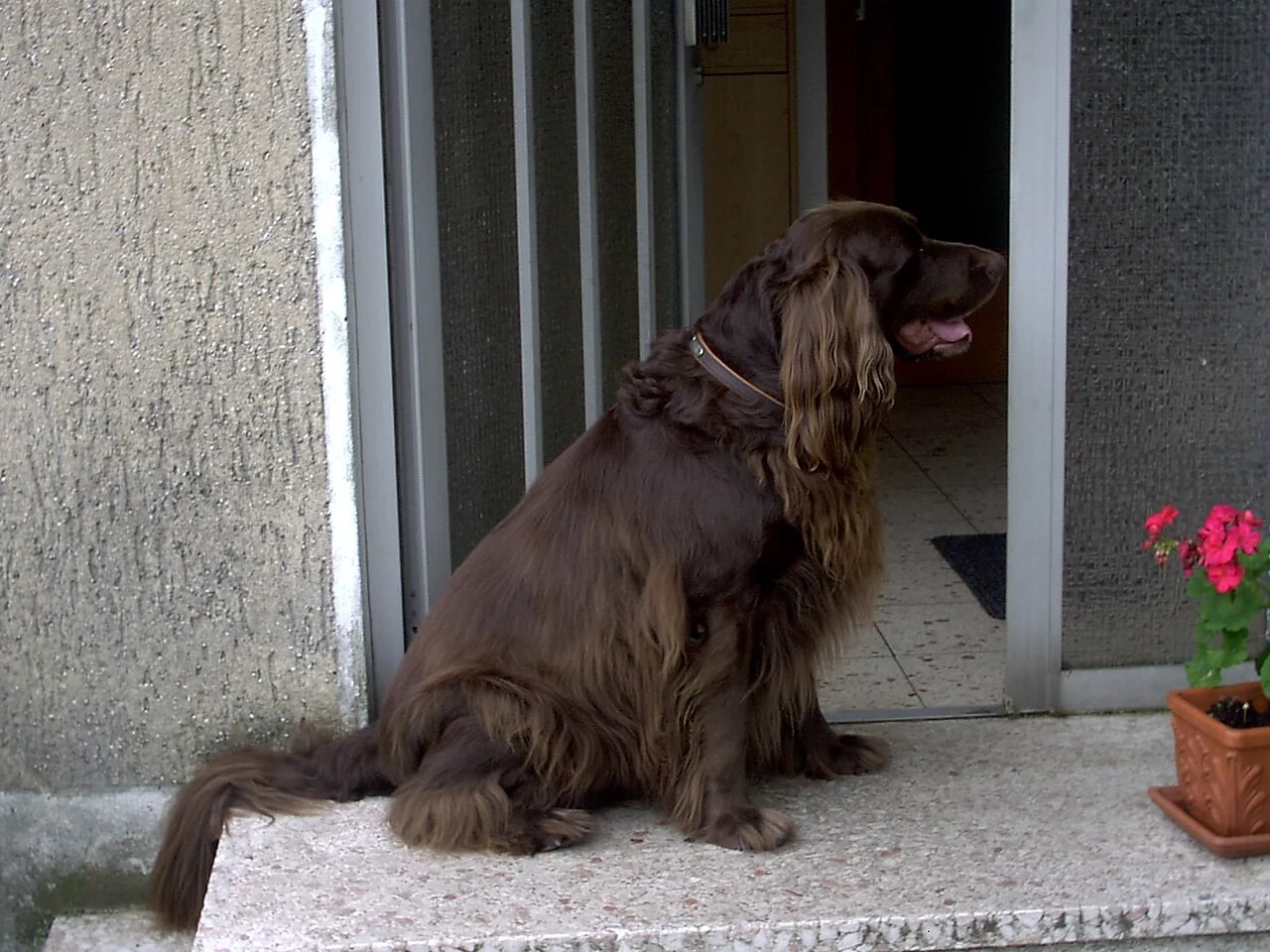
The longer hair on the ears, legs and tail needs regular attention. Burrs and fine twigs can collect there on woodland walks. Comb through gently several times a week, and after outings when needed. Small tangles are often easier to ease apart early. If matting is tight against the skin, ask a skilled groomer for help.
After walking through long grass, check the paws, spaces between the toes and ears for grass awns. These pointed plant parts can lodge in hair and skin. Sudden head shaking, constant paw licking or a tightly closed eye should be assessed by a vet. After water work, dry your dog and provide a clean, dry resting place. Short grooming exercises with rewards help a young dog understand these checks.
Size and build
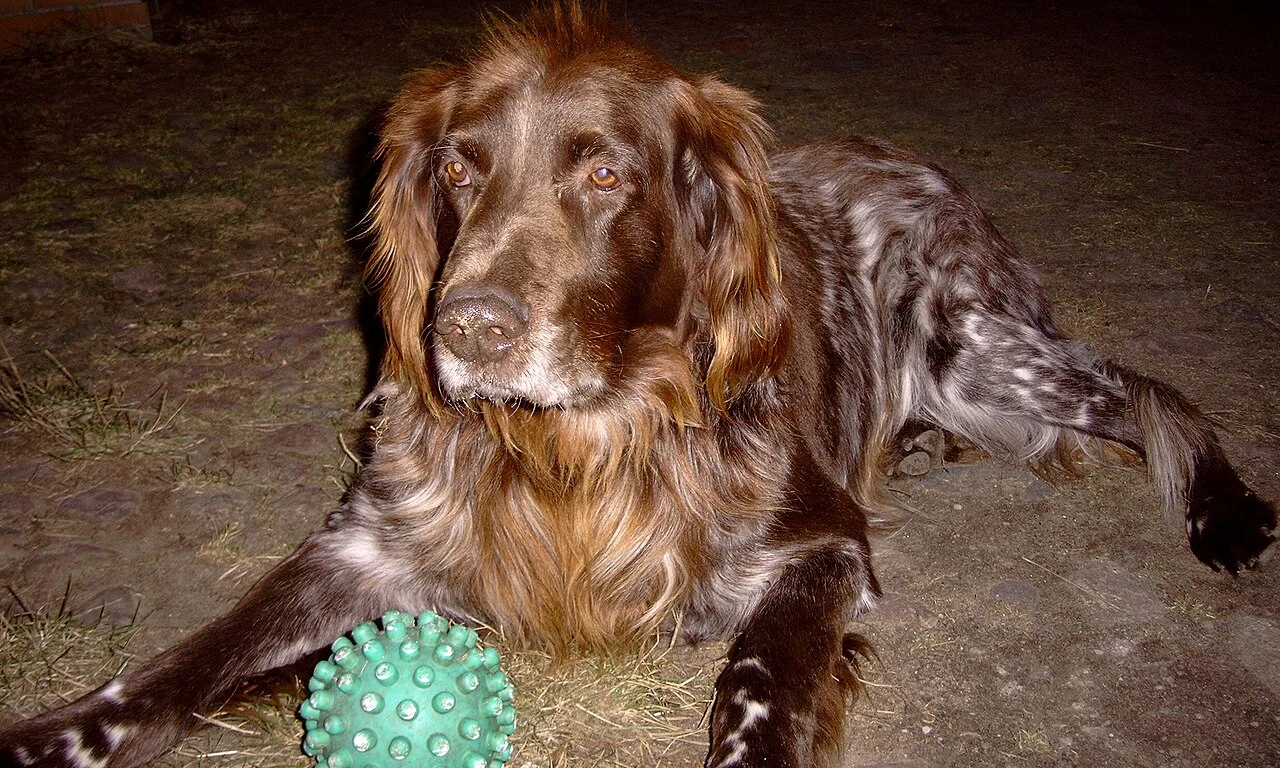
The German Longhaired Pointer has been bred as a distinct breed since 1879. The later standard aimed to develop a more consistent, versatile working dog from the long-haired gundogs of the time. Today's breed remains closely linked to that practical role. Its coat includes various brown colours and brown-and-white patterns.
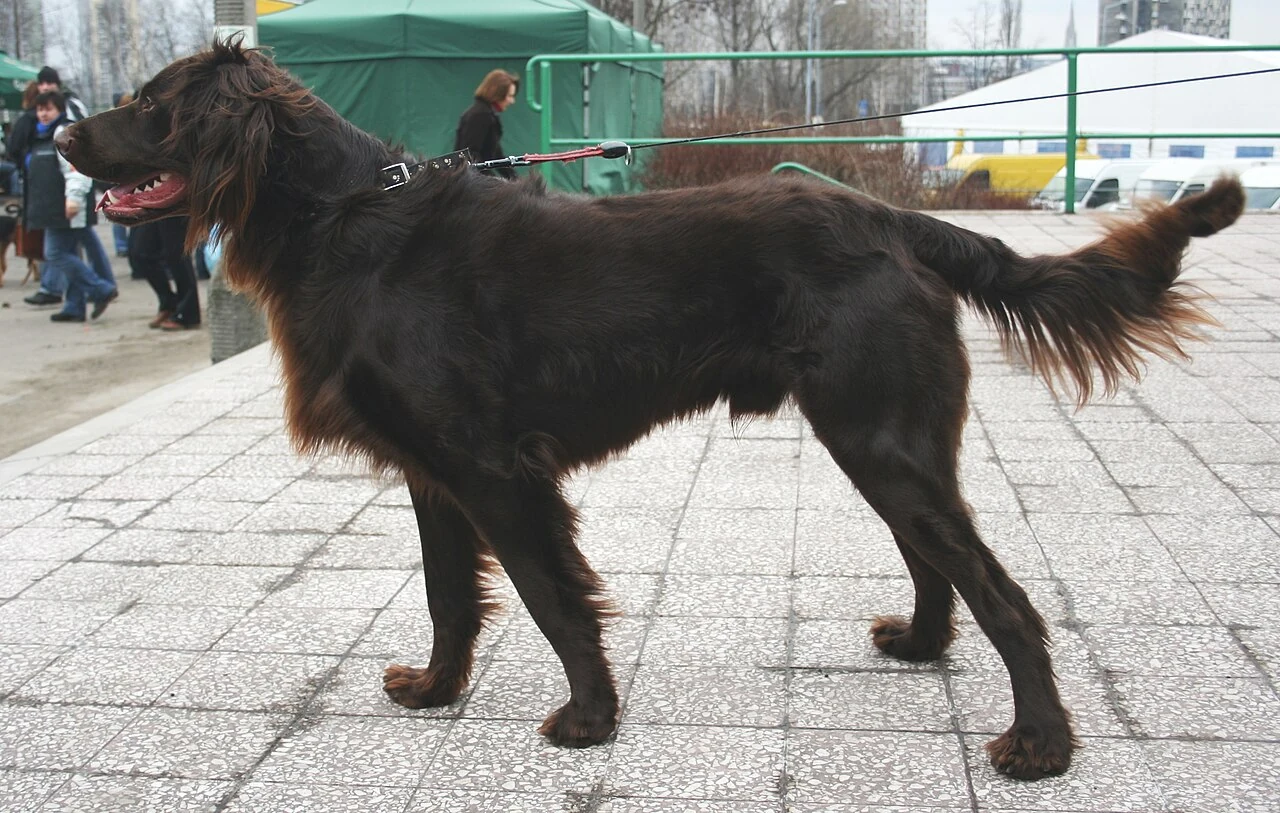
The international breed standard issued by the Fédération Cynologique Internationale (FCI) gives a shoulder-height range of 60 to 70 cm for males, with 63 to 66 cm considered ideal. Females have a range of 58 to 66 cm and an ideal of 60 to 63 cm. Weight is described as an average of 30 kg. The standard therefore distinguishes the permitted height range from a narrower ideal range.
For a puppy, small searching games, choosing to come back to you and calmly waiting at an open door can provide early foundations. Physical demands should suit its age. Regular rests and suitable growth food help you raise the youngster without already expecting the stamina of an adult working gundog.
From puppy to senior: caring for your dog through every life stage ↗
Health
Preparation should include looking at the parents' health records. The German club's 2023 breeding rules consider hip, elbow and shoulder findings. Hip dysplasia is a developmental problem that leaves the hip joint unstable. Elbow dysplasia includes several developmental disorders within the elbow. Reports should clearly identify the dog examined and have been assessed through the appropriate procedure.
Since July 2023, the club has also run cataract monitoring, systematically collecting eye examination results. A cataract is clouding in the lens of the eye that can affect vision. Ask for the dated specialist eye examinations and the club's current rules. The results describe the eyes at the time of examination. Later changes should be assessed by a vet again.
Limping, difficulty getting up or a visible change in the eyes should be assessed by a vet. For an older dog, walks and working tasks can be adapted to the mobility you actually observe. Fellfolio lets you record weight, reports and observations about its health. At an appointment, this can help explain when a change, such as difficulty rising, first appeared.
Could this breed fit your life?
Could work well if …
- You want a versatile gundog bred for hunting ability and can provide knowledgeable training and working opportunities.
- You enjoy patiently developing searching, recall, waiting and retrieving, with reliable everyday care in place.
- You can make time for grooming and checks after woodland, grassland and water outings.
What to consider
- Discuss the German breeding programme’s focus on hunting homes with the club and breeder before choosing a puppy.
- Although the breed is described as calm, you should assess how the individual dog responds to your family and other animals.
- Joint and eye reports should be dated and clearly identify the litter’s parents.
Similar needs, different dogs.
Selected by shared size, activity, grooming and training characteristics.
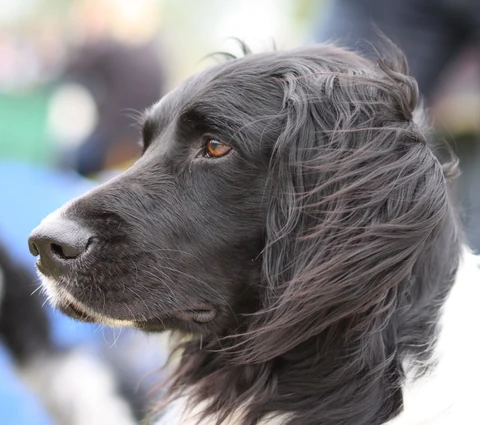
Versatile pointing gundog
Large Munsterlander
The Large Munsterlander is a large black-and-white gundog bred for work in fields, woodland and water. Its jobs include finding game, indicating it by standing still and retrieving shot game. Life with this breed suits someone who enjoys careful training and regular practical work with their dog.
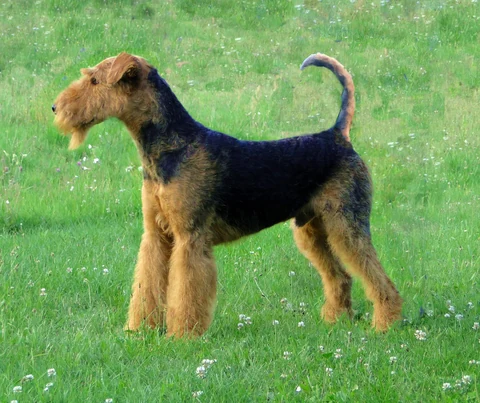
Large terrier from Yorkshire
Airedale Terrier
With its wiry coat, long head and distinctive beard, the Airedale is hard to miss. It is the largest terrier and shares much of the curiosity and independence of its smaller relatives. The breed originated along Yorkshire’s rivers, where dogs were needed for hunting on the banks. Today it suits people who enjoy being out with their dog, train patiently and make time for regular coat care.
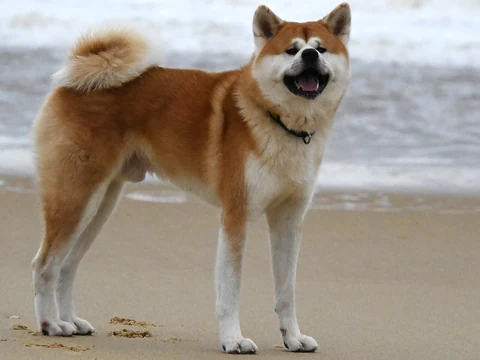
Japanese spitz with a dense undercoat
Akita
The Japanese Akita is a large dog with a dense undercoat, upright ears and a curled tail. It can form close bonds with familiar people while remaining more reserved with strangers. Its independence and hunting instincts suit people willing to guide encounters calmly and work with it regularly.
Sources and photograph credit
- Teaching your dog to be left alone
Used in this profile for: Staying home alone
- Canine Elbow Dysplasia
Used in this profile for: Health
- Canine Hip Dysplasia
Used in this profile for: Health
- Position Statements and Humane Dog Training
Used in this profile for: Temperament, Day-to-day care
- Zuchtordnung, 8. Ausgabe 04.06.2023
Used in this profile for: Everyday life, Health, Could this breed fit your life?
- Monitoring-Katarakt
Used in this profile for: Health
- German Longhaired Pointer
Used in this profile for: Day-to-day care, Lifespan
- FCI Standard No. 117: German Longhaired Pointing Dog
Used in this profile for: Size / Weight, Temperament, Day-to-day care, Size and build
- Cataracts in Dogs
Used in this profile for: Health
- Grass Seeds in Dogs
Used in this profile for: Day-to-day care
- Exercising Your Puppy
Used in this profile for: Size and build
- Training Your Dog to Be Left Alone
Used in this profile for: Everyday life
- Understanding Your Dog’s Behaviour
Used in this profile for: Temperament
- Children and Dogs
Used in this profile for: Everyday life, Could this breed fit your life?
- Train Your Dog to Come When Called
Used in this profile for: Everyday life, Could this breed fit your life?
Photo credits
Portrait · Dixie vom schoenrain.jpg · Indierocka · Public domain

Side view · Wyżeł niemiecki długowłosy 2009 pl.jpg · Pleple2000 · CC BY-SA 4.0 · Edited

Senior · Deutsch Langhaar Vorstehhund.jpg · Kirste · Public domain

Everyday life · Deutsch-Langhaar2.jpg · fuglu · CC BY-SA 1.0 · Edited
