 fellfolio
Companion and watchdog
Landseer
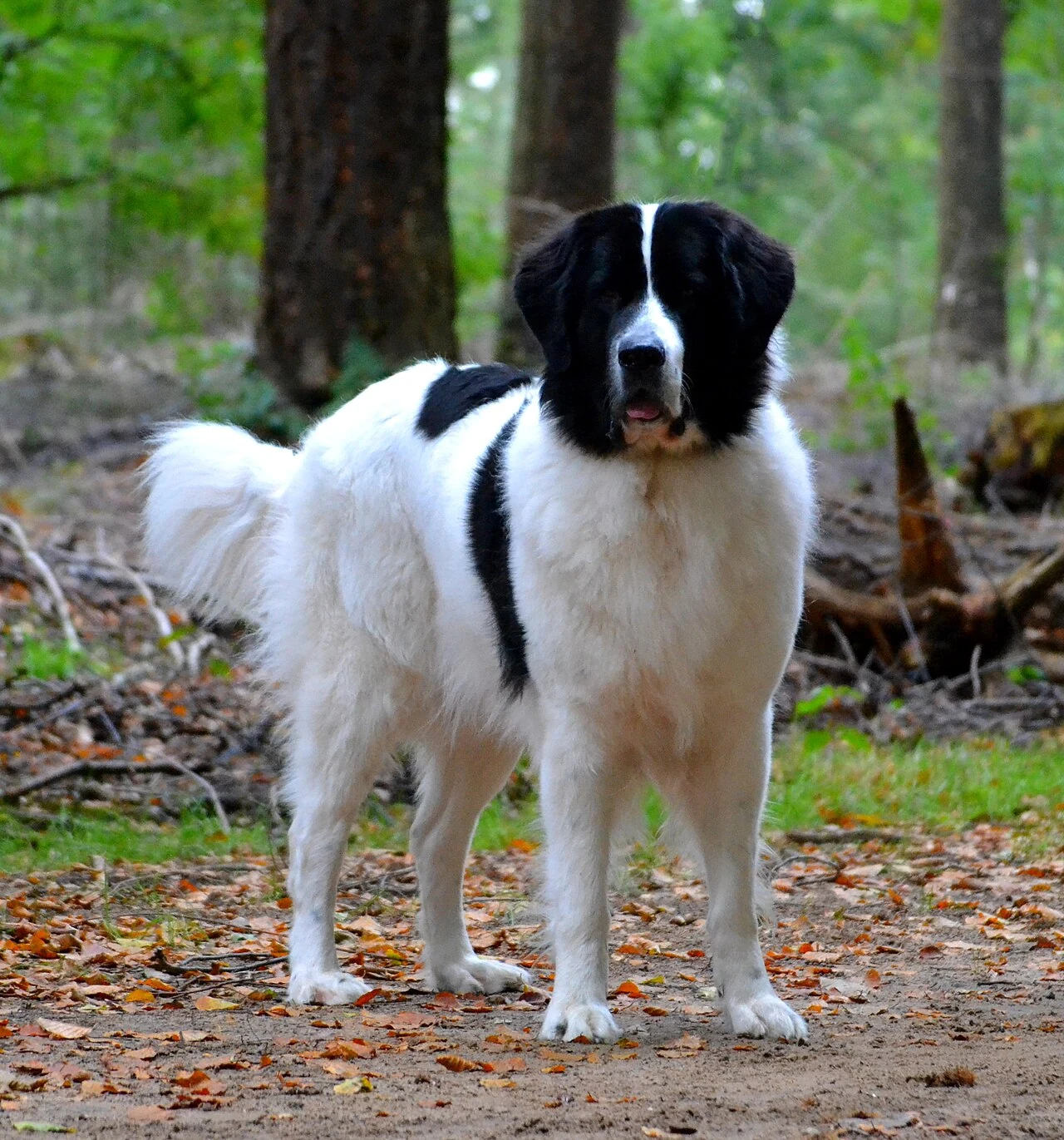
A Landseer stands out through its size and black-and-white coat. This profile covers the European Continental Type, a separate breed. It can suit people who enjoy outings with their dog and can reliably provide the space, grooming and care arrangements a very large companion needs.
At a glance
- Size
- Large
- Height at shoulder
- 67 to 80 cm
- Weight
- 40 to 70 kg
- Activity
- Moderate
- Grooming
- Several times weekly
- Training
- Patience & clear guidance
- Owner experience
- Experience recommended
A large companion with a place in the household
The name Landseer does not describe the same dogs everywhere. This profile covers the European Continental Type, recognised as a separate breed by the FCI, the international organisation that publishes breed standards. A black-and-white Newfoundland remains a Newfoundland. They can look similar in photographs. The FCI standard describes the Landseer as longer-legged and with a less dense undercoat than a black Newfoundland. The undercoat is the softer layer beneath the outer hairs.
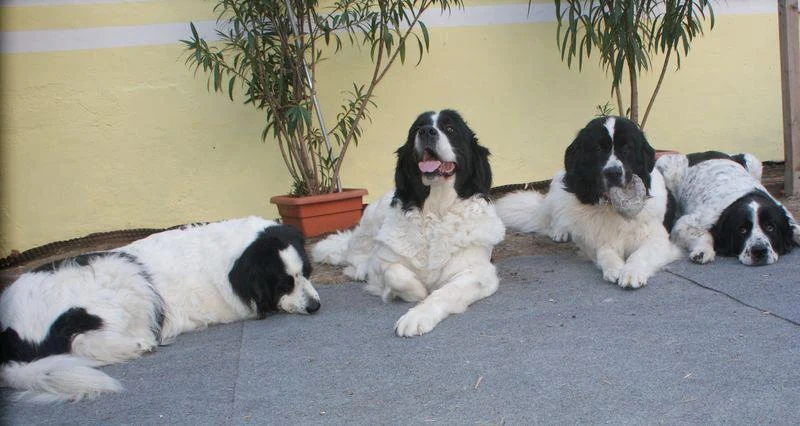
The German breed association VLD emphasises close family contact. In practical terms, this means planning a shared routine with outings, quiet time at home and care from someone familiar with the dog. A garden can be useful, but should not become the place where it spends most of its time alone. An individual dog’s response to new people and other animals should be assessed directly.
Its strength needs particular consideration around children. Even friendly leaning or a quick turn may knock a small child over. Adults should supervise their time together and provide a resting place where the dog remains undisturbed. Introductions to other dogs or cats should be gradual, with room for every animal to move away.
Everyday life
For an adult Landseer, walks with sniffing stops, games that involve finding a hidden toy and shared outings can offer varied activities. Some enjoy water work. This involves learning tasks in the water under experienced guidance, such as retrieving an appropriate object. Calm first attempts should give you a chance to see whether your dog enjoys the activity and can manage it physically.
Swimming needs an accessible, gently sloping way in and out. You should check currents, boat traffic and blue-green algae warnings beforehand. A dog should stay out when an algae warning is in place or water quality is doubtful. A heavy dog that becomes tired cannot easily be lifted up a steep bank. Help from an experienced club or trainer is therefore useful for early water sessions.
Access around the home matters too. A bed should allow the dog to stretch out without blocking a walkway. Non-slip routes to its resting place and the car can make daily life easier. Travel and care arrangements should include suitable transport and someone capable of handling a dog of this size safely.
Staying home alone
Dogs learn to stay home alone in small steps. The RSPCA advises no more than four hours at a time. Puppies and dogs that become unsettled when left alone need shorter absences and gradual practice. Arrange someone to care for your dog when you will be away longer.
Everyday dog training: recall, a loose lead and clear communication ↗
Day-to-day care
The long coat has outer guard hairs and a softer undercoat beneath them. The Dutch Landseer association recommends brushing it in layers. You should lift small sections and comb beneath them towards the skin. This reveals tangles that brushing the surface alone may miss. Areas behind the ears, around the legs and beneath a harness deserve a thorough check.
After rain or swimming, the coat should be able to dry properly. The association recommends rinsing it with clean water after swimming in a suitable natural body of water. Firm mats should not be pulled out forcefully. A groomer familiar with the breed can help with badly tangled hair and show you how to maintain your dog’s particular coat.
Paws should be checked for debris after walks and for trapped snow in winter. Nail care, toothbrushing with dog toothpaste and regular ear checks are part of the routine as well. An unusual ear smell, frequent scratching or head shaking should prompt veterinary advice. Time and costs for grooming and professional help should be considered before bringing the dog home.
Size and build
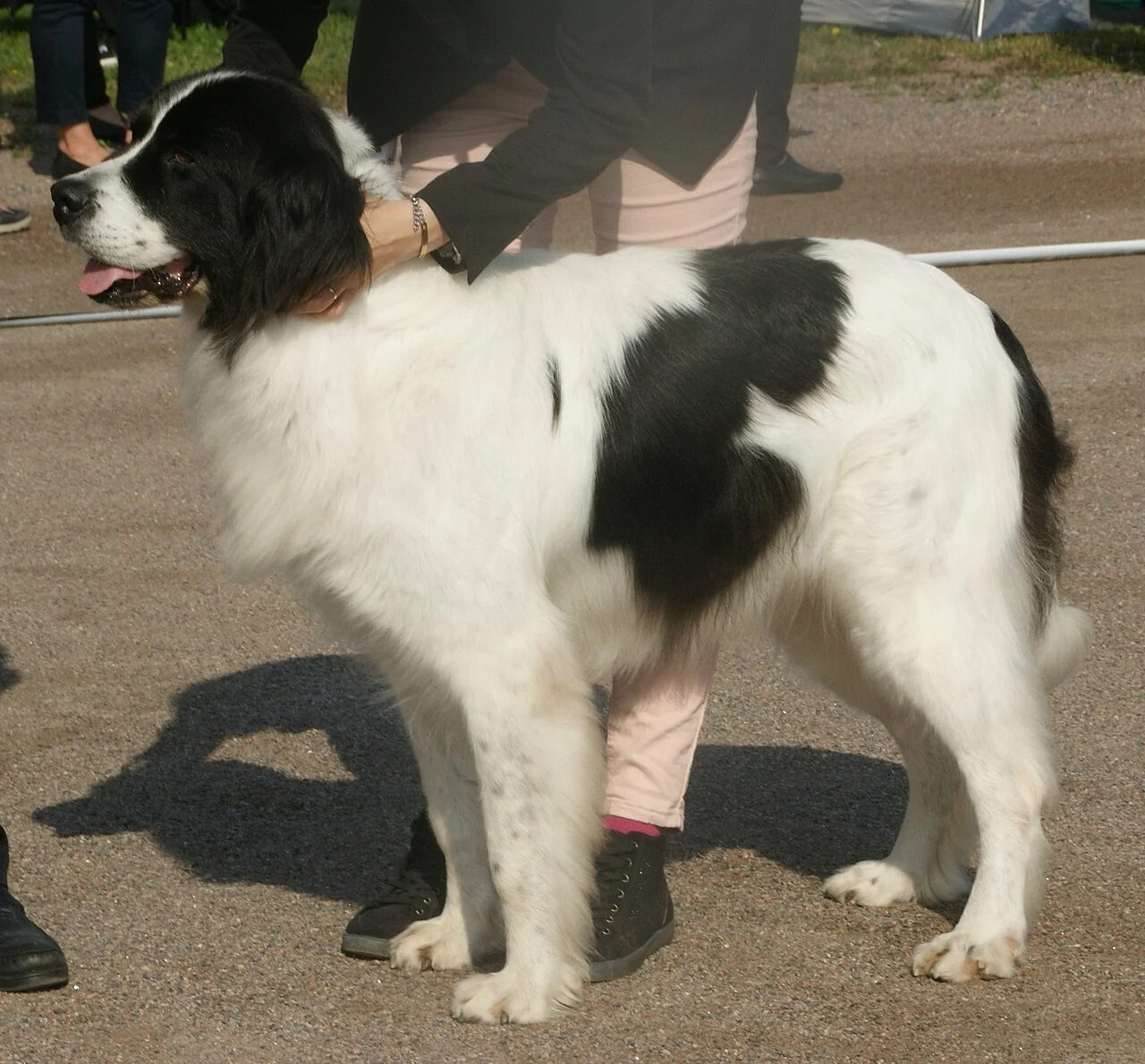
The FCI standard gives adult males a shoulder height of 72 to 80 cm and females 67 to 72 cm. Height is measured at the withers, the highest point of the back behind the neck. The VLD gives a guide of 40 to 55 kg for mature females and 50 to 70 kg for males. Appropriate body condition depends on the individual dog. Healthy growth should be the aim, rather than reaching a heavy weight as early as possible.
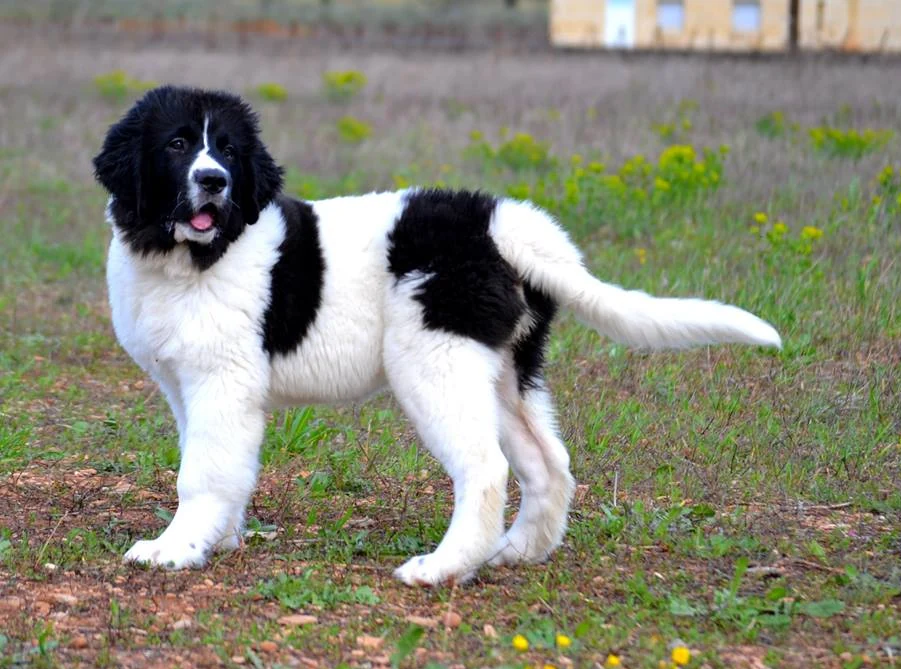
A Landseer puppy needs food suitable for growth and exercise that increases gradually. Long forced runs and repeated jumping should be avoided. Lead manners, comfortable handling and waiting while getting into the car can be introduced in small steps. Reward the behaviour you will later want from the adult dog.
In later life, a gentler access ramp, shorter walks and easy-to-reach beds may help. Sudden reluctance to rise or get into the car should be investigated. Assuming these changes are simply part of getting older can overlook pain.
From puppy to senior: caring for your dog through every life stage ↗
Health
Before choosing a puppy, you should examine its parents’ actual health records. The VLD breeding rules include checks for hip and elbow dysplasia, developmental joint problems that can cause pain and later damage. They also include examinations for abnormal development of joint cartilage.
The association’s genetic screening also covers muscular dystrophy, an inherited disease that causes progressive muscle weakness. A relevant inherited variant has been identified in Landseers. A DNA test checks for that particular change in the dog’s genetic material and helps breeders choose suitable pairings. Documented parental results may allow an exemption from repeat testing. A breeder should be able to explain which records support a litter. Weakness in your own dog still needs veterinary examination, whatever its paperwork says.
With a large, deep-chested dog, you should also know the signs of gastric dilatation-volvulus, commonly called bloat. The stomach expands and can twist, creating an emergency. Unproductive retching, marked restlessness and a suddenly swollen abdomen need immediate veterinary attention. Fellfolio can hold veterinary documents, weight records and observations together, helping different carers keep track or prepare for an appointment.
Could this breed fit your life?
Could work well if …
- You enjoy outings with a dog and can safely handle a very large companion.
- You want your dog involved in family life and can arrange suitable care and transport.
- Thorough long-coat grooming and its costs can remain part of your routine.
What to consider
- The European Continental Type is a separate breed, rather than simply any black-and-white Newfoundland.
- Steep banks and unsuitable water can endanger even a dog that enjoys swimming.
- A heavy puppy is not a sign of quality. Growth and body condition should be discussed with a veterinary professional.
Similar needs, different dogs.
Selected by shared size, activity, grooming and training characteristics.
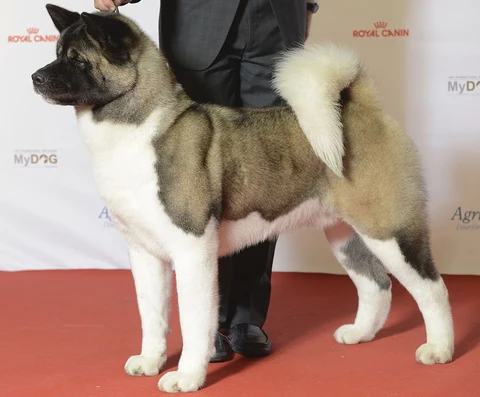
Large companion with Japanese roots
American Akita
The American Akita is a large, powerful dog with a broad head, upright ears and a dense coat. It can be deeply attached to its family while being less comfortable around unfamiliar dogs. Experienced handling and thoughtful arrangements for walks, visitors and temporary care are important.
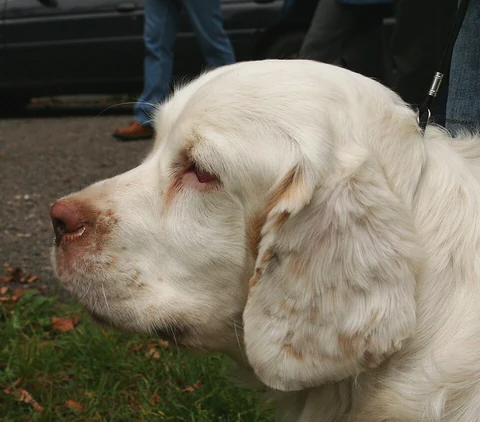
Flushing spaniel
Clumber Spaniel
The Clumber is the heaviest spaniel: low, long and strong, with a white coat and an excellent nose. It often seems relaxed at home yet follows outdoor scents with persistence.
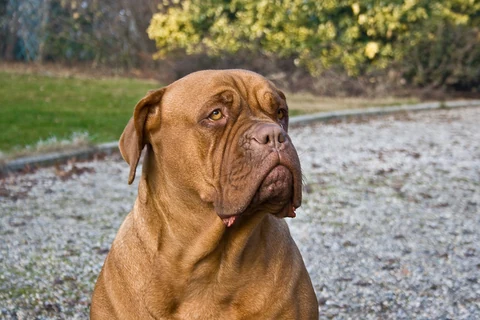
Powerful French companion with a watchful nature
Dogue de Bordeaux
The Dogue de Bordeaux is a powerful French dog with a short coat and broad head. It often seeks close contact with its people and can be a watchful guardian. Its considerable strength and the health burdens associated with its build and short face deserve careful attention before acquiring one.
Sources and photograph credit
- Teaching your dog to be left alone
Used in this profile for: Staying home alone
- Gastric Dilatation-Volvulus
Used in this profile for: Health
- Canine Hip Dysplasia
Used in this profile for: Health
- Position Statements and Humane Dog Training
Used in this profile for: Size and build
- Landseer ECT: Verzorging
Used in this profile for: Everyday life, Day-to-day care
- A Nonsense Variant in COL6A1 in Landseer Dogs with Muscular Dystrophy
Used in this profile for: Health
- FCI Standard: Landseer European Continental Type
Used in this profile for: Size / Weight, Temperament, Day-to-day care, Size and build
- Zuchtordnung des VLD 4/2024
Used in this profile for: Health
- Landseer: Rasseinformationen
Used in this profile for: Size / Weight, Temperament, Everyday life, Size and build, Could this breed fit your life?
- Heatstroke in Dogs
Used in this profile for: Everyday life
- Exercising Your Puppy
Used in this profile for: Size and build
- Training Your Dog to Be Left Alone
Used in this profile for: Everyday life, Could this breed fit your life?
- Children and Dogs
Used in this profile for: Temperament, Could this breed fit your life?
- Caring for Your Dog’s Teeth
Used in this profile for: Day-to-day care
Photo credits
Portrait · Pandas des terres rouges.jpg · Elevage des Pandas Des Terres Rouges · CC BY-SA 3.0 · Edited

Side view · Landseer 2018.jpg · Canarian · CC BY-SA 4.0 · Edited

Young dog · Landseer chiot 3 mois.jpg · Elevage des Pandas Des Terres Rouges · CC BY-SA 3.0 · Edited

Everyday life · Landseer Lucky Giants.jpg · Landseer Lucky Giants · CC BY-SA 3.0 · Edited
