 fellfolio
Terrier
Lakeland Terrier
The Lakeland Terrier is small, sturdy and often keen to explore. Its ancestors worked across the rocky terrain of England’s Lake District. Today, it can suit people who enjoy shared adventures and are ready to give hunting behaviour, training and wire-coat care thoughtful attention.
At a glance
- Size
- Small
- Lifespan
- over 12 years
- Activity
- High
- Grooming
- Specialist coat care
- Training
- Patience & clear guidance
- Owner experience
- Experience recommended
Curious on walks and quick on its feet
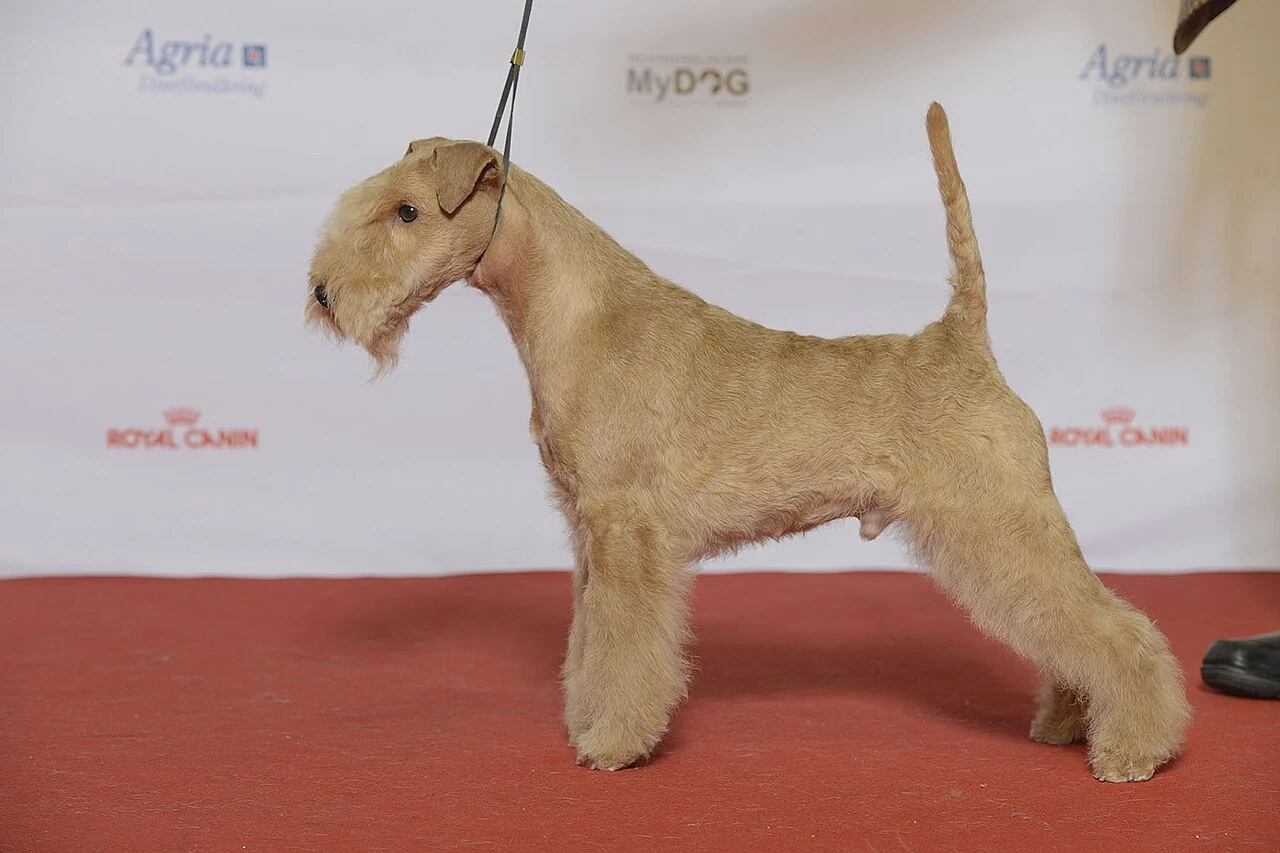
The Lakeland Terrier developed from working terriers in different valleys of the Lake District in northern England. They travelled with hounds across steep, rocky ground and were used for work that included pursuing foxes. The current breed standard describes a compact, confident and agile terrier. Small size therefore does not mean that a routine without interesting outings will suit it.
Rustling undergrowth or a fresh wildlife scent may attract considerable attention on a walk. Recall, returning to you when called, should be taught early in places with little distraction. A lead is sensible near roads or where wildlife is likely. It should allow your dog to explore without giving it the opportunity to chase an animal.
PDSA, a British veterinary charity, highlights hunting behaviour in this breed. Rabbits, guinea pigs and other small prey animals therefore need secure separation. Living with a cat should be assessed according to both animals’ behaviour and experience. Adults should supervise calm time with children and make sure the dog can move away when it wants to.
Everyday life
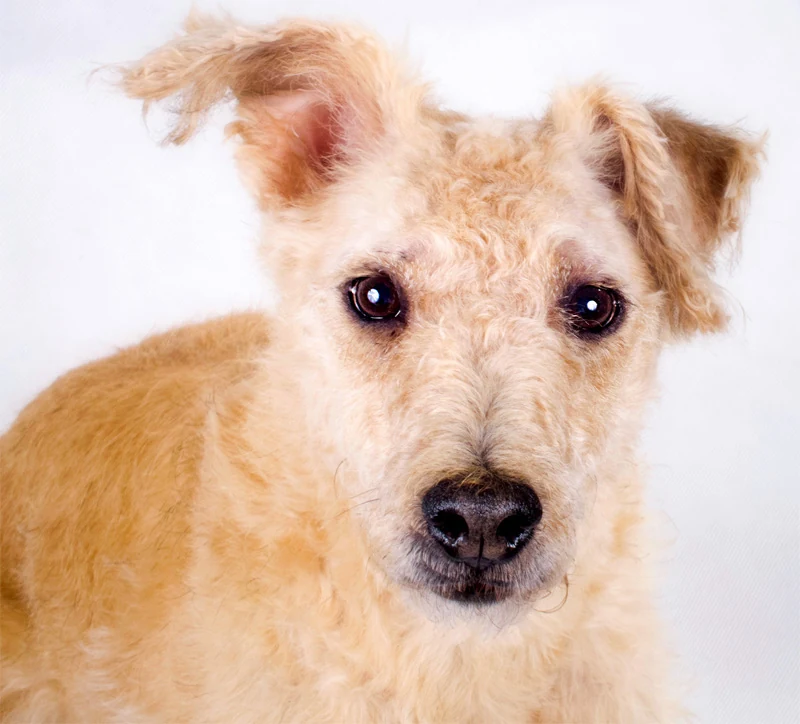
Different routes can make a walk more interesting for a Lakeland than repeating the same circuit. Time to sniff, find a hidden toy and practise a familiar cue can give the walk variety. For example, you could hide a familiar toy behind a low log after showing your dog how the game begins. The task should let it reach the toy easily.
Free running can take place in a reliably fenced area. You should first check that gates are closed and the fence has no gaps your dog could escape through. It is also useful to practise moving between activity and rest. After a shared task, you could allow sniffing or continue along a quiet stretch of path, rather than repeatedly increasing the pace of play.
A Lakeland can live in a flat when exercise, activities and rest suit its needs. If hallway noise triggers barking, you should begin with easier situations and enough distance from the entrance. Time alone needs gradual introduction. Persistent barking or restless pacing should prompt simpler training steps and, where needed, professional advice.
Staying home alone
Dogs learn to stay home alone in small steps. The RSPCA advises no more than four hours at a time. Puppies and dogs that become unsettled when left alone need shorter absences and gradual practice. Arrange someone to care for your dog when you will be away longer.
Everyday dog training: recall, a loose lead and clear communication ↗
Day-to-day care
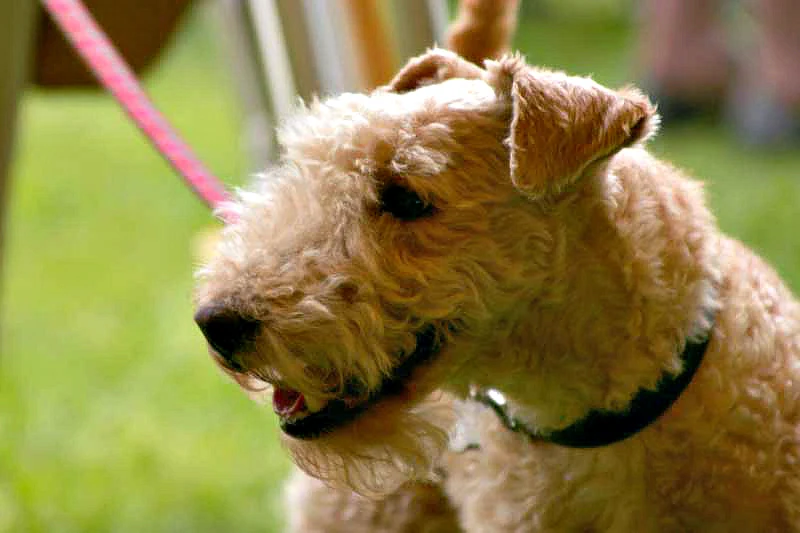
A Lakeland has harsh outer guard hairs with a softer undercoat beneath them. Hand stripping is often used to maintain the wiry texture. A skilled person removes mature, loose outer hairs that are ready to release. This is different from pulling out firmly attached hair at random. The Midland Lakeland Terrier Club recommends learning the technique with experienced help.
For a family dog, coat care should suit the skin, hair and what the dog can comfortably tolerate. Regular brushing and combing remove loose hair and help prevent tangles. Alongside hand stripping, a groomer can discuss appropriate trimming with scissors or clippers. A particular show finish should not be forced at the expense of comfort. Pain, red skin or firm mats need skilled attention.
Grooming can be introduced in short stages from puppyhood. Briefly examining one paw, rewarding the dog and continuing later is a useful start. Nails, ears and skin should be checked regularly. Toothbrushing with dog toothpaste belongs in the routine too. Before bringing your dog home, it is worth finding a groomer experienced with wire-coated terriers and planning for recurring costs.
Size and build
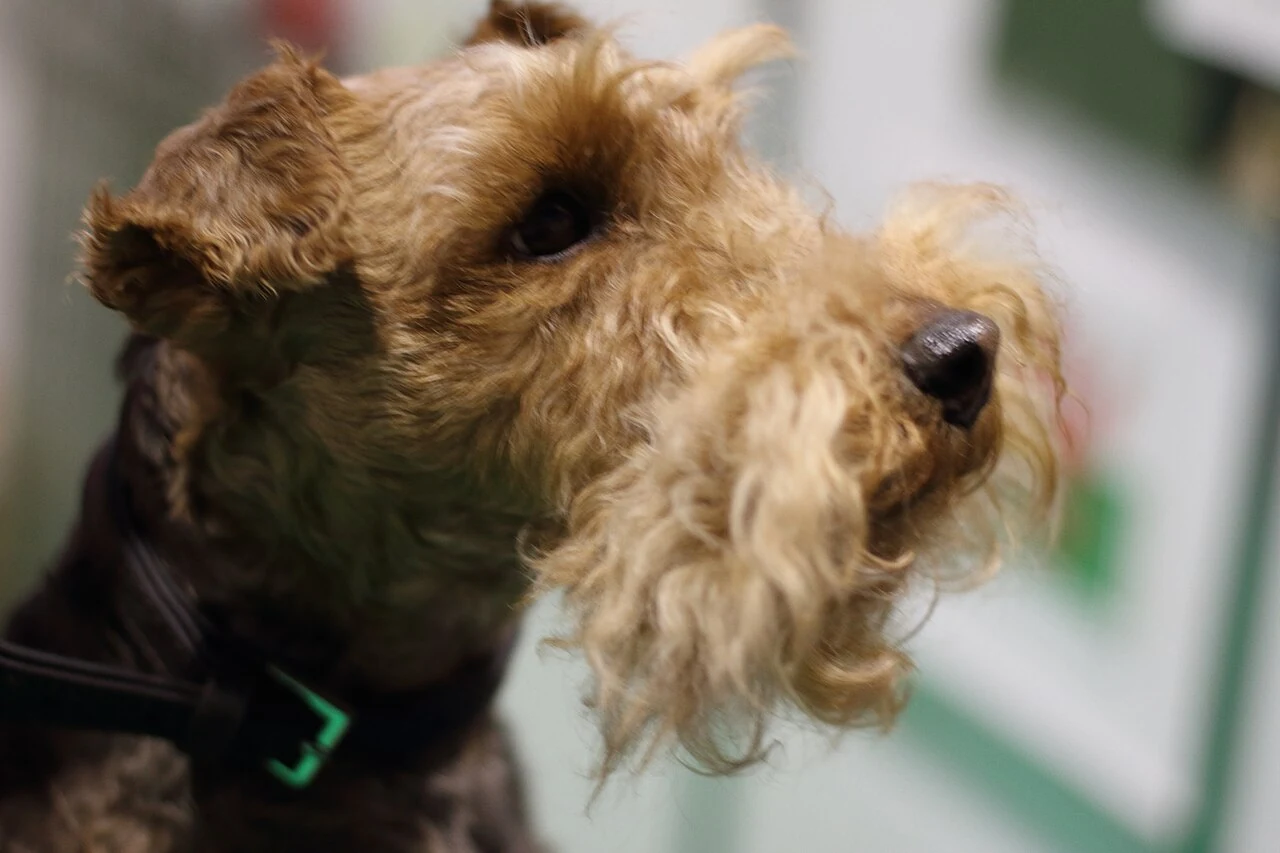
The FCI, the international organisation that publishes breed standards, gives a maximum shoulder height of 37 cm. The standard lists 7.7 kg for males and 6.8 kg for females. These are breed guidance figures, rather than a target weight for every individual. Height is measured at the withers, the highest point of the back just behind the neck. Food portions and body condition should suit your own dog.
Brief, rewarded exercises help build everyday habits. If your Lakeland looks towards you at a junction in a path, you can reward that moment before walking on together. A puppy’s first practice should not take place somewhere wildlife, cyclists and other dogs all compete for its attention. New distractions can be introduced gradually.
The Royal Kennel Club lists a lifespan of over 12 years. Shorter walks with time to explore and games with easily reached hiding places may remain enjoyable as your dog grows older. Sudden uncertainty, limping or changes in sight should be checked by a vet. An older dog still needs clear, familiar cues.
From puppy to senior: caring for your dog through every life stage ↗
Health
PDSA lists eye-lens conditions and Legg-Calvé-Perthes disease among the health issues that can affect Lakelands. Lens luxation occurs when the lens moves out of its normal position within the eye. A cataract makes the lens cloudy. An eye that suddenly becomes red, painful, held closed or visibly altered needs prompt veterinary examination.
In Legg-Calvé-Perthes disease, the head of the thigh bone within the hip loses an adequate blood supply and can become damaged. This can cause pain and limping. A young dog that repeatedly takes weight off a hind leg should be examined by a vet. You should not simply wait for growth to resolve the problem.
Before choosing a puppy, ask about the health of its parents and other close relatives. The Royal Kennel Club lists a specialist eye examination among its additional breeding recommendations. A genetic test checks for a particular inherited change, while an eye examination assesses the eyes themselves. They should not be confused. Fellfolio can keep veterinary findings, weight records and changes in movement together, making them easy to find at an appointment or when another person takes over care.
Could this breed fit your life?
Could work well if …
- You enjoy an inquisitive terrier and varied walks together.
- You can plan around potential chases and include brief, kind training in everyday life.
- You can arrange skilled wire-coat care and give your dog opportunities to settle at home.
What to consider
- Small size does not automatically make a working terrier a quiet companion.
- Wildlife scents can distract even a well-trained dog. Free running needs a suitable setting.
- Hand stripping should remove mature, loose hairs. Painfully pulling out firmly attached hair is not appropriate coat care.
Similar needs, different dogs.
Selected by shared size, activity, grooming and training characteristics.
Terrier
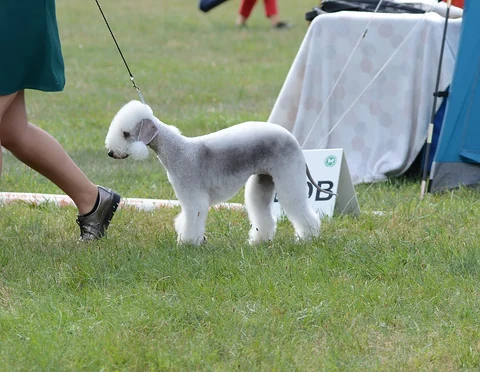
Bedlington Terrier
An arched outline and soft, curly coat give the Bedlington Terrier a distinctive appearance. Behind that gentle look is an agile terrier with a hunting history. It can be an attentive companion when shared walks, kind training and thorough grooming are part of everyday life.
Terrier
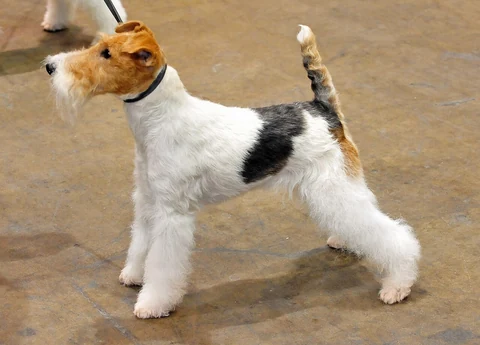
Wire Fox Terrier
The Wire Fox Terrier is easy to recognise by its rough coat, beard and watchful expression. Beneath that neatly groomed appearance is a British hunting terrier. It suits people who enjoy life with an active dog and can make room for the more demanding coat care as well as training.
Small Australian wire coated terrier
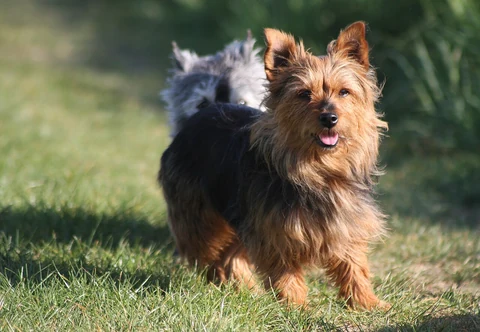
Australian Terrier
The Australian Terrier is a small, alert dog that enjoys getting out and exploring. Its harsh coat and distinctive neck ruff reflect a working background. At home it often wants to be close to its people, while a scent or a small animal can capture its attention outdoors.
Sources and photograph credit
- Teaching your dog to be left alone
Used in this profile for: Staying home alone
- Wire-Coat Care: Stripping
Used in this profile for: Day-to-day care
- Position Statements and Humane Dog Training
Used in this profile for: Size and build
- Grooming a Lakeland Terrier
Used in this profile for: Day-to-day care
- Lakeland Terrier: Breed Health and Care
Used in this profile for: Temperament, Everyday life, Health, Could this breed fit your life?
- Lakeland Terrier: Breed Information
Used in this profile for: Temperament, Size and build, Health, Lifespan
- FCI Standard: Lakeland Terrier
Used in this profile for: Size / Weight, Temperament, Day-to-day care, Size and build
- Exercising Your Puppy
Used in this profile for: Size and build
- Training Your Dog to Be Left Alone
Used in this profile for: Everyday life, Could this breed fit your life?
- Understanding Your Dog’s Behaviour
Used in this profile for: Everyday life
- Children and Dogs
Used in this profile for: Temperament, Could this breed fit your life?
- Caring for Your Dog’s Teeth
Used in this profile for: Day-to-day care
- Train Your Dog to Come When Called
Used in this profile for: Everyday life
Photo credits
Side view · LAKELANDTERRIER, DK UCH LT ESCH FI UCH NO UCH NO V-15 SE UCH Chelines In Extremis (24290878205).jpg · Johan Frick-Meijer / Svenska Mässan · CC BY 2.0 · Edited
.jpg)
Coat and features · Crufts 2019- NEC, Birmingham- 08-March 2019 - 32389328387.jpg · adam w · CC BY 2.0 · Edited

Portrait · Lakeland Terrier2.jpg · dee2018 · CC BY 2.0 · Edited

Everyday life · Lakeland Terrier Flickr.jpg · Flickr user Srinayan Puppala (TigerPuppala) · CC BY-SA 2.0 · Edited
