 fellfolio
Irish terrier with a soft, wavy coat
Kerry Blue Terrier
A soft, wavy coat and strong body give the Kerry Blue Terrier a distinctive appearance. Its blue-grey colour develops as it grows. Behind the groomed beard is a versatile Irish working dog that enjoys activity, shared tasks and clear guidance. The coat sheds little, but needs regular brushing, combing and skilled trimming.
At a glance
- Size
- Medium
- Height at shoulder
- 44.5 to 49.5 cm
- Lifespan
- over 10 years
- Activity
- High
- Grooming
- Several times weekly
- Training
- Patience & clear guidance
- Owner experience
- Experience recommended
A strong companion with a varied working background
The Kerry Blue Terrier carried out different jobs on Irish farms. It was used for hunting and retrieving, meaning bringing back animals shot by the hunter. As a companion, it may enjoy varied tasks, from exploring new routes to searching for a toy together. Activities should be tried to discover what the individual dog enjoys.
Calm encounters with other dogs and clear everyday cues matter. Enough space should initially be kept around unfamiliar dogs for it to watch and turn its attention back to you. A practised cue to keep walking and suitable playmates can make outings easier. Friendliness with its own family tells you little about its reaction to an unfamiliar animal.
Adults should supervise children during play. A strong, lively dog can knock someone over unintentionally. Cats need careful introductions and places to retreat. Small pets should be kept securely apart from the dog. An undisturbed bed gives it somewhere to settle after activities together.
Everyday life
A suitable routine includes walks, exercise and tasks in which dog and person work together. A small object search can begin with a familiar toy placed in sight. Later, the dog can learn to find and bring it. A friendly swap helps make giving the toy back worthwhile.
Waiting while you open a door is another useful exercise. Distractions should be limited at first and a brief quiet pause rewarded. This builds an everyday cue without a long training session. If another dog causes excitement, more distance may be needed before learning is possible again.
A garden provides extra space for activity and needs secure fencing. Outings and time with its people should still be part of the routine. Regular absences need dependable care arrangements and gradually introduced time alone. Grooming time should be planned as reliably as walks.
Staying home alone
Dogs learn to stay home alone in small steps. The RSPCA advises no more than four hours at a time. Puppies and dogs that become unsettled when left alone need shorter absences and gradual practice. Arrange someone to care for your dog when you will be away longer.
Everyday dog training: recall, a loose lead and clear communication ↗
Day-to-day care
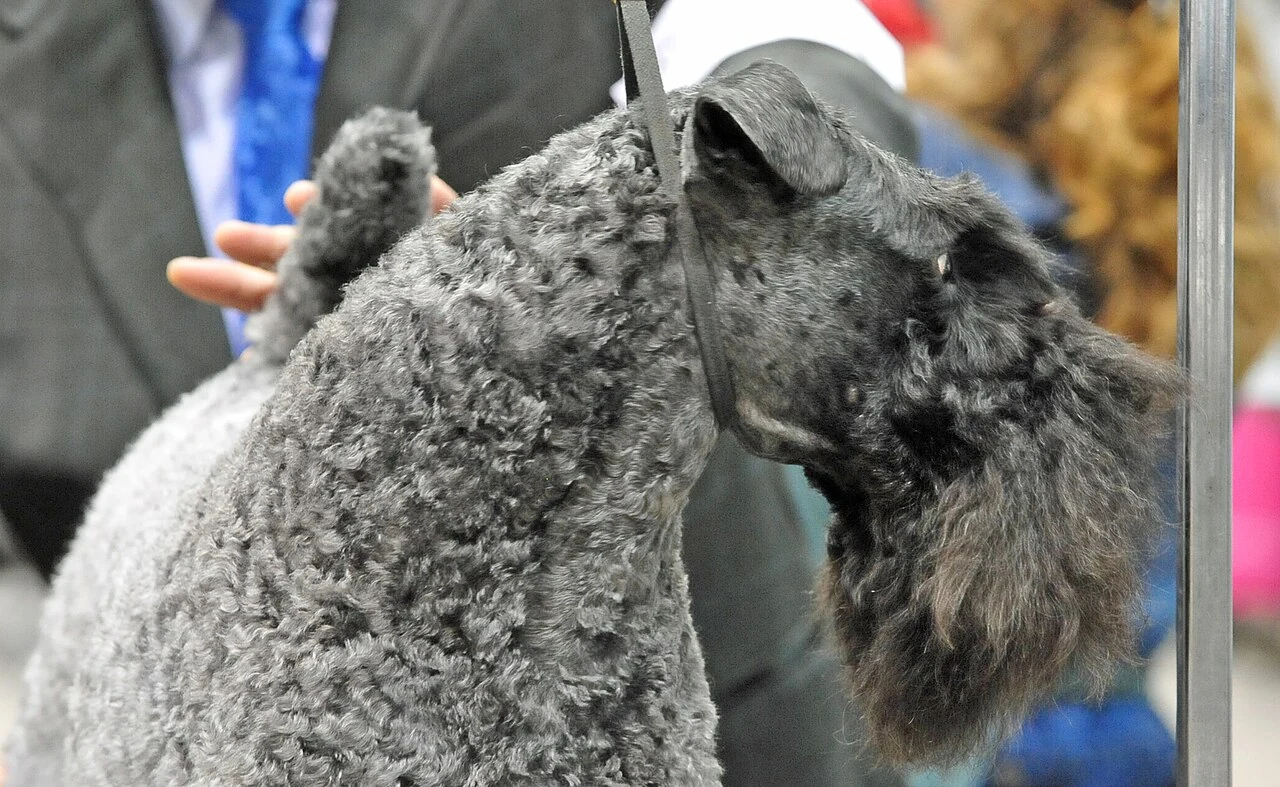
The soft, wavy coat needs regular brushing down to the skin followed by gentle combing. Tangles can form particularly in the beard, legs, armpits and behind the ears. A comb passing gently through these areas gives a better indication of matting than a smooth-looking surface. The Royal Kennel Club, the British canine organisation, gives weekly grooming as a guide. Longer hair or changes in coat condition may need more attention.
The Kerry’s soft coat should be shortened and shaped through skilled clipping and scissoring. An experienced groomer can choose a practical style that keeps the eyes clear and can be maintained at home. Tangles should be removed before bathing, and the coat dried carefully afterwards.
Water and food can remain in the beard. When cleaning and drying the beard, the skin beneath it should also be checked for redness or sore areas. Red or smelly ears, itching and pain need veterinary attention. Ear hair should not routinely be plucked without considering the individual dog. Daily brushing with dog toothpaste and regular nail checks also belong in care. Low shedding means neither minimal grooming nor guaranteed suitability for someone with allergies.
Size and build
The Kerry Blue Terrier comes from Ireland and takes its name from County Kerry. Its early history is not fully documented. It appeared in the show ring in 1913, and the Dublin Blue Terrier Club was established in 1920. The breed retains the strong outline of a terrier used for varied work.
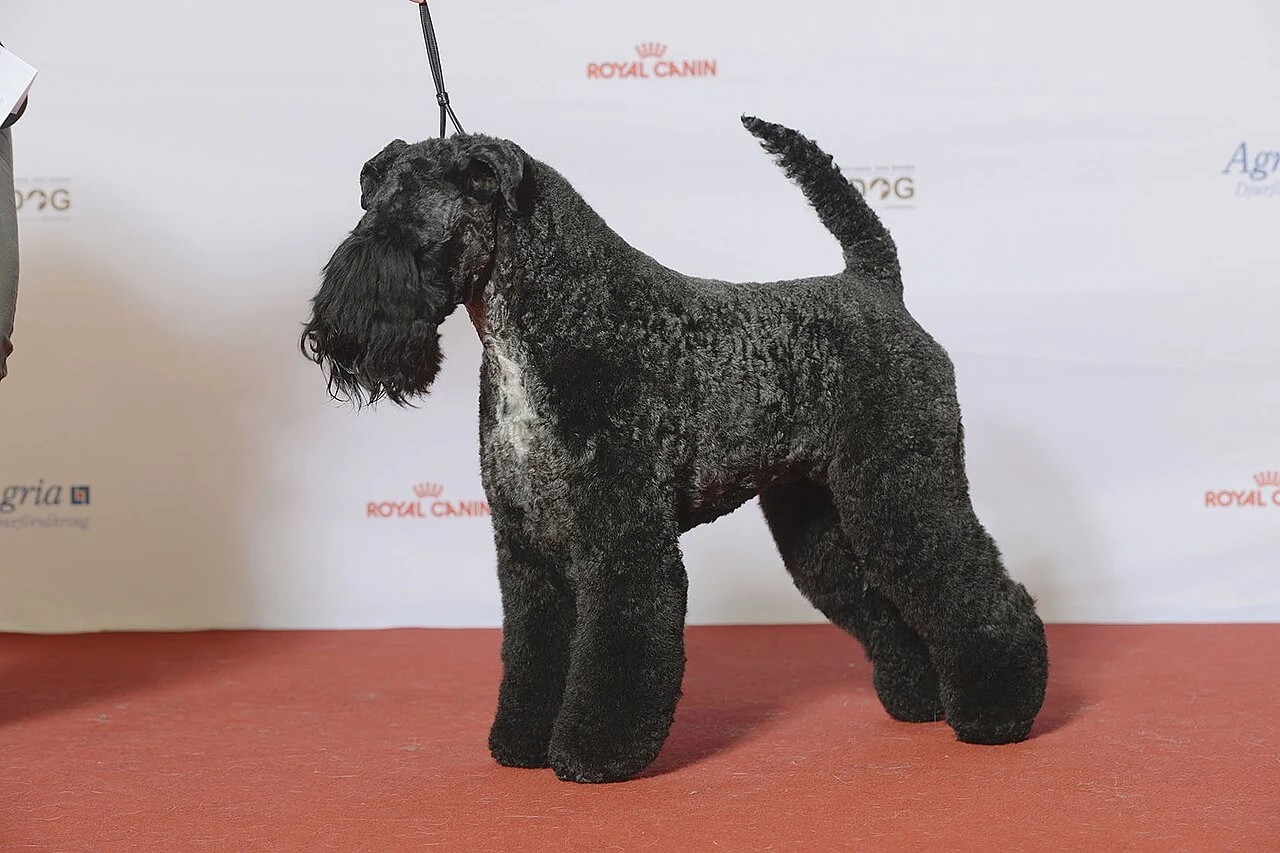
The international canine organisation FCI describes a muscular body with a soft, plentiful, wavy coat. Males should stand 45.5 to 49.5 cm and females 44.5 to 48 cm at the shoulder. The standard gives males a weight of 15 to 18 kg, with females proportionately lighter.
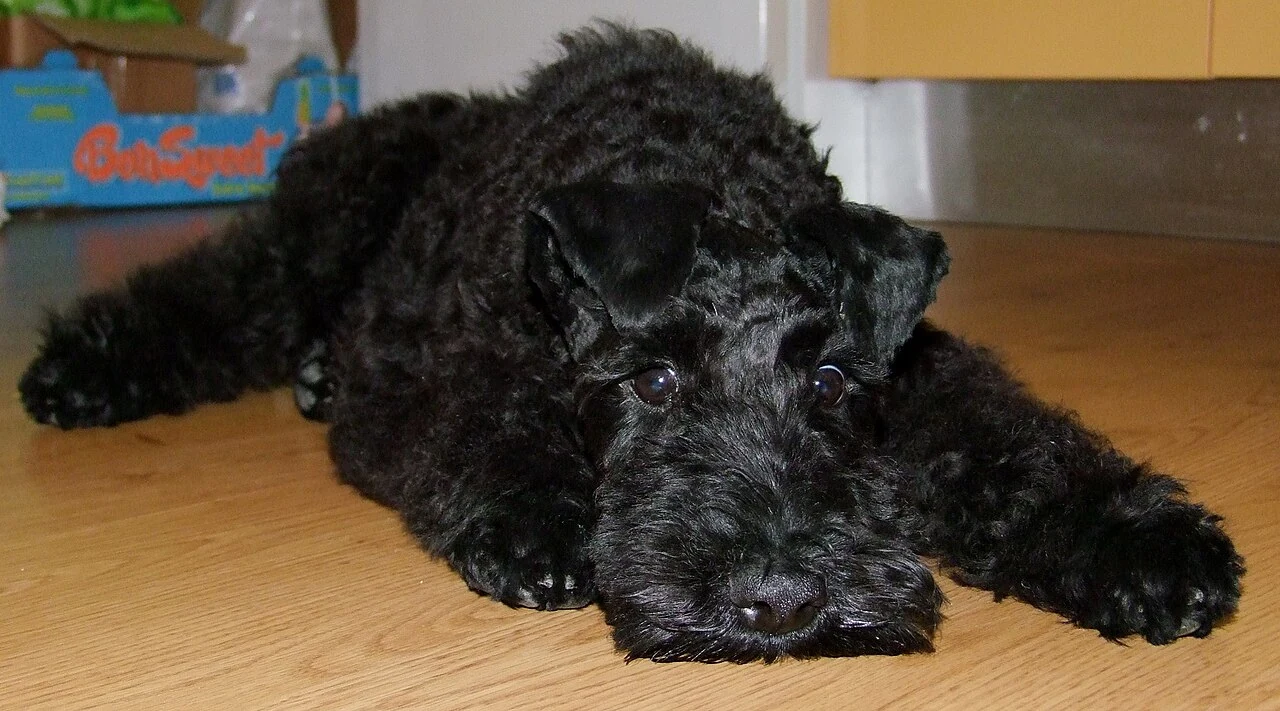
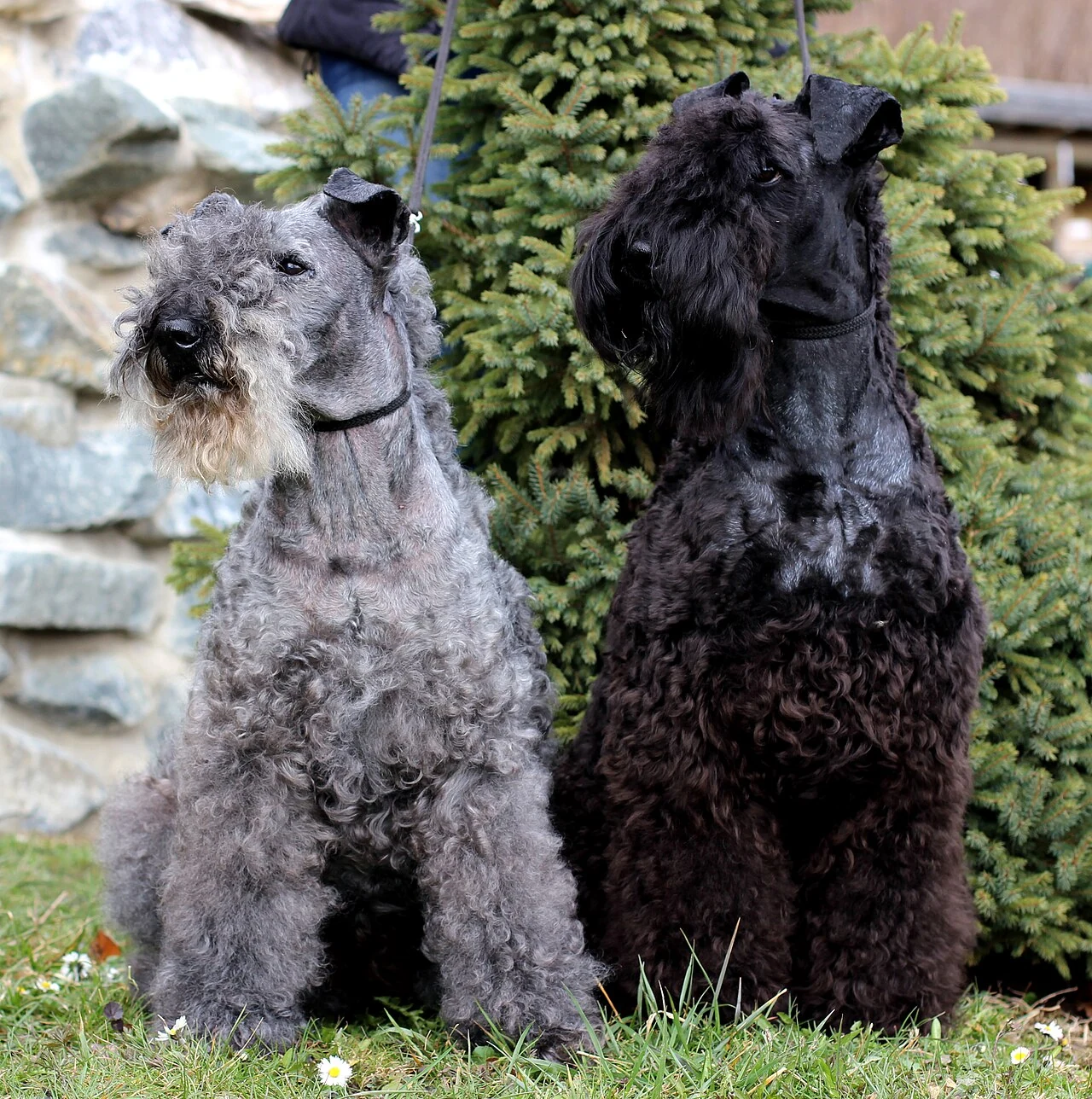
Adults show different shades of blue that can look grey, sometimes with black areas. Puppies may initially be dark. The standard permits black or tan colouring up to 18 months.
From puppy to senior: caring for your dog through every life stage ↗
Health
Health records and known conditions in the family should be discussed openly when choosing a puppy. One scientifically established inherited condition is canine multiple system degeneration, or CMSD. It damages parts of the nervous system involved in controlling movement. Affected young dogs can develop tremors and increasing difficulties with balance and coordination.
A study published in 2024 investigated a causal SERAC1 gene variant in Kerry Blue Terriers and confirmed recessive inheritance. An affected dog has inherited two corresponding copies. If genetic results are provided, they should identify the particular variant the dog was tested for. The study does not establish how common the condition is across all Kerrys today. New coordination problems should be assessed by a vet rather than dismissed as clumsiness.
Eyes and ears also deserve attention in everyday care. A squinting or red eye, or marked discharge, needs examination. These signs can have different causes. Weight changes and altered movement should also be discussed with the vet. The Royal Kennel Club gives a lifespan of more than 10 years. A routine adapted as the dog ages and preventive care belong in long-term planning.
Could this breed fit your life?
Could work well if …
- You want a strong, active terrier and enjoy tasks to do together.
- You can arrange calm encounters and teach clearly through rewards.
- You prefer a low-shedding coat and can commit to its grooming needs.
What to consider
- The soft, wavy coat needs regular combing and skilled trimming.
- Suitable playmates and supervised time with children matter for a strong, lively dog.
- Health records and family history should be discussed specifically. New coordination problems need a vet.
Similar needs, different dogs.
Selected by shared size, activity, grooming and training characteristics.
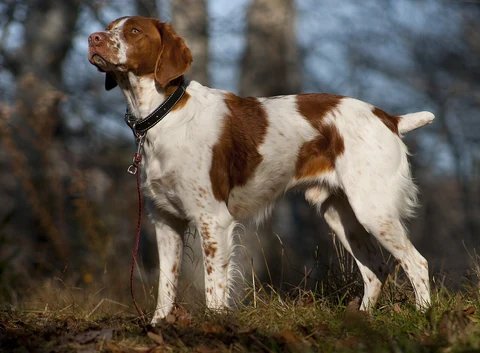
French pointing dog
Brittany
The Brittany is a compact French gundog with plenty of energy and a keen nose. It searches for game, points and retrieves. Pointing means pausing near game it has located to show the handler where it is. Anyone considering a Brittany as a companion should take its hunting instincts as seriously as its often friendly, people-oriented nature.
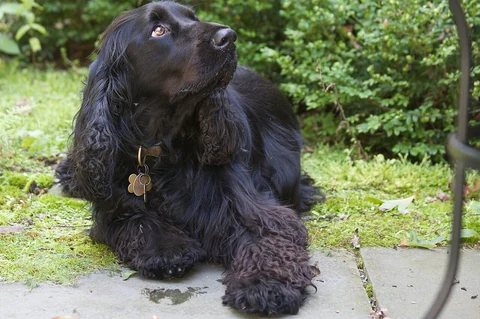
Sensitive hunting companion with a long silky coat
Field Spaniel
The Field Spaniel is an active, sensitive dog that enjoys following scents outdoors and being close to its people at home. Beneath the long silky coat is an enduring hunting companion. Varied exercise, shared activities and kind training give this attentive dog plenty to enjoy with its family.
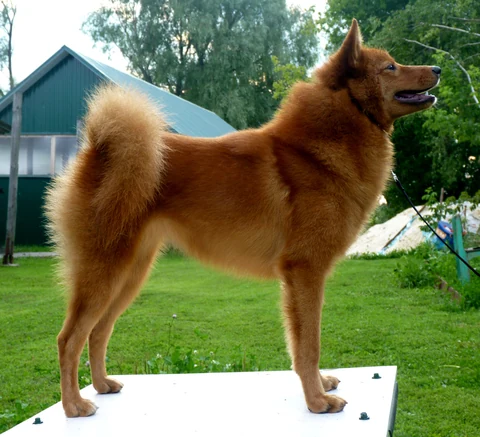
Vocal hunting dog from Finland
Finnish Spitz
A reddish gold coat, pointed ears and a tail curled over the back make the Finnish Spitz easy to recognise. Its voice is as much a part of its history as its appearance. When hunting, it barks to indicate a bird’s position in a tree. Life with this breed calls for plans that take exercise, hunting interest and noise into account together.
Sources and photograph credit
- Teaching your dog to be left alone
Used in this profile for: Staying home alone
- Canine Multiple System Degeneration Associated with Sequence Variants in SERAC1
Used in this profile for: Health
- Kerry Blue Terrier, FCI Standard No.3
Used in this profile for: Size / Weight, Temperament, Day-to-day care, Size and build, Could this breed fit your life?
- How to Trim Your Kerry Blue
Used in this profile for: Day-to-day care
- Congratulations on your Kerry Blue Terrier
Used in this profile for: Temperament, Everyday life, Day-to-day care, Could this breed fit your life?
- Kerry Blue Terrier
Used in this profile for: Temperament, Day-to-day care, Size and build, Health, Lifespan, Could this breed fit your life?
- Dental disease in dogs
Used in this profile for: Day-to-day care
- Ear problems in pets
Used in this profile for: Day-to-day care, Health
- Grooming and bathing pets
Used in this profile for: Day-to-day care
- Training your dog
Used in this profile for: Everyday life
- Keratoconjunctivitis Sicca (KCS) or Dry Eye in Dogs
Used in this profile for: Health
Photo credits
Portrait · Grupp 3, KERRY BLUE TERRIER, SE UCH Edbrios Don Giovanni (24227701641).jpg · Johan Frick-Meijer / Svenska Mässan · CC BY 2.0 · Edited
.jpg)
Coat and features · A Kerry Blue Terrier.jpg · State Farm · CC BY 2.0 · Edited

Puppy · Pui Kerry Blue Terrier.jpg · Vbi20 · CC BY-SA 3.0 · Edited

Everyday life · Kerry Blue Terrier Kelly with Russell.JPG · © Hilarmont (Kempten) · CC BY-SA 3.0 de · Edited
