 fellfolio
Red Irish wire-coated terrier
Irish Terrier
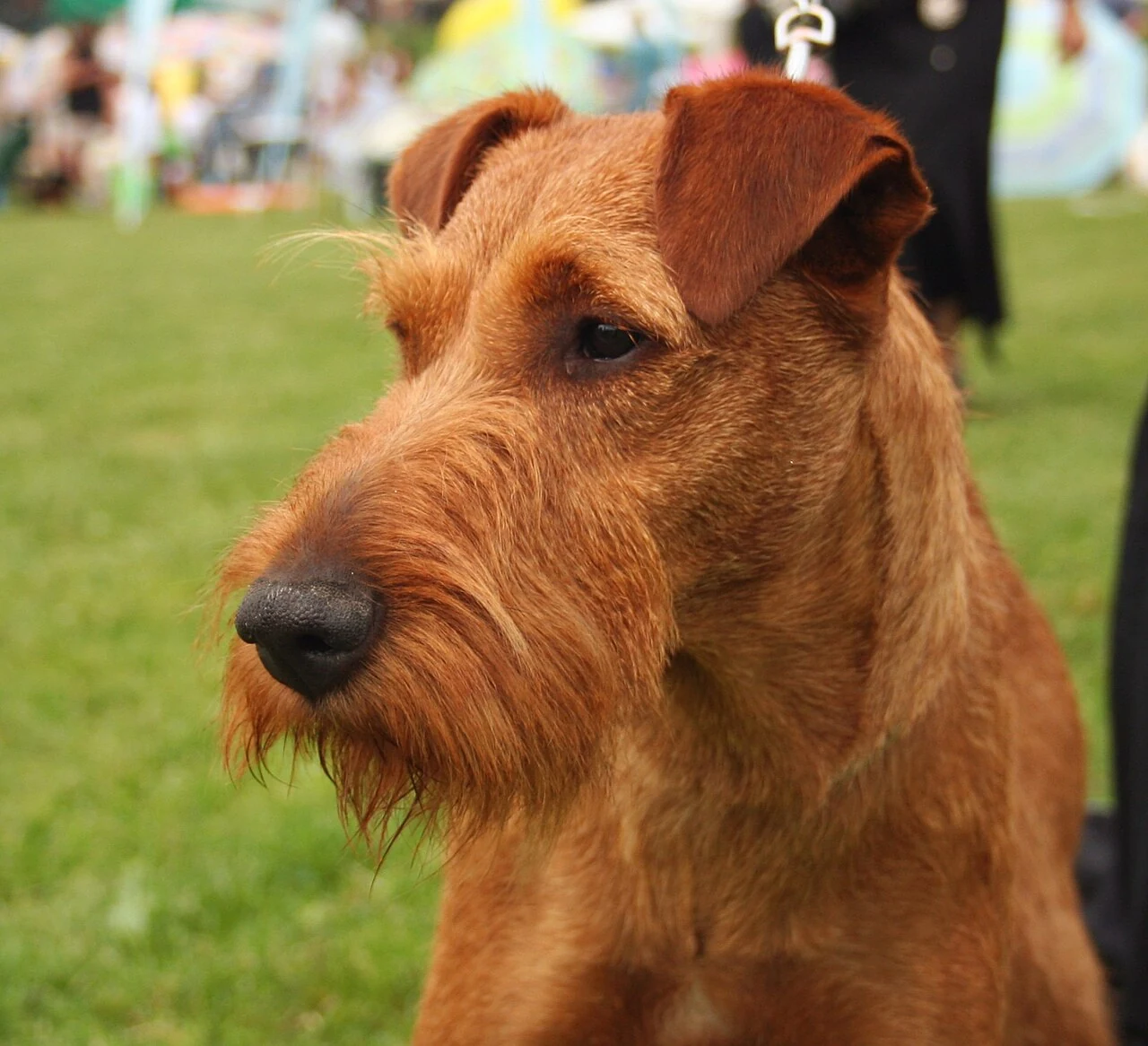
The Irish Terrier combines a red, wiry coat with long legs and a lean, strong body. Its ancestors guarded farms and worked at different hunting tasks. Today, it can suit people who enjoy activity and are happy to guide an independent dog through rewards. Grooming, managing an interest in chasing and calm encounters with other dogs deserve preparation.
At a glance
- Size
- Medium
- Lifespan
- over 12 years
- Activity
- High
- Grooming
- Several times weekly
- Training
- Patience & clear guidance
- Owner experience
- Experience recommended
Lively, active and close to its family
The international standard describes the Irish Terrier as lively, courageous and devoted to its people. Its working background called for attention and independent decisions. In everyday life, this can mean acting quickly when something catches its interest. Cues taught early help you stay connected in those moments.
Enough space and practice passing calmly help during dog encounters. If it likes to move ahead, looking back at you should be rewarded before you move closer. Whether it enjoys another dog’s company depends on the individuals and their experience. The same applies to a cat in the household. Small pets should not share an area the dog can freely access.
Family life needs dependable people, activity and a quiet bed. Children should learn not to crowd it while it sleeps or eats. Adults can help them play together appropriately. When excitement rises, a calmer activity or a break can help.
Everyday life
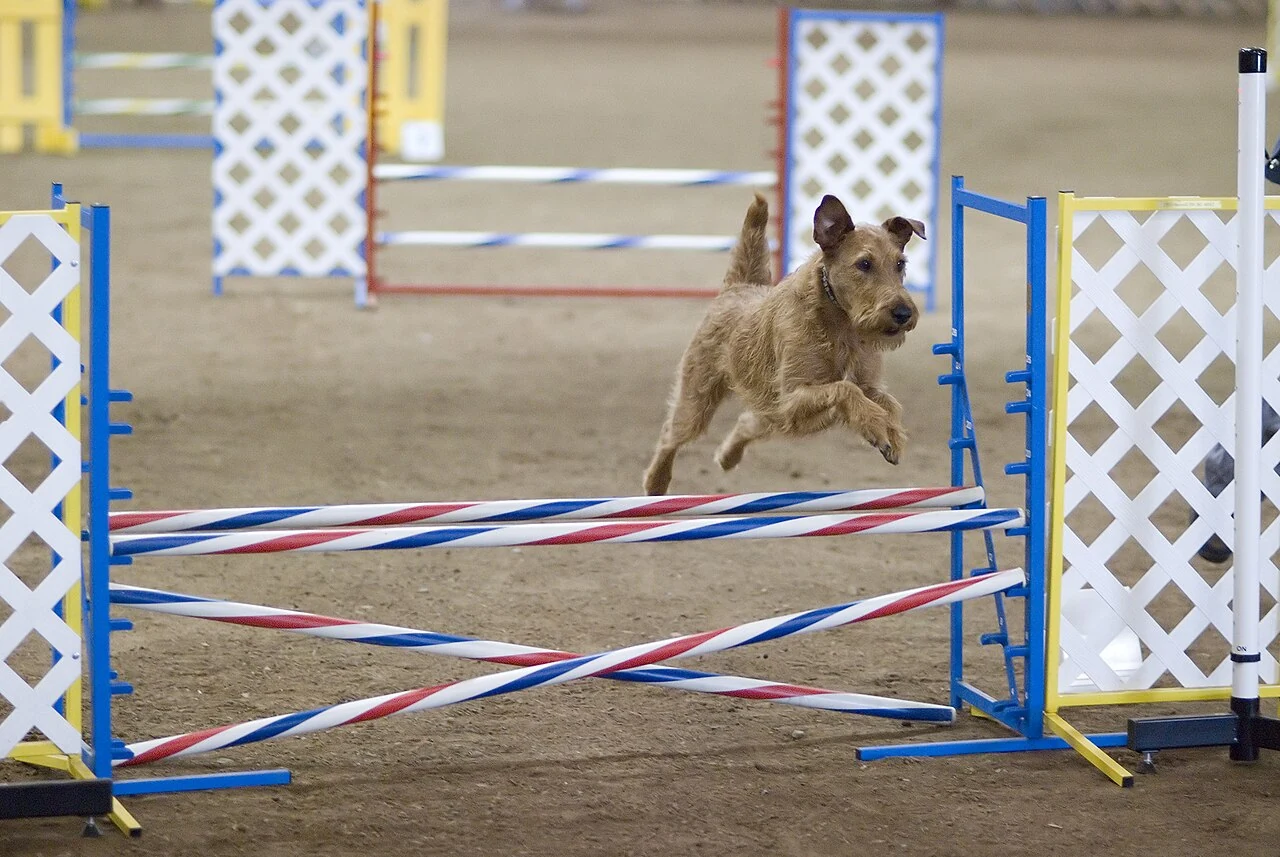
Longer walks, varied routes and scent tasks suit this active terrier. A woodland path can be interesting, but a lead and attention are needed where wildlife is present. Off-lead running should take place in a secure area or where recall and the surroundings make it appropriate.
For a small search task, a second person can carry a familiar toy a few steps and put it down in sight. The dog can then explore the short trail and find the toy. As it gains experience, the route can become a little more varied. The task should suit the dog and stay achievable enough to hold its interest.
At home, plenty of sleep and gradually introduced time alone matter. A garden can be useful, alongside daily outings and contact with its people. For an older Irish, shorter familiar walks and easily reached beds can help it continue taking part in family life.
Staying home alone
Dogs learn to stay home alone in small steps. The RSPCA advises no more than four hours at a time. Puppies and dogs that become unsettled when left alone need shorter absences and gradual practice. Arrange someone to care for your dog when you will be away longer.
Everyday dog training: recall, a loose lead and clear communication ↗
Day-to-day care
The dense, harsh outer coat lies fairly close to the body, with a softer undercoat beneath it. Brushing should therefore reach beyond the red hair tips. A gently used comb helps check that the lower layers are free from tangles too. The beard, legs and areas behind the ears need regular attention.
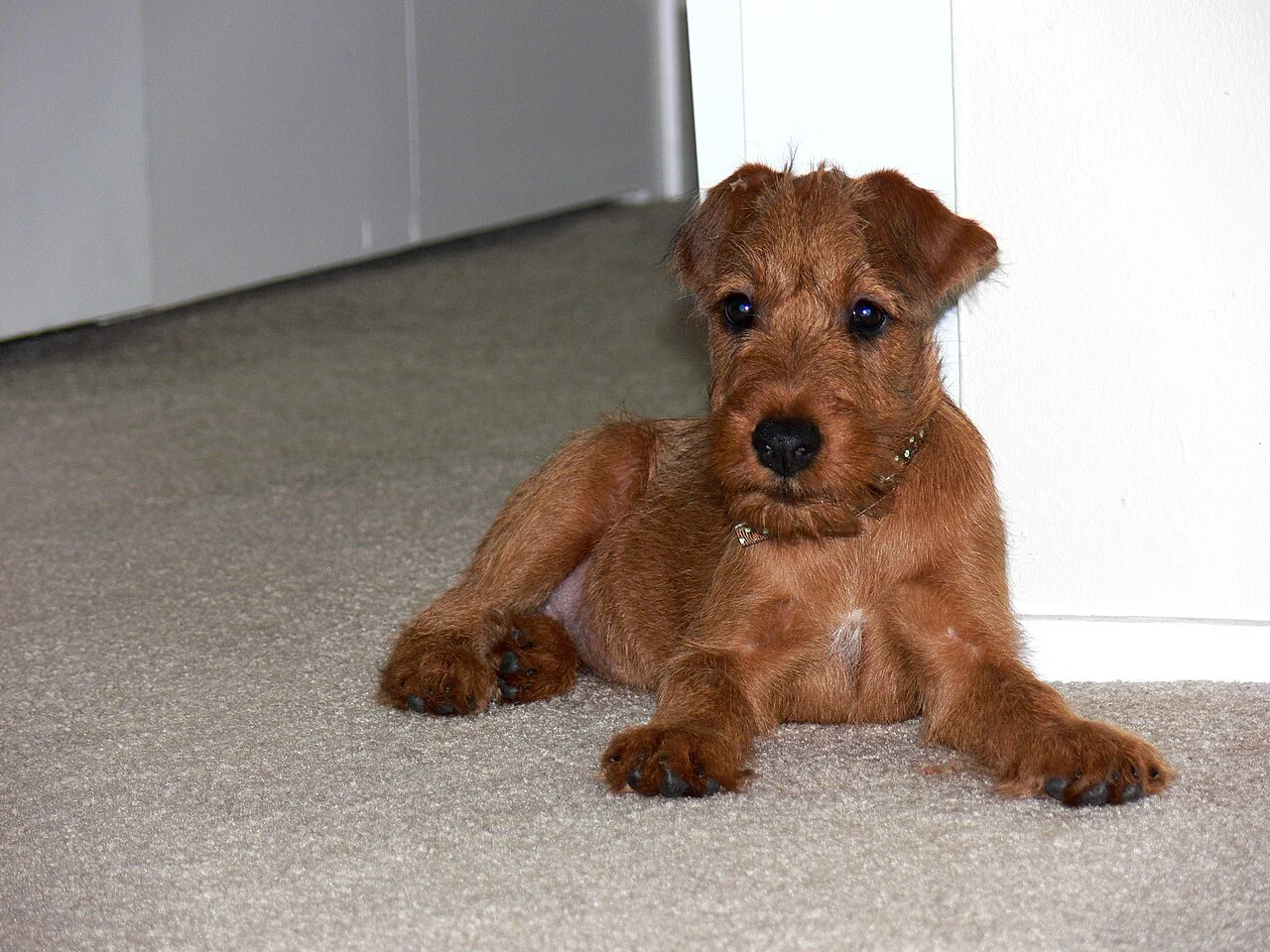
Hand stripping removes mature, loose hairs so new hair can grow. The North of England Irish Terrier Club, a British breed club, explains this care in detail. An experienced groomer can show when the coat is ready and how to keep the process comfortable. Puppies should first become used to touch and short grooming sessions calmly. Handling should remain gentle, with breaks if the dog becomes unsettled.
The feet also deserve regular checks. Cracks, marked thickening of the pads or pain when walking should be investigated by a vet. Red or smelly ears and frequent head shaking need examination too. Daily brushing with dog toothpaste is a useful habit that can be introduced gradually.
Size and build
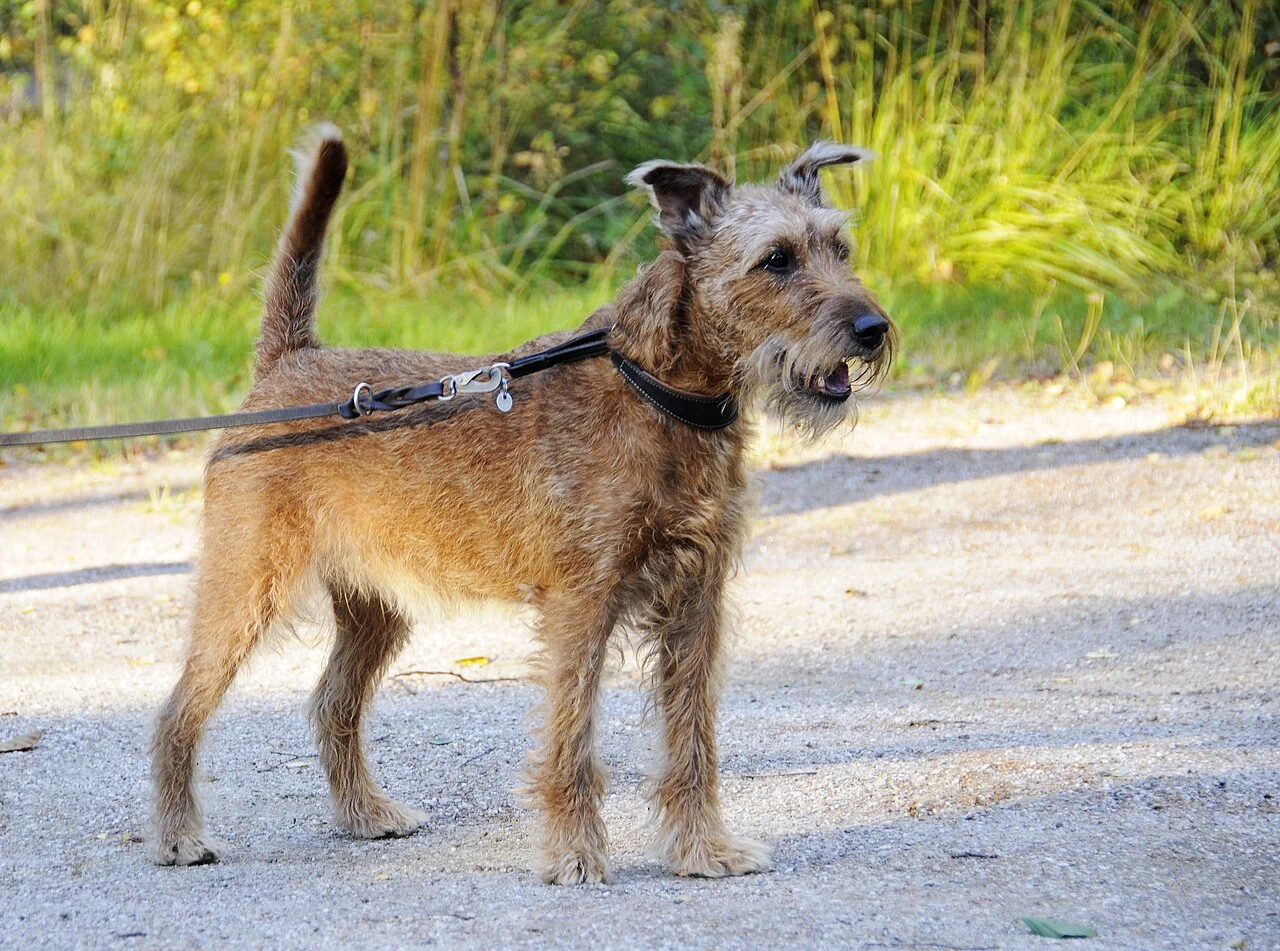
The Irish Terrier comes from Ireland and was used for varied work as a guard, farm and hunting dog. A breed club was founded in Dublin in 1879. Earlier dogs could have other colours. The red appearance became established in breeding towards the end of the nineteenth century.
The international canine organisation FCI describes a lean, agile body with a harsh coat in red, red wheaten or yellow red. Wheaten here refers to a lighter, warm red shade. The shoulder height is approximately 45.5 cm. The standard gives weights of 12.25 kg for males and 11.4 kg for females.
From puppy to senior: caring for your dog through every life stage ↗
Health
One established inherited condition in the Irish Terrier is hereditary footpad hyperkeratosis, also called HFH. The outer skin layer of the footpads becomes excessively thick. Deep cracks or hard, horn-like areas can form and make walking painful. The condition can become apparent in young dogs.
A DNA test is available for a known causal variant. In the described recessive inheritance, a dog develops the condition when it inherits two copies. A dog with one copy is a carrier and can pass the variant on. Before choosing a puppy, both parents’ results should be shown and what that combination means for their puppies explained clearly. Other problems can also cause cracked pads or lameness, so a dog with signs needs examination.
Other health records and the family history also belong in the conversation. Weight changes, reduced enthusiasm for activity or difficulty chewing should be taken seriously. Continuing to eat does not rule out painful dental disease. The Royal Kennel Club, the British canine organisation, and the Irish Terrier Association breed club give a lifespan of more than 12 years. Preventive care and activities adapted as the dog ages help support that long companionship.
Could this breed fit your life?
Could work well if …
- You enjoy an active, independent dog and can give it dependable guidance.
- You like walks and search tasks to do together.
- You can maintain a rough coat regularly and keep an eye on the feet.
What to consider
- Chasing and lively reactions need to be considered on off-lead outings and during dog encounters.
- Hand stripping needs suitable technique and a coat ready for it.
- The parents’ HFH results should be checked before choosing a puppy. Painful or cracked pads need a vet.
Similar needs, different dogs.
Selected by shared size, activity, grooming and training characteristics.
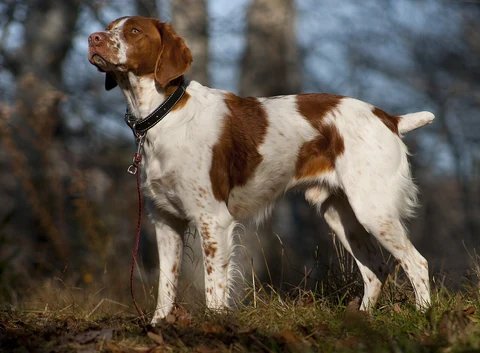
French pointing dog
Brittany
The Brittany is a compact French gundog with plenty of energy and a keen nose. It searches for game, points and retrieves. Pointing means pausing near game it has located to show the handler where it is. Anyone considering a Brittany as a companion should take its hunting instincts as seriously as its often friendly, people-oriented nature.
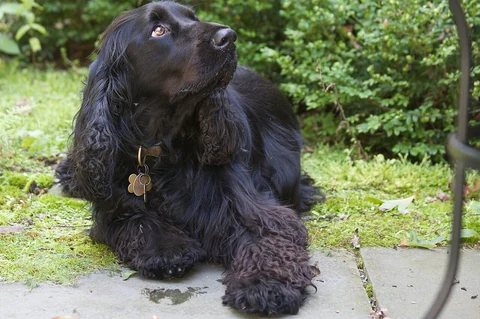
Sensitive hunting companion with a long silky coat
Field Spaniel
The Field Spaniel is an active, sensitive dog that enjoys following scents outdoors and being close to its people at home. Beneath the long silky coat is an enduring hunting companion. Varied exercise, shared activities and kind training give this attentive dog plenty to enjoy with its family.
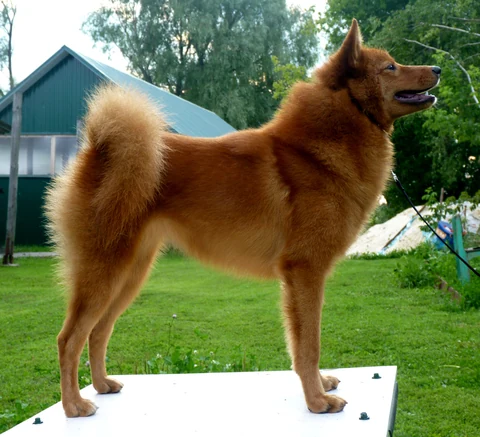
Vocal hunting dog from Finland
Finnish Spitz
A reddish gold coat, pointed ears and a tail curled over the back make the Finnish Spitz easy to recognise. Its voice is as much a part of its history as its appearance. When hunting, it barks to indicate a bird’s position in a tree. Life with this breed calls for plans that take exercise, hunting interest and noise into account together.
Sources and photograph credit
- Teaching your dog to be left alone
Used in this profile for: Staying home alone
- General Facts
Used in this profile for: Everyday life, Day-to-day care, Health, Lifespan, Could this breed fit your life?
- Irish Terrier, FCI Standard No.139
Used in this profile for: Size / Weight, Temperament, Day-to-day care, Size and build, Could this breed fit your life?
- Grooming your Irish Terrier
Used in this profile for: Day-to-day care
- Hereditary Footpad Hyperkeratosis
Used in this profile for: Health
- Irish Terrier
Used in this profile for: Temperament, Day-to-day care, Size and build, Health, Lifespan, Could this breed fit your life?
- Dental disease in dogs
Used in this profile for: Day-to-day care, Health
- Ear problems in pets
Used in this profile for: Day-to-day care, Health
- Grooming and bathing pets
Used in this profile for: Day-to-day care
- Training your dog
Used in this profile for: Everyday life
Photo credits
Portrait · Terier irlandzki głowa pl.jpg · Pleple2000 · CC BY-SA 3.0 · Edited

Puppy · A puppy Butters.jpg · Jodie Wilson · CC BY 2.0 · Edited

Side view · Irish Terrier.jpg · Sini Merikallio · CC BY-SA 2.0 · Edited

In action · Irish Terrier agility jump.jpg · Ron Armstrong from Helena, MT, USA · CC BY 2.0 · Edited
