 fellfolio
Flushing and retrieving gundog
German Spaniel
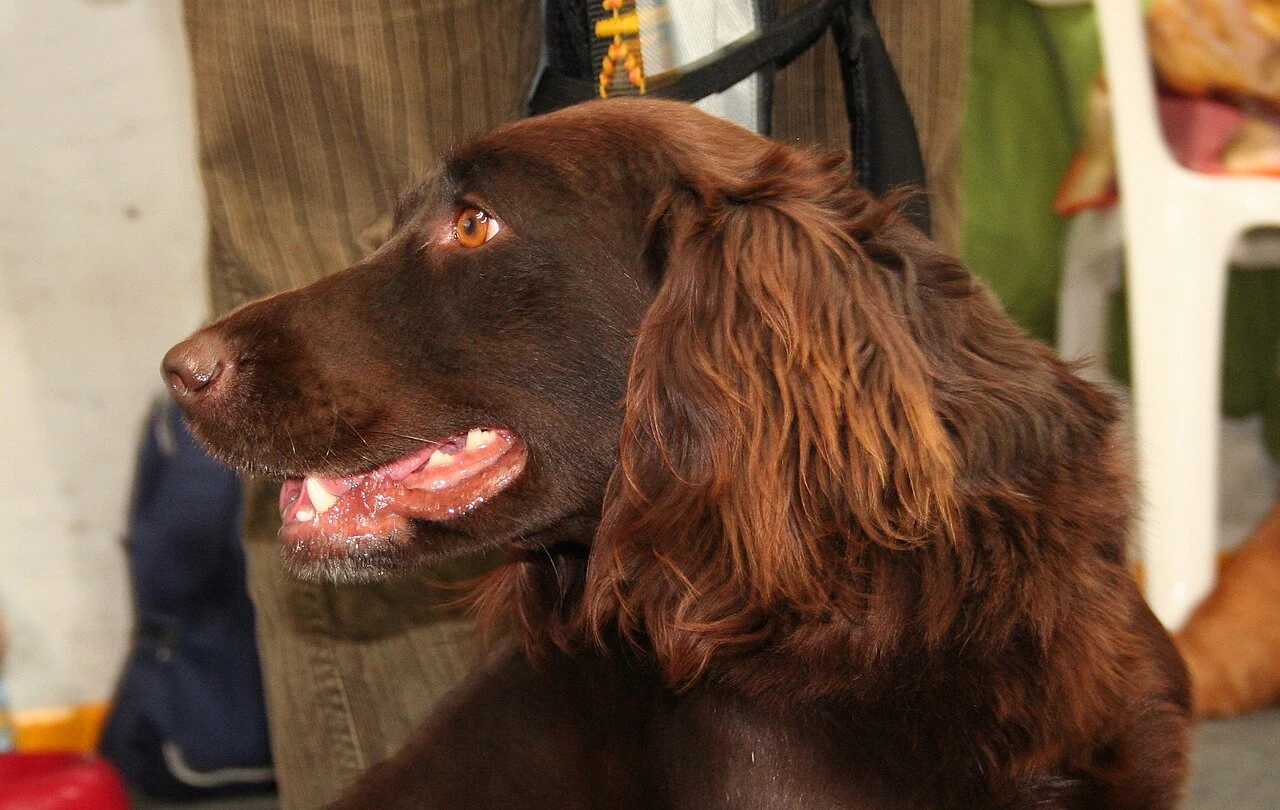
The German Spaniel, also called Deutscher Wachtelhund, is a medium-sized gundog that searches for game independently, including in dense cover. Its work also involves following trails and retrieving from water. In Germany, breeding remains closely focused on hunting use.
At a glance
- Size
- Medium
- Weight
- 18 to 25 kg
- Activity
- High
- Grooming
- Several times weekly
- Training
- Demanding activities
- Owner experience
- Experience recommended
Following scent through thick cover
The German Spaniel is a flushing dog. Flushing means searching an area for game and moving it out of cover, including places a person cannot easily walk alongside the dog. That differs from pointing, in which a dog indicates game by standing still. A working Wachtelhund is expected to search independently and then find its way back to its handler.
Giving voice on a trail is an important part of that job. The German term Spurlaut means barking while following a game animal's scent trail. It lets hunters follow the dog's work and should not be equated with constant barking in the living room. Discussing the particular line and its working style with experienced people helps you understand the dog you are considering.
The standard aims for a lively, friendly, trainable dog with strong hunting interest. Those qualities can support a close working partnership, with an owner who guides that interest from the start. Reward the behaviour you want. Small, understandable exercises are more helpful than punishment when a youngster's nose has just found a particularly exciting scent.
Everyday life
The German breed club explicitly describes the Wachtelhund as a dog bred by hunters for hunters. Before choosing one, you should discuss with the club and breeder whether the work you can offer suits the particular line. A large garden can provide space for time together, but it does not itself provide the working role the dog is bred for.
Dependable recall, waiting and settling during car journeys are particularly useful everyday skills. Begin recall in straightforward surroundings, with a worthwhile reward for coming back. In harder places, a long training line on a suitable harness can secure exploration. Later work in a hunting area needs knowledgeable instruction and must follow the rules that apply there.
Retrieving means picking something up and bringing it back. A soft practice object can introduce an easy exercise. Begin over a short distance and reward your dog for carrying the object to you. A search can follow once it understands what to do with the object. This combines scent, movement and cooperation.
Between outings and work, your dog should be able to sleep undisturbed. A protected resting place and clear arrangements with children help in family life. Adults should supervise contact, and the dog should be left alone while eating or sleeping. Small pets need separate, secure areas. You should also have care in place for long working days and holidays before your dog arrives.
Staying home alone
Dogs learn to stay home alone in small steps. The RSPCA advises no more than four hours at a time. Puppies and dogs that become unsettled when left alone need shorter absences and gradual practice. Arrange someone to care for your dog when you will be away longer.
Everyday dog training: recall, a loose lead and clear communication ↗
Day-to-day care
The dense, usually wavy coat has an undercoat, a softer layer beneath the outer hair. The outer hair is longer on several parts of the body. After moving through thick vegetation, it should be checked for burrs, twigs and tangles. Gentle combing several times a week helps deal with small knots before they tighten. Break grooming into short, rewarded steps so the dog can learn about the handling without immediately having to stand still for a long session.
Grass awns can collect on grassland walks. These are pointed plant parts that can lodge in the coat or skin. Afterwards, check the ears, paws and spaces between the toes in particular. Sudden head shaking or persistent paw licking should be assessed by a vet. You can gently remove loose plant material from the coat. Anything stuck in an ear or embedded in the skin should be removed by a professional.
After water work, drying off and a dry resting place are useful. Teeth also need regular care. When introducing a toothbrush, briefly touching the lip and following with a reward can be a good starting point.
Size and build
The breed was developed from earlier flushing dogs. The German breed club was established in 1903 and re-established in 1946 after the Second World War. Working tests and information about related dogs still play a part in breeding decisions.
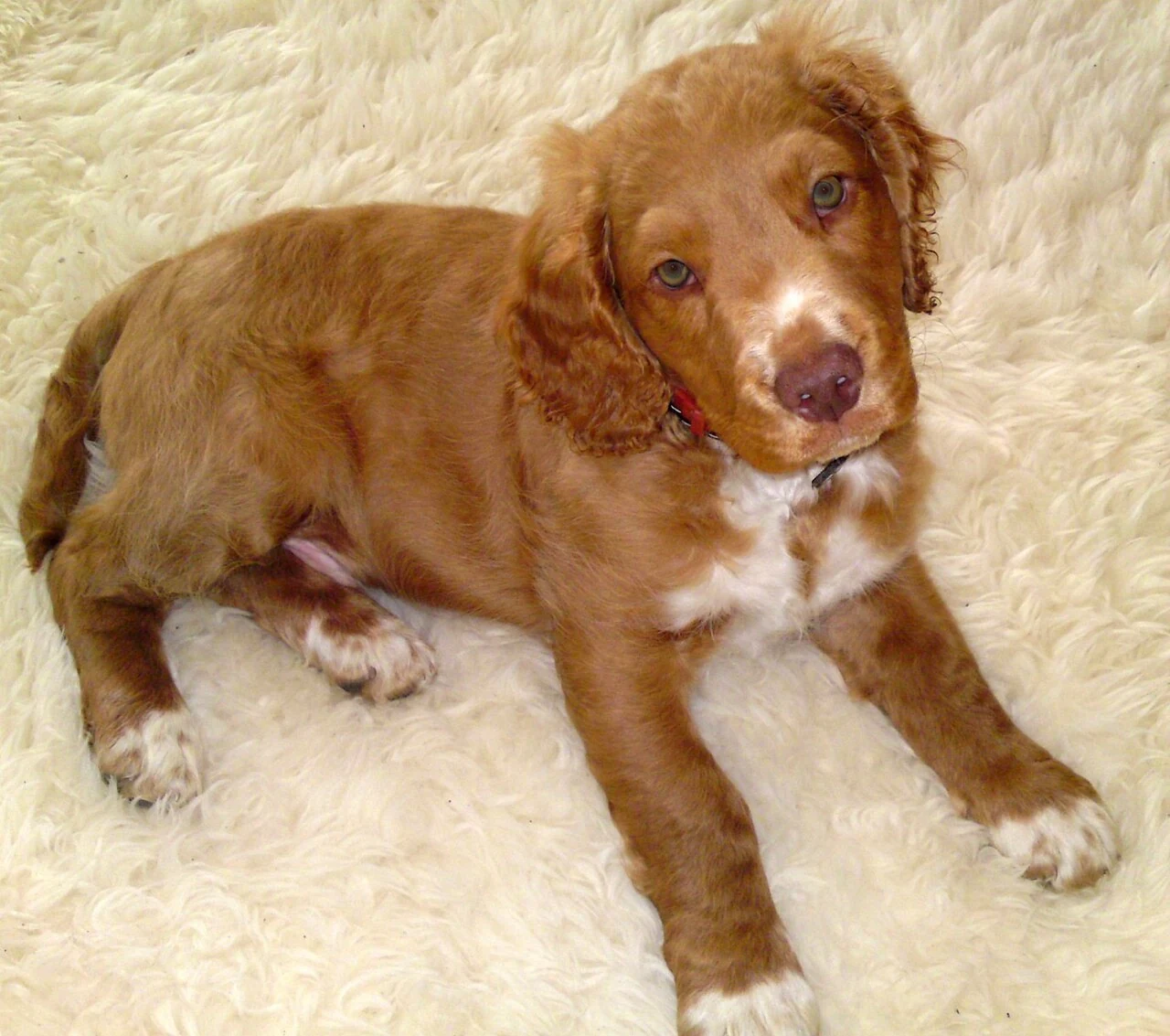
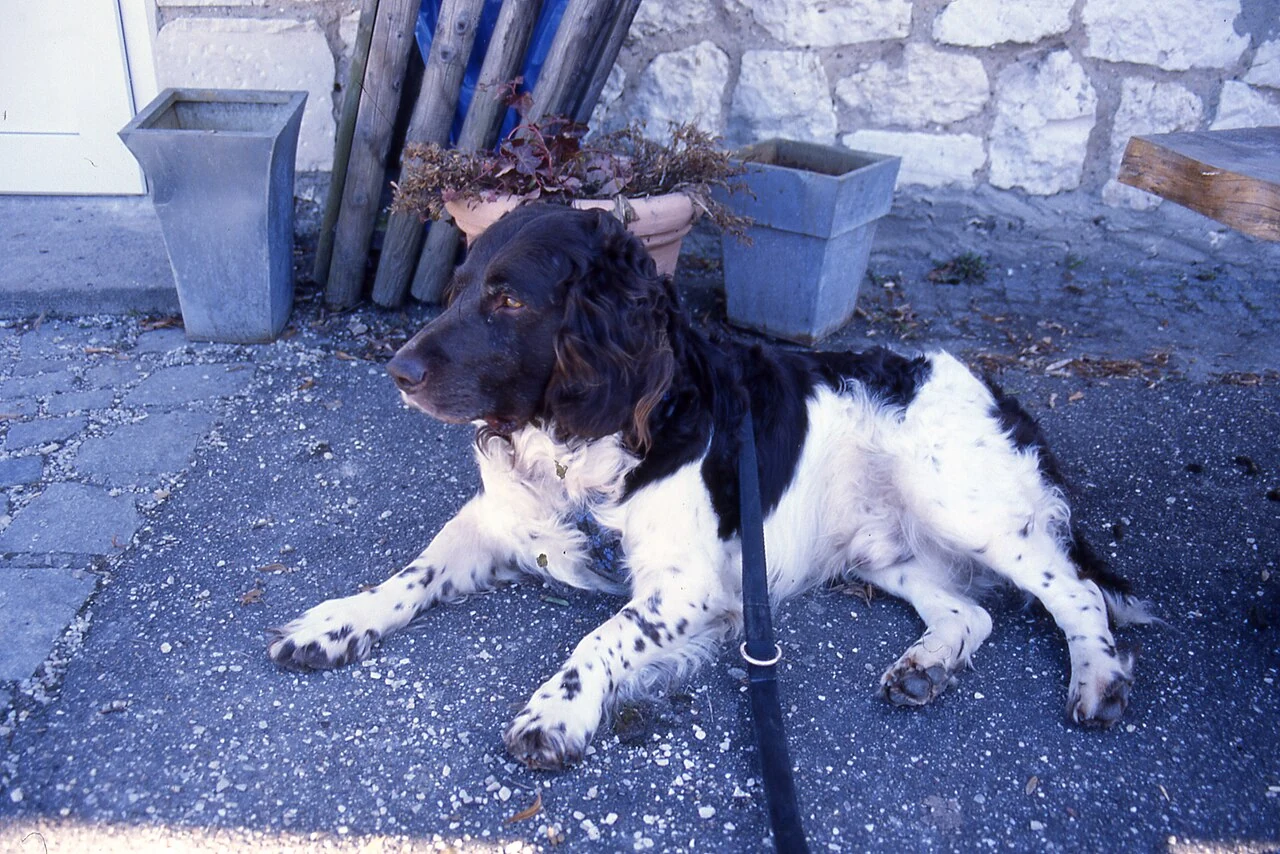
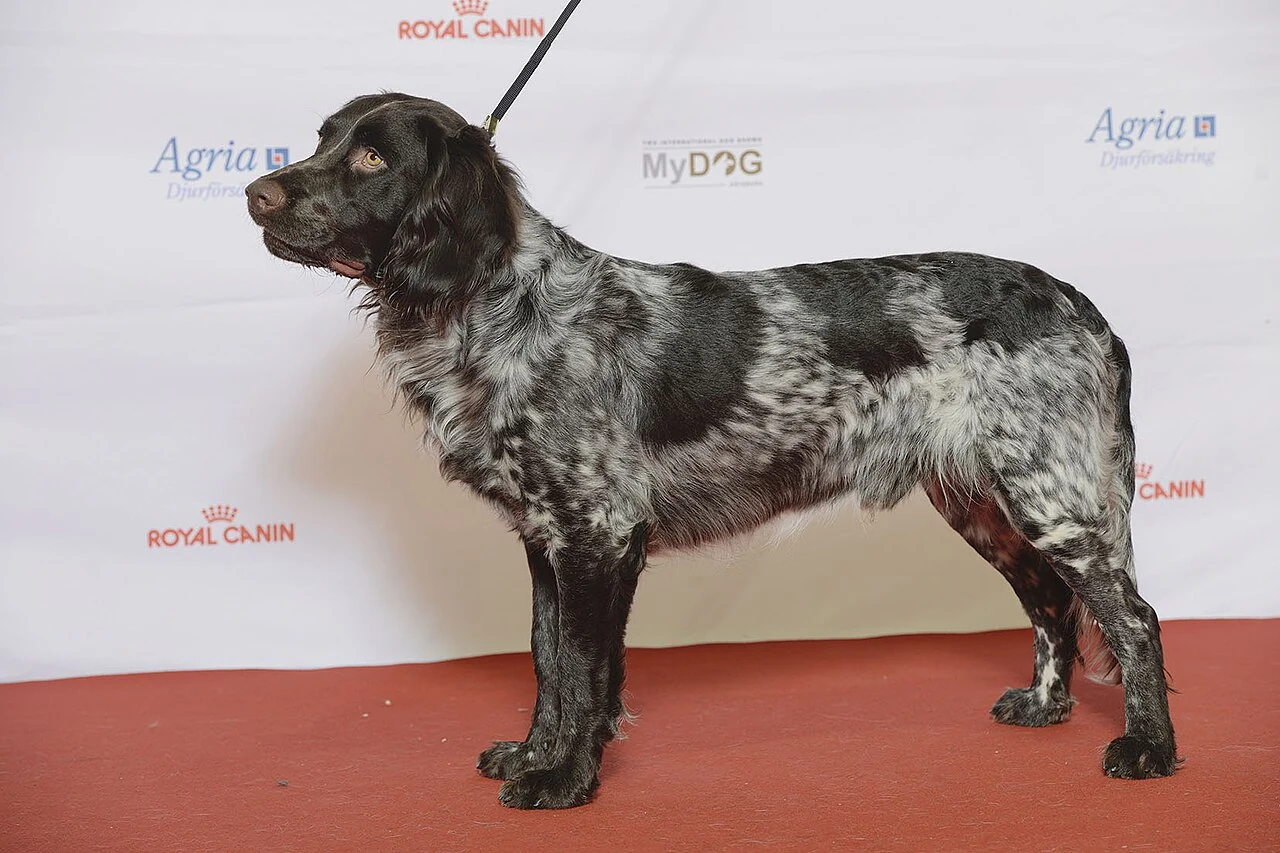
Solid brown or red dogs and brown or red roan dogs appear in the standard. Roan describes a mix of coloured and white hairs or patches. Coat colour does not reliably tell you how a present-day dog will work. The standard itself notes that the colour groups have since been crossed extensively.
The international breed standard issued by the Fédération Cynologique Internationale (FCI) gives shoulder heights of 48 to 54 cm for males and 45 to 52 cm for females. Its weight range is 18 to 25 kg, depending on size, with females generally somewhat lighter. A youngster's exercise should suit its stage of development. Brief explorations, rests and positively introduced everyday experiences lay foundations for later work.
From puppy to senior: caring for your dog through every life stage ↗
Health
Before choosing a puppy, you should discuss the parents' health records. The German club includes hip and elbow health in its screening and breeding programme. Hip dysplasia is a developmental problem that leaves the hip joint unstable. Elbow dysplasia covers several developmental disorders within the elbow. Both can cause painful joint changes. Reports should clearly identify the dogs examined.
You should also ask about known illnesses in close relatives. The breeding rules consider epilepsy, a condition involving recurrent seizures, among other disorders. Information about relatives’ health complements the examination reports and helps assess the planned mating.
A dog that limps, struggles to rise after resting or suddenly cannot manage a familiar walk should be assessed by a vet. A working gundog's physical demands should suit its actual health. Fellfolio can hold dated reports and observations, helping you explain whether problems appear only after longer working days or also on quiet days.
Could this breed fit your life?
Could work well if …
- You want a flushing dog for hunting and can provide suitable instruction and regular working opportunities.
- You enjoy patiently developing recall, rest, searching and retrieving, with reliable care between working days.
- You have time to check the coat and paws thoroughly after outings through dense cover.
What to consider
- Discuss the breeding programme’s hunting focus with the club and breeder before choosing a dog.
- Independent searching in a hunting area requires training and safe planning. General off-lead exercise is not that preparation.
- The parents’ health reports and known illnesses among close relatives should be discussed openly and clearly.
Similar needs, different dogs.
Selected by shared size, activity, grooming and training characteristics.
Herding dog
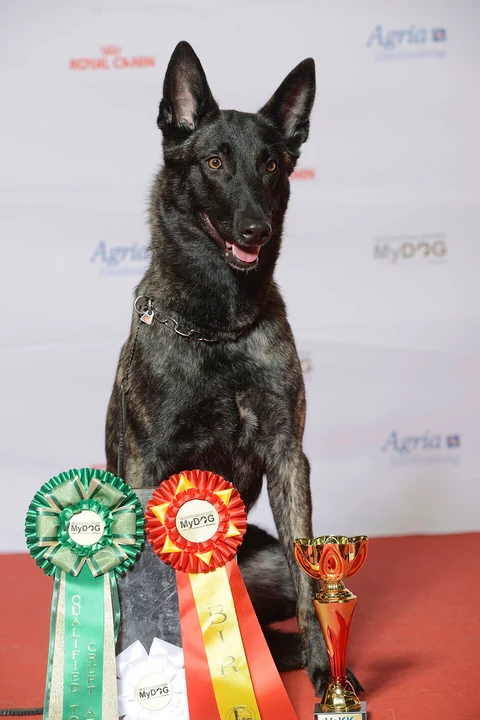
Dutch Shepherd
The Dutch Shepherd is an alert, active working dog with a striped coat known as brindle. Its short, long and rough coats differ markedly in grooming, and some health tests depend on the variety.
Herding dog
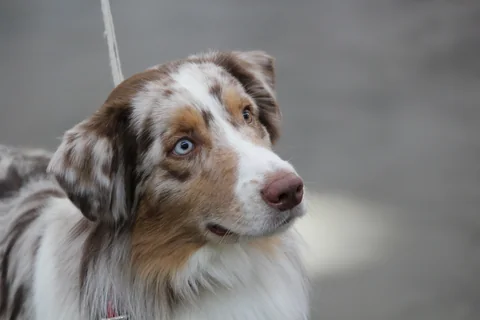
Australian Shepherd
Australian Shepherds were developed on western US ranches to herd livestock and work closely with people. In family life, they may watch bicycles or running children. Calm training at a distance helps them let movement pass.
Herding dog
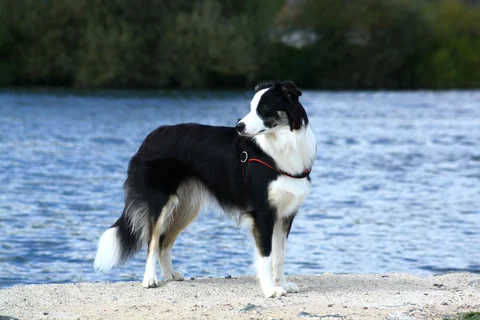
Border Collie
The Border Collie is a sheepdog from the border country of Britain. It learns quickly and notices movement at once. Its herding instinct can focus on bicycles and running children, so it needs space and calm practice around them.
Sources and photograph credit
- Teaching your dog to be left alone
Used in this profile for: Staying home alone
- Canine Elbow Dysplasia
Used in this profile for: Health
- Canine Hip Dysplasia
Used in this profile for: Health
- Position Statements and Humane Dog Training
Used in this profile for: Temperament, Day-to-day care
- Zuchtbestimmungen, Hauptversammlung Juni 2018
Used in this profile for: Health
- Verein für Deutsche Wachtelhunde: Die Rasse und der Verein
Used in this profile for: Everyday life, Size and build, Could this breed fit your life?
- Hinweise zur HD-, ED- und IOCH-Untersuchung
Used in this profile for: Health
- Tipps zum Welpenkauf
Used in this profile for: Everyday life
- FCI Standard No. 104: Deutscher Wachtelhund (German Spaniel)
Used in this profile for: Size / Weight, Temperament, Day-to-day care, Size and build
- Jagdliche Eignung
Used in this profile for: Temperament, Everyday life, Could this breed fit your life?
- Seizures and Epilepsy in Dogs
Used in this profile for: Health
- Grass Seeds in Dogs
Used in this profile for: Day-to-day care
- Exercising Your Puppy
Used in this profile for: Size and build
- Understanding Your Dog’s Behaviour
Used in this profile for: Everyday life
- Children and Dogs
Used in this profile for: Everyday life
- Caring for Your Dog’s Teeth
Used in this profile for: Day-to-day care
- Train Your Dog to Come When Called
Used in this profile for: Everyday life, Could this breed fit your life?
Photo credits
Portrait · Glowa plochacz niemiecki 2 pl.jpg · Pleple2000 · CC BY-SA 4.0 · Edited

Side view · BIR Grupp 8- WACHTELHUND, Stöyletuftas Legolas (24189380991).jpg · Svenska Mässan · CC BY 2.0 · Edited
.jpg)
Everyday life · Xylon1.jpg · Petra Stoll · CC0

Puppy · Red Wachtelhund 3month.jpg · Paesslergung · CC BY-SA 3.0 · Edited
