fellfolio
Herding dog
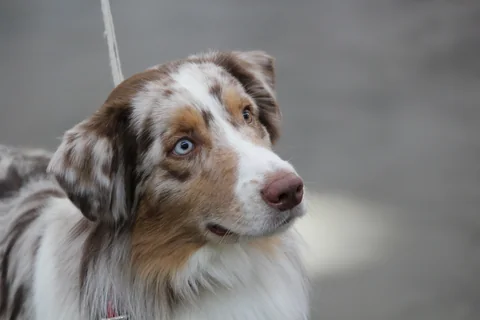
Australian Shepherd
An alert herding dog that needs exercise and mental work. The name is misleading: the breed was developed in the United States.
Herding dog
A specialised herding dog with quick responses and a strong working background. An active lifestyle alone does not necessarily provide the right home.
Watching movement, responding to signals and working livestock shaped this breed. In a household, that attention can turn towards bicycles or running children. Trainability does not automatically make a dog easy to live with. Notice how readily the individual settles after an activity.
Useful tasks and deliberately practised downtime need to work together. Constant ball games are no substitute for a considered routine. A busy home with frequent movement can be demanding. Around children and other animals, prevent chasing or herding without increasing the dog’s arousal.
Being alone needs gradual practice. The RSPCA advises no more than four hours at a time; puppies and some adults need much shorter intervals. Arrange company during longer absences.
Both moderately long and smooth coats need regular attention, especially when shedding. After outings, look over paws, between toes and through the coat for debris. A predictable, calm handling routine helps with nails, teeth and ears.
Sources use differing size and weight guides, so we do not present a single range here. Meet the parents and adult relatives where possible. With young dogs, settling and everyday behaviour deserve as much attention as progress in sports.
Documented inherited concerns include Collie Eye Anomaly and Trapped Neutrophil Syndrome, for which genetic testing is available. Hip dysplasia and epilepsy are also reported. DNA tests cannot capture every risk. Discuss actual results and family history with a vet; a breed name cannot establish an individual dog’s health.
A 2024 British study estimates a median of 13.1 years for this breed (95% confidence interval 13.0–13.2; 12917 dogs). The interval describes uncertainty in the estimate, not the range of individual lifespans. Region, sampling and living conditions limit generalisation.
Breed traits describe tendencies. Breeding line, socialisation, care and experience shape the individual. Children and animals always need responsible supervision.
Selected by shared size, activity, grooming and training characteristics.
Herding dog
An alert herding dog that needs exercise and mental work. The name is misleading: the breed was developed in the United States.
Herding dog
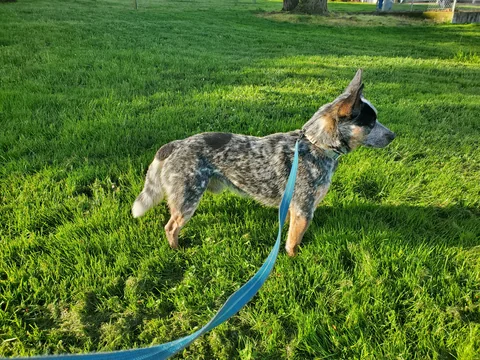
An enduring cattle dog that needs activity, clear tasks and experienced handling.
Flushing and retrieving dog
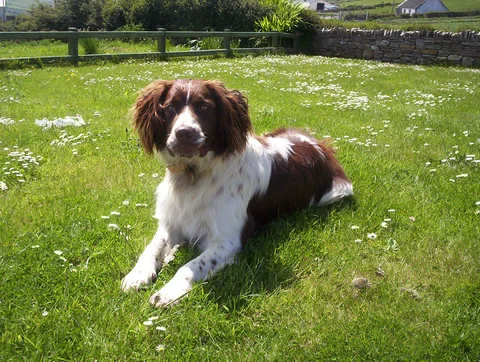
A cheerful flushing spaniel with plenty of energy and an interest in working alongside you.
Portrait · sannse · CC BY-SA 3.0 · Image cropped