 fellfolio
Austrian farm and companion dog
Austrian Pinscher
The Austrian Pinscher is a lively farm dog that enjoys accompanying familiar people and notices visitors attentively. Its short to medium-length coat is relatively straightforward to maintain. Exercise, shared activities and calm guidance of its guarding behaviour require more time. Meeting adult dogs helps show whether its watchfulness and temperament could suit your daily life.
At a glance
- Size
- Medium
- Height at shoulder
- 42 to 50 cm
- Activity
- High
- Grooming
- Weekly
- Training
- Patience & clear guidance
- Owner experience
- Experience recommended
Lively with the family and watchful around new arrivals
The international breed standard describes the Austrian Pinscher as alert, playful and especially affectionate with familiar people. It may initially be suspicious of strangers. The breed has a long history of guarding farms, and many bark to announce something unfamiliar. In a densely populated setting, the activity outside windows, in shared hallways or along fences deserves careful consideration.
A predictable routine can help with visitors. The dog should be able to wait away from the entrance while people come in. A familiar bed or separation into another area can make this easier while it is still learning. Guests should give it time and offer contact only when it approaches comfortably. Loud scolding can add to the excitement.
This Pinscher can be very affectionate with its own people. Children should still learn to respect its bed and food bowl and pay attention to its body language during play. Adults should supervise their time together. The standard describes a relatively weak hunting instinct. This does not establish a reliable recall or safe encounters with small animals for an individual dog.
Everyday life
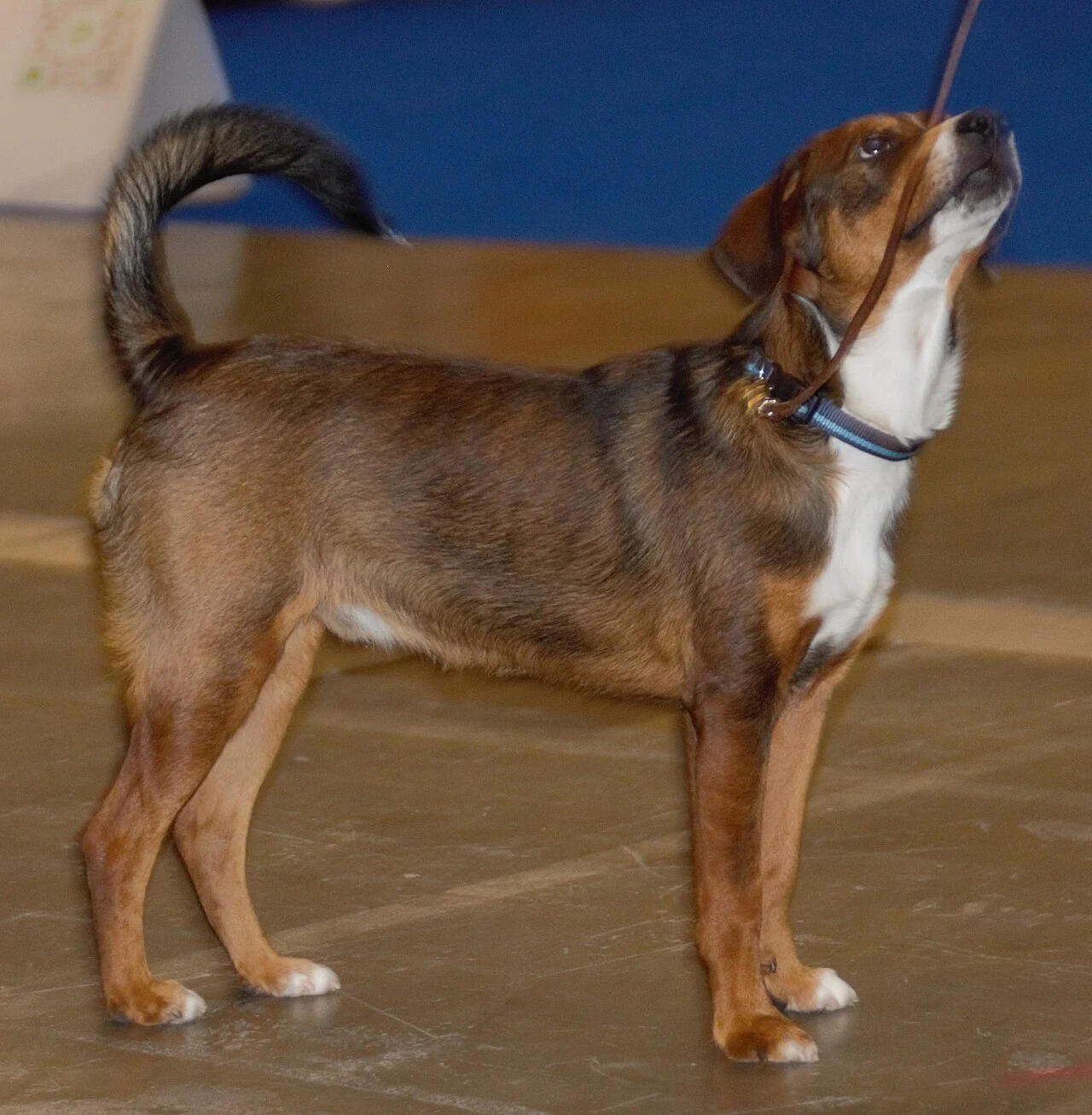
A healthy adult Austrian Pinscher may enjoy longer walks, hikes and varied activities. The breed club mentions scent work and dog sports among its interests. Trying activities together helps reveal what suits the individual dog. One that enjoys searching the ground could, for example, learn to follow a short, easily laid scent trail.
Everyday exercises can also provide useful activity. Coming back can initially be rewarded on a quiet walk. Waiting at a junction or calmly passing another dog can be introduced later. Leads and other safety measures should reflect the dog's actual training. An enclosed garden adds room to move, while shared outings remain important.
At home, a quiet bed away from busy routes should be available. The dog should be able to rest there without continually watching the entrance. Learning to be alone requires a gradual approach. Longer absences need care arrangements while it cannot yet stay alone comfortably. Persistent barking or restless pacing should prompt adjustments with knowledgeable help.
Staying home alone
Dogs learn to stay home alone in small steps. The RSPCA advises no more than four hours at a time. Puppies and dogs that become unsettled when left alone need shorter absences and gradual practice. Arrange someone to care for your dog when you will be away longer.
Everyday dog training: recall, a loose lead and clear communication ↗
Day-to-day care
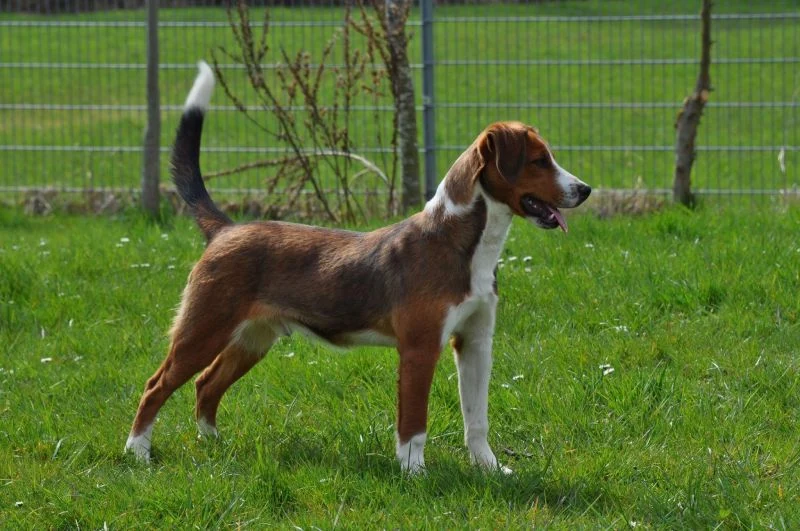
The coat combines dense, close-fitting outer hair with a short undercoat, the softer layer beneath. Regular brushing removes loose hairs and gives an opportunity to inspect the skin. More frequent brushing may be needed during moulting. After outings, feet and coat should be checked for ticks, plant material and small injuries.
The small, folded ears should be inspected regularly. Redness, an unpleasant smell, frequent scratching or head shaking should be investigated by a vet. Cleaning products should suit the dog and be used following veterinary guidance. Nails need care according to how they wear. Daily brushing with dog toothpaste supports dental health.
The brush can initially be shown briefly before touching the dog. If it stays comfortable, a short brush stroke can follow and earn a reward. Several pleasant small steps can help it feel at ease during longer grooming too.
Size and build
The ancestors were versatile farm dogs in Austria. They guarded farms, accompanied their people and helped with livestock. Systematic breeding began in 1921. The Austrian Kennel Club recognised the breed in 1928 as the Austrian Shorthaired Pinscher. Its name changed to Austrian Pinscher in 2000.
The breed club also runs a country Pinscher project to widen the gene pool. A gene pool is the collection of inherited variants within a population. Suitable dogs without pedigrees can be included under controlled conditions to preserve additional genetic diversity. Selection considers health, behaviour and breed type. The project does not establish that every individual dog is free of illness.
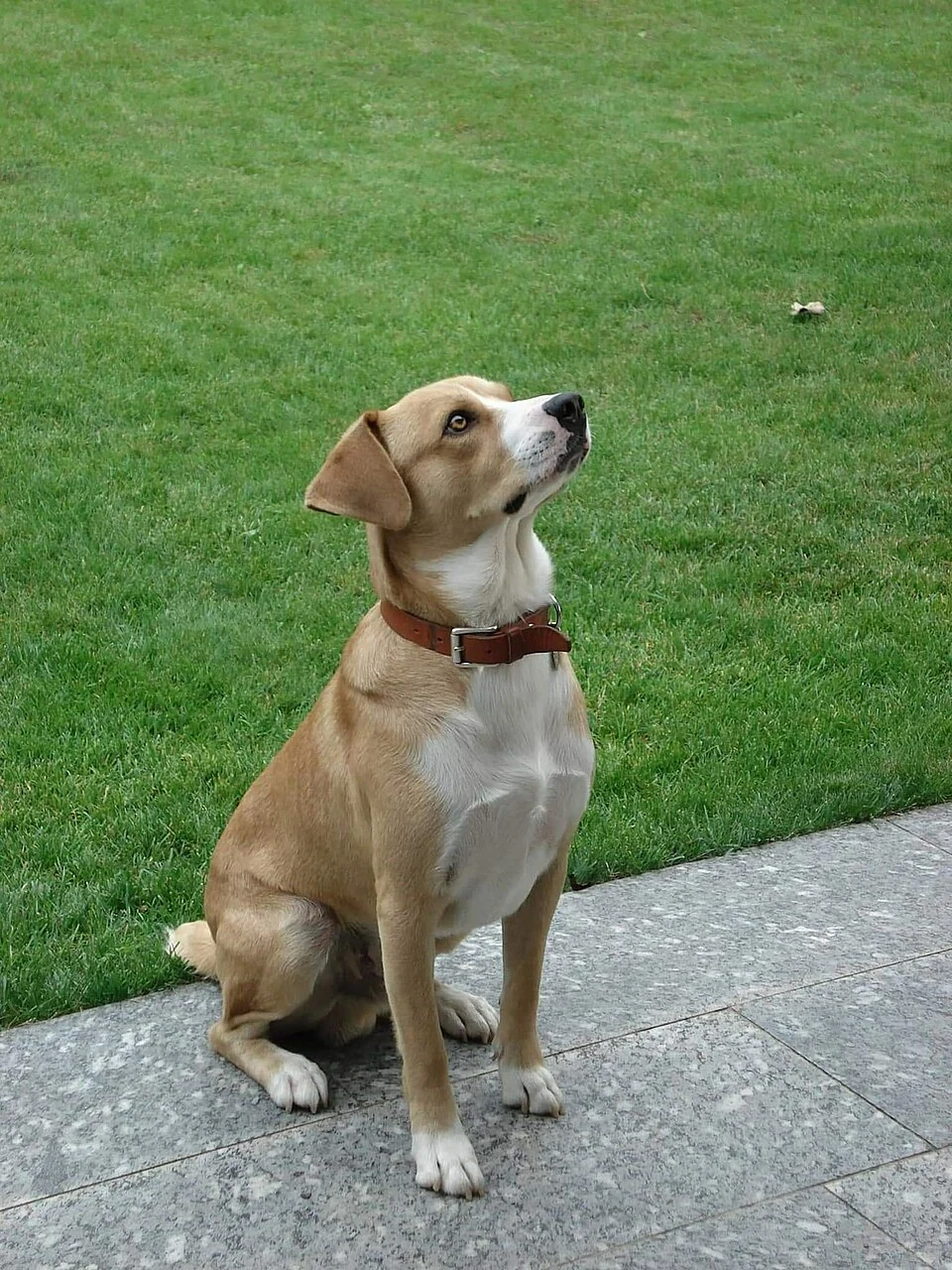
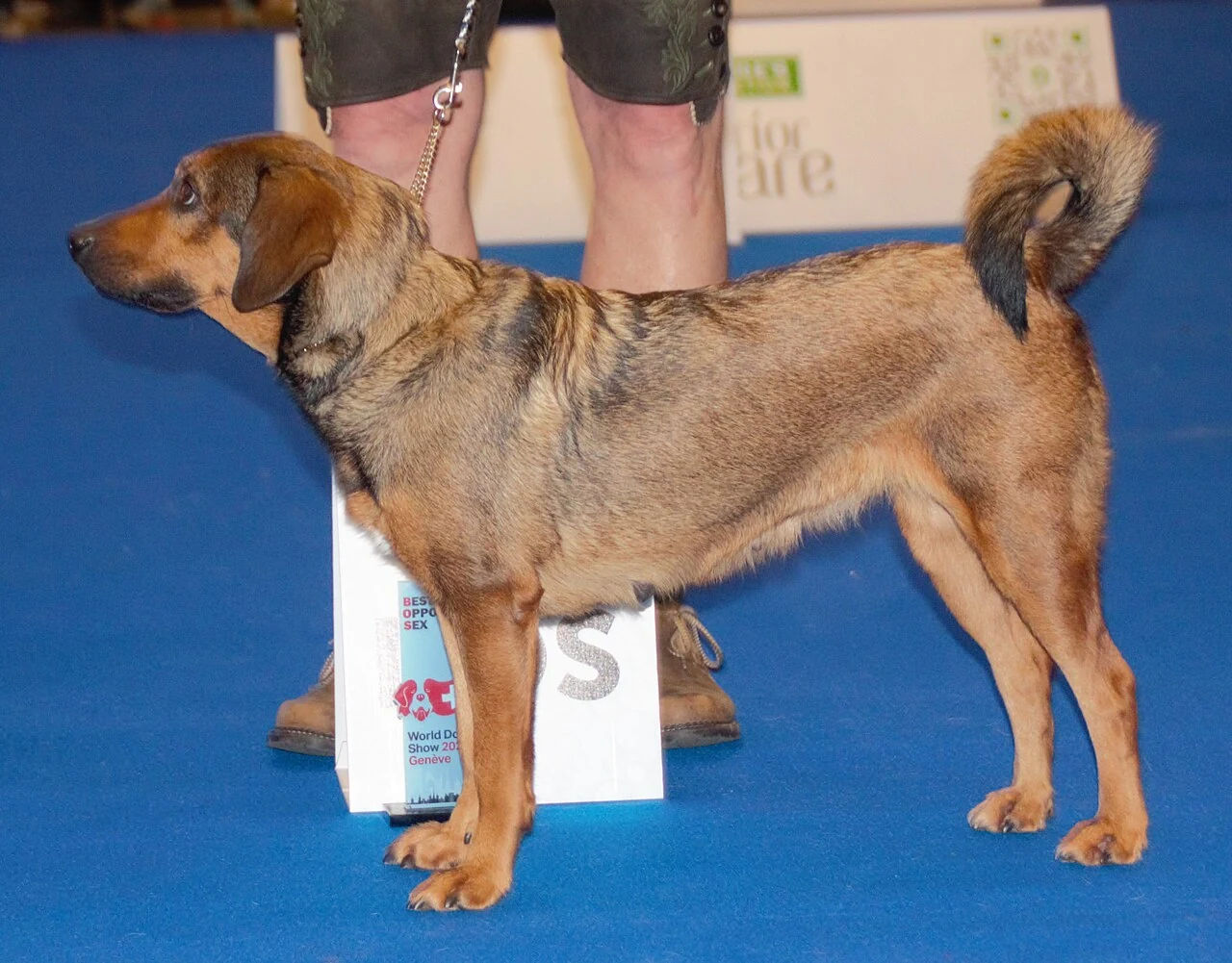
The body is medium-sized and sturdy, the head relatively broad and the ears small and folded forwards. The standard of the international canine organisation FCI gives an overall shoulder height of 42 to 50 cm, with males at 44 to 50 cm and females at 42 to 48 cm. It specifies no set weight. Yellow and red shades, and black with tan markings, are described. White markings may also be present.
From puppy to senior: caring for your dog through every life stage ↗
Health
The Austrian breeding regulations of 2025 require hip X-rays and an examination after the first year of life for newly approved breeding dogs, among other checks. This examination covers teeth, heart and kneecaps, as well as the testicles in males. Both parents' reports and actual results should be available before choosing a puppy, even when the dogs look sturdy and healthy.
Hip dysplasia means that the hip joint develops incorrectly, potentially causing pain and arthritis. Patellar luxation means that the kneecap slips out of the groove guiding it. Repeated three-legged skipping, lameness, stiffness or difficulty rising should be investigated by a vet. Good results reduce uncertainty when choosing a dog but cannot promise lifelong freedom from problems.
The club also considers genetic diversity when planning matings. This matters in a small population and should be considered alongside actual health reports. Regular preventive care, a suitable weight and exercise reflecting age and health belong in long-term planning, as do possible care needs in old age.
Could this breed fit your life?
Could work well if …
- You want daily outings with an active dog and enjoy offering varied activities.
- You can guide guarding behaviour patiently and manage visitors and property boundaries thoughtfully.
- You want a companion closely attached to the family and can include it in daily life.
What to consider
- Frequent barking at windows, doors or fences can be difficult in close neighbourhoods.
- A general description as a robust farm dog does not replace actual health reports.
- The standard’s relatively weak hunting instinct cannot establish an individual dog’s recall.
Similar needs, different dogs.
Selected by shared size, activity, grooming and training characteristics.
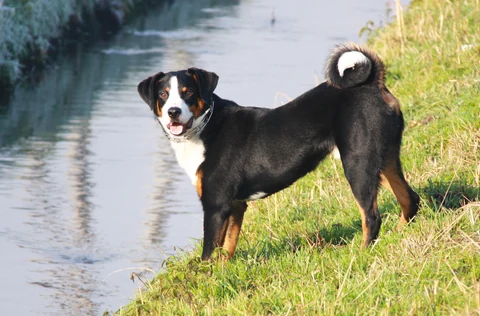
Swiss cattle and watchdog
Appenzeller Mountain Dog
The Appenzeller Mountain Dog is easy to recognise by its tricolour coat and tightly curled tail. Behind that cheerful appearance is an attentive Swiss working dog. It enjoys activity, learns quickly and notices changes around it. This breed suits people who want to spend time outdoors with their dog every day and can help it cope calmly with visitors and events at home.
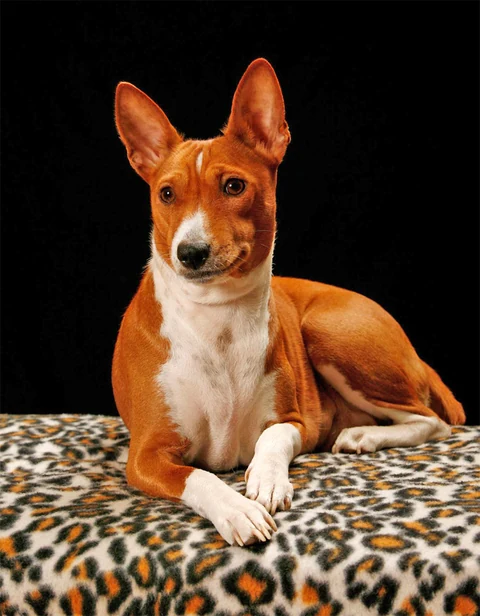
Hound
Basenji
The Basenji rarely barks but can make yodelling sounds. Outside, it may follow a scent or moving animal at speed, so off-lead running calls for secure fencing.
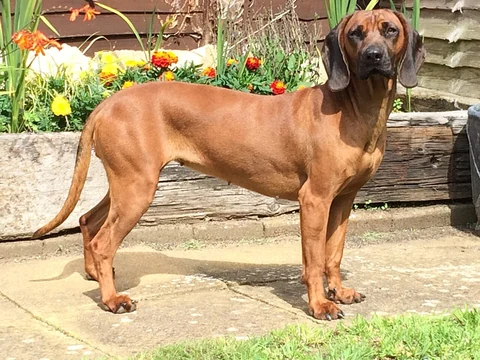
Scent hounds
Bavarian Mountain Scent Hound
The Bavarian Mountain Scent Hound is a specialist hunting dog with a short, dense coat and dark ears. Its principal work is locating wounded game. It works with concentration and forms a close bond with its person. Prospective owners should discuss training and future work with experienced handlers or the breed club early on.
Sources and photograph credit
- Teaching your dog to be left alone
Used in this profile for: Staying home alone
- Die Rasse
Used in this profile for: Temperament, Everyday life, Size and build, Could this breed fit your life?
- Zucht- und Eintragungsordnung1February2025
Used in this profile for: Health
- Austrian Pinscher, FCI Standard No.64
Used in this profile for: Size / Weight, Temperament, Day-to-day care, Size and build, Could this breed fit your life?
- Zuchtvoraussetzungen
Used in this profile for: Health
- Canine hip dysplasia (CHD)
Used in this profile for: Health
- Patellar luxation
Used in this profile for: Health
- Dental disease in dogs
Used in this profile for: Day-to-day care
- Ear problems in pets
Used in this profile for: Day-to-day care
- Grooming and bathing pets
Used in this profile for: Day-to-day care
- Teaching your dog to be left alone
Used in this profile for: Everyday life
- Separation-related behaviour
Used in this profile for: Everyday life
- Training your dog
Used in this profile for: Everyday life
Photo credits
Portrait · Sammy von der Birkenheide.jpg · Birkenheide · CC BY-SA 4.0 · Edited

Side view · Austrianpinscherosterreich1.jpg · Canarian · CC BY-SA 4.0 · Edited

Coat and features · Austrianpinscherosterreich6.jpg · Canarian · CC BY-SA 4.0 · Edited

Everyday life · Toni van de Peerdespul.jpg · Birkenheide · CC BY-SA 4.0 · Edited
