 fellfolio
British terrier with an egg-shaped head
Bull Terrier
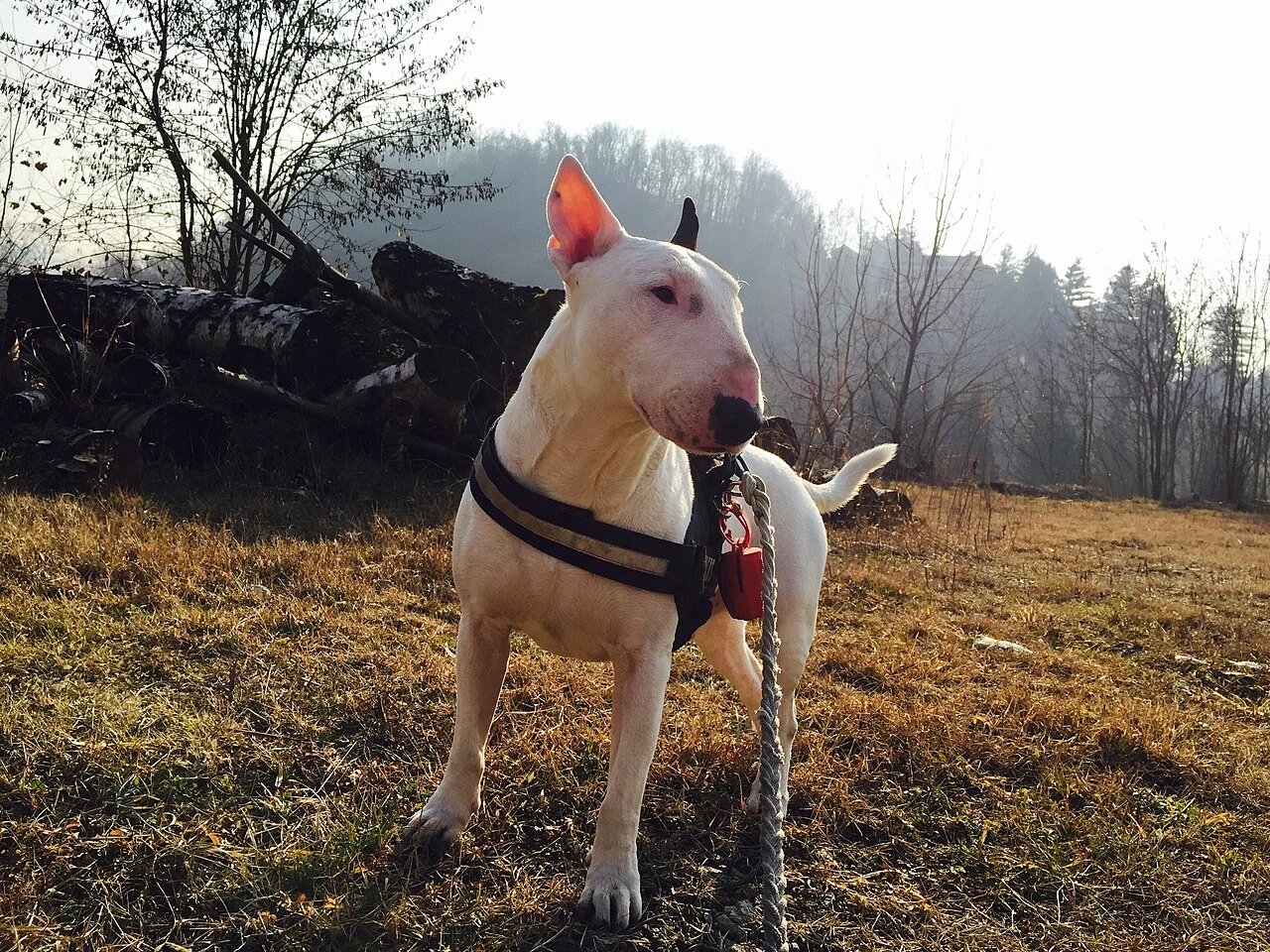
The Bull Terrier is instantly recognisable by its curved, egg-shaped head. Beneath its powerful build is an energetic, playful dog that enjoys being involved in family life. Shared activities, patient training and a home prepared for enthusiastic chewing are central to caring for it.
At a glance
- Size
- Medium
- Height at shoulder
- 53 to 56 cm
- Weight
- 23 to 32 kg
- Lifespan
- 12 to 13 years
- Activity
- High
- Grooming
- Low
- Training
- Patience & clear guidance
- Owner experience
- First dog with support
A playful, powerful companion with a mind of its own
A Bull Terrier may carry a toy around with great enthusiasm, squeeze onto the sofa beside its person and then become determined to investigate a scent on the next walk. Its attachment to people comes with a strong will. Enjoying an exuberant dog also means being willing to practise the everyday habits that make living together comfortable.
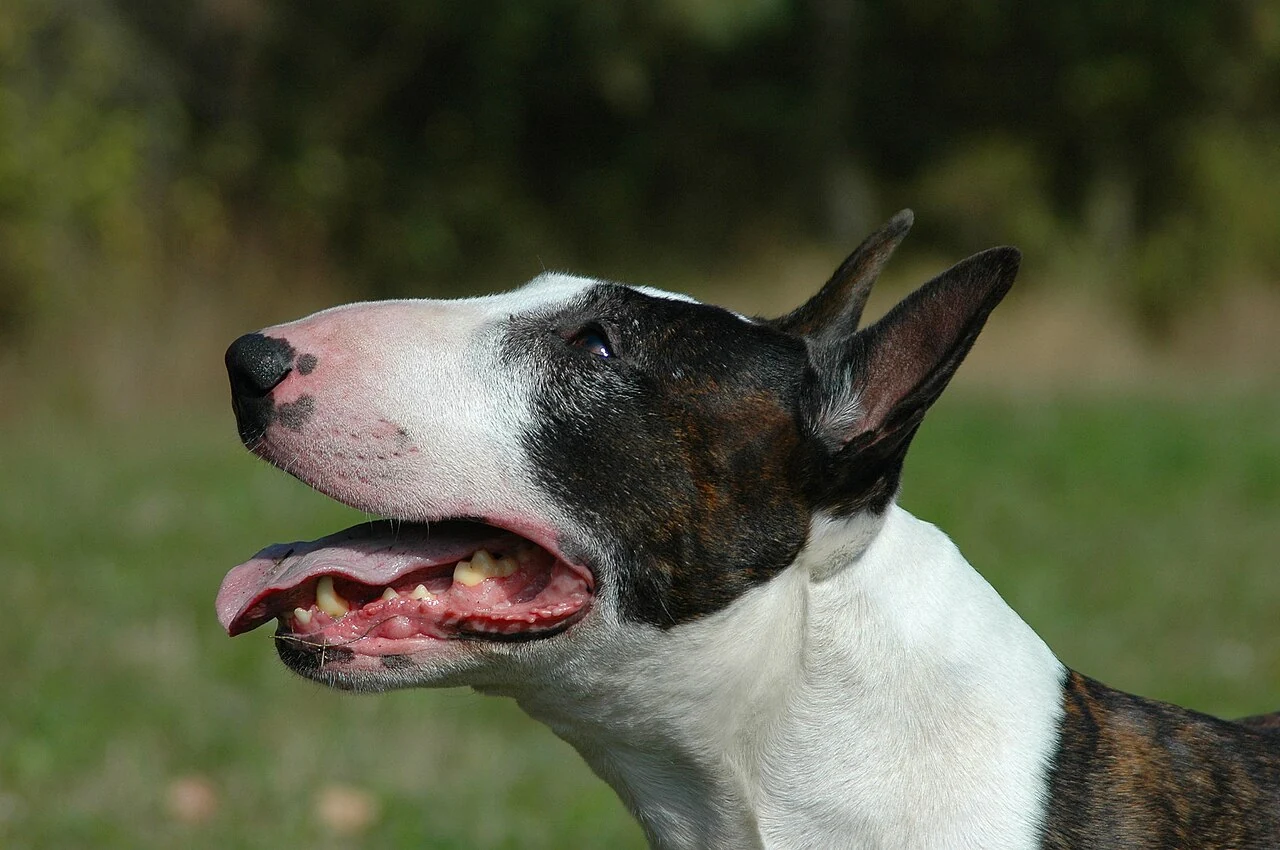
The breed developed in nineteenth-century Britain from bulldogs and terriers. Some of its early ancestors were used in animal fighting. James Hinks refined the type during the 1850s and exhibited it in Birmingham in 1862. Today the Bull Terrier is a companion dog. Its short back, strong muscles, small upright ears and distinctive head give it a very different outline from many other terriers.
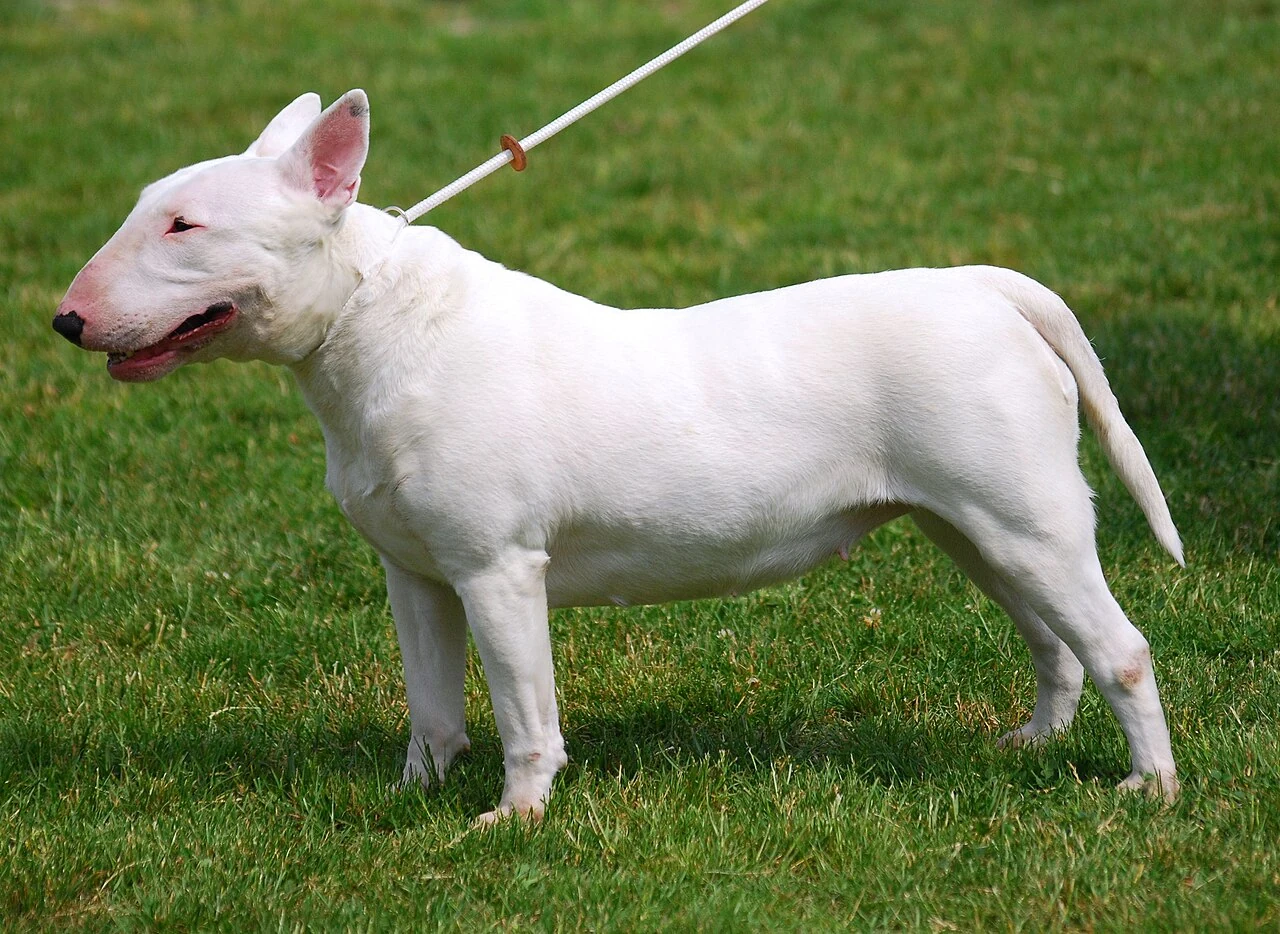
The international canine federation FCI sets no fixed height or weight. The American Kennel Club describes adult Bull Terriers as approximately 53 to 56 centimetres tall at the shoulder and 23 to 32 kilograms in weight. Its strength needs thoughtful handling during play and on the lead. An adult should supervise time with young children and help the dog take a quiet break when needed.
Everyday life
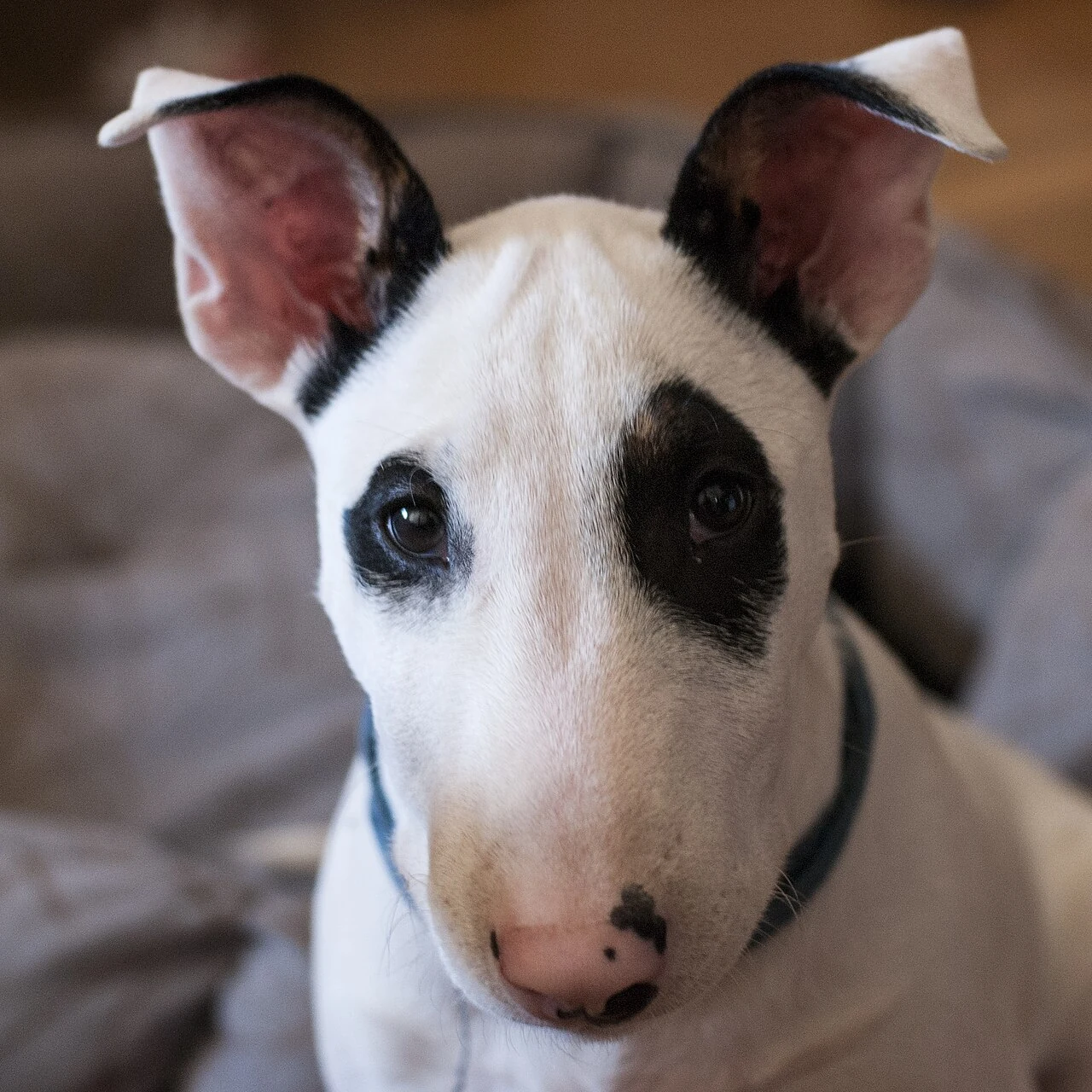
Varied walks, time to investigate scents and shared games suit a Bull Terrier. Many enjoy carrying something, searching or working through a task with their person. A sturdy food toy can make part of a meal more interesting. Using some of the normal food allowance helps keep these activities from adding extra calories every day.
Short training sessions work well when the reward matters to the dog. Instead of repeatedly pushing it away when it jumps up, you could practise greeting with all four paws on the ground and reward that moment. Coming back when called, walking on a loose lead and willingly exchanging a toy are useful skills too. A quiet setting is the best place to introduce them. With practice, they can become part of ordinary outings.
Many Bull Terriers chase cats or smaller animals. Rabbits and other small pets should therefore have physically separate accommodation. Meetings with dogs depend on the individuals and should begin with a controlled introduction. Learning to cope with time alone also takes gradual practice. Longer absences need suitable care. A Fellfolio handover can keep favourite games, feeding arrangements and useful walking guidance together for the carer.
Staying home alone
Dogs learn to stay home alone in small steps. The RSPCA advises no more than four hours at a time. Puppies and dogs that become unsettled when left alone need shorter absences and gradual practice. Arrange someone to care for your dog when you will be away longer.
Everyday dog training: recall, a loose lead and clear communication ↗
Day-to-day care
A soft brush or suitable grooming mitt can remove loose hair from the short, smooth coat. Grooming also makes it easier to notice changes in the skin. Checking nails and ears and brushing the teeth with dog toothpaste belong in the routine. A young dog should learn to accept handling through friendly, gradual practice.
Choosing chew items and toys deserves particular attention. Bull Terriers have strong jaws and may swallow pieces they tear off. Toys should suit the dog's size and be checked regularly for damage. Socks, small children's toys and soft plastic objects should be kept out of reach. A claim that a toy is especially tough should be followed by a careful look at the actual item and how your own dog uses it.
Size and build
Young Bull Terriers often play exuberantly and need to learn how to use their teeth and bodies gently around people. Brief, carefully guided games and practice taking breaks can help. When playing with dogs, size and play style should be compatible so that a smaller or quieter partner is not repeatedly knocked over.
During growth, short explorations and free play with rest breaks are more suitable than long runs or repeated high jumps. Exercise should increase gradually. An older Bull Terrier may still enjoy searching games even as its walks become shorter. New stiffness, lameness or reduced stamina should be assessed by a vet. Weight records and notes about movement in Fellfolio can help show how these changes develop over time.
From puppy to senior: caring for your dog through every life stage ↗
Health
Hearing, heart, kidney and kneecap health should be discussed before you choose a Bull Terrier puppy. The Bull Terrier Club of America recommends screening results for breeding dogs and a BAER hearing test for puppies. This electronic test assesses responses to sound and can identify congenital deafness in just one ear. A puppy responding to noises does not establish that both ears can hear.
For kidney screening, the club recommends a urine test comparing protein with creatinine. An abnormal result may indicate a kidney problem and needs veterinary interpretation. Listening to the heart and having a specialist perform an ultrasound can provide different information. With patellar luxation, the kneecap slips outside its normal groove. A dog may briefly carry a hind leg or show lameness.
Swallowed objects are another concern. Repeated vomiting, marked lethargy or refusing food after possibly swallowing an object need prompt veterinary help. Weight and skin are also worth discussing at routine appointments. Fellfolio can keep examination findings, medicines and observations in one place.
Before buying a dog abroad, you should check the legal requirements. Germany generally restricts the import of Bull Terriers and certain crosses, with narrowly defined exceptions. German customs should be contacted before travel. Additional keeping rules may apply where you live and should be checked with the relevant local authority.
Could this breed fit your life?
Could work well if …
- You want an energetic dog closely involved in everyday life.
- You enjoy patient training and shared games.
- You can arrange safe care, appropriate chew items and health screening.
What to consider
- Strength and exuberant play call for well-practised everyday habits.
- Small pets should have physically separate accommodation.
- Import and keeping requirements should be checked for your location before the dog arrives.
Similar needs, different dogs.
Selected by shared size, activity, grooming and training characteristics.
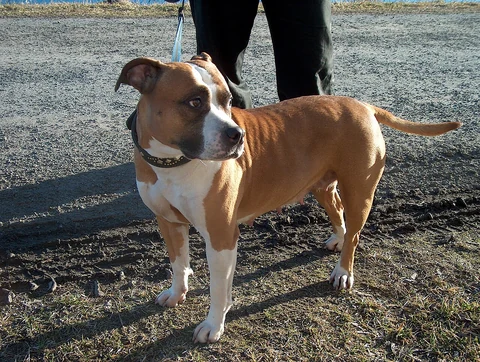
Powerful American terrier
American Staffordshire Terrier
The American Staffordshire Terrier is a compact, muscular dog that enjoys shared activity and close contact with its people. Its strength, often energetic play and possible difficulties with other dogs require thoughtful handling. Legal requirements where you live should also be checked before bringing one home.

Scent hound
Beagle
The Beagle is a sturdy little scent hound with stamina, an excellent nose and a taste for company. Walks are better when there is time to sniff.

Terrier
Staffordshire Bull Terrier
The Staffordshire Bull Terrier often seeks close contact and plays with its whole body. Plan daily activity and practise calm greetings. Allow space when meeting unfamiliar dogs until you know how yours responds.
Sources and photograph credit
- Teaching your dog to be left alone
Used in this profile for: Staying home alone
- Patellar Luxation
Used in this profile for: Health
- Bull Terrier
Used in this profile for: Size / Weight, Temperament, Everyday life, Day-to-day care, Size and build, Lifespan, Could this breed fit your life?
- Bull Terrier Club of America Health Statement
Used in this profile for: Health
- The Bull Terrier
Used in this profile for: Temperament, Everyday life, Day-to-day care, Health
- Bull Terrier, FCI Standard No.11
Used in this profile for: Temperament, Everyday life, Day-to-day care, Size and build, Could this breed fit your life?
- Bull Terrier
Used in this profile for: Everyday life, Day-to-day care, Could this breed fit your life?
- Gefährliche Hunde
Used in this profile for: Health
- Exercising your puppy
Used in this profile for: Size and build
- Training Your Dog to Be Left Alone
Used in this profile for: Everyday life
- Children and Dogs
Used in this profile for: Temperament, Size and build
- Dog dental care
Used in this profile for: Day-to-day care
- Train Your Dog to Come When Called
Used in this profile for: Everyday life
- Training your dog
Used in this profile for: Everyday life
Photo credits
Portrait · Bull Terrier Standard Maschio - Bianco.jpg · Alessio.milazzo · CC BY-SA 4.0 · Edited

Coat and features · A Bull Terrier Porträt DSC 7881.jpg · Goldmull · CC BY-SA 4.0 · Edited

Everyday life · Bull Terrier1.jpg · Adrià Ariste Santacreu · CC BY 2.0 · Edited

Side view · Bull Terrier R 01.jpg · Lilly M · CC BY-SA 3.0 · Edited
