 fellfolio
Powerful American terrier
American Staffordshire Terrier
The American Staffordshire Terrier is a compact, muscular dog that enjoys shared activity and close contact with its people. Its strength, often energetic play and possible difficulties with other dogs require thoughtful handling. Legal requirements where you live should also be checked before bringing one home.
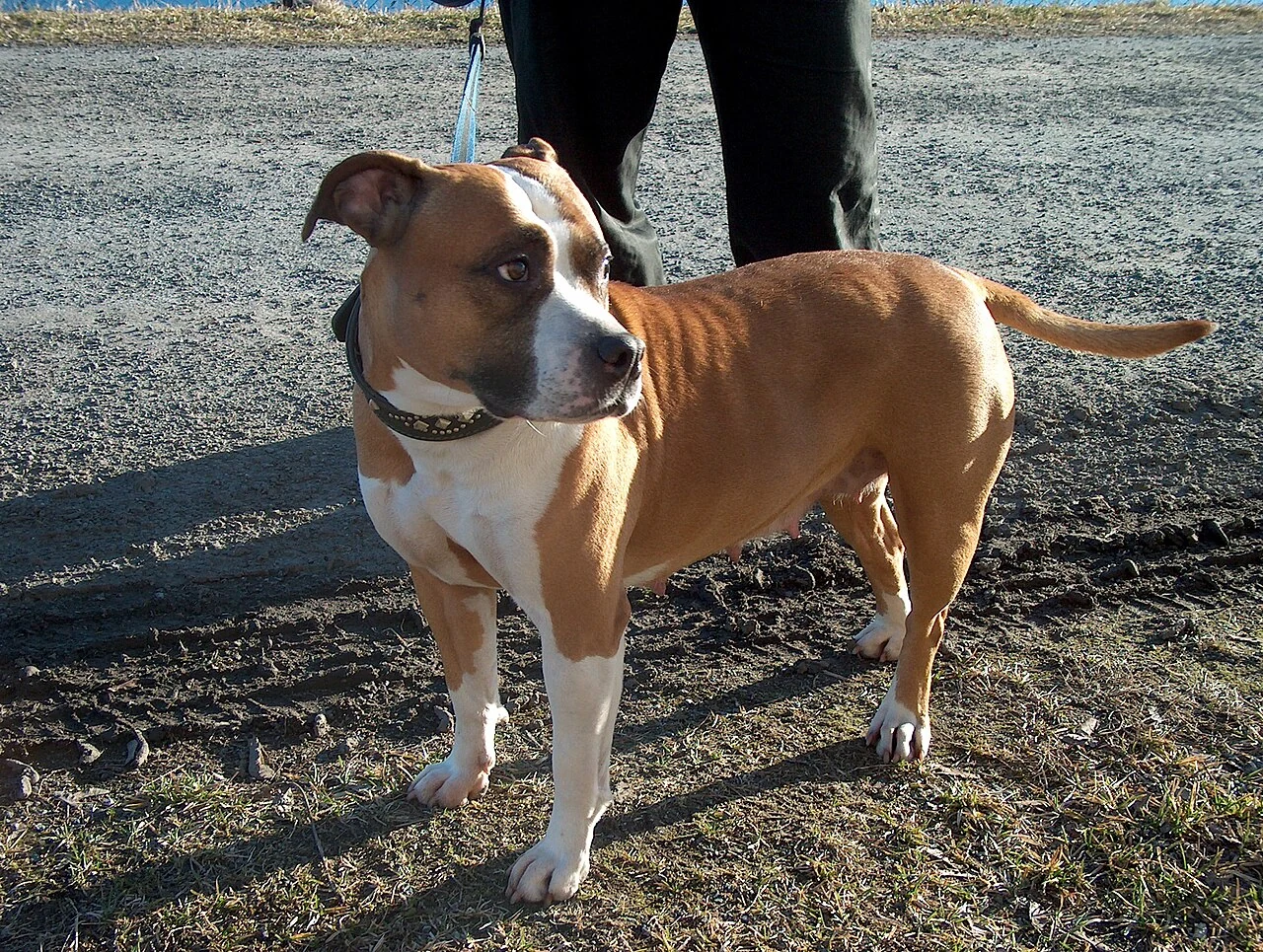
At a glance
- Size
- Medium
- Height at shoulder
- 43 to 48 cm
- Lifespan
- 12 to 16 years
- Activity
- High
- Grooming
- Low
- Training
- Patience & clear guidance
- Owner experience
- Experience recommended
Close to its people and keen to share activities
An American Staffordshire Terrier, often called an Amstaff, can be affectionate at home and enthusiastic about outdoor play. Its powerful body is agile rather than cumbersome. During shared training, it can be an attentive participant when both the task and the reward are interesting.
Its ancestors came from British crosses between bulldogs and terriers. Dog fighting is part of that history. Larger dogs developed in the United States, leading to the modern breed. The American Kennel Club recognised it in 1936 under the name Staffordshire Terrier. The later name American Staffordshire Terrier distinguishes it from the smaller Staffordshire Bull Terrier.
The international canine federation FCI gives a preferred shoulder height of 46 to 48 centimetres for males and 43 to 46 centimetres for females. Weight should be proportionate to size. A broad head, strong shoulders and short coat are typical features. An adult should supervise time with children. During energetic play, the dog’s strength can unintentionally knock a small child over. A quiet bed of its own also helps it take breaks in a busy household.
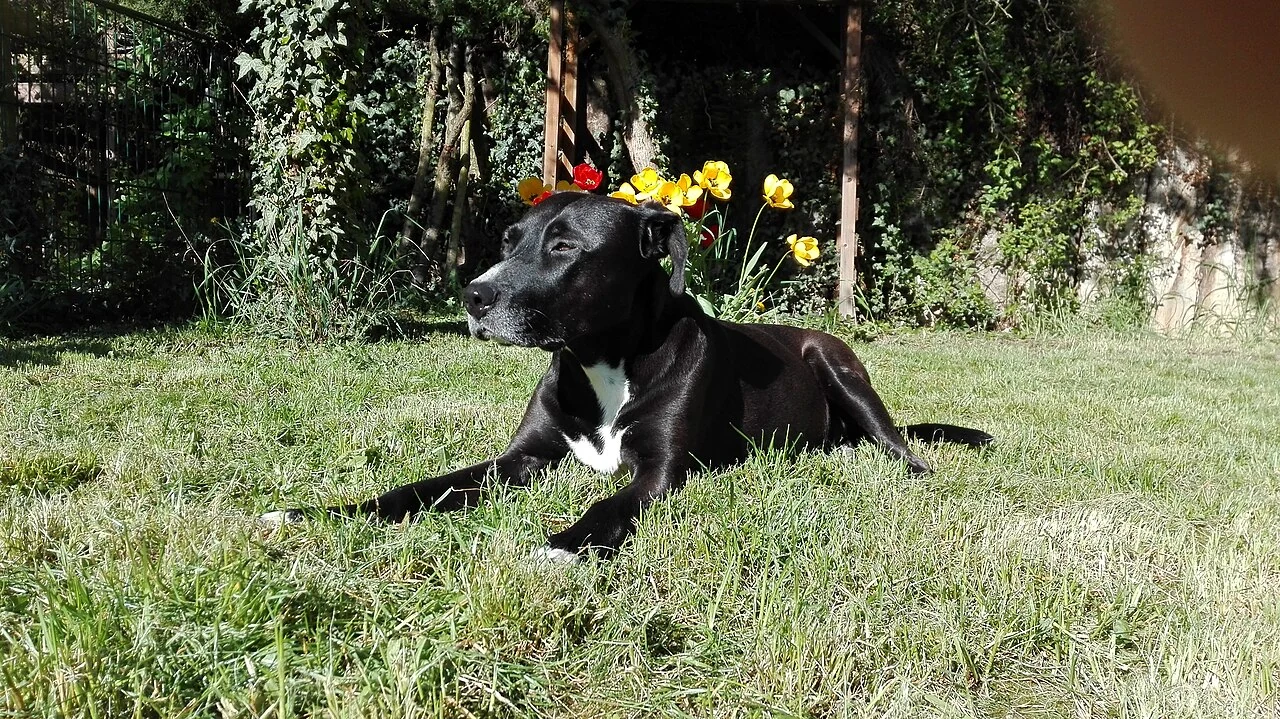
Everyday life
An Amstaff needs regular walks and opportunities to do things with its people. Searching games, carrying a suitable toy or brief learning tasks can add interest to an outing. Sporting activities should be introduced gradually and suit the dog’s age and health.
Useful training starts with situations that occur every day. Walking on a loose lead, coming back when called and willingly exchanging an object are particularly valuable skills. Rewarded practice in a quiet setting makes a task understandable before more distractions are added. With such a strong dog, early professional guidance can be especially helpful for these foundations.
Other dogs can be challenging. An Amstaff may enjoy the company of some dogs and struggle considerably with others. Meetings should begin with enough distance. Uncontrolled play in a large group does not suit every Amstaff. Living with a second dog requires careful selection and secure separation arrangements when they cannot be supervised.
Absences should be covered by a familiar carer who can handle the dog safely. Coping with time alone needs gradual practice. A Fellfolio handover can record suitable walking routes, guidance about dog encounters and familiar routines. This helps a carer prepare before the first outing.
Staying home alone
Dogs learn to stay home alone in small steps. The RSPCA advises no more than four hours at a time. Puppies and dogs that become unsettled when left alone need shorter absences and gradual practice. Arrange someone to care for your dog when you will be away longer.
Everyday dog training: recall, a loose lead and clear communication ↗
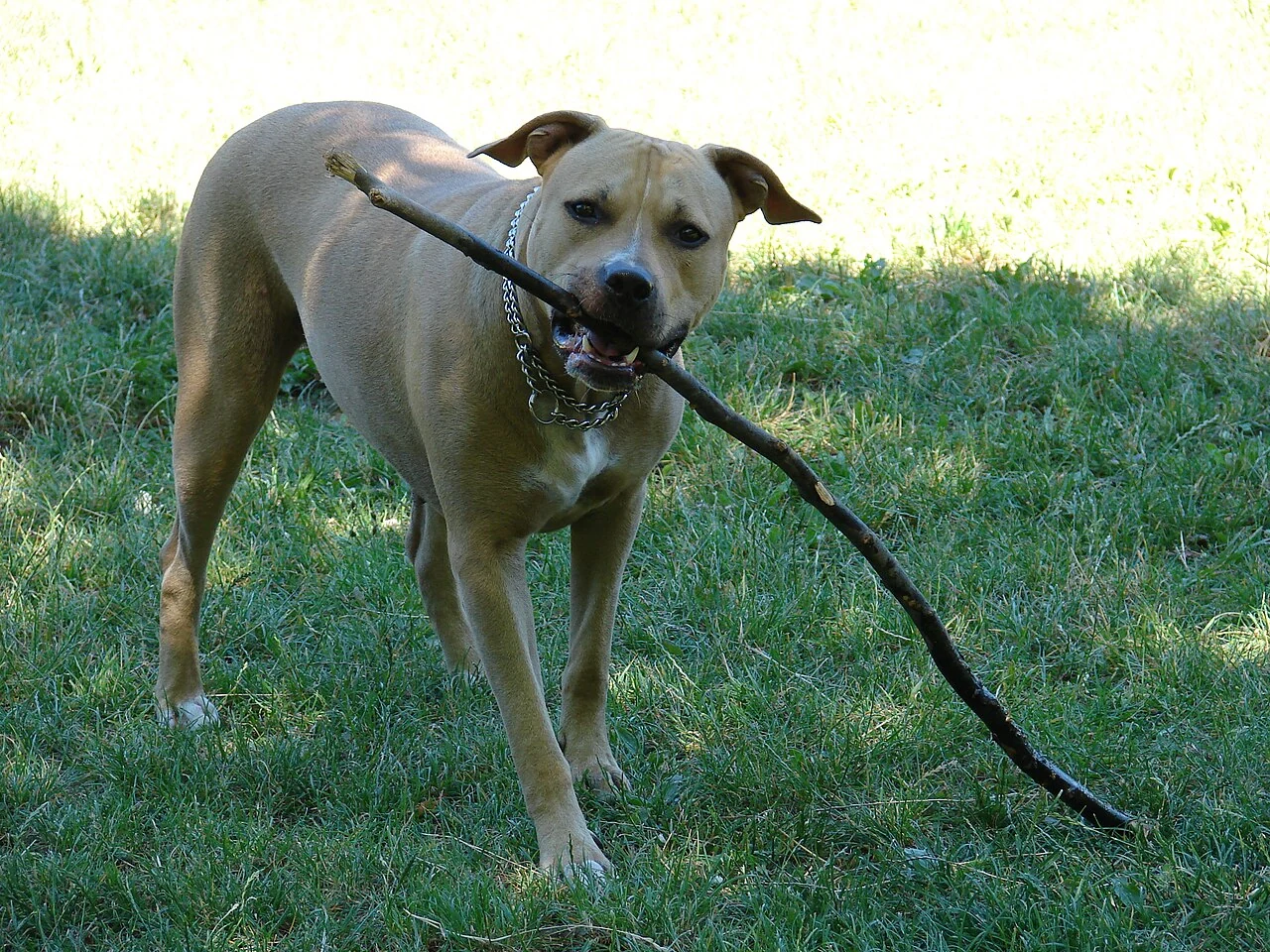
Day-to-day care
The short coat needs relatively simple grooming. A soft brush removes loose hair and dirt. Regular skin checks make it easier to notice redness, itching or small injuries. Persistent skin problems should be investigated rather than addressed by repeatedly trying new grooming products.
Nails, ears and teeth need attention too. Toothbrushing with dog toothpaste can be introduced in small steps. Checking paws after walks is also useful. Chew toys should suit the dog’s size and powerful jaws. Torn pieces and objects small enough to fit entirely into the mouth should be removed.
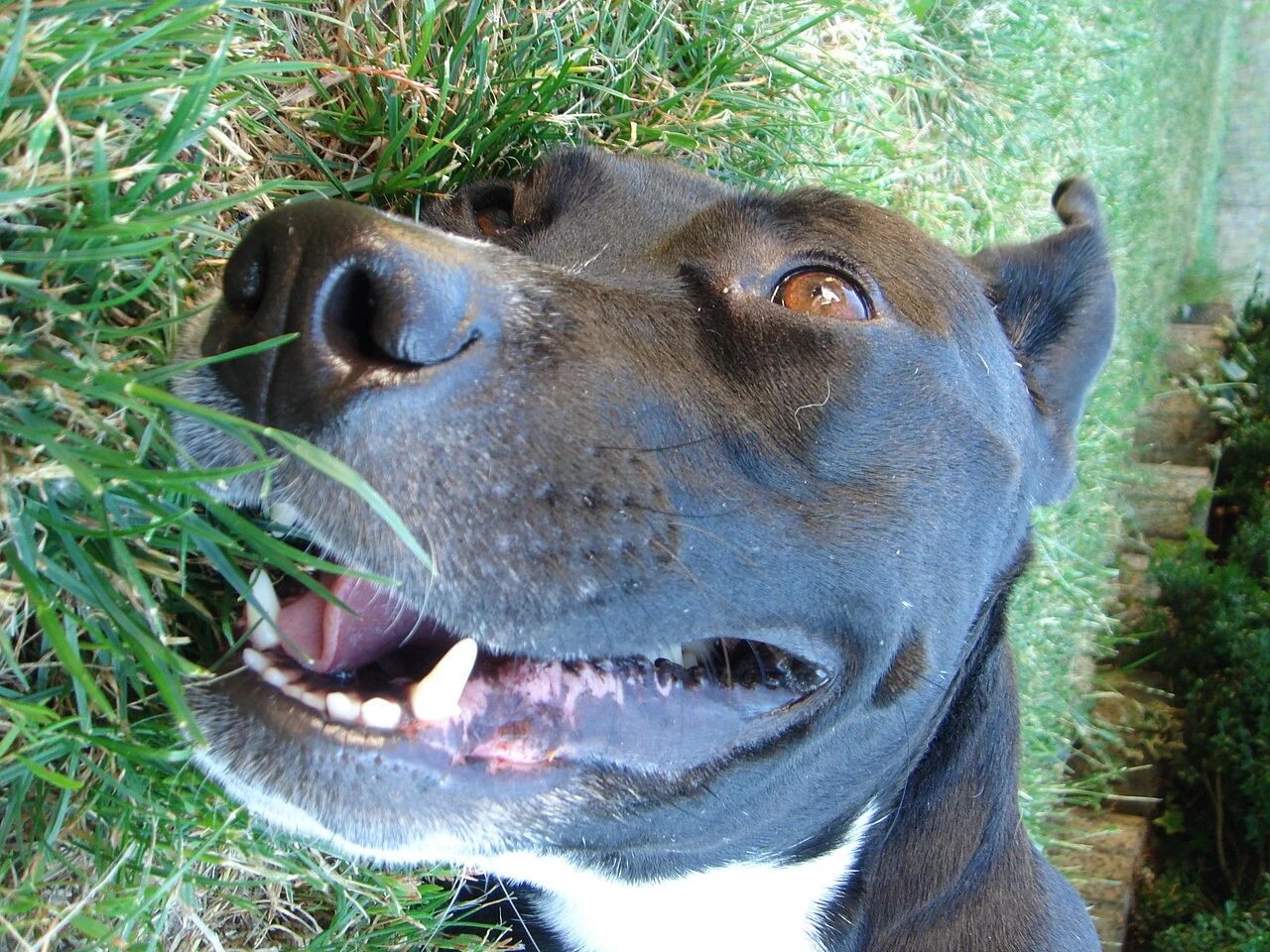
Size and build
A puppy should meet people, experience different surroundings and spend time with suitable dogs in pleasant situations. The quality of each encounter matters. A quiet walk together can be more useful than a chaotic meeting where the young dog is repeatedly overwhelmed. If its behaviour towards dogs changes as it matures, training should adapt to that change.
The growing body needs movement without long runs or repeated high jumps. Short explorations, free play and breaks are more suitable. Appropriate sports can be introduced later for the adult dog. As an Amstaff grows older, changes in getting up, walking and jumping are worth noticing. New lameness or reduced stamina needs veterinary assessment. Weight records and observations in Fellfolio can help show whether a change developed gradually or suddenly.
From puppy to senior: caring for your dog through every life stage ↗
Health
The Staffordshire Terrier Club of America particularly recommends hip, heart and thyroid screening, alongside specific inherited tests. With hip dysplasia, the hip joint develops abnormally or becomes unstable. This can lead to pain and later joint damage. Parents’ screening results and known illness in the family should be discussed before choosing a puppy.
An inherited neurological disease known as NCL occurs in the breed. It can cause progressive loss of balance and coordination, often starting in adulthood. A DNA test for the recognised variant helps with breeding decisions. Unusual swaying or repeated falls should be assessed by a vet regardless of an earlier test result.
Another inherited disease can affect young dogs. ALPP combines laryngeal paralysis with disease of nerves in the limbs. The larynx sits at the entrance to the windpipe. If it cannot open adequately during inhalation, breathing becomes more difficult. Affected dogs may develop difficulty walking and unusual breathing noises. Breathing distress needs immediate help. The currently described test uses genetic markers that occur closely alongside the disease. The actual causative change has not yet been identified. Results should therefore be discussed with a vet or a professional experienced in genetic counselling.
Legal requirements also need attention before acquiring an Amstaff. Germany generally restricts imports of American Staffordshire Terriers and certain crosses, with narrowly defined exceptions. German customs should be contacted before any planned entry. Additional keeping rules may apply where you live. The relevant authority, landlord and, where appropriate, insurer should be consulted before the dog arrives. A Fellfolio emergency card can then keep contact details, medicines and important health information readily available.
Could this breed fit your life?
Could work well if …
- You want to train regularly and share activities with a powerful dog.
- You can plan carefully for encounters and care arrangements.
- The legal requirements where you live have been established.
What to consider
- Some dog encounters and group situations may be unsuitable.
- Every carer should be able to manage the dog’s strength safely.
- Inherited neurological disease and suitable screening should be discussed when choosing a puppy.
Similar needs, different dogs.
Selected by shared size, activity, grooming and training characteristics.
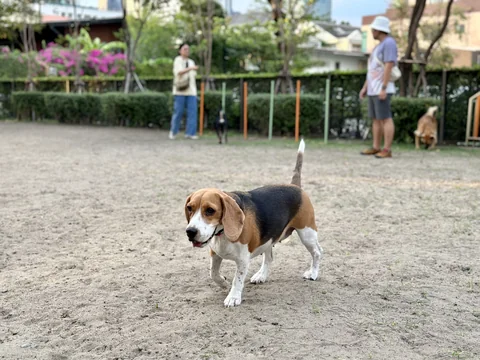
Scent hound
Beagle
The Beagle is a sturdy little scent hound with stamina, an excellent nose and a taste for company. Walks are better when there is time to sniff.
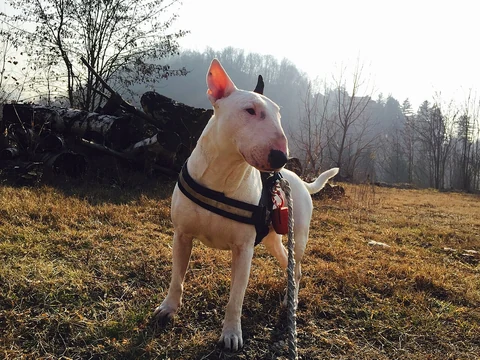
British terrier with an egg-shaped head
Bull Terrier
The Bull Terrier is instantly recognisable by its curved, egg-shaped head. Beneath its powerful build is an energetic, playful dog that enjoys being involved in family life. Shared activities, patient training and a home prepared for enthusiastic chewing are central to caring for it.
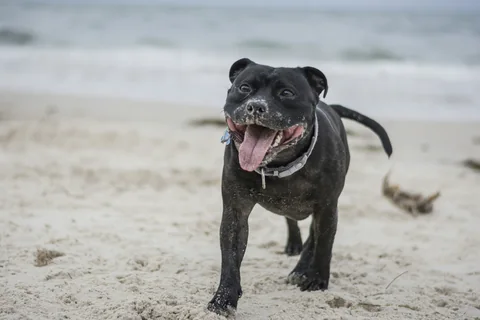
Terrier
Staffordshire Bull Terrier
The Staffordshire Bull Terrier often seeks close contact and plays with its whole body. Plan daily activity and practise calm greetings. Allow space when meeting unfamiliar dogs until you know how yours responds.
Sources and photograph credit
- Teaching your dog to be left alone
Used in this profile for: Staying home alone
- American Staffordshire Terrier
Used in this profile for: Temperament, Everyday life, Day-to-day care, Size and build, Health, Lifespan, Could this breed fit your life?
- STCA Health Committee
Used in this profile for: Health
- American Staffordshire Terrier, FCI Standard No.286
Used in this profile for: Size / Weight, Temperament, Everyday life, Day-to-day care, Size and build, Could this breed fit your life?
- Canine hip dysplasia
Used in this profile for: Health
- Gefährliche Hunde
Used in this profile for: Health
- Exercising your puppy
Used in this profile for: Size and build
- Training Your Dog to Be Left Alone
Used in this profile for: Everyday life
- Children and Dogs
Used in this profile for: Temperament, Size and build
- Dog dental care
Used in this profile for: Day-to-day care
- Train Your Dog to Come When Called
Used in this profile for: Everyday life
- Training your dog
Used in this profile for: Everyday life
Photo credits
Side view · American Staffordshire Terrier bitch.jpg · T. Bjornstad · CC BY-SA 3.0 · Edited

Coat and features · AmStaff Cookie geb. Jan 2010.jpg · Andy15568 · CC BY-SA 4.0 · Edited

Everyday life · AmStaff Cookie geb.Jan2010 No4.jpg · Andy15568 · CC BY-SA 4.0 · Edited

Portrait · American Staffordshire Terrier (Sammy).JPG · Oldwald4tler · CC BY-SA 4.0 · Edited
.JPG)